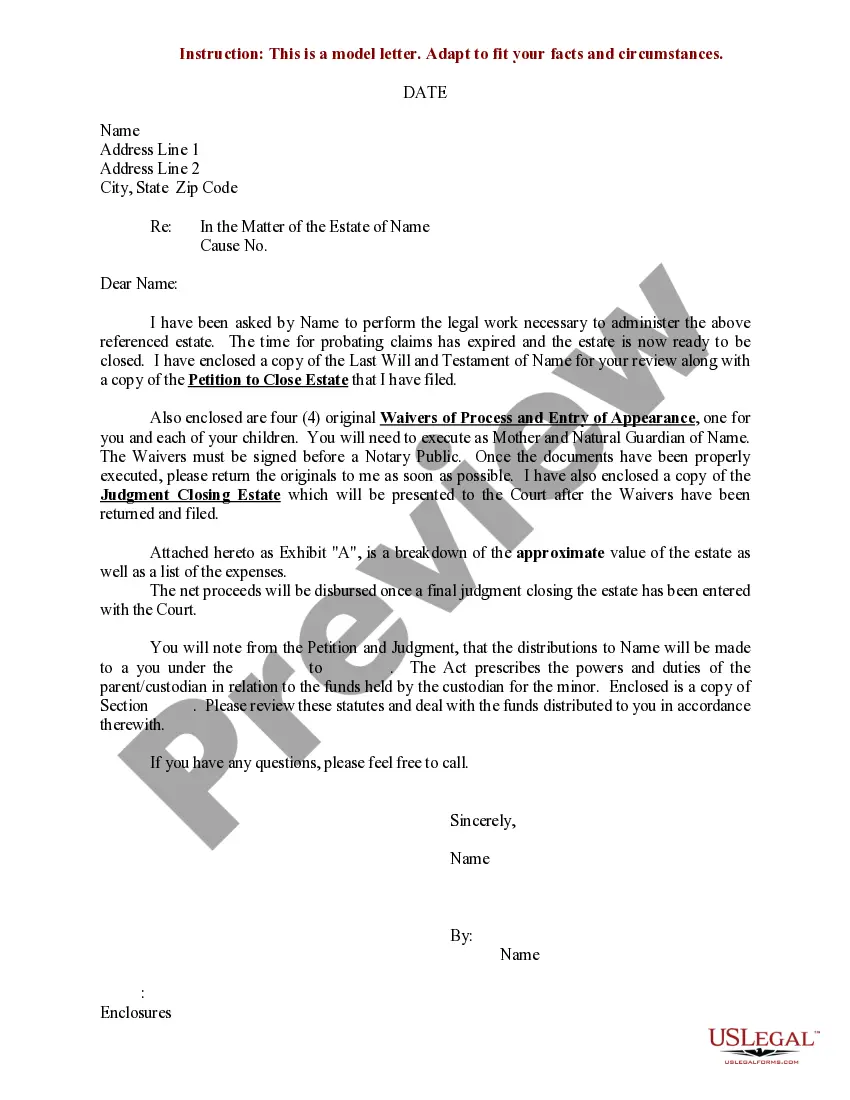
Estate Closing Statement With Transition Example
Description
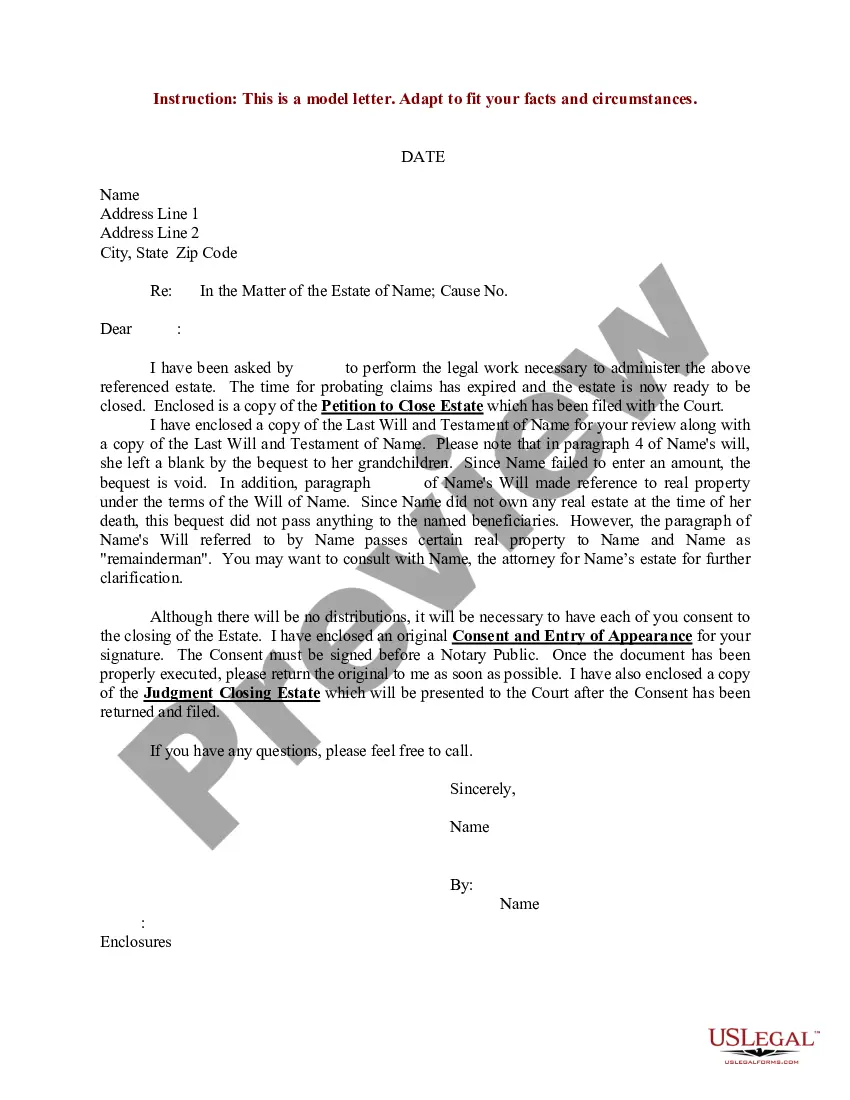
Get your form ready online
Our built-in tools help you complete, sign, share, and store your documents in one place.
Make edits, fill in missing information, and update formatting in US Legal Forms—just like you would in MS Word.
Download a copy, print it, send it by email, or mail it via USPS—whatever works best for your next step.
Sign and collect signatures with our SignNow integration. Send to multiple recipients, set reminders, and more. Go Premium to unlock E-Sign.
If this form requires notarization, complete it online through a secure video call—no need to meet a notary in person or wait for an appointment.
We protect your documents and personal data by following strict security and privacy standards.

Make edits, fill in missing information, and update formatting in US Legal Forms—just like you would in MS Word.

Download a copy, print it, send it by email, or mail it via USPS—whatever works best for your next step.

Sign and collect signatures with our SignNow integration. Send to multiple recipients, set reminders, and more. Go Premium to unlock E-Sign.

If this form requires notarization, complete it online through a secure video call—no need to meet a notary in person or wait for an appointment.

We protect your documents and personal data by following strict security and privacy standards.
Looking for another form?
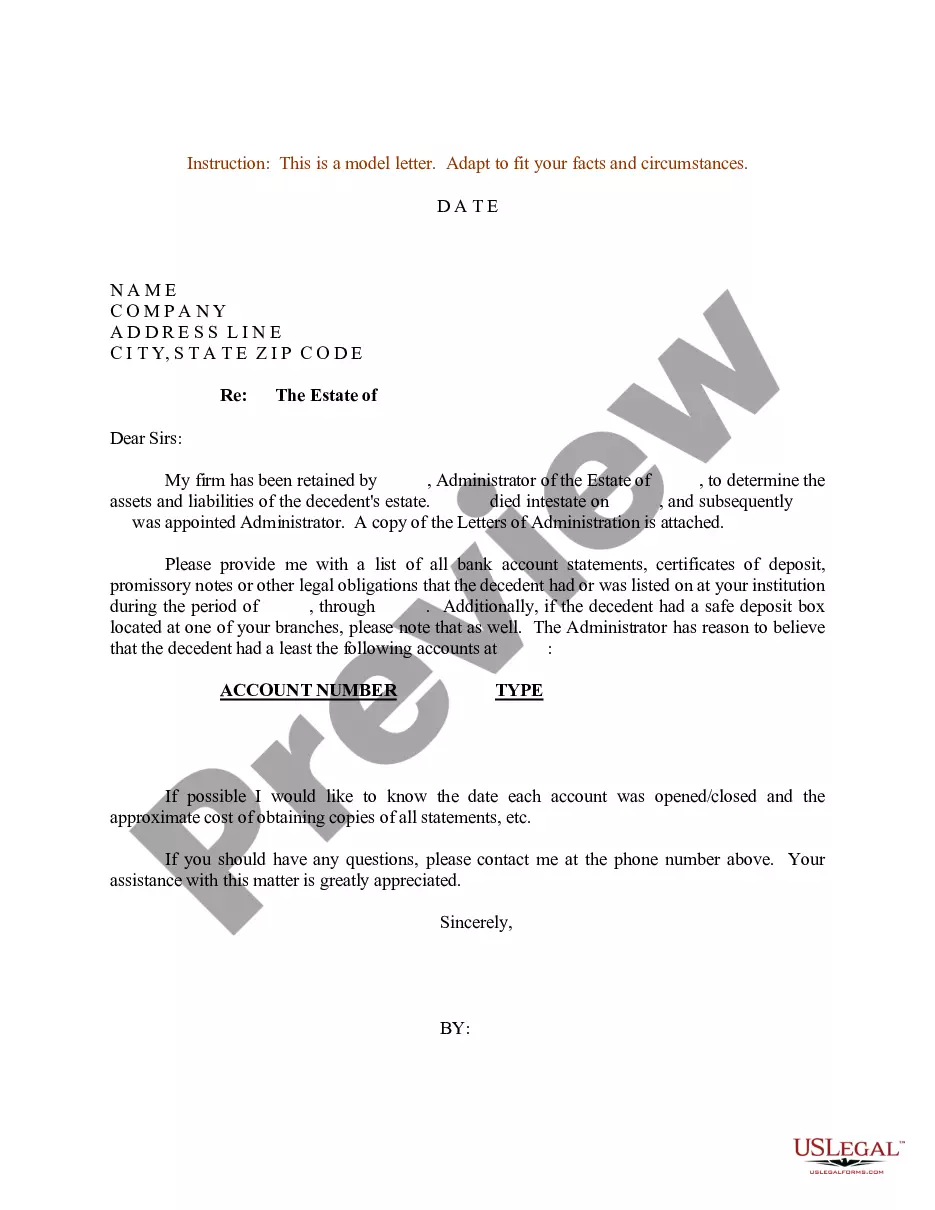
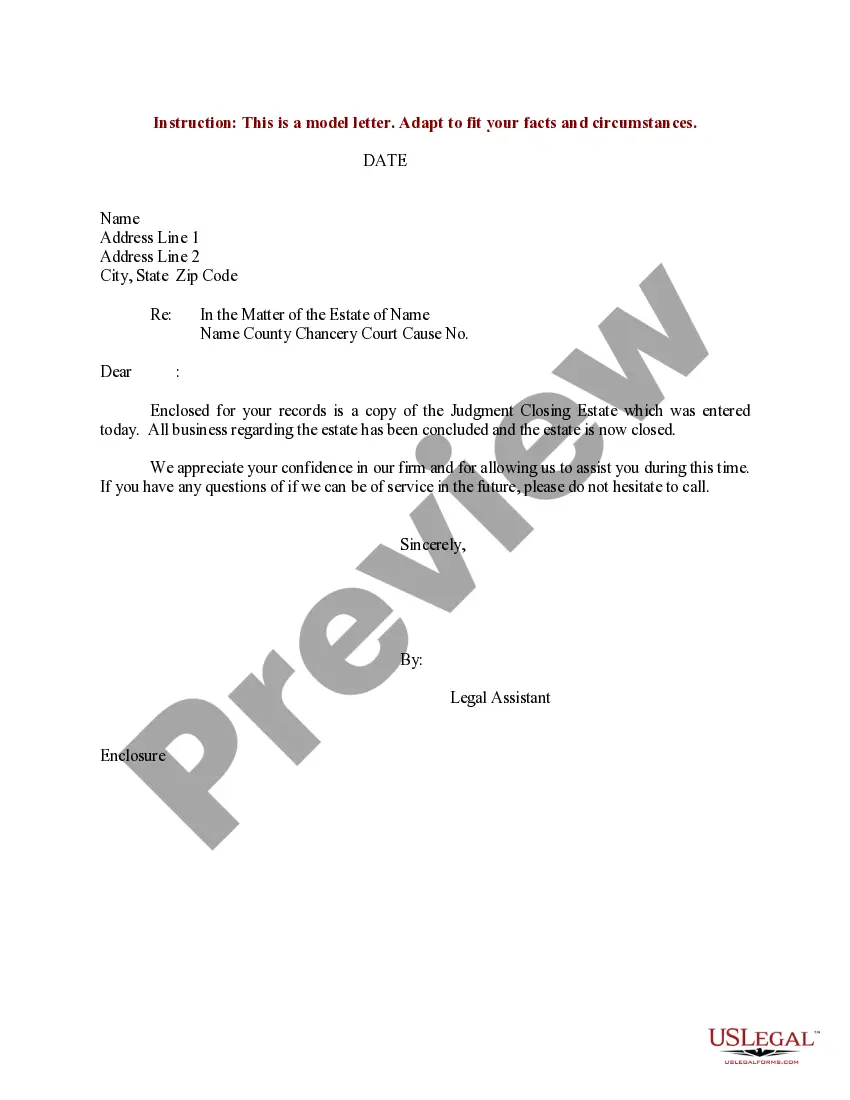
How to fill out Sample Letter For Closing Of Estate With Breakdown Of Assets And Expenses?
Dealing with legal papers and procedures might be a time-consuming addition to your entire day. Estate Closing Statement With Transition Example and forms like it typically require that you look for them and navigate how to complete them effectively. For that reason, regardless if you are taking care of economic, legal, or individual matters, having a comprehensive and practical web catalogue of forms on hand will go a long way.
US Legal Forms is the top web platform of legal templates, featuring more than 85,000 state-specific forms and numerous resources to assist you to complete your papers effortlessly. Discover the catalogue of pertinent papers available to you with just one click.
US Legal Forms offers you state- and county-specific forms available at any time for downloading. Protect your document managing processes having a high quality support that allows you to put together any form within minutes without having additional or hidden cost. Simply log in in your profile, identify Estate Closing Statement With Transition Example and acquire it immediately from the My Forms tab. You may also access formerly saved forms.
Is it your first time utilizing US Legal Forms? Sign up and set up up your account in a few minutes and you will get access to the form catalogue and Estate Closing Statement With Transition Example. Then, follow the steps below to complete your form:
- Ensure you have the correct form by using the Preview feature and reading the form information.
- Pick Buy Now when all set, and choose the subscription plan that suits you.
- Press Download then complete, sign, and print out the form.
US Legal Forms has twenty five years of experience supporting consumers control their legal papers. Obtain the form you require today and enhance any operation without breaking a sweat.
Form popularity
FAQ
A closing statement or credit agreement is provided with any type of loan, often with the application itself. A seller's Closing Disclosure is prepared by a settlement agent and lists all commissions and costs in addition to the net total to be paid to the seller.
The closing agent draws this document up to give both the seller and the buyer details on all fees that are in the transaction. Standard items added to this statement include loan fees, related costs, advanced PMI payments, homeowners insurance, agent commissions, loan settlement amounts and purchase price information.
The closing statement typically lists fees in two columns, one detailing the buyer's expenses and one detailing the seller's expenses. The amount of cash the buyer must give the seller has its own entry at the bottom of the document.
The closing disclosure is a type of settlement statement that was created and is regulated for the mortgage lending market. The closing disclosure is provided by the lender, closing attorney or title company to a borrower about three days before the closing on real estate.
Closing and settlement are often used interchangeably, but they are not exactly the same thing. Closing is the final step of the transaction, where the buyer and the seller sign the documents and exchange the keys. Settlement is the process of transferring the title, paying the fees, and recording the deed.