Trust For House
Description
Get your form ready online
Our built-in tools help you complete, sign, share, and store your documents in one place.
Make edits, fill in missing information, and update formatting in US Legal Forms—just like you would in MS Word.
Download a copy, print it, send it by email, or mail it via USPS—whatever works best for your next step.
Sign and collect signatures with our SignNow integration. Send to multiple recipients, set reminders, and more. Go Premium to unlock E-Sign.
If this form requires notarization, complete it online through a secure video call—no need to meet a notary in person or wait for an appointment.
We protect your documents and personal data by following strict security and privacy standards.

Make edits, fill in missing information, and update formatting in US Legal Forms—just like you would in MS Word.

Download a copy, print it, send it by email, or mail it via USPS—whatever works best for your next step.

Sign and collect signatures with our SignNow integration. Send to multiple recipients, set reminders, and more. Go Premium to unlock E-Sign.

If this form requires notarization, complete it online through a secure video call—no need to meet a notary in person or wait for an appointment.

We protect your documents and personal data by following strict security and privacy standards.
Looking for another form?

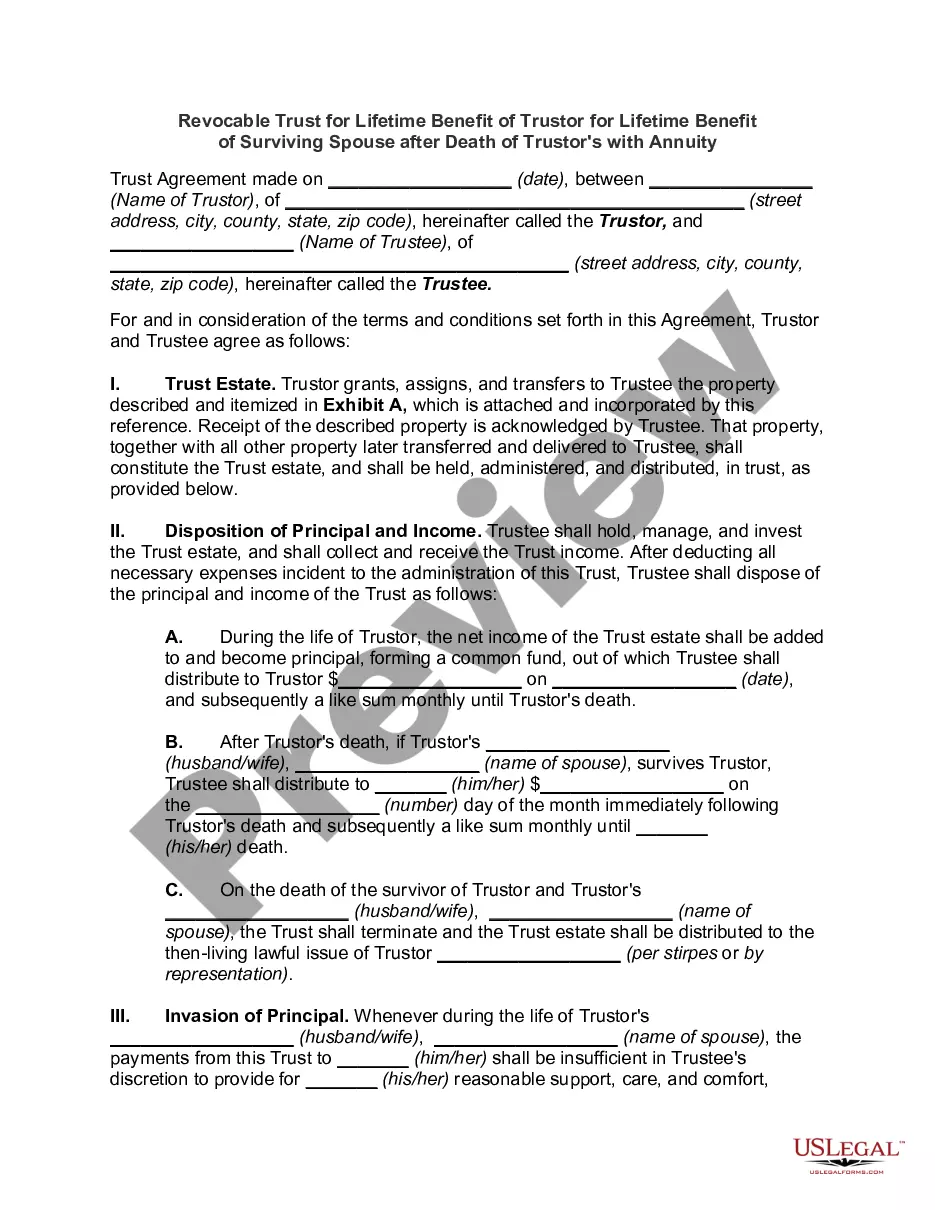
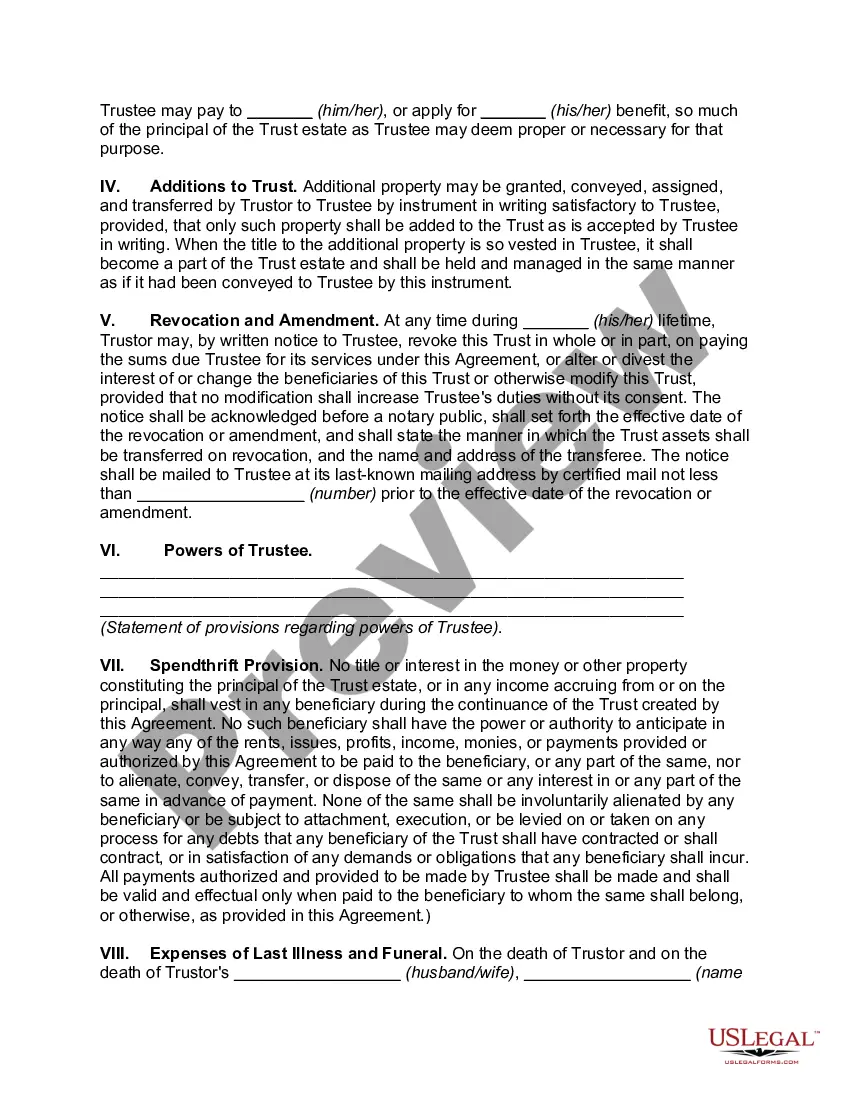
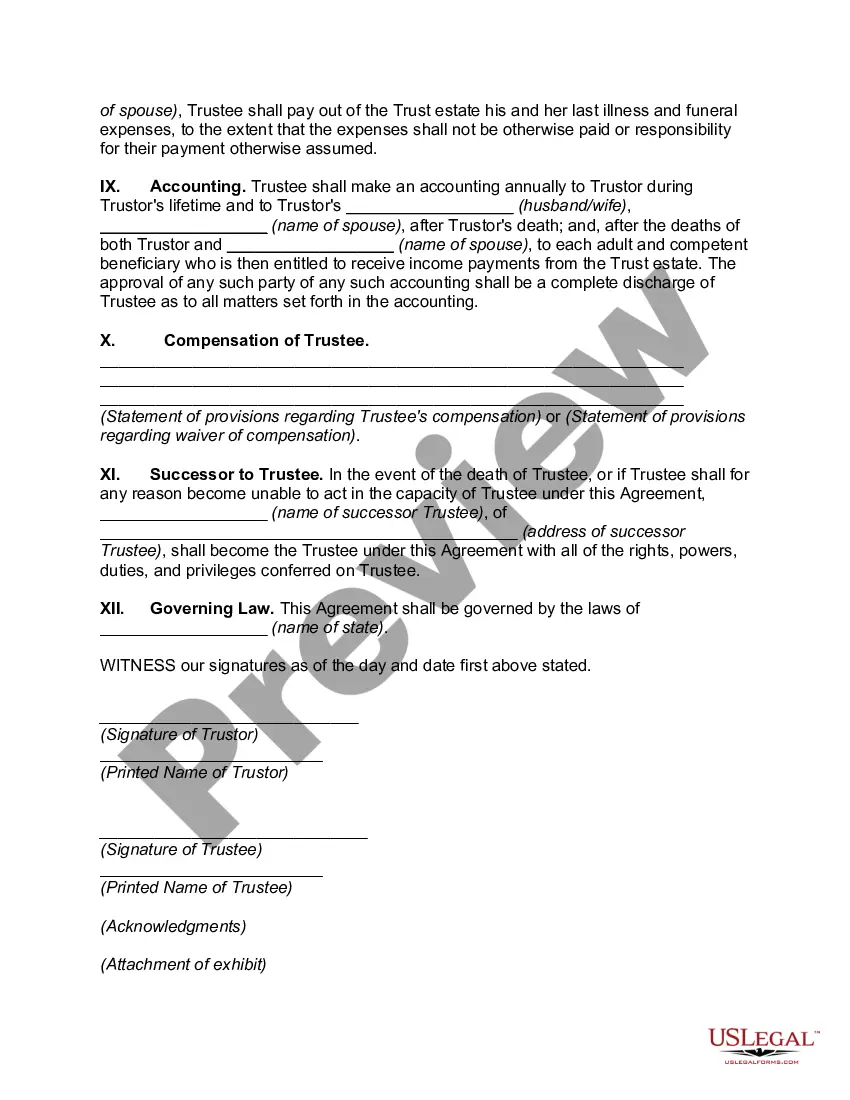
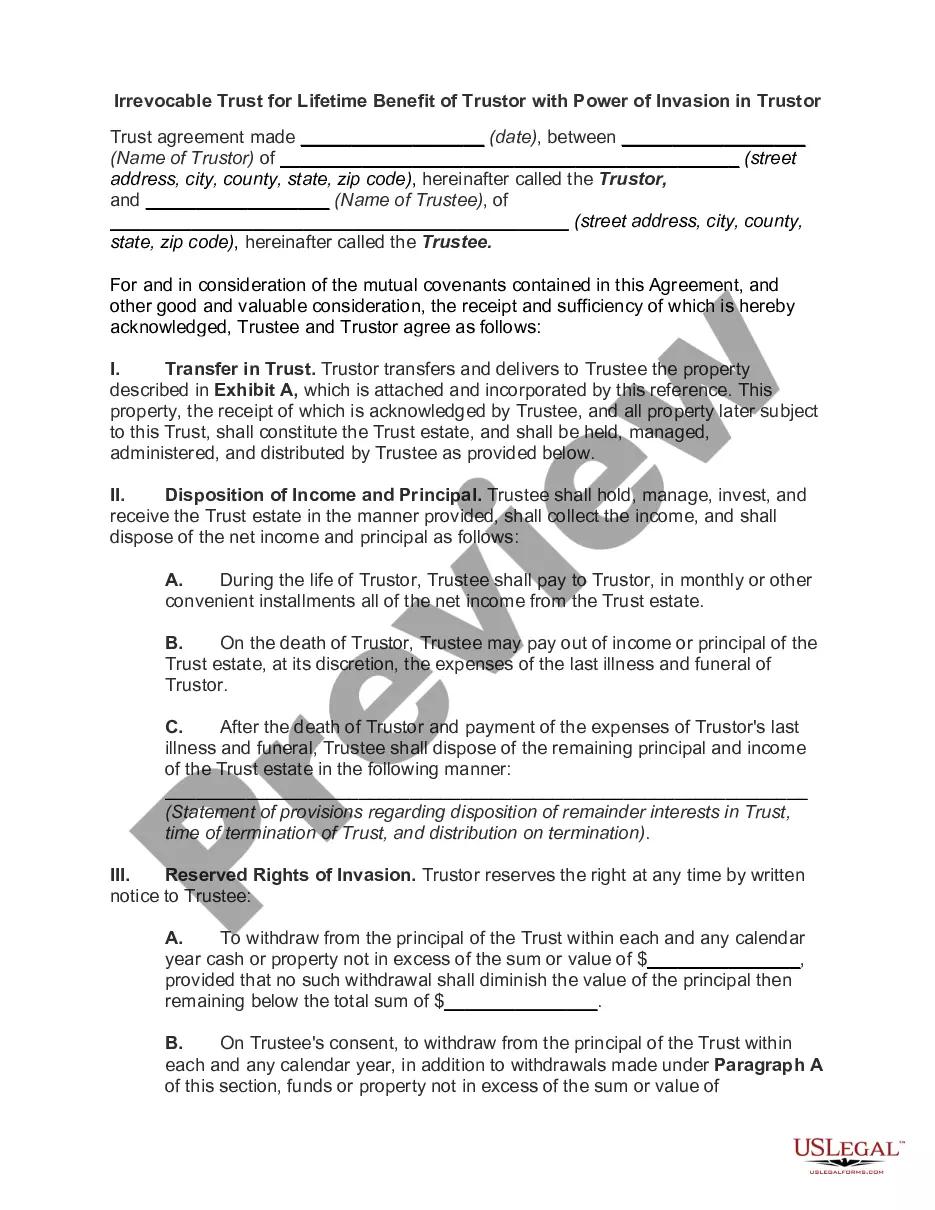
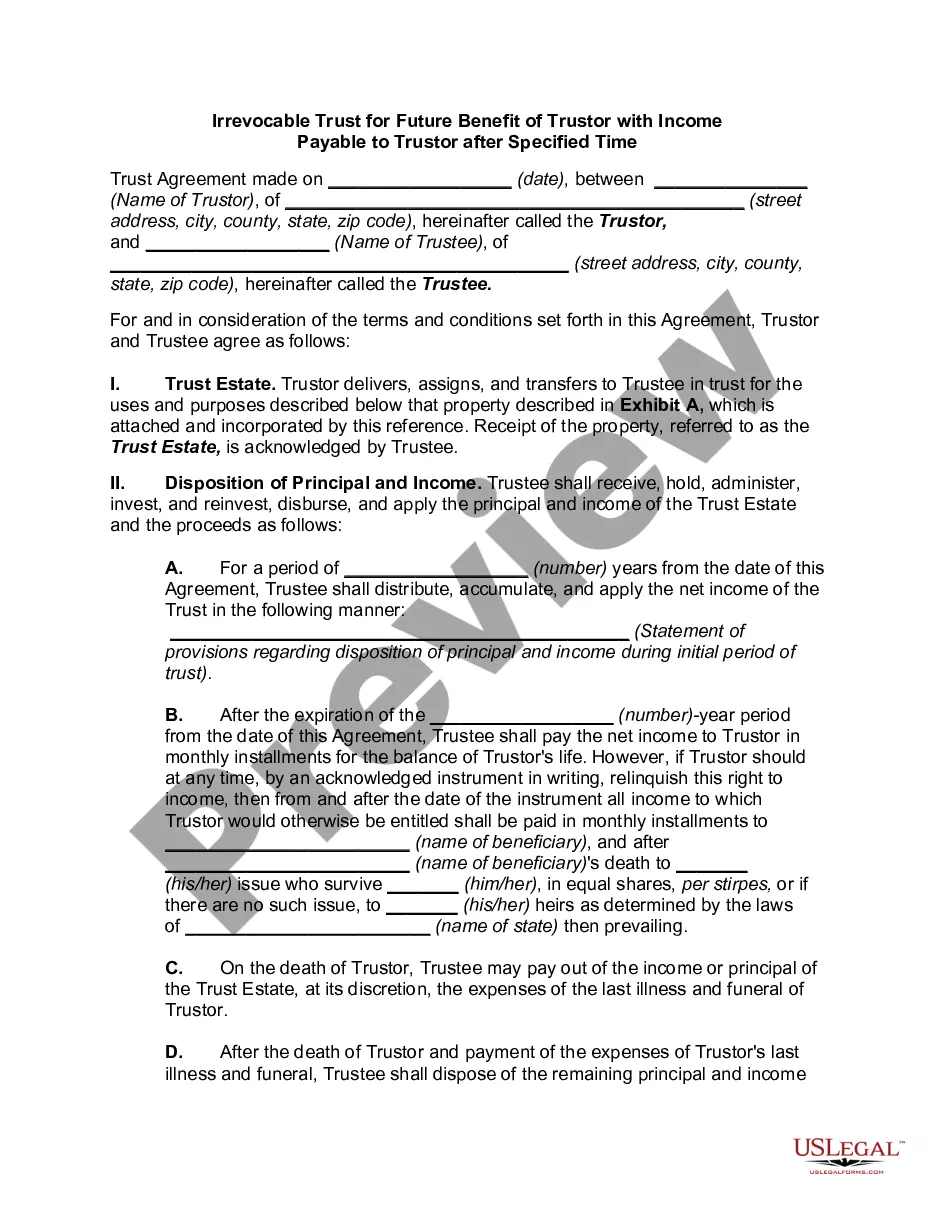
How to fill out Revocable Trust For Lifetime Benefit Of Trustor For Lifetime Benefit Of Surviving Spouse After Death Of Trustor's With Annuity?
- If you have an existing US Legal Forms account, log in and download the appropriate trust template by clicking on the Download button. Ensure your subscription is up to date; if not, renew it based on your payment plan.
- Review the form in Preview mode, making certain it's the correct one for your specific needs and complies with local jurisdiction requirements.
- If you need a different template, utilize the Search feature to find the exact document you require. Once found, continue to the next step.
- Purchase your document by clicking the Buy Now button and selecting your preferred subscription plan. Account registration is mandatory to access the forms library.
- Complete your payment using credit card or PayPal for subscription access.
- Download your chosen form and save it on your device. You'll find it under the My Forms section, allowing easy access whenever needed.
After following these steps, you will have successfully gathered the necessary documentation to establish a trust for your house. US Legal Forms empowers you with the tools and resources to manage your legal needs effectively.
Get started today and experience the convenience of a comprehensive legal form library!
Form popularity
FAQ
The best trust to protect your home is often a revocable living trust. This type of trust allows you to maintain control over your property while ensuring it bypasses probate upon your passing. Using a trust for house not only offers privacy, but it can also safeguard your home from creditors and unforeseen legal issues. Our platform, USLegalForms, provides tailored solutions to help you set up a trust that fits your specific needs and goals.
The most effective way to leave a house to your child is by establishing a trust for the house. This allows you to set conditions and guidelines for the property's use and management. A trust can also help avoid the lengthy and costly probate process, ensuring your child receives their inheritance in a timely manner. Leveraging platforms like US Legal Forms can simplify the creation of this trust, providing you with the necessary legal documents.
The best way to leave a house to your children is often by creating a trust for the house. A trust can provide clear instructions on how to manage and distribute the property. By using a trust, you ensure that your wishes are followed and reduce potential conflicts among heirs. Additionally, this approach can help prevent probate, making the process smoother for your family.
The best trust to put your house in often depends on your specific goals and circumstances. A revocable living trust is frequently recommended as it allows you to retain control while ensuring a streamlined transfer of ownership upon your passing. You can also evaluate other options, like irrevocable trusts, depending on your estate planning needs. Consulting with a knowledgeable professional can help you choose the ideal trust for house.
One of the largest mistakes parents make when setting up a trust fund is not clearly defining the terms or purposes of the trust. It is essential to outline how the assets will be managed, who will oversee the trust, and how funds will be distributed. Additionally, failing to communicate these details with your children can lead to confusion and misunderstandings later. Establishing a clear trust for house can prevent these issues.
Holding property in a trust offers both benefits and challenges. On the positive side, a trust for house helps avoid probate, provides privacy, and can protect your assets from creditors. However, it may also involve legal complexities and additional costs associated with maintaining the trust. Understanding both sides will help you make an informed decision.
While a trust can be beneficial, there are some disadvantages to consider. For instance, setting up and managing a trust for house can require legal fees and ongoing administrative work. Additionally, transferring your property into a trust may trigger tax implications, depending on your situation. Therefore, it’s important to weigh these potential drawbacks against the benefits.
Deciding whether to gift a house or to place it in a trust depends on your individual financial and estate planning goals. Gifting a house can result in immediate transfer of ownership, while putting it in a trust allows for controlled management and distribution after your death. Additionally, a trust for house may also help reduce tax consequences for both you and your beneficiaries. Careful consideration is crucial to make the right choice.
When a house is in a trust, it means that a legal entity holds the property on behalf of the beneficiaries. This can provide several advantages, including avoiding probate and simplifying the transfer of assets. Using a trust for house can protect your property from creditors and ensure your wishes are honored after your passing. Overall, it offers a structured way to manage and distribute your property.