Grantor Trusts With A Will
Description

Get your form ready online
Our built-in tools help you complete, sign, share, and store your documents in one place.
Make edits, fill in missing information, and update formatting in US Legal Forms—just like you would in MS Word.
Download a copy, print it, send it by email, or mail it via USPS—whatever works best for your next step.
Sign and collect signatures with our SignNow integration. Send to multiple recipients, set reminders, and more. Go Premium to unlock E-Sign.
If this form requires notarization, complete it online through a secure video call—no need to meet a notary in person or wait for an appointment.
We protect your documents and personal data by following strict security and privacy standards.

Make edits, fill in missing information, and update formatting in US Legal Forms—just like you would in MS Word.

Download a copy, print it, send it by email, or mail it via USPS—whatever works best for your next step.

Sign and collect signatures with our SignNow integration. Send to multiple recipients, set reminders, and more. Go Premium to unlock E-Sign.

If this form requires notarization, complete it online through a secure video call—no need to meet a notary in person or wait for an appointment.

We protect your documents and personal data by following strict security and privacy standards.
Looking for another form?


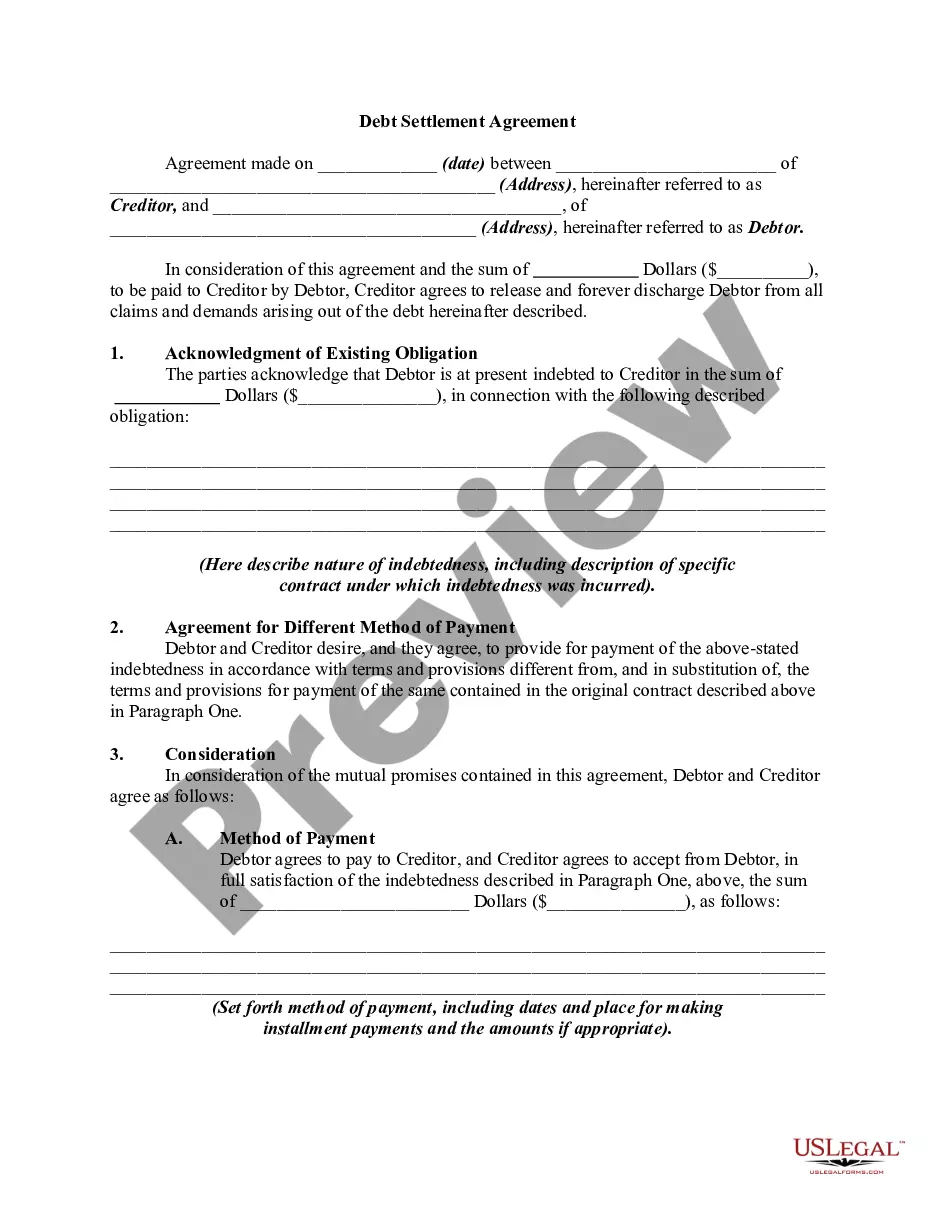




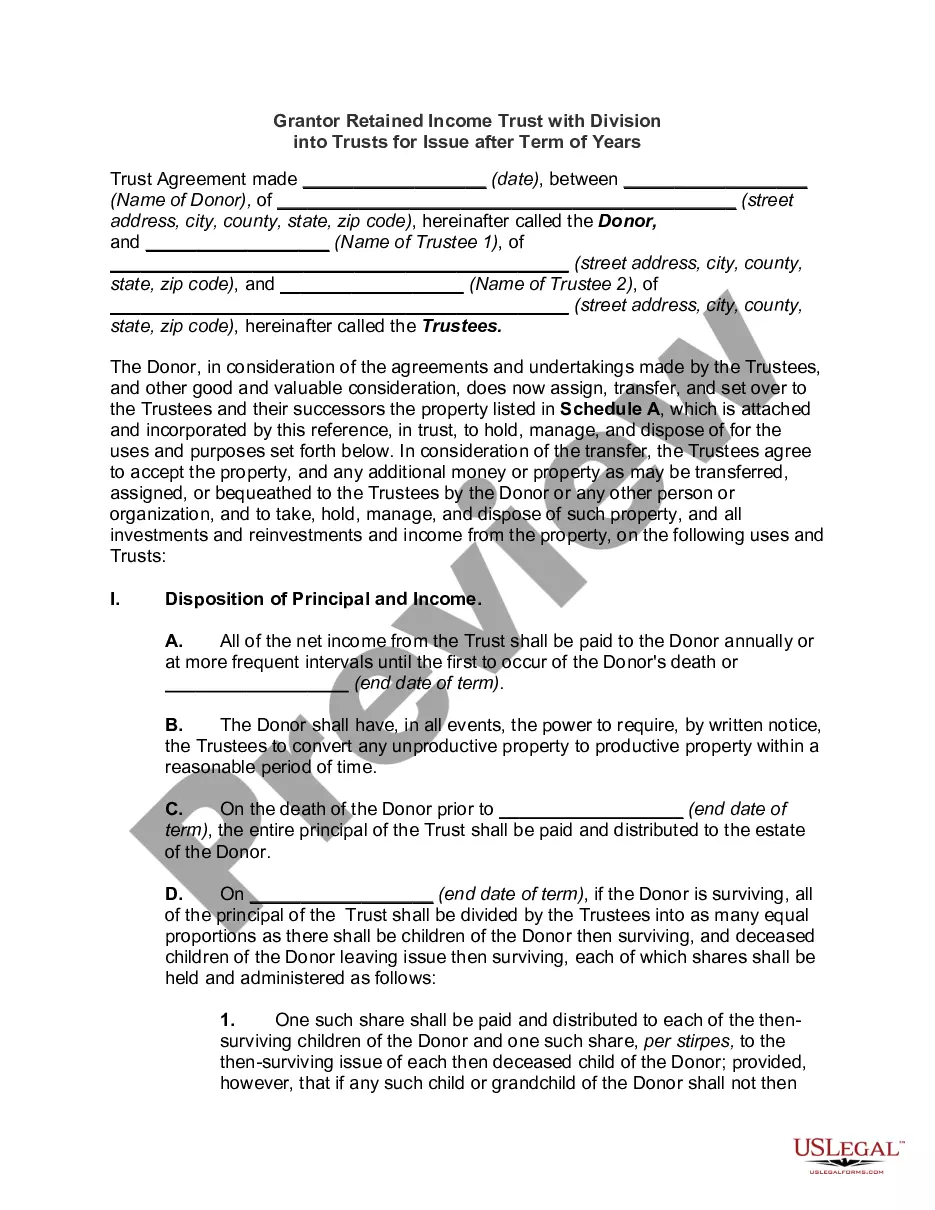
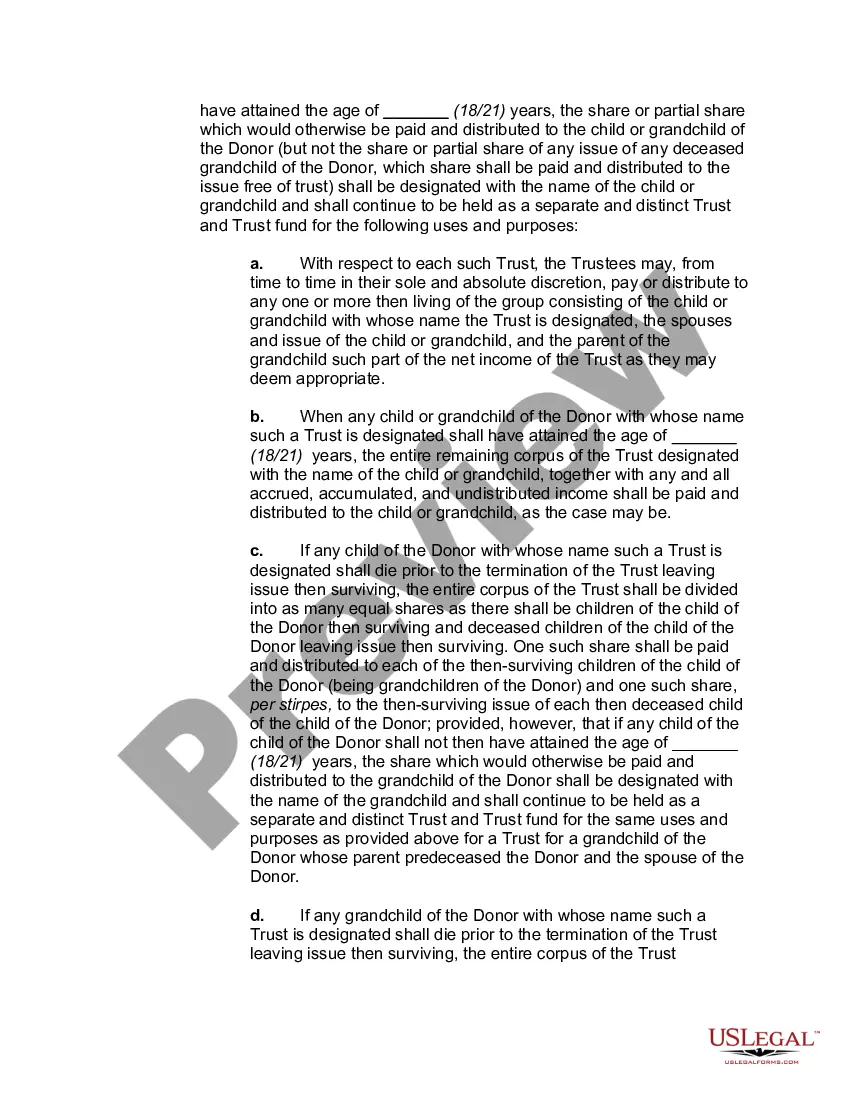
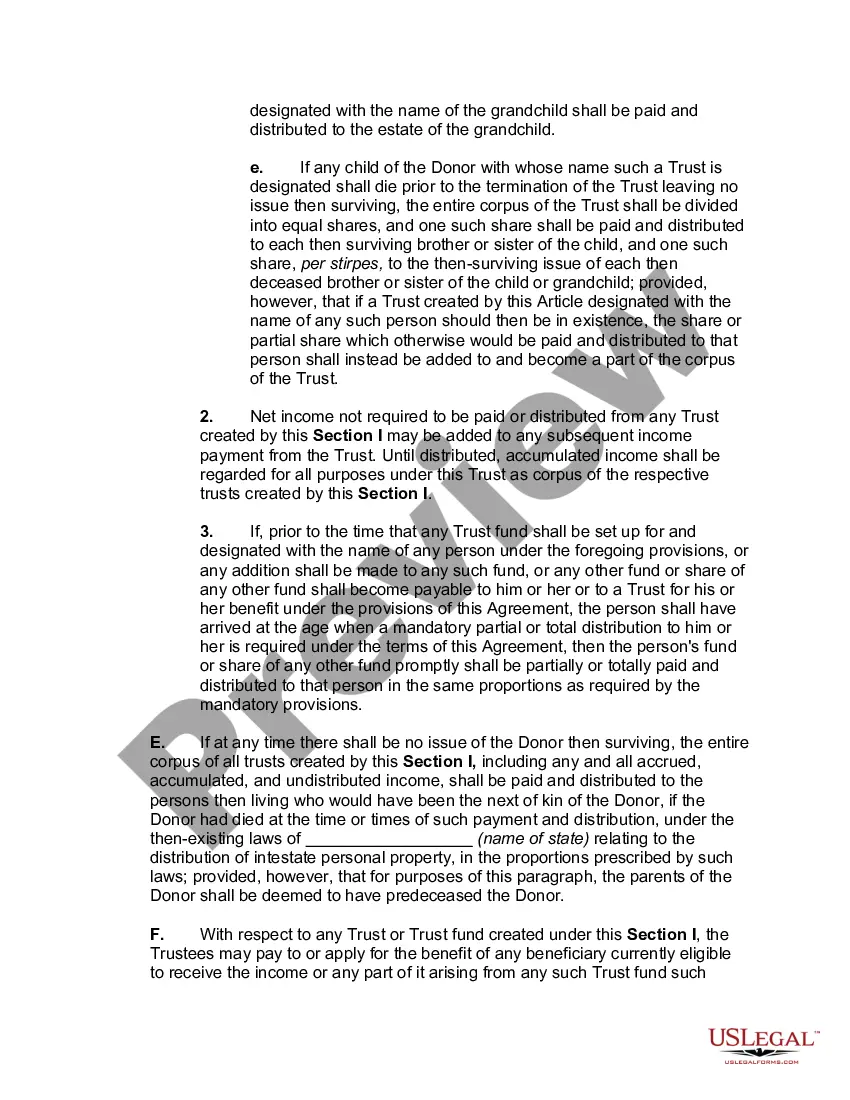
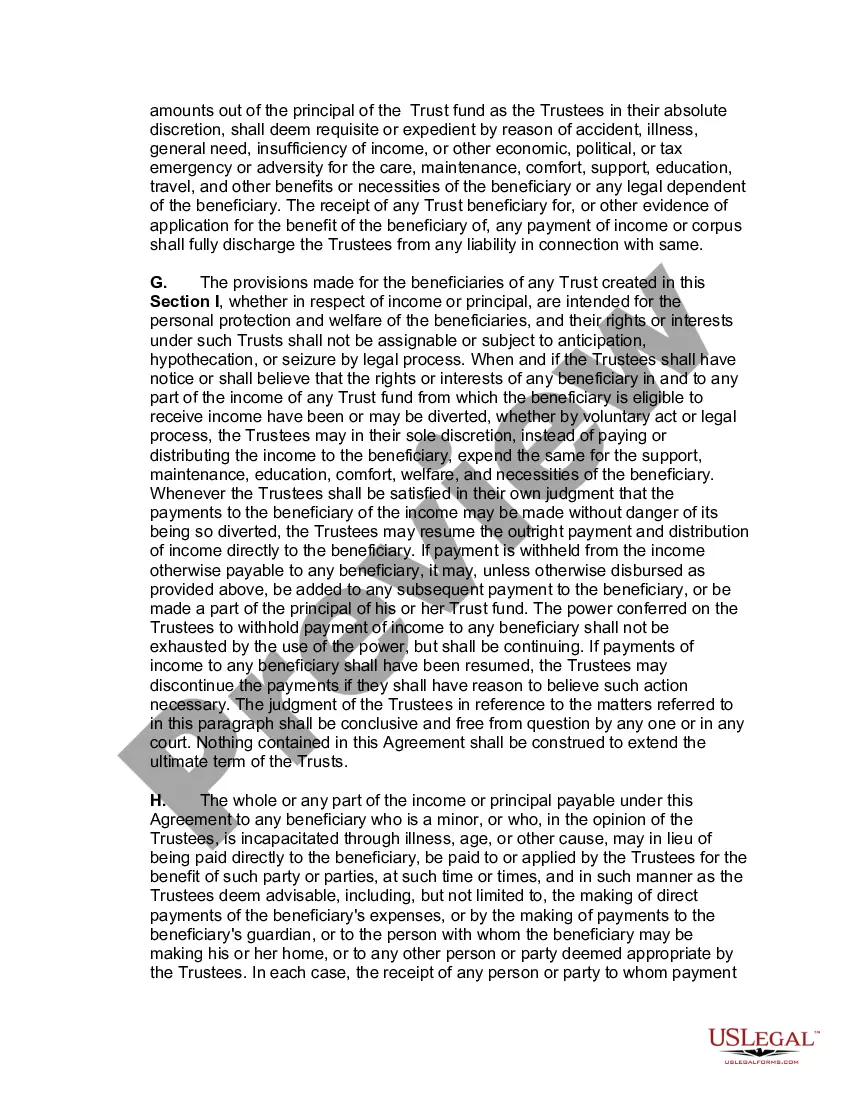
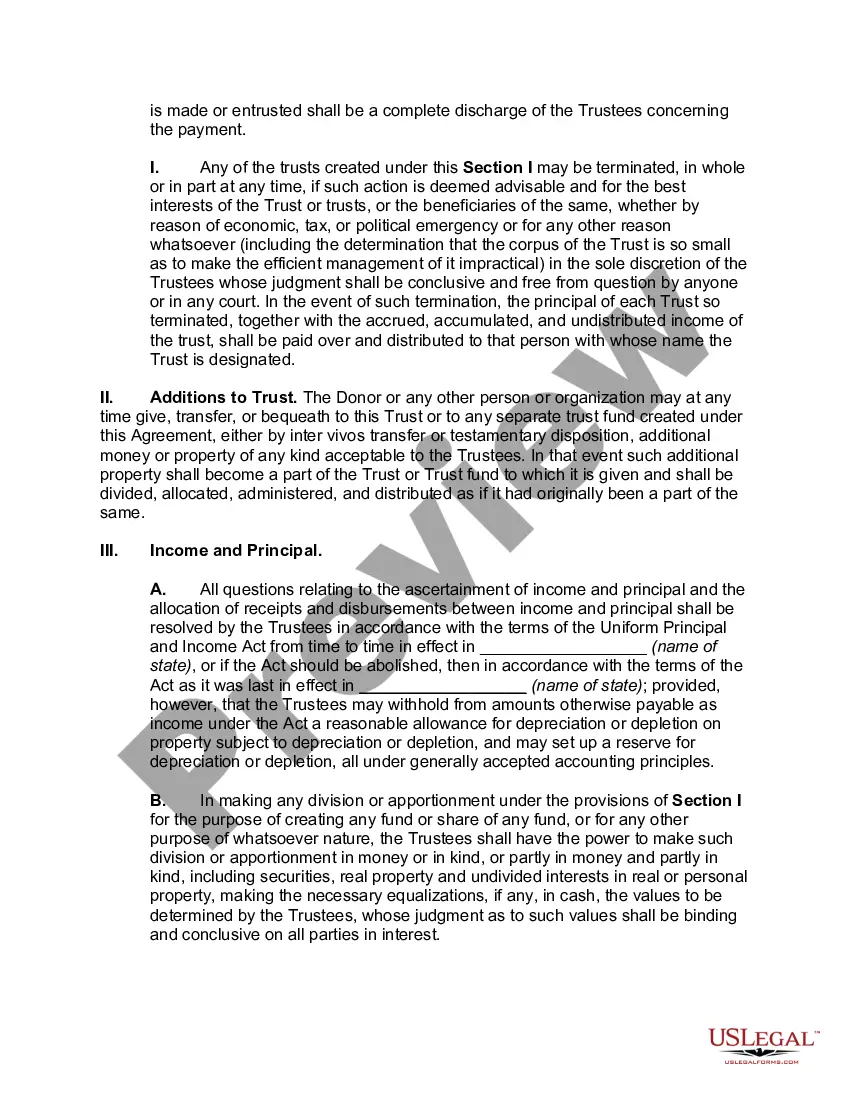
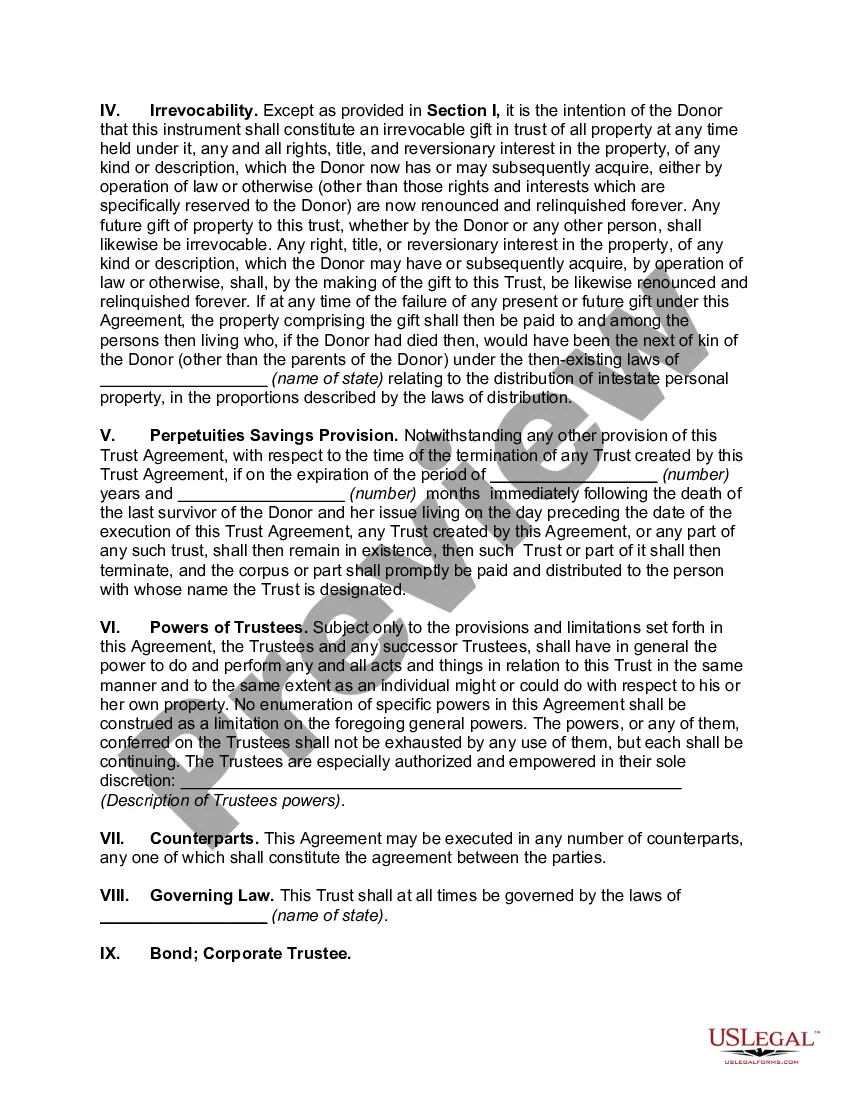
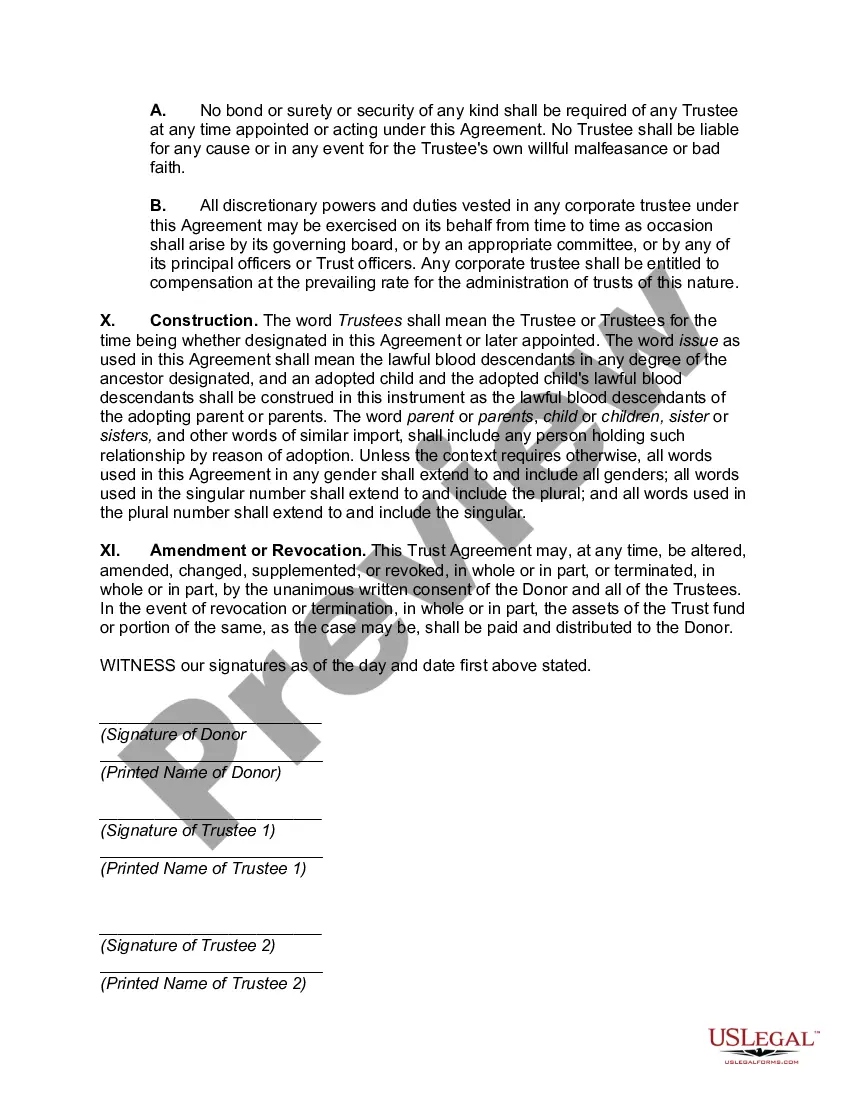
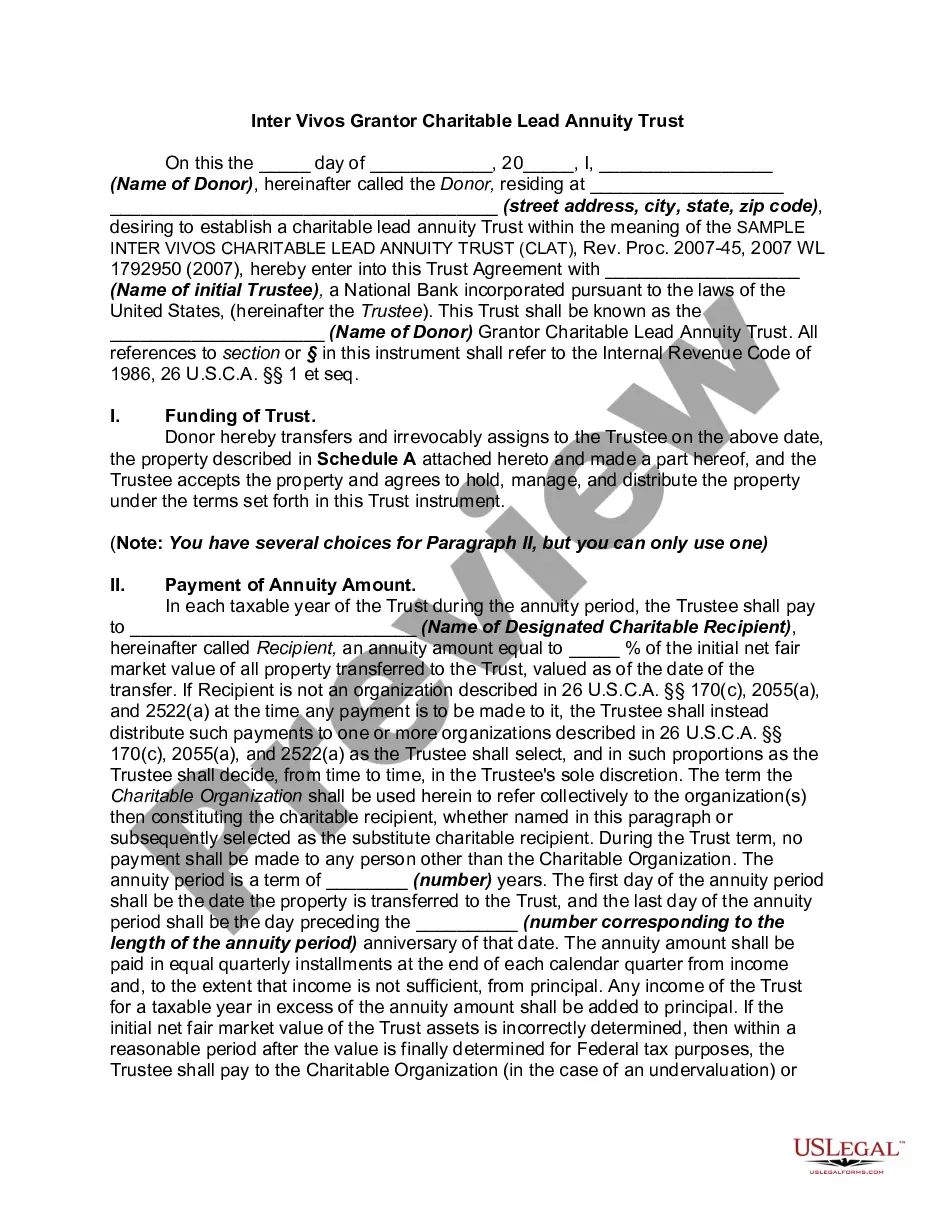
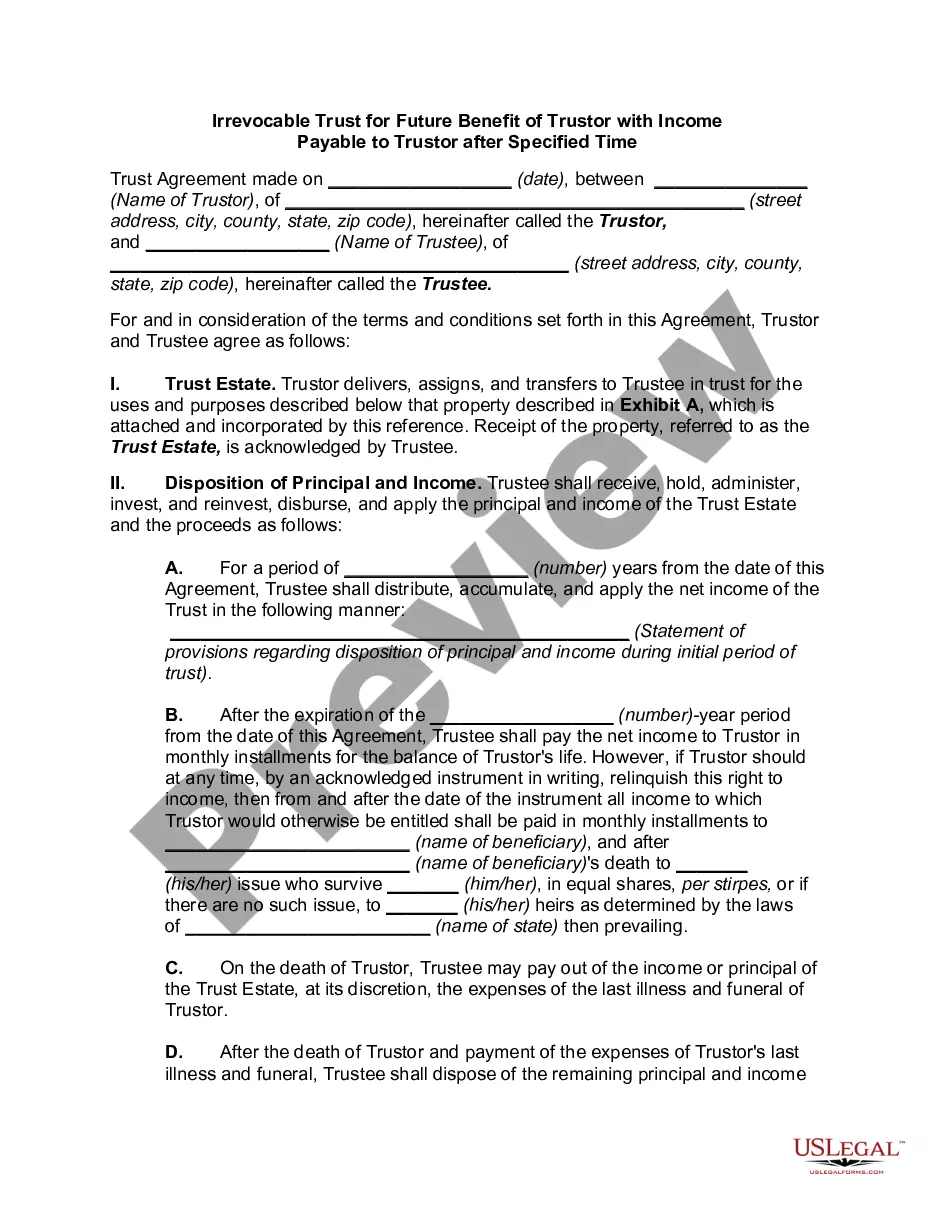
How to fill out Grantor Retained Income Trust With Division Into Trusts For Issue After Term Of Years?
- Sign in to your US Legal Forms account to access your form library.
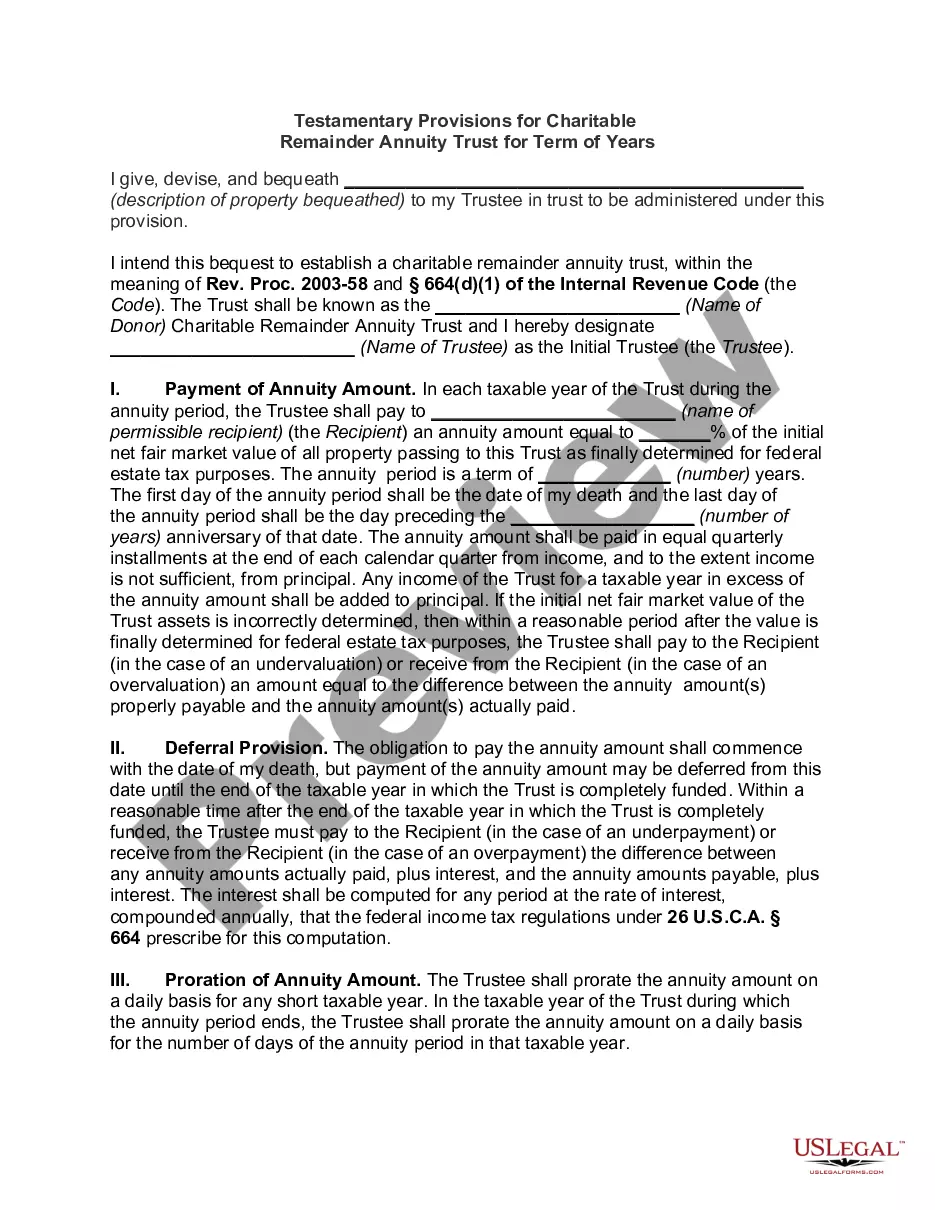
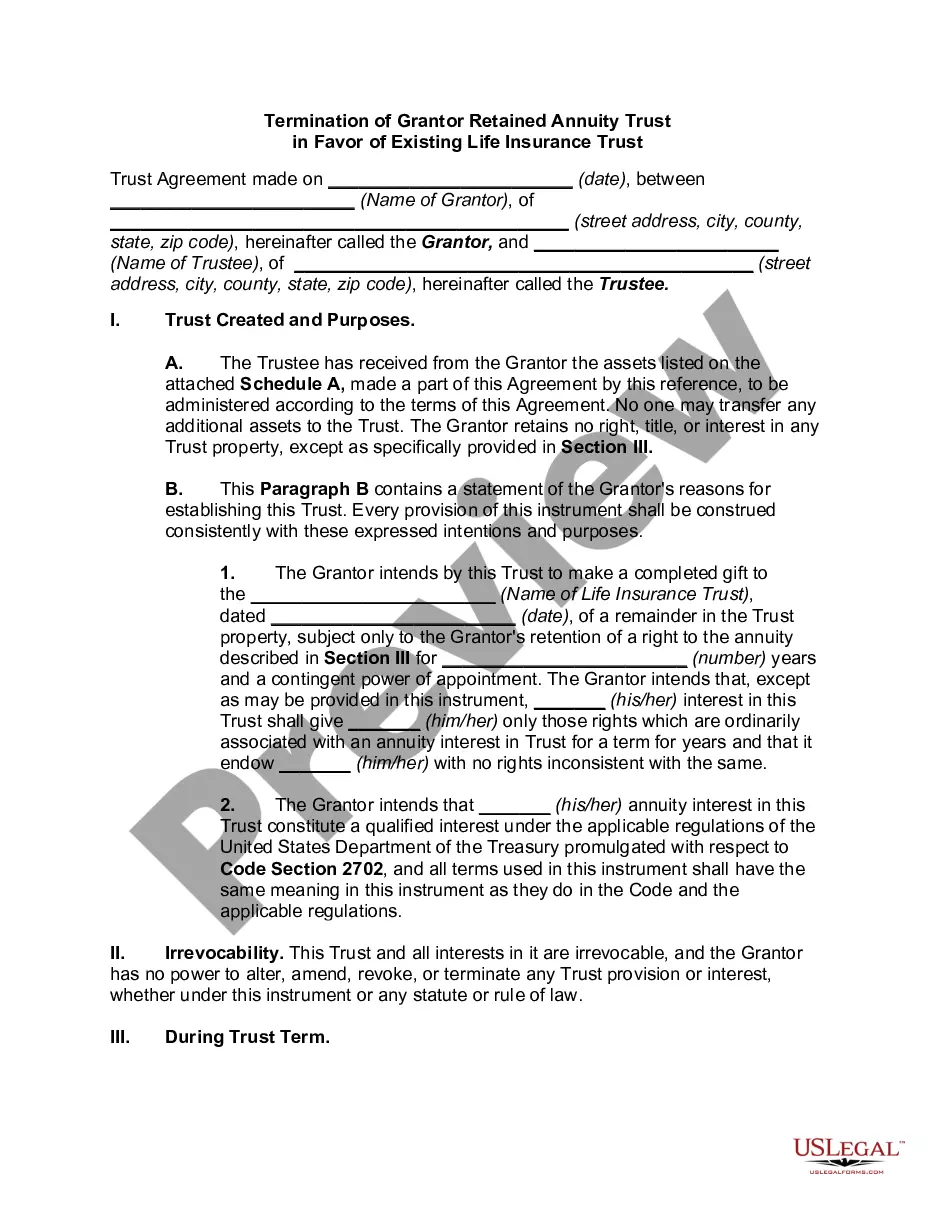
- If you're a new user, start by selecting the appropriate form related to grantor trusts through the Preview mode.
- Use the search function if you need to find a different template that better meets your requirements.
- Once you have located the correct document, click 'Buy Now' and choose your subscription plan.
- Proceed to payment by entering your credit card or PayPal details and finalize your purchase.
- Download your selected form to your device and save it securely.
With access to over 85,000 editable legal forms and resources, US Legal Forms makes the process efficient and user-friendly. Plus, their team of experts is available to provide assistance with your form completion to ensure accuracy.
Take control of your legal needs today. Visit US Legal Forms and discover the simplest path to create your grantor trusts with a will!
Form popularity
FAQ
In the context of grantor trusts with a will, the grantor is responsible for reporting the income generated by the trust. Since the IRS views the grantor and the trust as one entity for tax purposes, all income must be reported on the grantor's personal tax return. This setup can offer several advantages, such as avoiding unnecessary complexity. Utilizing resources like USLegalForms can help you navigate your obligations smoothly.
When dealing with grantor trusts with a will, it is essential to understand the filing requirements. Generally, grantor trusts do not require a separate tax return because the grantor reports the income on their personal tax return. However, if the trust generates significant income, it may be beneficial to consult with a tax professional. This approach ensures that you comply with all regulations and make informed decisions.
In the context of trusts, the term 'guarantor' is not commonly used. Instead, the focus is typically on the roles of the grantor and trustees. While many people associate the concept of a guarantor with loans or agreements, when discussing grantor trusts with a will, it is more relevant to focus on the grants and distributions overseen by the trustee.
The grantor of a trust is the individual who creates the trust and contributes assets to it. This person establishes the rules and terms for the trust, including how the assets should be managed and distributed. If you are contemplating using grantor trusts with a will, identifying the grantor's role is vital for effective estate planning and asset protection.
To determine if a trust is a grantor or non-grantor trust, examine the terms of the trust agreement. If the grantor retains certain powers or control over the assets, it indicates a grantor trust. In contrast, non-grantor trusts typically do not allow the grantor to access the income or principal during their lifetime. Understanding these differences is essential when navigating your options for grantor trusts with a will.
In general, grantor trusts do not need to file a separate tax return because the income generated is reported on the grantor's personal tax return. Since the grantor maintains control over the assets, they are responsible for any tax liabilities. Consequently, this simplifies the tax process for individuals who utilize grantor trusts with a will, allowing them to focus more on their estate planning.
A common example of a grantor trust is a revocable living trust, which allows the grantor to maintain control over the assets during their lifetime. This type of trust becomes irrevocable upon the grantor's death, ensuring that the assets are distributed according to their wishes. With grantor trusts with a will, individuals can easily manage and protect their assets while specifying how they want these assets to be allocated after their passing.
In the context of grantor trusts with a will, the grantor is the individual who creates and funds the trust. This person retains control over the trust assets during their lifetime, directing how those assets are handled. Understanding this role is crucial for anyone looking to establish effective estate planning.
Absolutely, grantor trusts with a will can continue to function after the grantor's death. However, the trust's status typically shifts to irrevocable, meaning the beneficiaries will manage the trust according to its terms. This continuity can provide peace of mind for both the grantor and their family.
Yes, grantor trusts with a will generally become irrevocable upon the death of the grantor. This change prohibits any modifications to the trust terms made after the grantor's passing. It is vital for individuals to fully understand these implications while creating their estate plans.