Grantor Trusts With A Trust
Description

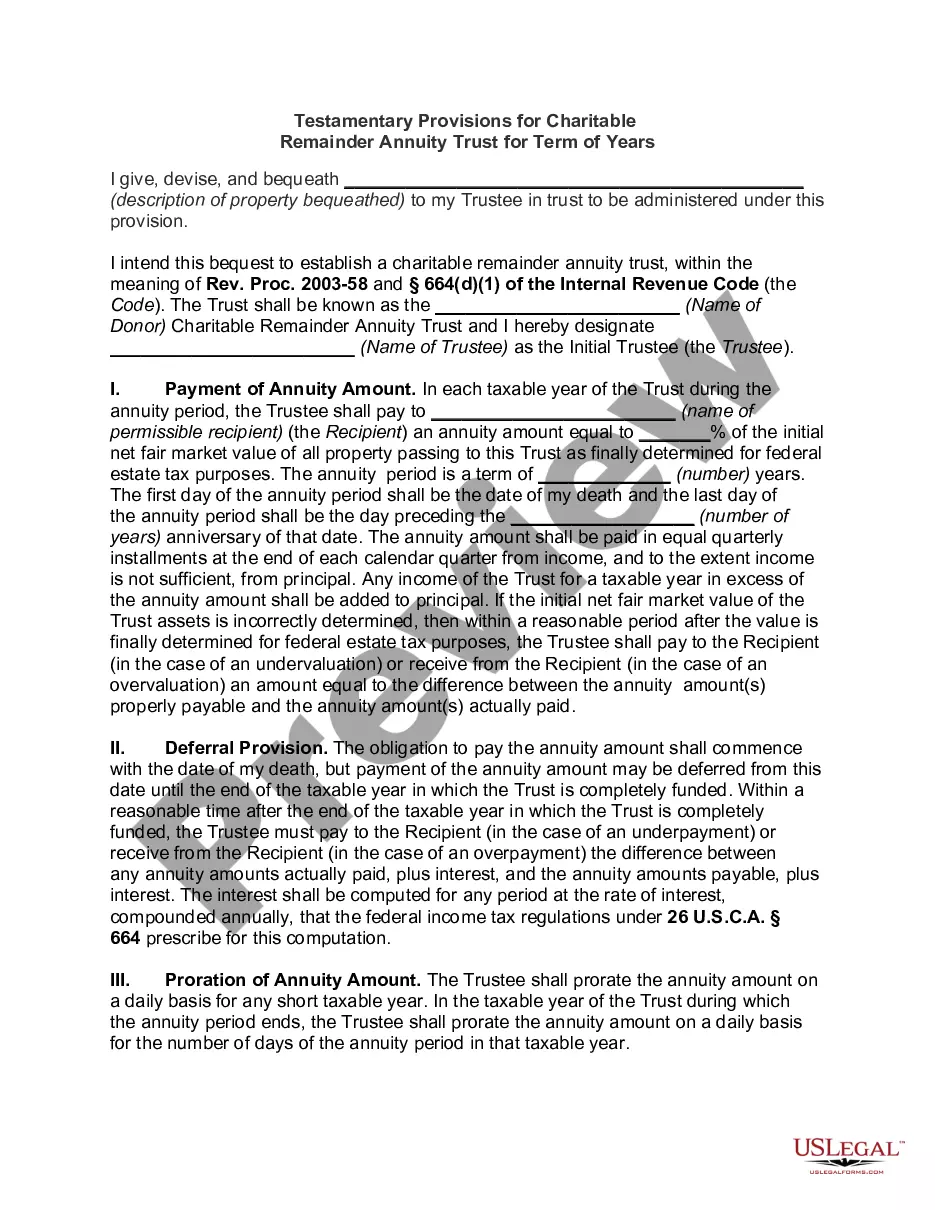
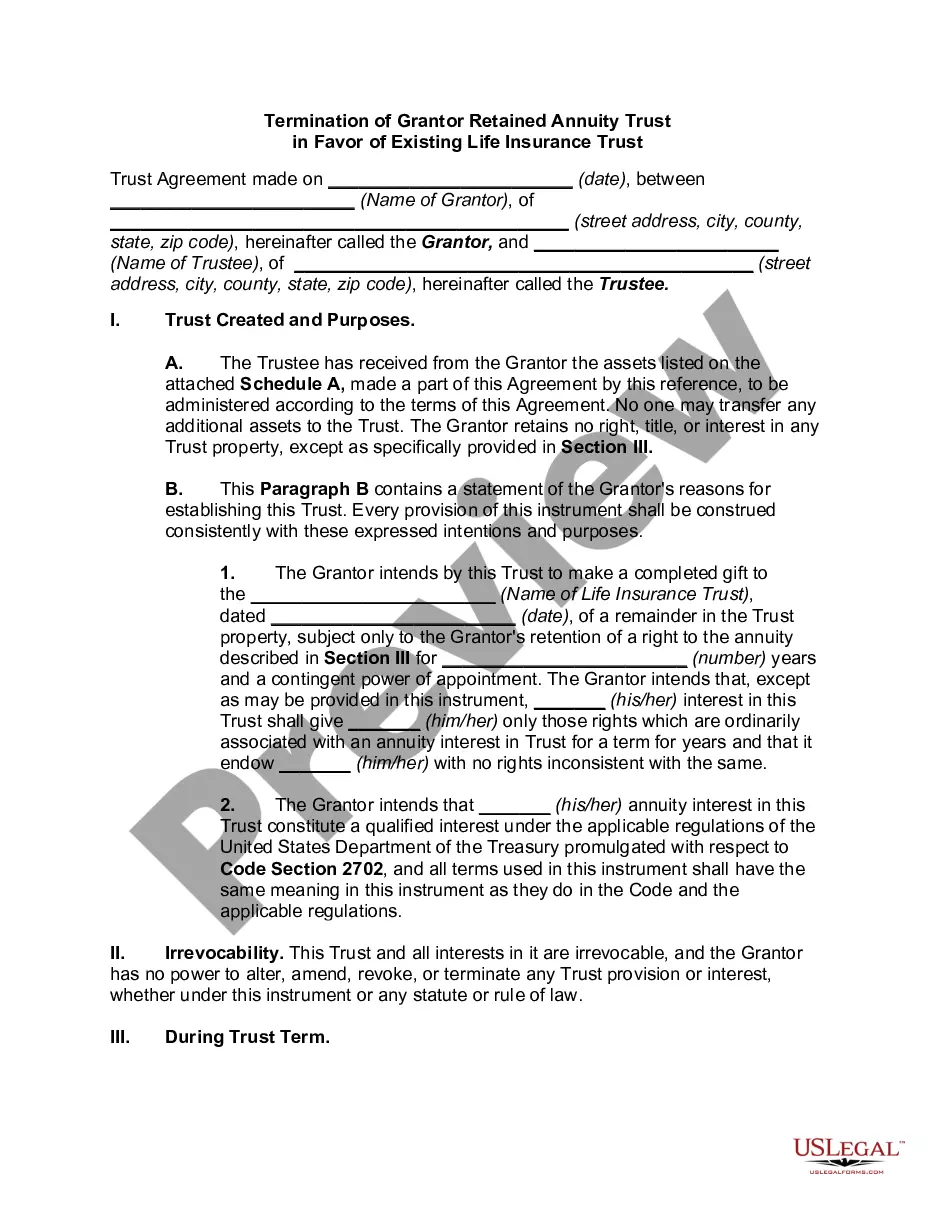
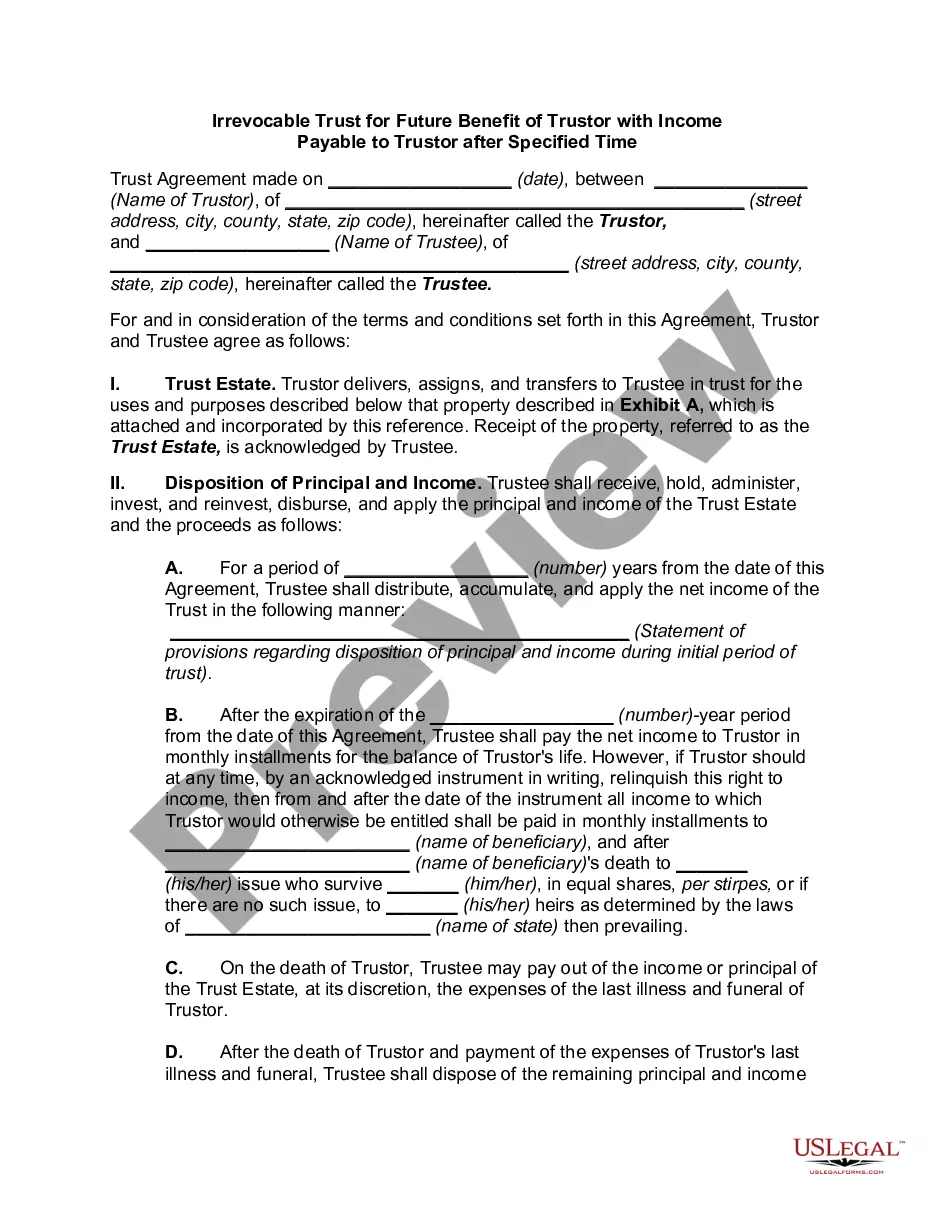
Get your form ready online
Our built-in tools help you complete, sign, share, and store your documents in one place.
Make edits, fill in missing information, and update formatting in US Legal Forms—just like you would in MS Word.
Download a copy, print it, send it by email, or mail it via USPS—whatever works best for your next step.
Sign and collect signatures with our SignNow integration. Send to multiple recipients, set reminders, and more. Go Premium to unlock E-Sign.
If this form requires notarization, complete it online through a secure video call—no need to meet a notary in person or wait for an appointment.
We protect your documents and personal data by following strict security and privacy standards.

Make edits, fill in missing information, and update formatting in US Legal Forms—just like you would in MS Word.

Download a copy, print it, send it by email, or mail it via USPS—whatever works best for your next step.

Sign and collect signatures with our SignNow integration. Send to multiple recipients, set reminders, and more. Go Premium to unlock E-Sign.

If this form requires notarization, complete it online through a secure video call—no need to meet a notary in person or wait for an appointment.

We protect your documents and personal data by following strict security and privacy standards.
Looking for another form?



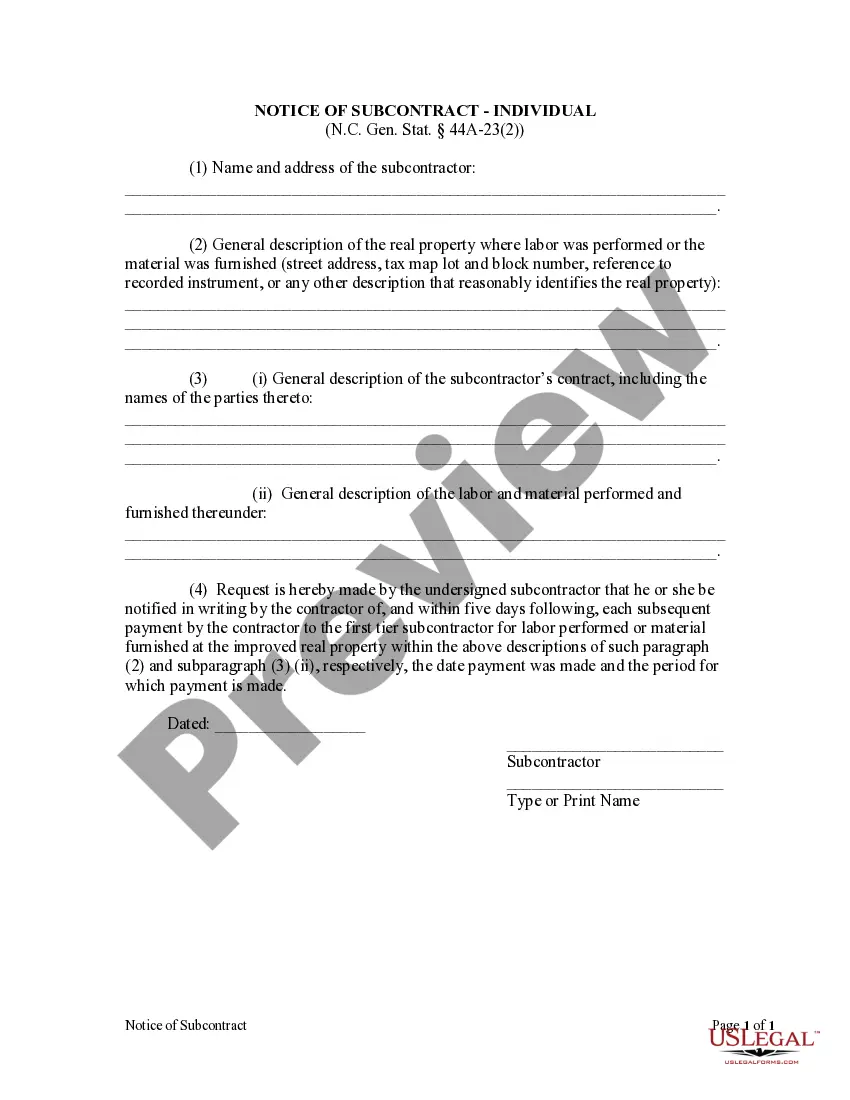




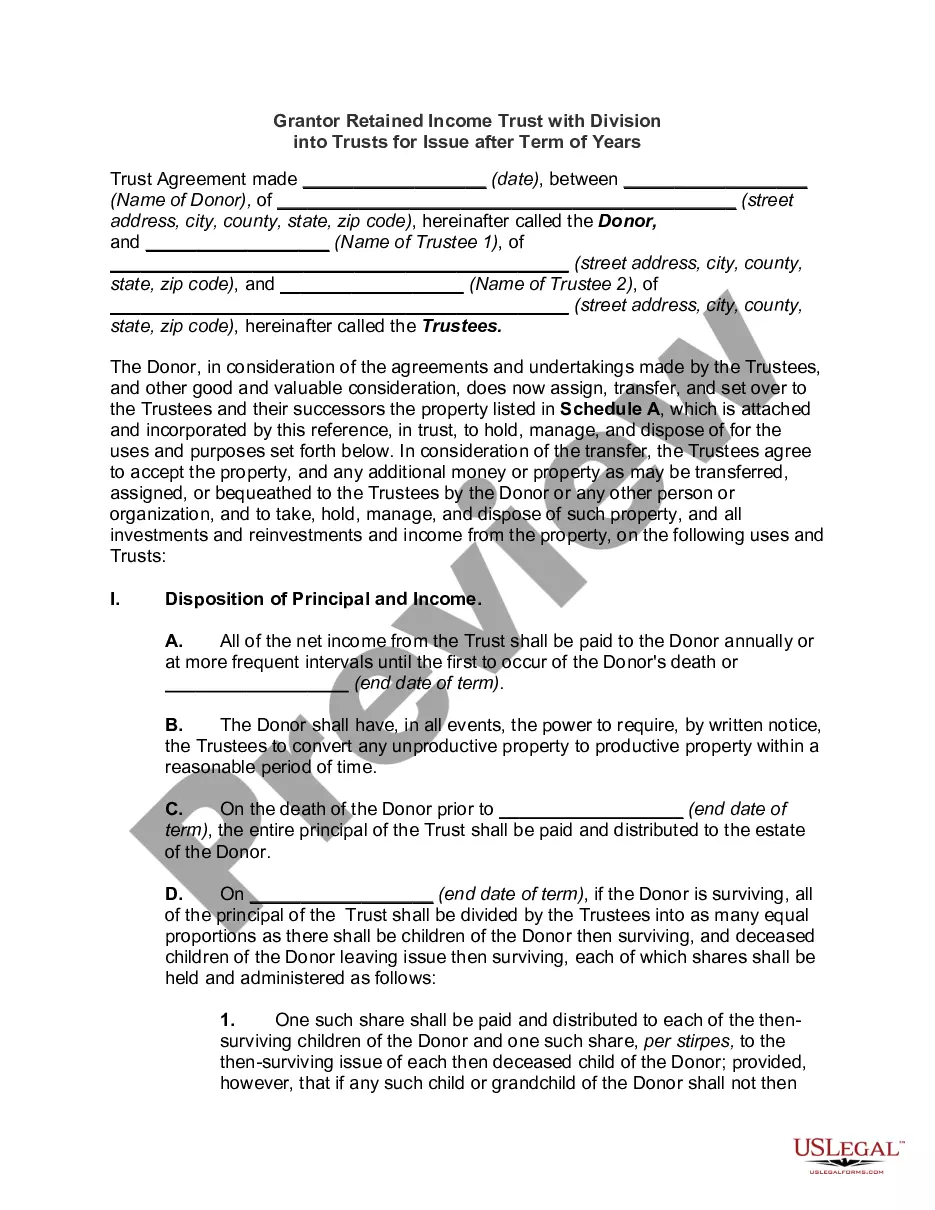
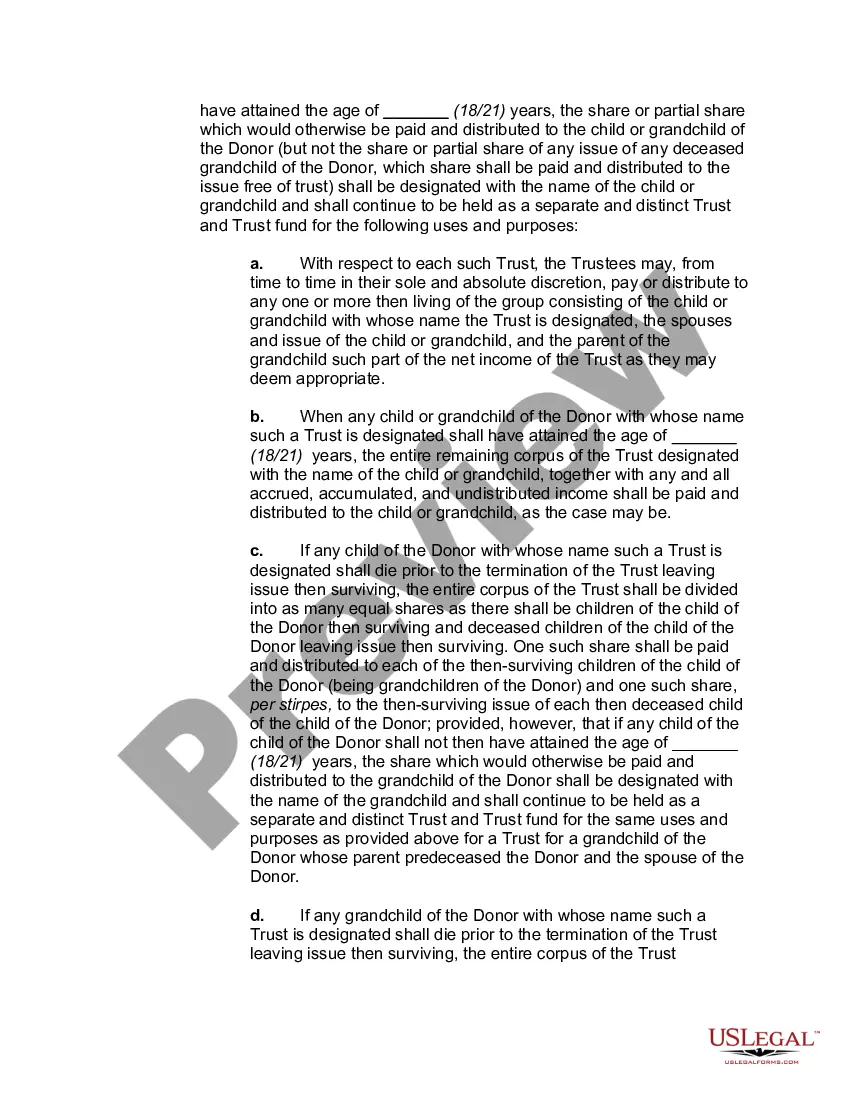
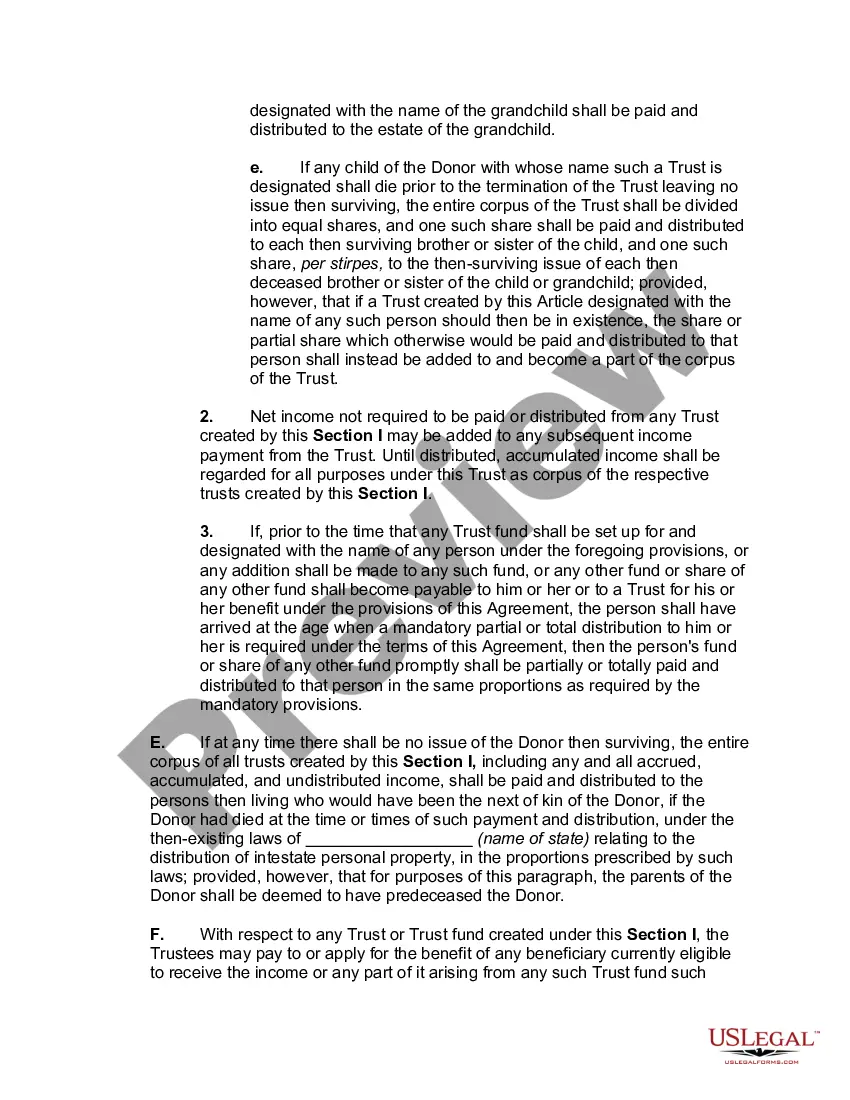
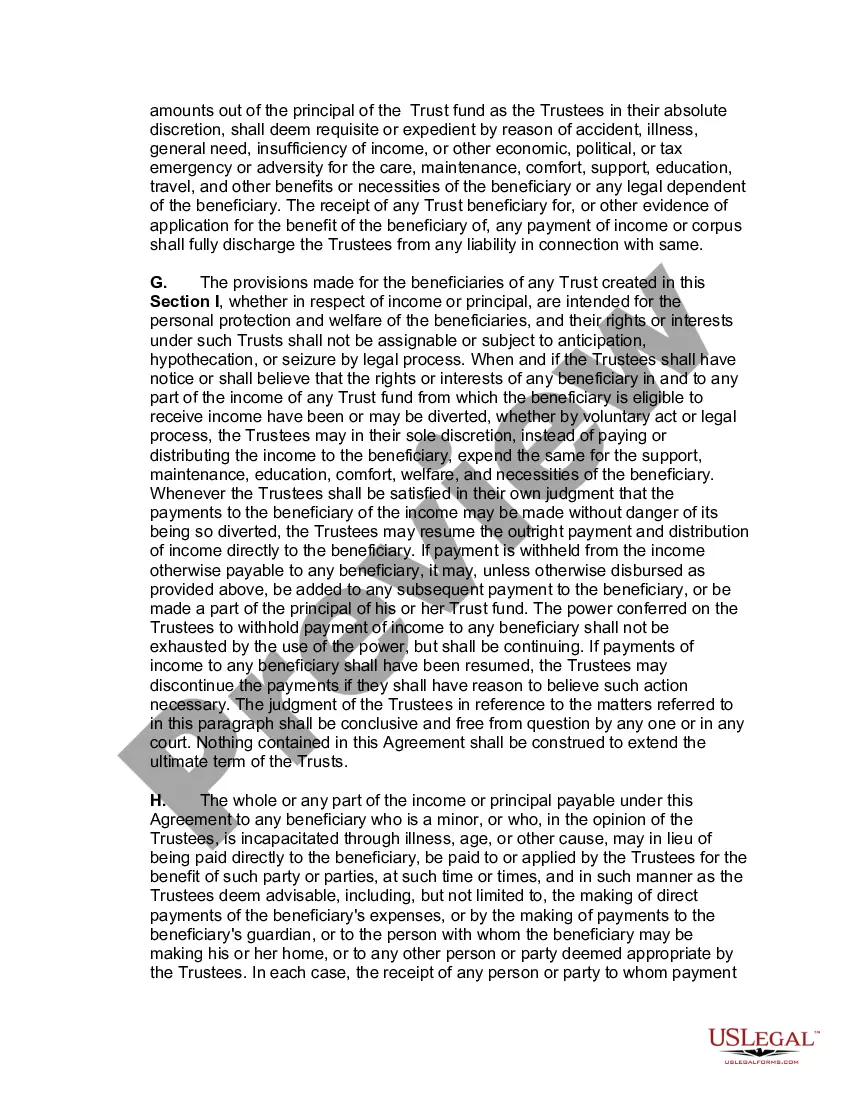
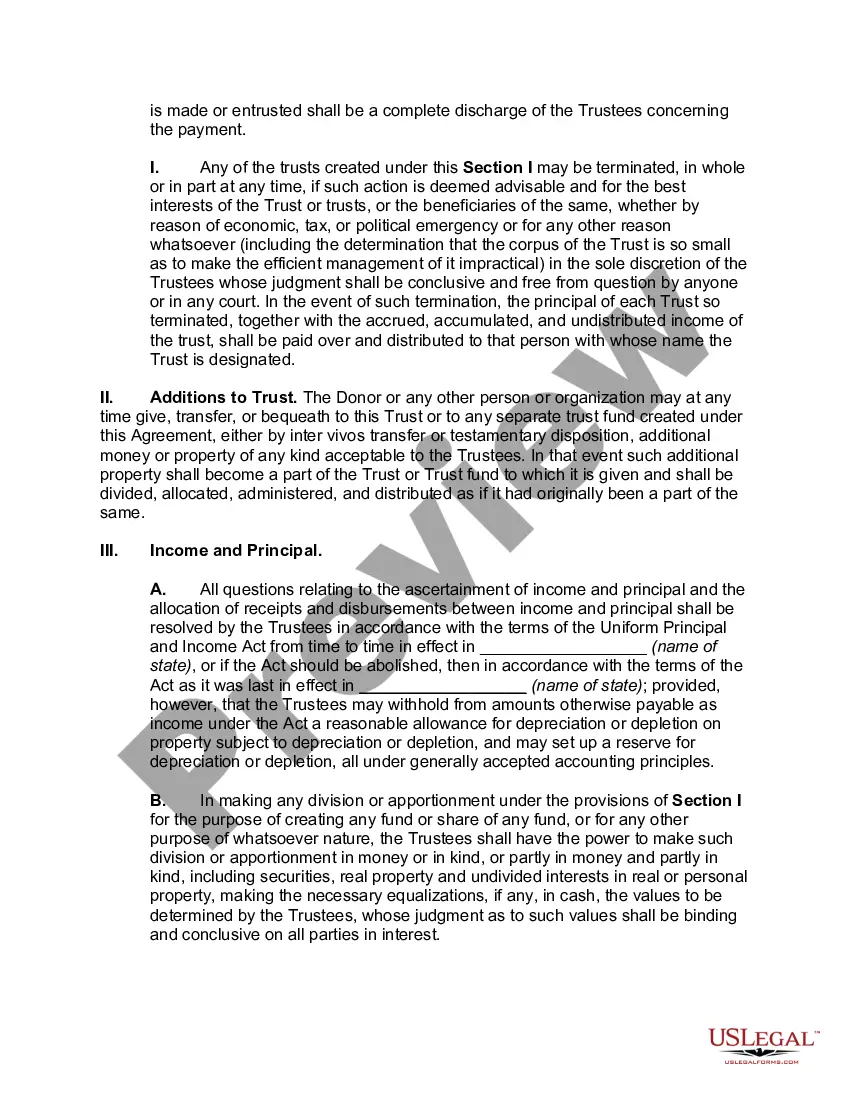
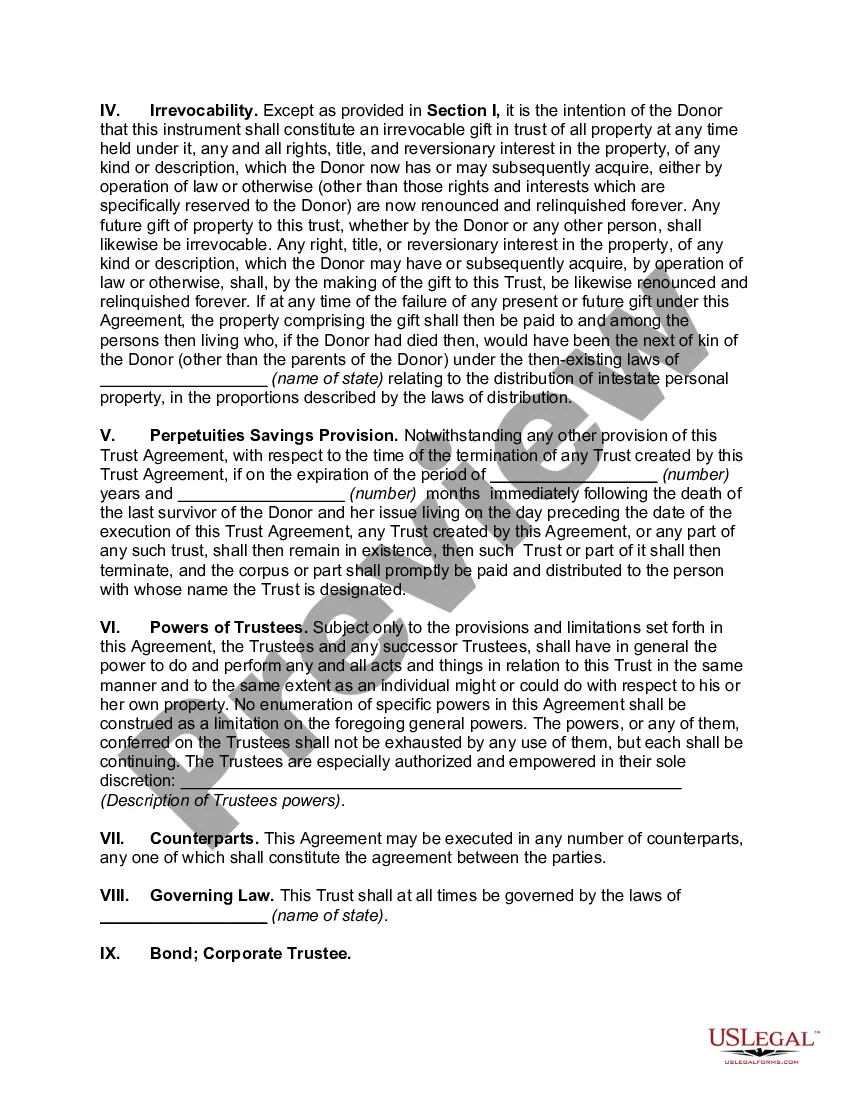
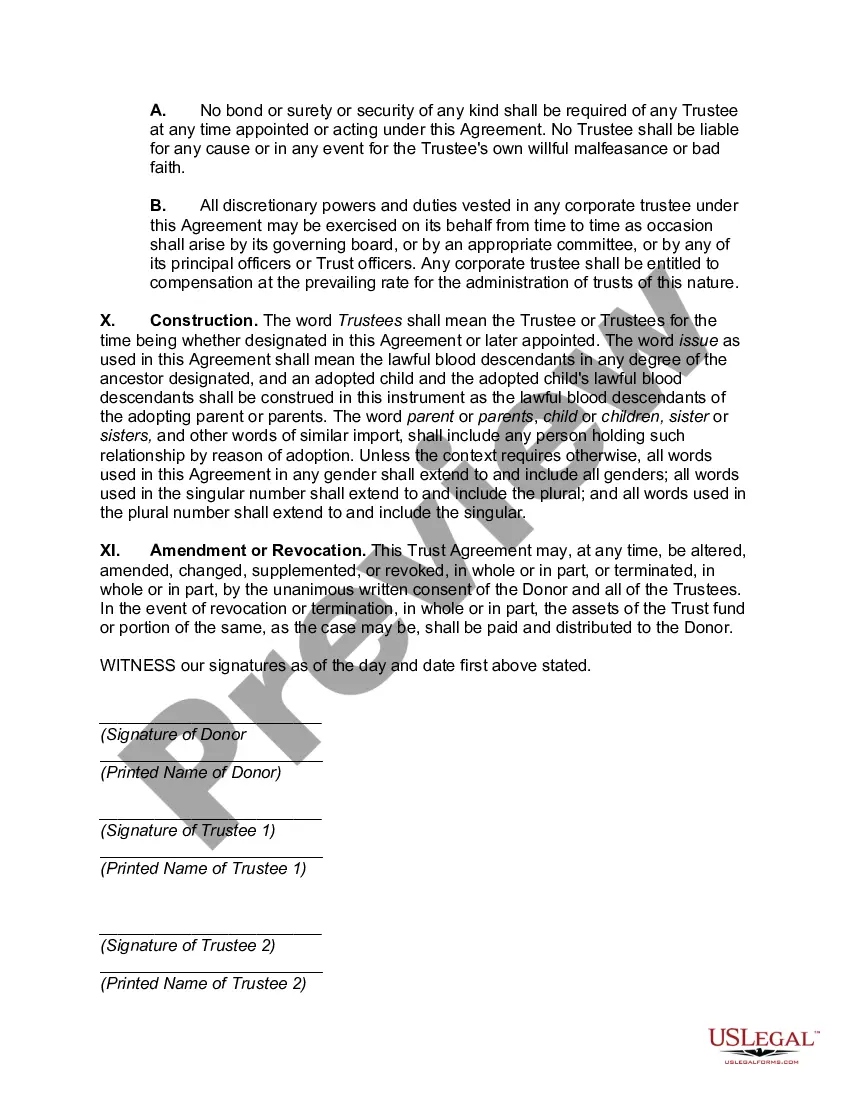
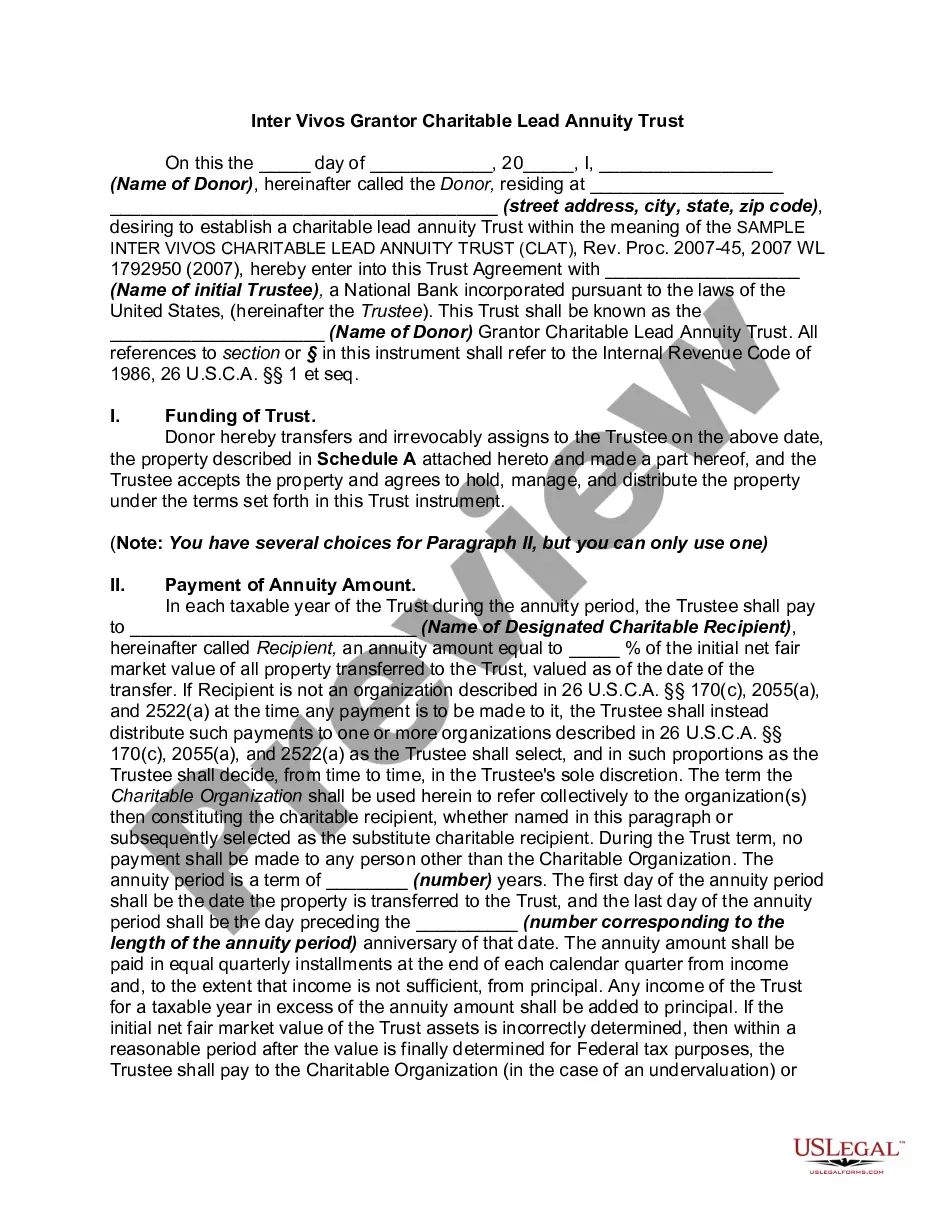
How to fill out Grantor Retained Income Trust With Division Into Trusts For Issue After Term Of Years?
- If you have previously used US Legal Forms, log in to your account and click the Download button for your needed form template. Confirm your subscription is active; if not, renew according to your payment preference.
- For first-time users, start by checking the Preview mode and form description. Ensure that the form meets your specific needs and complies with your local jurisdiction's regulations.
- If you require a different template, utilize the Search tab to locate the correct form. Once you find the suitable option, proceed to the next step.
- Click on the Buy Now button to select your preferred subscription plan, necessitating account registration to access the complete library.
- Complete your purchase by entering your credit card information or using your PayPal account for payment.
- After purchase, download the form and save it on your device. You can access the template anytime in the My Forms section of your profile.
US Legal Forms stands out with its robust collection of over 85,000 easily fillable and editable legal forms, empowering you to swiftly and effectively manage your legal documents.
Experience the simplicity and efficiency of US Legal Forms for all your grantor trust needs. Don’t hesitate—start your estate planning today!
Form popularity
FAQ
Yes, in grantor trusts with a trust, the grantor is effectively the owner of the trust assets for tax purposes. This ownership means the grantor is responsible for reporting income from those assets on their personal tax return. Additionally, the grantor's control over the trust ensures they can direct how the assets are managed and distributed.
You can determine if a trust is a grantor trust by checking if the grantor retains certain powers, such as the ability to revoke or amend the trust. Grantor trusts with a trust typically allow the grantor to control distributions or manage trust assets. Reviewing the trust document and seeking legal advice can clarify its status.
The primary difference lies in the control and tax implications of grantor trusts with a trust. A grantor trust allows the grantor to retain certain rights, thereby making them responsible for taxes on income generated. In contrast, a non-grantor trust is a separate tax entity that pays its own taxes, which can complicate filings and tax responsibilities.
When dealing with grantor trusts with a trust, filing taxes typically involves including the trust’s income on the grantor's tax return. The grantor must ensure they accurately report all earnings and any deductions attributed to the trust. Engaging a tax professional can provide clarity and ensure compliance with tax laws.
Generally, grantor trusts with a trust do not need to file IRS Form 1041 because the income is reported on the grantor's personal tax return. This filing exemption simplifies tax obligations for the grantor and streamlines the process. However, if the trust has income from sources other than the grantor, additional considerations may apply.
People frequently choose grantor trusts with a trust for flexible estate planning and potential tax benefits. These trusts allow the grantor to retain certain controls while providing a way to manage assets for beneficiaries. Additionally, they can help avoid probate, making the transfer of wealth smoother and more efficient.
Trusts cannot exist without a grantor; the grantor initiates the creation and funding of a trust. In grantor trusts with a trust, the grantor provides the assets and instructions for how the trust should operate. Without a grantor, there would be no legal authority to establish the trust or dictate its terms.
In grantor trusts with a trust, the grantor is typically responsible for reporting the income. The earnings and losses generated by the trust pass through to the grantor's personal tax return. This means that the grantor must include the trust's income when calculating their taxable income, which simplifies tax reporting.
Yes, a grantor trust can have a different trustee from the grantor. Although the grantor may retain control over the trust’s decisions, they can appoint someone else to manage the trust's assets and carry out the grantor's wishes. This arrangement can provide a valuable balance between control and delegation, enhancing the efficiency of managing grantor trusts with a trust. Engaging professionals can help ensure the trustee understands their role in the trust.
You can differentiate between grantor and non-grantor trusts by examining the trust agreement and the powers retained by the grantor. If the grantor retains significant control over the assets, such as the ability to revoke the trust or make changes, it is likely a grantor trust. On the other hand, a non-grantor trust typically has more restrictions, resulting in the trust being treated as a separate tax entity. Utilizing resources like US Legal Forms can simplify this analysis.