Grantor Income Trust With Cons
Description
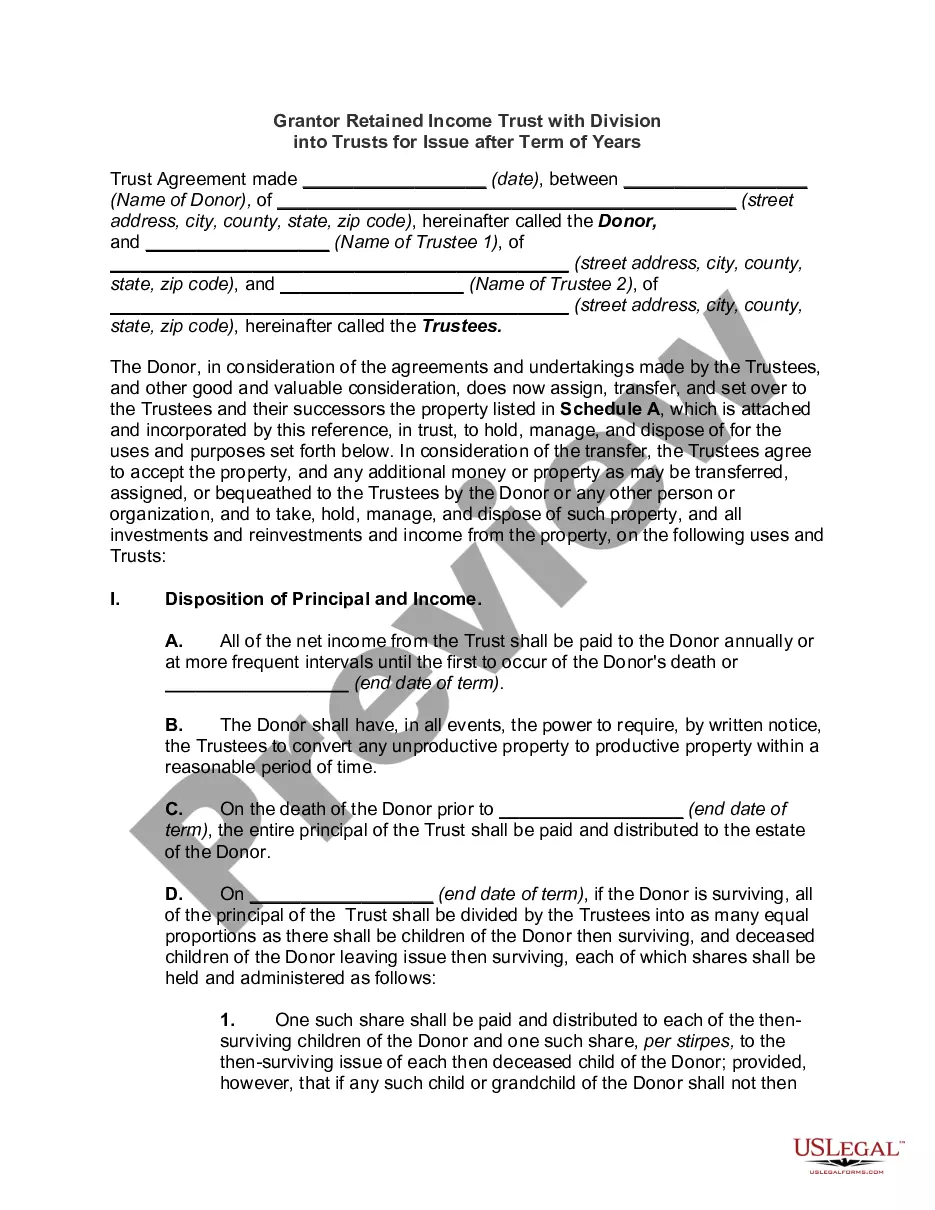
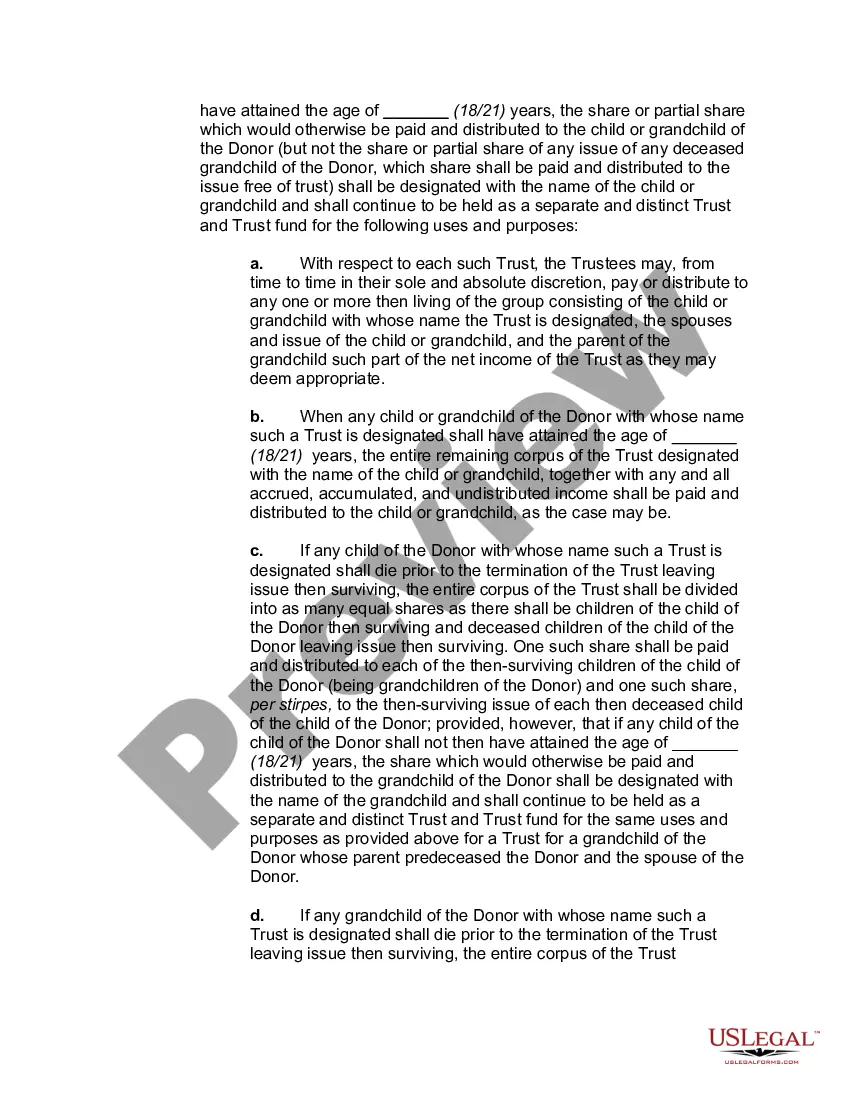
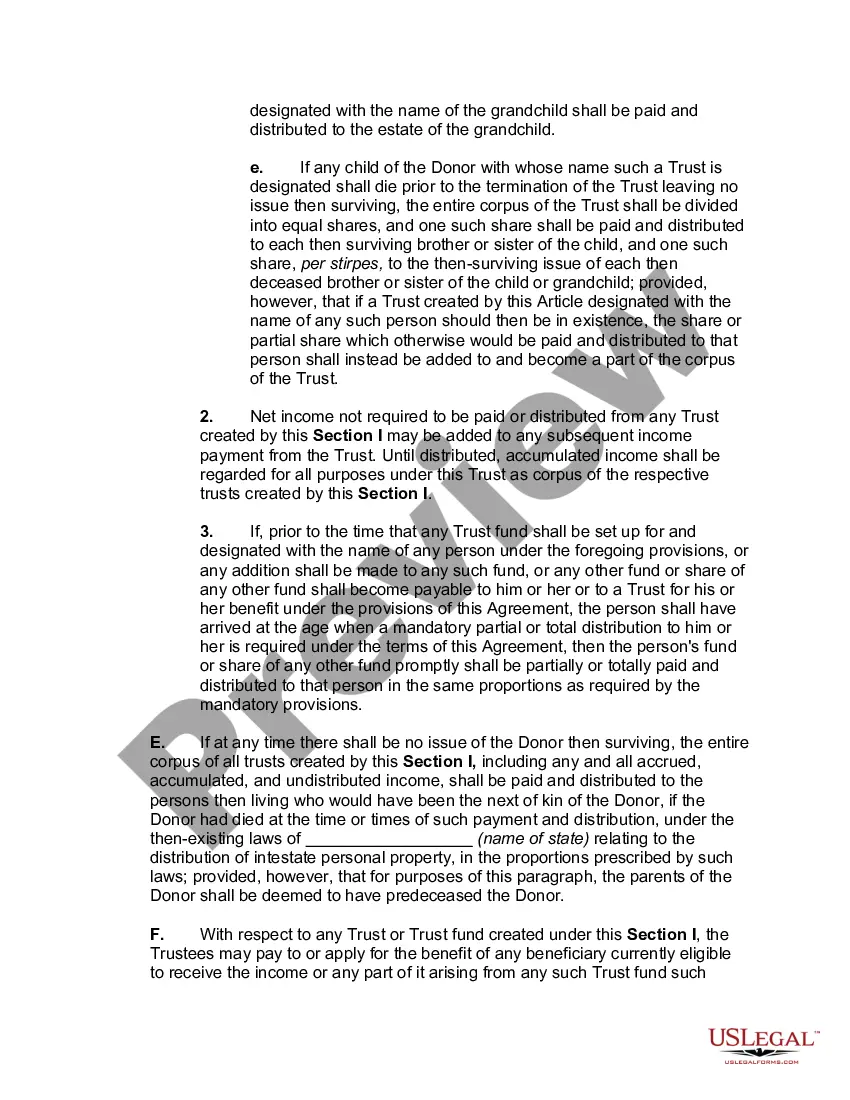
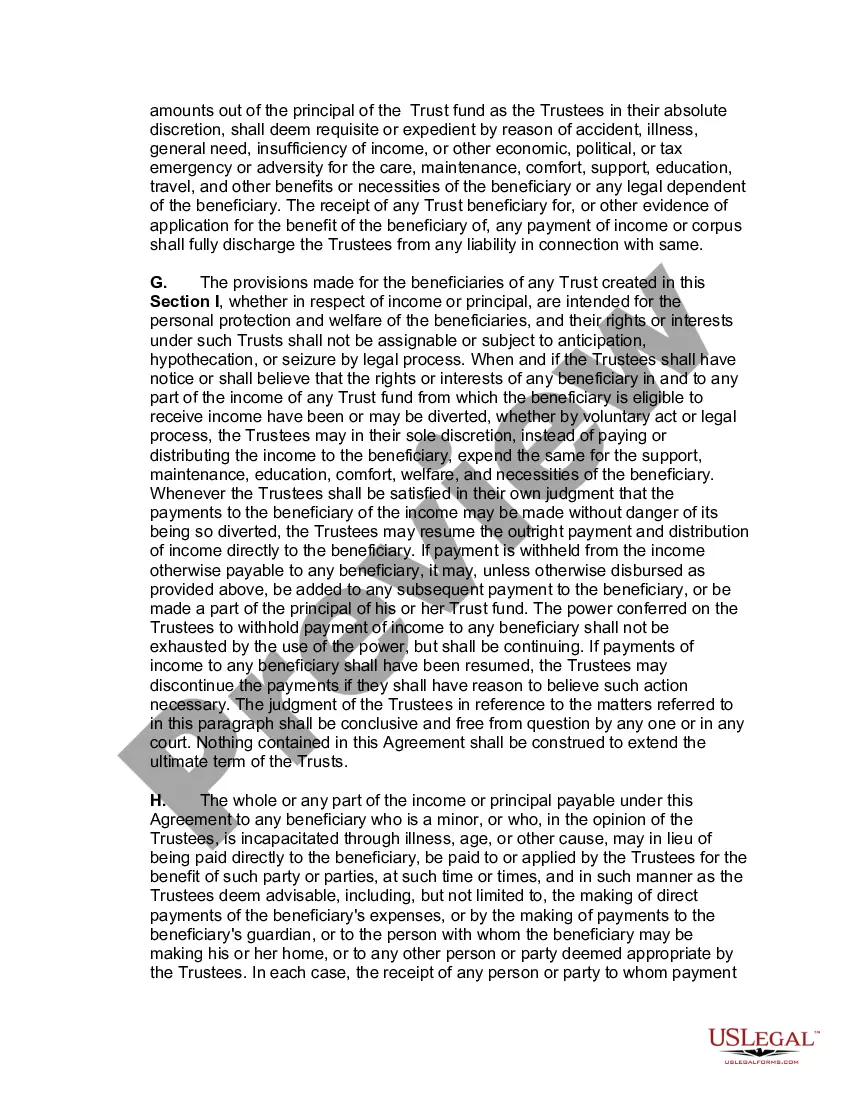
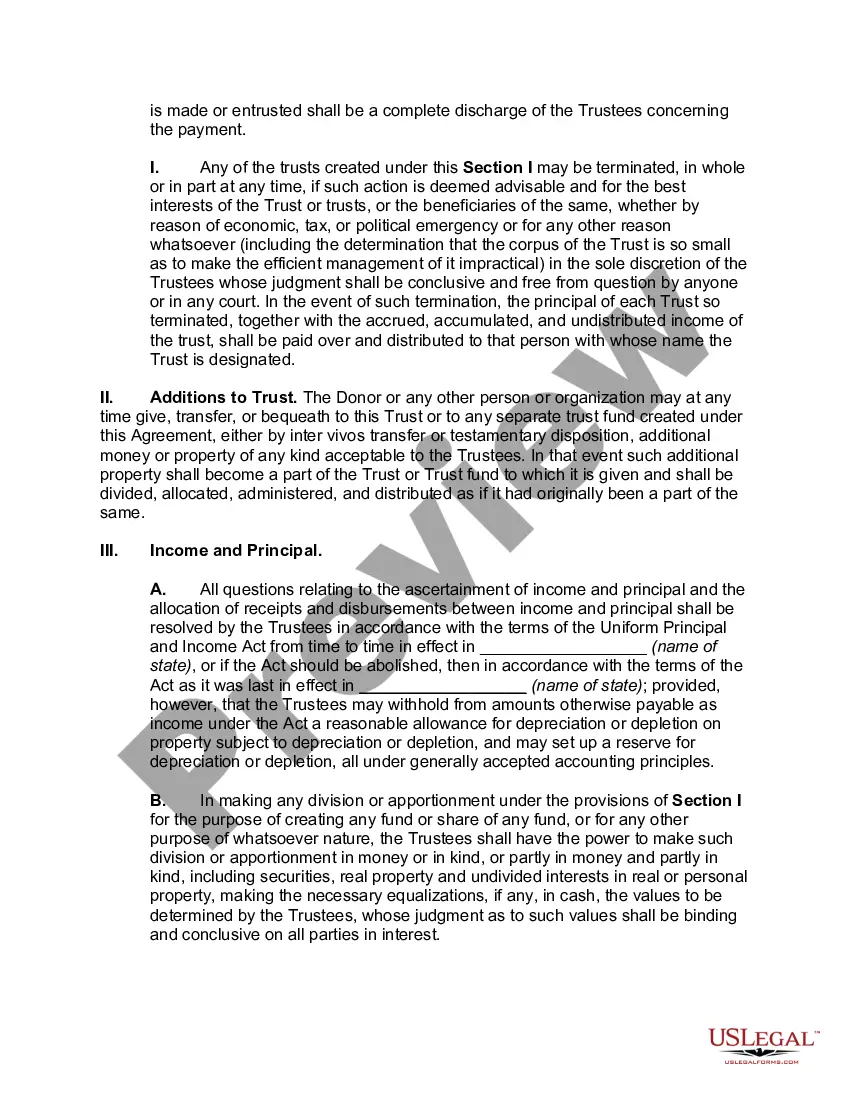
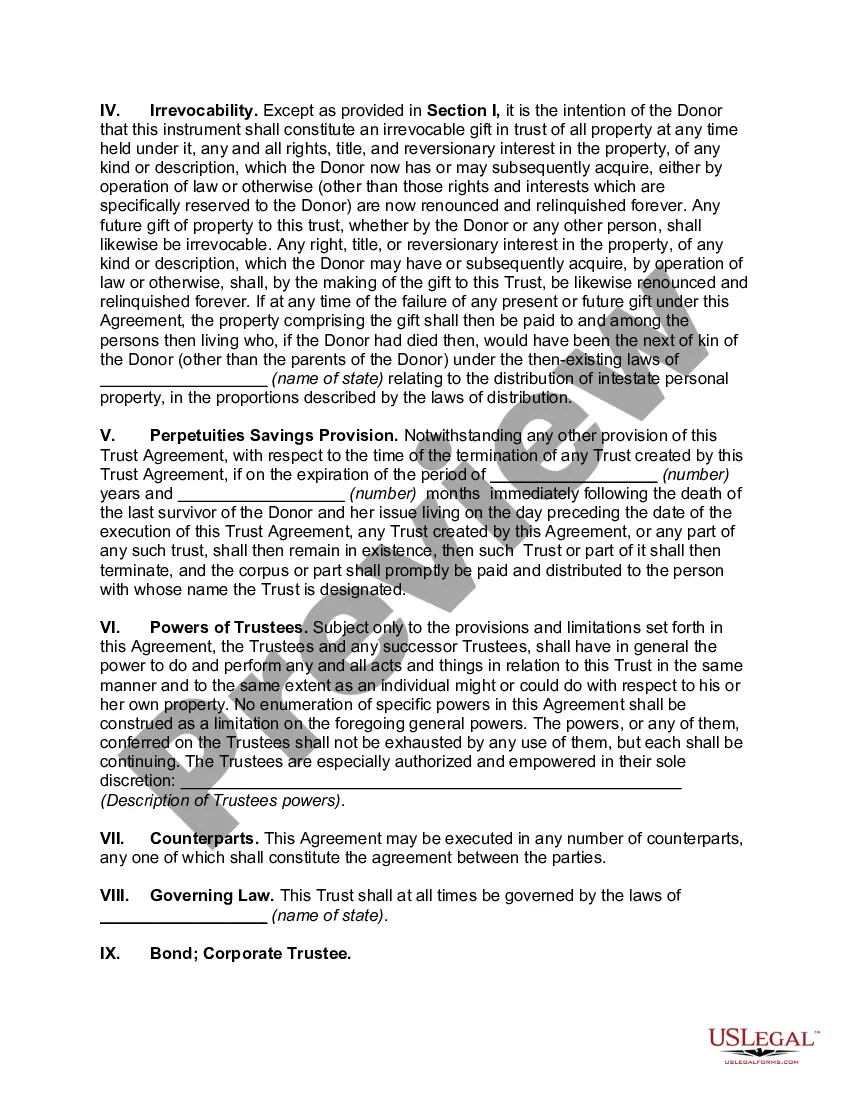
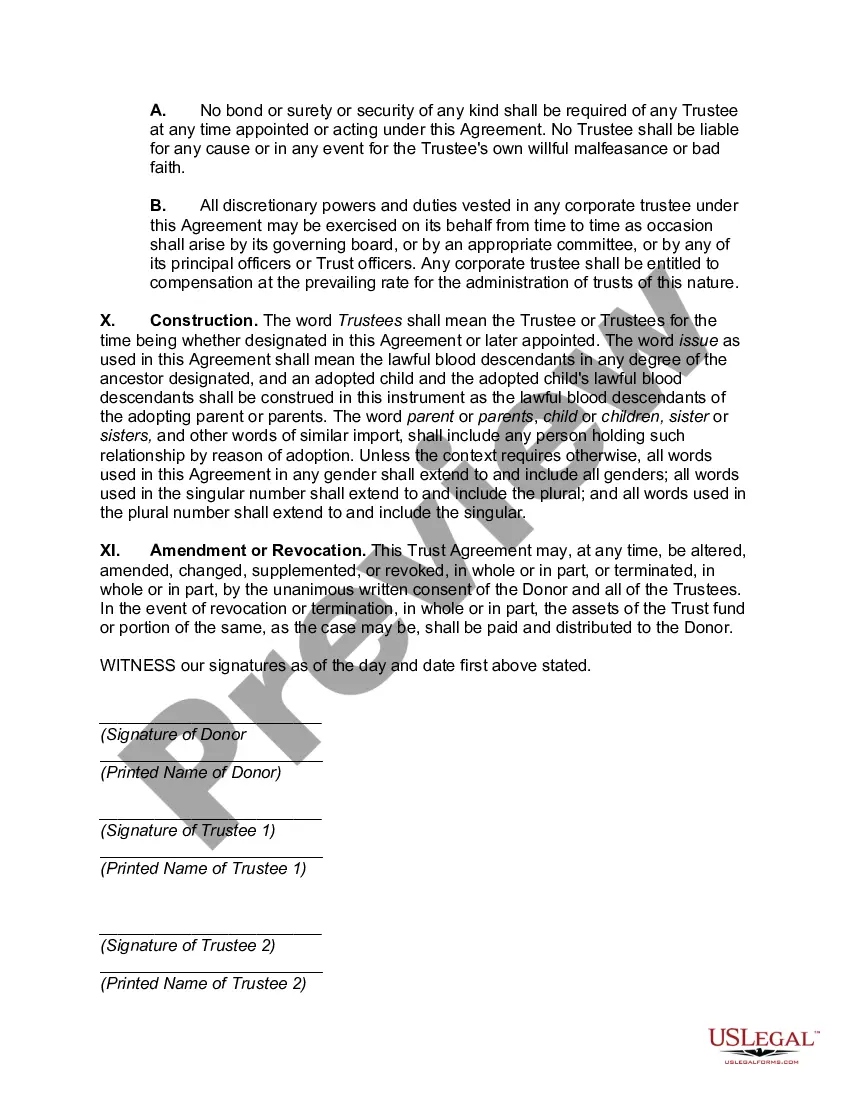

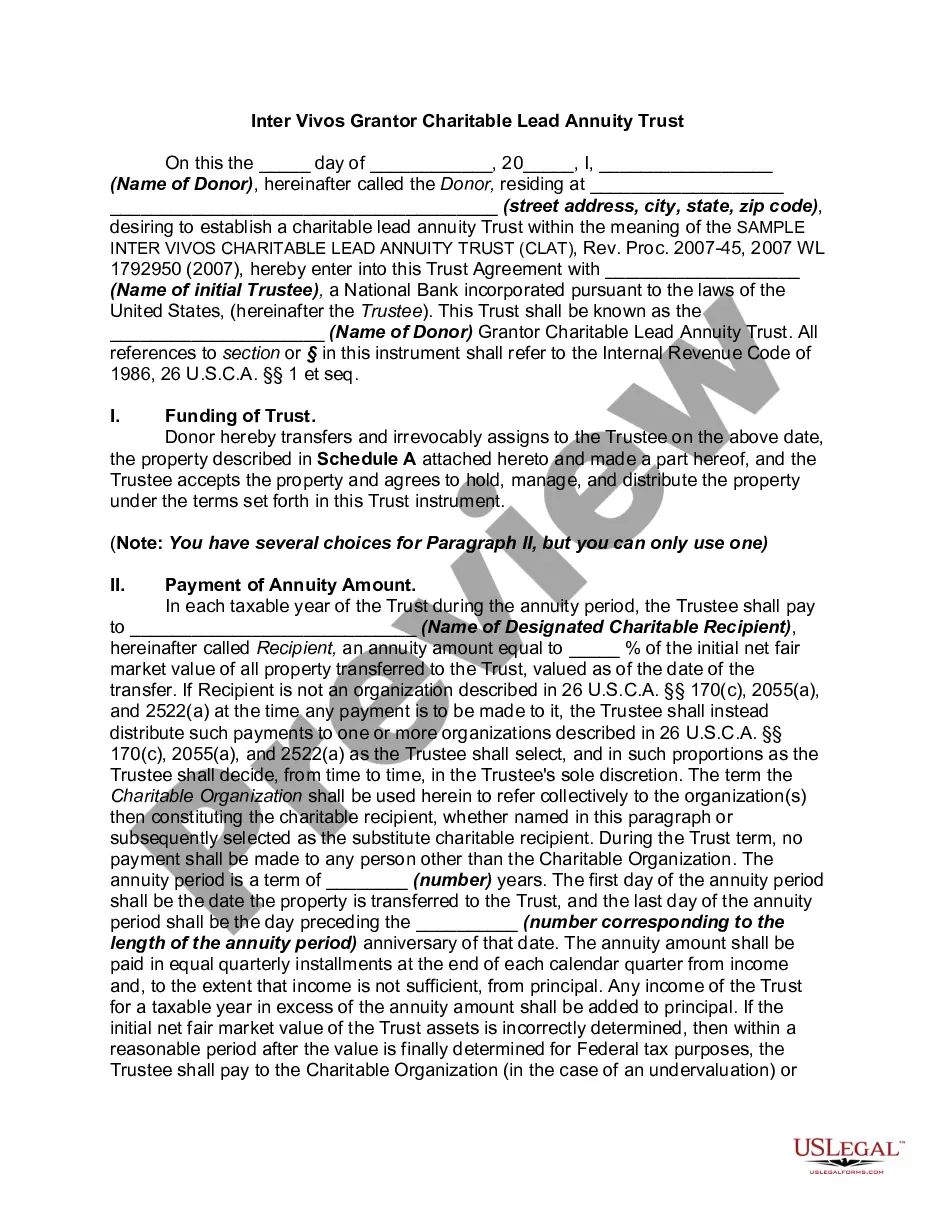
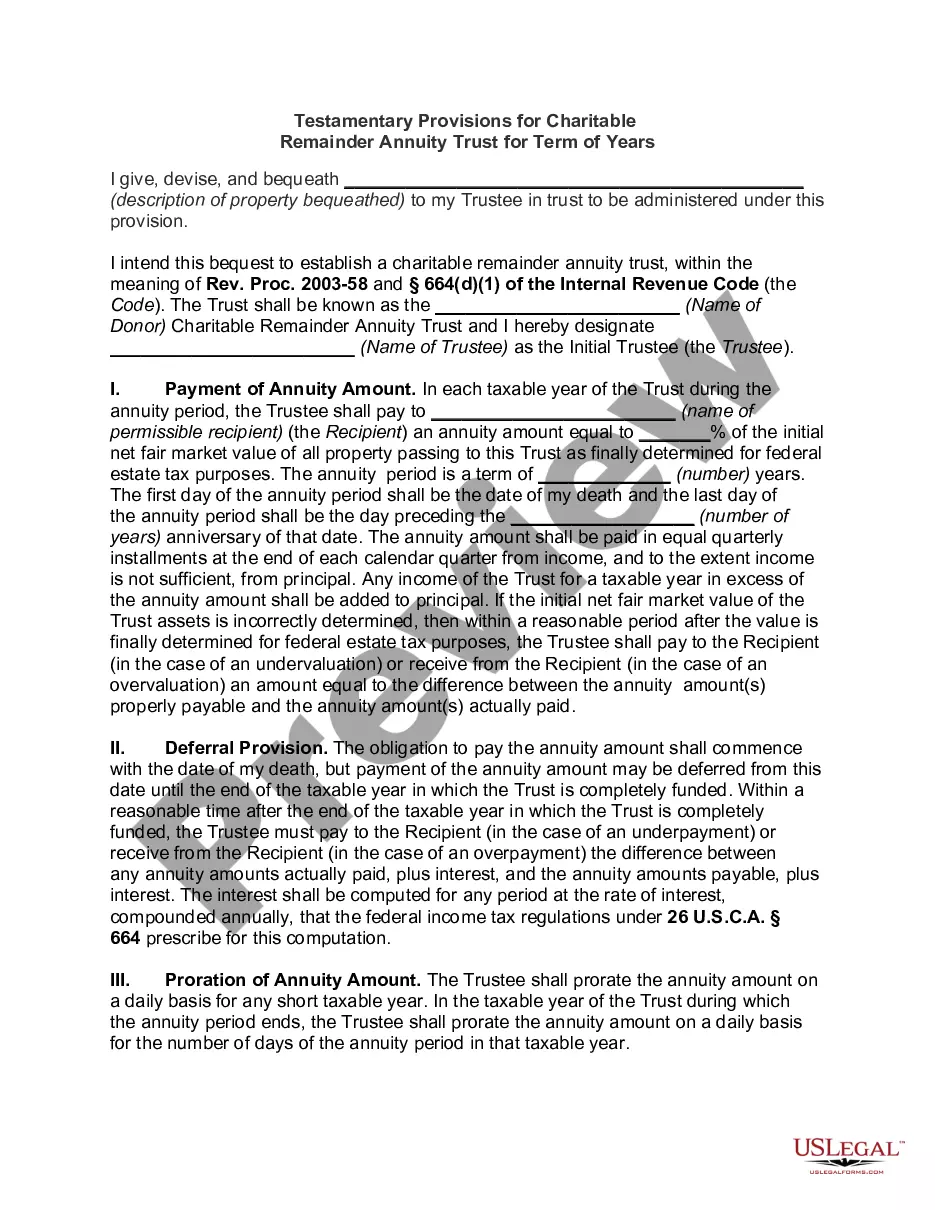
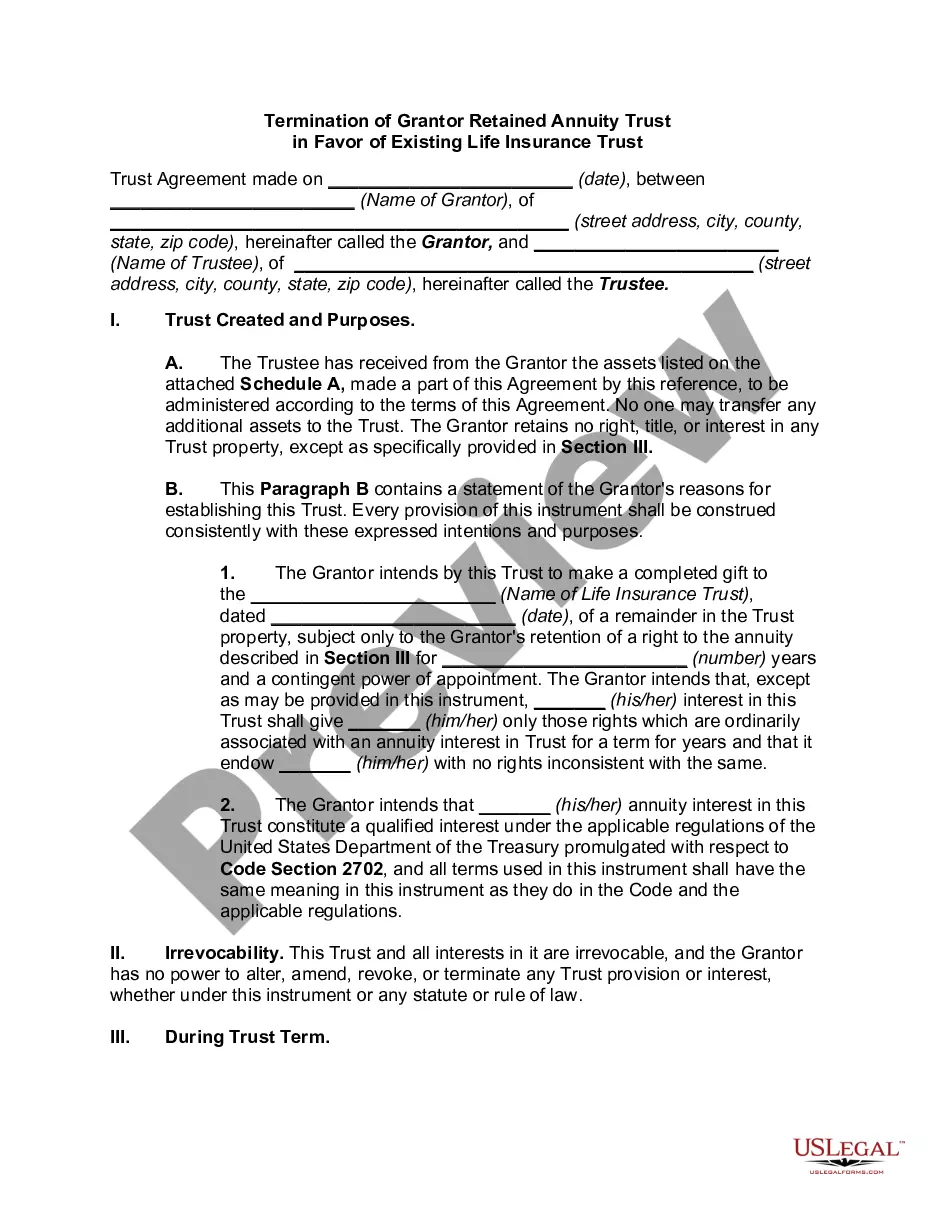
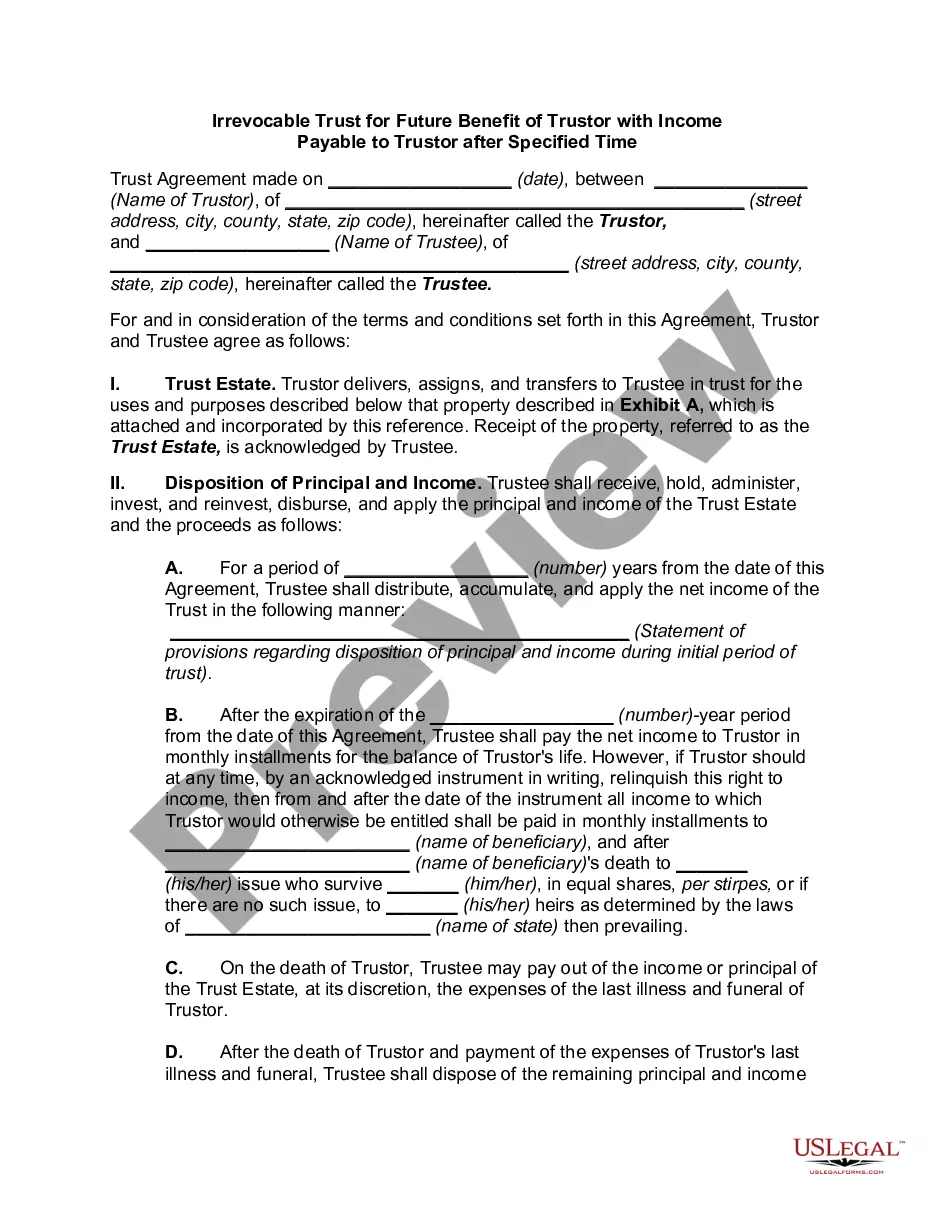
Get your form ready online
Our built-in tools help you complete, sign, share, and store your documents in one place.
Make edits, fill in missing information, and update formatting in US Legal Forms—just like you would in MS Word.
Download a copy, print it, send it by email, or mail it via USPS—whatever works best for your next step.
Sign and collect signatures with our SignNow integration. Send to multiple recipients, set reminders, and more. Go Premium to unlock E-Sign.
If this form requires notarization, complete it online through a secure video call—no need to meet a notary in person or wait for an appointment.
We protect your documents and personal data by following strict security and privacy standards.

Make edits, fill in missing information, and update formatting in US Legal Forms—just like you would in MS Word.

Download a copy, print it, send it by email, or mail it via USPS—whatever works best for your next step.

Sign and collect signatures with our SignNow integration. Send to multiple recipients, set reminders, and more. Go Premium to unlock E-Sign.

If this form requires notarization, complete it online through a secure video call—no need to meet a notary in person or wait for an appointment.

We protect your documents and personal data by following strict security and privacy standards.
Looking for another form?










How to fill out Grantor Retained Income Trust With Division Into Trusts For Issue After Term Of Years?
Locating a reliable source to obtain the most up-to-date and suitable legal documents is a significant part of dealing with bureaucracy. Identifying the correct legal forms requires precision and careful attention, which is why it is essential to obtain samples of Grantor Income Trust With Cons exclusively from reputable sources, such as US Legal Forms. An incorrect template will squander your time and delay your current situation. With US Legal Forms, you have minimal concerns. You can access and review all the information regarding the document’s application and significance for your circumstances and in your state or locality.
Follow these steps to complete your Grantor Income Trust With Cons.
Once you have the form on your device, you can modify it using the editor or print it out and complete it manually. Eliminate the stress that comes with your legal documentation. Explore the extensive US Legal Forms library to discover legal templates, assess their applicability to your case, and download them instantly.
- Use the catalog navigation or search bar to locate your template.
- Examine the form’s description to confirm it aligns with the requirements of your state and locality.
- Check the form preview, if accessible, to verify the template is the one you seek.
- Return to the search and find the correct template if the Grantor Income Trust With Cons does not suit your needs.
- If you are confident about the form’s suitability, download it.
- If you are a registered user, click Log in to verify and access your selected templates in My documents.
- If you do not have an account at this time, click Buy now to acquire the form.
- Select the pricing option that meets your needs.
- Move forward to the registration to complete your purchase.
- Finalize your transaction by choosing a payment method (credit card or PayPal).
- Select the document format for downloading Grantor Income Trust With Cons.
Form popularity
FAQ
To determine if a trust is a grantor income trust with cons, look for provisions that allow the grantor to control the assets and receive benefits during their lifetime. You can also check if the grantor is responsible for paying taxes on the trust income. Reviewing the trust document with a legal expert can provide clarity on its classification.
An example of a grantor income trust with cons is a charitable remainder trust. In this arrangement, the grantor donates assets to the trust, which pays them income for a specified period before the remainder goes to a charity. This setup can provide tax benefits while supporting a charitable cause, but it does require thorough planning.
The grantor retains ownership of the assets in a grantor income trust with cons during their lifetime. This means the grantor has the right to use, manage, or sell the assets as they see fit. However, upon the grantor's passing, the assets are typically transferred to the beneficiaries according to the terms of the trust.
In a grantor income trust with cons, the grantor is typically responsible for paying taxes on the income generated by the trust assets. This means that any income, deductions, or credits must be reported on the grantor's personal tax return. This setup can have advantages and disadvantages, so it's essential to evaluate your financial situation carefully.
A trust that does not allow the grantor to retain control or benefits is not considered a grantor income trust with cons. For example, irrevocable trusts, where the grantor permanently gives up ownership and control of the assets, fall outside this category. Understanding these distinctions can help you make informed decisions about your estate planning.
A common example of a grantor income trust with cons is a revocable living trust. In this type of trust, the grantor retains control over the assets during their lifetime, allowing them to amend or revoke the trust as needed. This arrangement can simplify asset distribution upon death while avoiding probate, yet it has tax implications that grantors should consider.
Yes, a grantor can receive income from a trust, specifically from a grantor trust. However, the income is subject to taxation on the grantor's personal tax return, which can affect the overall financial strategy. Understanding the implications of receiving income from a grantor income trust with cons is vital for effective financial planning. Utilizing resources like USLegalForms can help you navigate these complexities.
One significant disadvantage of a grantor trust is that the income generated is typically taxable to the grantor, which can lead to higher personal tax liabilities. Additionally, assets within a grantor trust may not receive the protection from creditors that irrevocable trusts provide. These factors highlight some of the drawbacks associated with a grantor income trust with cons, making careful consideration essential.
To minimize tax liabilities, many individuals consider a revocable living trust or a grantor income trust with cons. These trusts allow grantors to manage their assets while potentially avoiding some taxes. However, it is crucial to understand the specific rules and implications of each type of trust. Consulting with a legal expert can help you determine the most suitable option for your needs.
A grantor of an irrevocable trust should avoid being a trustee to maintain the trust's independence and ensure proper management. When the grantor acts as the trustee, it may create legal complications, particularly regarding tax implications and asset protection. Furthermore, separating these roles helps to reinforce the irrevocable nature of the trust, aligning with the principles of a grantor income trust with cons.