Testamentary Trust For Minor Beneficiaries
Description
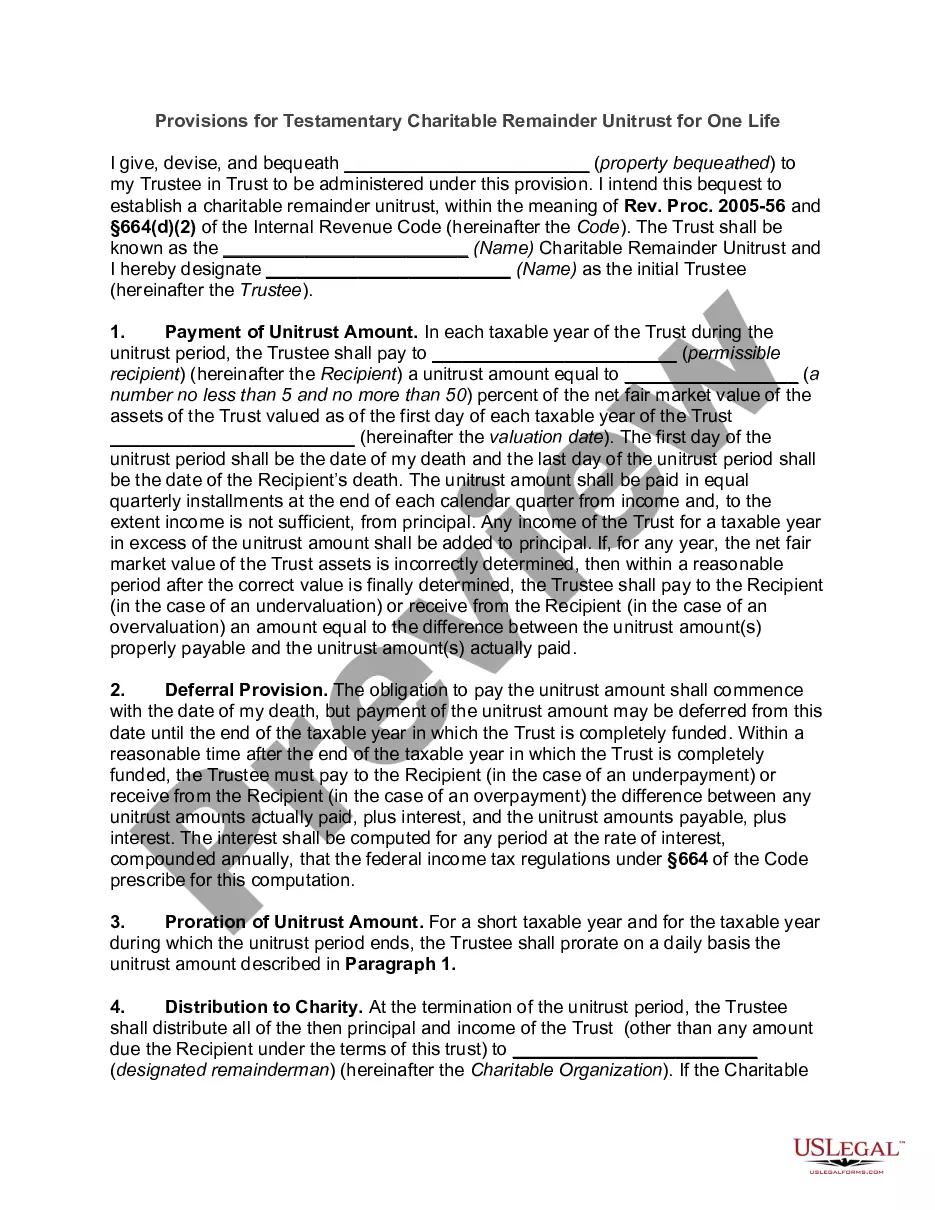

Get your form ready online
Our built-in tools help you complete, sign, share, and store your documents in one place.
Make edits, fill in missing information, and update formatting in US Legal Forms—just like you would in MS Word.
Download a copy, print it, send it by email, or mail it via USPS—whatever works best for your next step.
Sign and collect signatures with our SignNow integration. Send to multiple recipients, set reminders, and more. Go Premium to unlock E-Sign.
If this form requires notarization, complete it online through a secure video call—no need to meet a notary in person or wait for an appointment.
We protect your documents and personal data by following strict security and privacy standards.

Make edits, fill in missing information, and update formatting in US Legal Forms—just like you would in MS Word.

Download a copy, print it, send it by email, or mail it via USPS—whatever works best for your next step.

Sign and collect signatures with our SignNow integration. Send to multiple recipients, set reminders, and more. Go Premium to unlock E-Sign.

If this form requires notarization, complete it online through a secure video call—no need to meet a notary in person or wait for an appointment.

We protect your documents and personal data by following strict security and privacy standards.
Looking for another form?

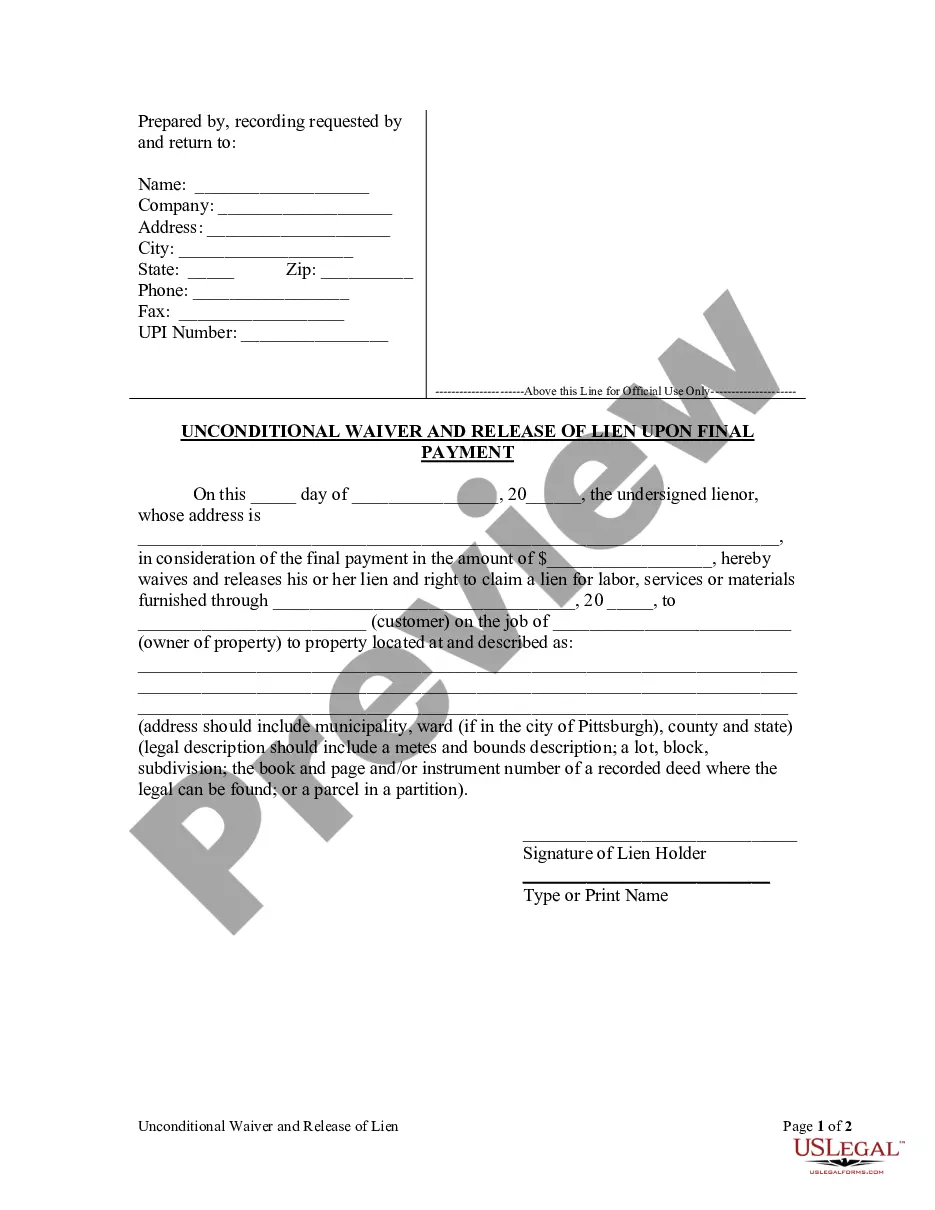






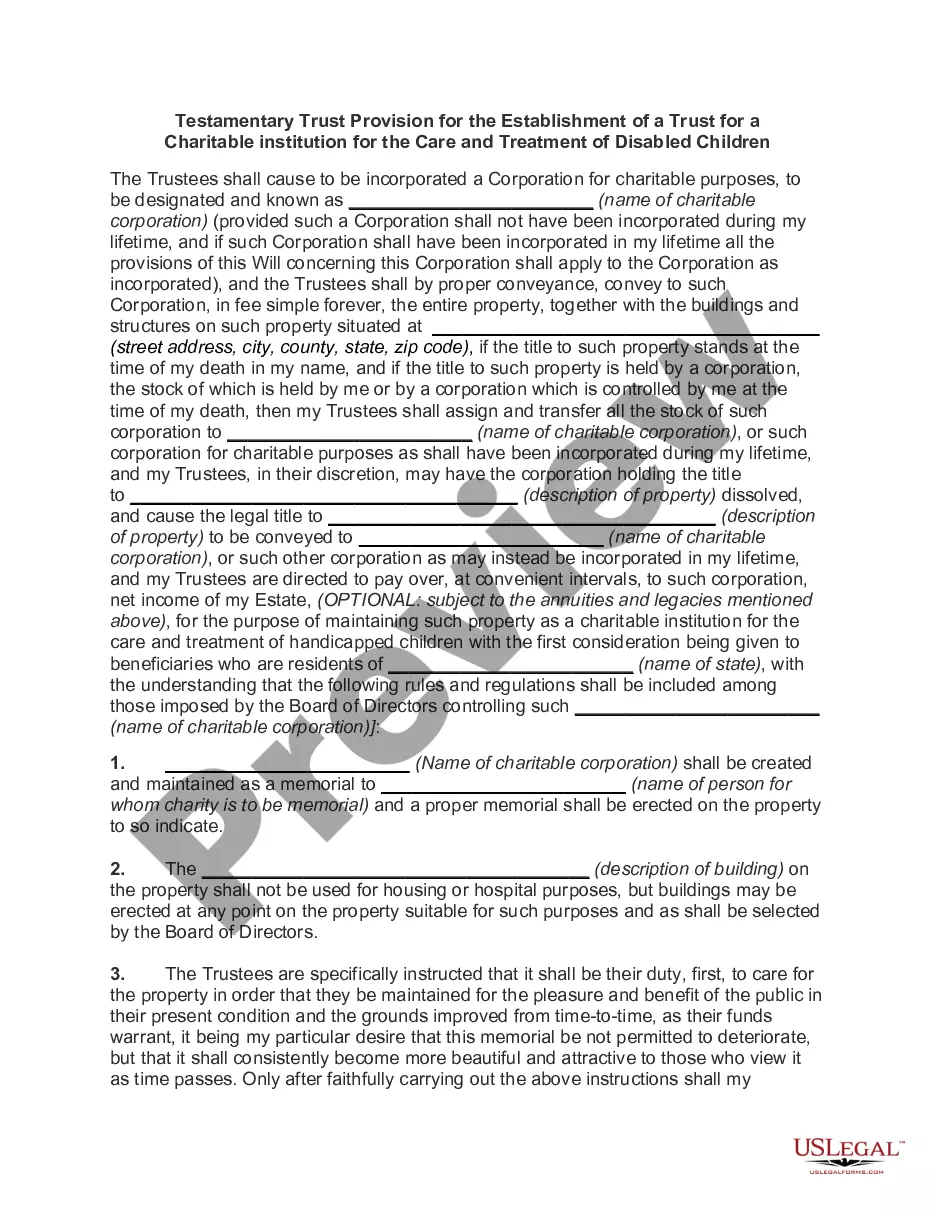
How to fill out Testamentary Trust Provision For The Establishment Of A Trust For A Charitable Institution For The Care And Treatment Of Disabled Children?
- Log in to your US Legal Forms account if you're already a user and verify your subscription is active. Click the Download button to retrieve your template.
- For first-time users, begin by reviewing the Preview mode and form description to ensure you have the correct Testamentary trust that fits your local jurisdiction.
- If required, use the Search feature to find additional templates that suit your needs. Proceed only when you're confident about your selection.
- Select the document you need by clicking the Buy Now button and choose a subscription plan that fits your legal needs. Create an account for library access.
- Complete your purchase by entering your payment information, either through credit card or PayPal.
- Once your transaction is confirmed, download the completed template to your device, accessible via the My Forms section for future reference.
In conclusion, US Legal Forms streamlines the process of securing a Testamentary trust for minor beneficiaries. With their extensive library and resources, you can rest assured that your legal documents are comprehensive and accurate.
Don’t hesitate to explore your options and start today with US Legal Forms to easily navigate the complexities of legal documentation!
Form popularity
FAQ
The advantages of a testamentary trust for minor beneficiaries include protection of assets and the ability to set clear guidelines for distribution. However, disadvantages include potential probate delays and the fact that it only takes effect after your passing. Understanding both sides can help you make an informed decision about estate planning.
Having a testamentary trust may be beneficial if you intend to leave inheritances to minor beneficiaries. It allows you to set specific terms for how the assets are handled until the minors reach an appropriate age. If you are looking to ensure financial security for your children while maintaining control over your estate, a testamentary trust can be an effective solution.
In a testamentary trust for minor beneficiaries, the assets are owned by the trust itself until the specified conditions are met. The trustee manages these assets on behalf of the beneficiaries, ensuring that they are protected and used according to your wishes. This arrangement safeguards the assets until the beneficiaries are responsible enough to handle them.
The lifespan of a testamentary trust typically lasts until the minor beneficiaries reach a specified age or milestone outlined in the trust document. In many cases, this could be until they turn 18, 21, or even older, depending on the terms you set. This structure allows you to control how and when your beneficiaries receive their inheritance.
One disadvantage of a testamentary trust for minor beneficiaries is that it only comes into effect upon your death, which means it does not offer any benefits during your lifetime. Additionally, the assets in the trust may go through probate, creating delays and potentially incurring costs. Therefore, if immediate access to funds is needed, a testamentary trust may not be the best choice.
Beneficiaries of a testamentary trust can include minors, adult children, spouses, or other dependents specified in the will. The trustee administers the trust on behalf of these beneficiaries, ensuring they receive distributions per the terms set out in the will. It's essential to determine the nature and needs of each beneficiary when establishing a testamentary trust, particularly for minor beneficiaries. Resources like US Legal Forms can provide valuable insight into crafting a suitable trust.
The beneficiaries of a testamentary trust are the individuals designated in the will to receive the trust's assets. In many cases involving a testamentary trust for minor beneficiaries, these individuals may be children or dependents who need financial support and guidance. The will should clearly specify these beneficiaries to avoid confusion. Using comprehensive resources from US Legal Forms can help you outline these designations accurately.
One disadvantage of a testamentary trust for minor beneficiaries is that it only becomes effective upon the testator's death, which can lead to delays in access to funds for the beneficiaries. Additionally, the trust may be subject to probate, which can prolong the distribution of assets and incur legal fees. Understanding these potential drawbacks can help you make informed decisions. Consulting with an expert can shed more light on how to navigate these issues.
To establish a testamentary trust for minor beneficiaries, you usually need a last will and testament that clearly outlines the trust's terms. Additional documents may include birth certificates of the minors, signatures from the trustee, and any relevant court filings. Proper documentation is crucial to ensure the trust is valid and meets all legal requirements. You can find templates and guidance on these documents with US Legal Forms.
The responsible party for a testamentary trust is typically the appointed trustee. This individual or institution manages the trust according to the terms outlined in the will. The trustee has a fiduciary duty to act in the best interest of the beneficiaries, particularly ensuring that minor beneficiaries receive their inheritance appropriately. Utilizing platforms like US Legal Forms can assist you in understanding these responsibilities.