Special Trust Disabled With A
Description





Get your form ready online
Our built-in tools help you complete, sign, share, and store your documents in one place.
Make edits, fill in missing information, and update formatting in US Legal Forms—just like you would in MS Word.
Download a copy, print it, send it by email, or mail it via USPS—whatever works best for your next step.
Sign and collect signatures with our SignNow integration. Send to multiple recipients, set reminders, and more. Go Premium to unlock E-Sign.
If this form requires notarization, complete it online through a secure video call—no need to meet a notary in person or wait for an appointment.
We protect your documents and personal data by following strict security and privacy standards.

Make edits, fill in missing information, and update formatting in US Legal Forms—just like you would in MS Word.

Download a copy, print it, send it by email, or mail it via USPS—whatever works best for your next step.

Sign and collect signatures with our SignNow integration. Send to multiple recipients, set reminders, and more. Go Premium to unlock E-Sign.

If this form requires notarization, complete it online through a secure video call—no need to meet a notary in person or wait for an appointment.

We protect your documents and personal data by following strict security and privacy standards.
Looking for another form?







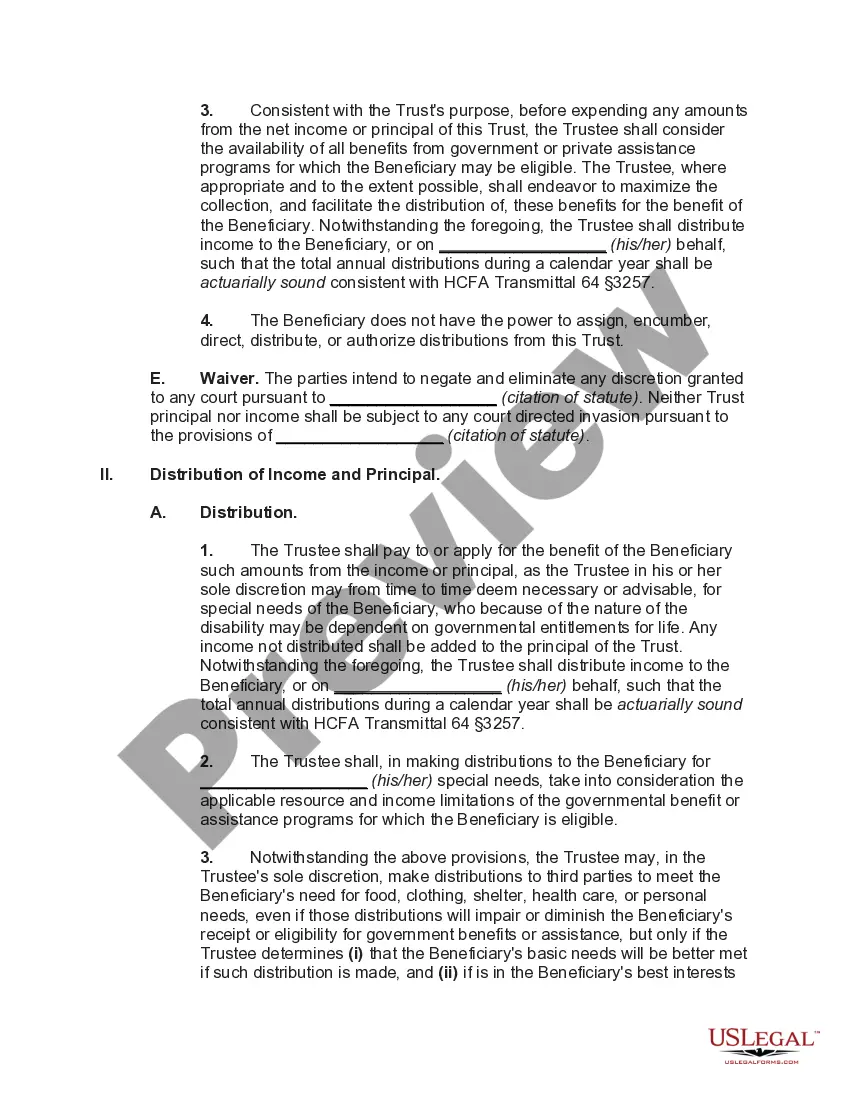
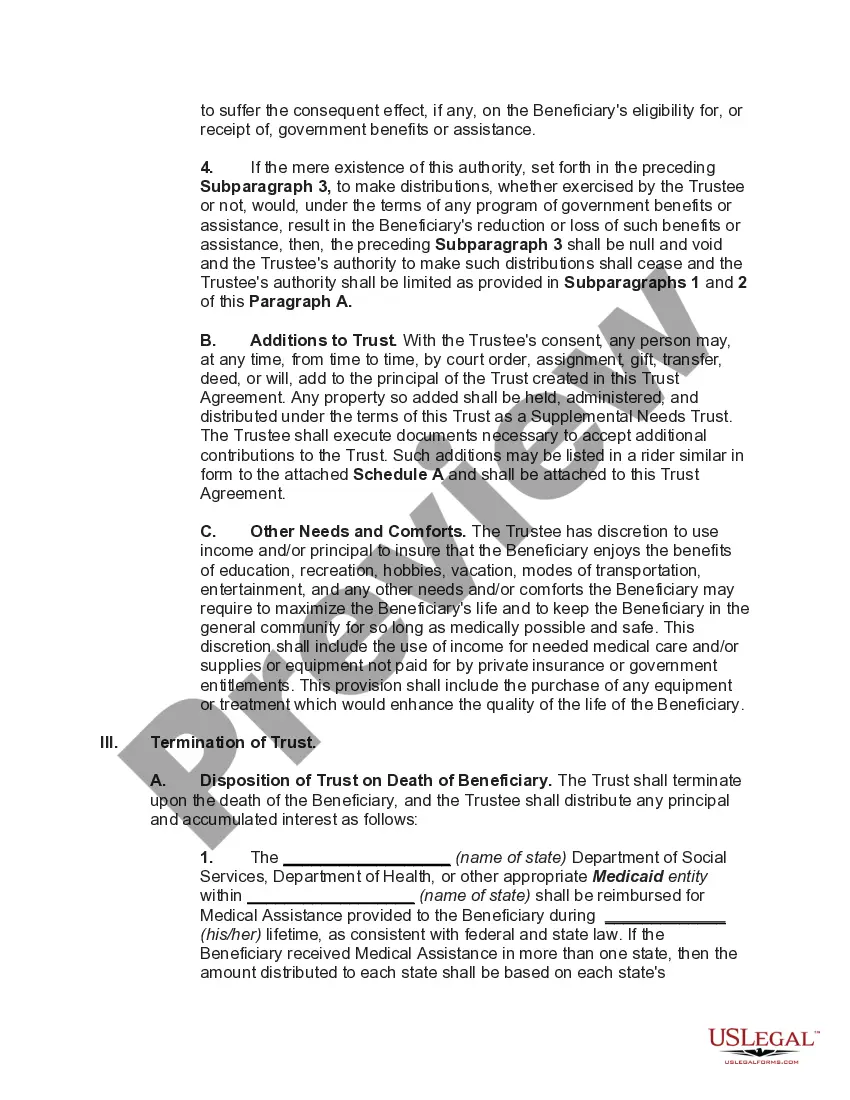
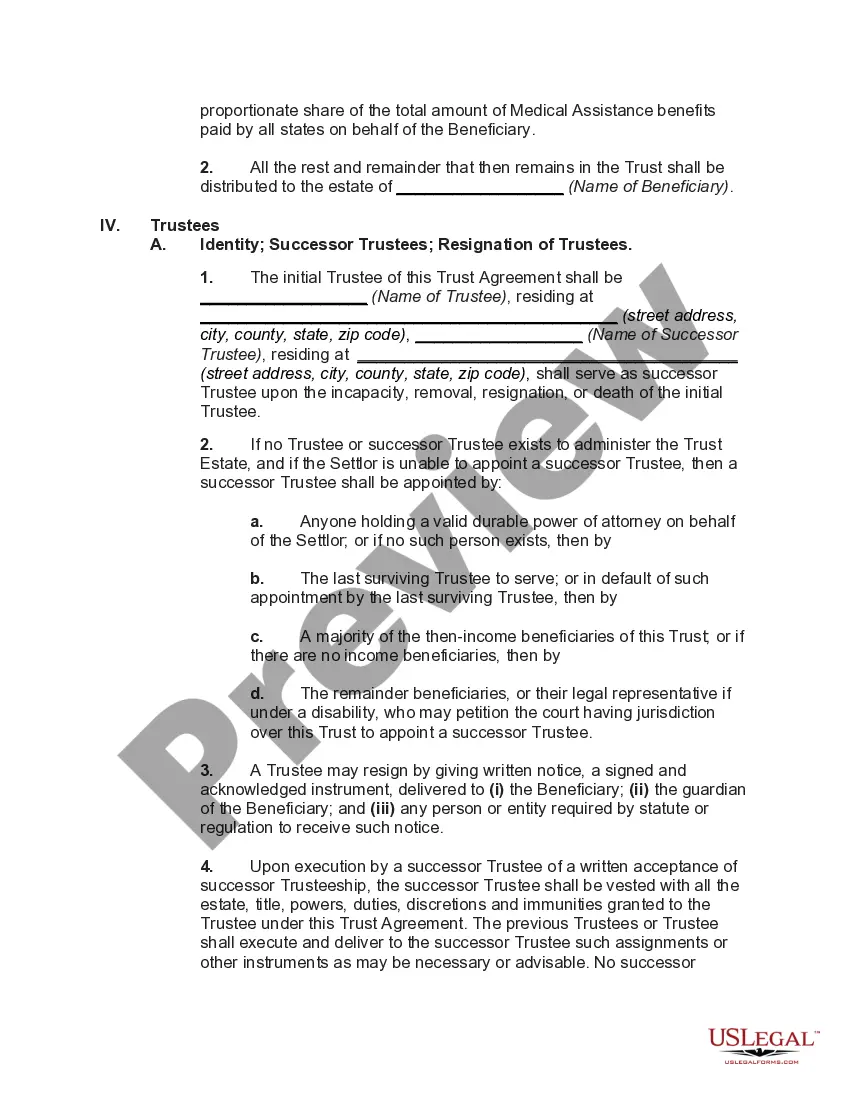
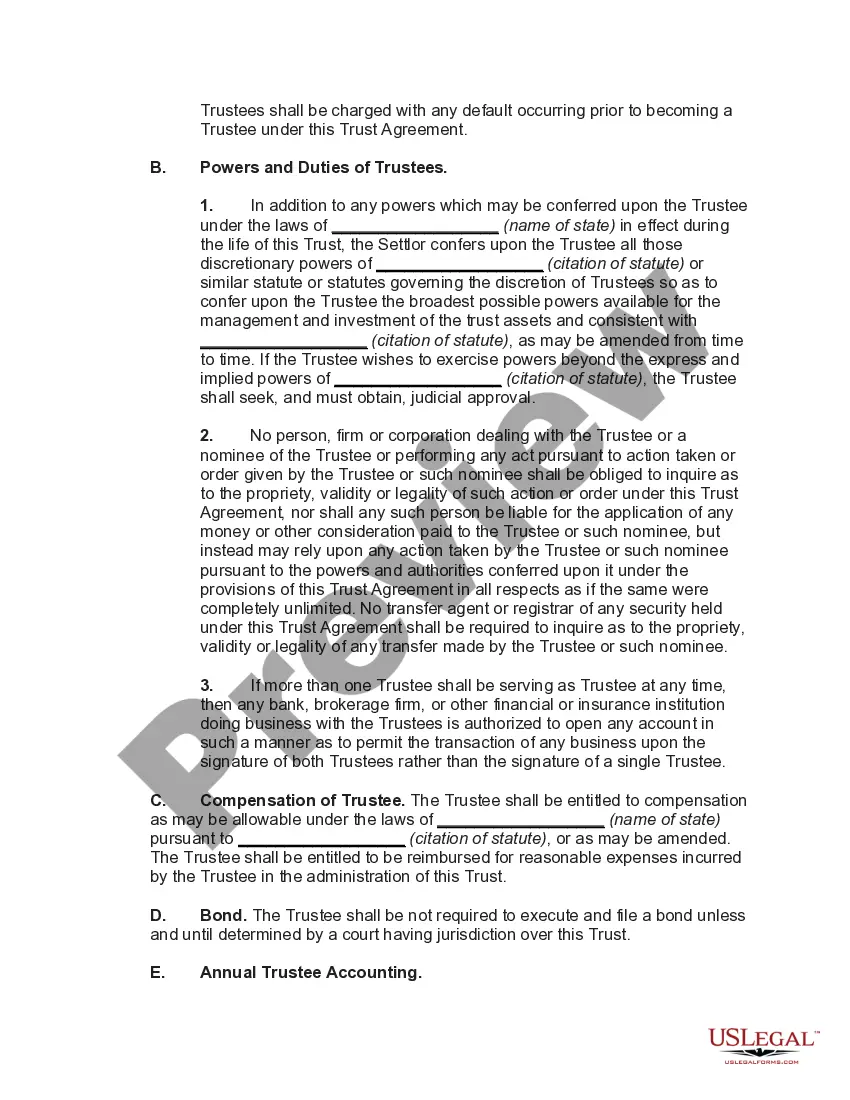
How to fill out Special Needs Irrevocable Trust Agreement For Benefit Of Disabled Child Of Trustor?
- Visit the US Legal Forms website and log into your account if you're a returning user. If your account is in good standing, you can start downloading.
- For first-time users, begin by exploring the Preview mode and reading the form description to ensure it meets your specific needs.
- If you don’t find the correct form, use the Search tab to locate alternative templates that are appropriate for your jurisdiction.
- Once you've chosen your document, click the Buy Now button and select your subscription plan. Make sure to register an account for full access.
- Enter your payment information, either via credit card or PayPal, to finalize the purchase.
- After the transaction, download your chosen form directly to your device and access it anytime through the My Documents section of your profile.
In conclusion, US Legal Forms simplifies the process of obtaining essential legal documents, ensuring that you have all the necessary resources at your fingertips. With support from premium experts, you can create precise and legally sound documents without unnecessary hassle.
Start your journey towards easy legal document creation today!
Form popularity
FAQ
A disability trust must clearly define its purpose, beneficiaries, and how assets will be managed. It should also comply with federal and state laws that govern special trust disabled with a. Additionally, the trust must include a viable trustee who can make decisions in the best interest of the beneficiaries. Consulting a legal professional can provide guidance in meeting all necessary requirements.
To establish a disability trust, you need to create a trust document that outlines the beneficiaries, their needs, and the trust's terms. A qualified trustee must be appointed to manage the trust. Additionally, it’s essential to comply with state laws that govern special trust disabled with a, ensuring that the trust serves its intended purpose effectively.
Filing taxes on a special trust disabled with a requires specific forms and proper reporting. The trust itself typically needs to apply for a tax identification number. You'll need to file Form 1041 for the trust's income and possibly other relevant documentation. Consider consulting with a tax professional to ensure compliance and optimize your tax strategy.
Despite their benefits, special needs trusts can have some disadvantages that you should be aware of. Setting up a special trust disabled with a focus on maintaining benefits can involve legal complexities and costs that may deter some families. Additionally, there are restrictions on how funds can be used, which could limit the disabled person's access to certain resources. Understanding these limitations is crucial for effective trust management, and platforms like USLegalForms can help clarify the process.
The best trust for a disabled person often turns out to be a special needs trust. This special trust disabled with a focus on enabling access to financial resources while protecting government benefit eligibility provides the ideal balance. It allows for the acquisition of funds to support needs that public benefits may not cover, such as education or recreation. However, it's essential to tailor the trust to meet specific requirements and circumstances.
There are several types of trusts designed for disabled individuals, including special needs trusts, supplemental needs trusts, and pooled trusts. A special trust disabled with a focus on maintaining eligibility for government benefits can be particularly beneficial. These trusts allow the disabled person to receive funds without affecting their access to vital aid such as Medicaid or Social Security. Each type of trust has unique features tailored to individual needs, so it’s important to understand the options available.
A common mistake parents make when setting up a special trust disabled with a loved one in mind is not consulting a professional. Parents often assume they can manage the trust without expert guidance. This can lead to improper fund distribution and compliance issues that could jeopardize the disabled individual's financial safety. It's crucial to seek advice to ensure the trust is set up correctly and fulfills its intended purpose.
The minimum amount for a special trust disabled with a can vary greatly, but there isn't a strict minimum set in laws. However, creating a trust with a meaningful amount may better serve your needs for future healthcare and living expenses. Consulting with financial advisors helps in determining the most beneficial amount for your trust.
A qualified trust must adhere to federal regulations regarding the use of funds to maintain eligibility for government benefits. Trusts often require a formal agreement that outlines the beneficiaries and their rights. Seeking professional assistance ensures that all legalities are considered.
To qualify for a qualified trust disabled with a, you need to demonstrate your disability and how it affects your ability to manage financial resources. Legal documentation supporting your disability status will be necessary. Engaging with Uslegalforms can help you gather and present the required evidence effectively.