Special Needs Trust Vs Irrevocable Trust
Description





Get your form ready online
Our built-in tools help you complete, sign, share, and store your documents in one place.
Make edits, fill in missing information, and update formatting in US Legal Forms—just like you would in MS Word.
Download a copy, print it, send it by email, or mail it via USPS—whatever works best for your next step.
Sign and collect signatures with our SignNow integration. Send to multiple recipients, set reminders, and more. Go Premium to unlock E-Sign.
If this form requires notarization, complete it online through a secure video call—no need to meet a notary in person or wait for an appointment.
We protect your documents and personal data by following strict security and privacy standards.

Make edits, fill in missing information, and update formatting in US Legal Forms—just like you would in MS Word.

Download a copy, print it, send it by email, or mail it via USPS—whatever works best for your next step.

Sign and collect signatures with our SignNow integration. Send to multiple recipients, set reminders, and more. Go Premium to unlock E-Sign.

If this form requires notarization, complete it online through a secure video call—no need to meet a notary in person or wait for an appointment.

We protect your documents and personal data by following strict security and privacy standards.
Looking for another form?





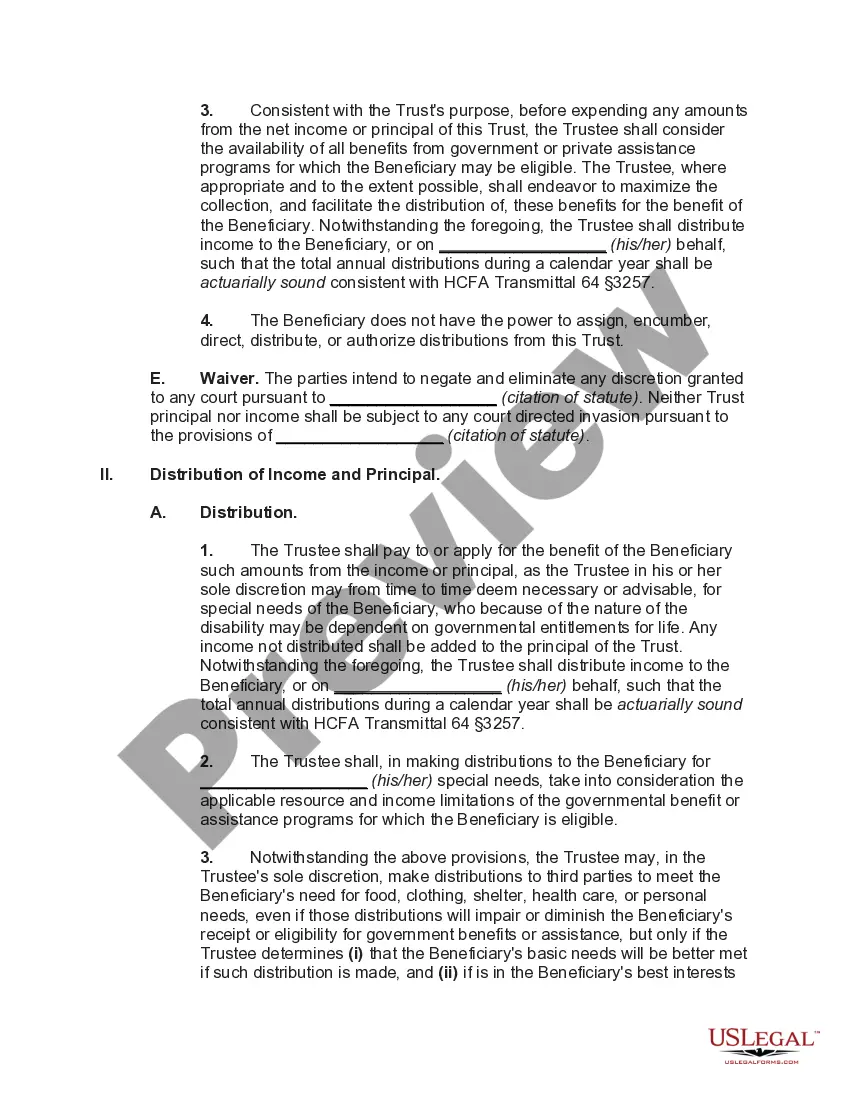
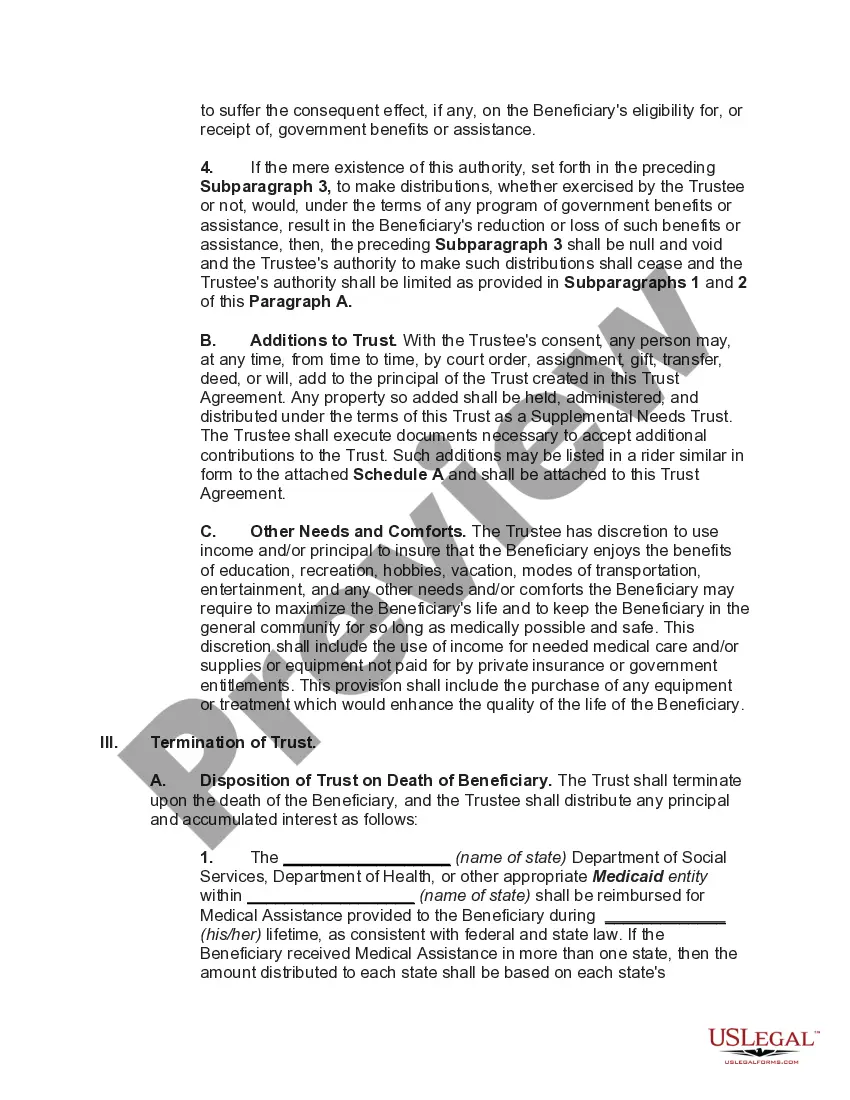
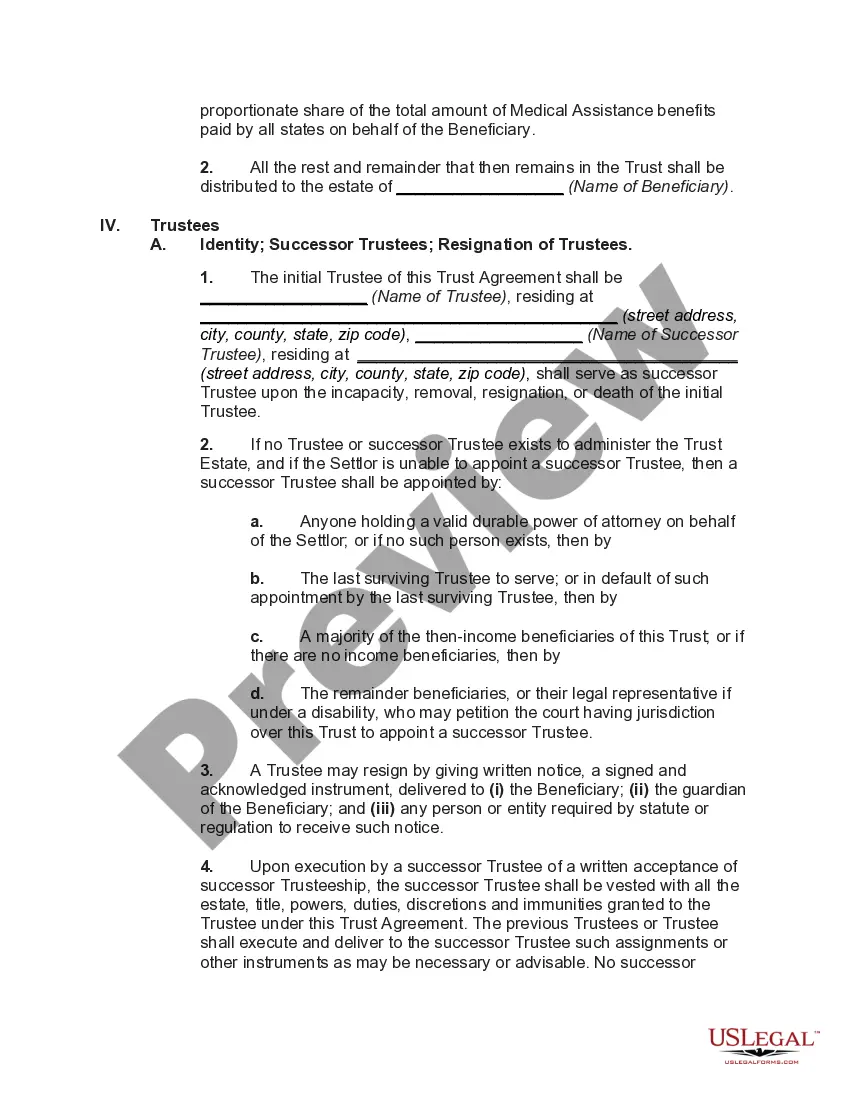
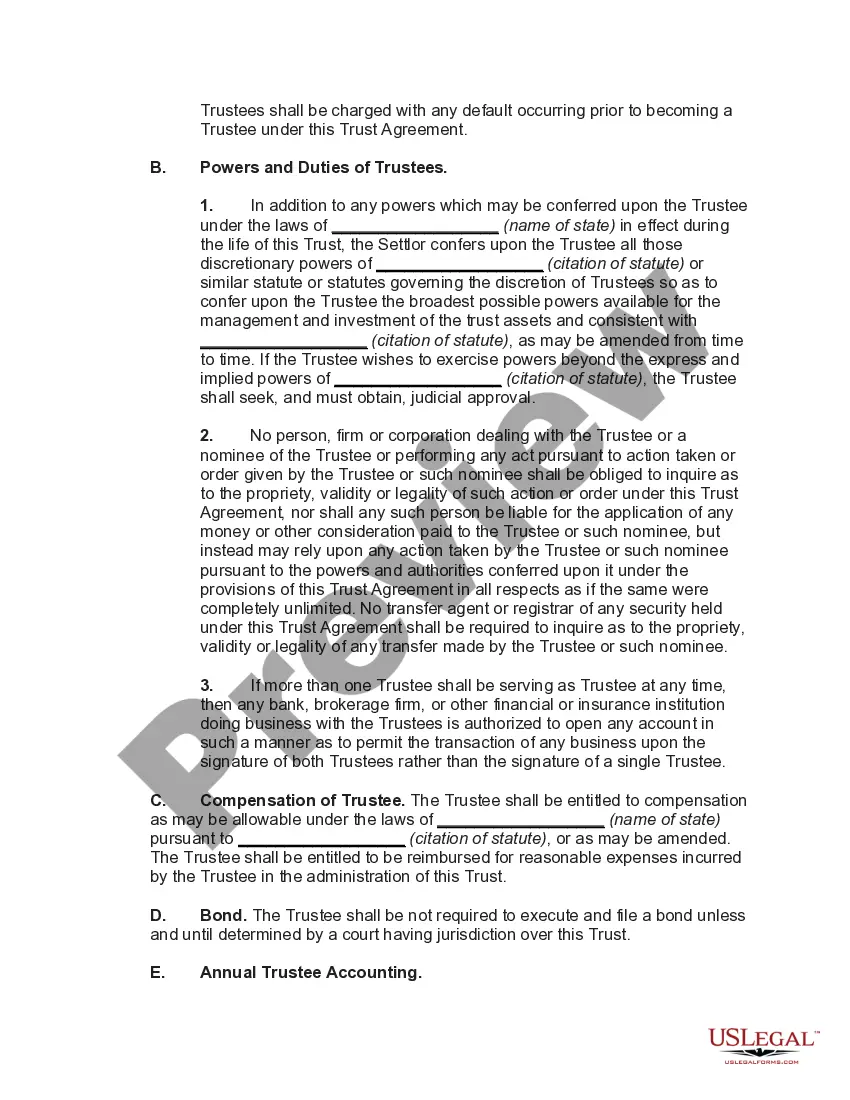
How to fill out Special Needs Irrevocable Trust Agreement For Benefit Of Disabled Child Of Trustor?
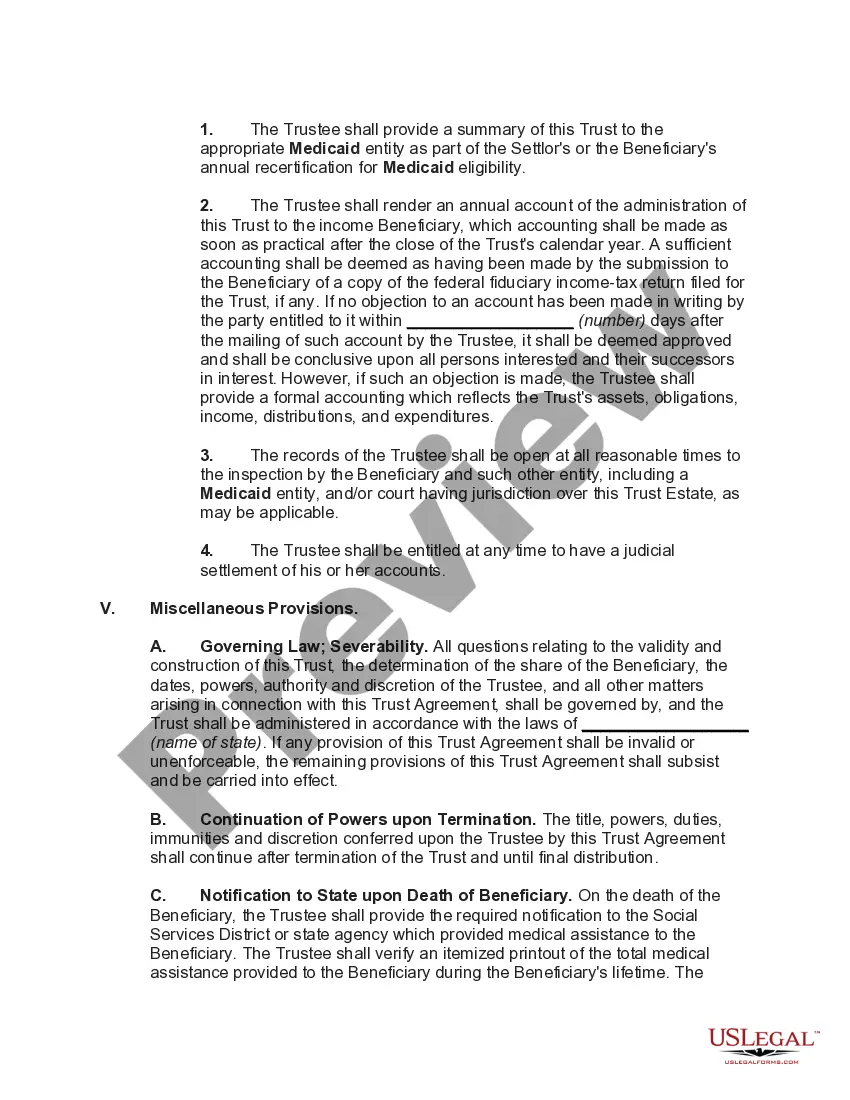
- If you're a returning user, log in to your account and download your desired form template by clicking the Download button. Ensure your subscription is current; if it's not, renew it based on your payment plan.
- For first-time users, start by reviewing the Preview mode and form description to confirm the selection meets your needs and complies with local jurisdiction requirements.
- If you need a different template, utilize the Search tab at the top of the page to find the appropriate one. Once you've found a suitable form, proceed to the next step.
- Purchase your document by clicking the Buy Now button and selecting your preferred subscription plan. You’ll need to create an account to gain access to the library of resources.
- Complete your transaction by entering your credit card information or selecting PayPal for payment.
- Download your form and save the template for completion. You can access it later in the My Forms section of your profile.
US Legal Forms empowers users by providing an extensive library of over 85,000 fillable and editable legal forms, surpassing competitors in both quantity and cost-effectiveness.
Take action today and experience the convenience of obtaining your legal documents with confidence. Start your journey with US Legal Forms now!
Form popularity
FAQ
Another name for a special needs trust is a supplemental needs trust. This type of trust helps individuals with disabilities maintain their eligibility for government benefits while receiving additional support. The structure of a special needs trust vs irrevocable trust highlights important differences in asset management and protection. If you're considering setting up one of these trusts, our platform at uslegalforms can guide you through the process smoothly.
The three types of irrevocable trusts typically include the irrevocable life insurance trust, charitable remainder trust, and irrevocable trust for special needs. An irrevocable life insurance trust allows you to exclude life insurance from your taxable estate. On the other hand, a charitable remainder trust provides income to beneficiaries while supporting a charity. Choosing between a special needs trust vs irrevocable trust depends on your goals for protecting assets and ensuring your beneficiaries' well-being.
The primary difference lies in their purpose and design. An irrevocable trust is generally used for asset protection and tax benefits, becoming permanent once established. On the other hand, a special needs trust focuses on ensuring that individuals with disabilities can receive financial support without jeopardizing their public benefits. Weighing the special needs trust vs irrevocable trust can help you choose the right option for your situation.
The maximum amount for a special disability trust varies depending on the specific regulations of your state, but typically, these trusts can hold a significant amount, often exceeding $100,000. However, exceeding this limit may impact eligibility for certain public benefits. Comparing a special needs trust vs irrevocable trust can clarify how best to maximize your benefits within legal limits.
Special needs trusts come with limitations regarding the types of income and assets that can be included without affecting eligibility for government benefits. Generally, these trusts can't exceed a certain threshold in value without losing the intended benefits. Understanding the special needs trust vs irrevocable trust is essential when navigating these restrictions to protect your assets effectively.
A viable alternative to a special needs trust is a pooled trust. This type of trust allows individuals with disabilities to benefit from shared management, leading to potentially lower fees. When deciding between a special needs trust vs irrevocable trust, evaluating your specific needs can help determine which option aligns best with your situation.
One drawback of a special needs trust is that it can be complex to set up and maintain, requiring legal expertise, which may lead to higher costs. Additionally, the trust has strict rules about distributions, which can limit access to funds for different expenses. When considering a special needs trust vs irrevocable trust, it's crucial to understand these nuances to make an informed decision.
An irrevocable trust and a special needs trust serve different purposes. While an irrevocable trust removes assets from the granter's control, a special needs trust is specifically designed to maintain eligibility for benefits like SSI without disqualifying the beneficiary. Therefore, understanding the distinctions is vital when navigating special needs trust vs irrevocable trust.
Putting assets in a trust can limit the control the granter has over those assets. This is particularly relevant when comparing special needs trust vs irrevocable trust, as the latter generally cannot be altered. Thus, understanding how these differences affect asset management is essential for informed decision-making.
The primary downfall of having a trust is the potential for high administrative costs, which could drain the assets over time. Weighing special needs trust vs irrevocable trust reveals that the latter may involve more stringent terms and fewer options for changes. It's important to consider both advantages and drawbacks when deciding on the right structure.