Special Needs Trust Violations For Someone Over 65
Description
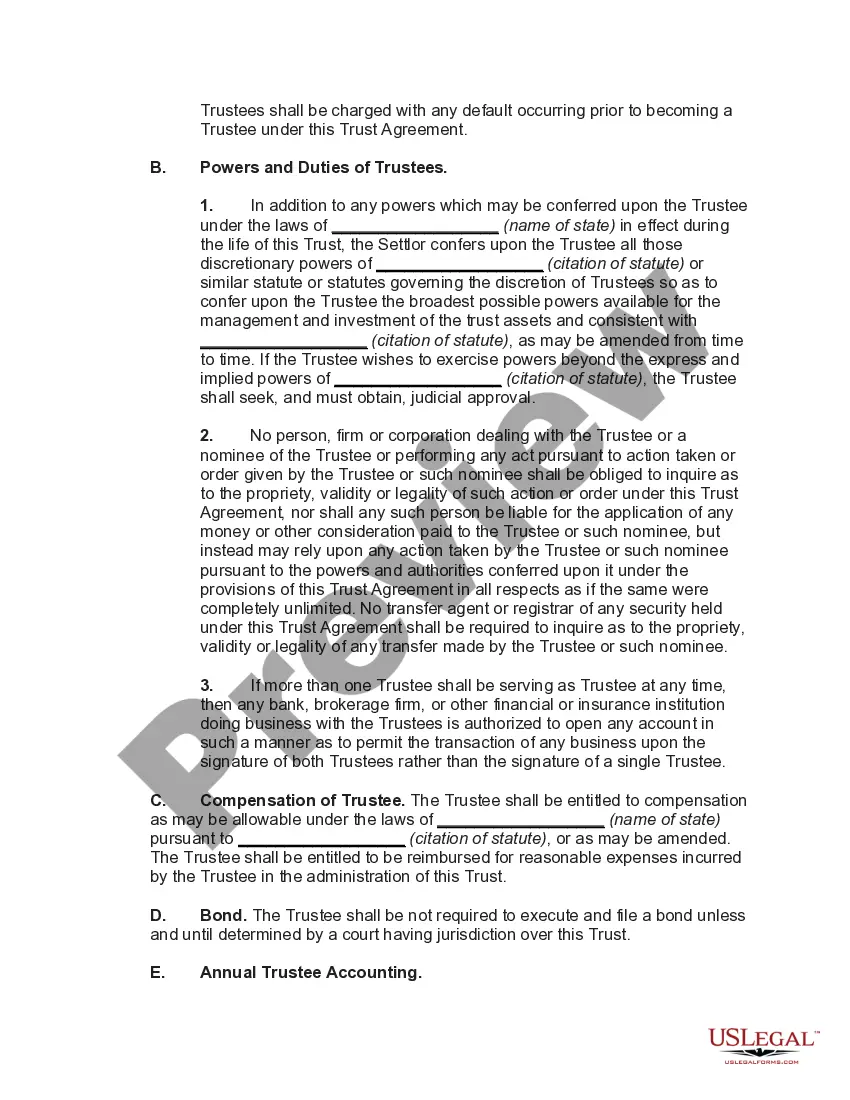
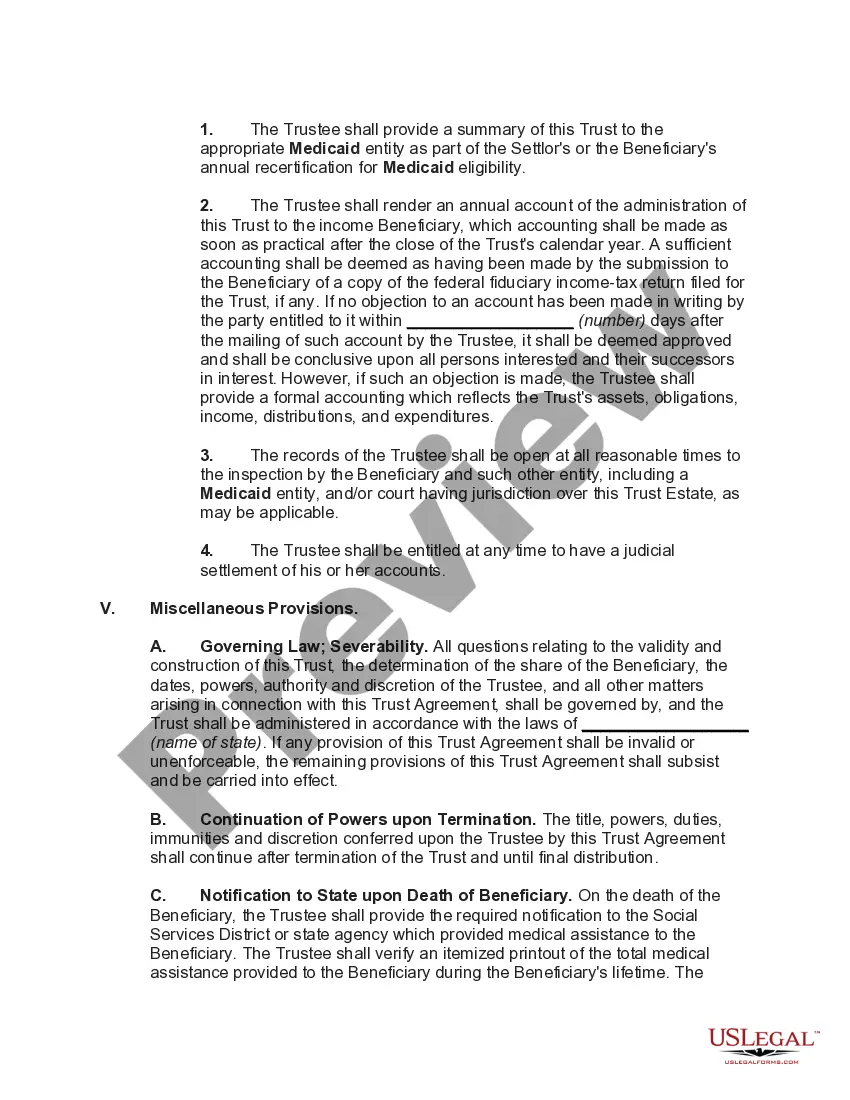
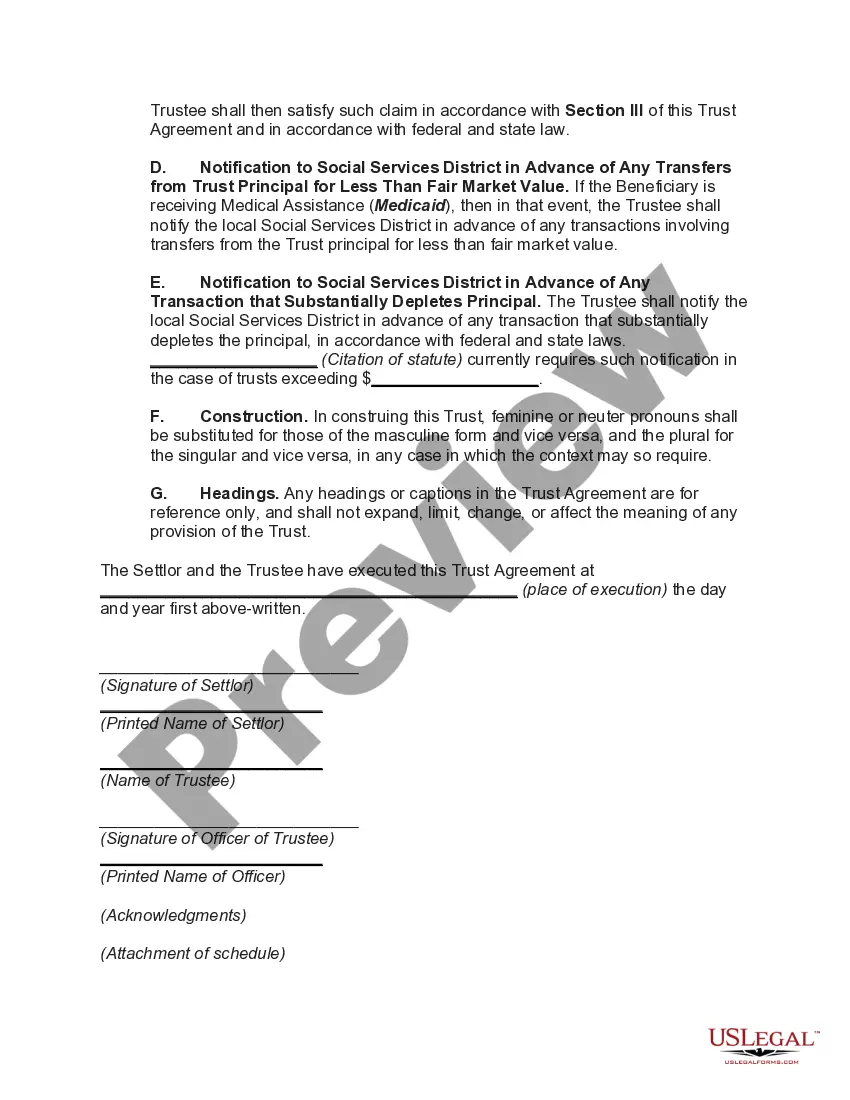
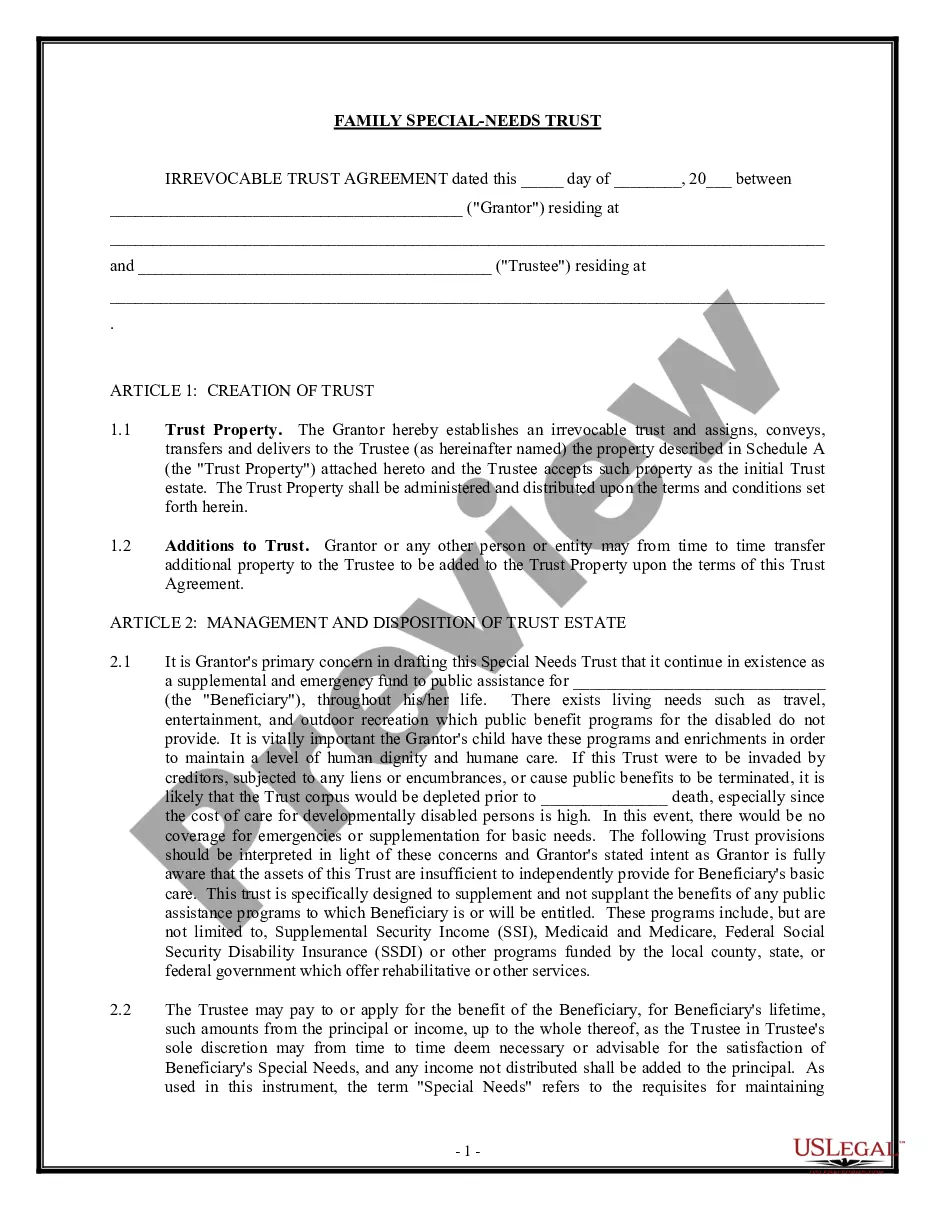
Get your form ready online
Our built-in tools help you complete, sign, share, and store your documents in one place.
Make edits, fill in missing information, and update formatting in US Legal Forms—just like you would in MS Word.
Download a copy, print it, send it by email, or mail it via USPS—whatever works best for your next step.
Sign and collect signatures with our SignNow integration. Send to multiple recipients, set reminders, and more. Go Premium to unlock E-Sign.
If this form requires notarization, complete it online through a secure video call—no need to meet a notary in person or wait for an appointment.
We protect your documents and personal data by following strict security and privacy standards.

Make edits, fill in missing information, and update formatting in US Legal Forms—just like you would in MS Word.

Download a copy, print it, send it by email, or mail it via USPS—whatever works best for your next step.

Sign and collect signatures with our SignNow integration. Send to multiple recipients, set reminders, and more. Go Premium to unlock E-Sign.

If this form requires notarization, complete it online through a secure video call—no need to meet a notary in person or wait for an appointment.

We protect your documents and personal data by following strict security and privacy standards.
Looking for another form?






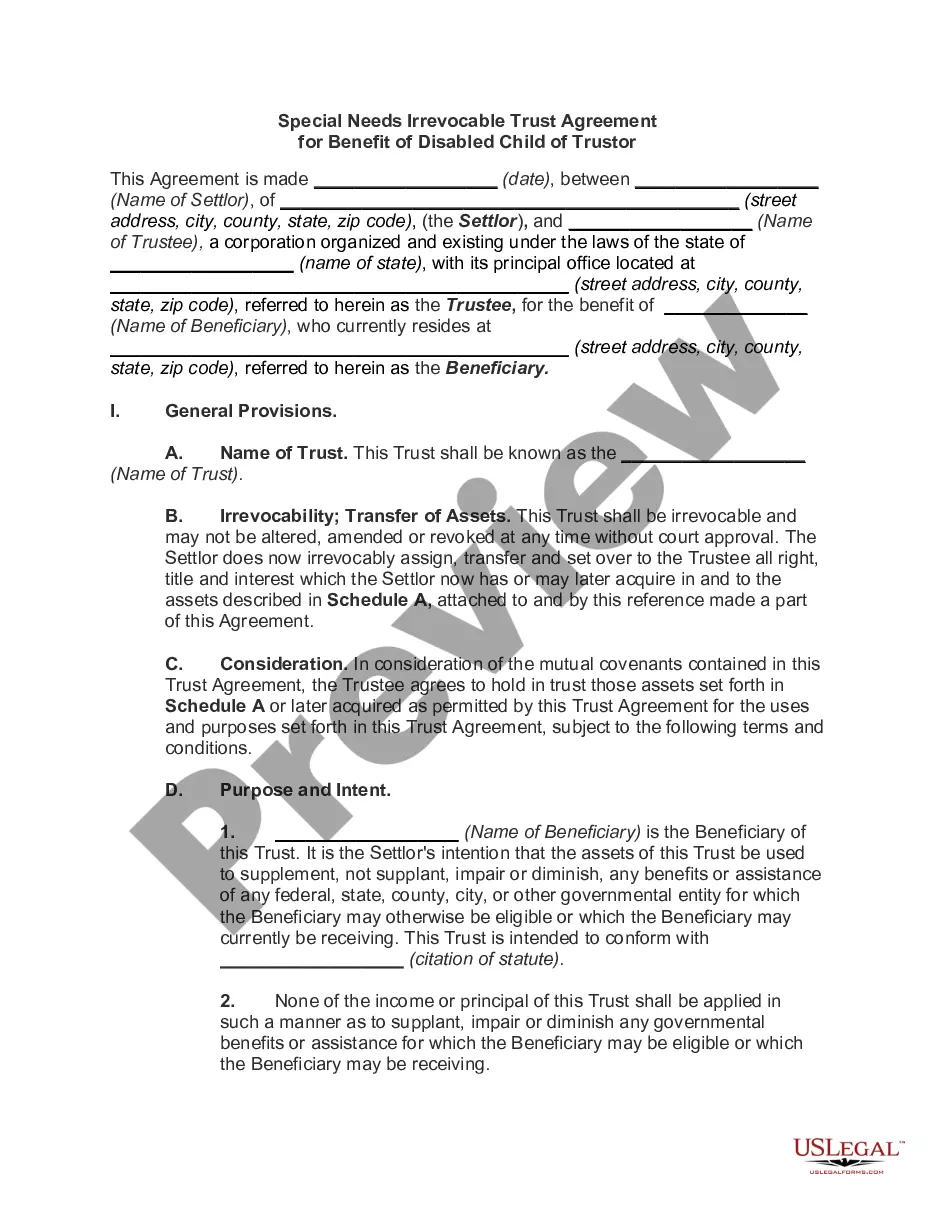
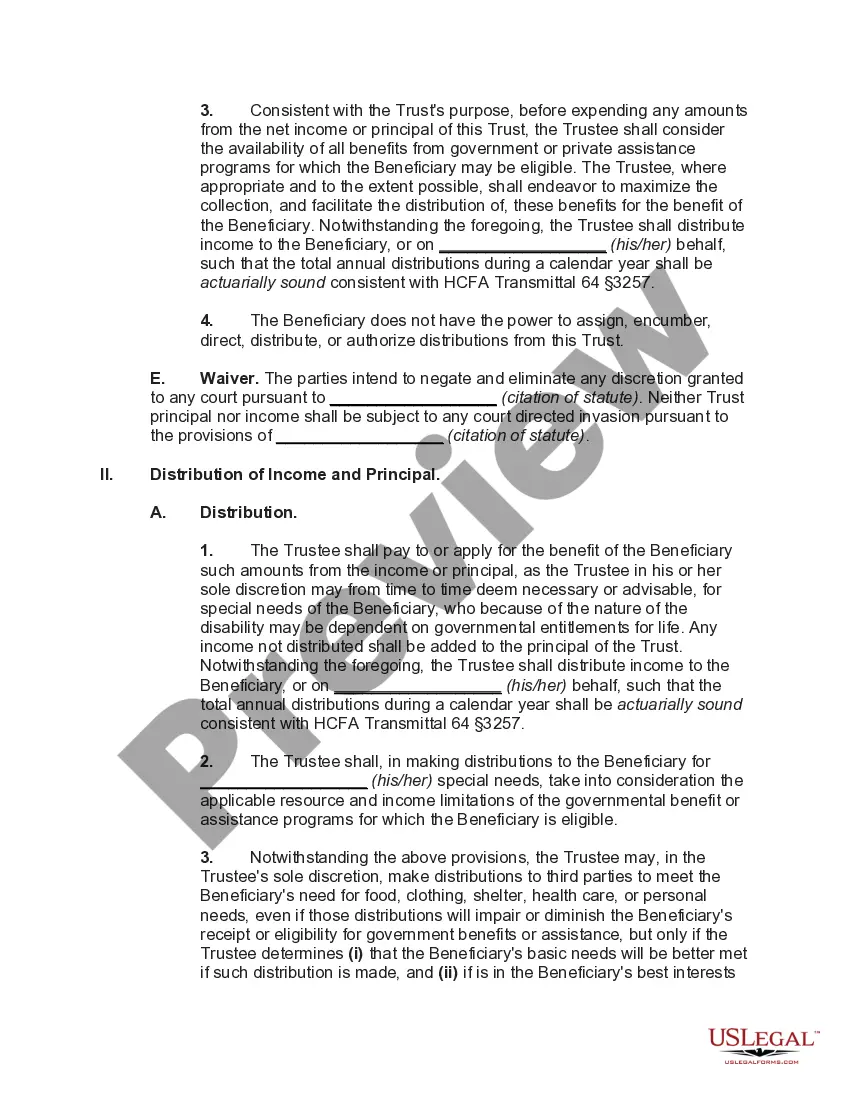
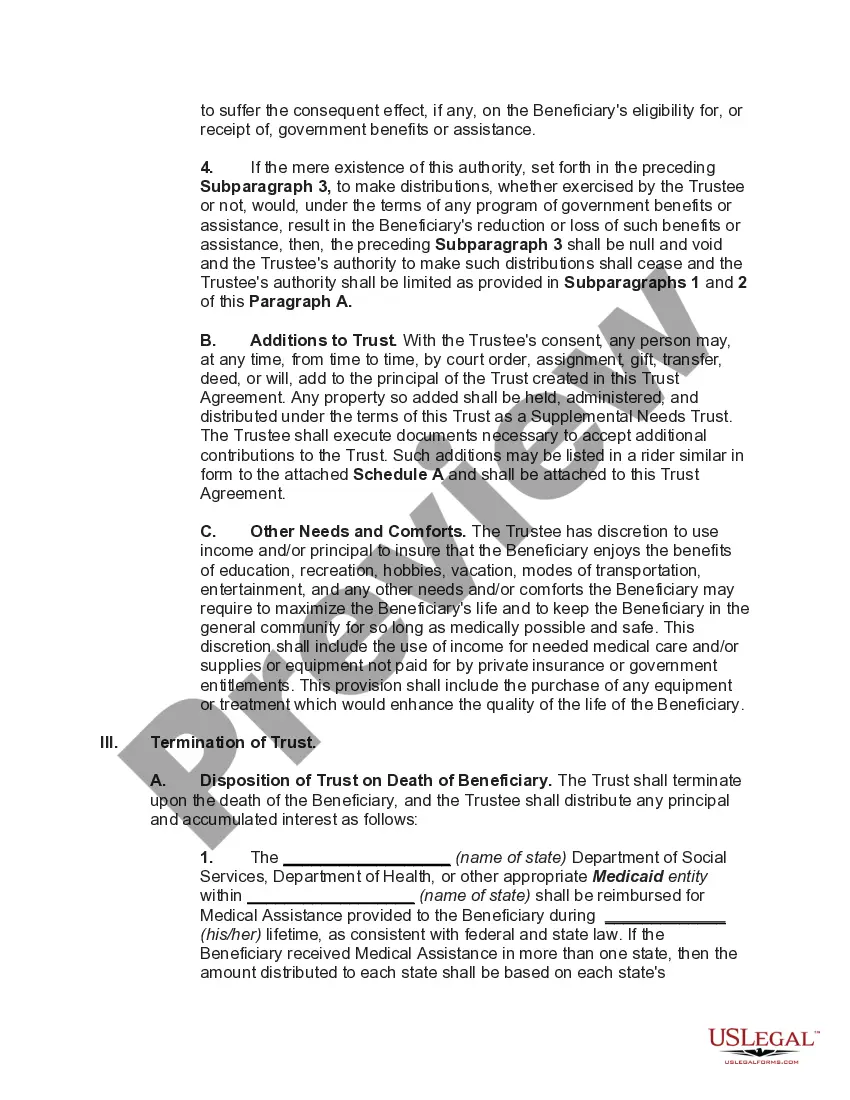
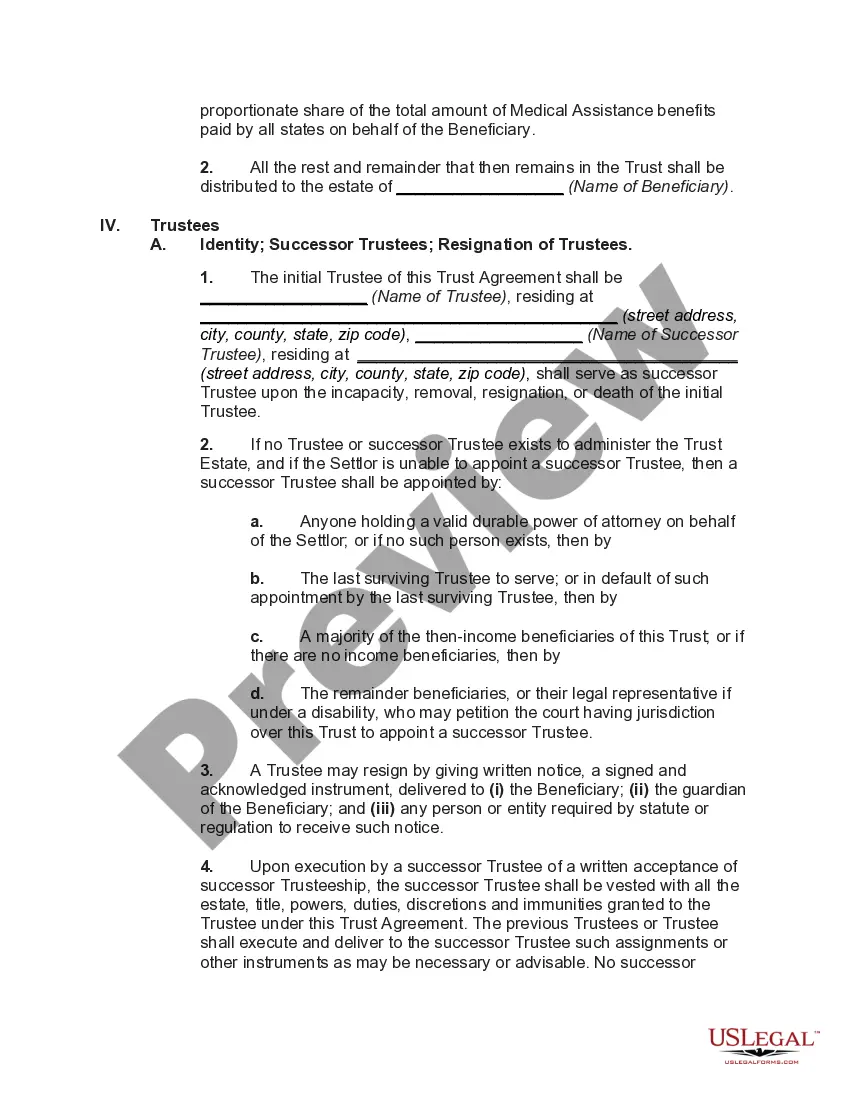
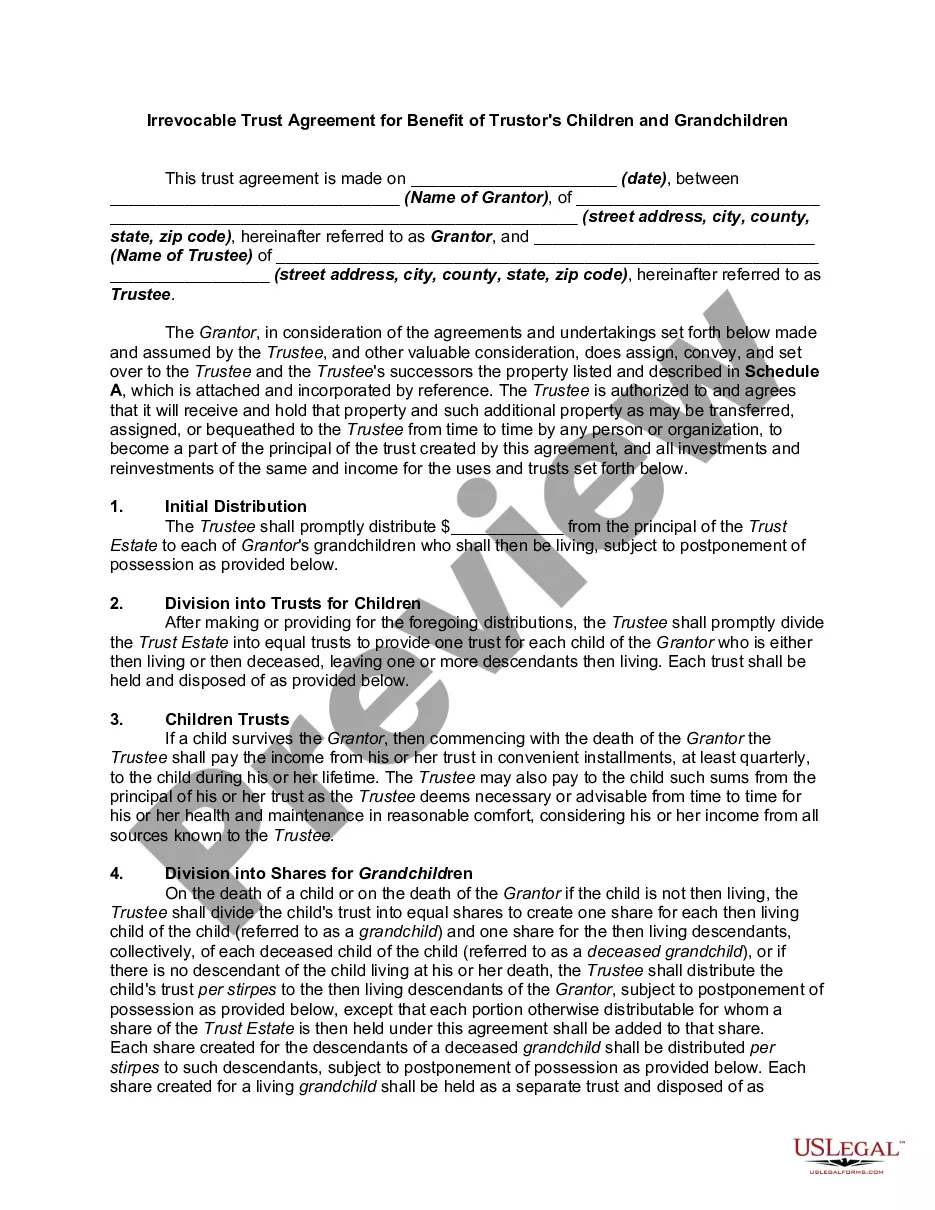
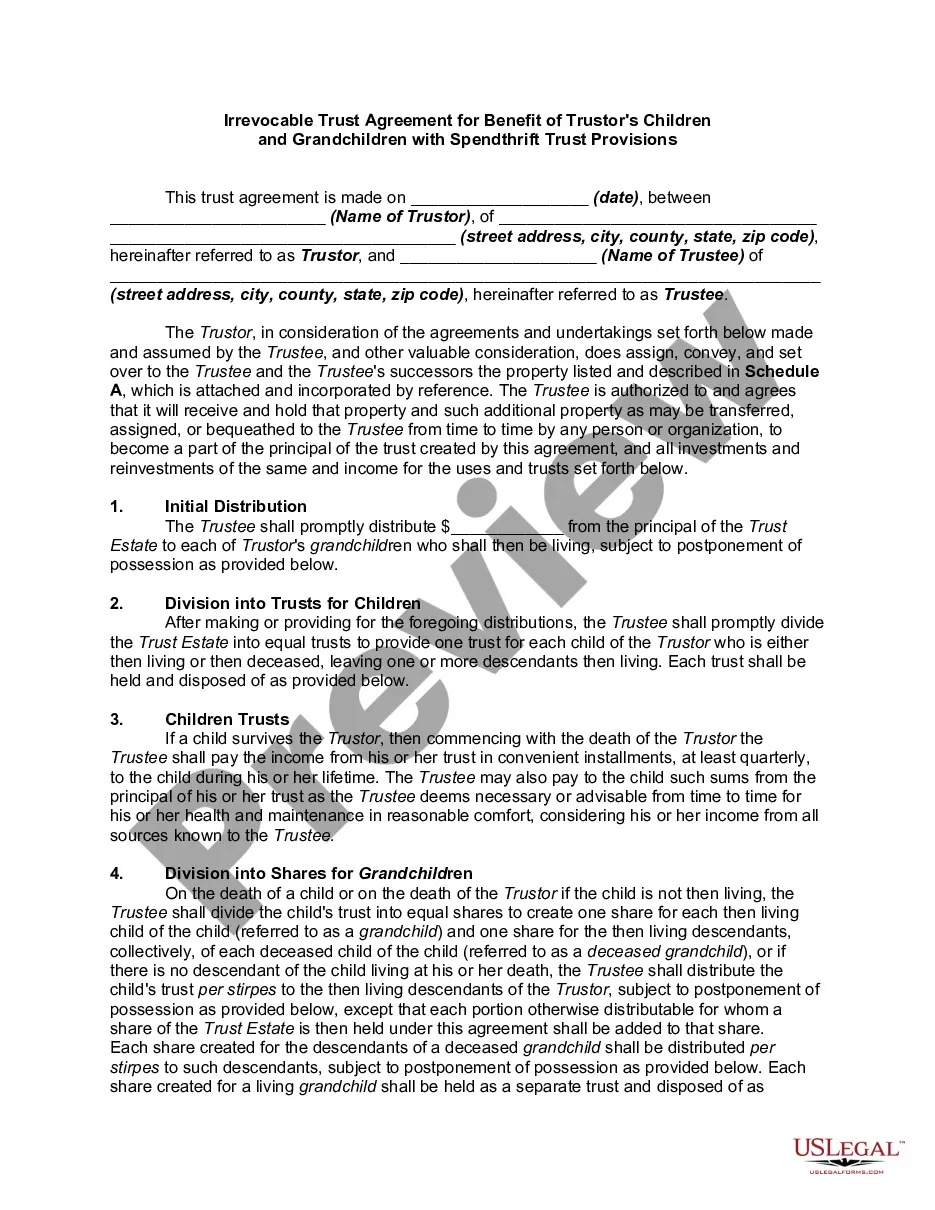
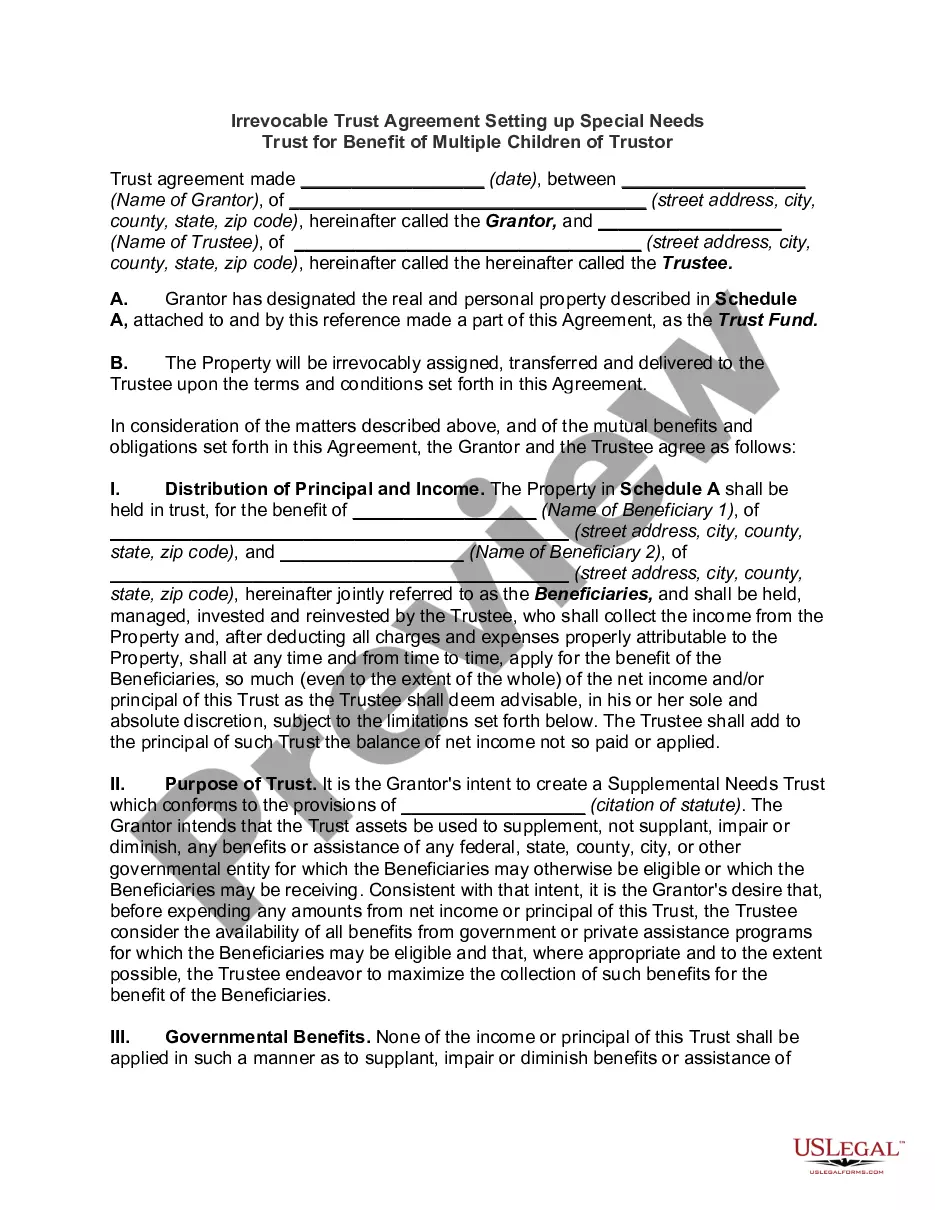
How to fill out Special Needs Irrevocable Trust Agreement For Benefit Of Disabled Child Of Trustor?
It's clear that you cannot transform into a legal expert instantly, nor can you quickly learn how to efficiently prepare Special Needs Trust Violations For Individuals Over 65 without possessing a specific background.
Drafting legal documents is a lengthy process that demands specialized education and abilities. So why not entrust the development of the Special Needs Trust Violations For Individuals Over 65 to the professionals.
With US Legal Forms, one of the most extensive legal template resources, you can discover anything from court paperwork to templates for internal office communication. We understand how essential compliance and adherence to federal and state regulations are. Therefore, on our site, all documents are location-specific and current.
You can regain access to your documents from the My documents tab at any time. If you are an existing user, you can simply Log In, and find and download the template from the same section.
Regardless of the aim of your documents—whether for financial and legal matters, or personal reasons—our website has you covered. Experience US Legal Forms now!
- Locate the form you require using the search bar at the top of the page.
- Preview it (if this option is available) and review the accompanying description to ascertain whether Special Needs Trust Violations For Individuals Over 65 is what you seek.
- Restart your search if you need a different template.
- Create a free account and choose a subscription plan to acquire the template.
- Click Buy now. After the payment is finalized, you can download the Special Needs Trust Violations For Individuals Over 65, fill it out, print it, and send or deliver it to the relevant individuals or entities.
Form popularity
FAQ
HOW DOES MONEY FROM A TRUST THAT IS NOT MY RESOURCE AFFECT MY SSI BENEFITS? Money paid directly to you from the trust reduces your SSI benefit. Money paid directly to someone to provide you with food or shelter reduces your SSI benefit but only up to a certain limit.
Funds held in a properly drafted special needs trust (SNT) will not affect a Supplemental Security Income (SSI) or Medicaid recipient's benefits. However, funds disbursed in a manner that violates SSI or Medicaid rules can impact these benefits.
Unlike individual special needs trusts, which may be created only for those under age 65, pooled trusts may be for beneficiaries of any age and may be created by the beneficiary his- or herself.
The trustee works in very close contact with the beneficiary and/or their caregiver to manage the trust and its financial distributions to pay for these things. The main takeaway regarding distribution of SNT funds is this: The beneficiary never sees the money directly, but the money is used to pay for their needs.
The SSA will usually count the assets in a trust against a person when deciding SSI eligibility. For example, all of the assets in a revocable trust would be counted against you. In an irrevocable trust, the portion of the trust that could be used to make payments to you would be counted against you.