Special Needs Trust Requirements
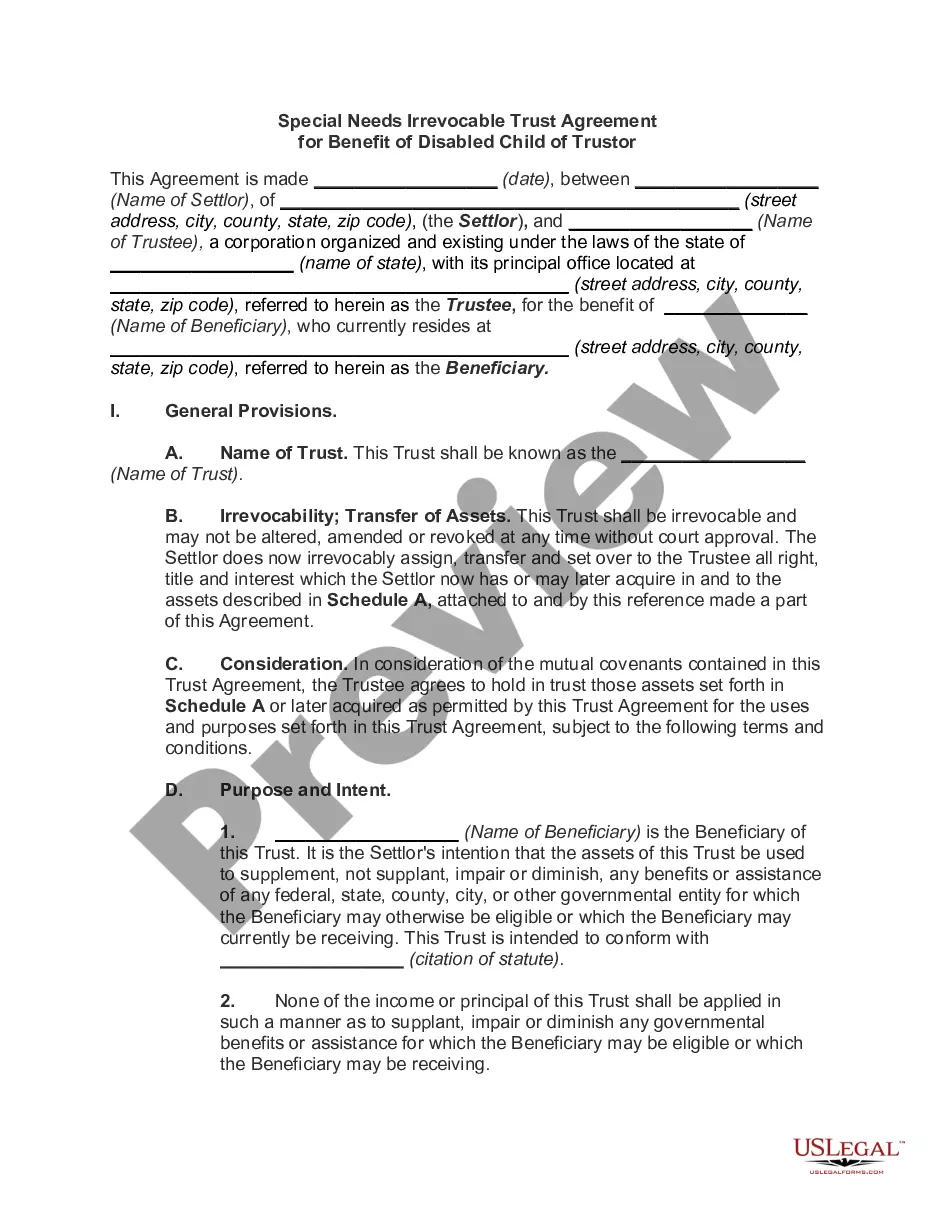
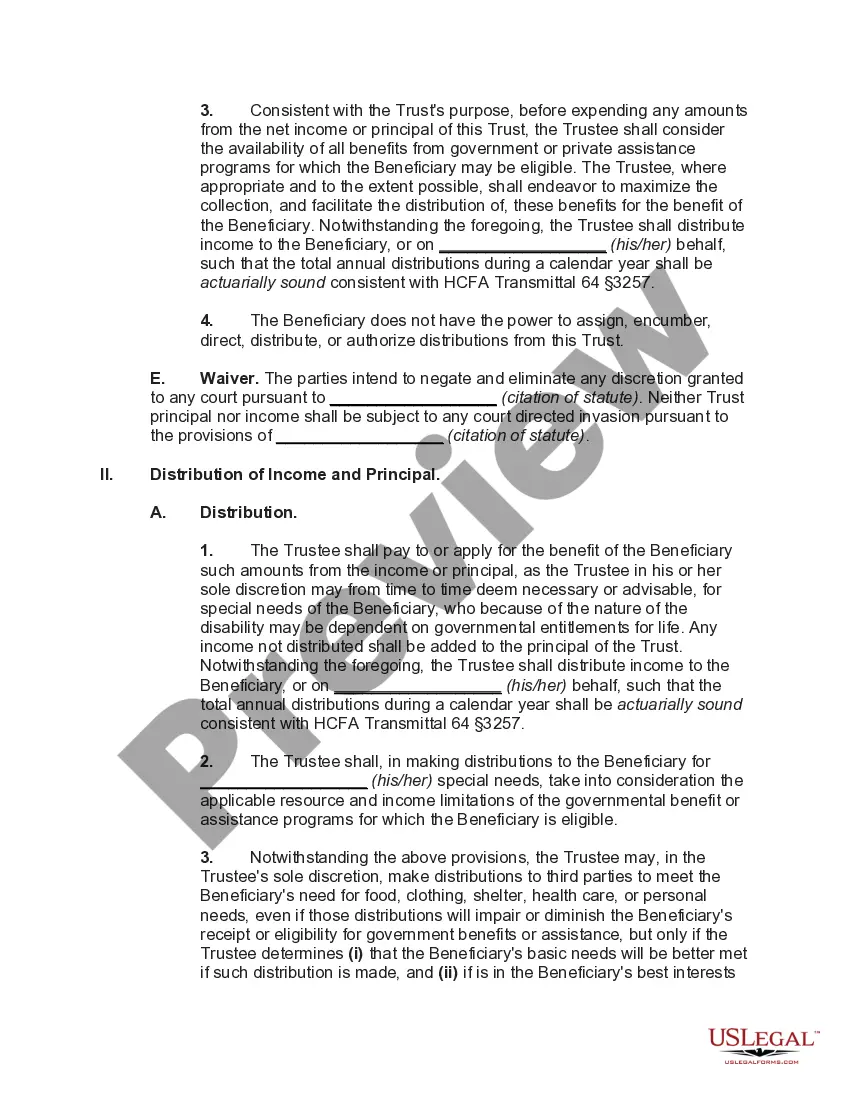
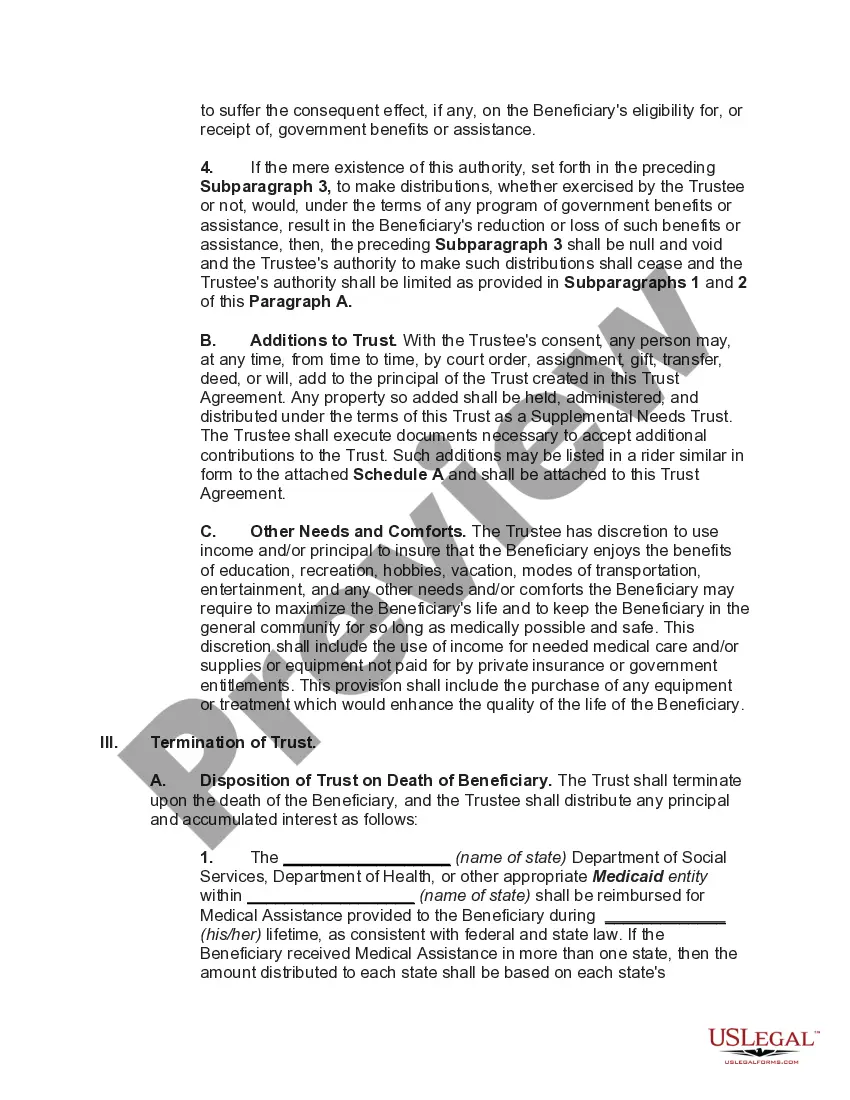
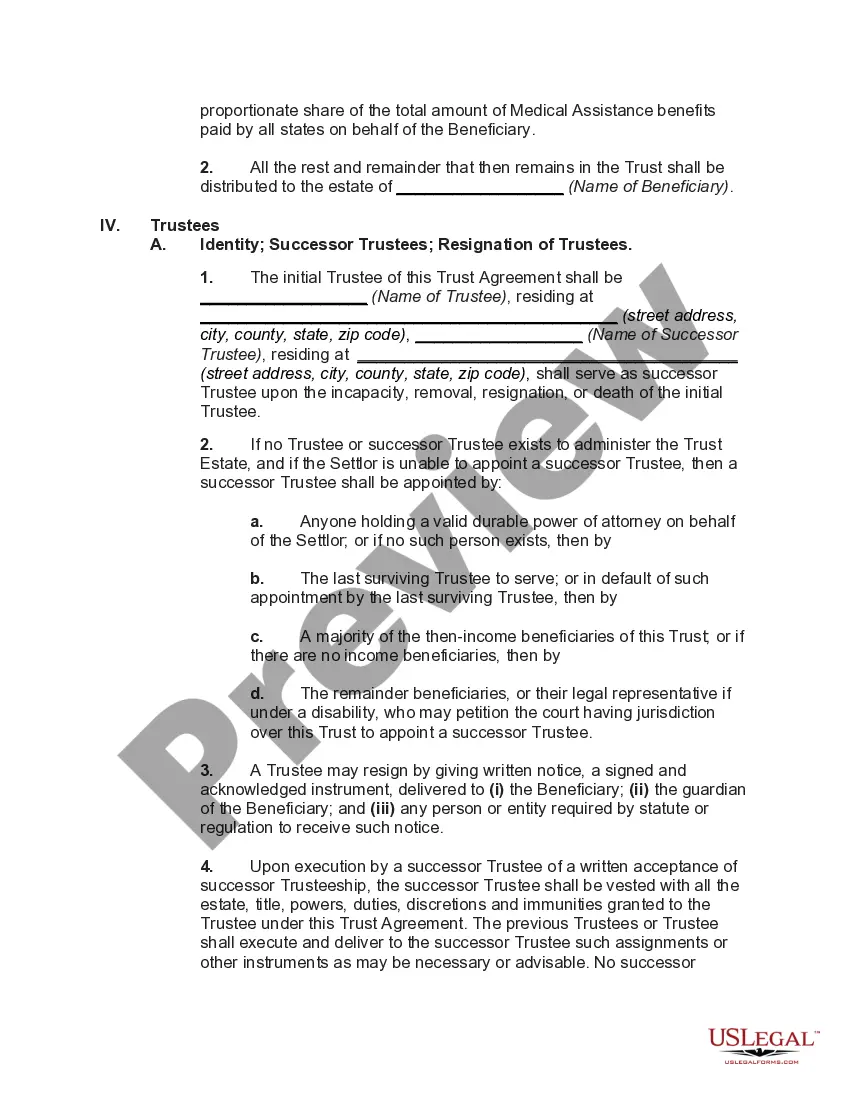
Description



Get your form ready online
Our built-in tools help you complete, sign, share, and store your documents in one place.
Make edits, fill in missing information, and update formatting in US Legal Forms—just like you would in MS Word.
Download a copy, print it, send it by email, or mail it via USPS—whatever works best for your next step.
Sign and collect signatures with our SignNow integration. Send to multiple recipients, set reminders, and more. Go Premium to unlock E-Sign.
If this form requires notarization, complete it online through a secure video call—no need to meet a notary in person or wait for an appointment.
We protect your documents and personal data by following strict security and privacy standards.

Make edits, fill in missing information, and update formatting in US Legal Forms—just like you would in MS Word.

Download a copy, print it, send it by email, or mail it via USPS—whatever works best for your next step.

Sign and collect signatures with our SignNow integration. Send to multiple recipients, set reminders, and more. Go Premium to unlock E-Sign.

If this form requires notarization, complete it online through a secure video call—no need to meet a notary in person or wait for an appointment.

We protect your documents and personal data by following strict security and privacy standards.
Looking for another form?


How to fill out Special Needs Irrevocable Trust Agreement For Benefit Of Disabled Child Of Trustor?
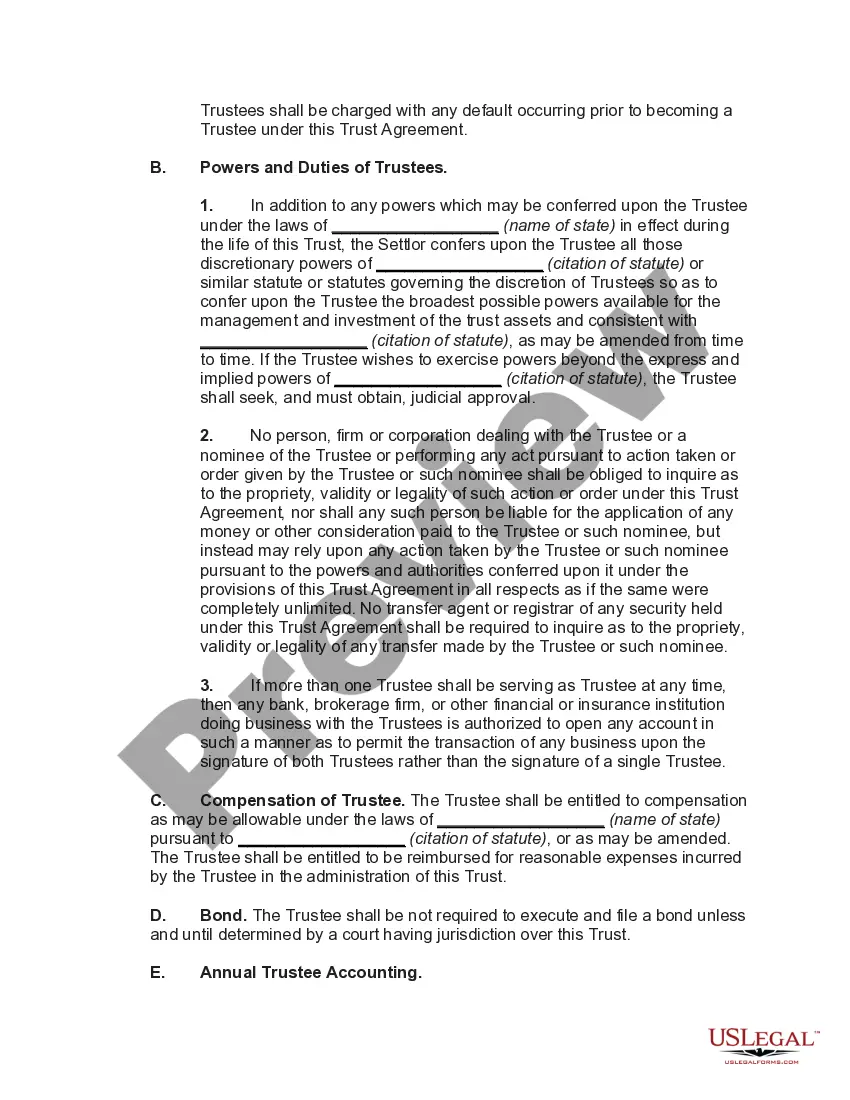
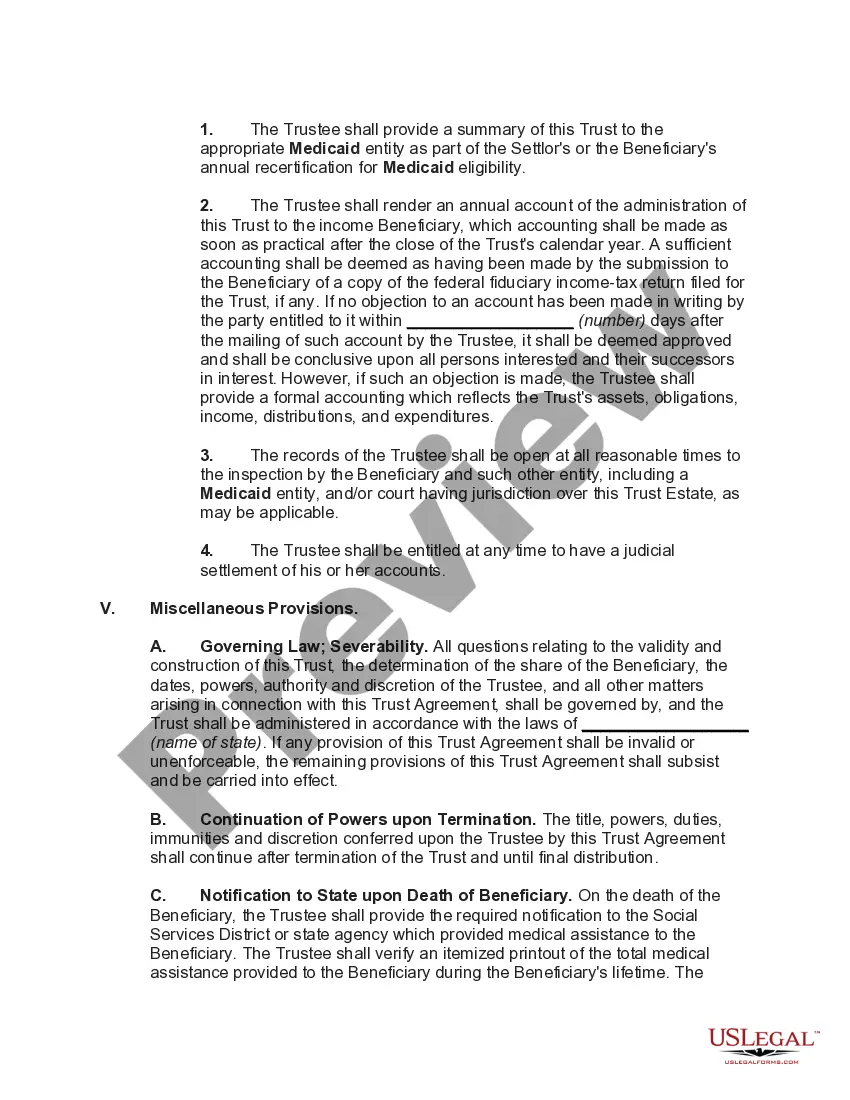
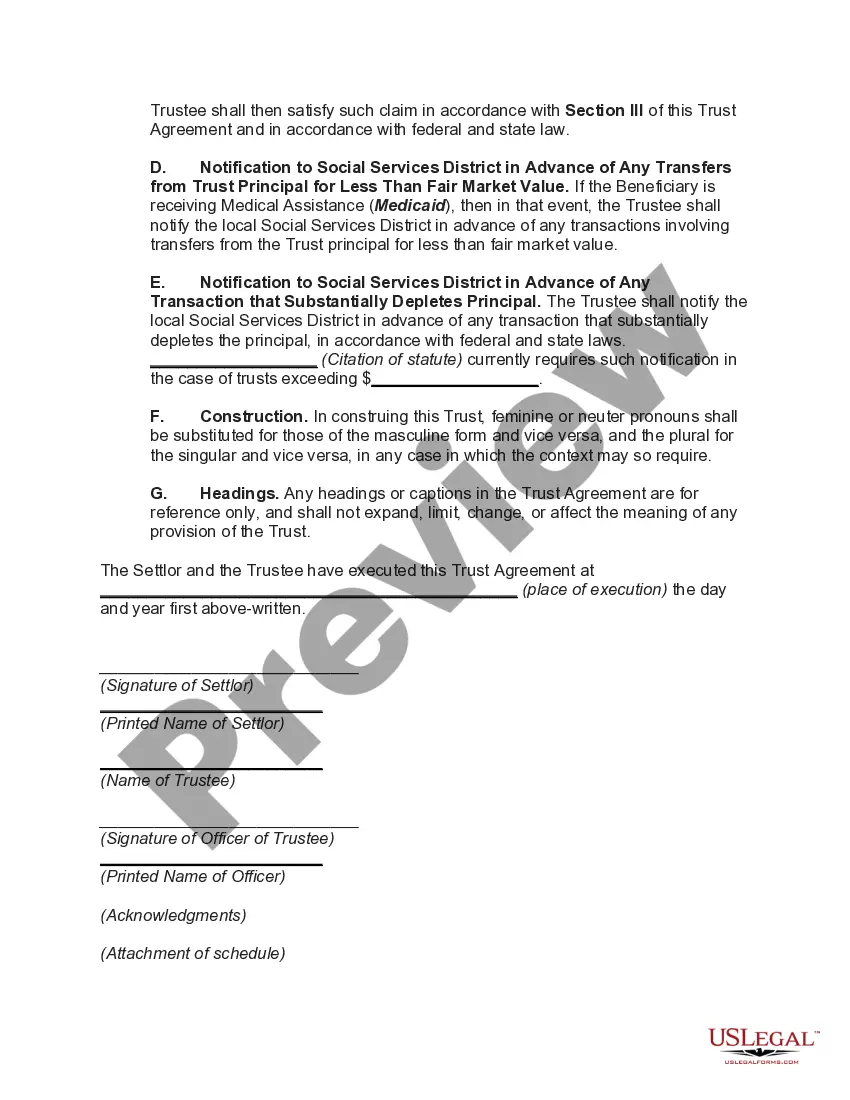
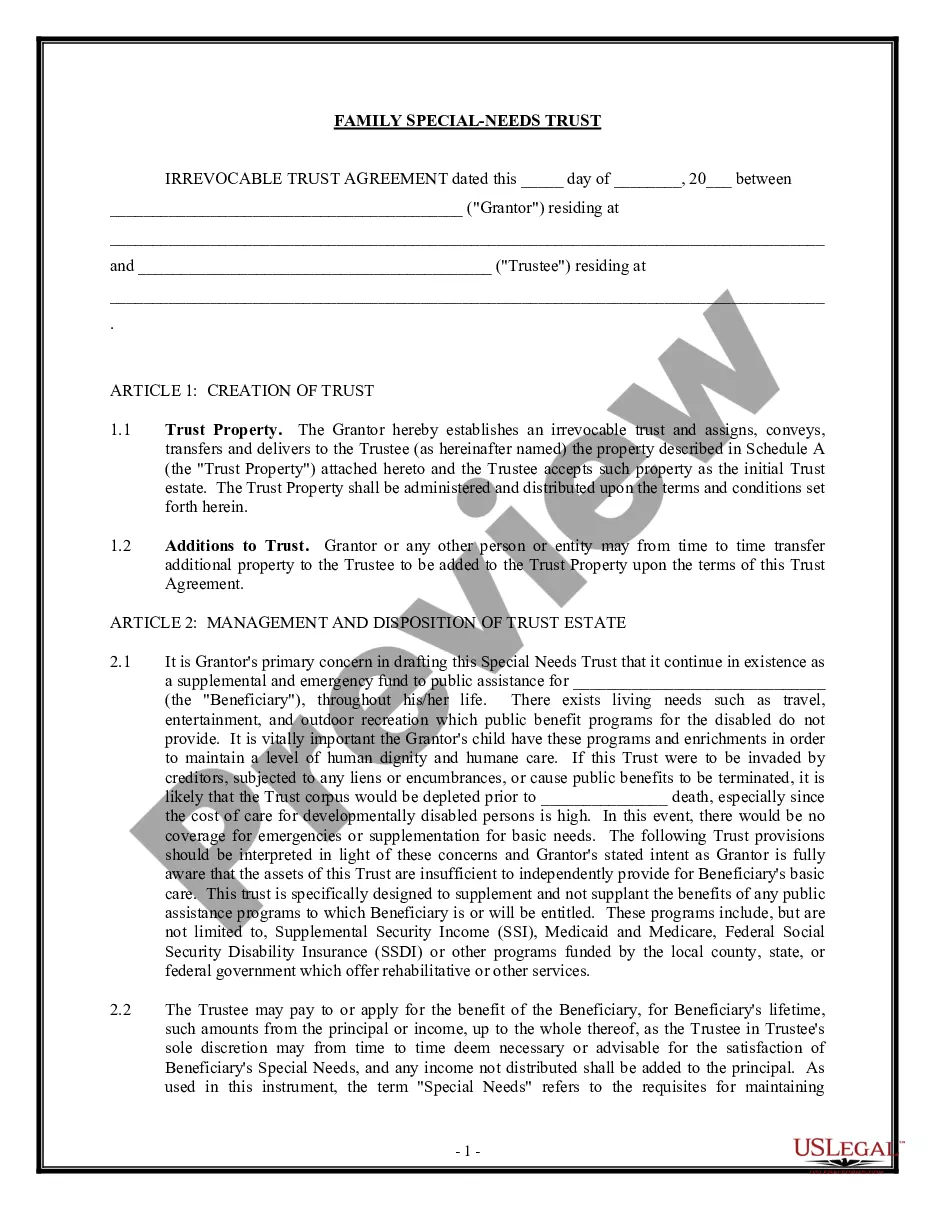
The Special Needs Trust Requirements presented on this page is a reusable legal framework crafted by expert attorneys in accordance with federal and local regulations.
For over 25 years, US Legal Forms has supplied individuals, businesses, and lawyers with more than 85,000 validated, state-specific documents for any business and personal need. It’s the fastest, simplest, and most dependable way to acquire the necessary paperwork, as the service guarantees bank-level data protection and anti-malware safeguards.
Choose the format you prefer for your Special Needs Trust Requirements (PDF, Word, RTF) and save the document on your device.
- Search for the document you require and examine it.
- Browse through the file you searched and preview it or review the form description to ensure it meets your requirements. If it doesn't, use the search feature to find the right one. Click Buy Now when you have found the template you need.
- Subscribe and Log In.
- Select the pricing plan that works for you and create an account. Use PayPal or a credit card to make a quick payment. If you already have an account, Log In and verify your subscription to continue.
- Obtain the fillable template.
Form popularity
FAQ
A spendthrift trust is a trust designed so that the beneficiary is unable to sell or give away her equitable interest in the trust property. The trustee is in control of the managing the property. Thus, the beneficiary of the trust is not in control of the property and her creditors cannot reach those assets.
You'll need to do a few things when setting up your special needs trust. First, you'll need to talk with an experienced estate planning attorney who fully understands how special needs trusts work. They can help you carefully draw up your trust documents ing to NC law. Next, you'll choose a trustee.
Special Needs Trust Typically, a guardian of the estate is first appointed for the minor or incompetent and then the guardian can apply for the approval of the creation of the Special Needs Trust. ... The Special Needs Trust will be administered and supervised as any other trust created through the Probate Court.
Special Needs Trusts may also be used for inheritance, gifts, or other resources. Reimbursement must include all Medical Assistance provided and not just the Medical Assistance provided during the term of the trust.
While public benefits, such as SSI, Medicaid, and HUD housing benefits, offer basic support for food, shelter, and medical care, a Special Needs Trust can be used to pay for other things. For example, money from the trust could be used to pay for your recreation expenses, telephone bill, education, and vacations.