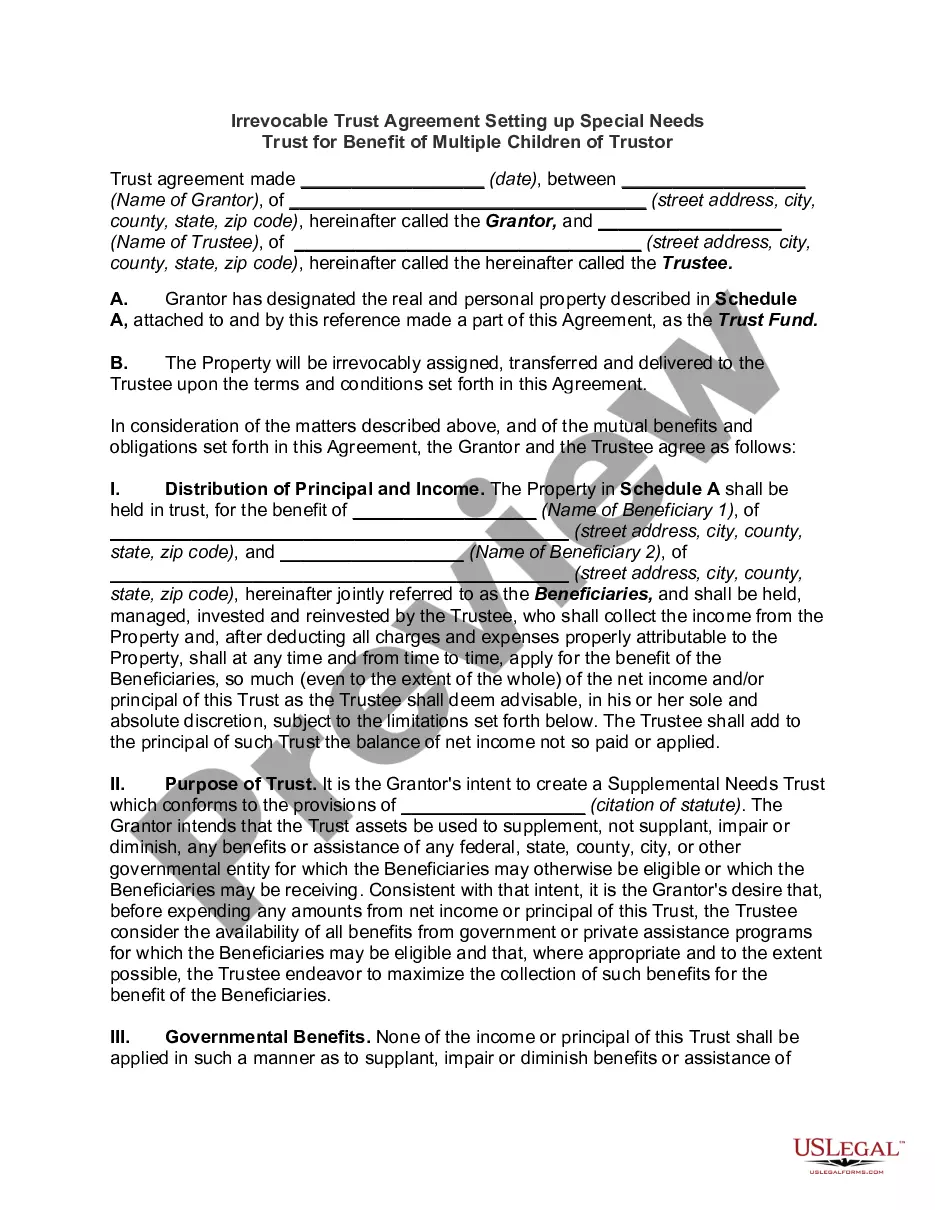
Special Needs Trust Qualified Disability Trust
Description

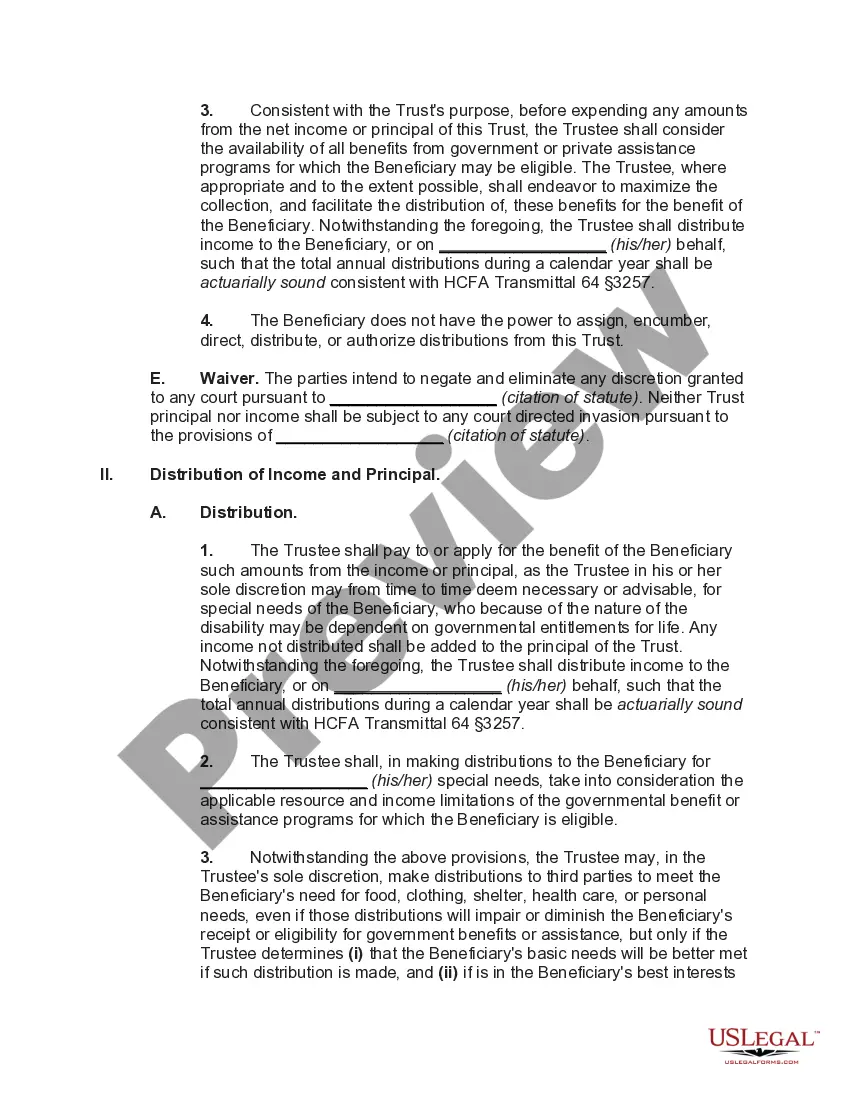
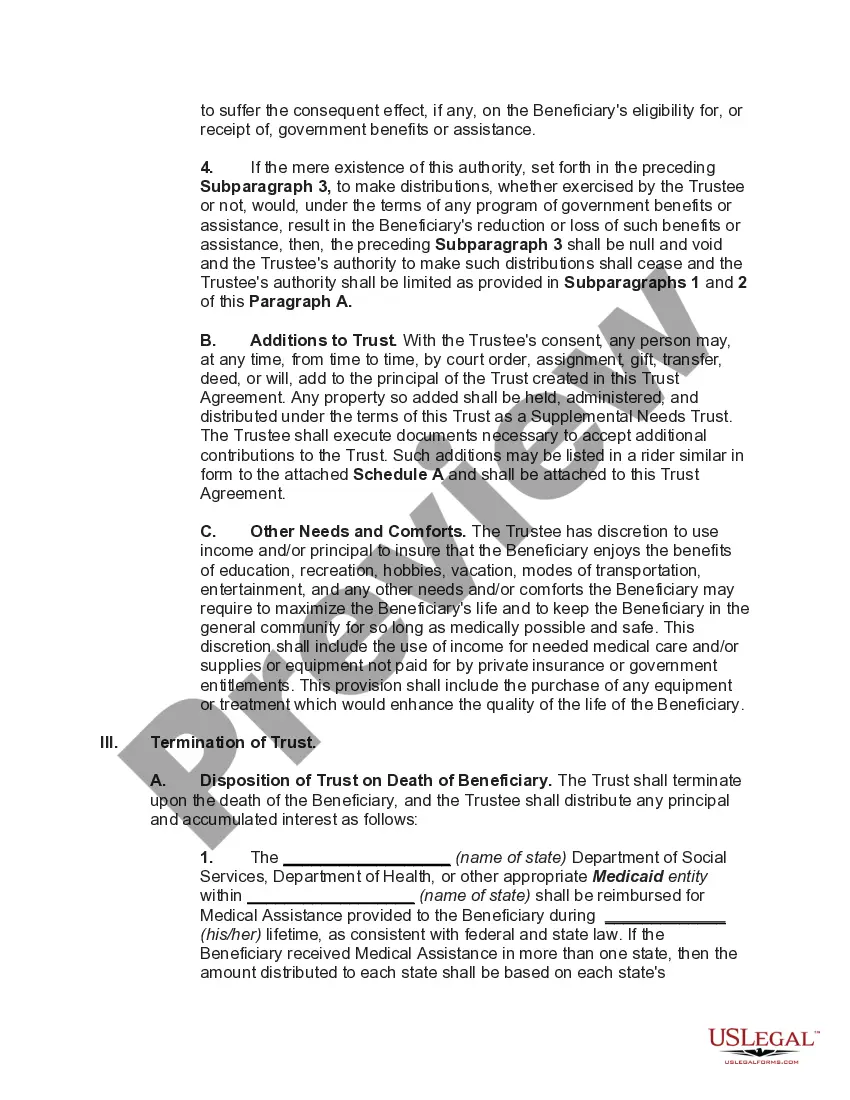
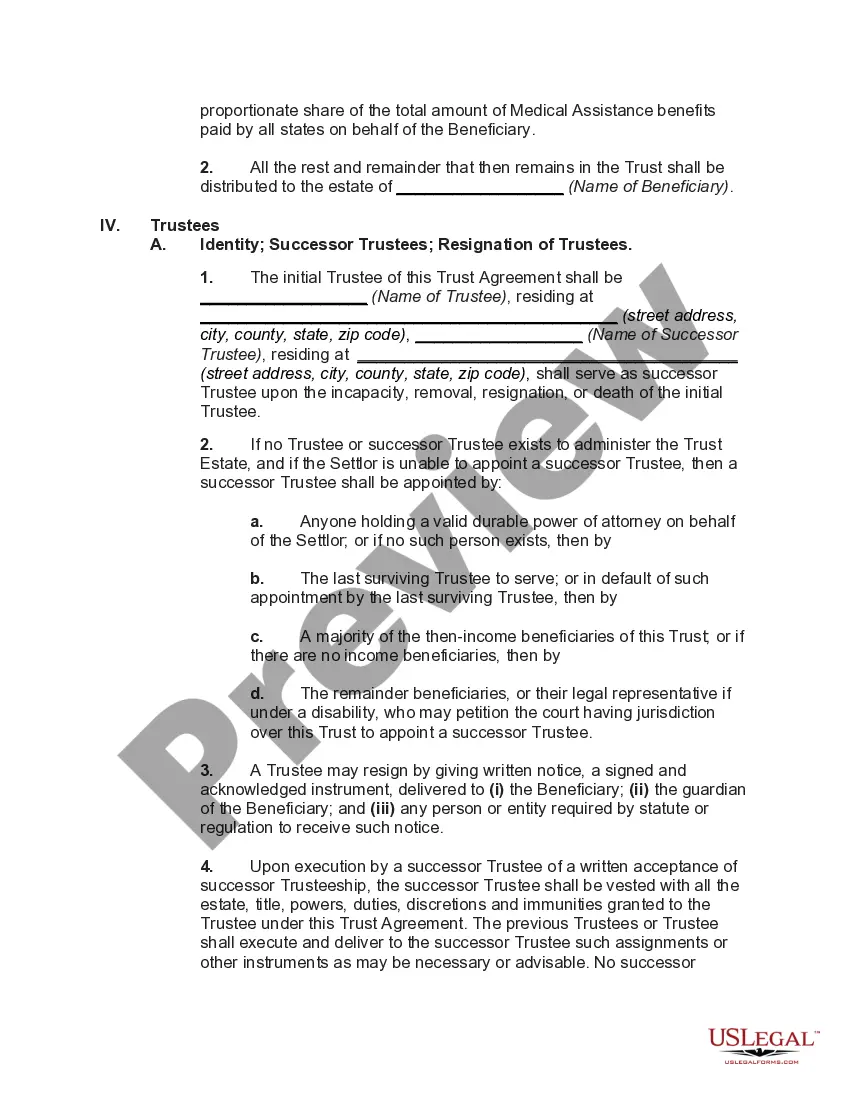
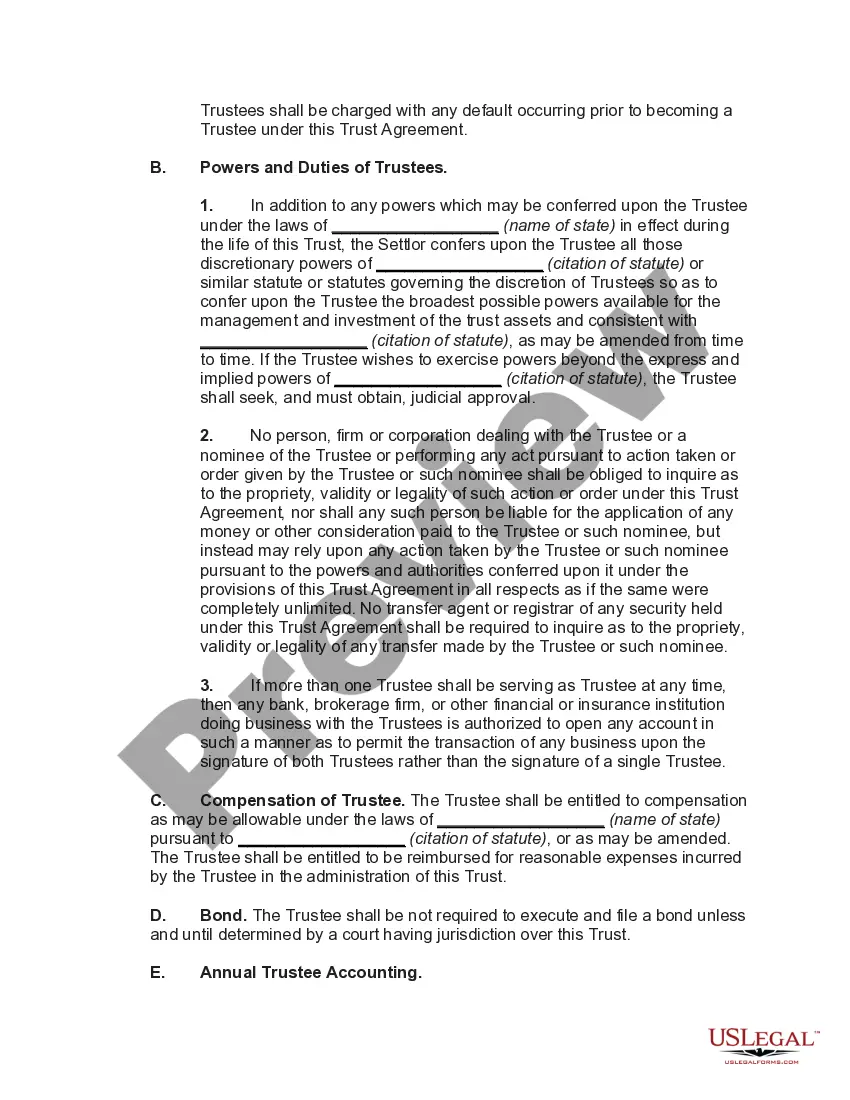

Get your form ready online
Our built-in tools help you complete, sign, share, and store your documents in one place.
Make edits, fill in missing information, and update formatting in US Legal Forms—just like you would in MS Word.
Download a copy, print it, send it by email, or mail it via USPS—whatever works best for your next step.
Sign and collect signatures with our SignNow integration. Send to multiple recipients, set reminders, and more. Go Premium to unlock E-Sign.
If this form requires notarization, complete it online through a secure video call—no need to meet a notary in person or wait for an appointment.
We protect your documents and personal data by following strict security and privacy standards.

Make edits, fill in missing information, and update formatting in US Legal Forms—just like you would in MS Word.

Download a copy, print it, send it by email, or mail it via USPS—whatever works best for your next step.

Sign and collect signatures with our SignNow integration. Send to multiple recipients, set reminders, and more. Go Premium to unlock E-Sign.

If this form requires notarization, complete it online through a secure video call—no need to meet a notary in person or wait for an appointment.

We protect your documents and personal data by following strict security and privacy standards.
Looking for another form?







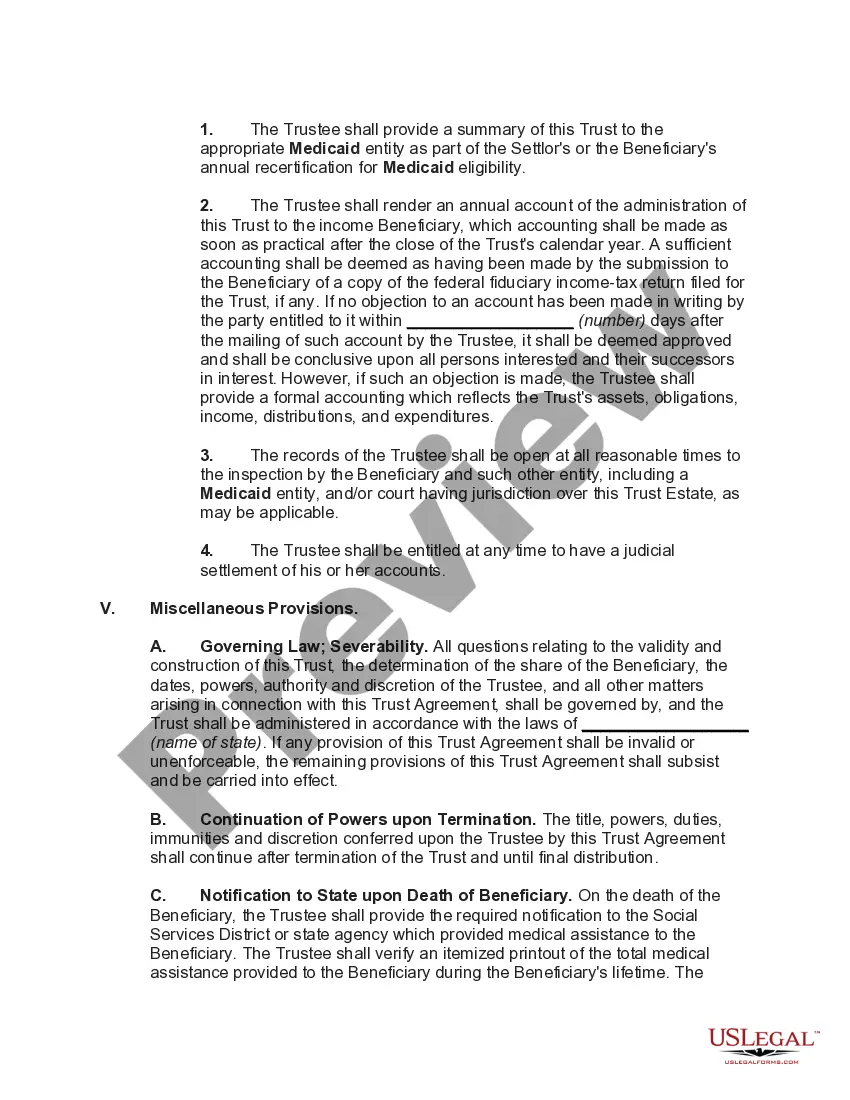
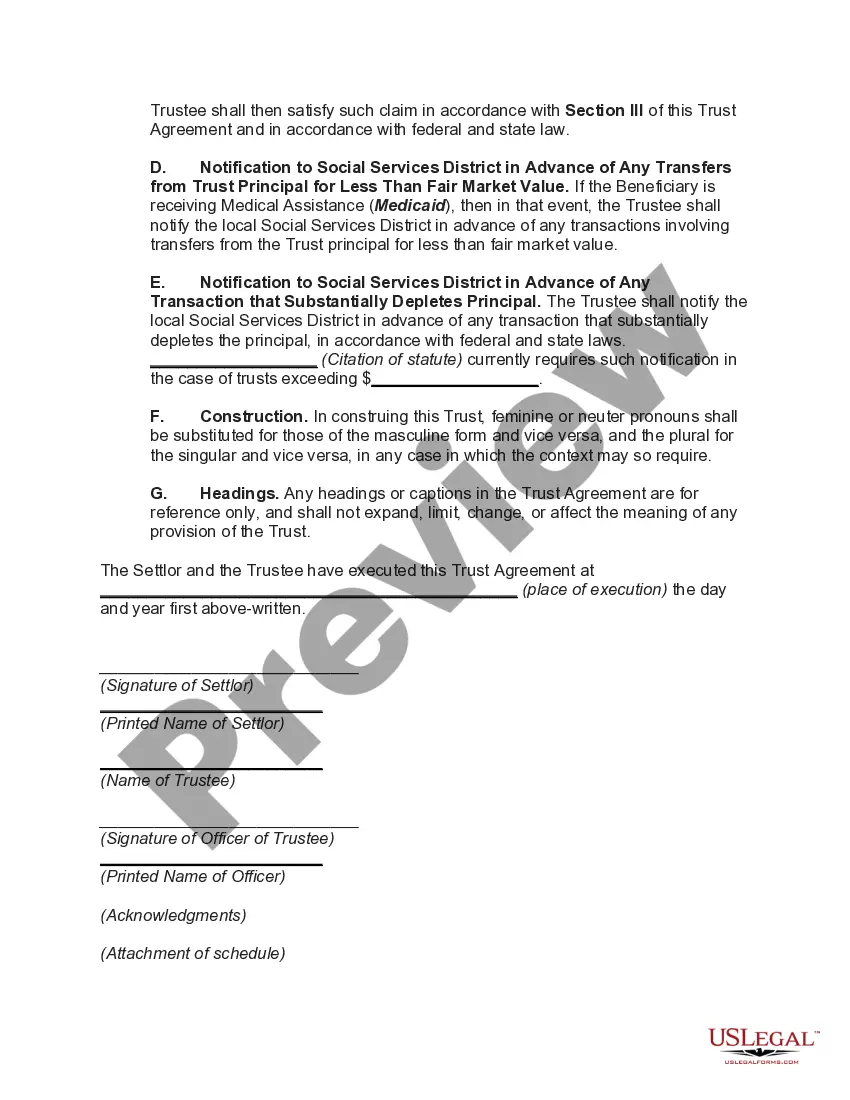
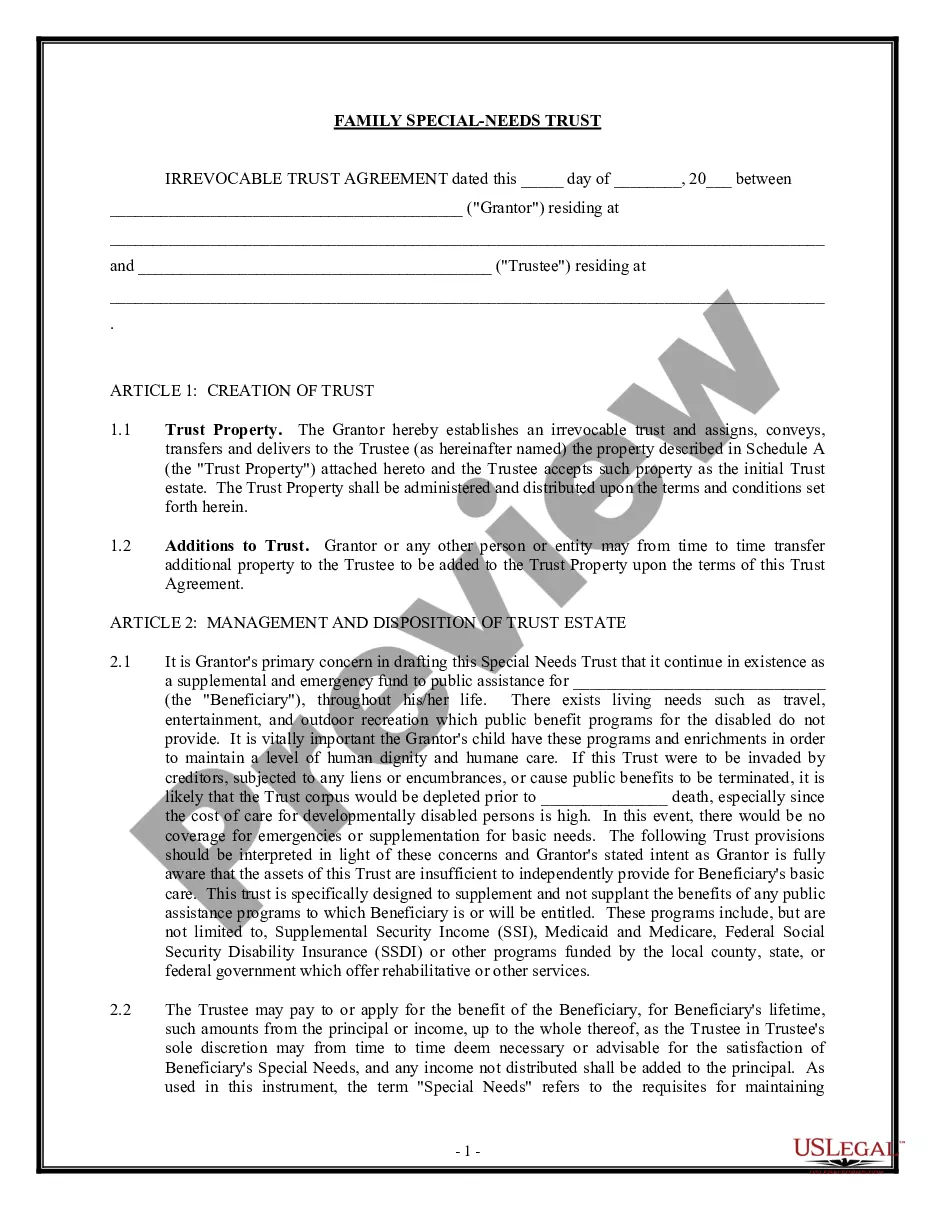
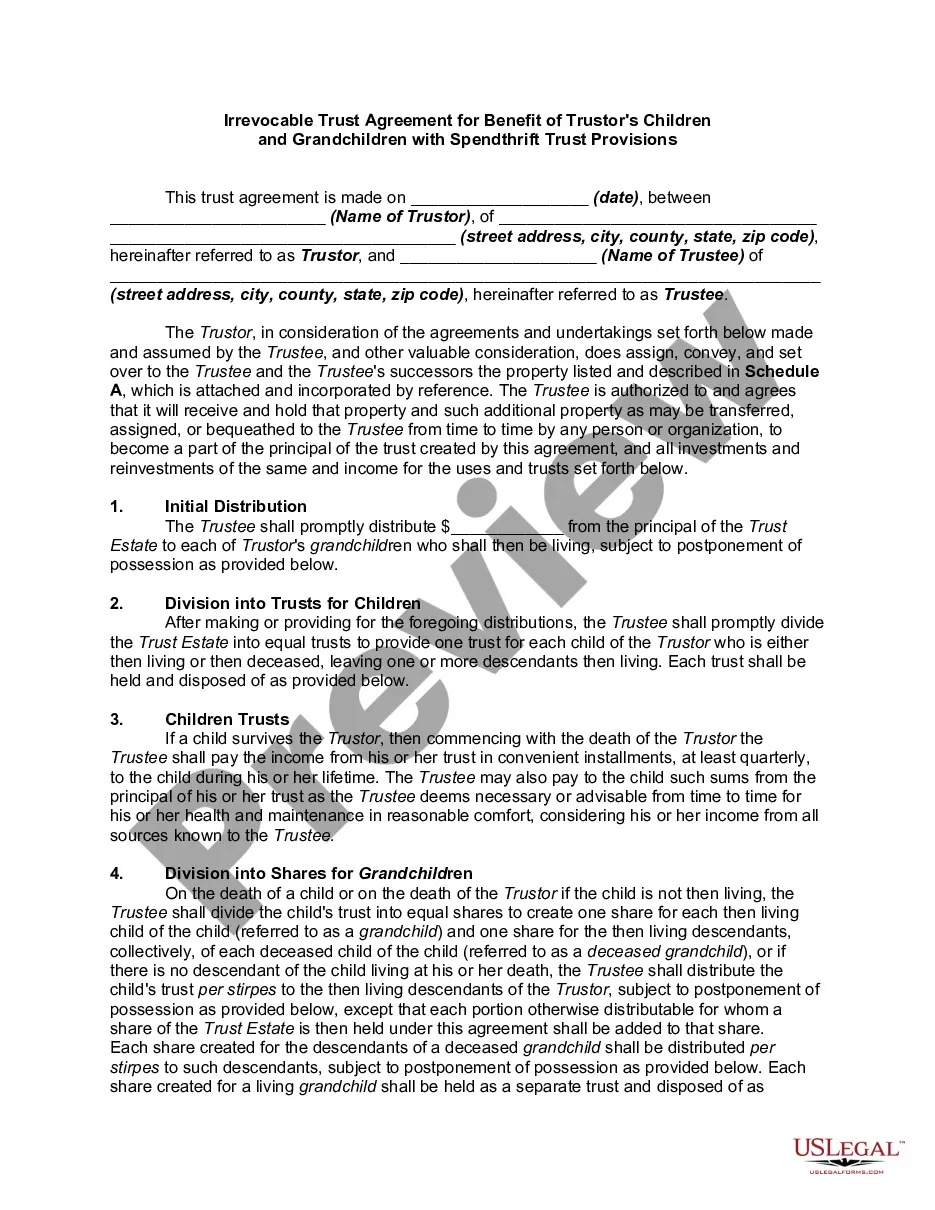
How to fill out Special Needs Irrevocable Trust Agreement For Benefit Of Disabled Child Of Trustor?
- Log in to your US Legal Forms account if you are a returning user. Confirm your subscription is active to access the document library.
- If this is your first visit, explore the extensive online library and select the special needs trust qualified disability trust form that corresponds to your jurisdiction.
- Once you identify the correct template, use the search functionality to find additional forms if needed.
- To initiate your purchase, click the Buy Now button and choose a subscription plan that fits your requirements. Create an account to gain access to more legal resources.
- Complete your purchase by entering your payment details or using PayPal to finalize the transaction.
- Download the document directly to your device, ensuring you have the necessary form for completion, which you can also find under My Forms in your profile.
With US Legal Forms, individuals and attorneys can confidently create legally sound documents through an extensive collection of over 85,000 forms. This ensures you have all necessary legal coverage at your fingertips.
Don't wait to safeguard your future. Start your journey today with US Legal Forms and access the legal documents you need in just a few clicks.
Form popularity
FAQ
The three types of special needs trusts include the first-party trust, the third-party trust, and the pooled trust. A first-party special needs trust qualified disability trust typically holds assets owned by the individual with disabilities, ensuring they remain eligible for government benefits. In contrast, a third-party trust is established by someone else, such as a parent or grandparent, to benefit the individual without affecting their benefit eligibility. Lastly, a pooled trust allows multiple individuals with disabilities to pool their resources while maintaining separate accounts, making it an effective solution for managing funds.
A complex trust differs from a special needs trust qualified disability trust mainly in its distribution requirements and tax implications. Complex trusts have more flexibility in their distributions but may not align with the needs of individuals with disabilities. In contrast, a qualified disability trust's primary focus is ensuring continued eligibility for government benefits, which is essential for the special needs population. Understanding these differences can greatly impact your estate planning.
While a special needs trust qualified disability trust offers many advantages, there are also potential disadvantages to consider. For instance, the costs of setting up and maintaining the trust can be higher than those of a regular trust. Additionally, the trust may restrict certain types of income and assets, which can limit your options in managing funds for the beneficiary. Weighing these factors carefully is crucial.
A special needs trust qualified disability trust differs significantly from a regular trust in its purpose and legal structure. This type of trust is specifically designed to provide for the needs of individuals with disabilities without jeopardizing their eligibility for government benefits. On the other hand, a regular trust might not offer such protections and can lead to the loss of essential aid. Understanding these distinctions can help you make informed planning decisions.
A special needs trust qualified disability trust is subject to specific tax rules outlined by the IRS. Generally, income generated by the trust may be taxable, but certain distributions made to qualified beneficiaries can be tax-exempt. This means a special needs trust can help preserve vital government benefits while managing tax implications effectively. Consulting with a tax professional can provide tailored guidance for your situation.
The formation of a trust can take anywhere from a few days to several weeks, primarily influenced by the complexity of the trust and the time needed for documentation. Factors that affect the timeline include drafting the trust agreement, consulting with professionals, and funding the trust. With a clear focus and assistance from qualified experts, you can expect a smooth transition to having a special needs trust qualified disability trust in place.
Setting up a special needs trust usually takes anywhere from a few weeks to a couple of months. The duration depends on how quickly you gather required information and documents, as well as the attorney's workload. Being proactive and organized can significantly speed up the process, helping you quickly establish your special needs trust qualified disability trust.
The timeline to establish a special needs trust can vary. Generally, the process can take several weeks to a few months, depending on factors such as complexity and necessary documentation. Engaging a knowledgeable attorney can help expedite the process and ensure that the resulting trust meets all legal requirements as a special needs trust qualified disability trust.
Setting up a special needs trust involves several steps. First, consult an attorney to understand the legal requirements and tailor the trust to meet the beneficiary's needs. Second, draft the trust document and specify the terms governing its administration. Once completed, funding the trust allows it to function effectively as a special needs trust qualified disability trust.
To qualify for a special needs trust, you must establish that the beneficiary meets the disability criteria defined by Social Security. The trust should be irrevocable to ensure compliance with regulations. It's essential to specify how assets will support the beneficiary without affecting their eligibility for crucial government programs. Consulting with legal experts can assist in forming a special needs trust qualified disability trust tailored to your situation.