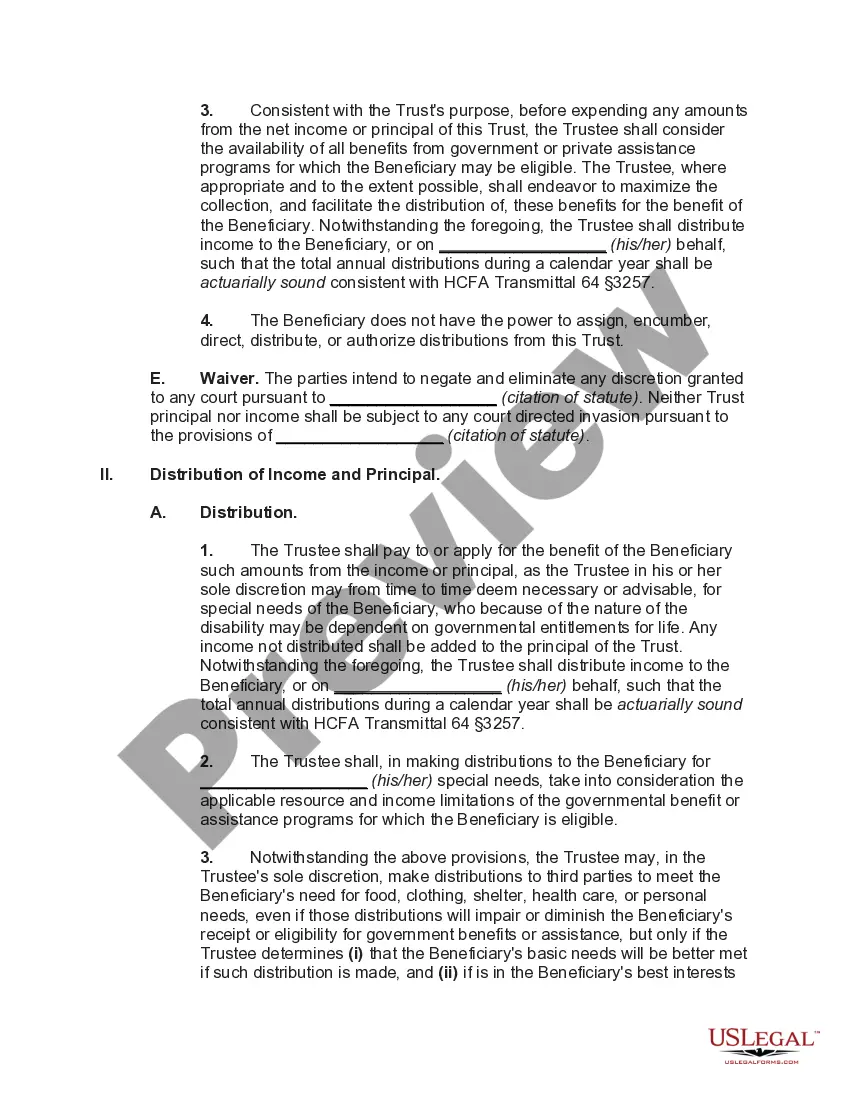
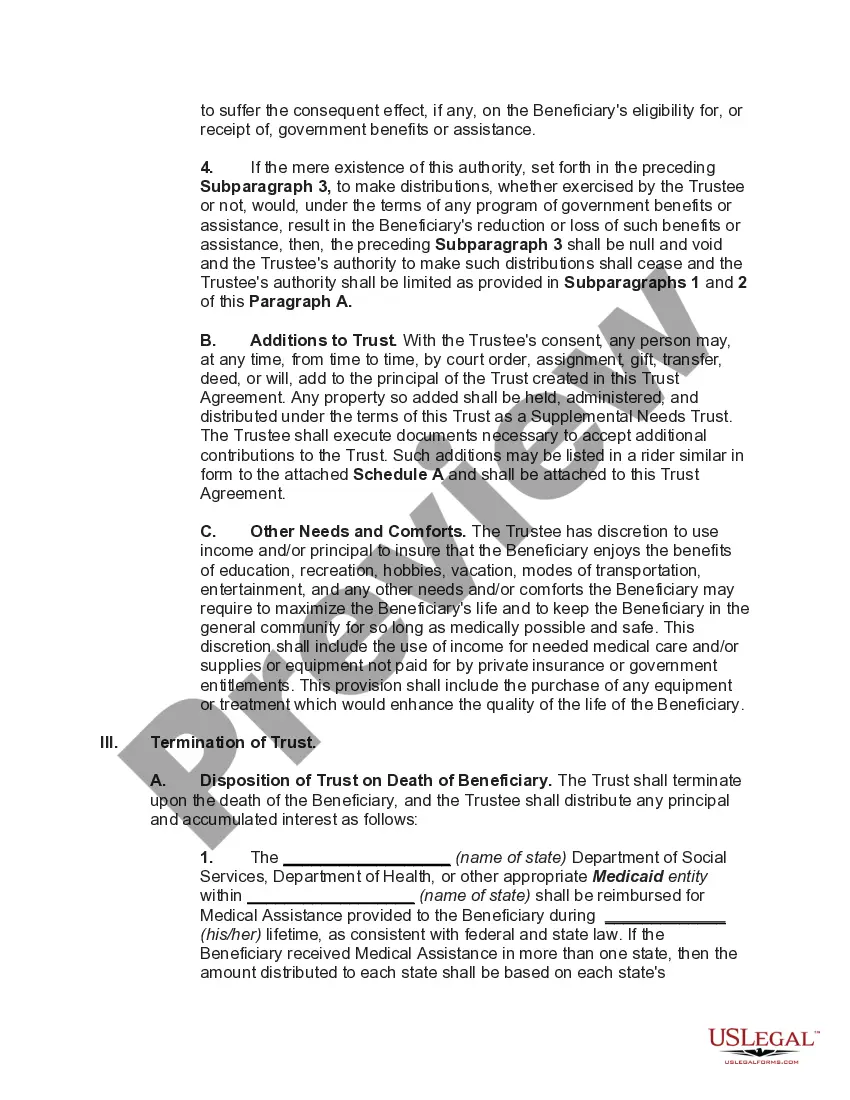
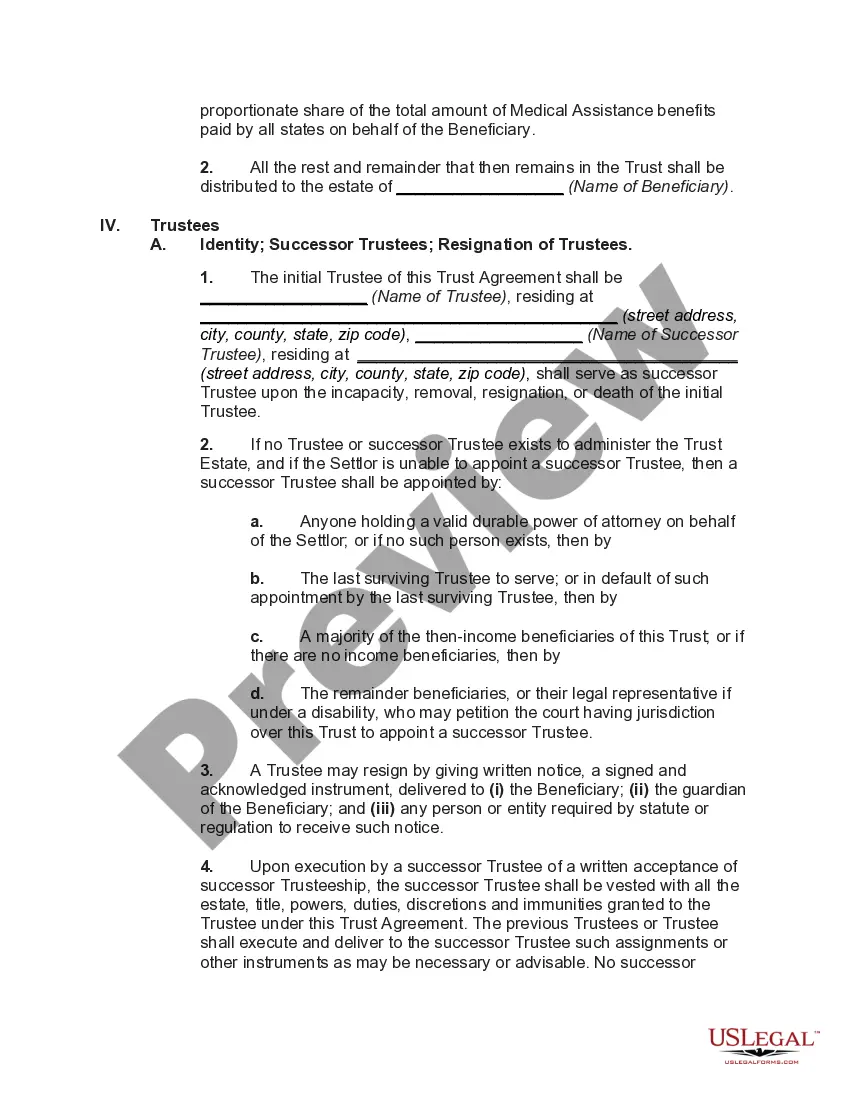
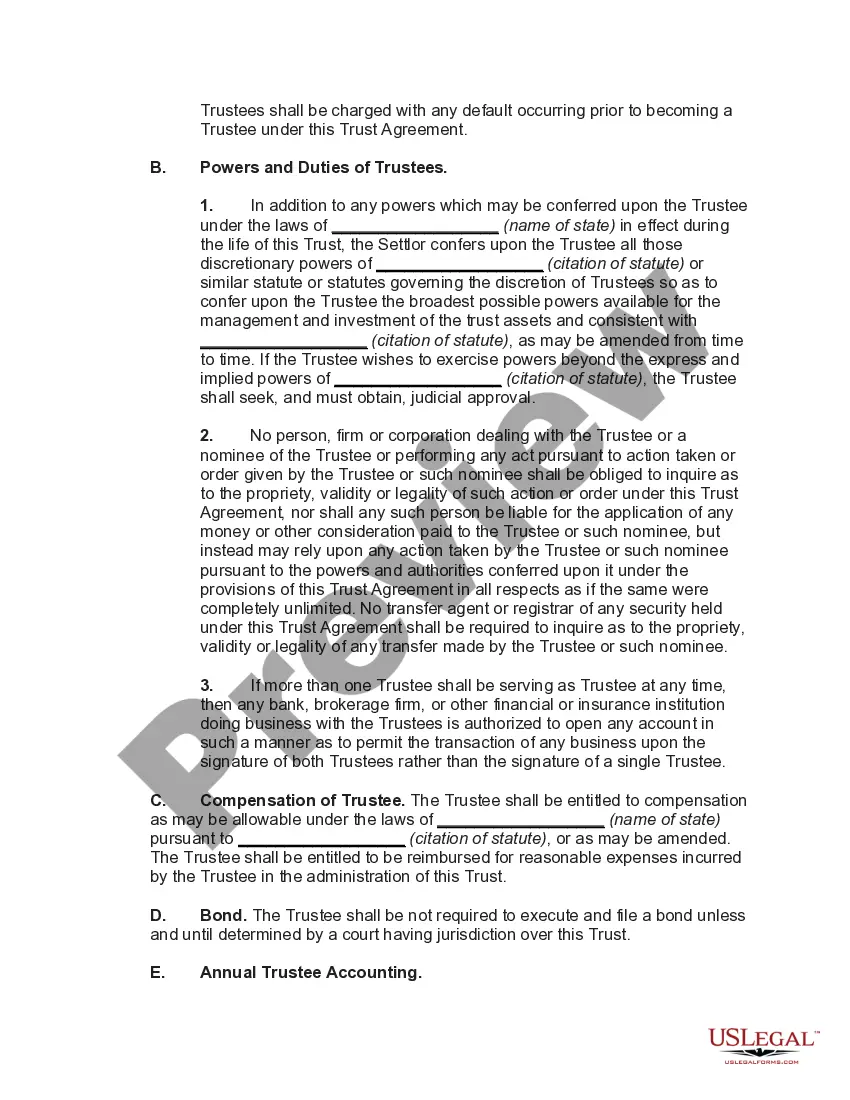
Special Needs Trust For Medicaid
Description

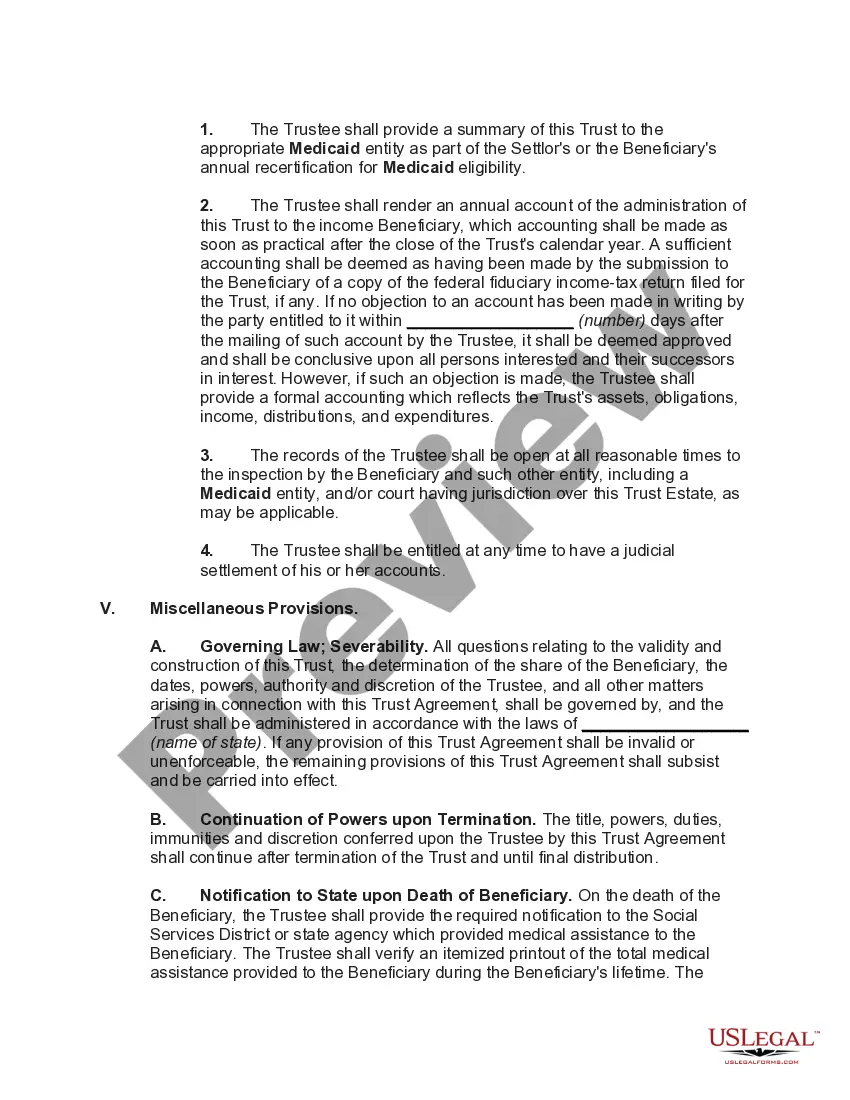
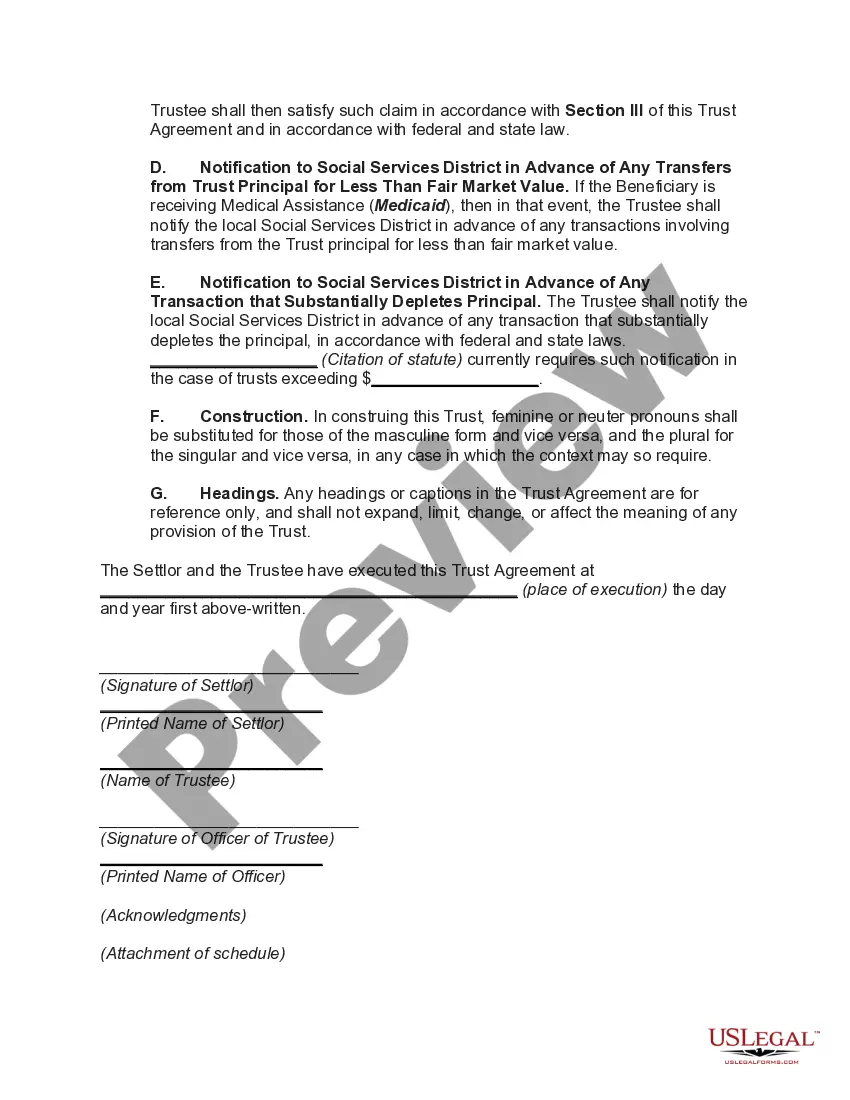


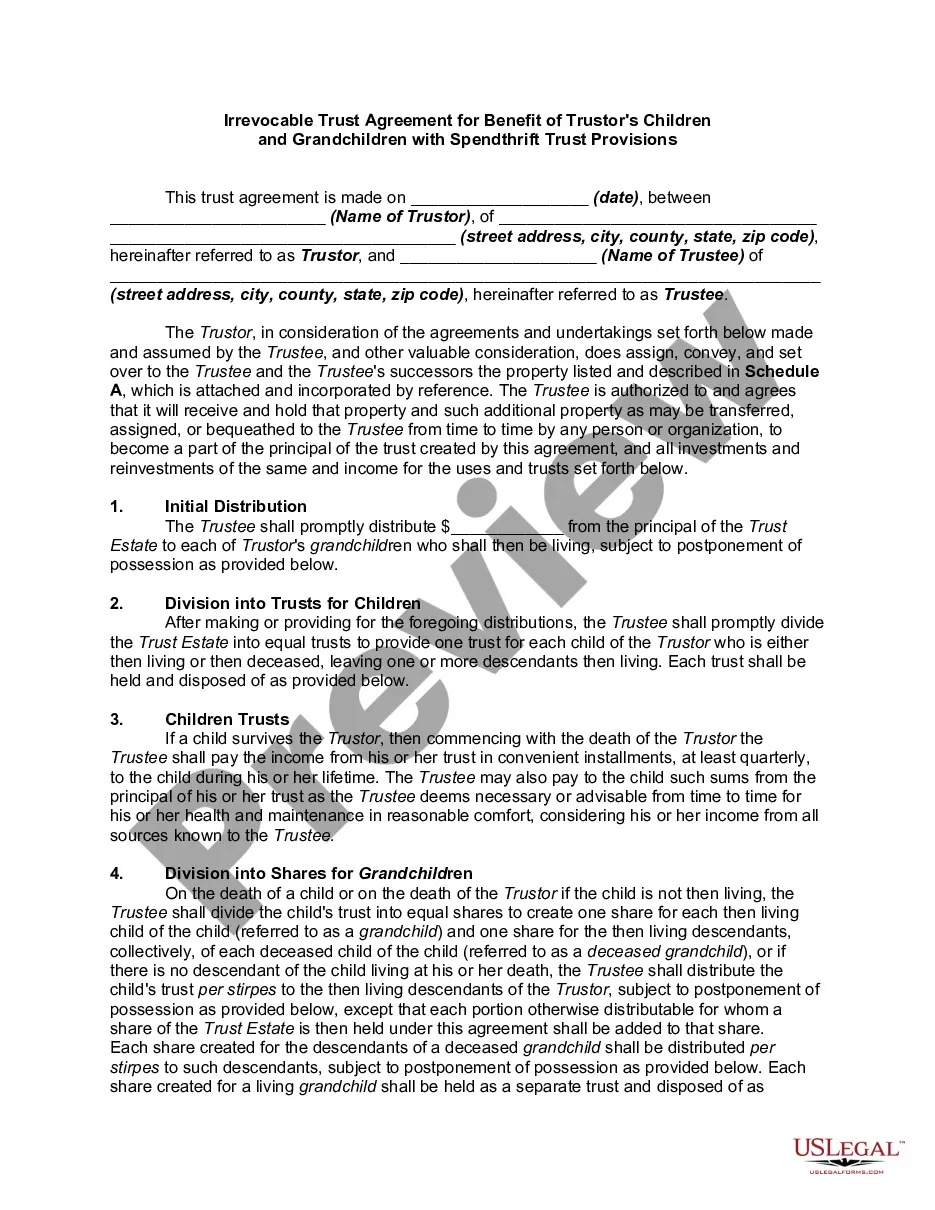

Get your form ready online
Our built-in tools help you complete, sign, share, and store your documents in one place.
Make edits, fill in missing information, and update formatting in US Legal Forms—just like you would in MS Word.
Download a copy, print it, send it by email, or mail it via USPS—whatever works best for your next step.
Sign and collect signatures with our SignNow integration. Send to multiple recipients, set reminders, and more. Go Premium to unlock E-Sign.
If this form requires notarization, complete it online through a secure video call—no need to meet a notary in person or wait for an appointment.
We protect your documents and personal data by following strict security and privacy standards.

Make edits, fill in missing information, and update formatting in US Legal Forms—just like you would in MS Word.

Download a copy, print it, send it by email, or mail it via USPS—whatever works best for your next step.

Sign and collect signatures with our SignNow integration. Send to multiple recipients, set reminders, and more. Go Premium to unlock E-Sign.

If this form requires notarization, complete it online through a secure video call—no need to meet a notary in person or wait for an appointment.

We protect your documents and personal data by following strict security and privacy standards.
Looking for another form?
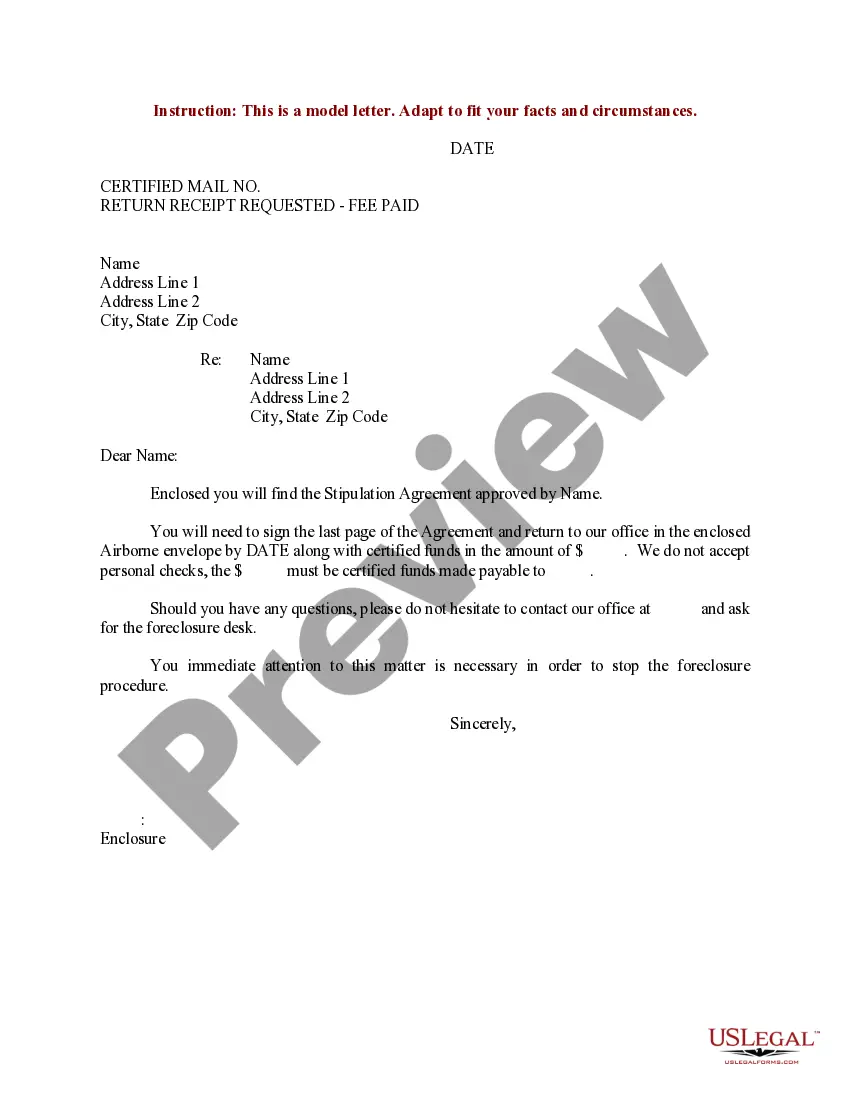


How to fill out Special Needs Irrevocable Trust Agreement For Benefit Of Disabled Child Of Trustor?
The Special Needs Trust For Medicaid you observe on this page is a versatile formal template created by professional attorneys in accordance with federal and local regulations.
For over 25 years, US Legal Forms has supplied individuals, businesses, and lawyers with more than 85,000 validated, state-specific documents for any commercial and personal circumstances. It’s the quickest, simplest, and most dependable method to acquire the documentation you require, as the service assures bank-level data protection and anti-malware security.
Choose the format you desire for your Special Needs Trust For Medicaid (PDF, DOCX, RTF) and download the sample onto your device. Fill out and sign the document. Print the template to complete it manually. Alternatively, use an online multifunctional PDF editor to swiftly and accurately fill out and sign your form with an authentic signature. Download your paperwork once more. Use the same document again whenever necessary. Access the My documents tab in your profile to redownload any previously acquired forms. Sign up for US Legal Forms to have verified legal templates for all of life's situations at your fingertips.
- Search for the document you require and examine it.
- Browse through the file you searched and preview it or verify the document description to ensure it meets your requirements. If it does not, use the search bar to find the correct one. Click Buy Now once you have located the template you need.
- Register and Log In.
- Select the pricing plan that works best for you and create an account. Use PayPal or a credit card for a swift payment. If you already possess an account, Log In and review your subscription to proceed.
- Obtain the fillable template.
Form popularity
FAQ
When considering a special needs trust for Medicaid, it is important to know which assets are exempt from recovery. Generally, a primary residence, personal belongings, and certain types of income are protected. Additionally, funds held in a special needs trust are typically not counted as assets for Medicaid eligibility. This allows individuals to maintain necessary support without jeopardizing their benefits.
To obtain a special needs trust for Medicaid, start by consulting with a legal professional who specializes in estate planning and disability law. They can help you understand the necessary steps and documentation required to establish the trust. Additionally, platforms like USLegalForms provide resources and templates that can simplify the creation of your trust. Taking these steps ensures that the trust is set up correctly, protecting your loved one's eligibility for essential benefits.
A properly structured special needs trust for Medicaid will not affect your eligibility for Medicaid benefits. These trusts are designed to supplement government assistance without disqualifying the beneficiary. Funds held in the trust can be used for specific expenses that enhance the beneficiary's quality of life, such as education, medical care, and personal needs. To ensure compliance with Medicaid regulations, it is wise to seek advice from a professional knowledgeable in this area.
Individuals with disabilities who require financial support may be eligible for a special needs trust for Medicaid. Typically, these trusts are established for people under the age of 65 who are disabled and have limited income and resources. The trust helps to preserve their eligibility for government benefits while allowing them to receive additional support. If you are considering this option, consulting with a legal expert can provide tailored guidance suited to your situation.
A special needs trust for Medicaid is specifically designed to protect eligibility while allowing individuals to benefit from additional resources. When properly established, it does not count as a resource for Medicaid qualification purposes. This means your loved one can receive necessary care and support without losing vital benefits. Engaging with a trustworthy platform like USLegalForms can simplify the process of setting up a compliant trust.
A trust can affect Medicaid eligibility, depending on how it is structured. If the trust is revocable, assets within it may count against Medicaid's asset limits. However, a properly established special needs trust for Medicaid allows individuals to retain assets without impacting their eligibility. Always seek guidance to ensure compliance with Medicaid regulations.
Generally, Medicaid cannot go after a special needs trust as long as it is properly established and managed. This type of trust is designed specifically to hold assets without jeopardizing Medicaid benefits. However, if the trust does not meet certain legal requirements, there may be risks. Consulting with professionals familiar with special needs trust for Medicaid can help you navigate these complexities.
One downside of a special needs trust for Medicaid is the complexity involved in establishing and managing it. If not set up correctly, the trust may not fully protect your loved one’s eligibility for Medicaid benefits. Additionally, the costs associated with creating and maintaining the trust can be significant. It's essential to consult with experts to ensure it aligns with your specific goals.