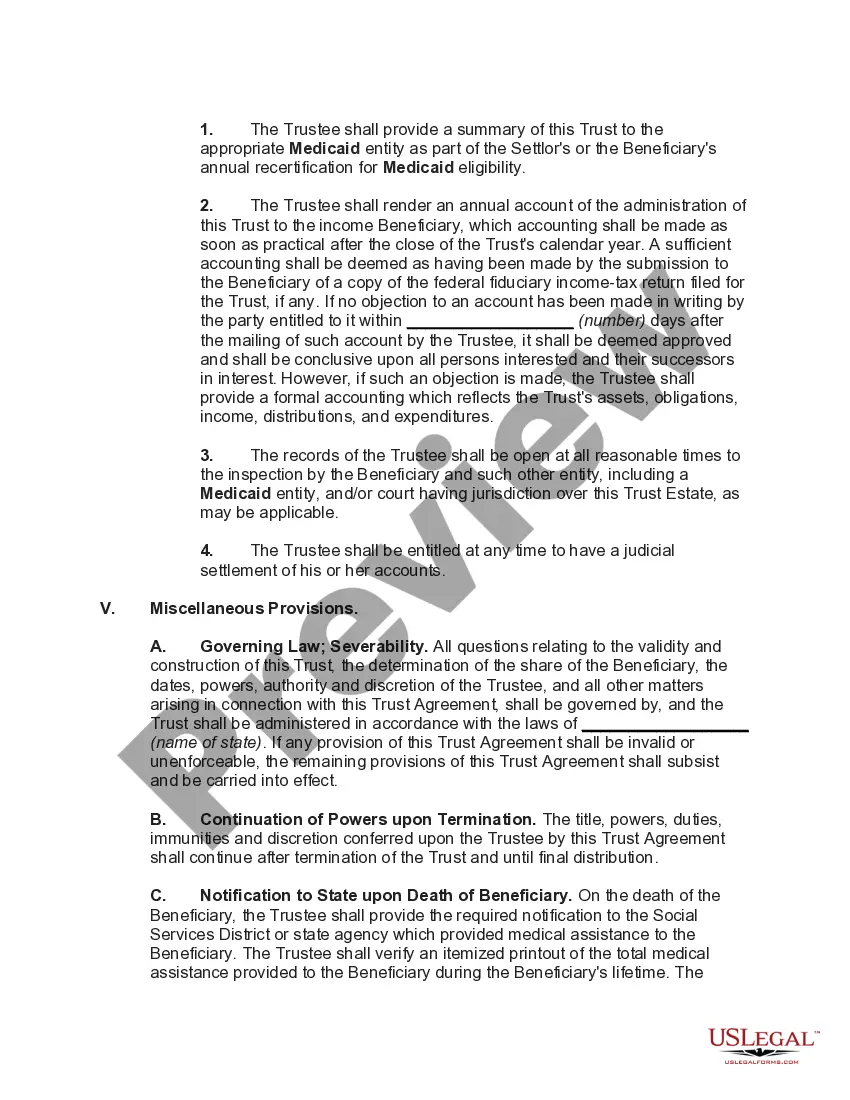
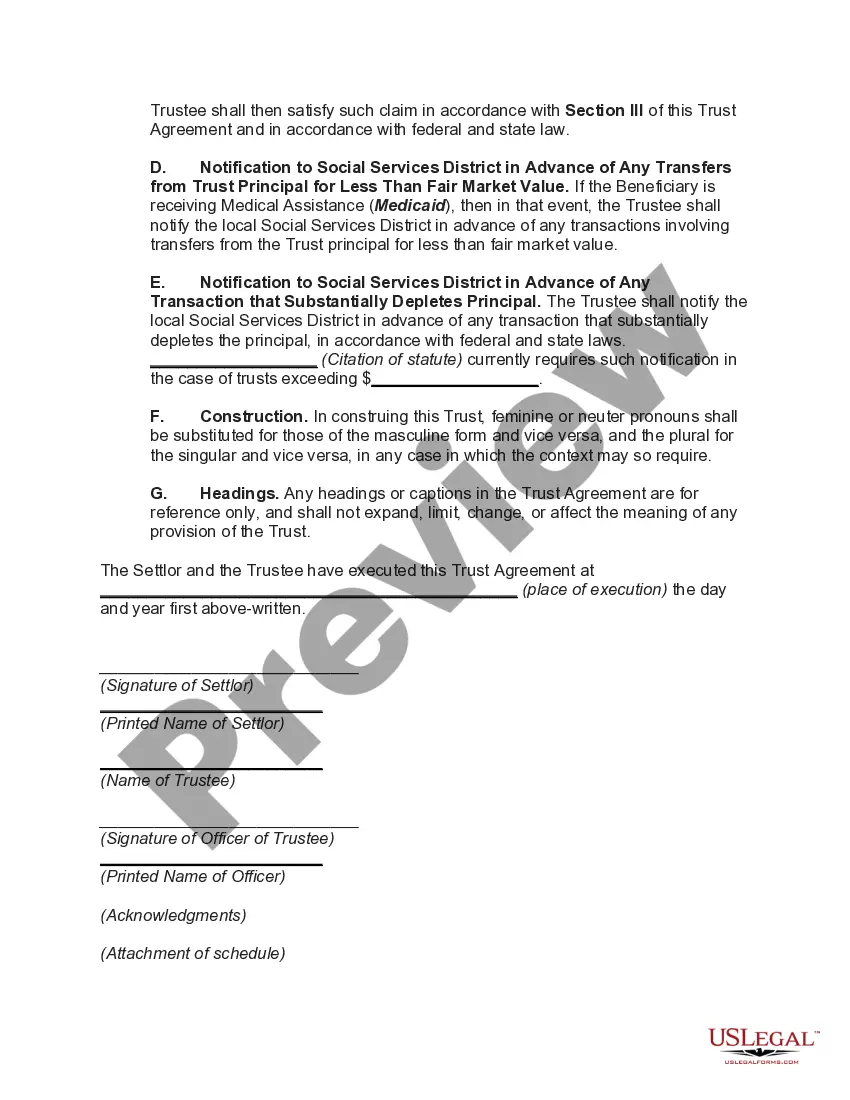
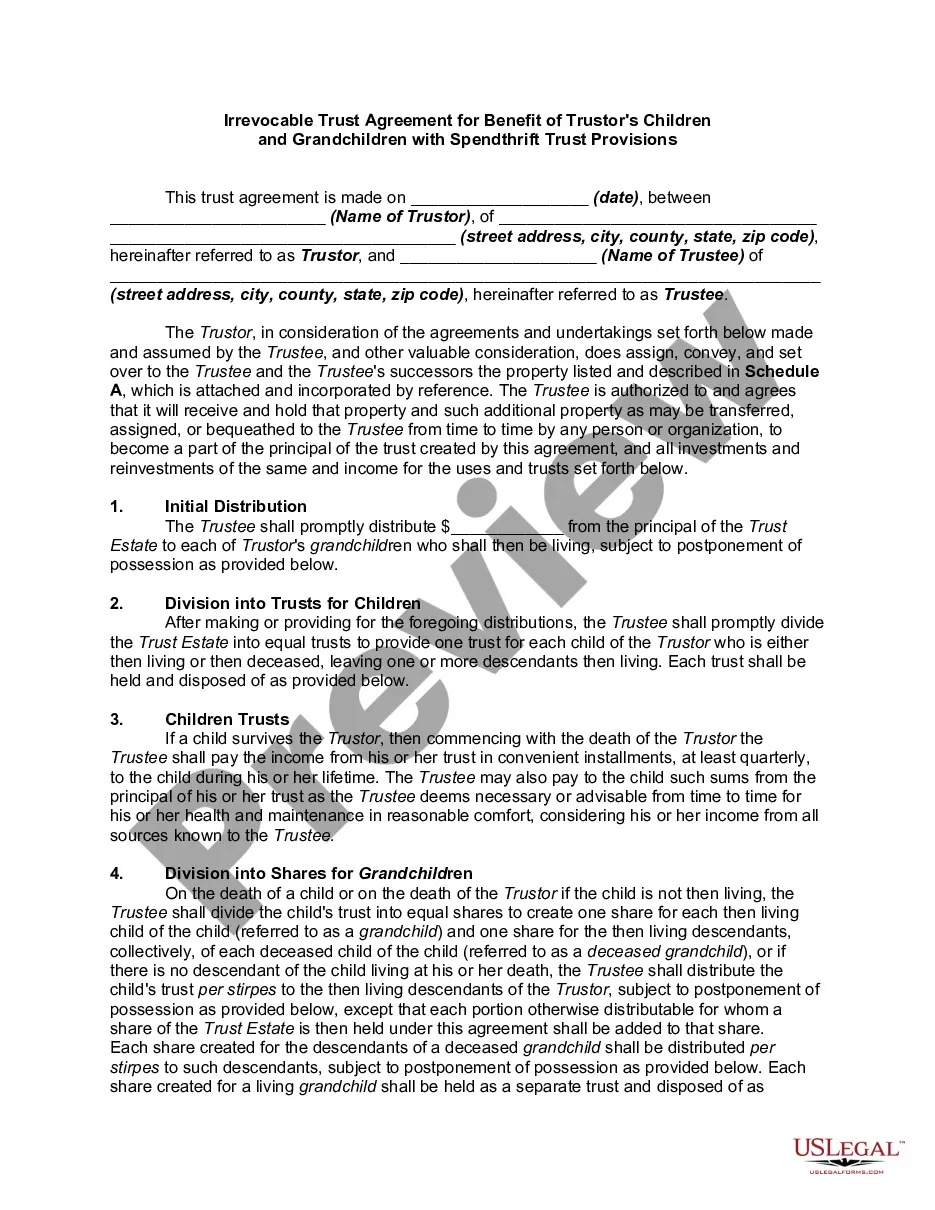
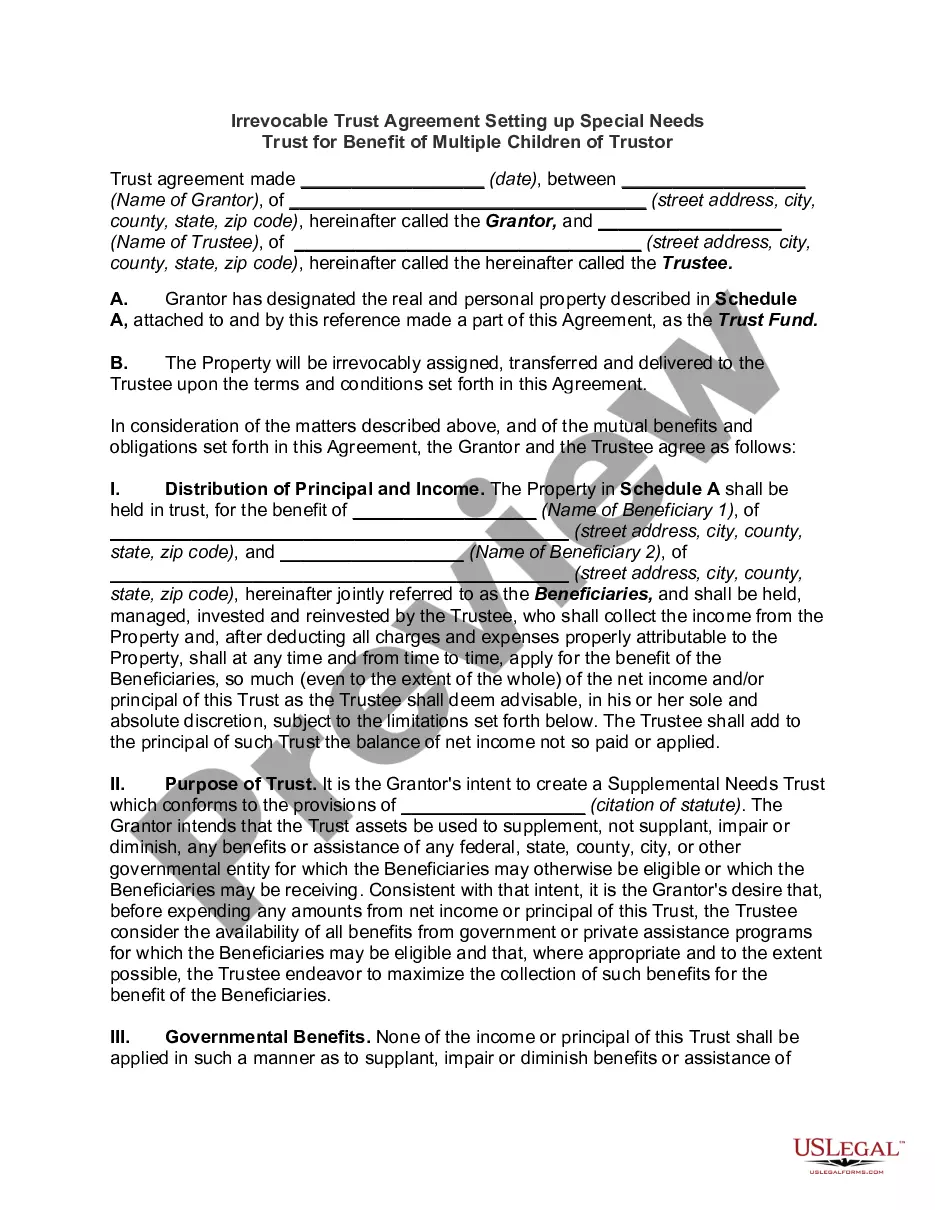
Special Needs Irrevocable Trust With Trust
Description



Get your form ready online
Our built-in tools help you complete, sign, share, and store your documents in one place.
Make edits, fill in missing information, and update formatting in US Legal Forms—just like you would in MS Word.
Download a copy, print it, send it by email, or mail it via USPS—whatever works best for your next step.
Sign and collect signatures with our SignNow integration. Send to multiple recipients, set reminders, and more. Go Premium to unlock E-Sign.
If this form requires notarization, complete it online through a secure video call—no need to meet a notary in person or wait for an appointment.
We protect your documents and personal data by following strict security and privacy standards.

Make edits, fill in missing information, and update formatting in US Legal Forms—just like you would in MS Word.

Download a copy, print it, send it by email, or mail it via USPS—whatever works best for your next step.

Sign and collect signatures with our SignNow integration. Send to multiple recipients, set reminders, and more. Go Premium to unlock E-Sign.

If this form requires notarization, complete it online through a secure video call—no need to meet a notary in person or wait for an appointment.

We protect your documents and personal data by following strict security and privacy standards.
Looking for another form?




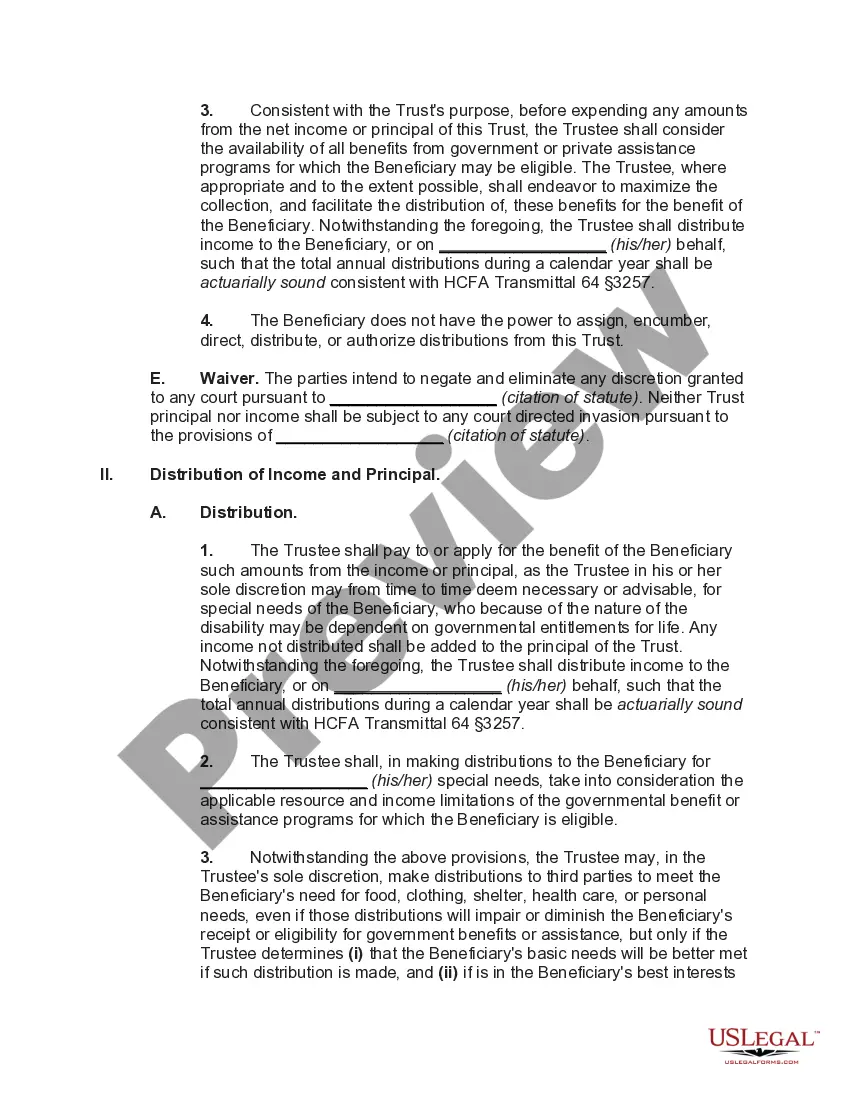
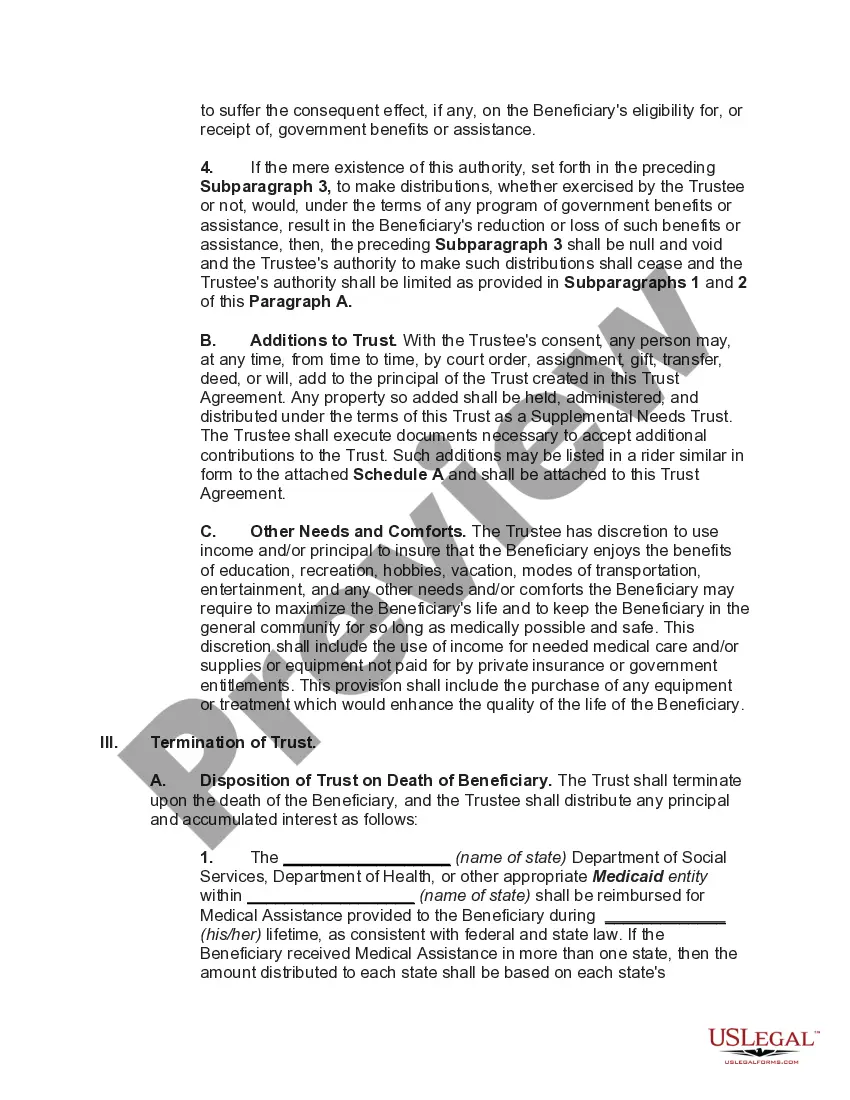
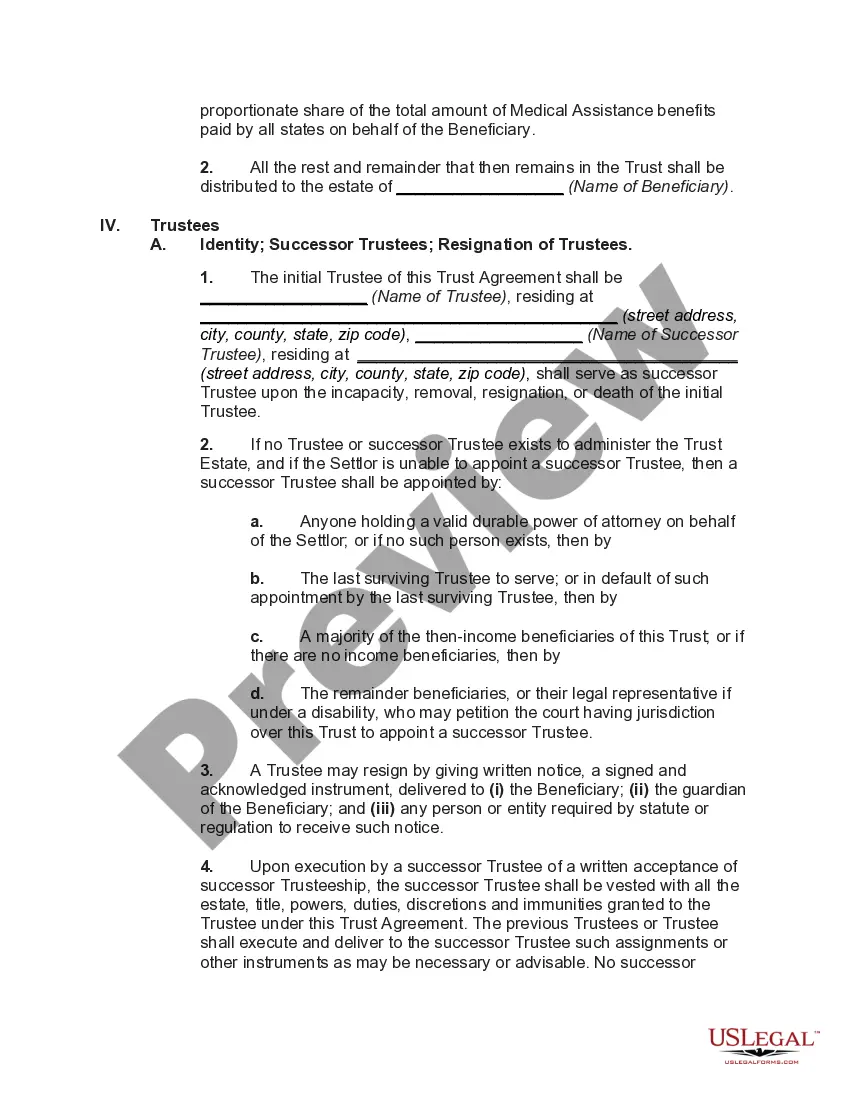
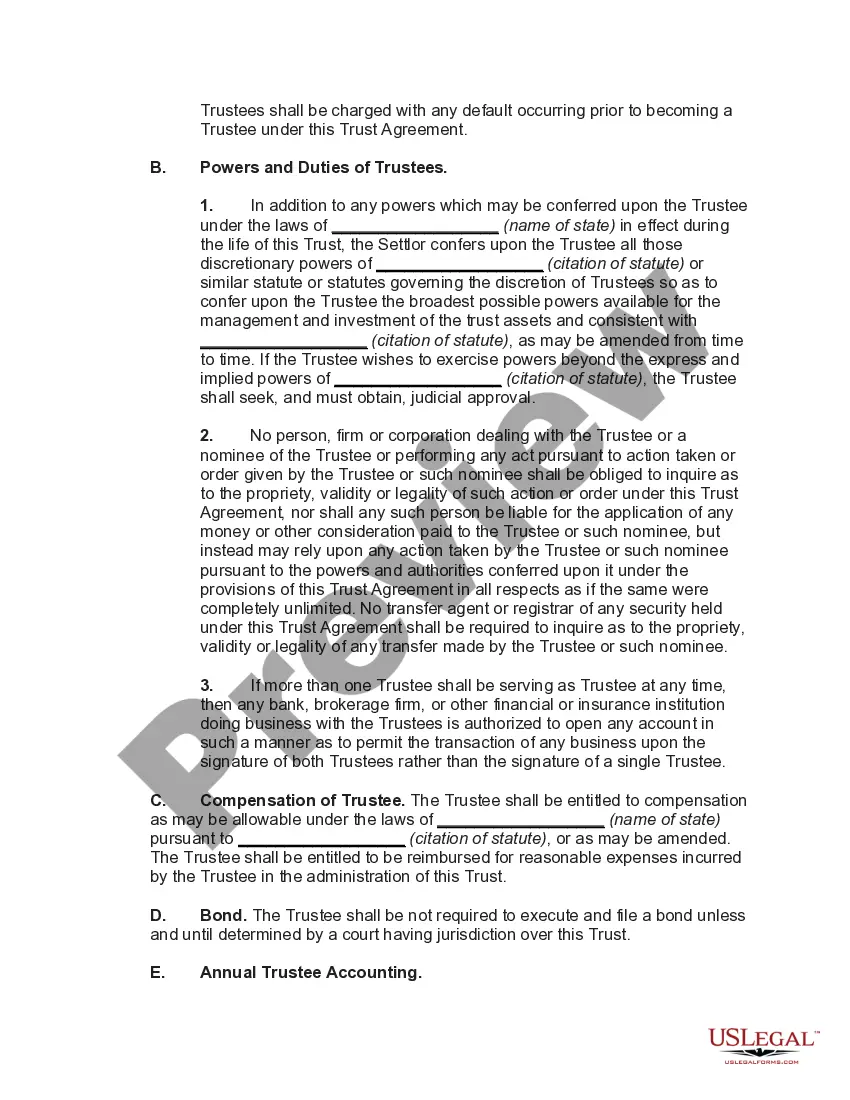
How to fill out Special Needs Irrevocable Trust Agreement For Benefit Of Disabled Child Of Trustor?
Creating legal documents from the ground up can frequently be intimidating.
Certain situations may entail extensive research and significant financial investment.
If you’re looking for a simpler and more affordable method of preparing Special Needs Irrevocable Trust With Trust or any other documentation without the hassle, US Legal Forms is always available to assist you.
Our online repository of over 85,000 current legal documents covers nearly every aspect of your financial, legal, and personal issues. With just a few clicks, you can swiftly access templates that comply with state and county regulations, painstakingly prepared for you by our legal professionals.
Check the form preview and descriptions to confirm you are viewing the correct form. Ensure that the form you select meets the standards of your state and county. Select the appropriate subscription plan to acquire the Special Needs Irrevocable Trust With Trust. Download the form, then complete, validate, and print it out. US Legal Forms has a strong reputation and boasts over 25 years of experience. Join us today and make document creation a straightforward and efficient process!
- Utilize our website whenever you require dependable services to easily find and download the Special Needs Irrevocable Trust With Trust.
- If you are a returning user and have already registered with us, simply Log In to your account, find the template, and download it or retrieve it at any time later in the My documents section.
- Not yet registered? No worries. It takes just a few minutes to create your account and navigate the library.
- However, before diving straight into downloading the Special Needs Irrevocable Trust With Trust, consider these tips.
Form popularity
FAQ
A Special Needs Trust must have its own Federal Identification Number (also called an Employer Identification Number, EIN, Tax Identification Number, or TIN) to be valid. This unique number means that the Trust is its own entity, and that it does not belong to anyone but itself.
In the case of third party special needs trusts, if the trust is considered a grantor trust, all items of income, deduction and credit are generally taxed to the individual(s) who created and funded the trust (typically parents or other relatives of the individual with a disability).
Income retained by the trust will be taxed to the trust. Practically, with most smaller trusts, there's no real difference in the tax treatment of the two types of trusts, since they use all their annual income for the benefit of the individual with special needs.
In these circumstances, the Form 1041 is very simple to complete. The trustee will check the box on Form 1041 indicating that the trust is a grantor trust and provide some general information about the trust (name, address, tax identification number, and the date the trust was established).
The trustee works in very close contact with the beneficiary and/or their caregiver to manage the trust and its financial distributions to pay for these things. The main takeaway regarding distribution of SNT funds is this: The beneficiary never sees the money directly, but the money is used to pay for their needs.