Special Disability Trust Requirements
Description

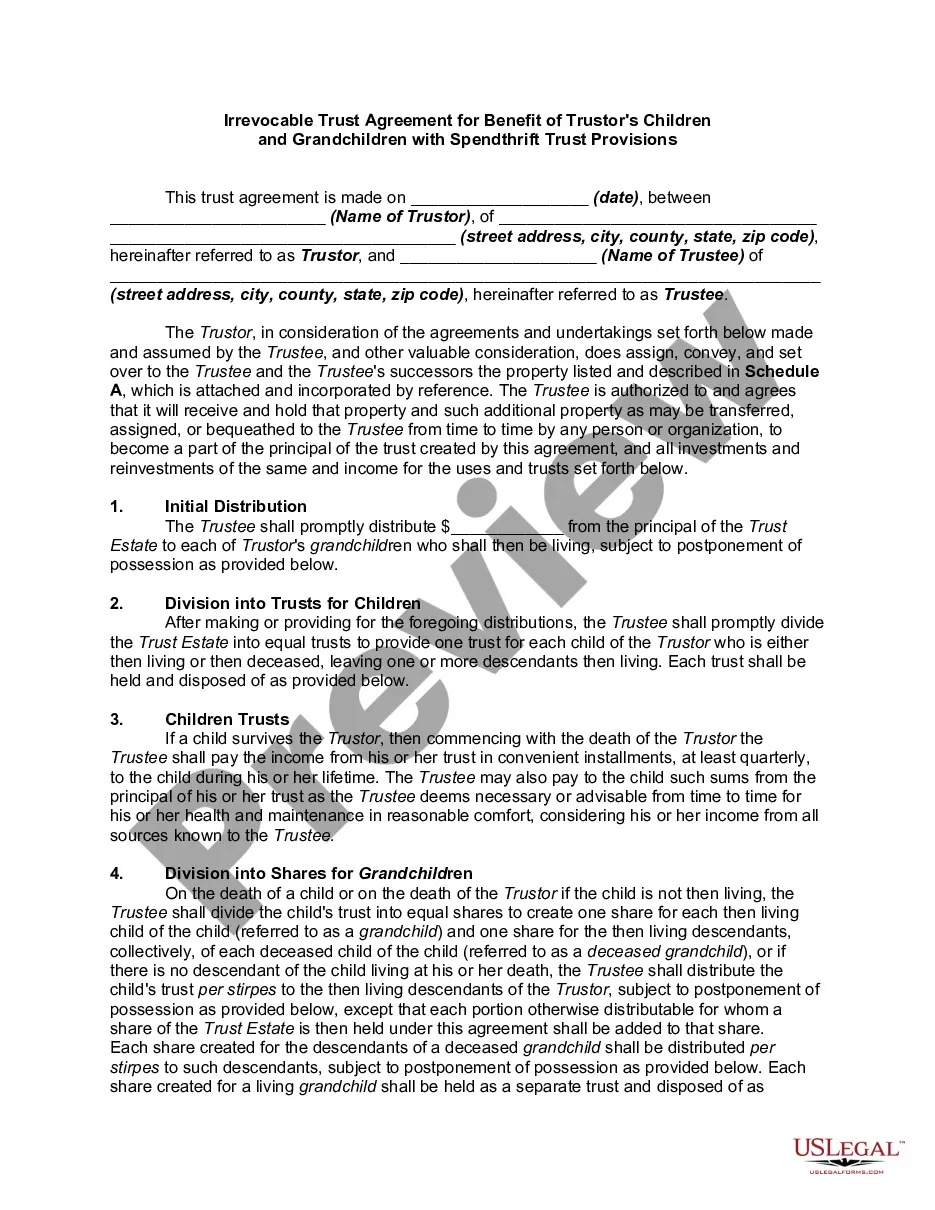
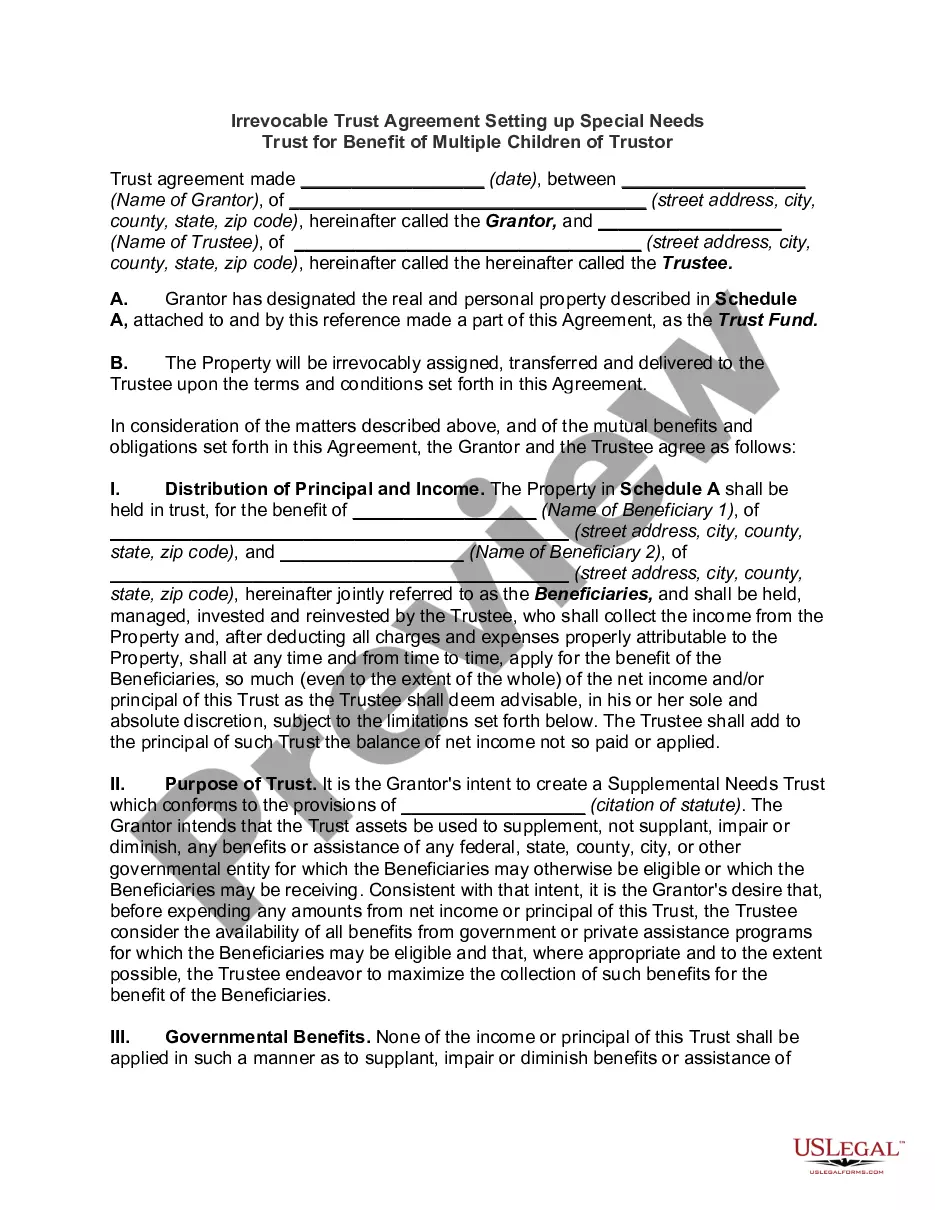
Get your form ready online
Our built-in tools help you complete, sign, share, and store your documents in one place.
Make edits, fill in missing information, and update formatting in US Legal Forms—just like you would in MS Word.
Download a copy, print it, send it by email, or mail it via USPS—whatever works best for your next step.
Sign and collect signatures with our SignNow integration. Send to multiple recipients, set reminders, and more. Go Premium to unlock E-Sign.
If this form requires notarization, complete it online through a secure video call—no need to meet a notary in person or wait for an appointment.
We protect your documents and personal data by following strict security and privacy standards.

Make edits, fill in missing information, and update formatting in US Legal Forms—just like you would in MS Word.

Download a copy, print it, send it by email, or mail it via USPS—whatever works best for your next step.

Sign and collect signatures with our SignNow integration. Send to multiple recipients, set reminders, and more. Go Premium to unlock E-Sign.

If this form requires notarization, complete it online through a secure video call—no need to meet a notary in person or wait for an appointment.

We protect your documents and personal data by following strict security and privacy standards.
Looking for another form?
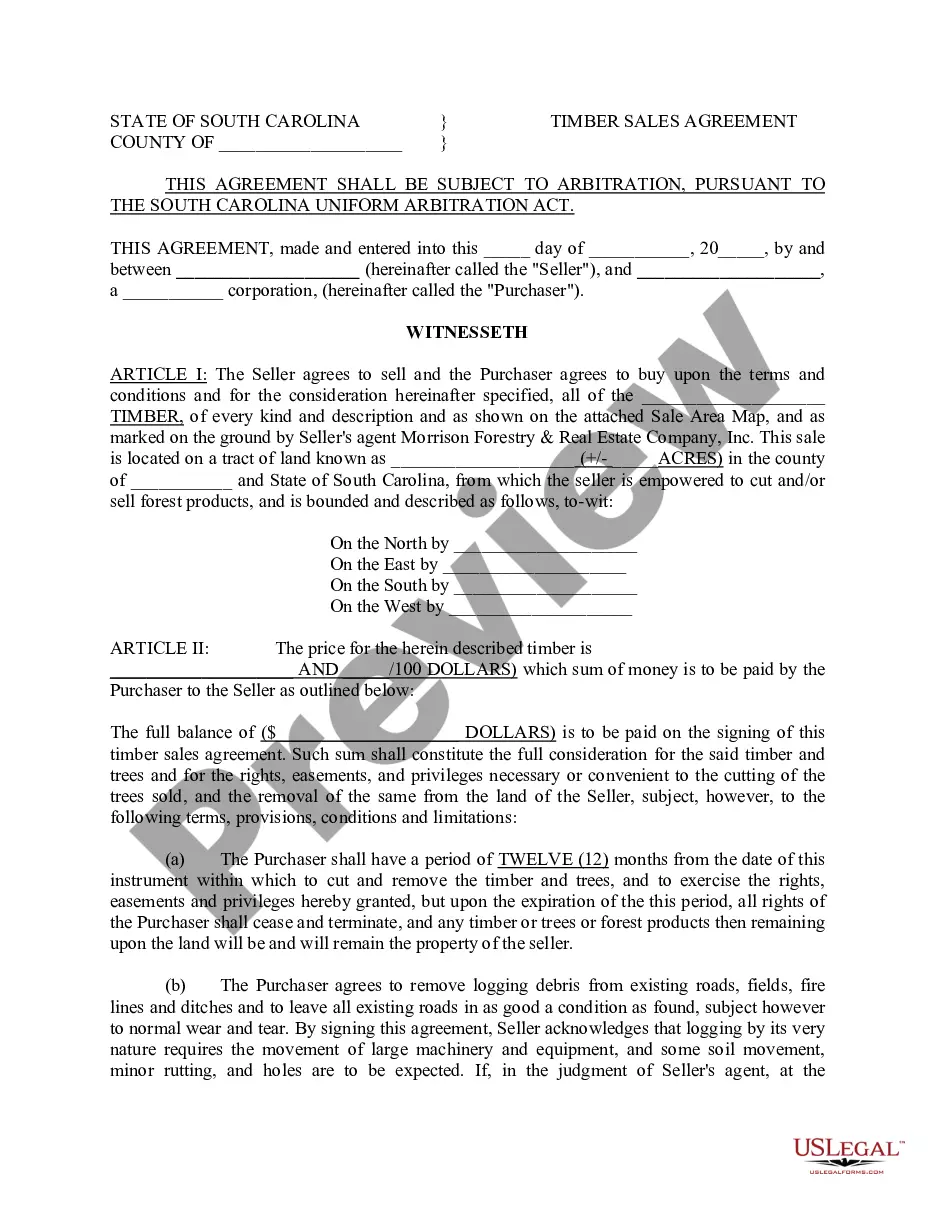






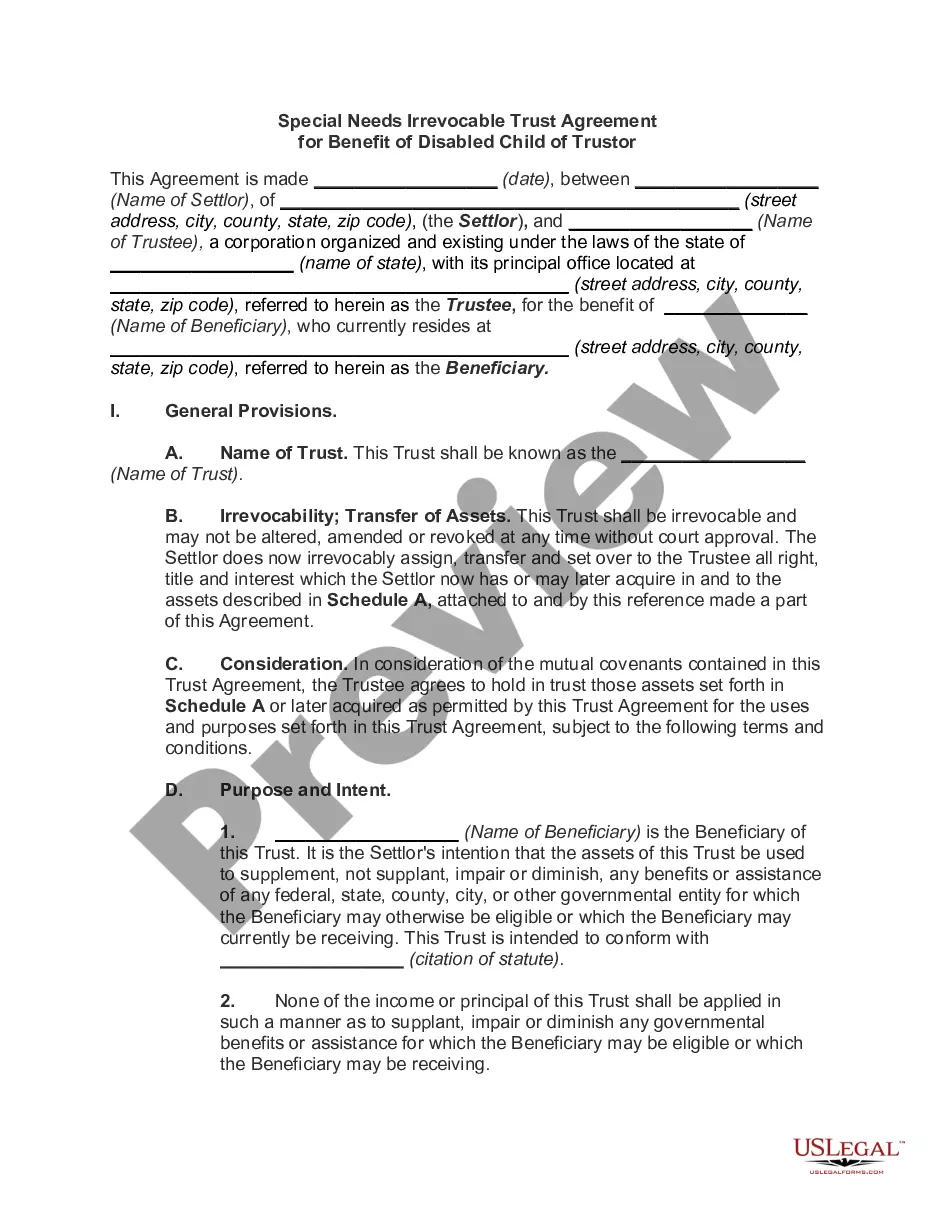
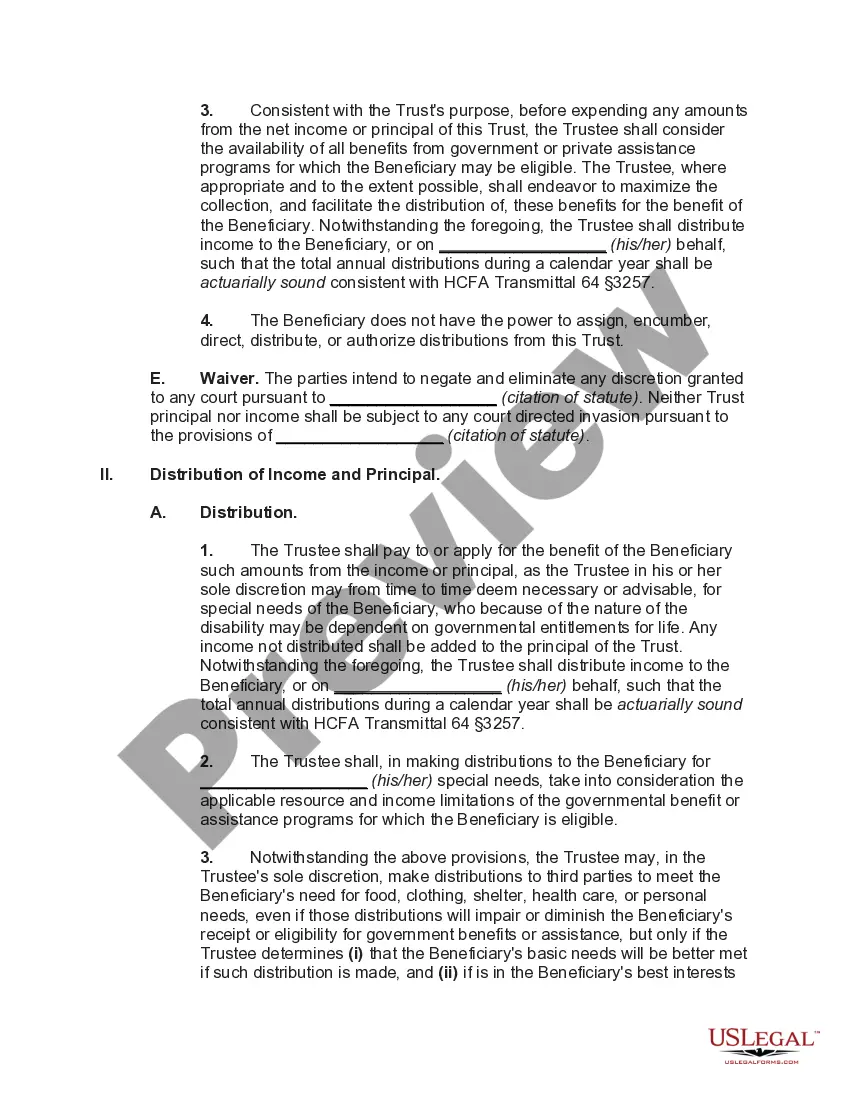
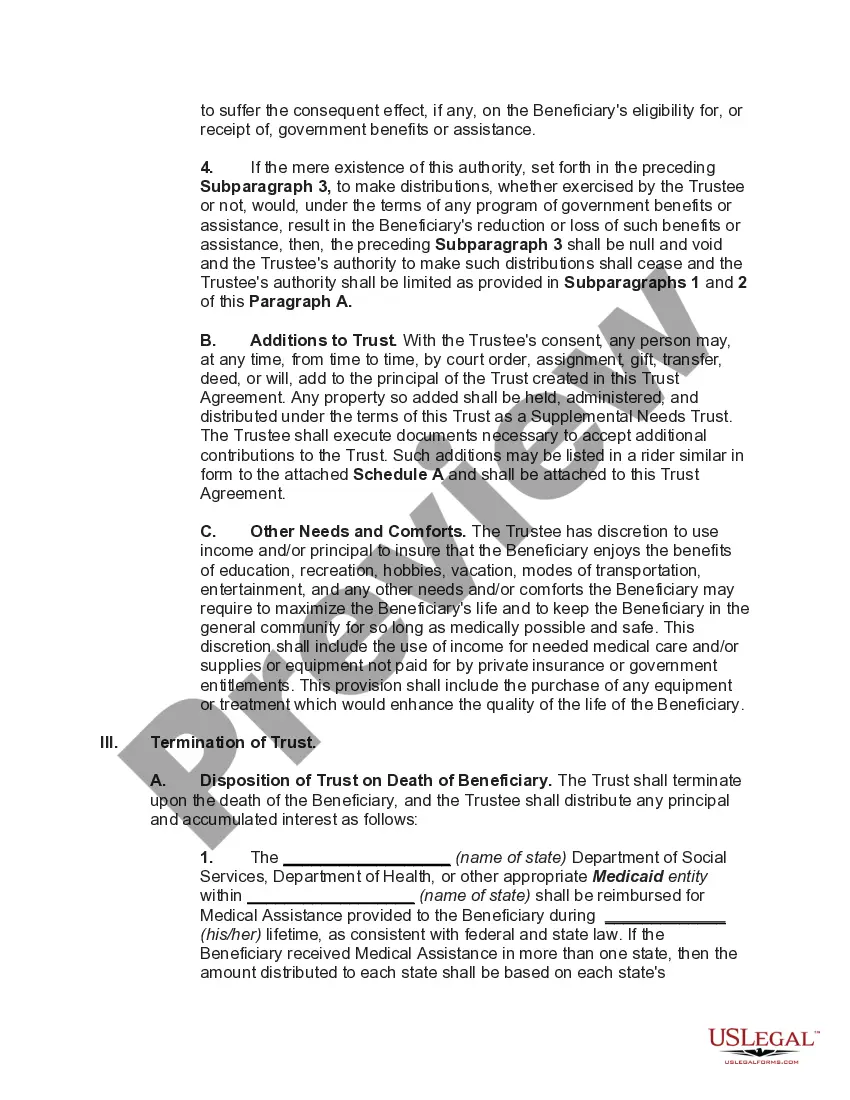
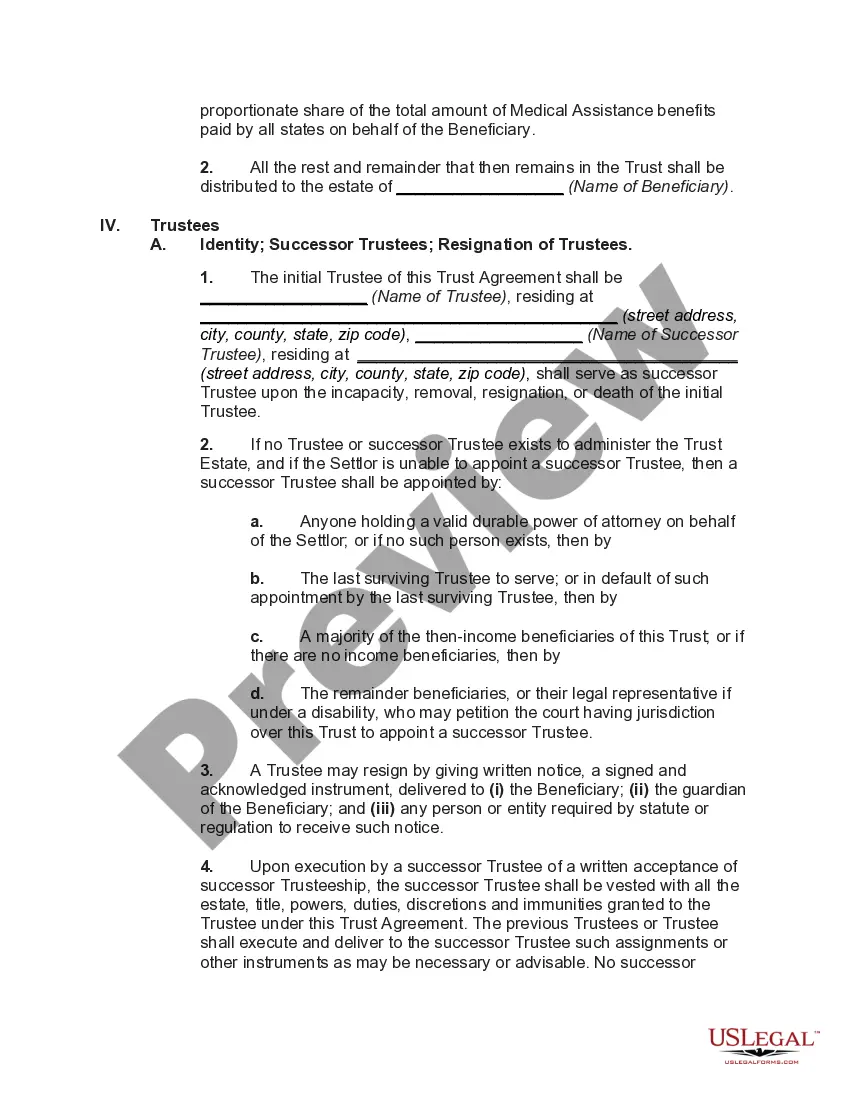
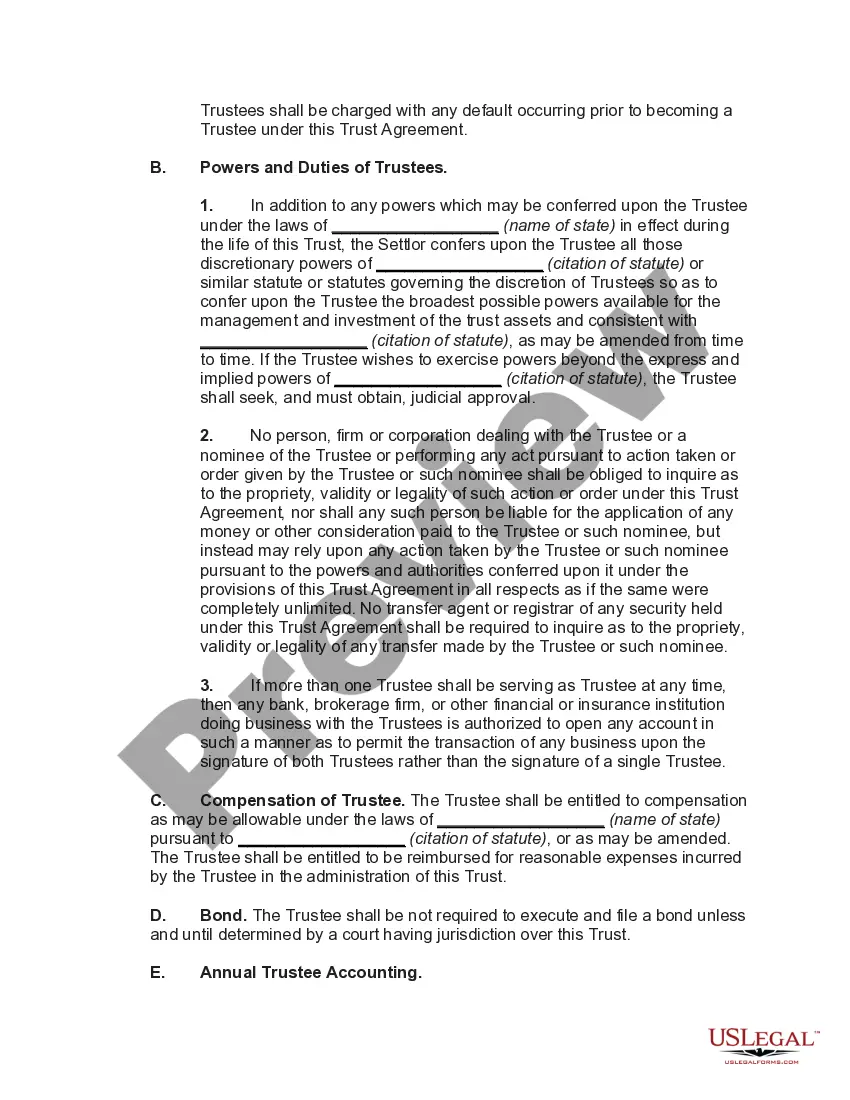
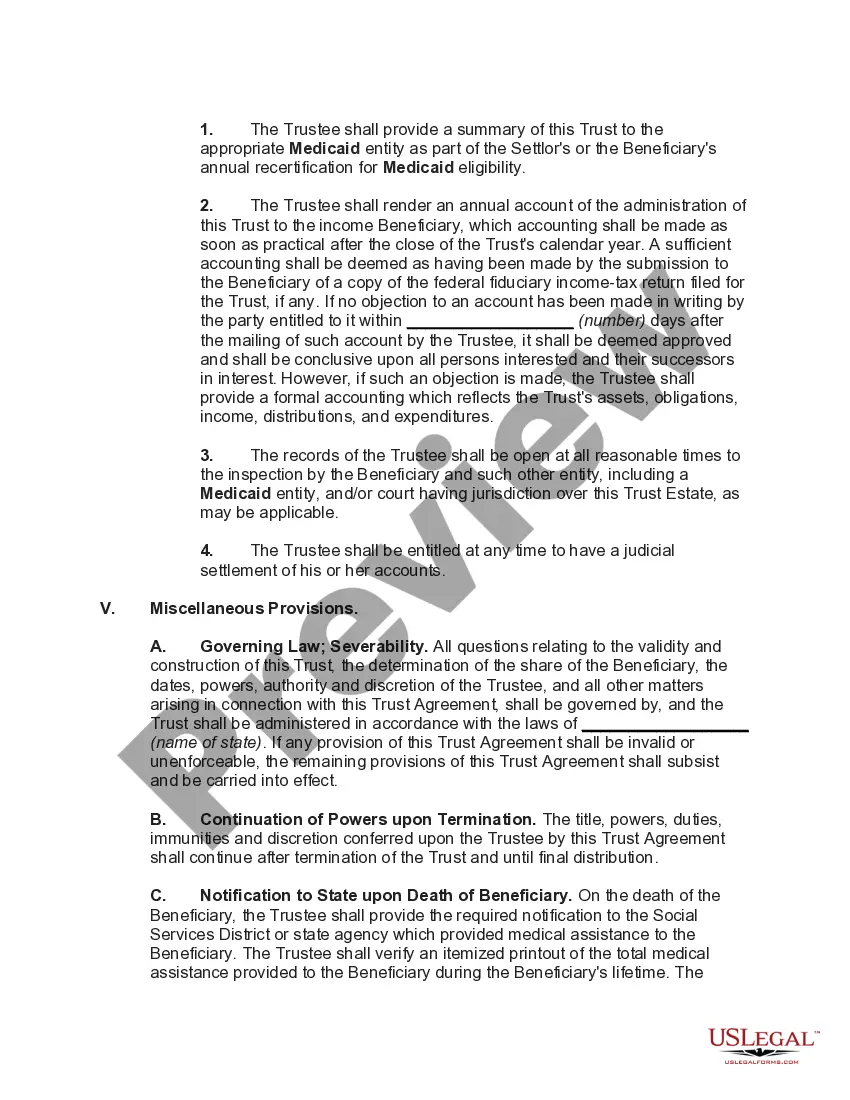
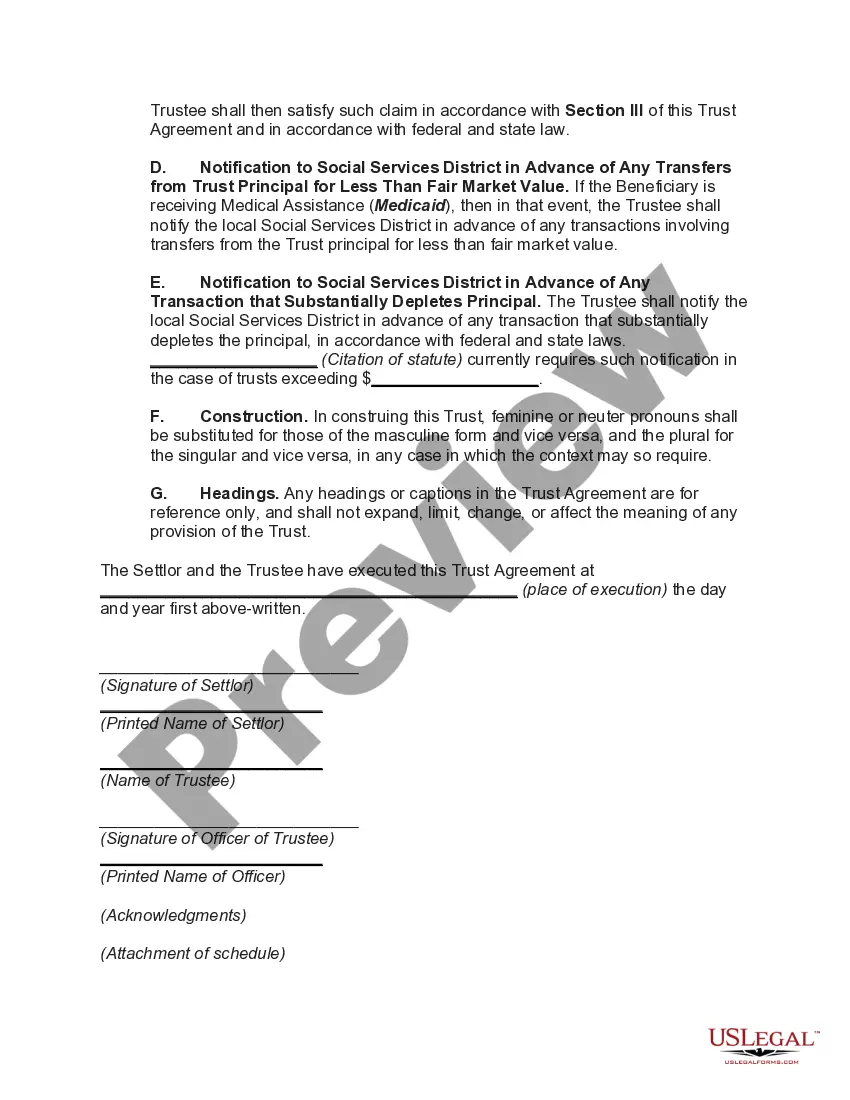
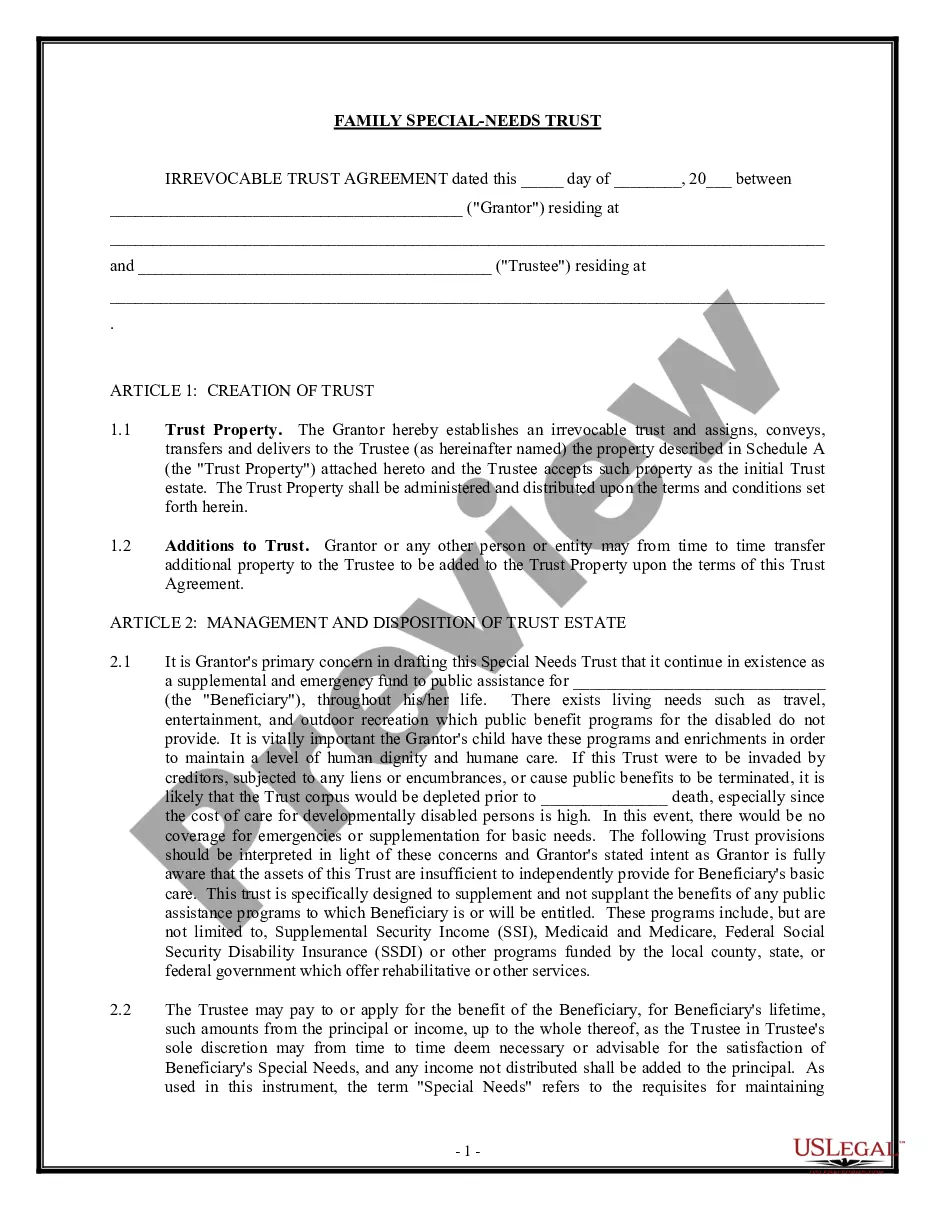
How to fill out Special Needs Irrevocable Trust Agreement For Benefit Of Disabled Child Of Trustor?
Creating legal documents from the ground up can frequently be daunting. Certain situations might require extensive research and significant financial investment.
If you are seeking a simpler and more cost-effective method of producing Special Disability Trust Requirements or other forms without unnecessary complications, US Legal Forms is always available to assist you.
Our digital library, featuring over 85,000 current legal documents, covers nearly every aspect of your financial, legal, and personal matters. With just a few clicks, you can swiftly retrieve state- and county-specific templates meticulously crafted for you by our legal experts.
Utilize our website whenever you need a dependable and trustworthy service to easily locate and download the Special Disability Trust Requirements. If you’re already familiar with our site and have set up an account, simply Log In, choose the form, and download it immediately or access it again at any time in the My documents section.
US Legal Forms has a solid reputation and more than 25 years of experience. Join us today and make document completion a straightforward and efficient process!
- Don’t have an account? No worries. It only takes a few minutes to create one and browse the catalog.
- Before jumping right into downloading the Special Disability Trust Requirements, consider these guidelines.
- Review the form preview and descriptions to ensure you’ve located the document you need.
- Confirm that the template you choose meets the criteria of your state and county.
- Select the most appropriate subscription option to acquire the Special Disability Trust Requirements.
- Download the form, then fill it out, certify it, and print it.
Form popularity
FAQ
Cons of Special Needs Trusts The trust must be maintained, and yearly management costs can be high. Depending on who manages the fund, there may be a minimum amount required to set up the trust. It may be financially difficult for the settlor to actually establish the trust, depending upon their circumstances.
The trustee works in very close contact with the beneficiary and/or their caregiver to manage the trust and its financial distributions to pay for these things. The main takeaway regarding distribution of SNT funds is this: The beneficiary never sees the money directly, but the money is used to pay for their needs.
Requirements for Qualified Disability Trusts The trust must be irrevocable. The trust must be established for the sole benefit of the disabled beneficiary. The disabled beneficiary must be under age 65 when the trust is established.
The Trustee simply transfers all assets to the beneficiary. Distribution is also fairly easy if the trust document identifies all assets and specific amounts to be paid to each beneficiary. Distributions by percentages are a little more complicated as the Trustee should first establish the estate's fair market value.
In these circumstances, the Form 1041 is very simple to complete. The trustee will check the box on Form 1041 indicating that the trust is a grantor trust and provide some general information about the trust (name, address, tax identification number, and the date the trust was established).