Irrevocable Trust Trustor For Sale
Description




Get your form ready online
Our built-in tools help you complete, sign, share, and store your documents in one place.
Make edits, fill in missing information, and update formatting in US Legal Forms—just like you would in MS Word.
Download a copy, print it, send it by email, or mail it via USPS—whatever works best for your next step.
Sign and collect signatures with our SignNow integration. Send to multiple recipients, set reminders, and more. Go Premium to unlock E-Sign.
If this form requires notarization, complete it online through a secure video call—no need to meet a notary in person or wait for an appointment.
We protect your documents and personal data by following strict security and privacy standards.

Make edits, fill in missing information, and update formatting in US Legal Forms—just like you would in MS Word.

Download a copy, print it, send it by email, or mail it via USPS—whatever works best for your next step.

Sign and collect signatures with our SignNow integration. Send to multiple recipients, set reminders, and more. Go Premium to unlock E-Sign.

If this form requires notarization, complete it online through a secure video call—no need to meet a notary in person or wait for an appointment.

We protect your documents and personal data by following strict security and privacy standards.
Looking for another form?










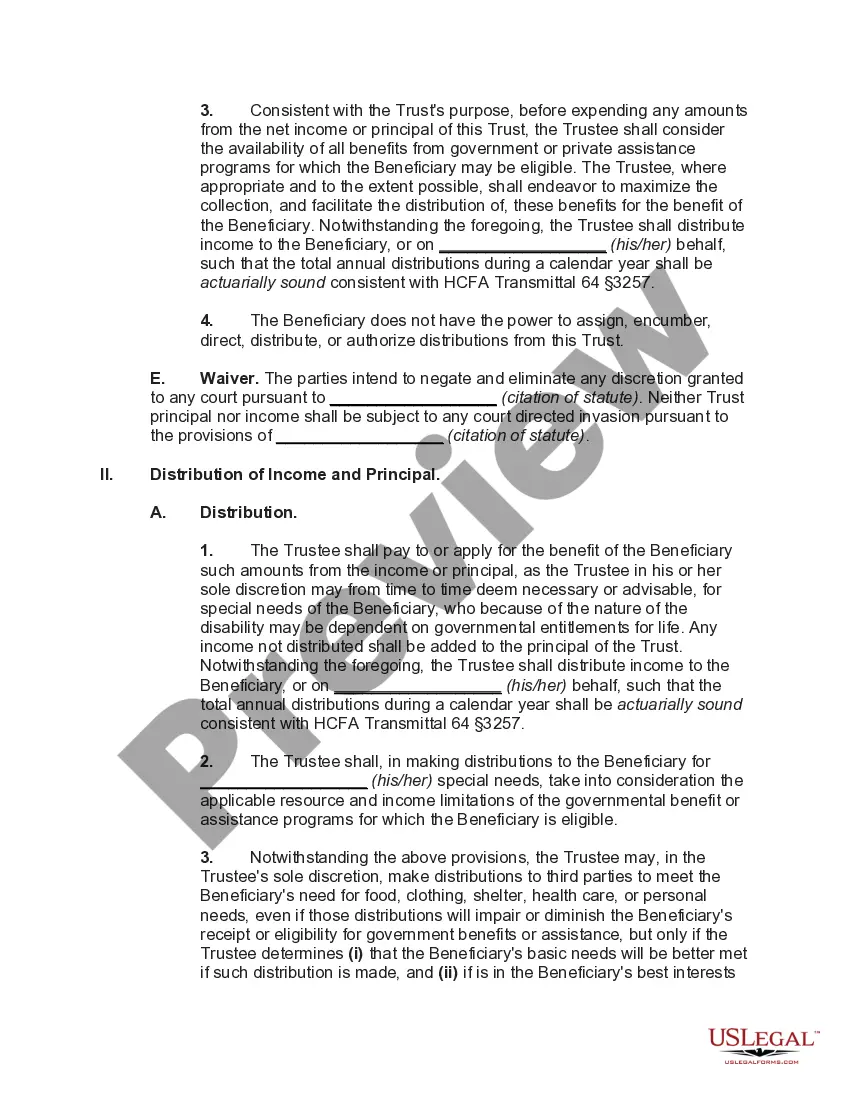
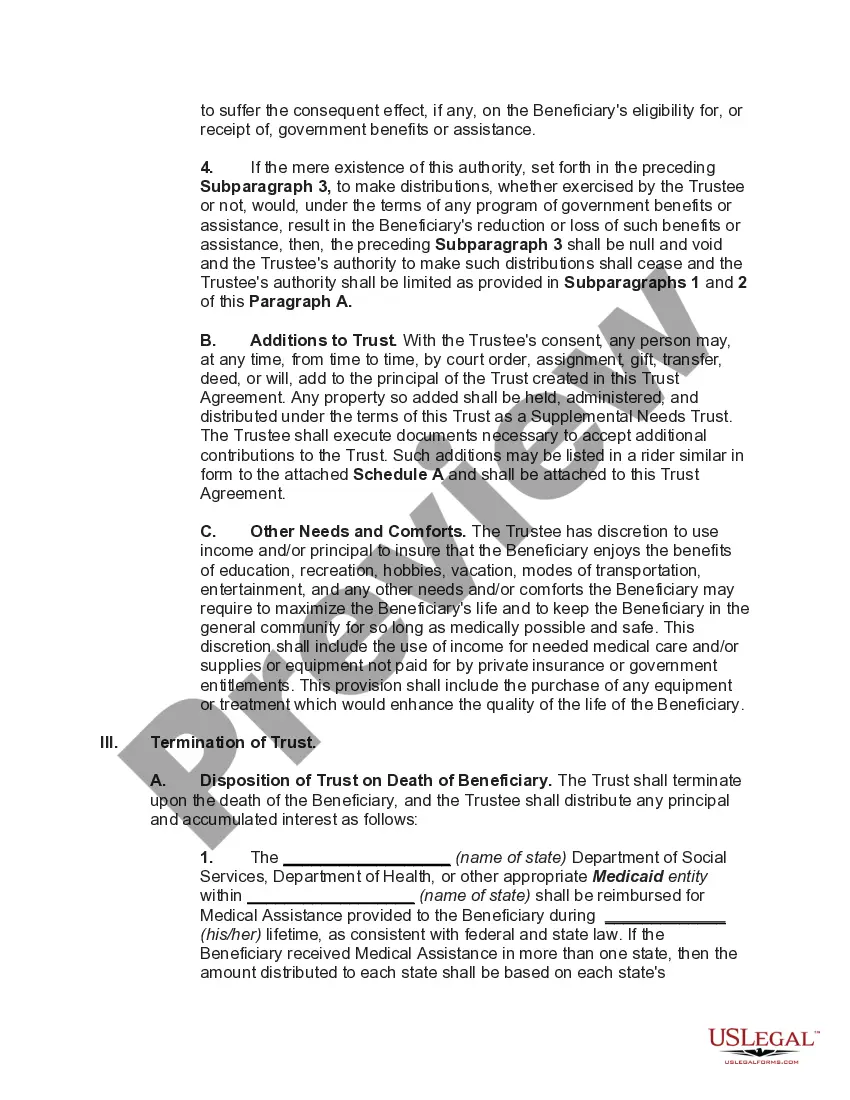
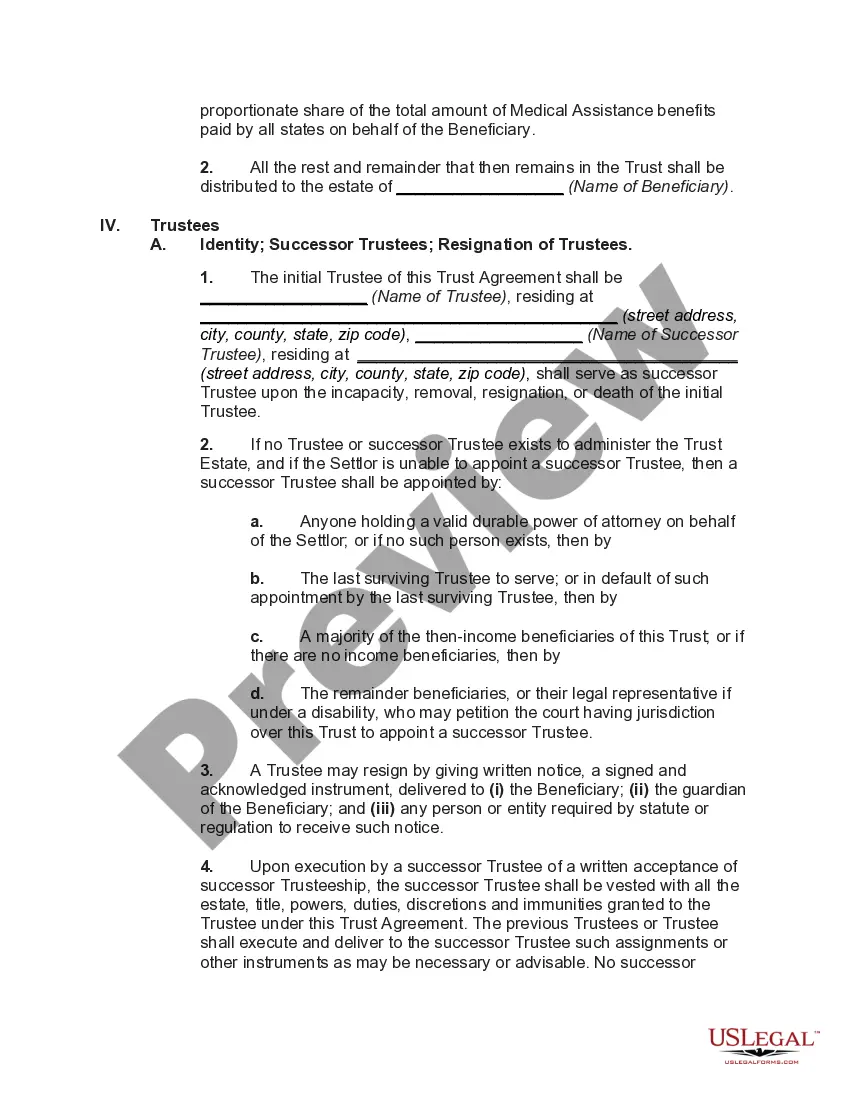
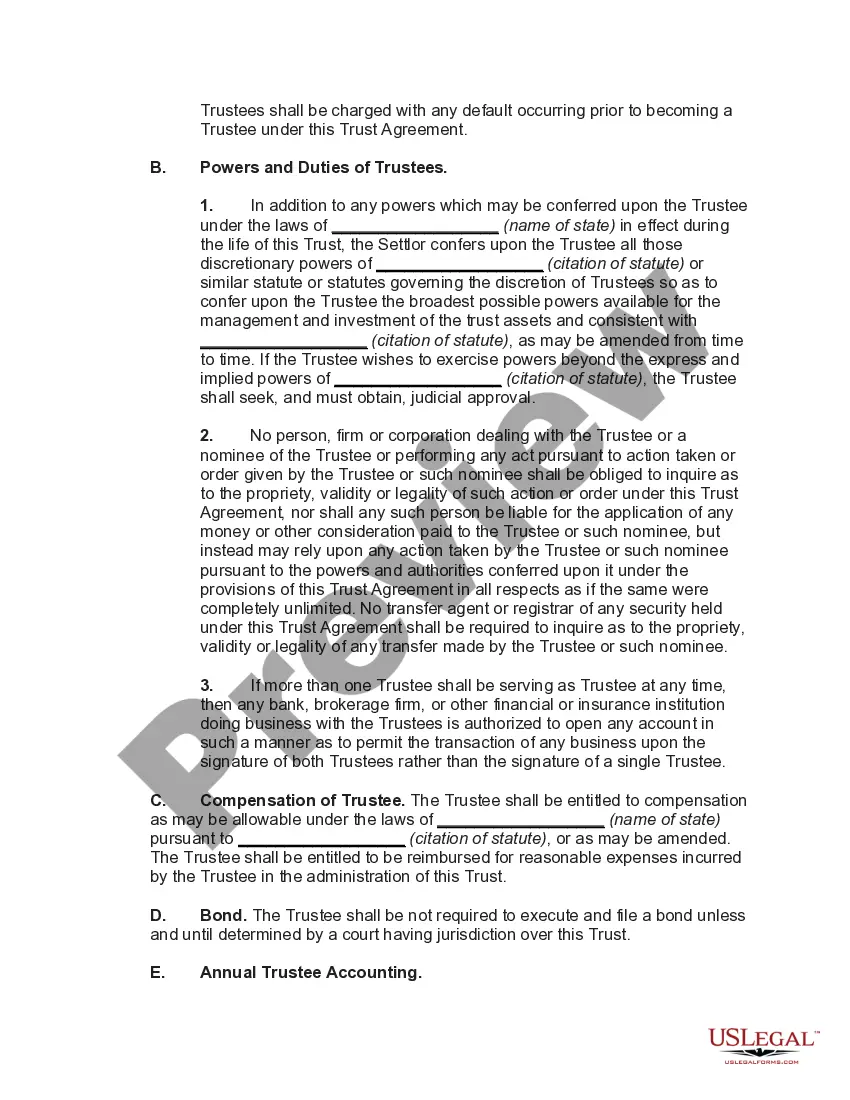
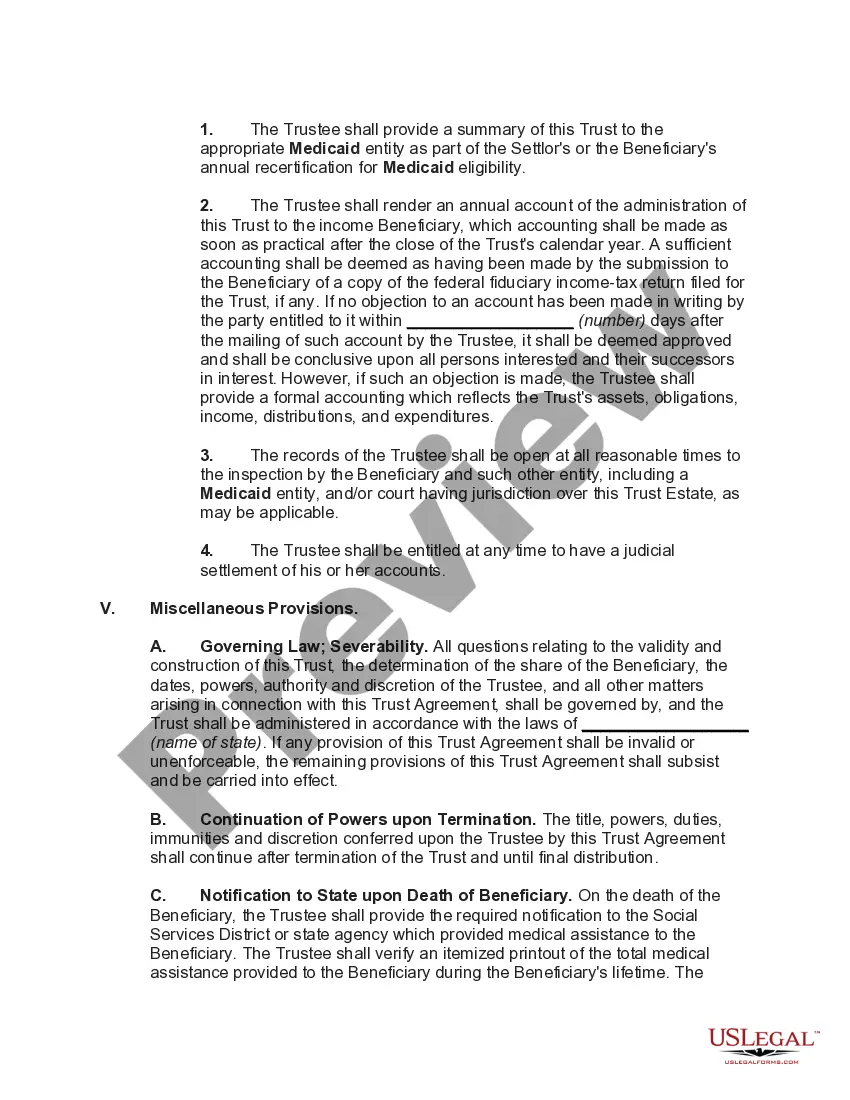
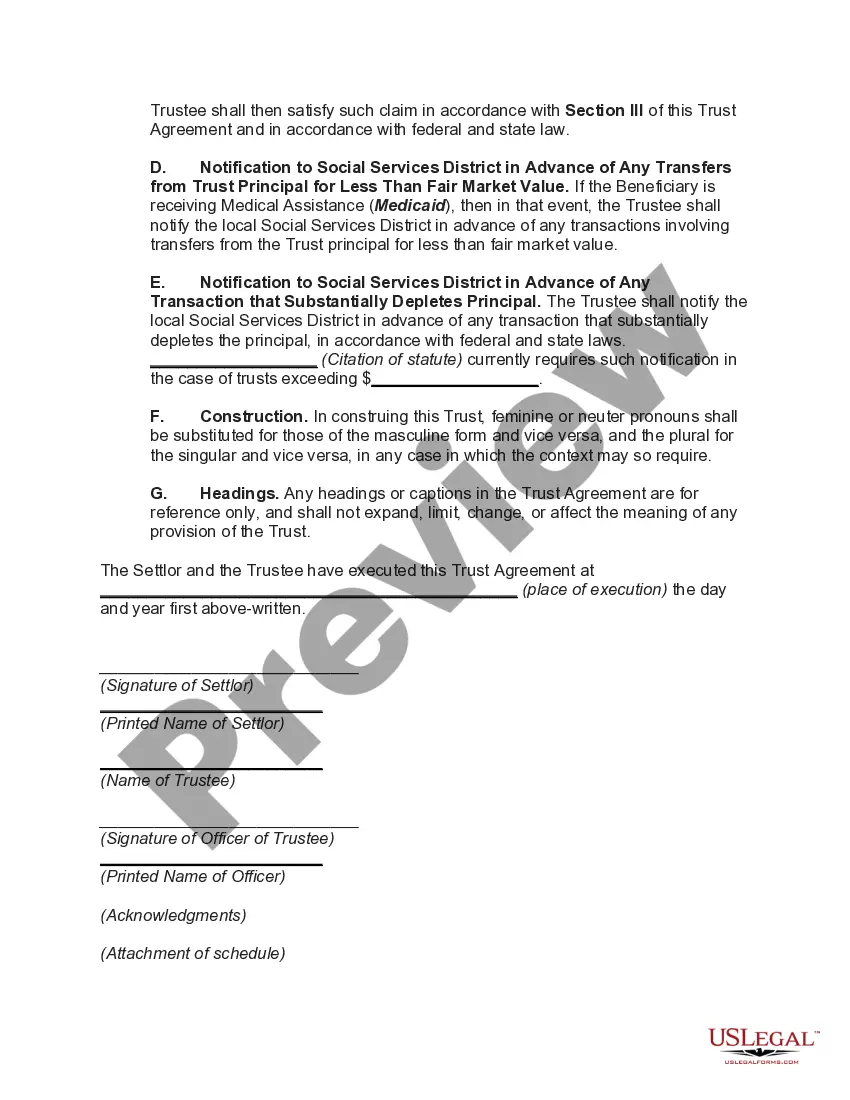
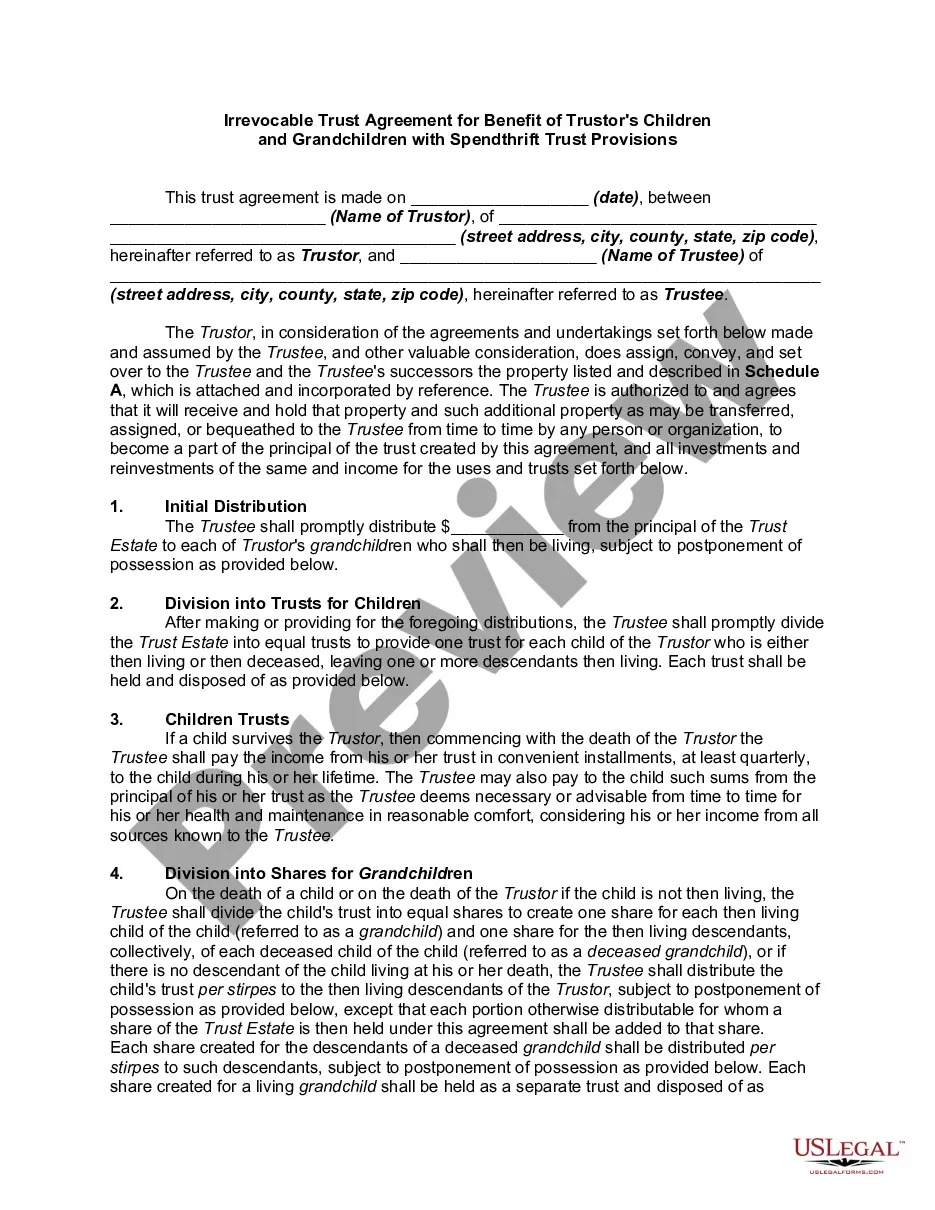
How to fill out Special Needs Irrevocable Trust Agreement For Benefit Of Disabled Child Of Trustor?
- Log into your US Legal Forms account if you're a returning user, ensuring your subscription is valid before downloading the required template.
- Review the Preview mode and form details to confirm you've selected the correct document based on your specific needs and legal requirements.
- If necessary, search for alternative templates through the provided Search function to find the most suitable option.
- Proceed to purchase your document by clicking the Buy Now button and selecting an appropriate subscription plan, which requires account registration for full access.
- Complete the payment process using your credit card or PayPal account to finalize your subscription and obtain the forms.
- Download your selected document onto your device, enabling you to fill it out and access it anytime via your My Forms section.
By following these straightforward steps, you can efficiently navigate the process of acquiring your irrevocable trust documents. US Legal Forms not only provides a vast form collection but also grants access to expert assistance for ensuring your documents are expertly completed.
Don't hesitate—begin your journey towards establishing an irrevocable trust today with the resources available at US Legal Forms!
Form popularity
FAQ
Yes, a property in an irrevocable trust can be sold, but the process involves specific legal considerations. The trust must adhere to its terms when selling the property, and typically, the trustee manages the sale. Engaging with platforms like UsLegalForms can provide clarity on how to navigate this process effectively when searching for an irrevocable trust trustor for sale.
The trustor of an irrevocable trust is the individual who creates the trust and contributes assets to it. This person establishes the terms and decides how the assets should be managed and distributed. Understanding the role of the trustor is crucial, particularly if you are looking for an irrevocable trust trustor for sale.
One downside of an irrevocable trust is that it cannot be altered or revoked once established. This means the trustor relinquishes control over the assets, which might limit flexibility in managing those assets. Additionally, it may have tax implications that the trustor should consider before setting up an irrevocable trust trustor for sale.
When a house in an irrevocable trust is sold, the proceeds typically belong to the trust, not the original owner. The trustor may not directly control the funds because the trust has specific terms and conditions governing its assets. It's essential to consult with legal experts to understand the implications of the sale on taxes and the overall trust structure, especially if you're considering an irrevocable trust trustor for sale.
When the trustor of an irrevocable trust dies, the trust continues to operate as per the terms outlined in the trust document. The assets are distributed according to the directives inside the trust without going through probate, benefiting the beneficiaries directly. For those looking at an irrevocable trust trustor for sale, it’s essential to comprehend how this process may affect the property and beneficiaries.
Removing a house from an irrevocable trust is generally not straightforward and may require legal steps. Once assets go into the trust, they usually remain there without the consent of all beneficiaries. If you are exploring options regarding an irrevocable trust trustor for sale, seek help from a legal advisor to understand your rights.
The IRS regularly updates regulations regarding trusts, including irrevocable ones, but specific rules can vary. Recent changes may affect taxation and reporting requirements for irrevocable trusts. Anyone buying an irrevocable trust trustor for sale should stay informed on these updates or consider guidance from industry professionals for clarity.
Yes, the federal government can seize assets in an irrevocable trust if there are valid legal reasons, such as unpaid taxes or fraud. Trusts do not provide complete immunity against government actions. If you are facing concerns about an irrevocable trust trustor for sale, it can be helpful to discuss your situation with a legal expert.
The IRS can take your house if it's in an irrevocable trust and there are tax liabilities. The trust assets may be vulnerable to IRS claims, contrary to common belief that trusts offer absolute protection. Understanding your rights and liabilities related to an irrevocable trust trustor for sale is crucial, so seeking legal advice is recommended.
Generally, an irrevocable trust cannot be sold as it is a separate legal entity. However, assets held within the trust might be sold with the consent of the beneficiaries. If you're considering an irrevocable trust trustor for sale, it's wise to consult with a legal expert to explore your options.