Qualified Personal Residence Trusts
Description

Get your form ready online
Our built-in tools help you complete, sign, share, and store your documents in one place.
Make edits, fill in missing information, and update formatting in US Legal Forms—just like you would in MS Word.
Download a copy, print it, send it by email, or mail it via USPS—whatever works best for your next step.
Sign and collect signatures with our SignNow integration. Send to multiple recipients, set reminders, and more. Go Premium to unlock E-Sign.
If this form requires notarization, complete it online through a secure video call—no need to meet a notary in person or wait for an appointment.
We protect your documents and personal data by following strict security and privacy standards.

Make edits, fill in missing information, and update formatting in US Legal Forms—just like you would in MS Word.

Download a copy, print it, send it by email, or mail it via USPS—whatever works best for your next step.

Sign and collect signatures with our SignNow integration. Send to multiple recipients, set reminders, and more. Go Premium to unlock E-Sign.

If this form requires notarization, complete it online through a secure video call—no need to meet a notary in person or wait for an appointment.

We protect your documents and personal data by following strict security and privacy standards.
Looking for another form?







How to fill out Qualified Personal Residence Trust?
- Visit the US Legal Forms website and log into your existing account or create a new one.
- Search for 'Qualified Personal Residence Trust' in the extensive library to find the relevant form.
- Review the preview and form description carefully to ensure it meets your needs and complies with local requirements.
- If required, use the search feature to find other templates that may better suit your specific situation.
- Once you have the correct document, select the 'Buy Now' option and choose your subscription plan.
- Complete your purchase using a credit card or PayPal, ensuring your account is set up for future access.
- After payment, download the form to your device and save it for easy access through the 'My Forms' section.
In conclusion, utilizing US Legal Forms not only simplifies the process of creating a qualified personal residence trust, but it also gives you access to an extensive library of resources and expert guidance. By following these steps, you can ensure that your documents are both comprehensive and legally precise.
Ready to get started? Visit US Legal Forms today and take the first step towards securing your estate.
Form popularity
FAQ
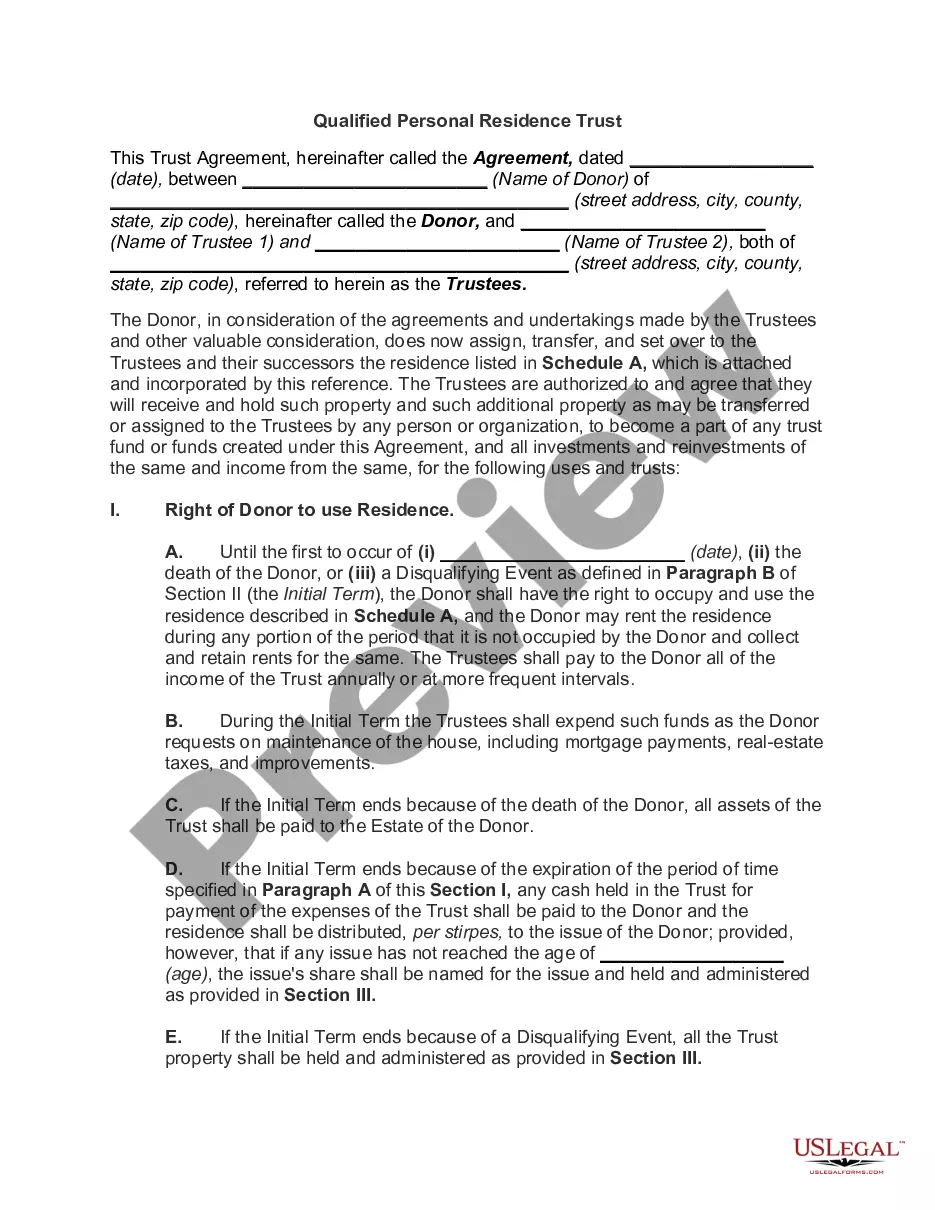
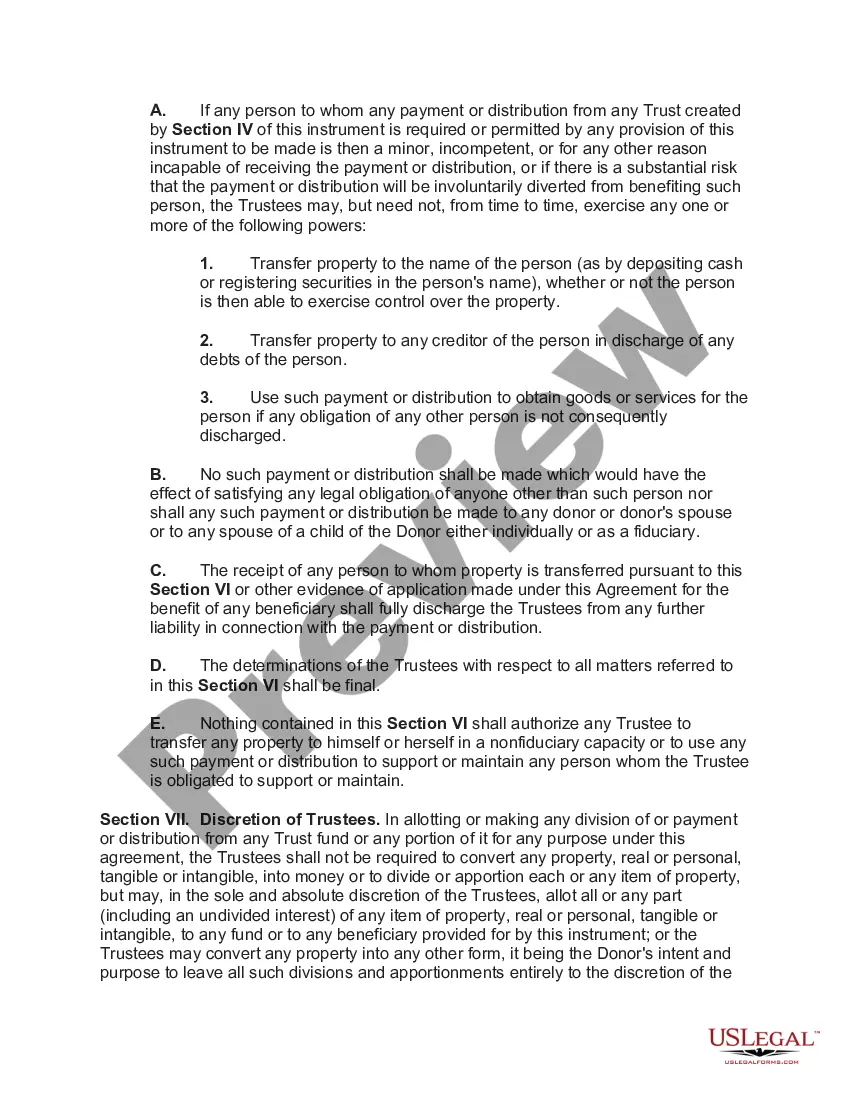
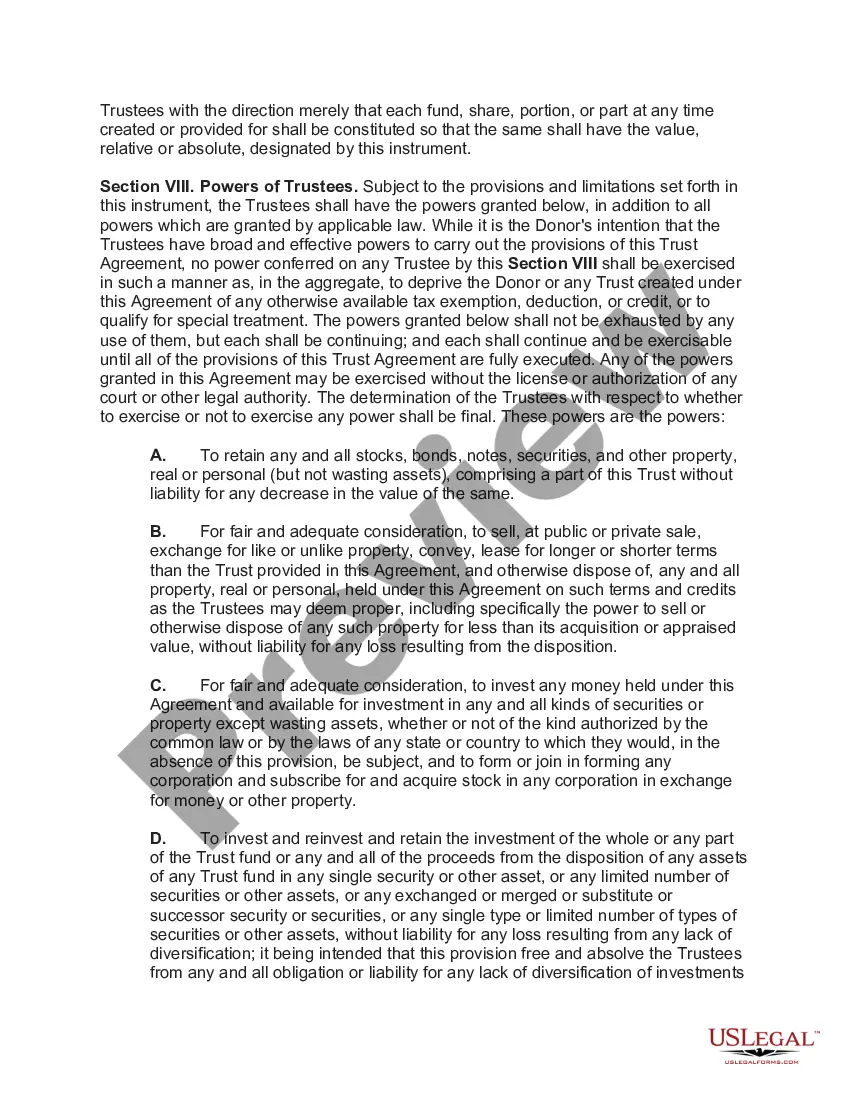
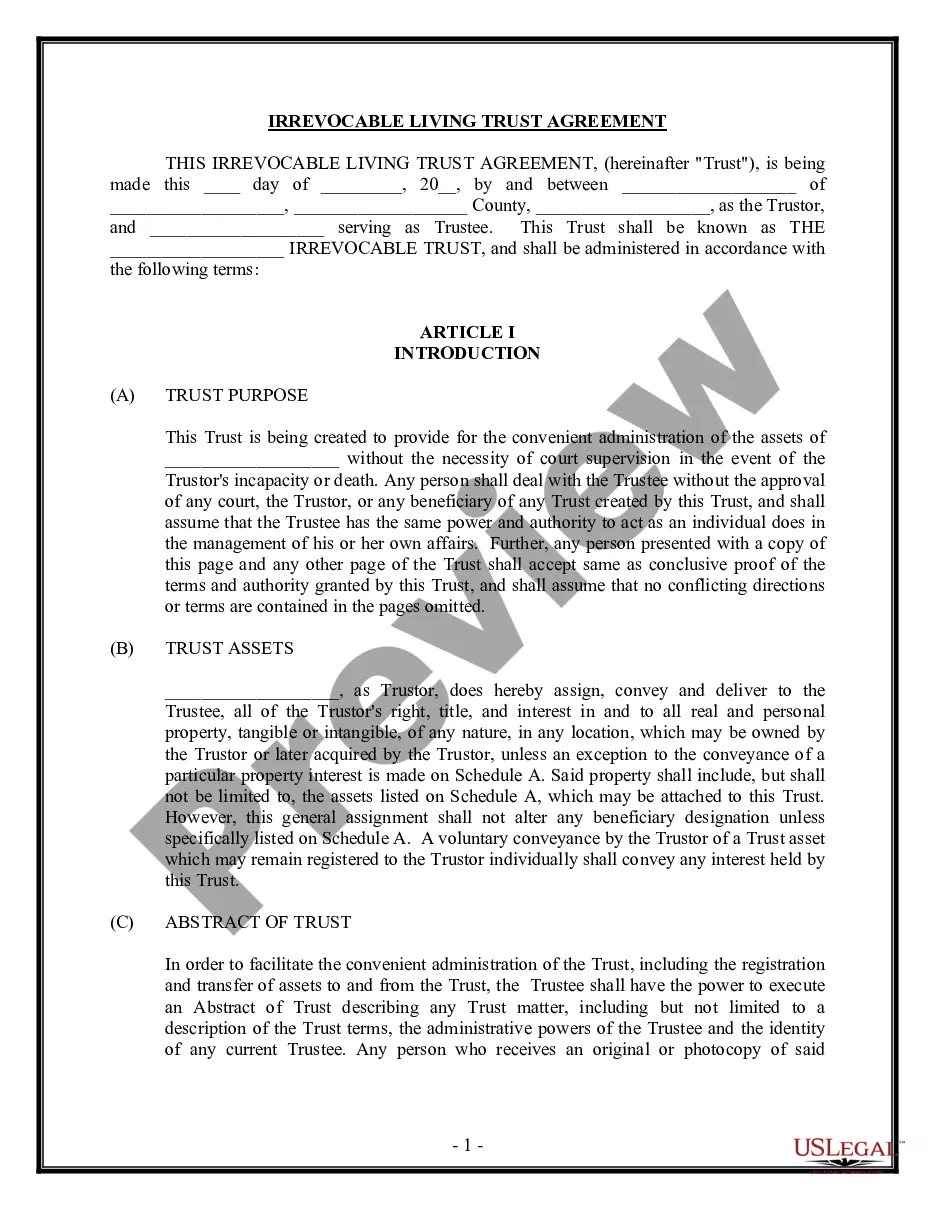
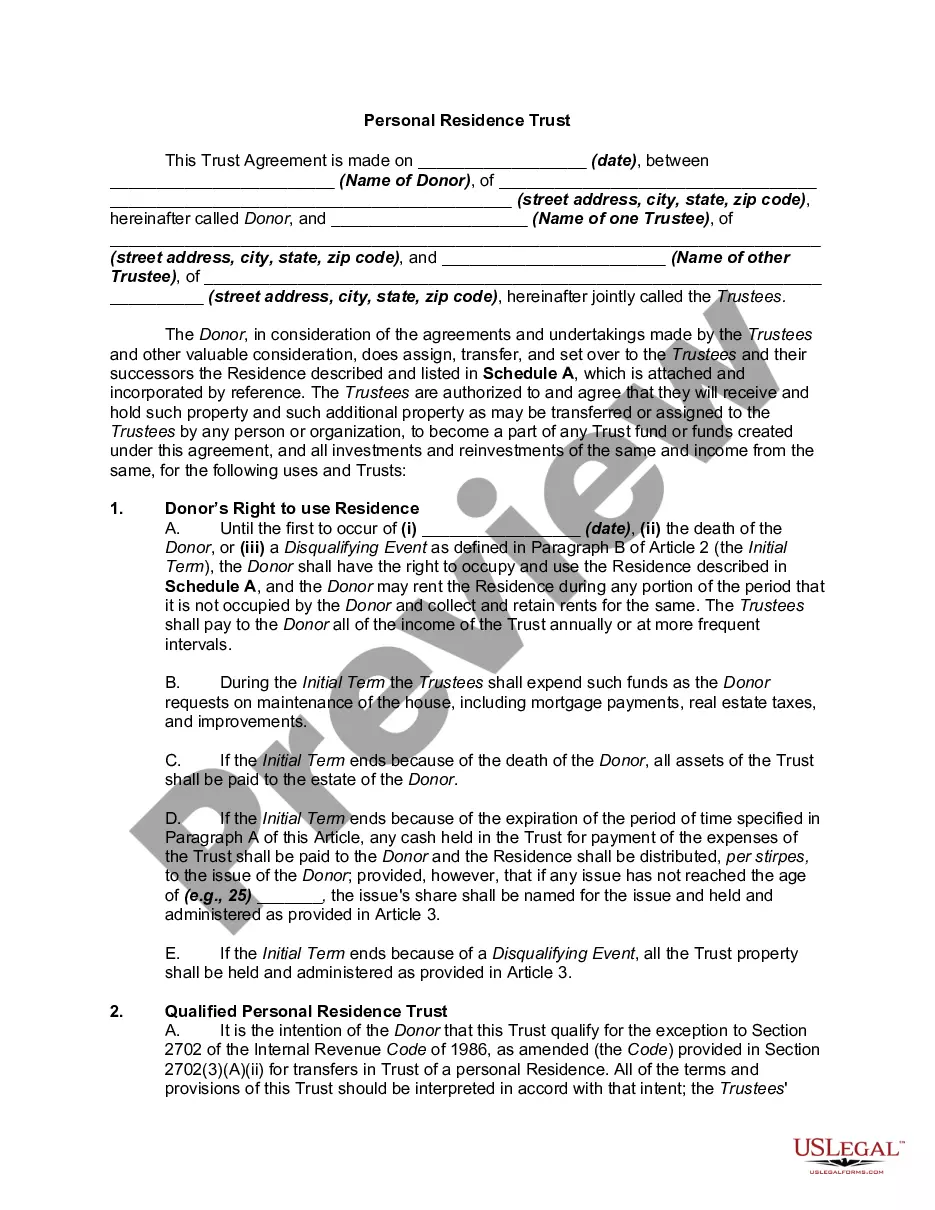
A Qualified Personal Residence Trust (QPRT) works by allowing you to transfer your primary home or a vacation property into a trust, reducing your taxable estate. You retain the right to live in the property for a set period, and after that, the property passes to your beneficiaries at a reduced gift tax value. This strategy can significantly lower the amount of estate taxes your heirs might face. Engaging with platforms like USLegalForms can help clarify the setup process and ensure compliance with all legal requirements.
A Qualified Personal Residence Trust (QPRT) is a financial tool that allows you to transfer a personal residence out of your estate while still living in it. Essentially, you place your home into the trust, which reduces the value of your taxable estate and can save on estate taxes. It's a smart way to transfer wealth to your heirs while retaining the right to live in your home. If you're unsure where to start, consider exploring resources like USLegalForms for simple guidance.
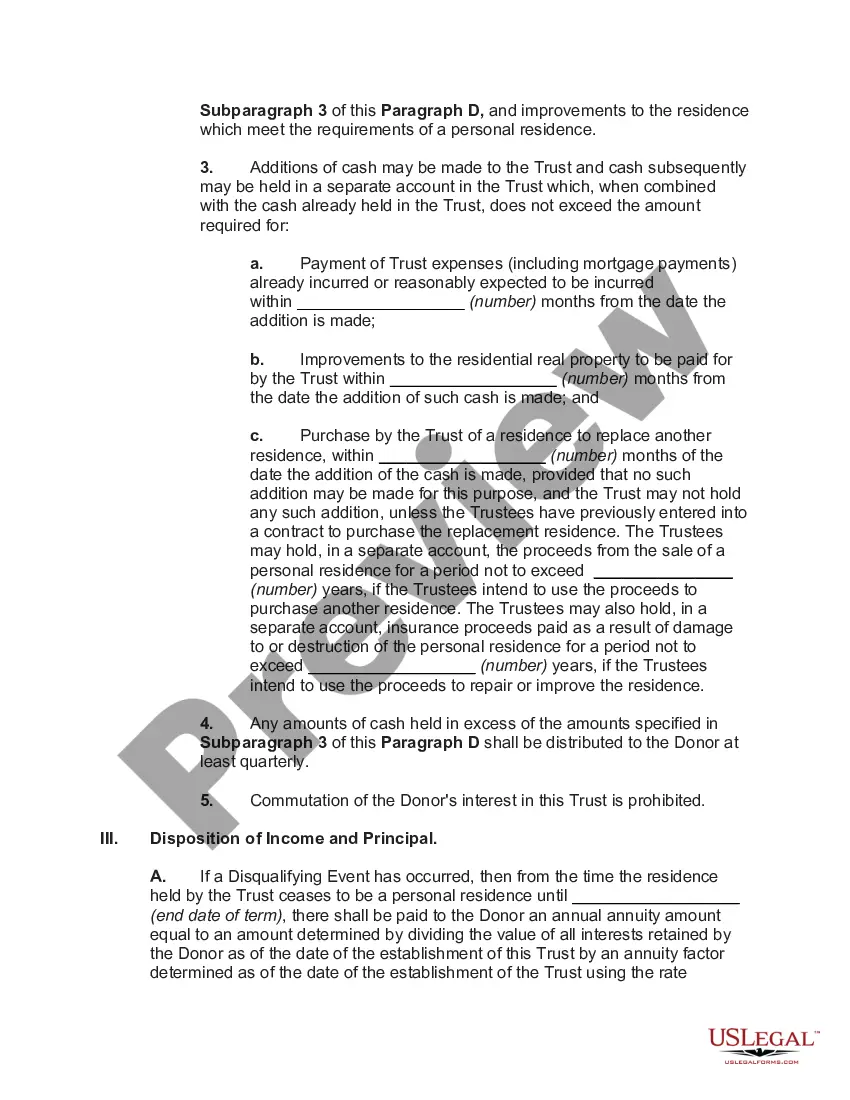
Yes, a home in a Qualified Personal Residence Trust (QPRT) can be sold, but it may have specific tax implications. When you sell a home held in a QPRT, the proceeds must go back into the trust or another qualified investment to maintain the tax benefits. Additionally, it's essential to consult with a legal expert to understand the potential consequences, ensuring that you make informed decisions about your estate planning.
Setting up a qualified personal residence trust (QPRT) involves several important steps. First, you need to determine the type of property to transfer into the trust. Next, you should draft a trust agreement that outlines the terms and conditions, ideally with the help of a legal professional. Finally, transferring the property into the QPRT must be completed properly, and you can utilize platforms like uslegalforms to streamline the paperwork and ensure compliance.
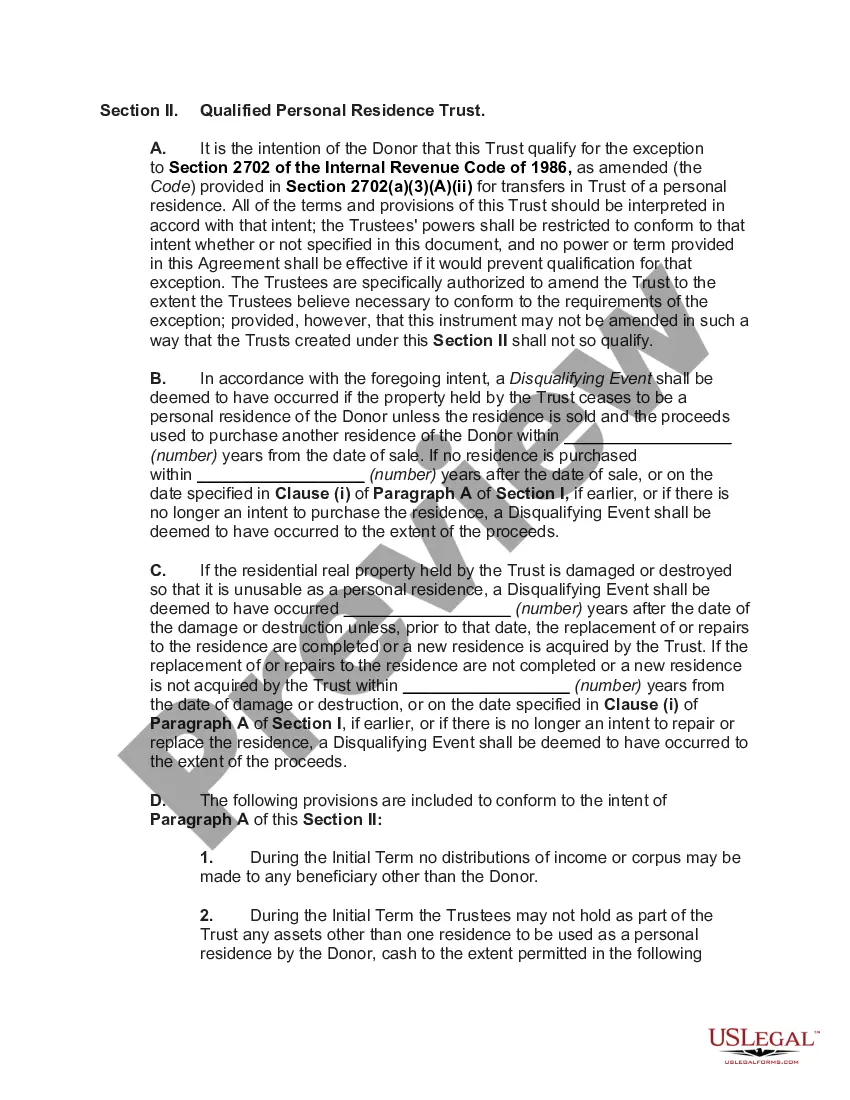
The 2-year rule for qualified personal residence trusts (QPRTs) pertains to the transfer of your home into the trust. This rule states that you must not sell or transfer your residence out of the trust for a minimum of two years after establishing it. Abiding by this timeline can help you maintain the tax benefits associated with QPRTs. Always ensure you understand the implications of this rule before implementing a QPRT.
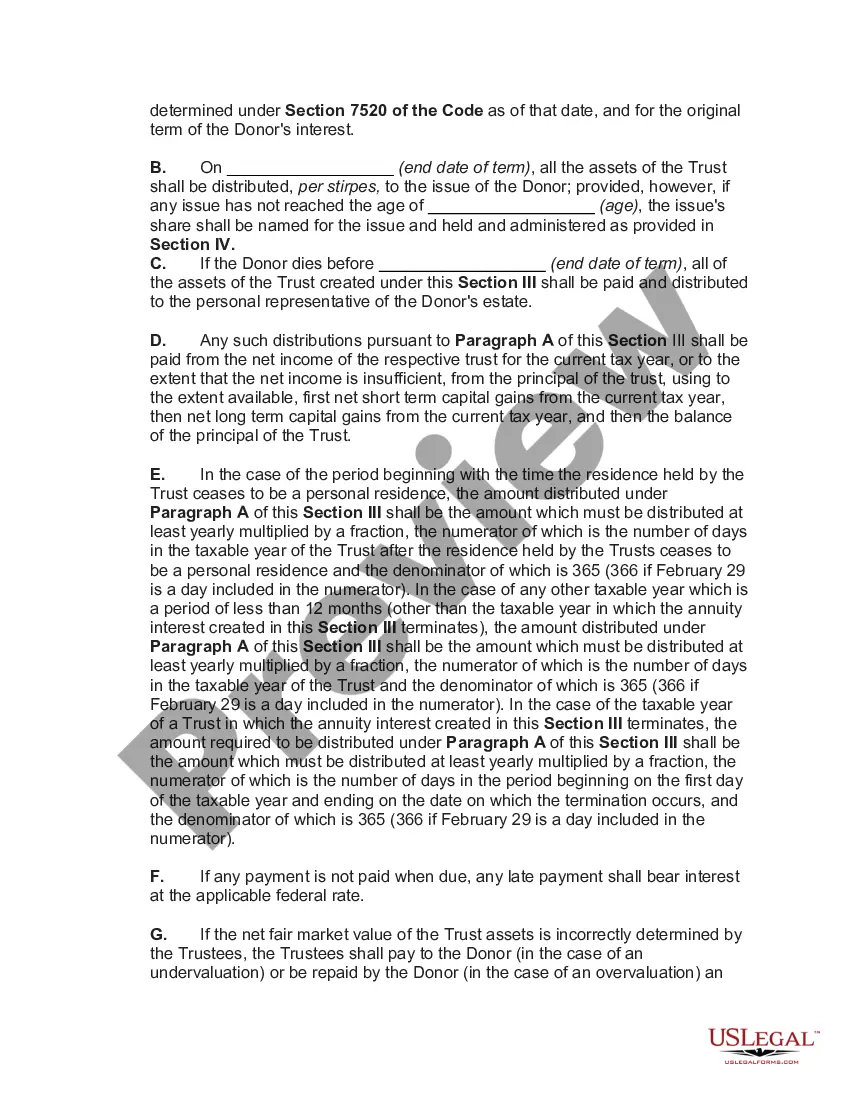
Yes, qualified personal residence trusts (QPRTs) may be required to file a tax return. Generally, the trust itself must file IRS Form 1041 if it generates any income. Additionally, beneficiaries may need to report any income from the trust on their personal tax returns. Consulting with a tax professional is advisable to ensure compliance with all tax obligations.
While Qualified Personal Residence Trusts offer tax benefits, they are not without downsides. Selling a property in a QPRT can complicate your financial situation, potentially undoing the intended benefits. Additionally, there is a risk associated with outliving the term of the QPRT, leading to potential estate tax consequences. Assessing these downsides is essential to ensure a successful estate planning strategy.
A Qualified Personal Residence Trust is characterized by its intent to hold a principal residence or vacation home. To qualify as a QPRT, the property must remain in your possession until the end of the trust term, at which point it is transferred to beneficiaries. Moreover, the trust must be established according to specific IRS guidelines to gain the desired tax benefits. Understanding these qualifications helps in accurate planning.
For a trust to be deemed a qualified trust, it must meet specific criteria set by the IRS. It generally requires that the trust provides for a fixed income to a surviving spouse and allows for qualified distributions. Additionally, the trust must be irrevocable, meaning you can't alter or cancel it without consent from beneficiaries. Familiarizing yourself with these requirements is crucial for successful estate planning.
A QTIP trust, while providing some tax benefits, also has downsides. One significant downside is that all income generated by the trust is taxable to you as the grantor. Moreover, QTIP trusts only defer estate taxes, which means they could ultimately lead to a larger tax bill upon your passing. Being informed about these challenges can guide your estate planning decisions effectively.