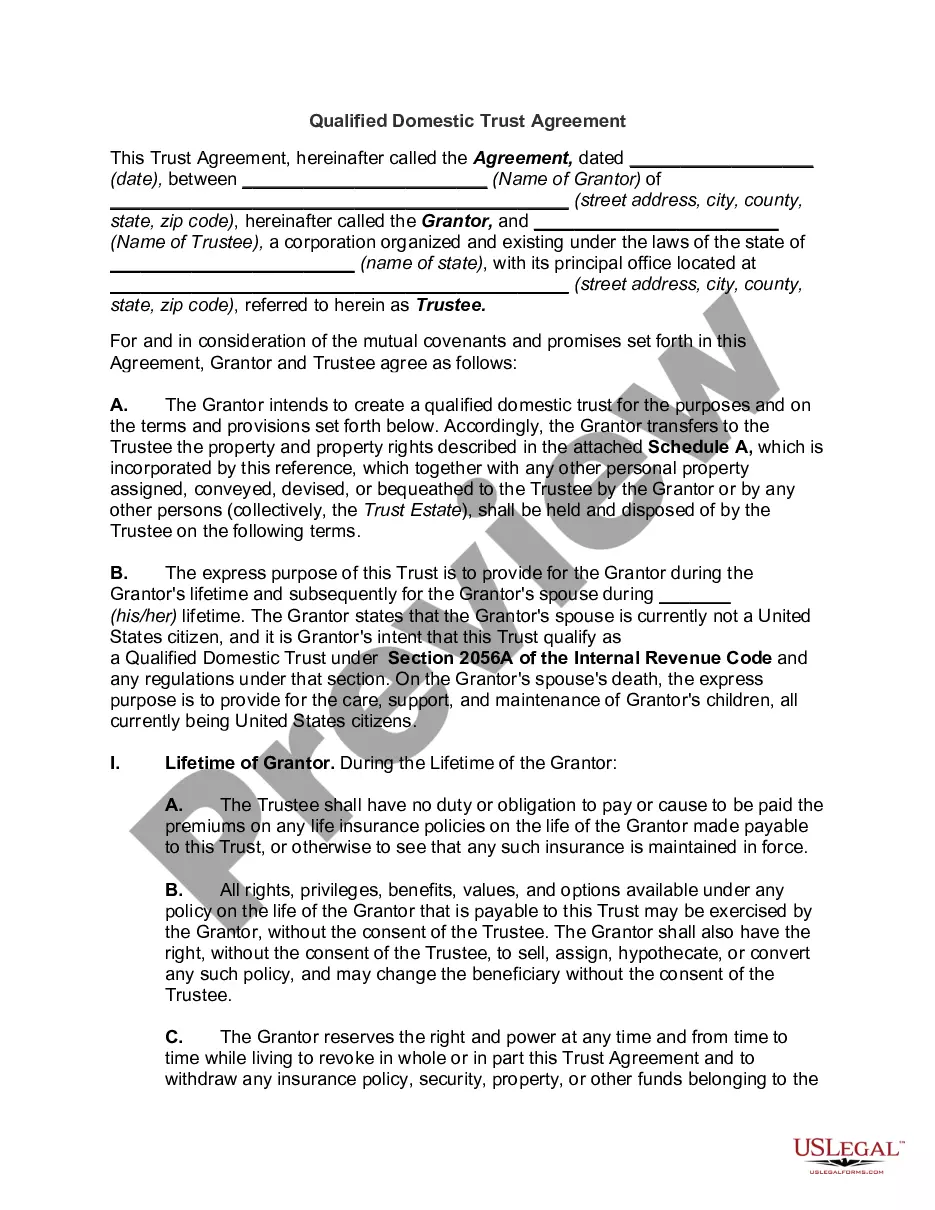
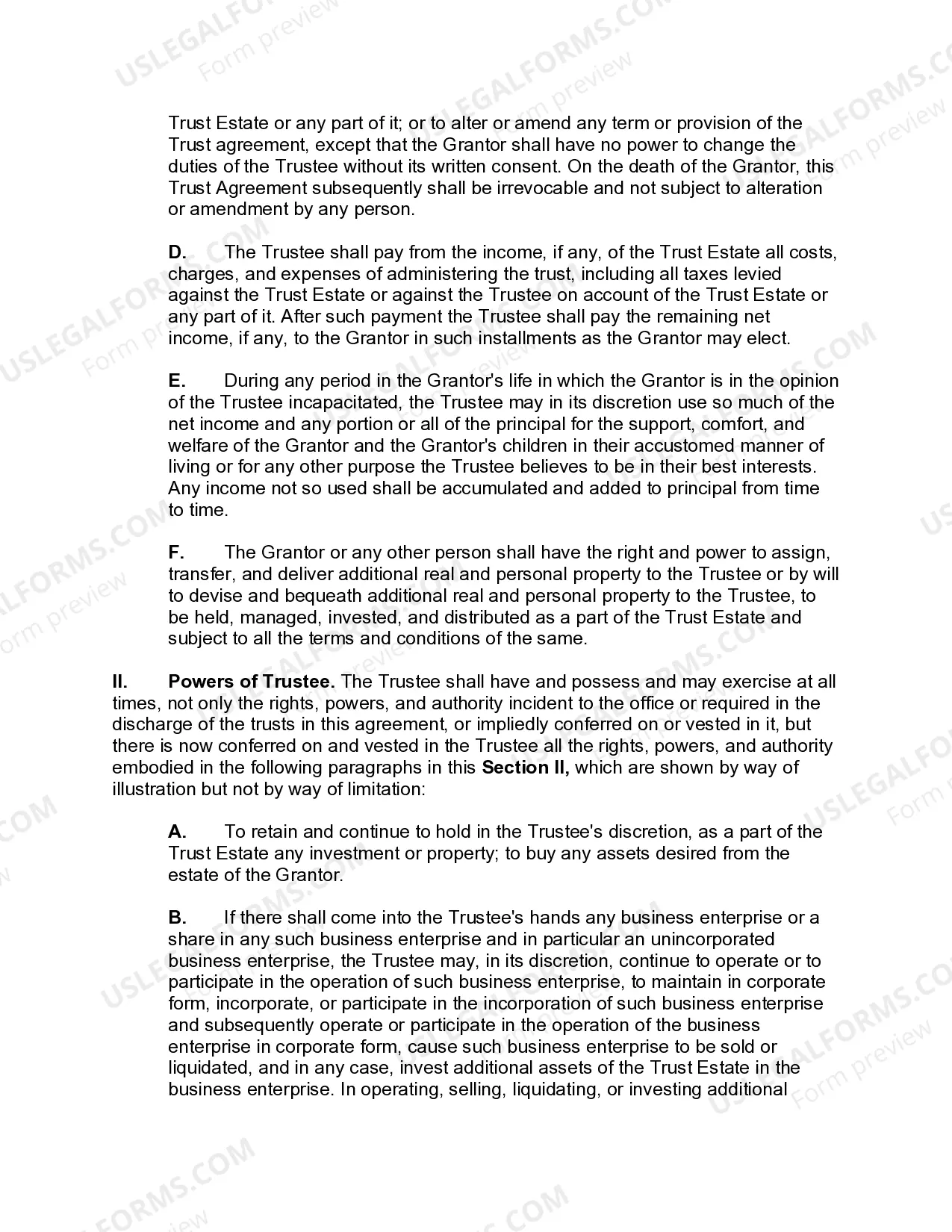
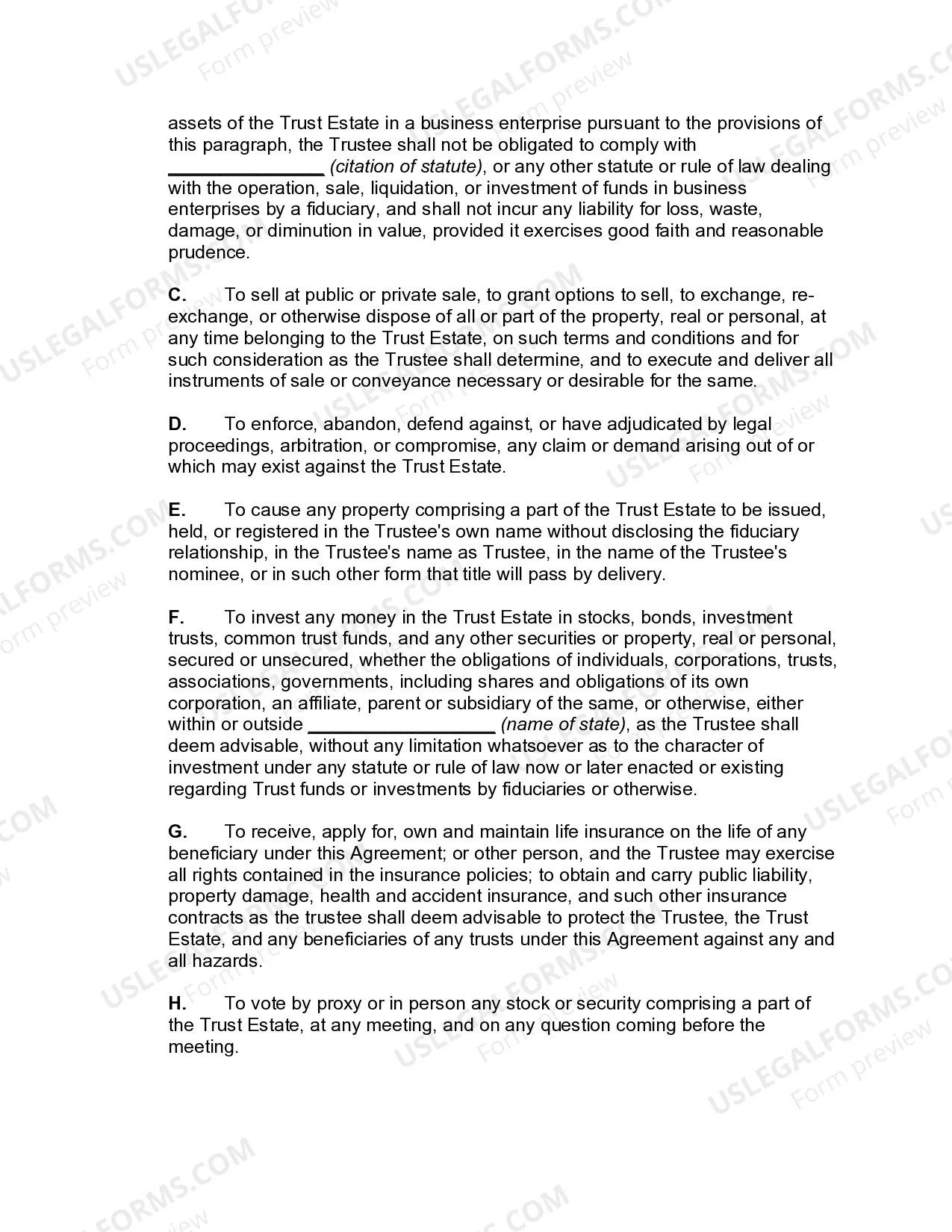
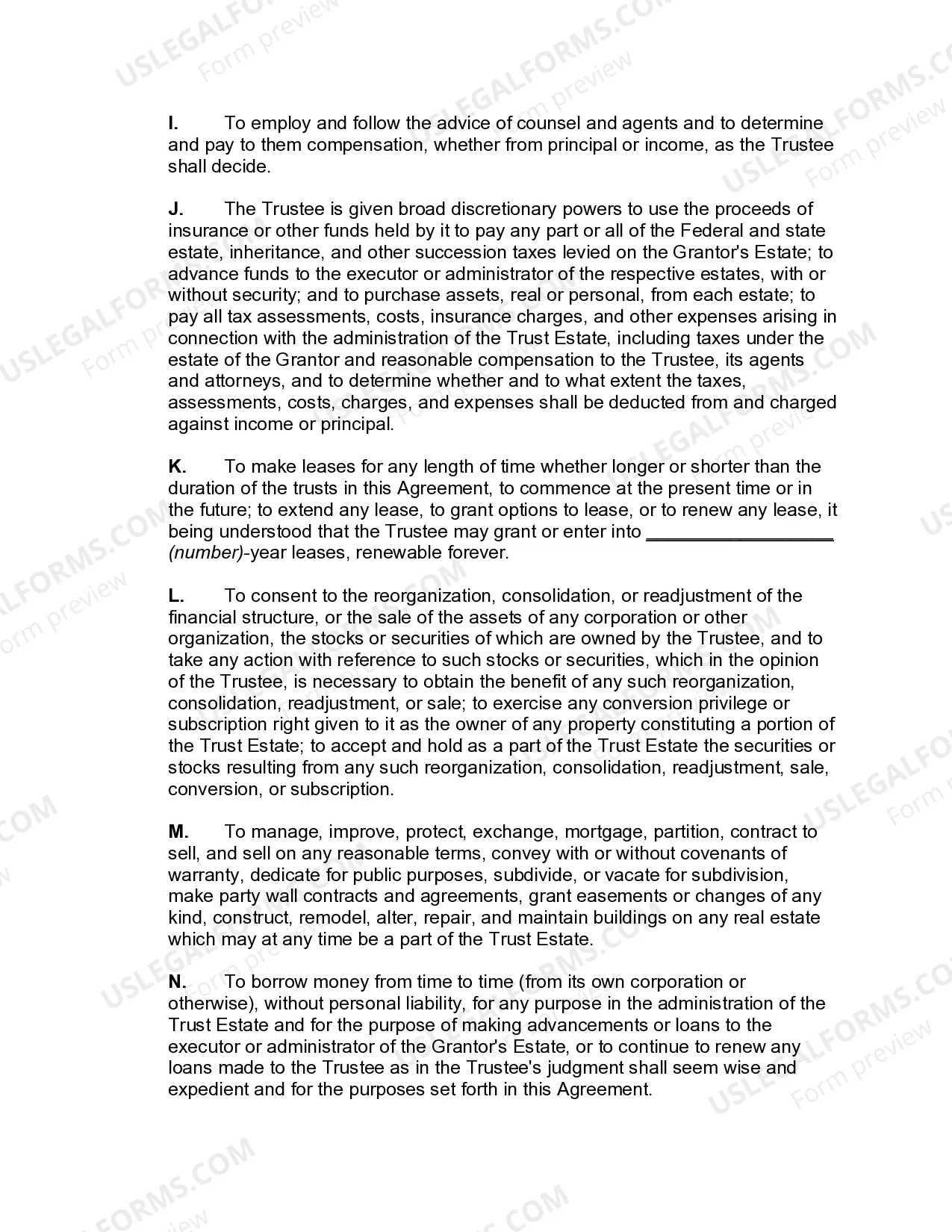
Qdot Trust Sample With Replacement
Description
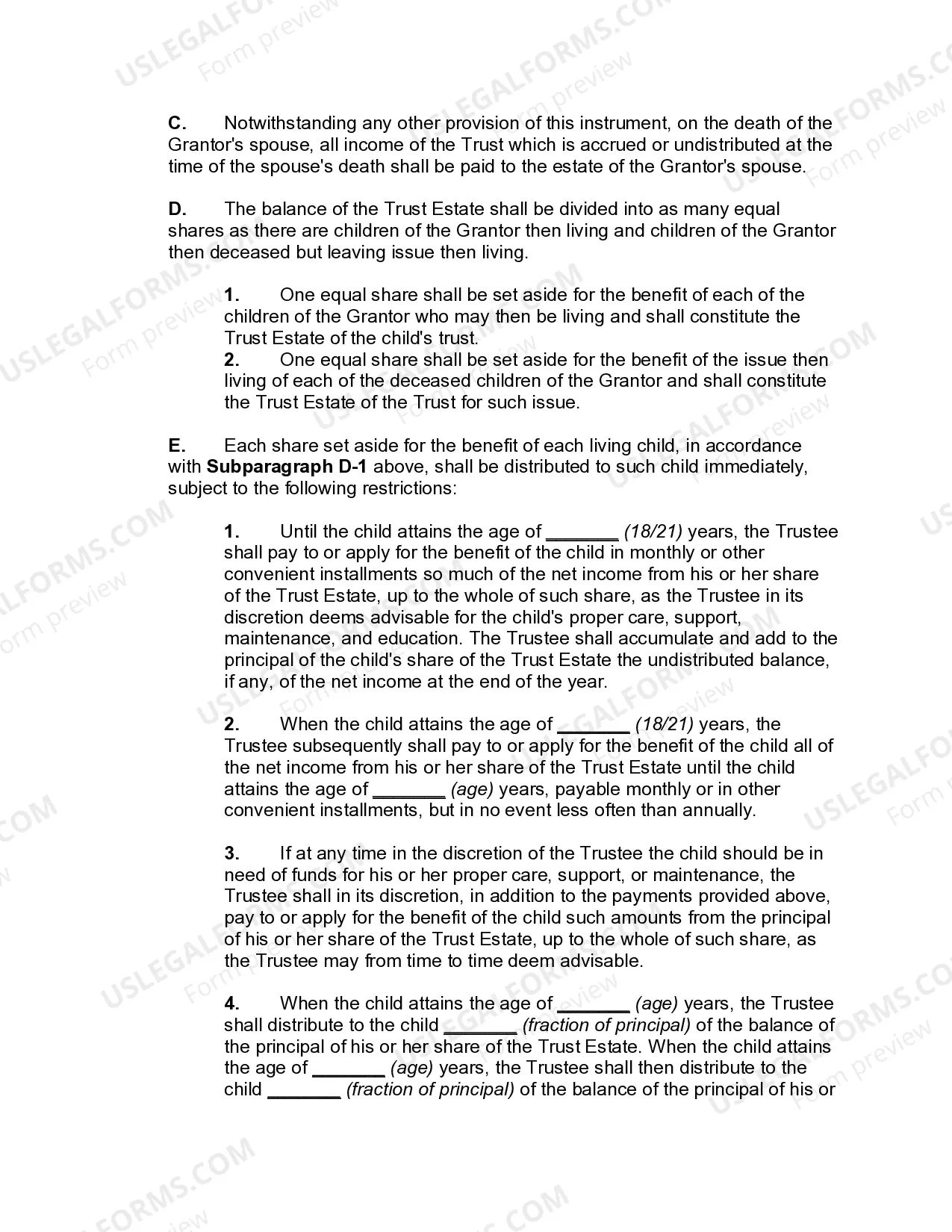
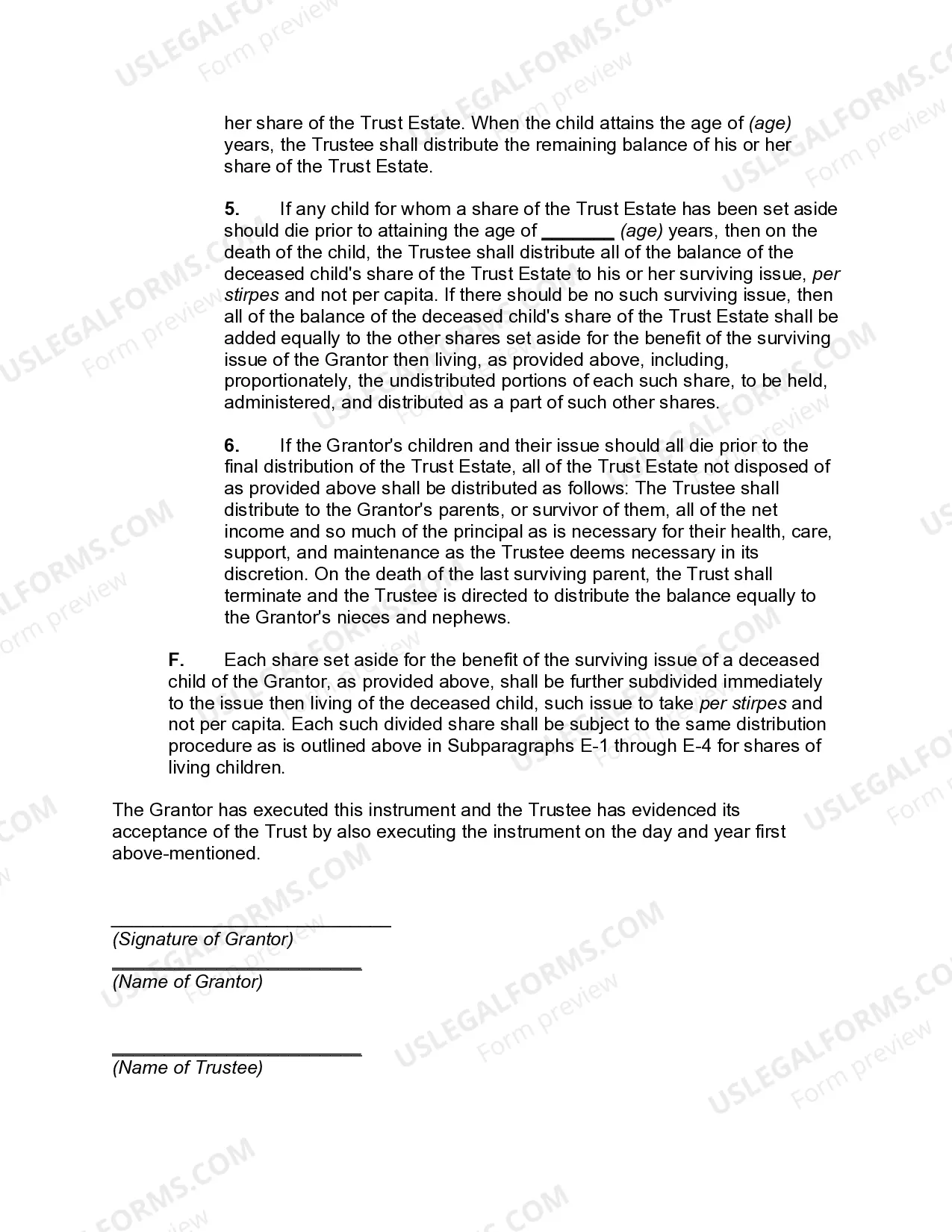

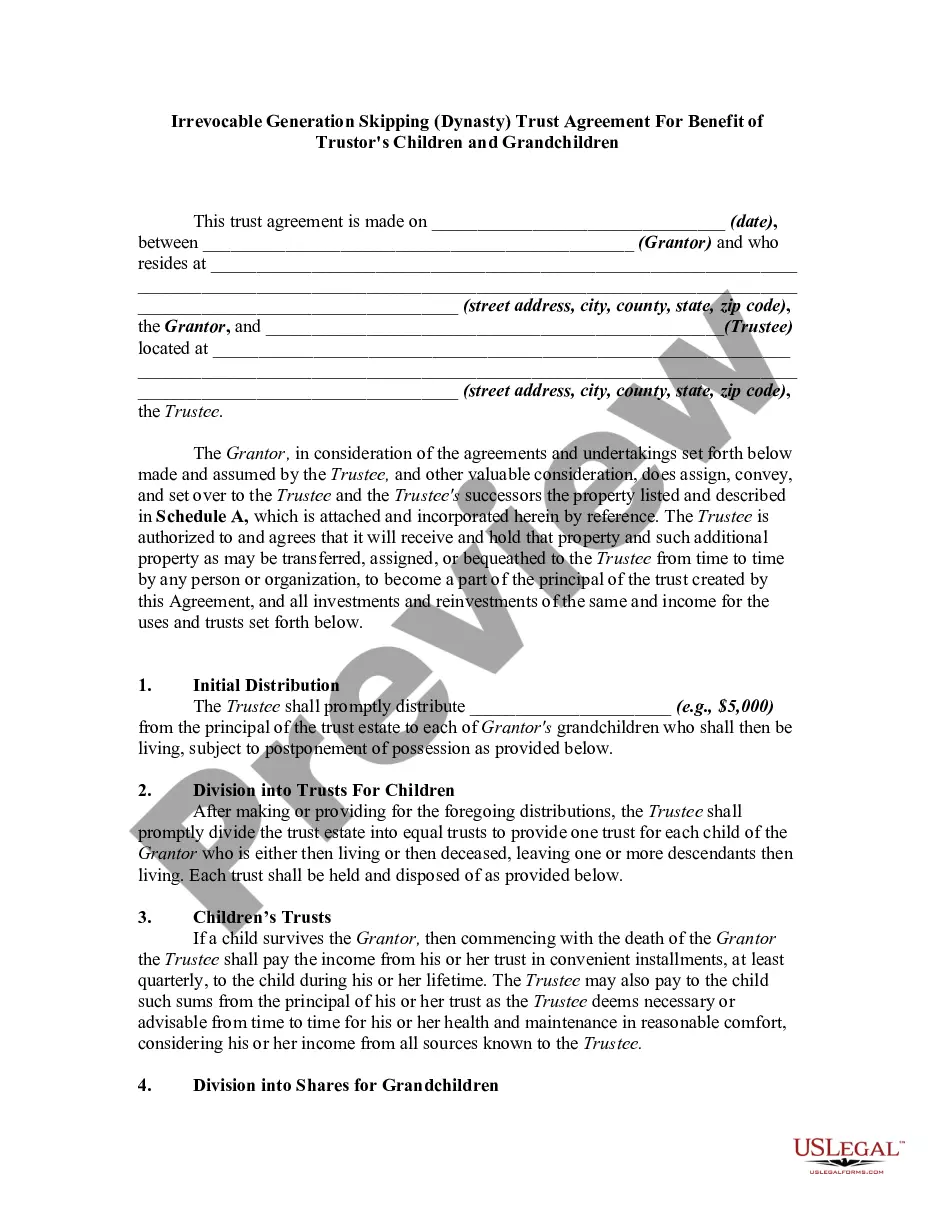

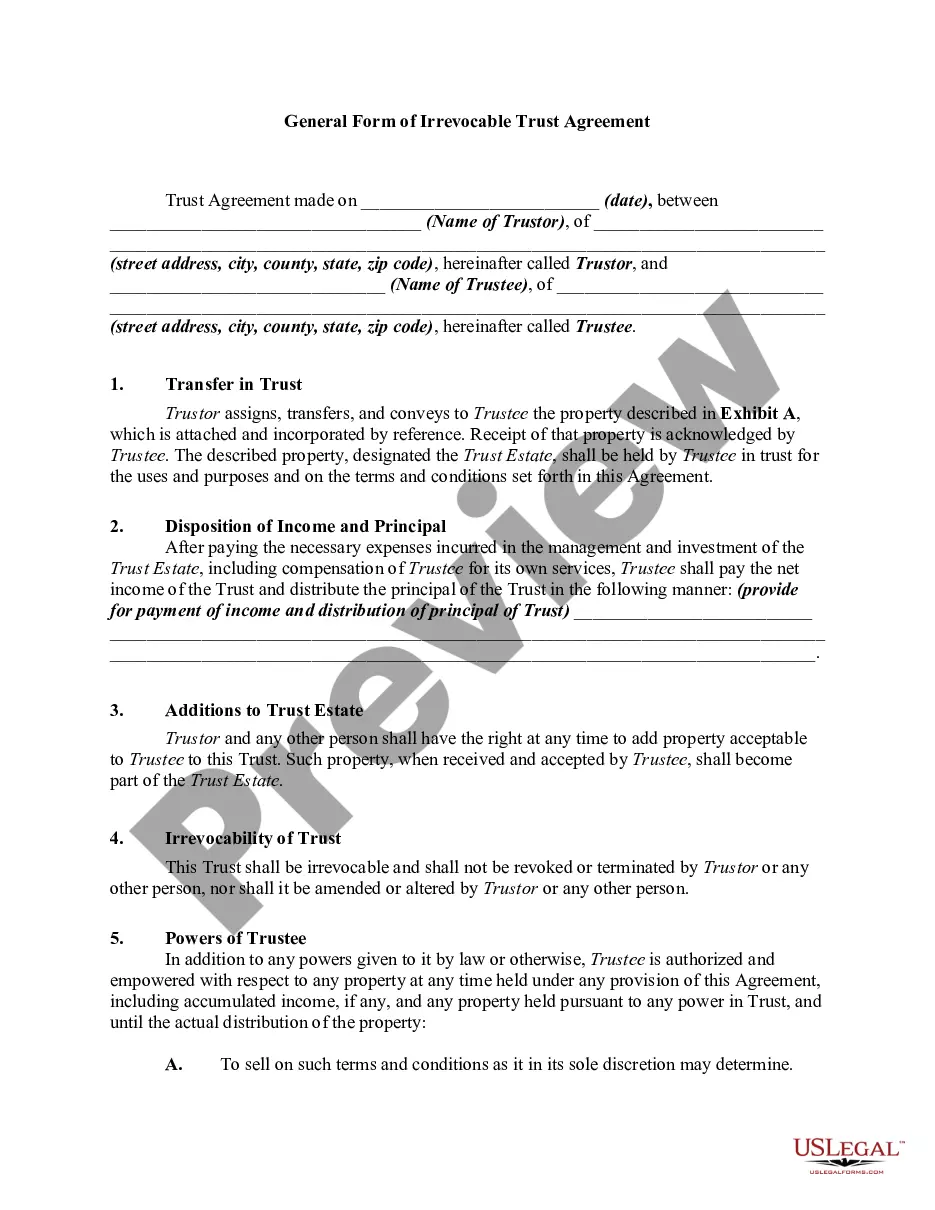
Get your form ready online
Our built-in tools help you complete, sign, share, and store your documents in one place.
Make edits, fill in missing information, and update formatting in US Legal Forms—just like you would in MS Word.
Download a copy, print it, send it by email, or mail it via USPS—whatever works best for your next step.
Sign and collect signatures with our SignNow integration. Send to multiple recipients, set reminders, and more. Go Premium to unlock E-Sign.
If this form requires notarization, complete it online through a secure video call—no need to meet a notary in person or wait for an appointment.
We protect your documents and personal data by following strict security and privacy standards.

Make edits, fill in missing information, and update formatting in US Legal Forms—just like you would in MS Word.

Download a copy, print it, send it by email, or mail it via USPS—whatever works best for your next step.

Sign and collect signatures with our SignNow integration. Send to multiple recipients, set reminders, and more. Go Premium to unlock E-Sign.

If this form requires notarization, complete it online through a secure video call—no need to meet a notary in person or wait for an appointment.

We protect your documents and personal data by following strict security and privacy standards.
Looking for another form?





How to fill out Qualified Domestic Trust Agreement?
Handling legal documents and processes can be a lengthy addition to your schedule.
Qdot Trust Sample With Replacement and similar forms usually require you to search for them and comprehend how to fill them out accurately.
Thus, whether you are managing financial, legal, or personal affairs, possessing a detailed and functional online repository of forms readily available will greatly assist.
US Legal Forms is the leading online platform for legal templates, providing over 85,000 state-specific forms and a variety of tools to help you complete your documents effortlessly.
Is this your first experience with US Legal Forms? Register and create a free account in just a few minutes, and you’ll gain access to the form library and Qdot Trust Sample With Replacement. After that, follow the steps outlined below to complete your form.
- Browse the collection of relevant documents available to you with a single click.
- US Legal Forms offers state- and county-specific forms available at any time for download.
- Protect your document management processes with a high-quality service that allows you to prepare any form in minutes without additional or hidden charges.
- Simply Log In to your account, find Qdot Trust Sample With Replacement, and retrieve it instantly from the My documents section.
- You can also access forms you have previously saved.
Form popularity
FAQ
For a qualified domestic trust (Qdot), the trust must stipulate that all income goes to the non-citizen spouse during their lifetime. Additionally, it should ensure that the trustee is a U.S. citizen or a domestic entity qualified to act as a trustee. If you’re considering a Qdot, uslegalforms can help clarify these requirements and provide a Qdot trust sample with replacement for your review.
Distributions from a non-grantor trust are taxed based on the income generated by the trust itself. The beneficiaries must report this income on their personal tax returns. Using an example like a Qdot trust sample with replacement can illustrate how the tax process works, ensuring beneficiaries are well-informed.
The most common types of advance directives are the living will and the durable power of attorney for health care (sometimes known as the medical power of attorney). There are many advance directive formats.
Living wills do not determine your medical treatment in situations that do not affect your continued life, such as routine medical treatment and non life-threatening medical conditions.
Your living will is an essential part of your estate plan and can be changed and altered as needed as your specific needs and preferences change over time. Taking the time to create this document and outline your wishes will give you peace of mind and help your family cope during a stressful time.
The rules governing Living Wills vary by state; however, in Maine, your Living Will needs the signatures of two witnesses. As a basic rule, witnesses will need to be over 18 years old, and no witness should simultaneously be acting as your healthcare agent.
You do not need to have a Notary Public sign your Advance Directive form to make it legal in Maine. However, if you travel or live part of the year out-of-state, it would be wise to have it signed by a Notary.
There are three main disadvantages to using a living will: Living wills have a limited scope; Living wills rely on physician compliance; Living wills are not always given to health care providers.
4 Pros and Cons of a Living Will Pro: Ensures You Get What You Need and Want. The biggest advantage of a living will is that it lists out all the care you want and need in your later years. ... Pro: Takes the Pressure off Family. ... Con: You Need to Understand It. ... Con: People Can Still Argue the Meaning.
What are the Benefits of a Living Will? Appoints a medical power of attorney. Prevents arguments amongst family members. Reduces the burden of decision-making for caretakers. Refuses any treatments you wouldn't want. Provides peace of mind; you know you'll receive the medical care that you want.