Beneficiary Estate Other Foreign
Description

Get your form ready online
Our built-in tools help you complete, sign, share, and store your documents in one place.
Make edits, fill in missing information, and update formatting in US Legal Forms—just like you would in MS Word.
Download a copy, print it, send it by email, or mail it via USPS—whatever works best for your next step.
Sign and collect signatures with our SignNow integration. Send to multiple recipients, set reminders, and more. Go Premium to unlock E-Sign.
If this form requires notarization, complete it online through a secure video call—no need to meet a notary in person or wait for an appointment.
We protect your documents and personal data by following strict security and privacy standards.
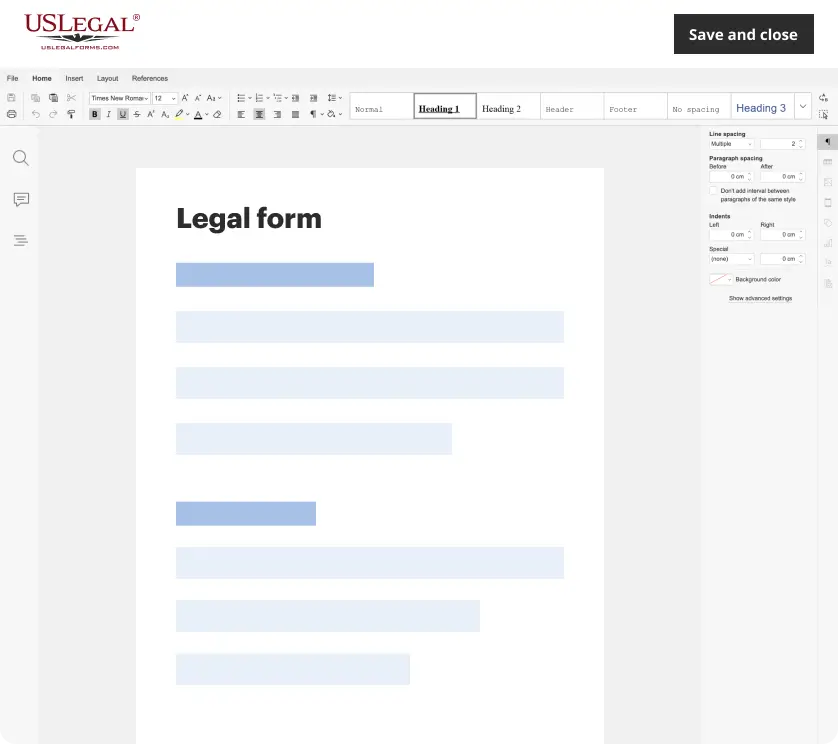
Make edits, fill in missing information, and update formatting in US Legal Forms—just like you would in MS Word.
Download a copy, print it, send it by email, or mail it via USPS—whatever works best for your next step.
Sign and collect signatures with our SignNow integration. Send to multiple recipients, set reminders, and more. Go Premium to unlock E-Sign.
If this form requires notarization, complete it online through a secure video call—no need to meet a notary in person or wait for an appointment.
We protect your documents and personal data by following strict security and privacy standards.
Looking for another form?


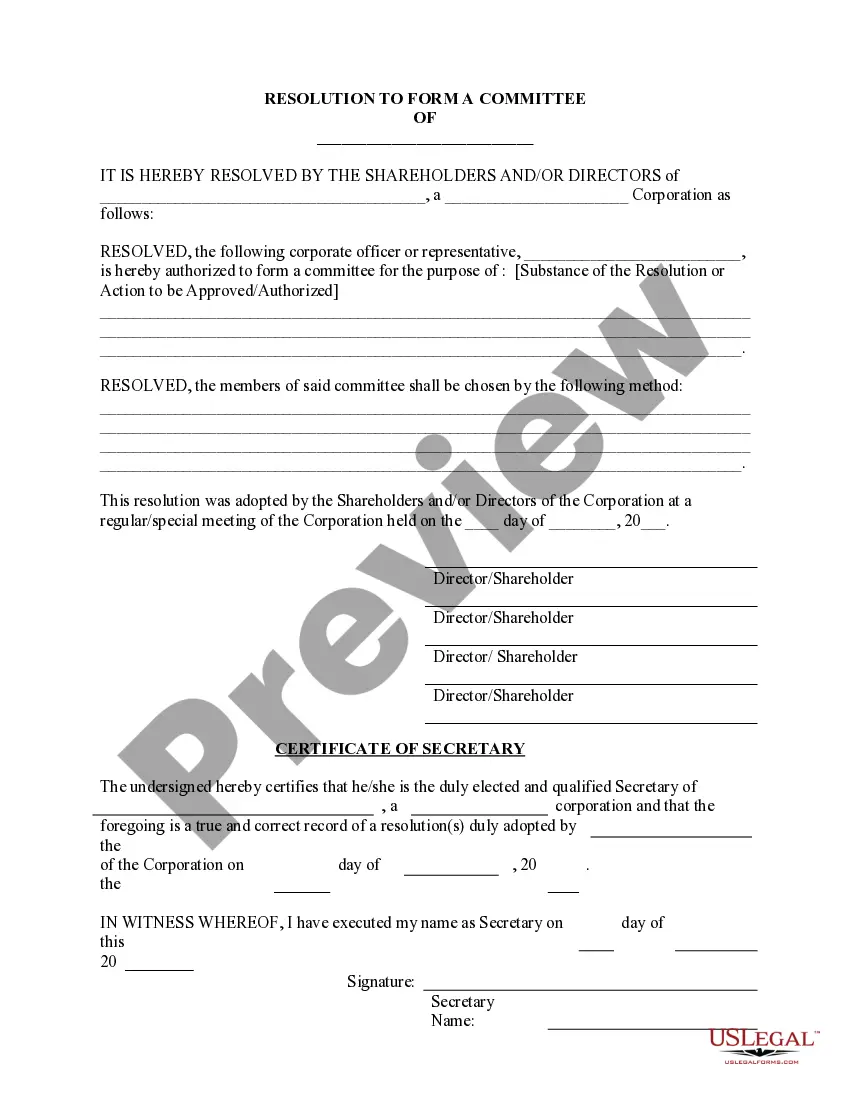

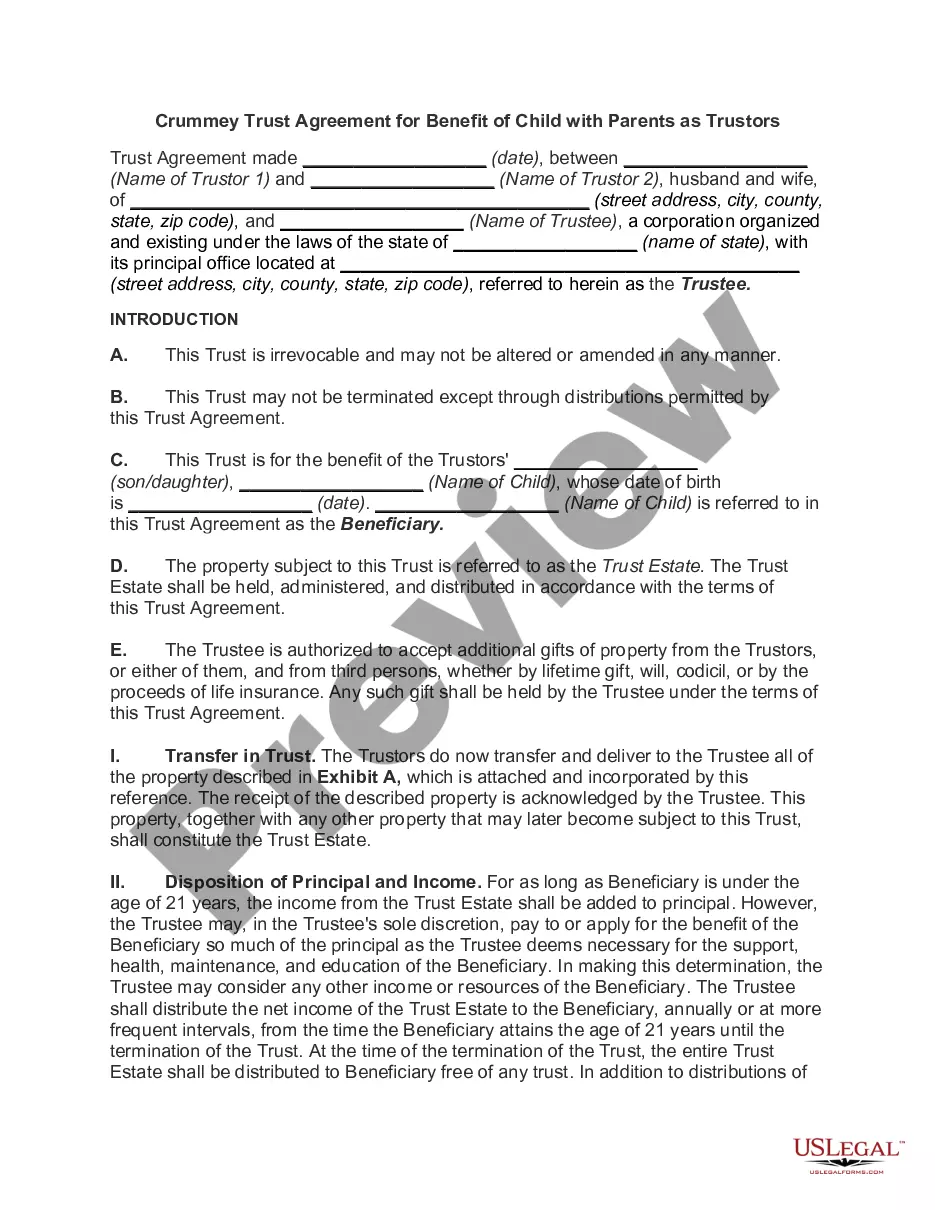
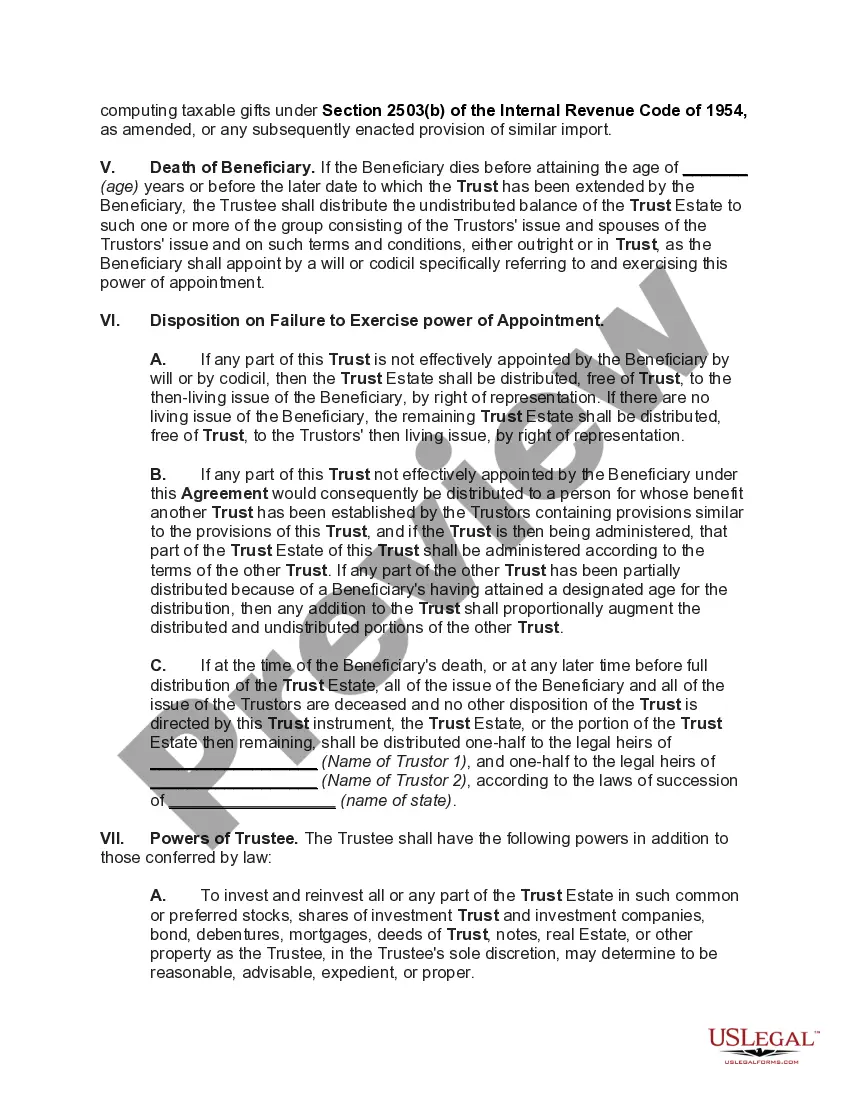
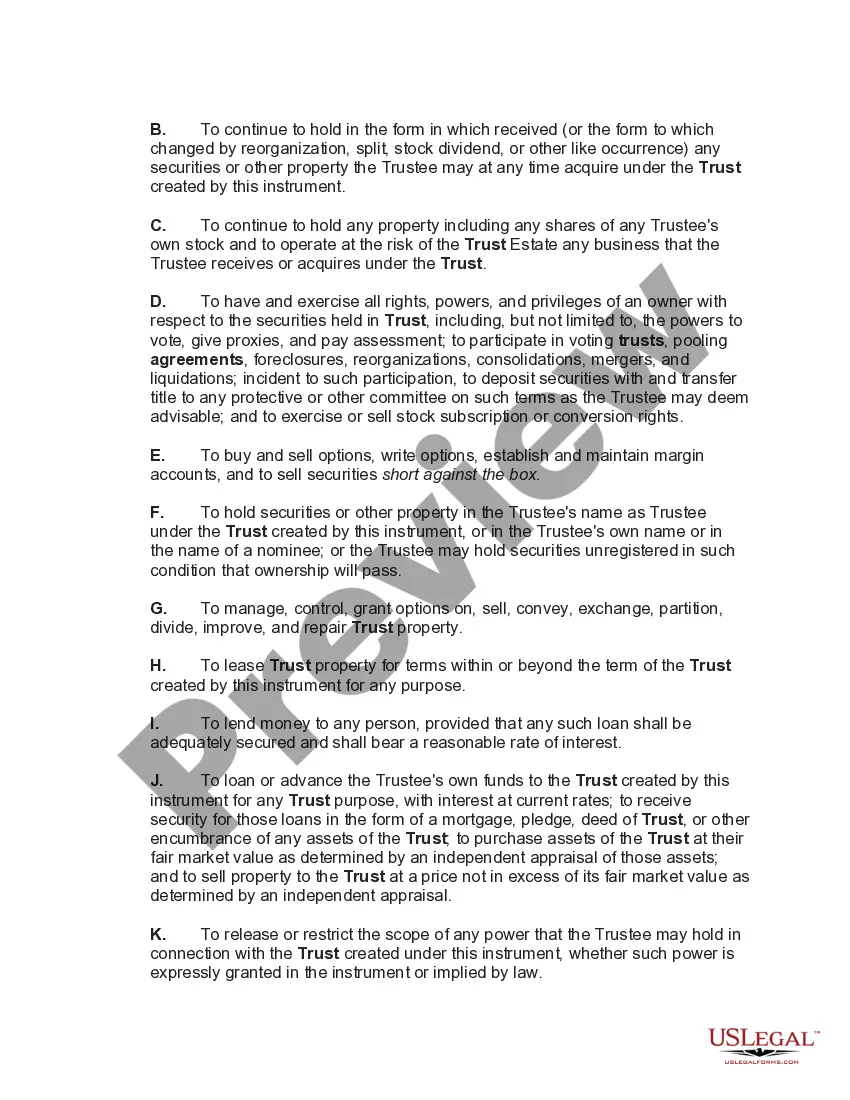
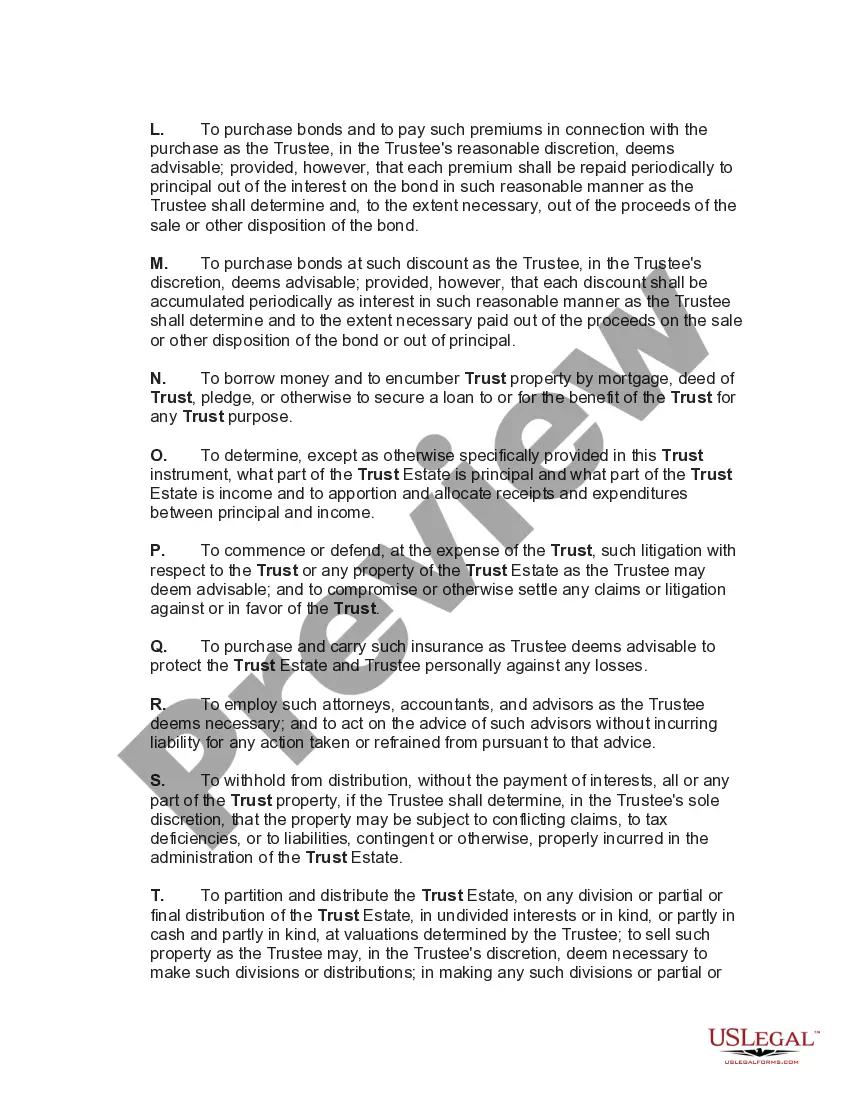
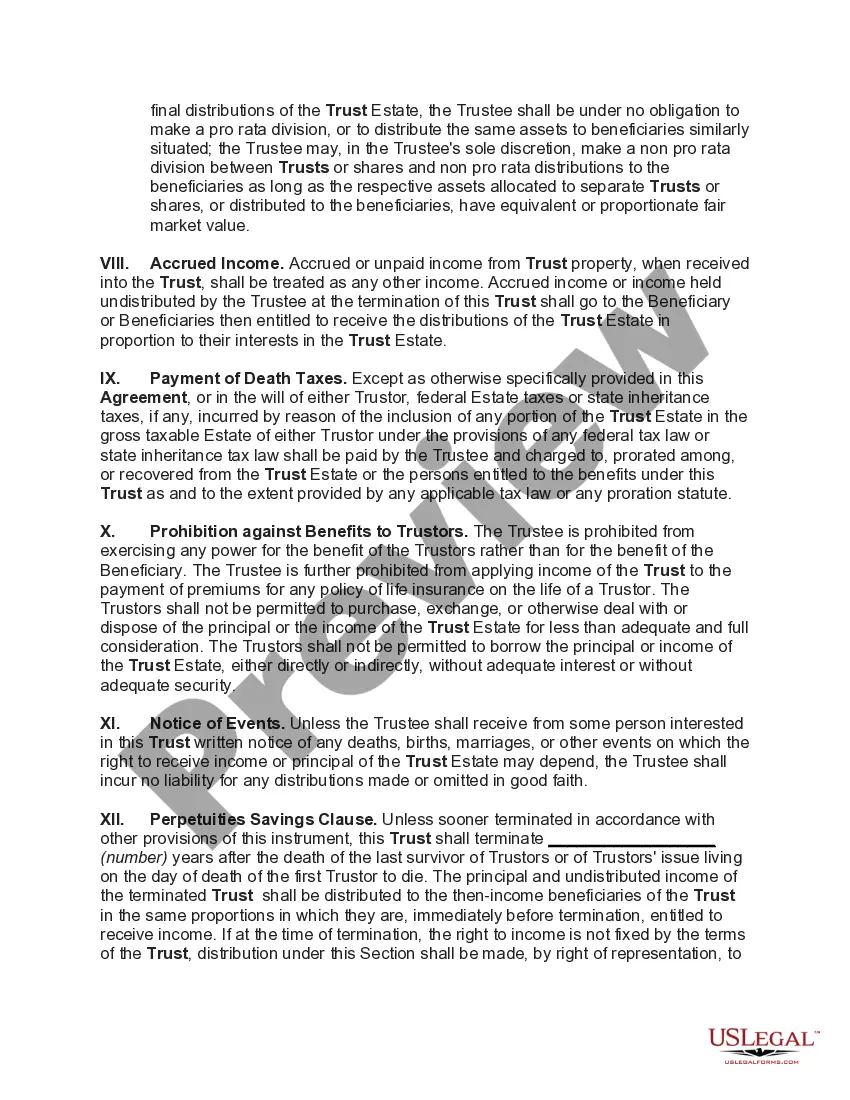
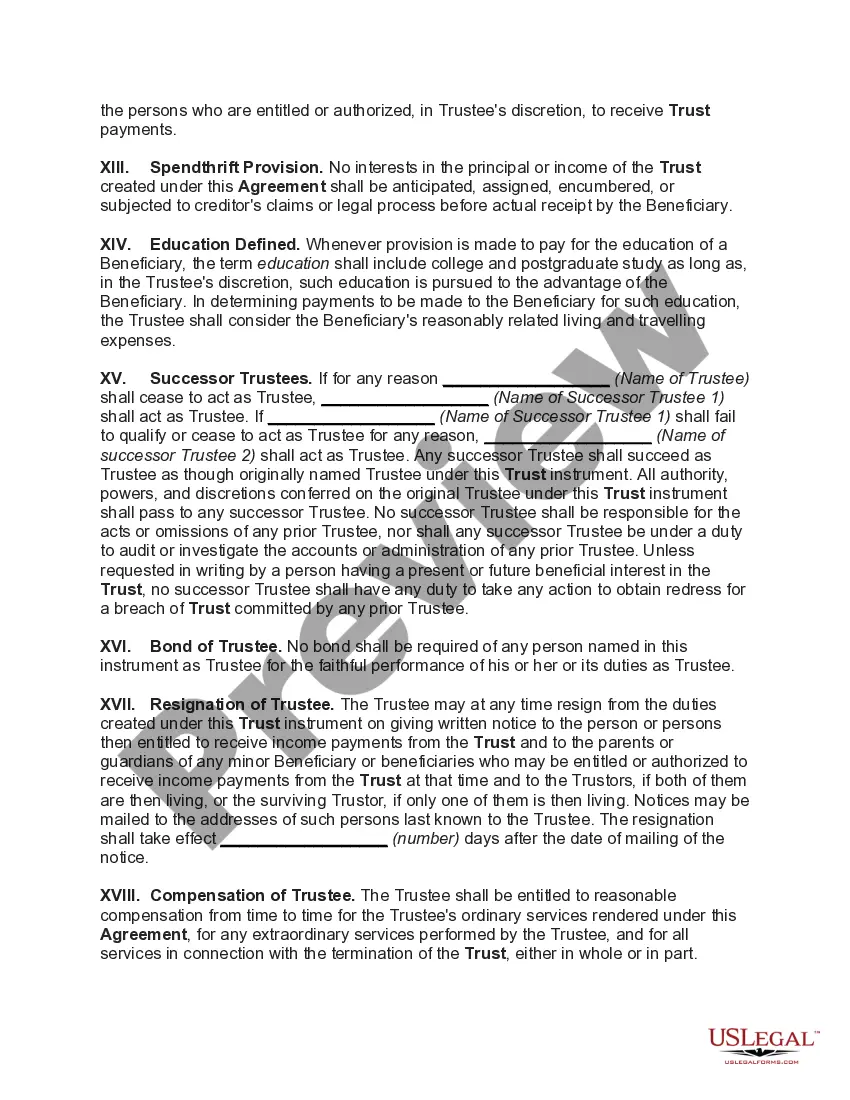
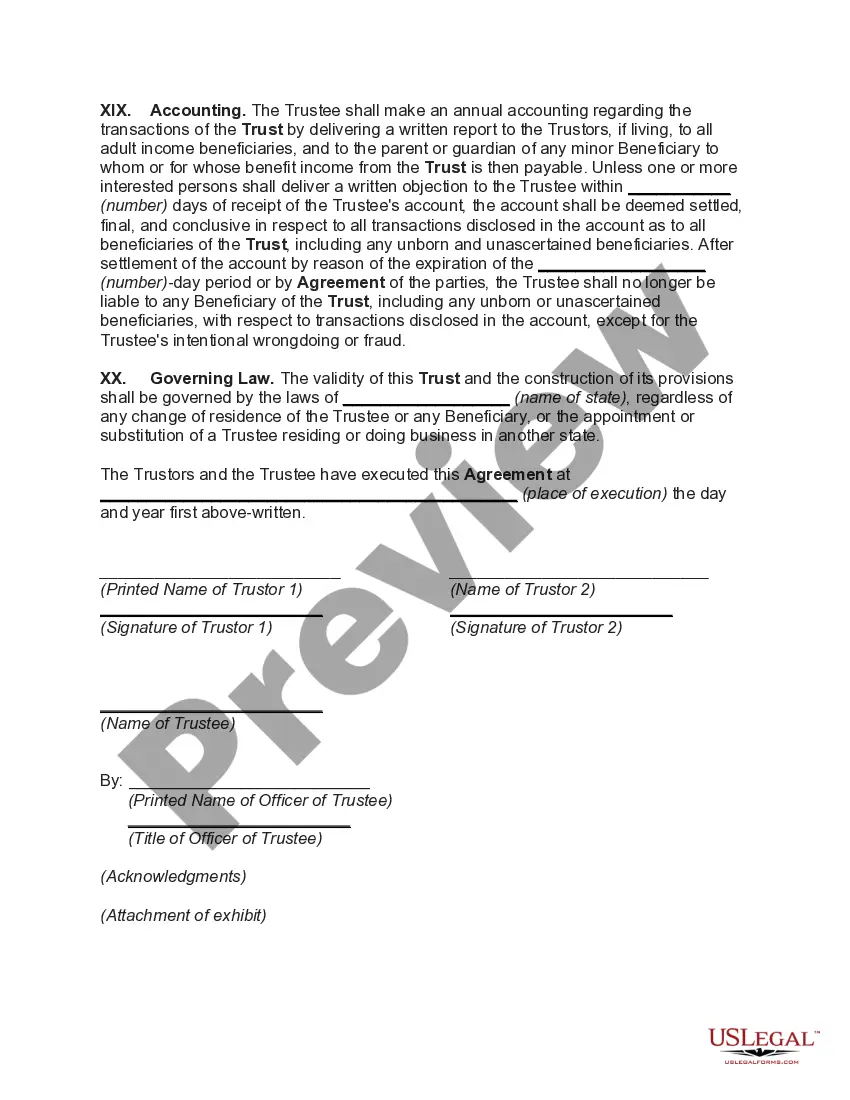
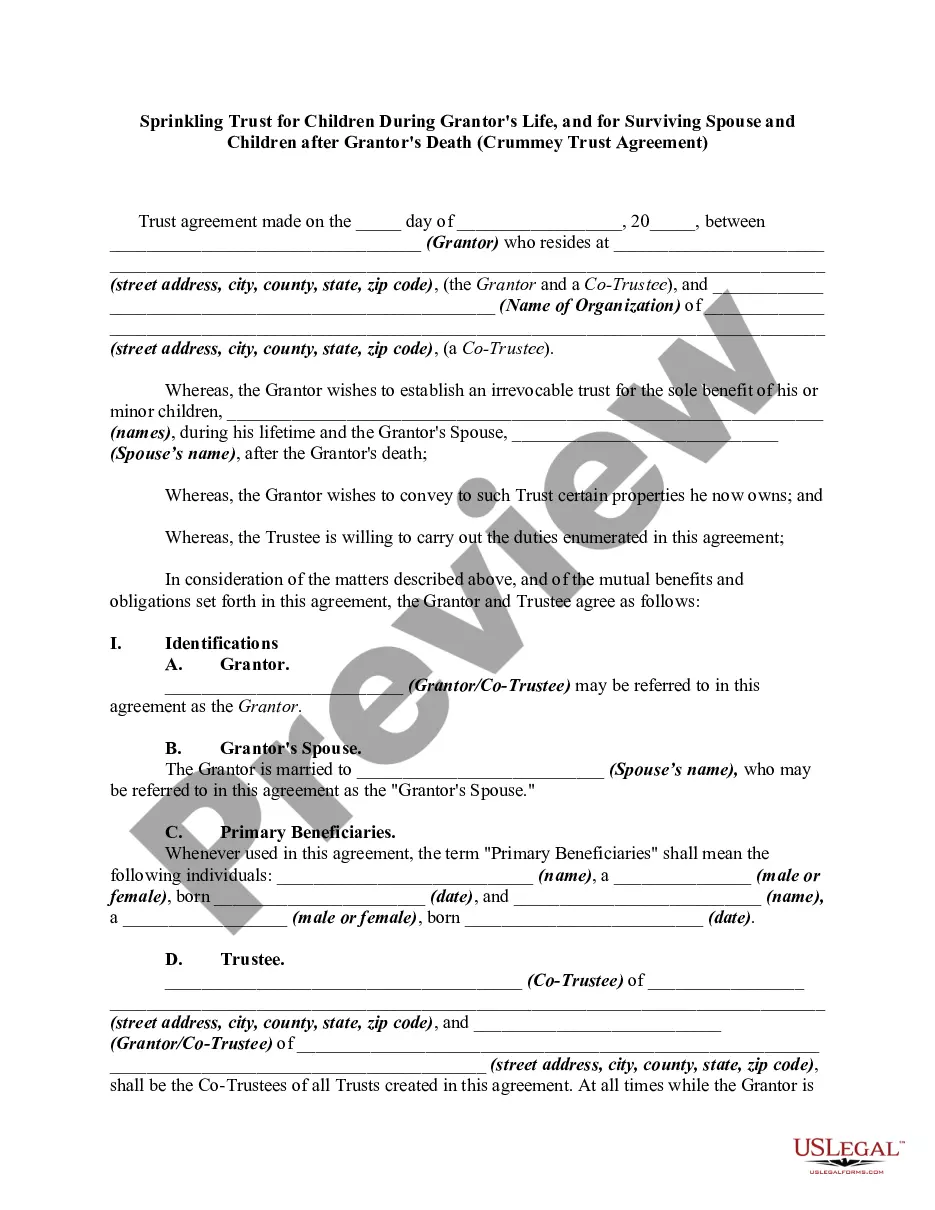
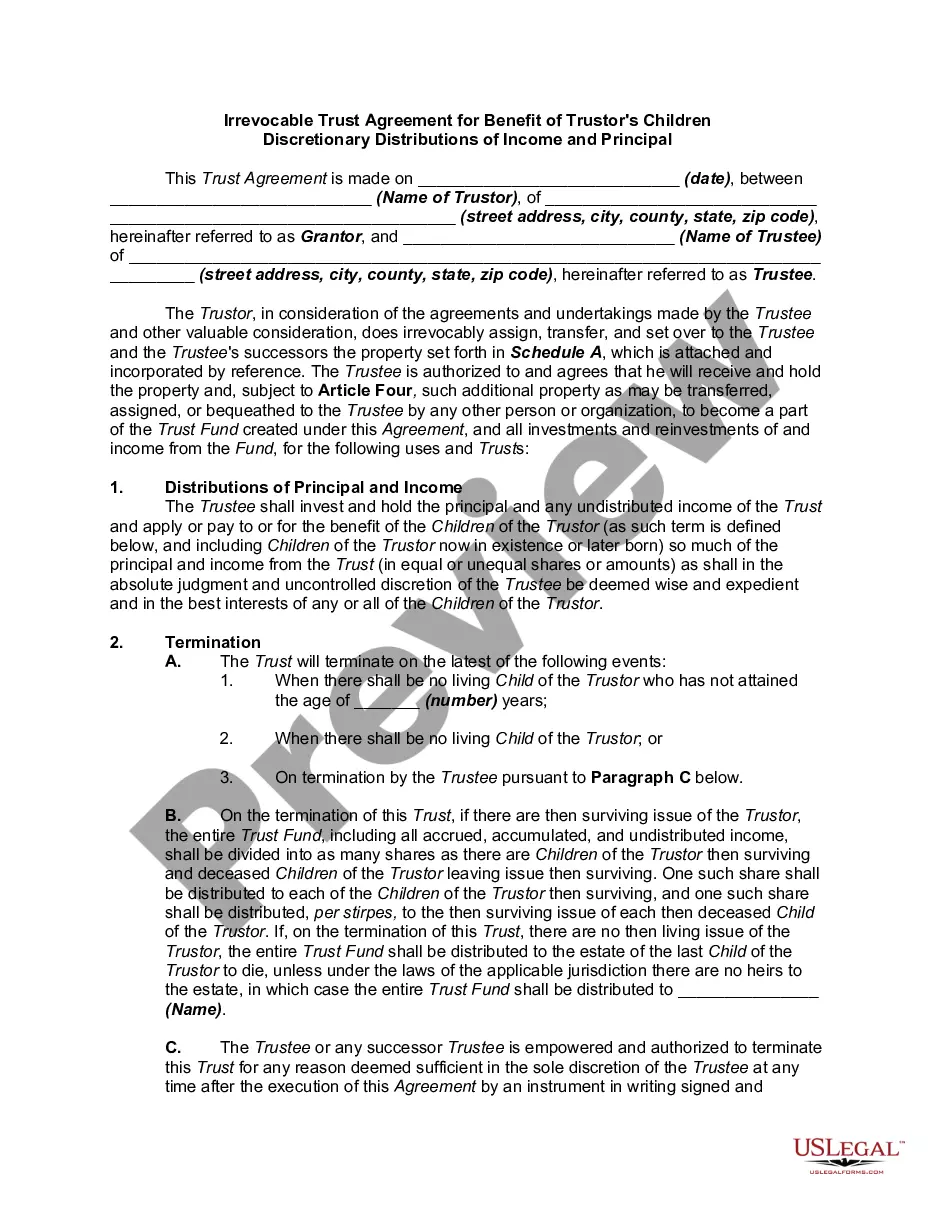
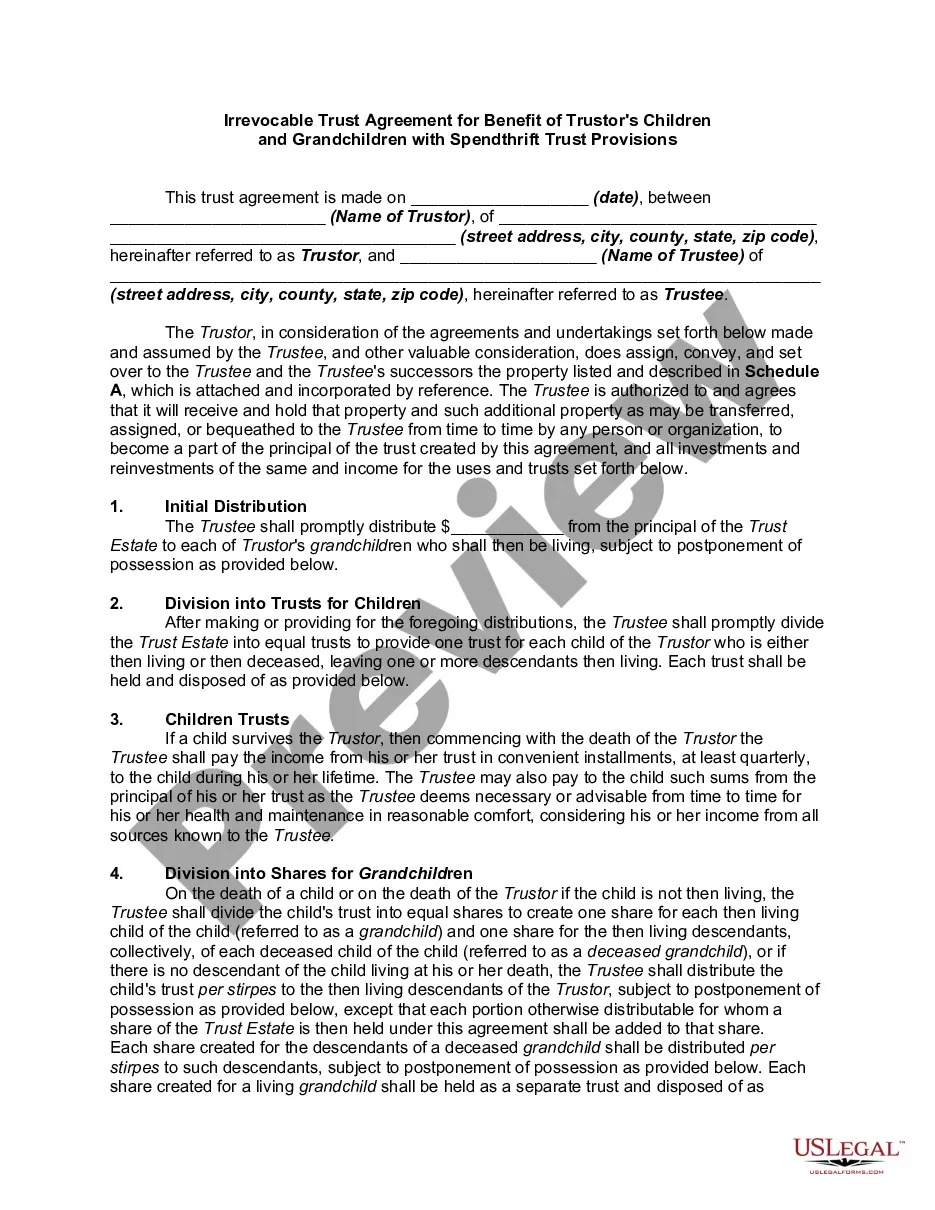
How to fill out Crummey Trust Agreement For Benefit Of Child With Parents As Trustors?
It’s obvious that you can’t become a legal professional immediately, nor can you figure out how to quickly prepare Beneficiary Estate Other Foreign without having a specialized background. Putting together legal documents is a time-consuming process requiring a particular training and skills. So why not leave the creation of the Beneficiary Estate Other Foreign to the specialists?
With US Legal Forms, one of the most extensive legal document libraries, you can find anything from court paperwork to templates for internal corporate communication. We understand how crucial compliance and adherence to federal and local laws and regulations are. That’s why, on our website, all templates are location specific and up to date.
Here’s start off with our website and get the form you need in mere minutes:
- Find the form you need by using the search bar at the top of the page.
- Preview it (if this option available) and read the supporting description to determine whether Beneficiary Estate Other Foreign is what you’re searching for.
- Start your search again if you need a different template.
- Set up a free account and select a subscription option to purchase the template.
- Pick Buy now. Once the payment is complete, you can download the Beneficiary Estate Other Foreign, complete it, print it, and send or send it by post to the necessary individuals or entities.
You can re-gain access to your documents from the My Forms tab at any time. If you’re an existing customer, you can simply log in, and locate and download the template from the same tab.
No matter the purpose of your documents-whether it’s financial and legal, or personal-our website has you covered. Try US Legal Forms now!
Form popularity
FAQ
The answer is yes. You can name a son or daughter living in another country as your beneficiary. Of course, you must include all your information in the policy, the legal name of your relative, the date of birth, the identity number, the relationship, the mailing address, the telephone number and an email address.
In addition to the withholding requirement, naming a beneficiary who resides in a foreign country may allow the foreign country to tax the property and accounts of the trust. In most cases, a foreign person is subject to US tax on its US source income.
Trusts can have multiple beneficiaries, including the trustee. Naming a non-US citizen as a beneficiary of a Trust could have consequences for inheritance or income-tax. For one, selecting a foreign citizen as a beneficiary can expose the Trust to increased tax liability.
Naming a Non-US Citizen as Beneficiary Naming a non-US citizen as a beneficiary of a trust can expose the trust to increased tax liability or could result in double taxation. In addition, there may be complexities of transferring or making distributions to a non-US trustee depending on the country of citizenship.
It is essential to properly file a timely IRS Form 3520 to report a foreign inheritance or foreign gift received by a U.S. person as large penalties may be imposed on a taxpayer if the IRS later discovers that an inheritance was not properly declared when received using Form 3520.