Rules Tenants Of Without Contract Philippines
Description
Get your form ready online
Our built-in tools help you complete, sign, share, and store your documents in one place.
Make edits, fill in missing information, and update formatting in US Legal Forms—just like you would in MS Word.
Download a copy, print it, send it by email, or mail it via USPS—whatever works best for your next step.
Sign and collect signatures with our SignNow integration. Send to multiple recipients, set reminders, and more. Go Premium to unlock E-Sign.
If this form requires notarization, complete it online through a secure video call—no need to meet a notary in person or wait for an appointment.
We protect your documents and personal data by following strict security and privacy standards.

Make edits, fill in missing information, and update formatting in US Legal Forms—just like you would in MS Word.

Download a copy, print it, send it by email, or mail it via USPS—whatever works best for your next step.

Sign and collect signatures with our SignNow integration. Send to multiple recipients, set reminders, and more. Go Premium to unlock E-Sign.

If this form requires notarization, complete it online through a secure video call—no need to meet a notary in person or wait for an appointment.

We protect your documents and personal data by following strict security and privacy standards.
Looking for another form?







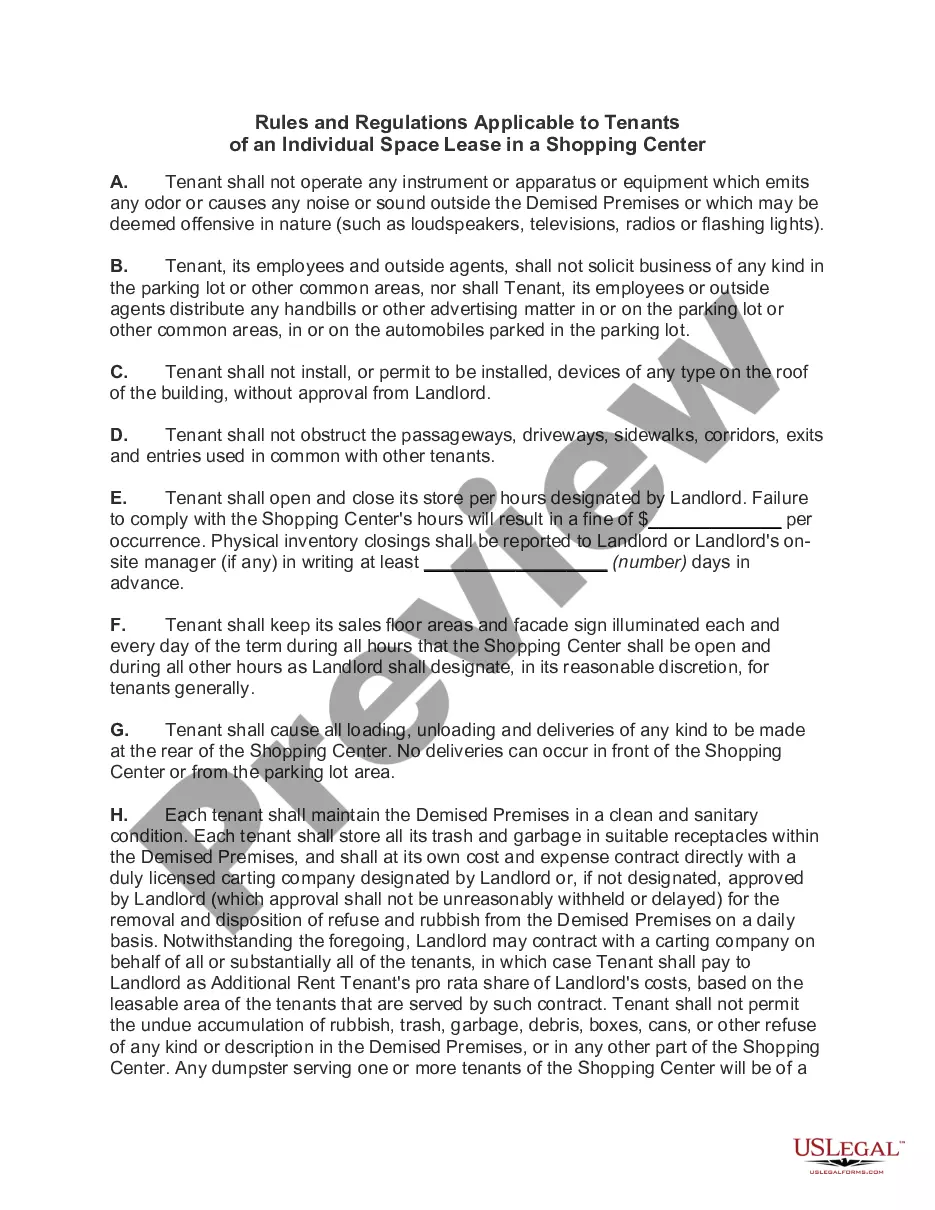
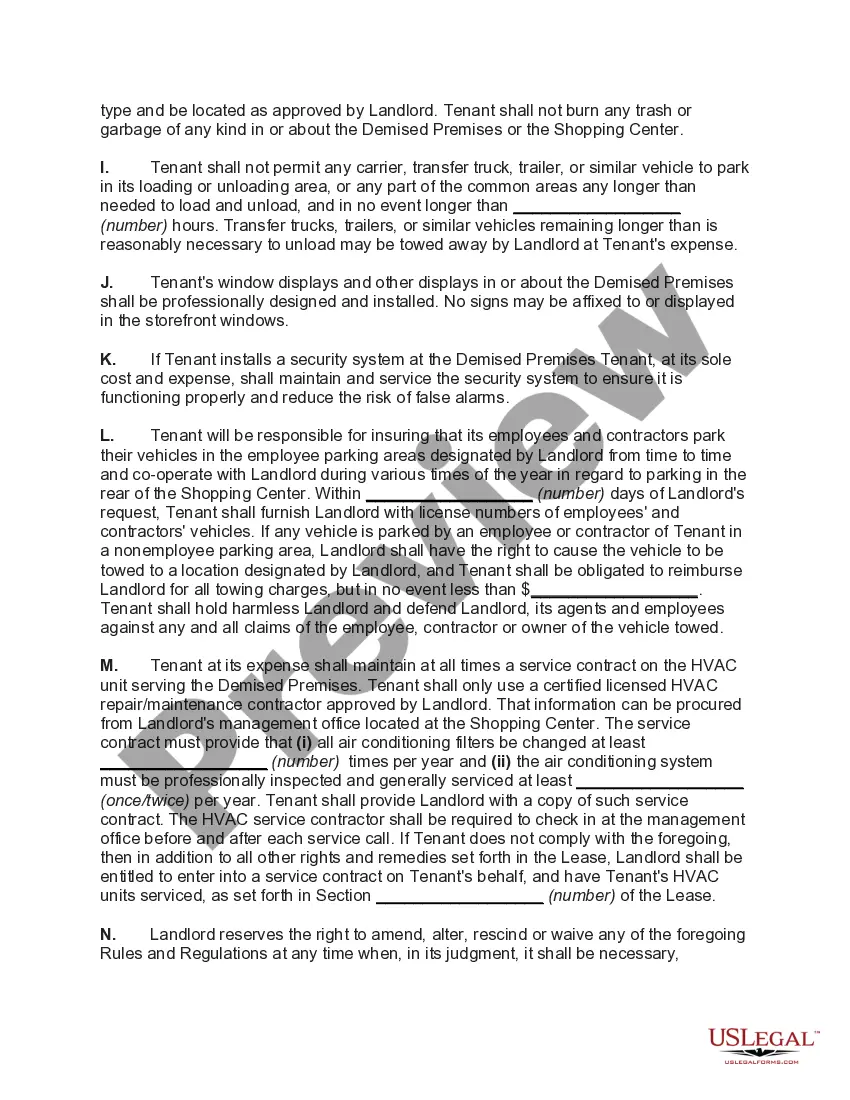
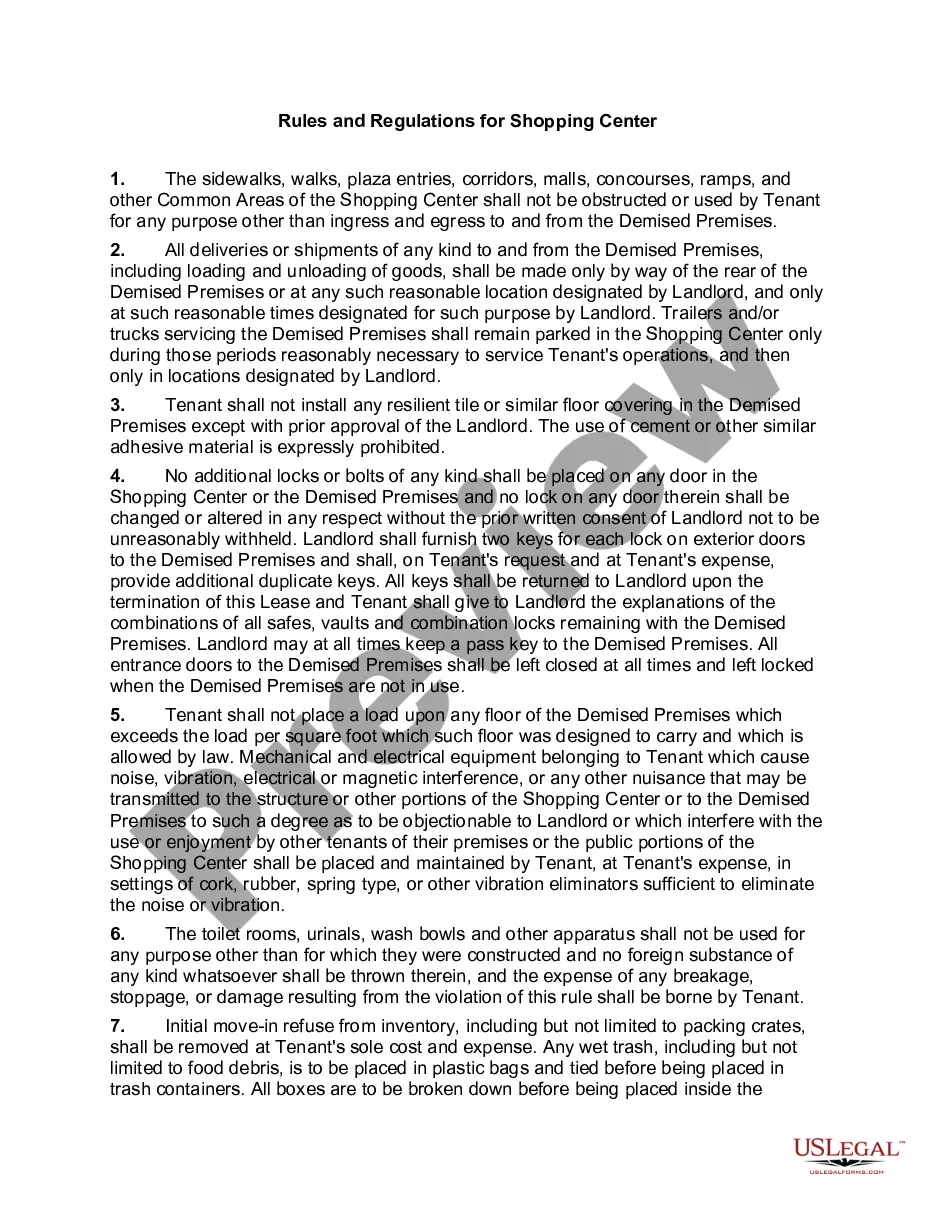
How to fill out Rules And Regulations Applicable To Tenants Of An Individual Space Lease In Shopping Center?
Utilizing samples of legal documents that comply with federal and state regulations is essential, and the web provides numerous choices to choose from.
However, why spend time searching for the suitable Rules Tenants Of Without Contract Philippines template online when the US Legal Forms digital library already has these forms compiled in one location.
US Legal Forms is the largest online legal repository with more than 85,000 customizable templates created by attorneys for any business and personal situation. They are easy to navigate, with all documents categorized by state and intended use.
All templates you find through US Legal Forms are reusable. To re-download and fill out forms you've previously obtained, access the My documents section in your profile. Experience the most comprehensive and user-friendly legal documentation service!
- Our experts stay updated with legal changes, ensuring you can trust that your form is current and compliant when obtaining a Rules Tenants Of Without Contract Philippines from our site.
- Acquiring a Rules Tenants Of Without Contract Philippines is easy and quick for both existing and new users.
- If you already possess an account with a valid subscription, Log In and retrieve the document template you need in the preferred format.
- If you're a first-time visitor to our site, follow these steps.
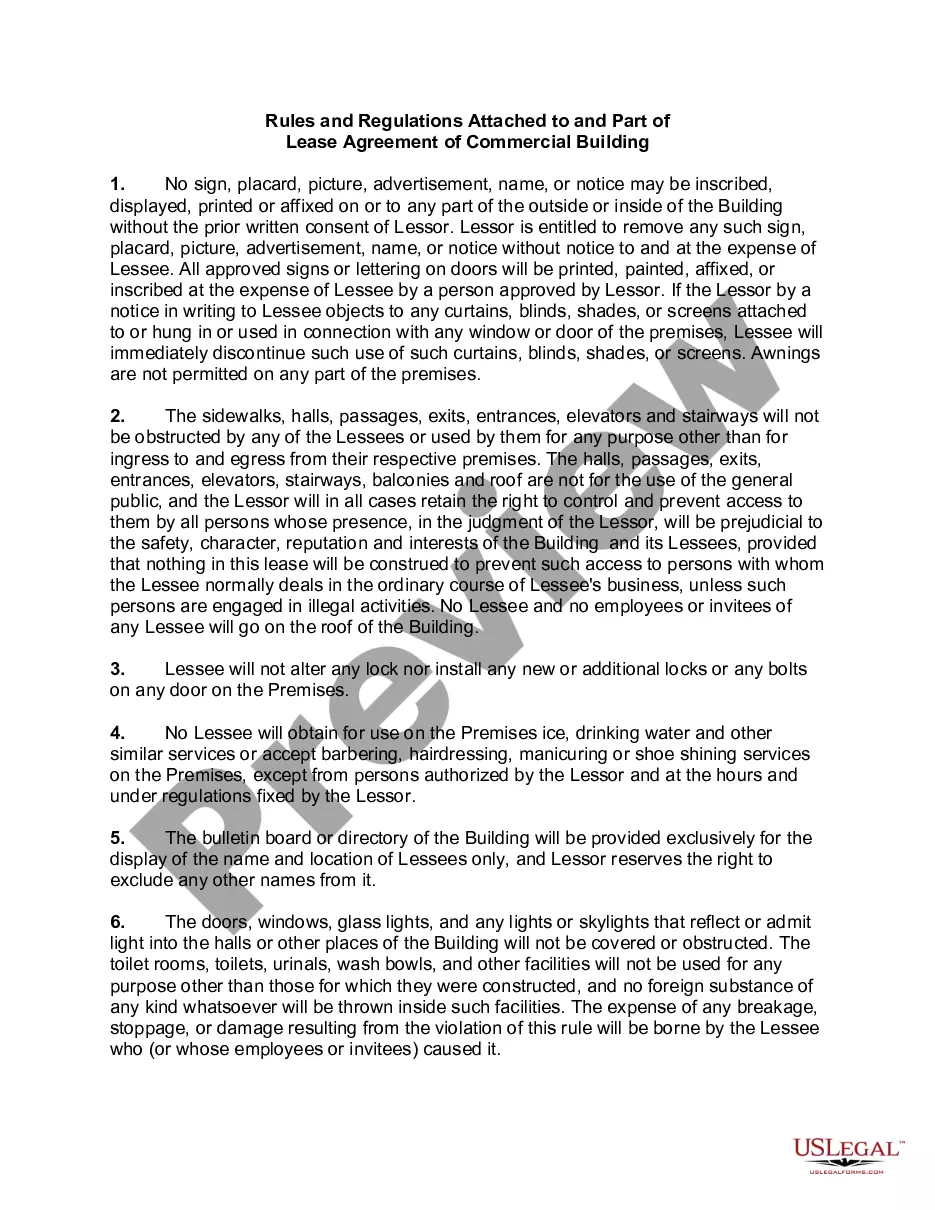
- Review the template using the Preview feature or through the text description to ensure it satisfies your needs.
Form popularity
FAQ
To evict a non-paying tenant in the Philippines, you must follow the legal process outlined under the rules for tenants without a contract. Begin by sending a formal notice to the tenant, giving them a clear timeframe to settle the overdue rent. If they fail to comply, you can then file a case in court for unlawful detainer. Utilizing platforms like US Legal Forms can help you understand the necessary documentation and steps to ensure a smooth eviction process.
Divorce records can be found by making a request from the Department in person, via post, online or on the phone. To find divorce records in person, interested parties must visit the State Office at 207 E. Missouri, Suite1-A, Pierre, SD 57501.
For civil record searches and questions regarding criminal and civil record searches, you can send an e-mail to: USJPARupport@ujs.state.sd.us. Criminal and protection order searches are available on the Public Access System or PARS at: . There is a $20 fee for each submitted search.
Records of divorce proceedings since 1905 are kept by the State Department of Health. To order a copy of a divorce record, follow the instructions on the South Dakota Department of Health website. For information about earlier divorce records, write to the clerk of courts in the county where the divorce took place.
For civil record searches and questions regarding criminal and civil record searches, you can send an e-mail to: USJPARupport@ujs.state.sd.us. Criminal and protection order searches are available on the Public Access System or PARS at: . There is a $20 fee for each submitted search.
The South Dakota Sunshine Law is a series of laws designed to guarantee that public has access to public records of governmental bodies. Public records are defined as all records kept by public bodies in South Dakota, no matter the physical form.
CRIMINAL cases are available, unless sealed, on the UJS system from 1989 to present. CIVIL cases, unless confidential or sealed, are available from 2003 to present. Active money judgments are available for the past 20 years and inactive money judgments from April 19, 2004 to present.
What are the basic steps in filing a lawsuit? File the Summons and Complaint. The person starting the case is called the Petitioner or Plaintiff. ... File the Answer. The person being sued is either called the Defendant or the Respondent. ... Prepare the case. ... The judge holds a hearing. ... The judge makes a decision.
The South Dakota Sunshine Law is a series of laws designed to guarantee that public has access to public records of governmental bodies. Public records are defined as all records kept by public bodies in South Dakota, no matter the physical form.