Rules Tenants Of Withdrawal
Description

Get your form ready online
Our built-in tools help you complete, sign, share, and store your documents in one place.
Make edits, fill in missing information, and update formatting in US Legal Forms—just like you would in MS Word.
Download a copy, print it, send it by email, or mail it via USPS—whatever works best for your next step.
Sign and collect signatures with our SignNow integration. Send to multiple recipients, set reminders, and more. Go Premium to unlock E-Sign.
If this form requires notarization, complete it online through a secure video call—no need to meet a notary in person or wait for an appointment.
We protect your documents and personal data by following strict security and privacy standards.

Make edits, fill in missing information, and update formatting in US Legal Forms—just like you would in MS Word.

Download a copy, print it, send it by email, or mail it via USPS—whatever works best for your next step.

Sign and collect signatures with our SignNow integration. Send to multiple recipients, set reminders, and more. Go Premium to unlock E-Sign.

If this form requires notarization, complete it online through a secure video call—no need to meet a notary in person or wait for an appointment.

We protect your documents and personal data by following strict security and privacy standards.
Looking for another form?







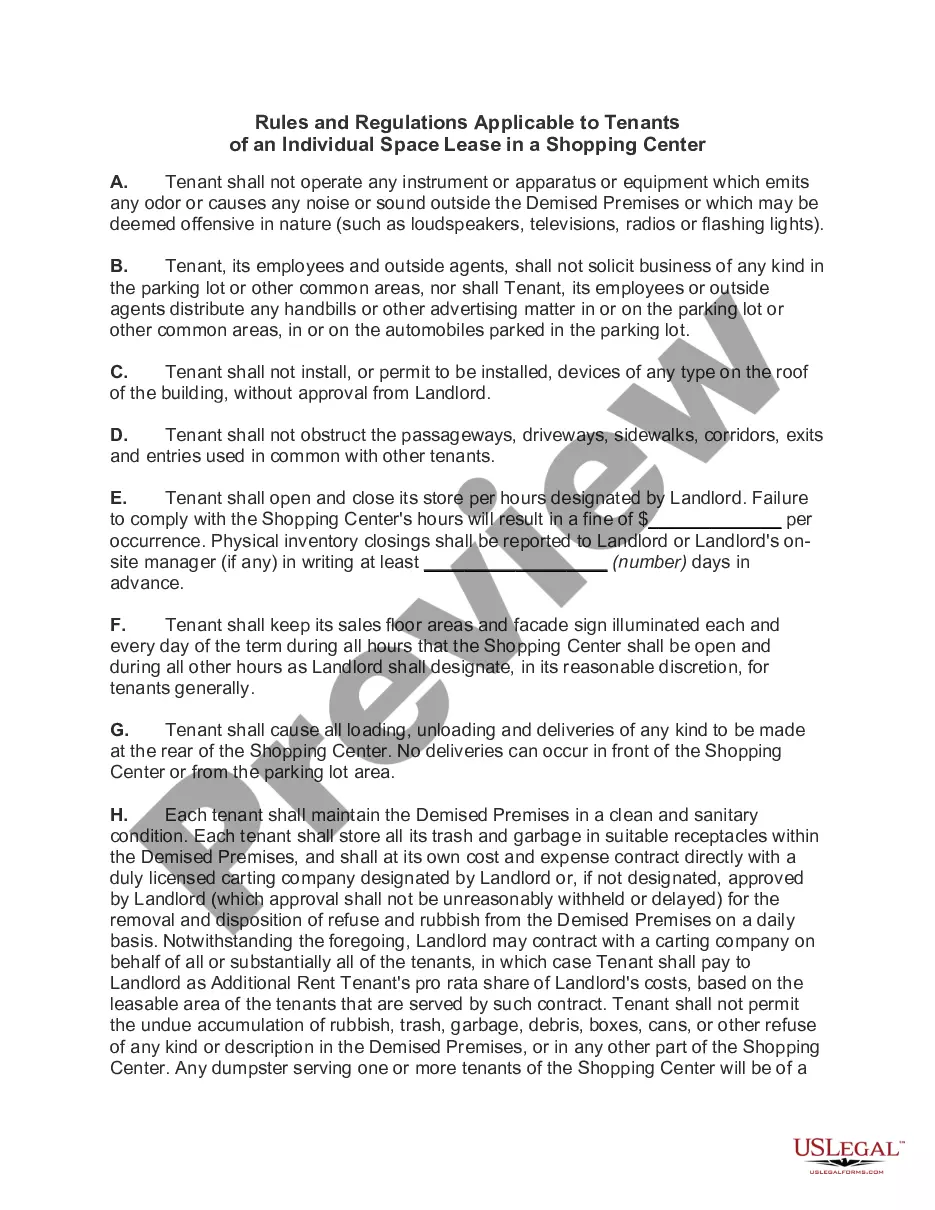
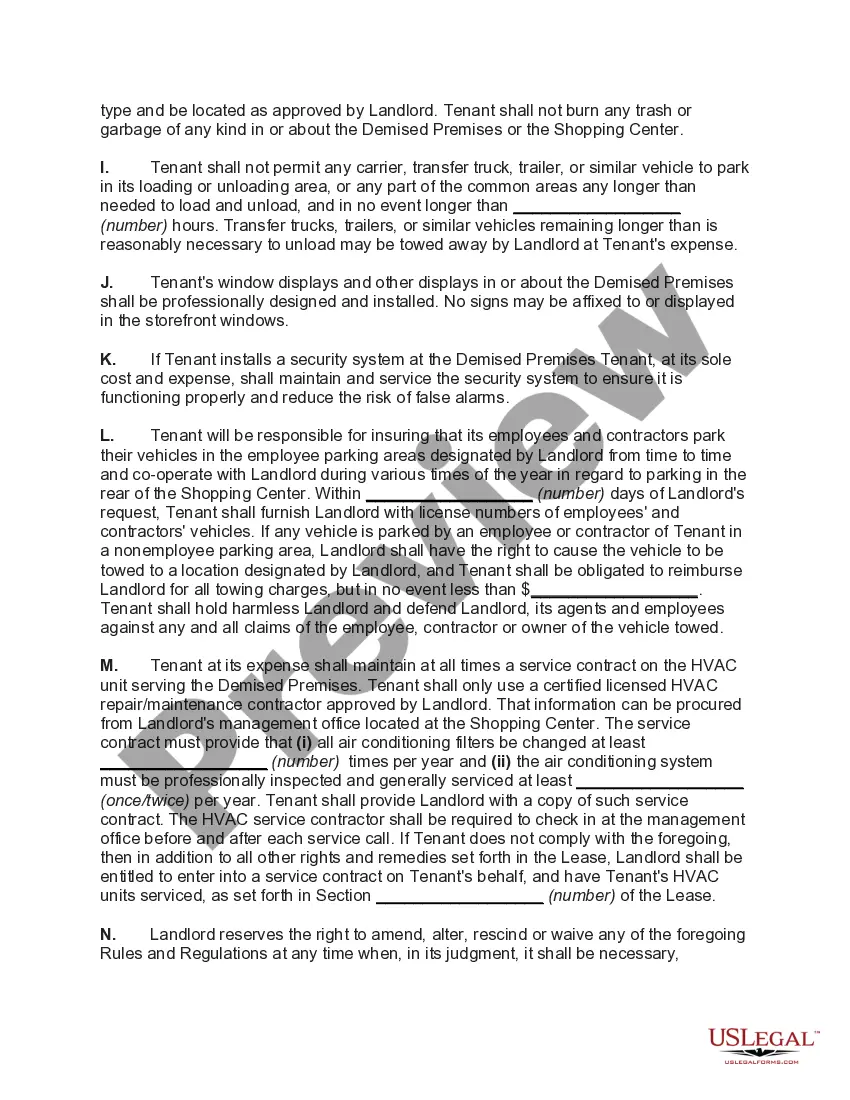
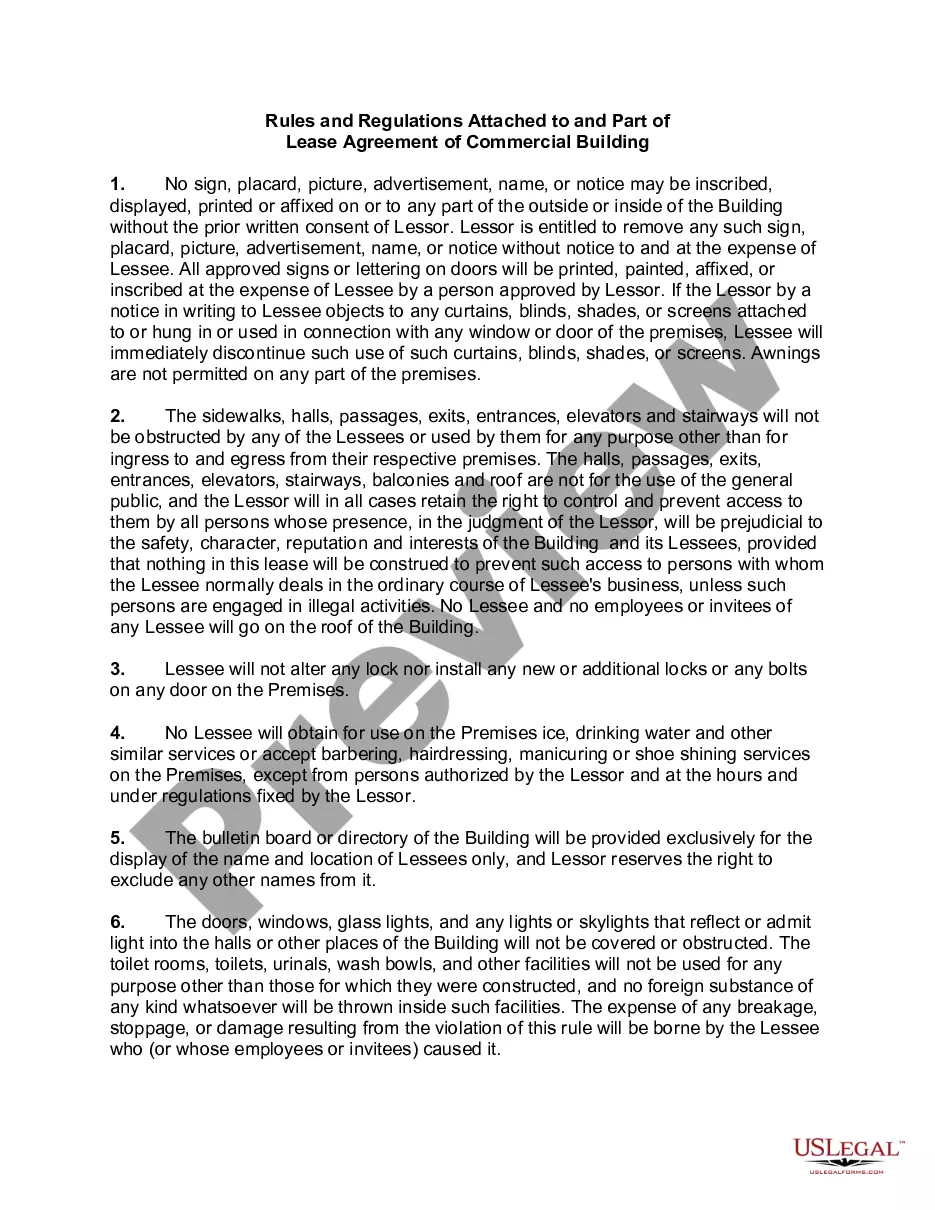
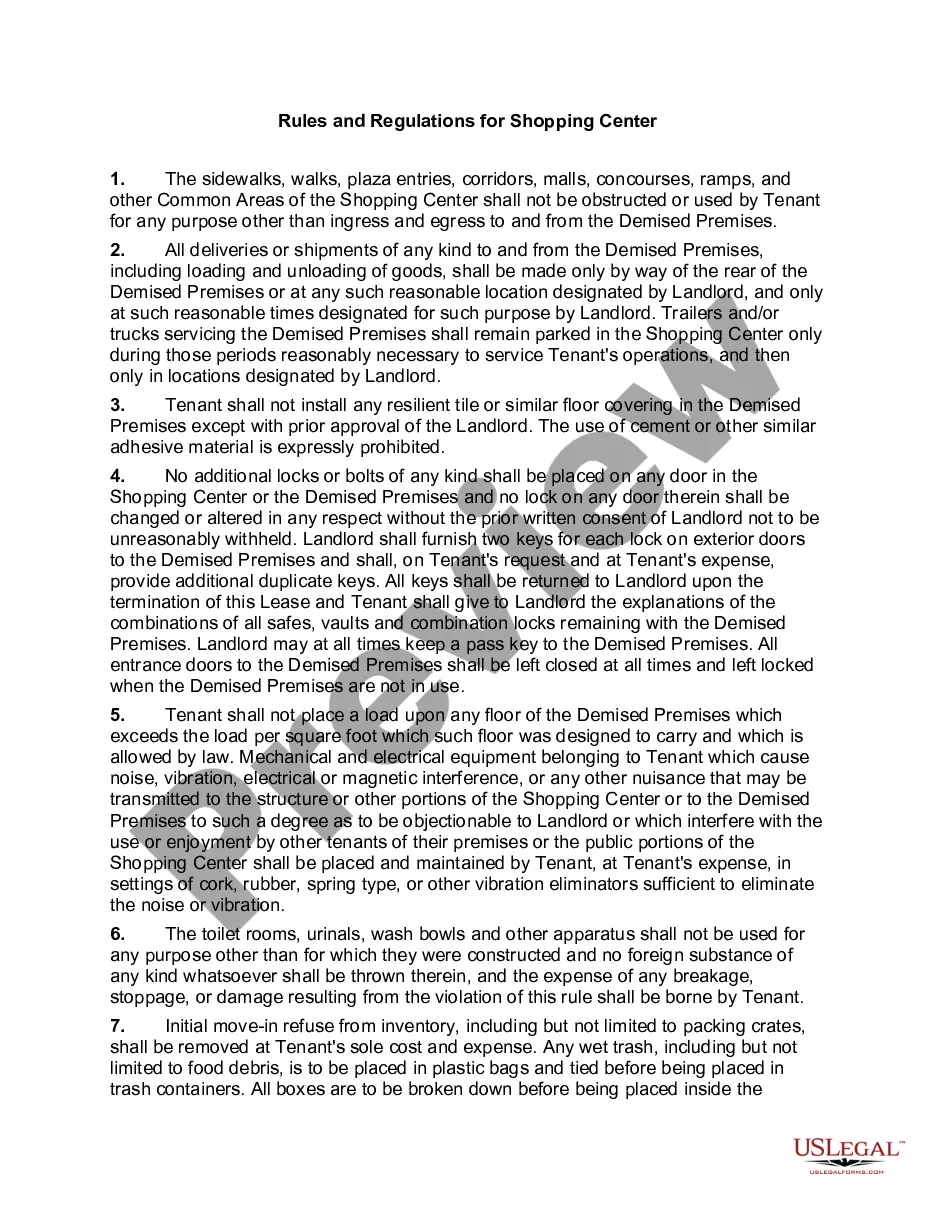
How to fill out Rules And Regulations Applicable To Tenants Of An Individual Space Lease In Shopping Center?
Managing legal documents and processes can be a labor-intensive addition to your whole day.
Regulations for Tenants of Withdrawal and similar documents typically require you to locate them and figure out the optimal way to fill them out accurately.
Therefore, whether you are addressing financial, legal, or personal issues, having a thorough and user-friendly online repository of forms readily available will be incredibly beneficial.
US Legal Forms is the leading online resource for legal templates, featuring over 85,000 state-specific forms and an array of tools to help you complete your documents with ease.
Is this your first time using US Legal Forms? Sign up and create an account in just a few minutes to gain access to the form library and Regulations for Tenants of Withdrawal. Then, follow these steps to complete your form.
- Browse the collection of relevant documents available to you with just one click.
- US Legal Forms offers you state- and county-specific templates ready for download at any time.
- Streamline your document management with a premium service that allows you to prepare any form in minutes without any additional or unexpected fees.
- Simply Log In to your account, locate Regulations for Tenants of Withdrawal and download it immediately from the My documents section.
- You can also access forms you have previously downloaded.
Form popularity
FAQ
Debt collectors can only call once Once a debt collector knows they have called the wrong party, they have to stop calling that person. If you receive a debt collection phone call for someone else, and you tell the debt collector that you are not that consumer, the debt collector should stop calling you.
SOUTH DAKOTA A judgment becomes a lien on real property for a period of 10 years. S.D. Codified Laws § 15-16-7. A judgment may be renewed for an additional period of ten years.
A debt collector can contact your spouse. A debt collector can contact your parents or guardian if you are under 18 years old or live with them. A debt collector can also contact your attorney and, if otherwise allowed by law, credit reporting companies (Equifax, Experian, and TransUnion) about your debt.
Debt collectors have a certain number of years they can sue you and win to collect a debt. It's called the statute of limitations and it usually begins when you fail to make a payment on a debt. In South Dakota, the statute of limitations is six years.
Never give out or confirm personal or sensitive financial information ? such as your bank account, credit card, or full Social Security number ? unless you know the company or person you are talking with is a real debt collector.
A debt collector can contact your spouse. A debt collector can contact your parents or guardian if you are under 18 years old or live with them. A debt collector can also contact your attorney and, if otherwise allowed by law, credit reporting companies (Equifax, Experian, and TransUnion) about your debt.
Can debt collectors tell other people, like family, friends, or my employer, about my debt? No. Under federal law, a debt collector may contact other people but generally only to find out how to contact you. There are strict limits about what debt collectors can say or ask about you.
Communicating with Third Parties The only third parties that a debt collector may contact when trying to collect a debt are: ? The consumer. The consumer's attorney. A consumer reporting agency (if permitted by local law).