Trust Form Transfer Document Within
Description
Get your form ready online
Our built-in tools help you complete, sign, share, and store your documents in one place.
Make edits, fill in missing information, and update formatting in US Legal Forms—just like you would in MS Word.
Download a copy, print it, send it by email, or mail it via USPS—whatever works best for your next step.
Sign and collect signatures with our SignNow integration. Send to multiple recipients, set reminders, and more. Go Premium to unlock E-Sign.
If this form requires notarization, complete it online through a secure video call—no need to meet a notary in person or wait for an appointment.
We protect your documents and personal data by following strict security and privacy standards.

Make edits, fill in missing information, and update formatting in US Legal Forms—just like you would in MS Word.

Download a copy, print it, send it by email, or mail it via USPS—whatever works best for your next step.

Sign and collect signatures with our SignNow integration. Send to multiple recipients, set reminders, and more. Go Premium to unlock E-Sign.

If this form requires notarization, complete it online through a secure video call—no need to meet a notary in person or wait for an appointment.

We protect your documents and personal data by following strict security and privacy standards.
Looking for another form?






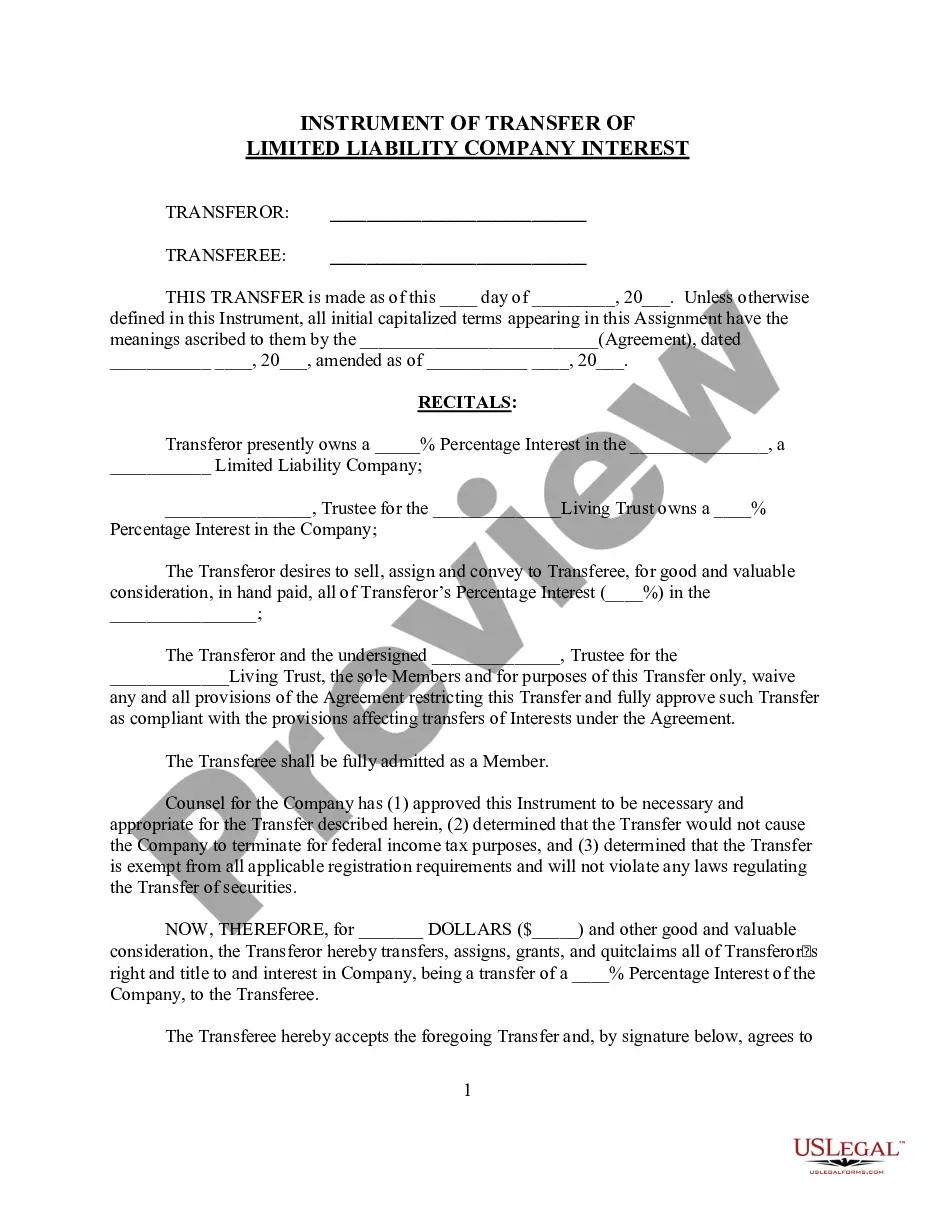
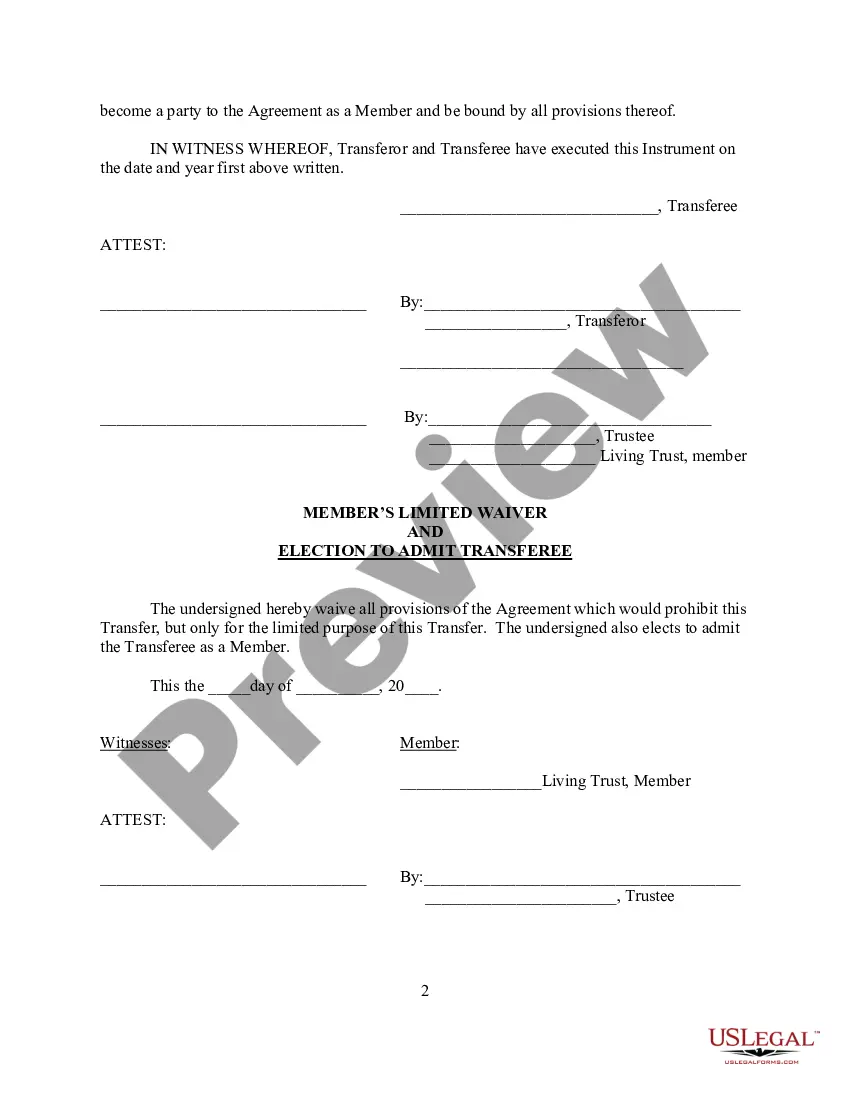
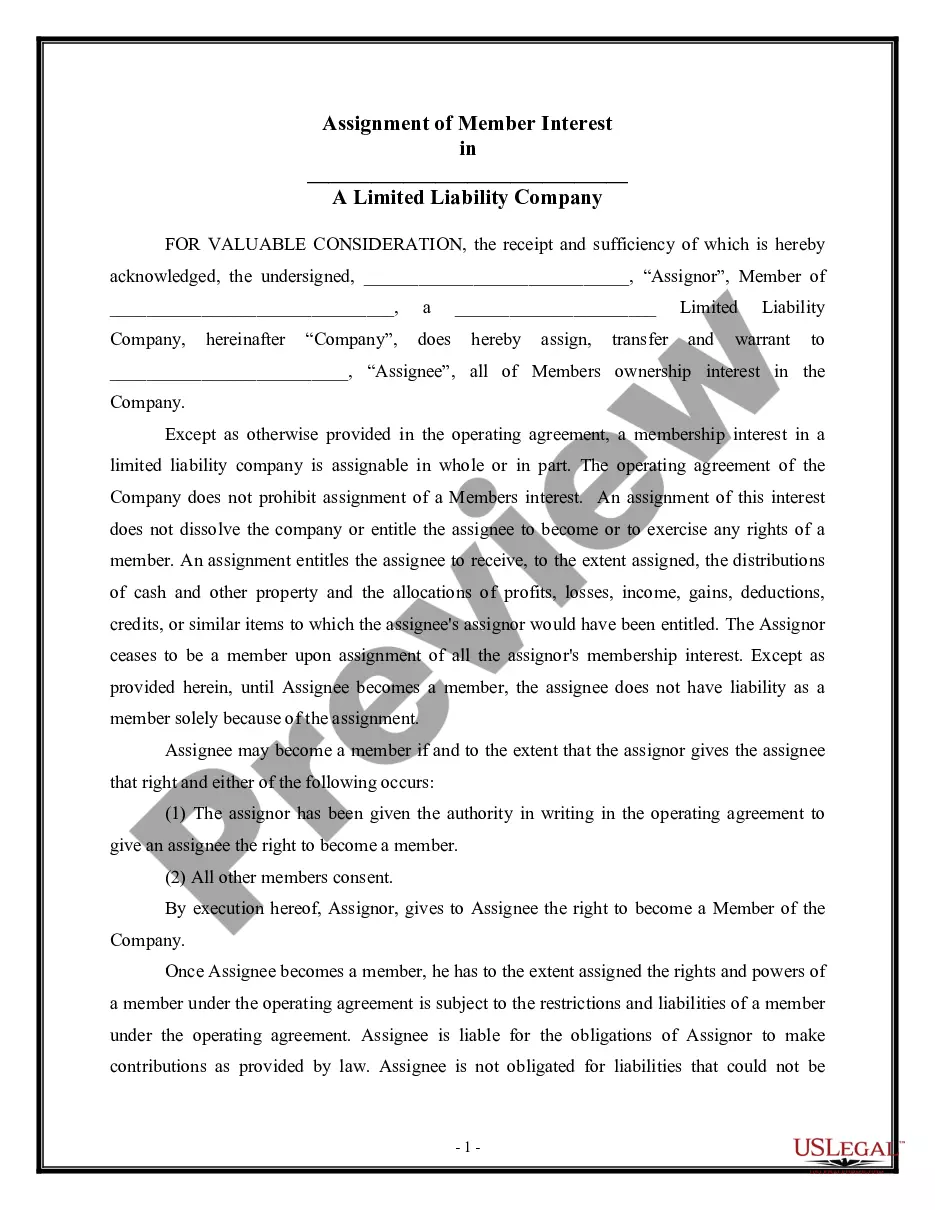
How to fill out Assignment Of LLC Company Interest To Living Trust?
Managing legal documents can be daunting, even for experienced experts.
When you're looking for a Trust Form Transfer Document Within and don't have the opportunity to spend time seeking out the appropriate and updated version, the experience can become overwhelming.
Gain entry to a comprehensive collection of articles, guides, and resources tailored to your situation and requirements.
Save time and effort searching for the documents you require, and utilize US Legal Forms’ sophisticated search and Review functionality to locate the Trust Form Transfer Document Within and download it.
Leverage the US Legal Forms online library, supported by 25 years of expertise and reliability. Streamline your everyday document management into a seamless and user-friendly process today.
- If you are a member, sign in to your US Legal Forms account, search for the form, and download it.
- Check your My documents section to review the documents you have previously saved as well as manage your folders accordingly.
- If this is your initial experience with US Legal Forms, create an account to gain unlimited access to all the platform's benefits.
- Here are the steps to follow once you've obtained the form you need.
- Verify that it is the correct form by previewing it and examining its details.
- Ensure that the template is permissible in your state or county.
- Click Buy Now when you are ready.
- Select a monthly subscription option.
- Choose the format you need, and Download, fill out, sign, print, and distribute your document.
- Access regional or county-specific legal and business documents.
- US Legal Forms accommodates any requirements you might have, from personal to corporate paperwork, all in one place.
- Utilize state-of-the-art tools to fill out and oversee your Trust Form Transfer Document Within.
Form popularity
FAQ
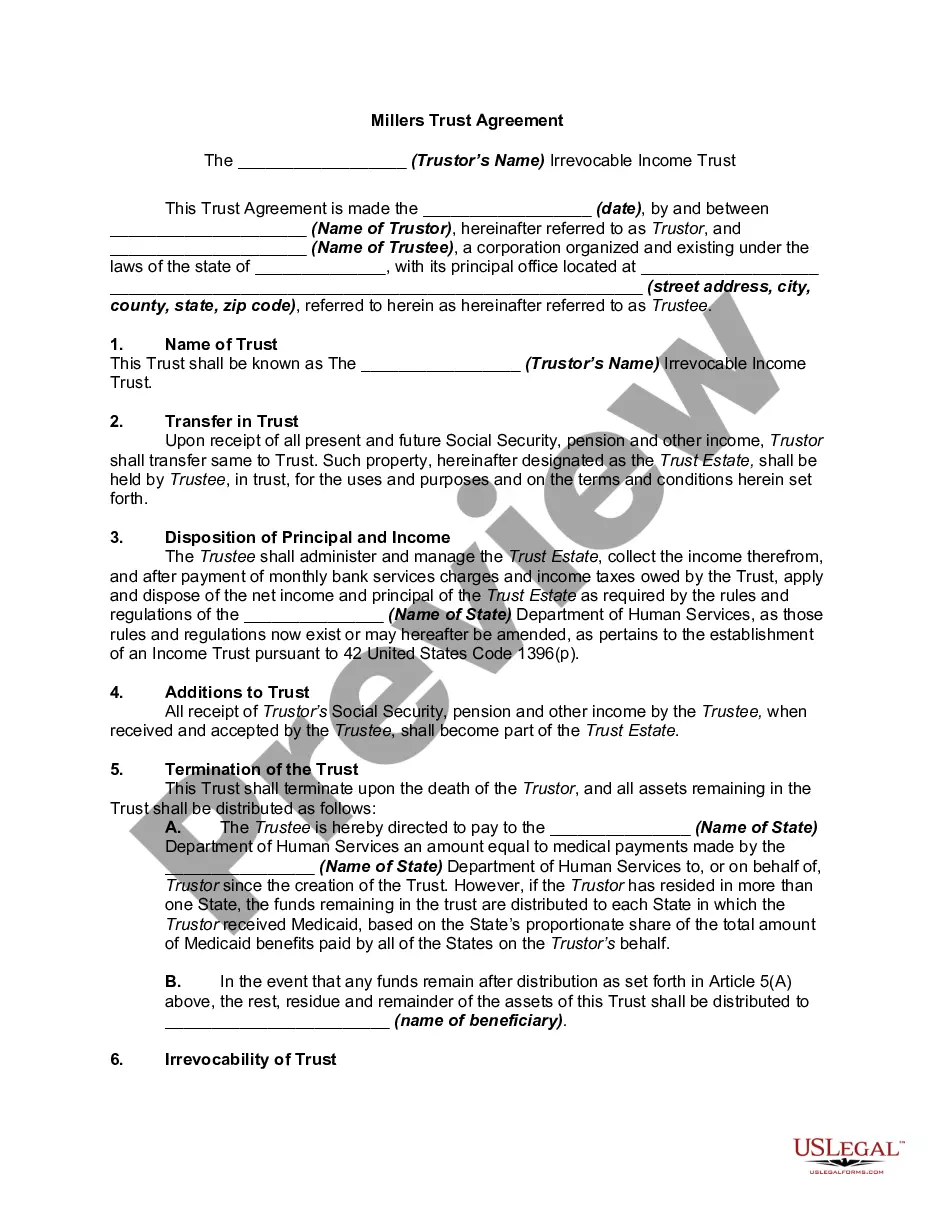
To transfer assets into a trust, you first need to complete a Trust form transfer document within that specifies the items you wish to include. Begin by identifying the assets you want to move, such as real estate, bank accounts, or personal belongings. Once you fill out the appropriate form, you can then sign it and file it with the relevant entities, such as your county office for real estate. With this clear process, you can efficiently transfer your assets, ensuring your wishes are respected.
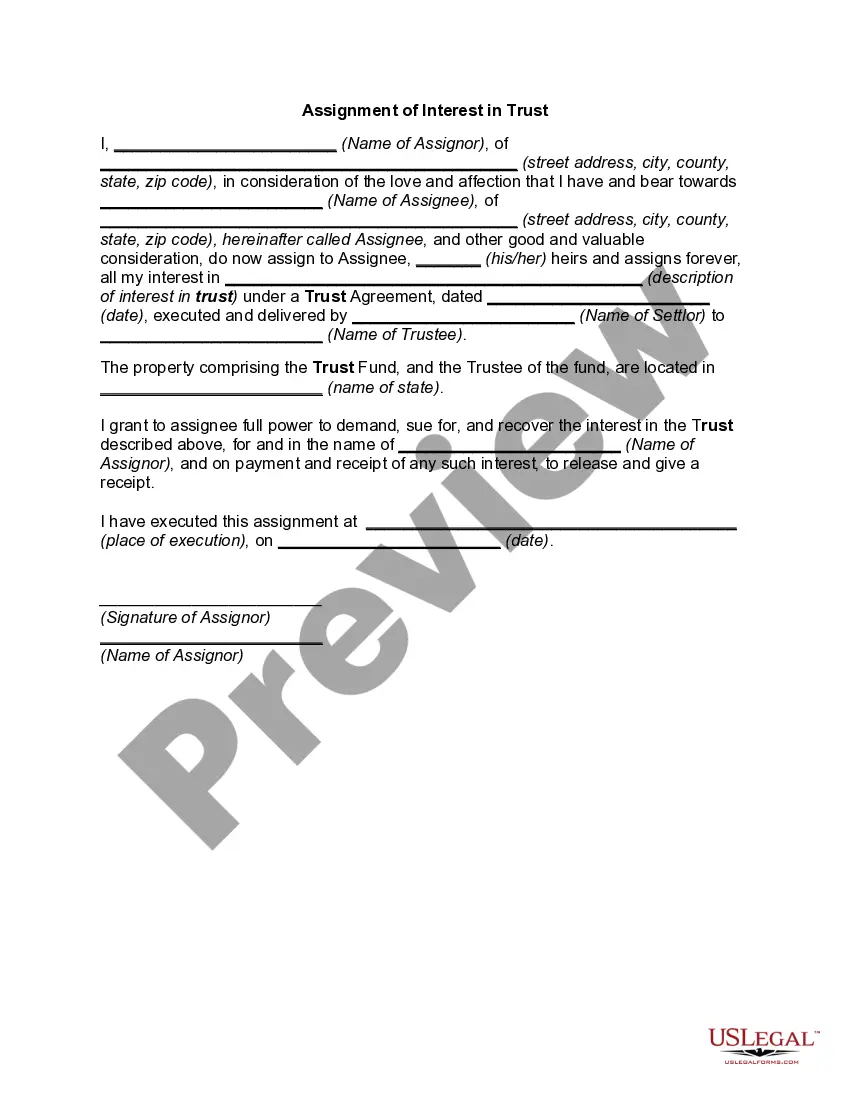
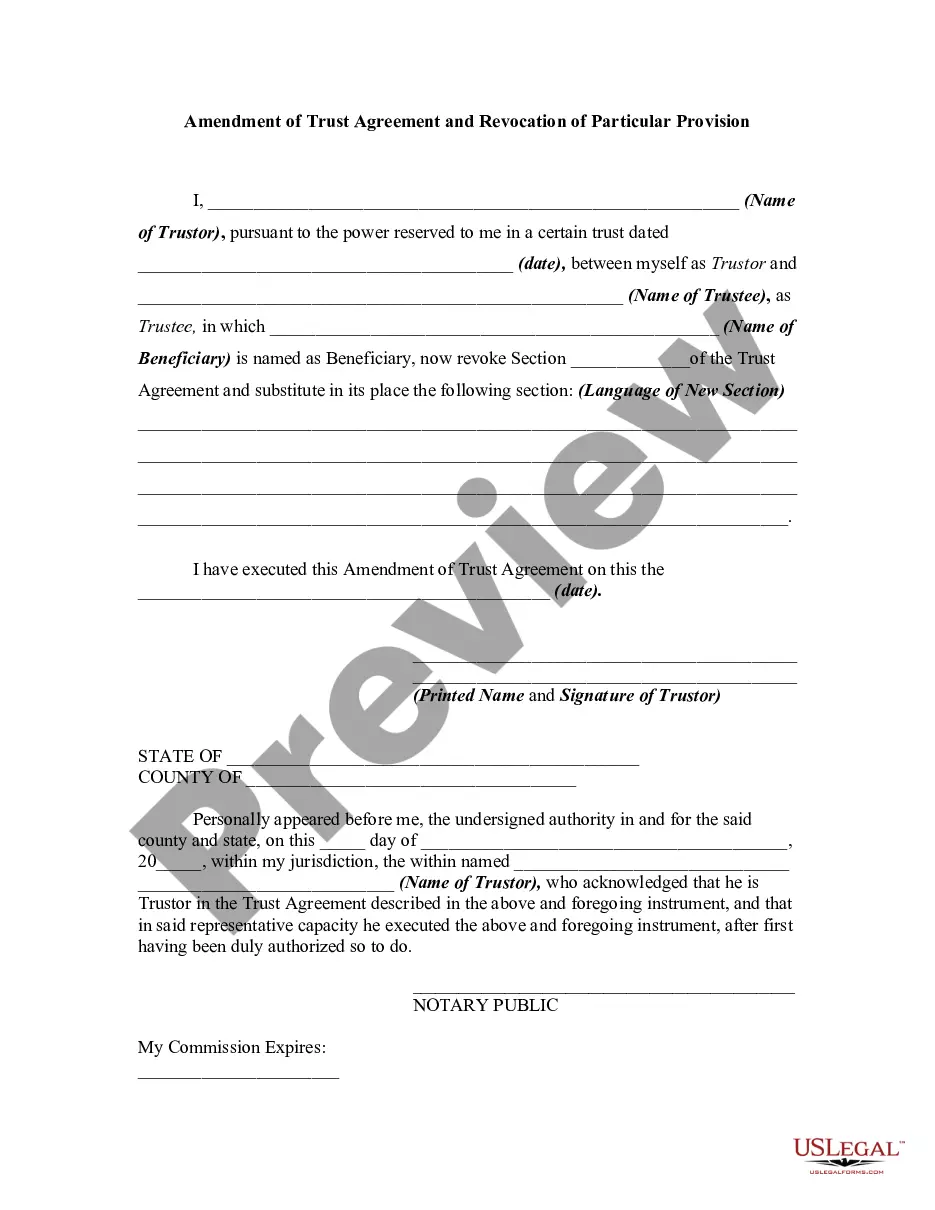
To transfer property from one trust to another, begin by reviewing the terms and conditions of both trusts. Next, you will need a Trust form transfer document within to outline the transfer details. It's advisable to work with a legal expert to ensure compliance with all regulations. Our platform offers resources and templates to assist you in executing this process smoothly.
Yes, you can transfer assets from one trust to another. This process often involves creating a Trust form transfer document within to ensure all legal requirements are met. It's essential to review the terms of both trusts to confirm that asset transfer aligns with their provisions. Utilizing our services simplifies this process and provides clear guidance for successful transfers.
The 2 year rule for trusts refers to a guideline that affects the transfer of assets into a trust. Under this rule, any assets transferred into a trust within two years of a person's death may be included in their estate for tax purposes. Therefore, if you are considering moving assets, it's crucial to understand how this rule can impact the overall value of your estate. To navigate this, you can utilize a Trust form transfer document within our platform.
To transfer cash or securities, the trustee will open an account in the trust's name, and the grantor will instruct his or her bank or broker to move the funds from his or her account to the trust's account. For real estate, a deed is used to transfer legal title of the property from the grantor to the trust.
You must create the form stating precisely what you are transferring to the (named) trustee of the (named) trust. Sign and date the form. You must sign it once as the person assigning the properties to the living trust and once as the trustee. Include the word "trustee" after that signature.
Meet with your personal banker where your account is held. Tell your banker you would like to transfer a bank account into a trust. Remove any existing bank account beneficiaries. Present an official copy of the trust to your banker.
The trustee of an irrevocable trust can only withdraw money to use for the benefit of the trust ing to terms set by the grantor, like disbursing income to beneficiaries or paying maintenance costs, and never for personal use.
Assets that should not be used to fund your living trust include: Qualified retirement accounts ? 401ks, IRAs, 403(b)s, qualified annuities. Health saving accounts (HSAs) Medical saving accounts (MSAs) Uniform Transfers to Minors (UTMAs) Uniform Gifts to Minors (UGMAs) Life insurance. Motor vehicles.