Licensee Patent
Description
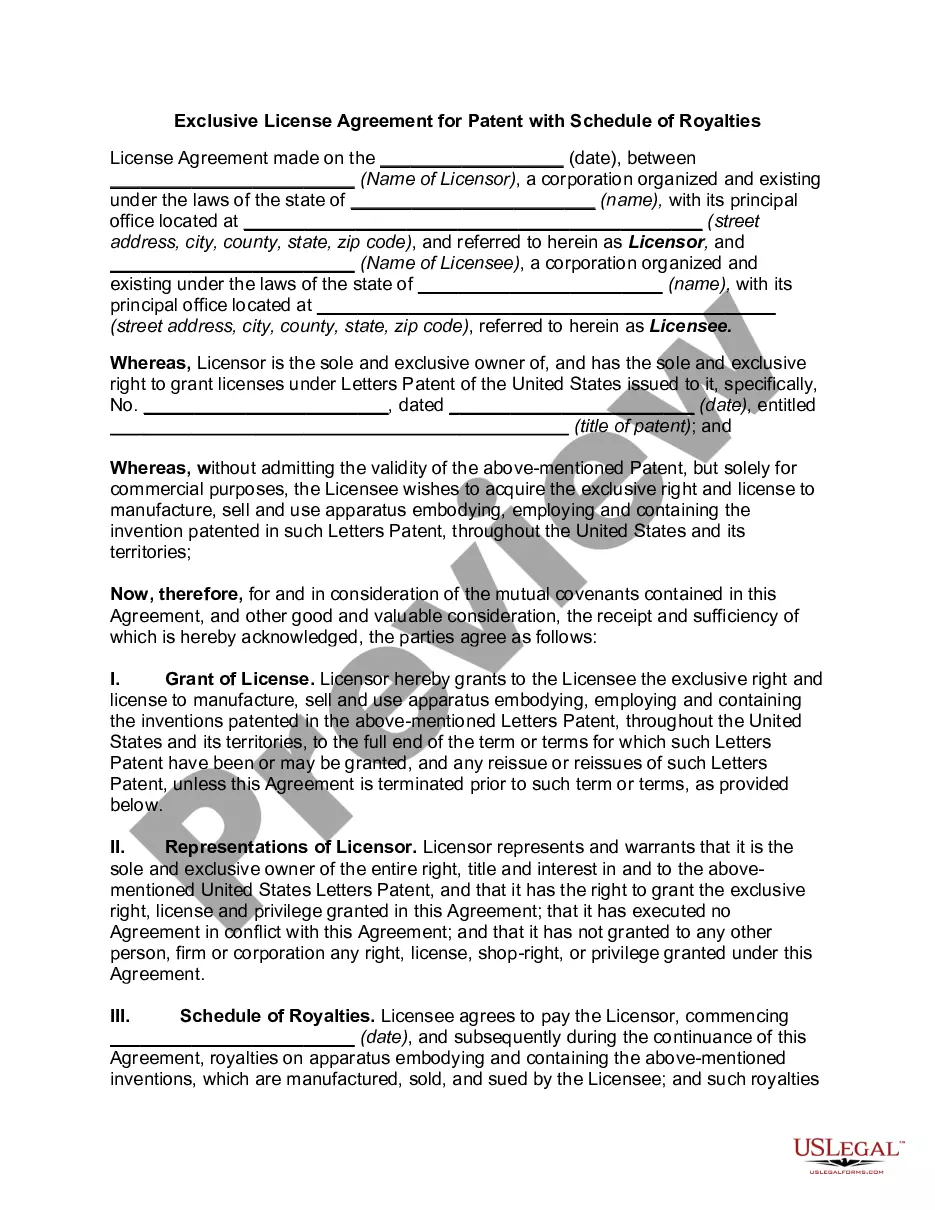
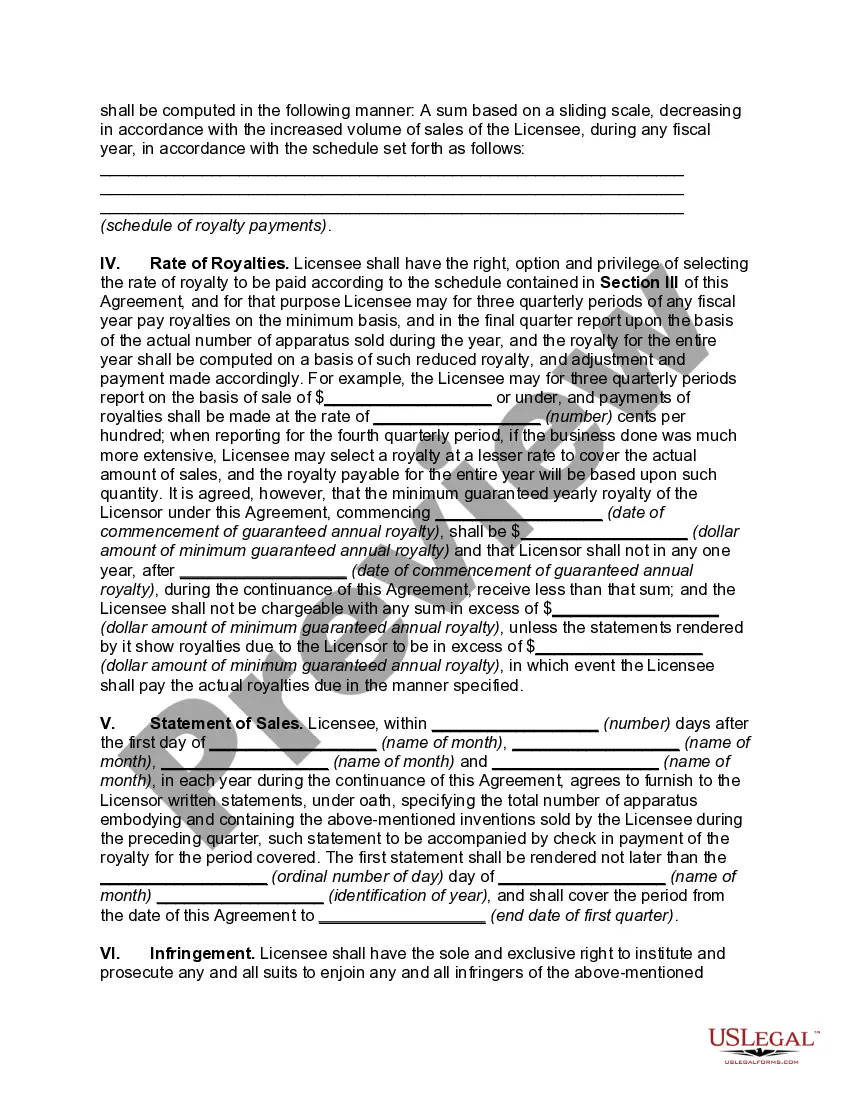
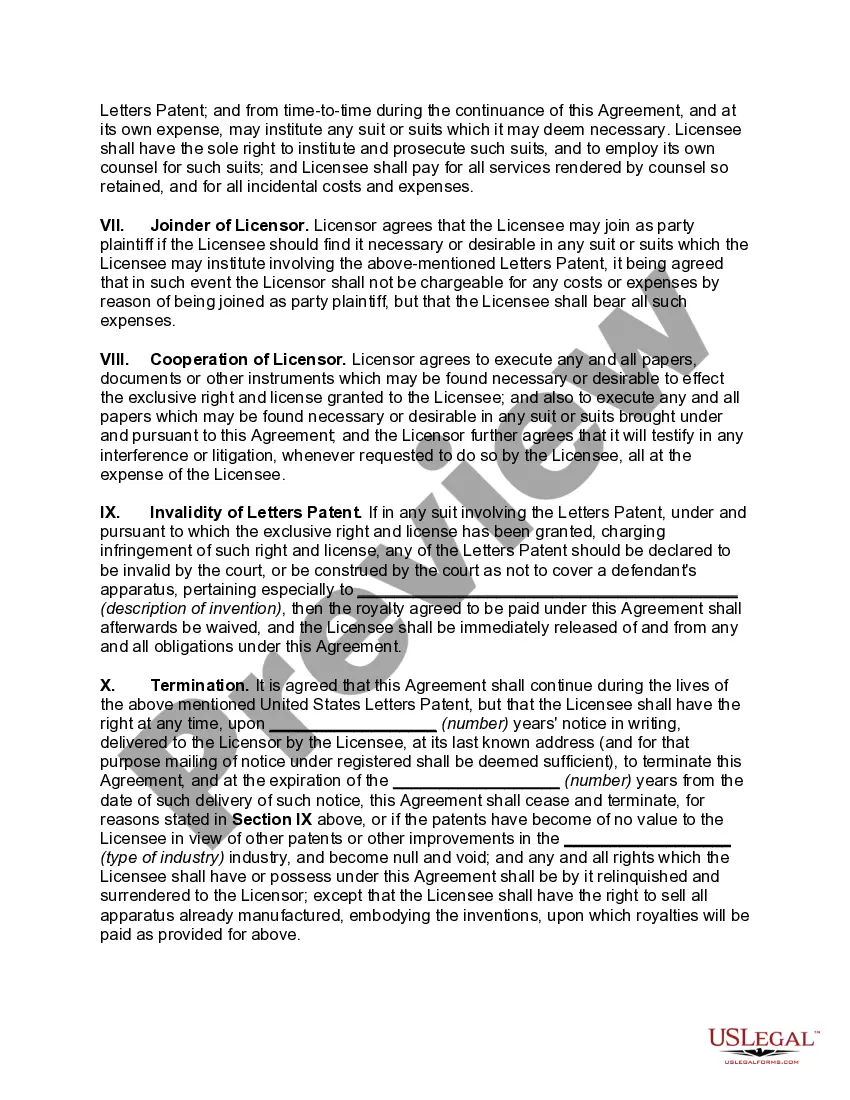
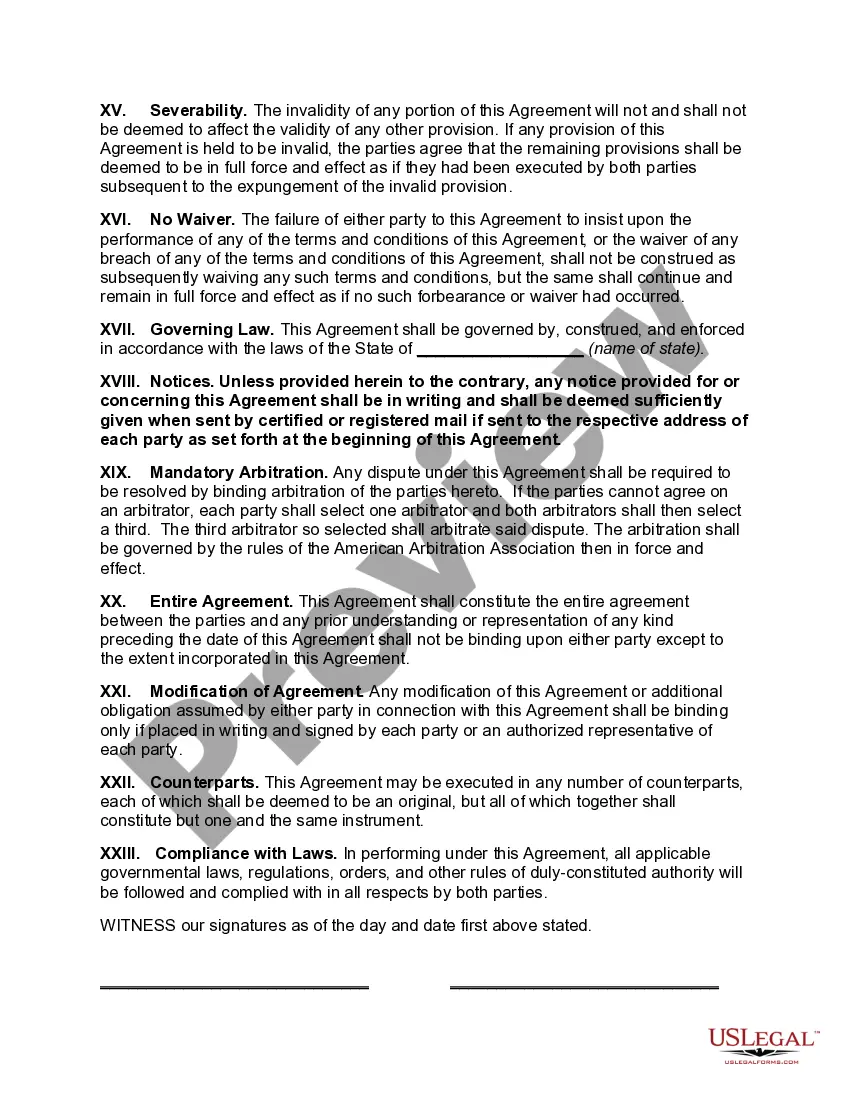
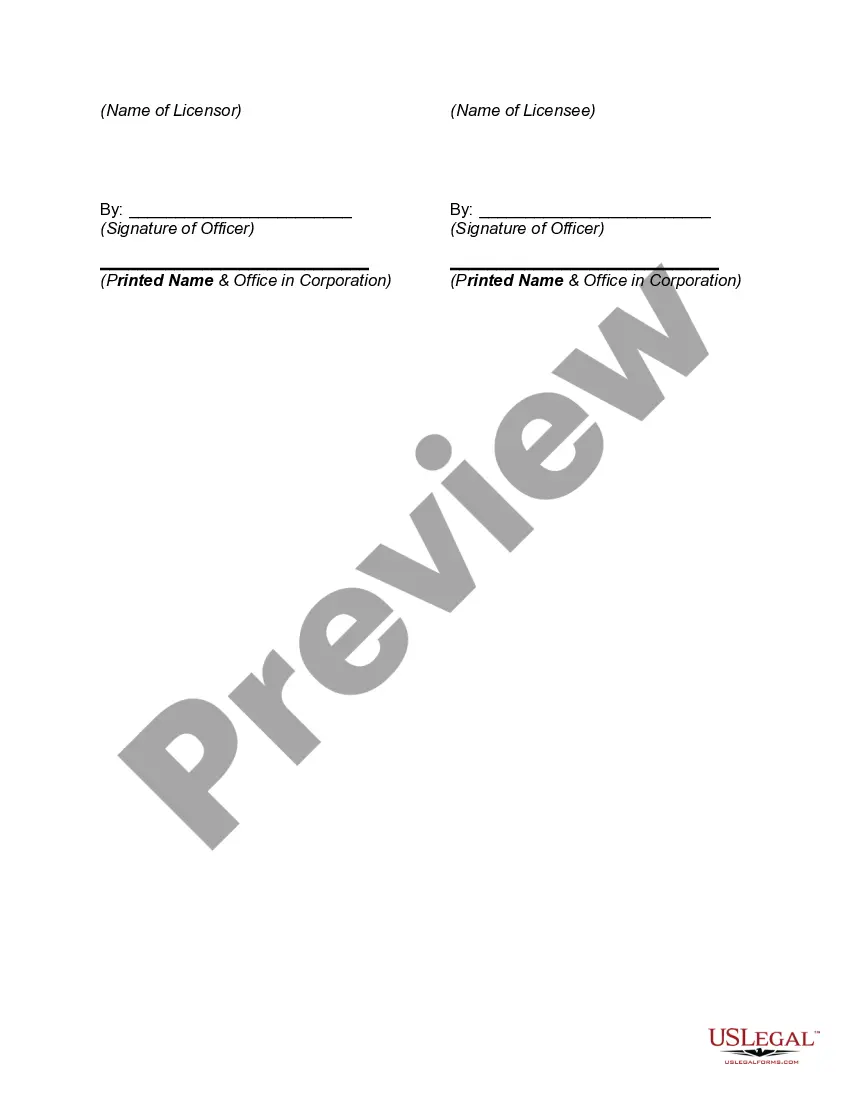
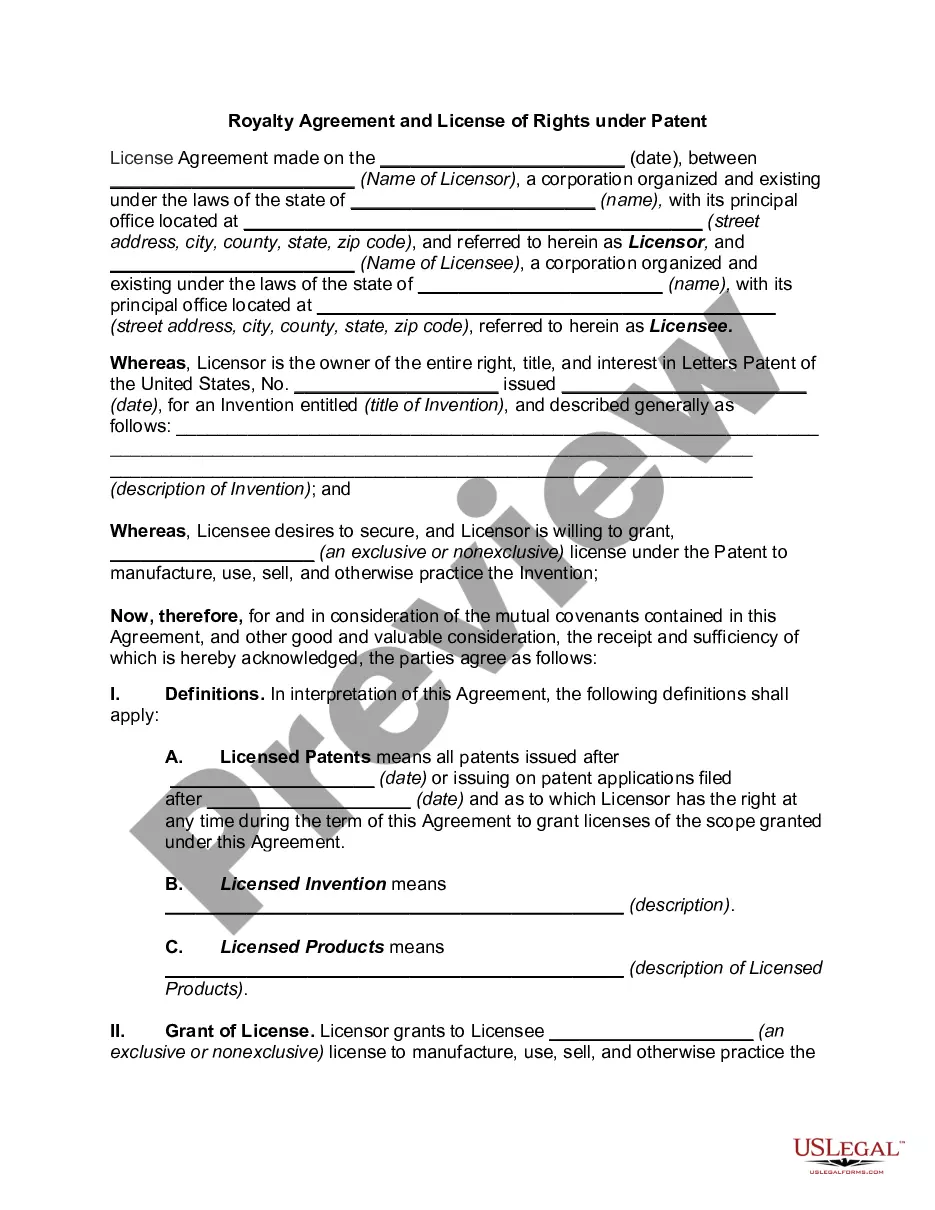
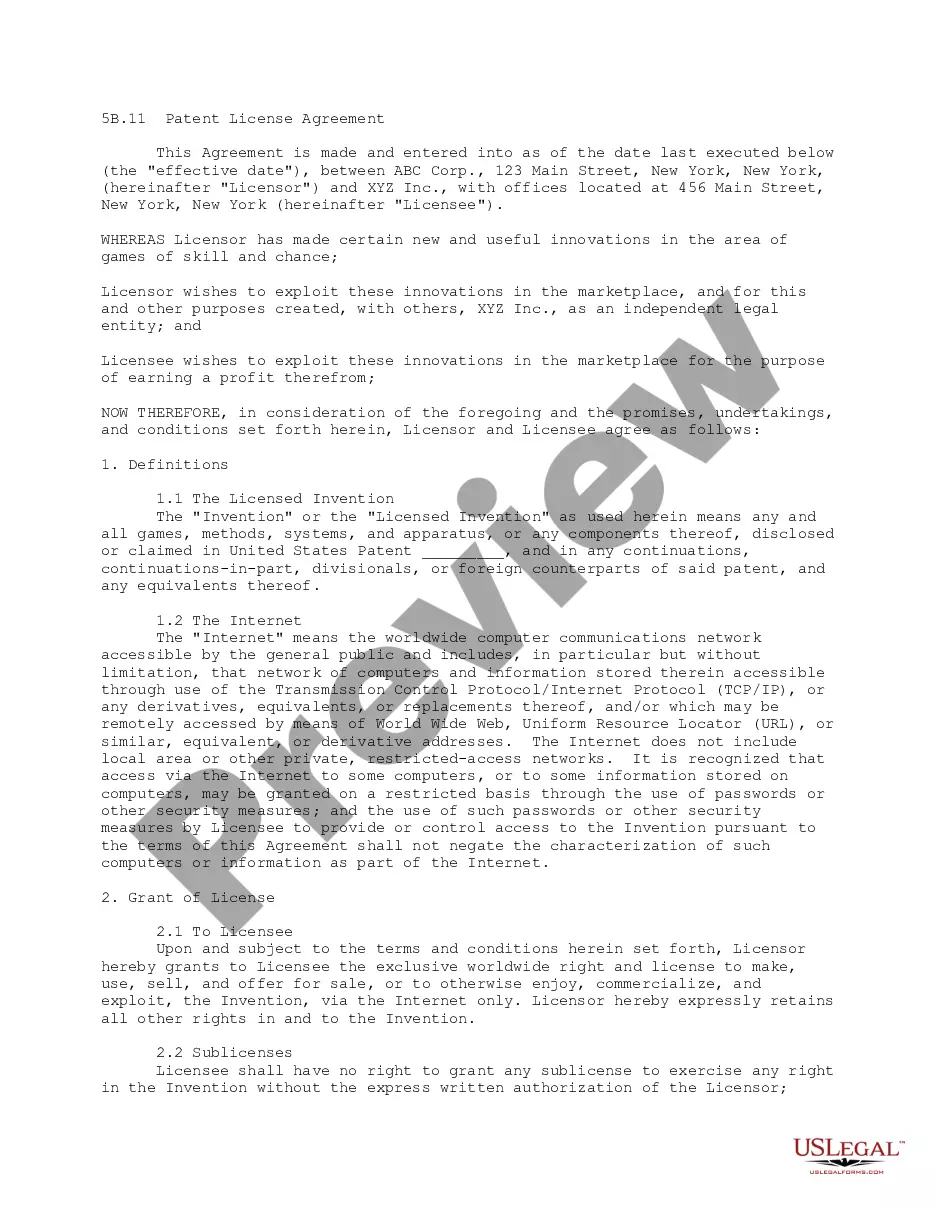
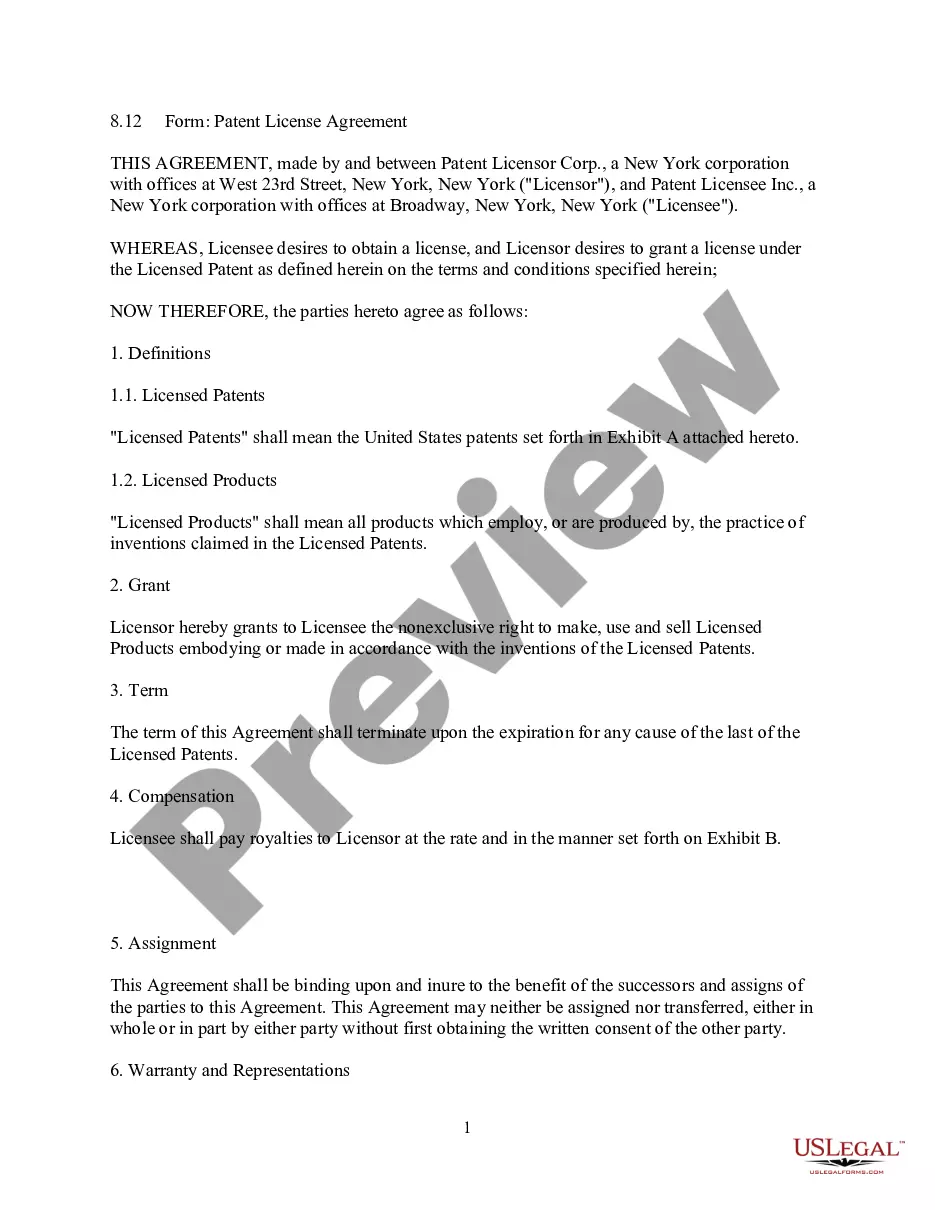
Get your form ready online
Our built-in tools help you complete, sign, share, and store your documents in one place.
Make edits, fill in missing information, and update formatting in US Legal Forms—just like you would in MS Word.
Download a copy, print it, send it by email, or mail it via USPS—whatever works best for your next step.
Sign and collect signatures with our SignNow integration. Send to multiple recipients, set reminders, and more. Go Premium to unlock E-Sign.
If this form requires notarization, complete it online through a secure video call—no need to meet a notary in person or wait for an appointment.
We protect your documents and personal data by following strict security and privacy standards.

Make edits, fill in missing information, and update formatting in US Legal Forms—just like you would in MS Word.

Download a copy, print it, send it by email, or mail it via USPS—whatever works best for your next step.

Sign and collect signatures with our SignNow integration. Send to multiple recipients, set reminders, and more. Go Premium to unlock E-Sign.

If this form requires notarization, complete it online through a secure video call—no need to meet a notary in person or wait for an appointment.

We protect your documents and personal data by following strict security and privacy standards.
Looking for another form?


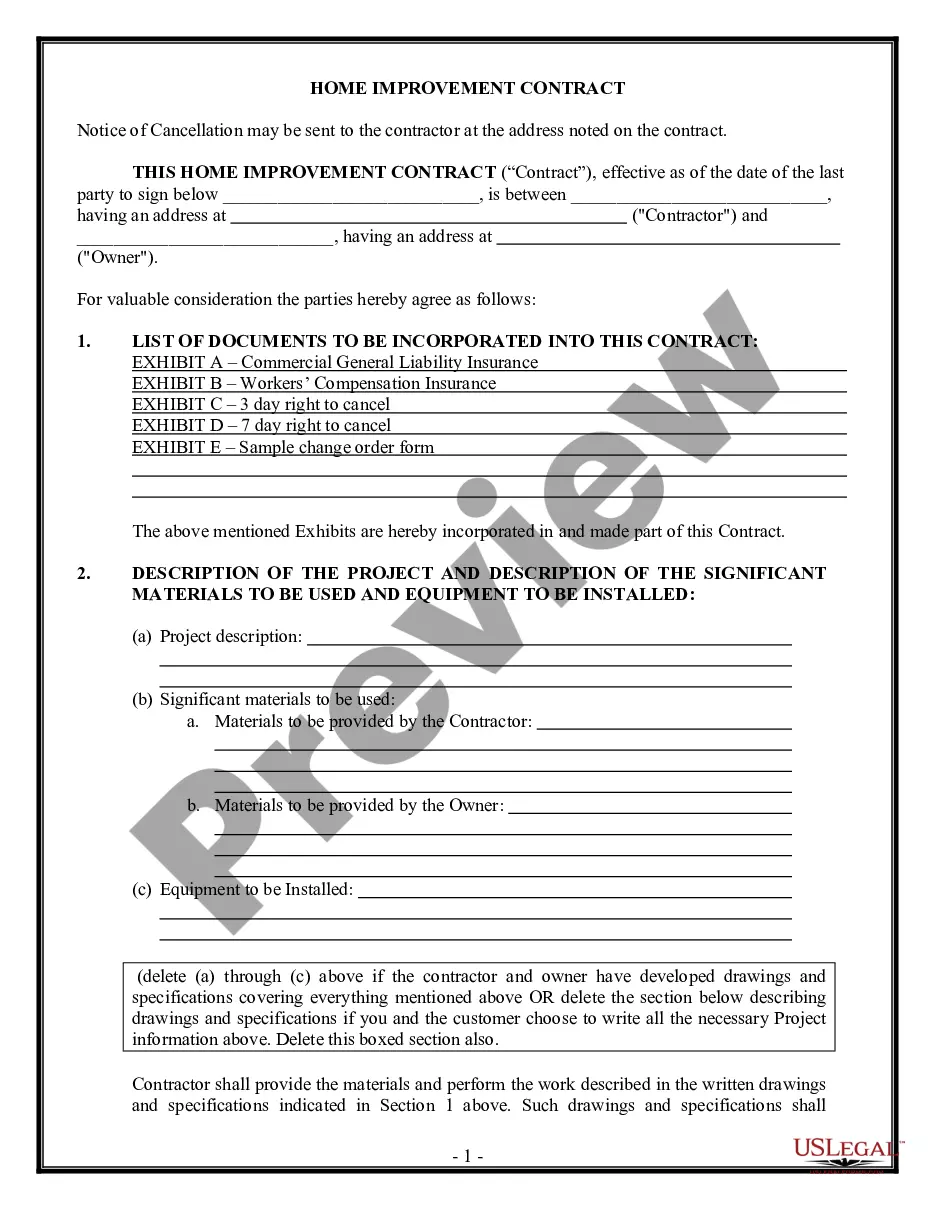

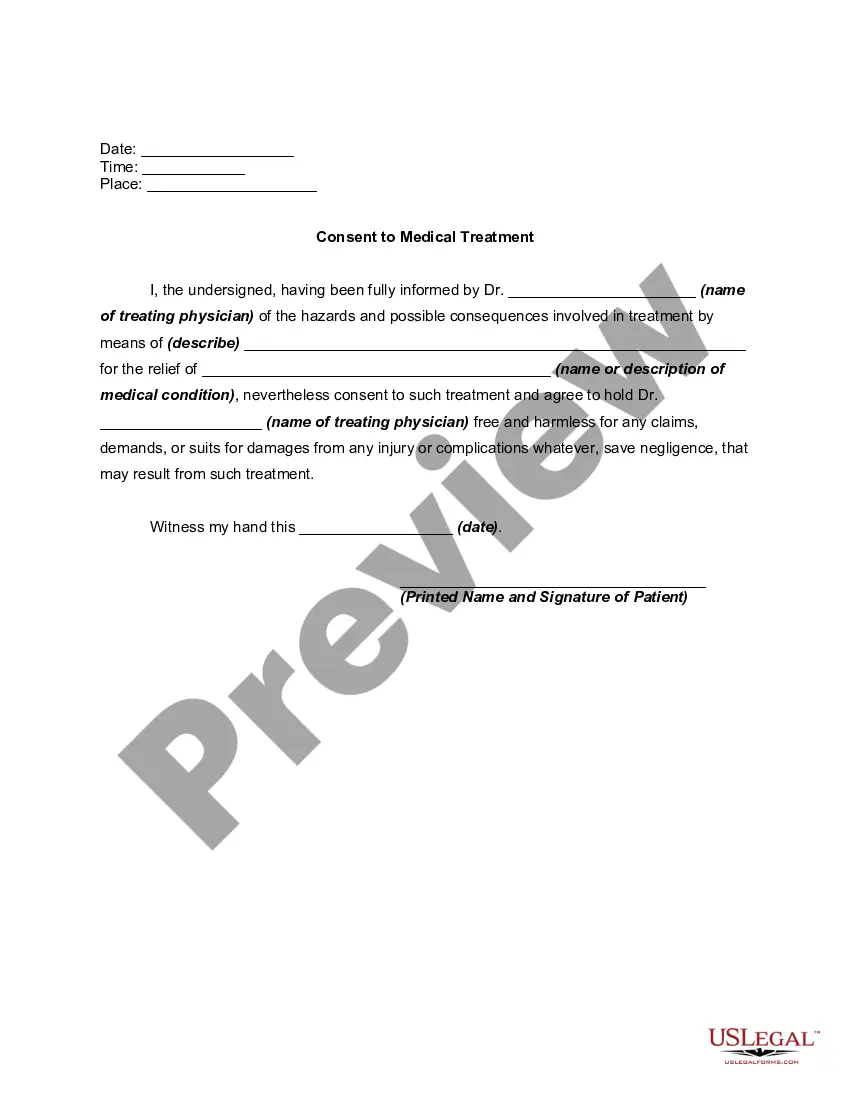

How to fill out Exclusive License Agreement For Patent With Schedule Of Royalties?
- Log in to your existing account at US Legal Forms or create a new account if you're a first-time user.
- Explore the Preview mode and review the form description to ensure it aligns with your specific needs and local jurisdiction.
- If the form isn’t suitable, utilize the Search function to find an alternative template that meets your requirements.
- Select the document that fits your needs and click the Buy Now button to choose your preferred subscription plan.
- Complete your purchase by entering your payment details, either with a credit card or PayPal.
- Download the form to your device, ensuring you can access it later in the My Forms section of your account.
By following these steps, you can confidently navigate the process of acquiring a licensee patent document. With US Legal Forms' robust collection and expert assistance, your legal documentation needs are efficiently met.
Start your journey today by visiting US Legal Forms and experience the convenience of their extensive legal library.
Form popularity
FAQ
An example of a licensee might be a company that manufactures software under a licensing agreement with the original patent holder. The software company benefits from the patented features and technologies developed by the patent holder without having to create them from scratch. This collaboration is a prime example of how a licensee patent can foster innovation and economic growth.
A licensee is an individual or organization that has been granted permission to use a specific asset, such as a trademark or patent, under a contractual agreement. In the context of a licensee patent, this means they can utilize the innovations of another inventor while adhering to agreed-upon terms. Being a licensee can offer significant commercial advantages through access to patented technologies.
A licensee contract is a legal document that outlines the terms and conditions under which a licensee may use a patent or other intellectual property. This contract typically includes details such as royalties, duration, territorial rights, and obligations of both parties. Utilizing platforms like uslegalforms can simplify the creation of these contracts and ensure you cover all necessary legal bases.
A license is a legal agreement that grants rights from one party to another, while a licensee is the individual or entity who receives those rights. In the case of a licensee patent, the license specifies how the patented invention can be used, and the licensee benefits from the ability to utilize that invention. Understanding the distinction is critical for effective patent management.
The individual or entity that owns a patent is referred to as the patent holder or patentee. This person has exclusive rights to the patented invention, allowing them to control how it is used and who can use it. The patent holder can also enter into license agreements, making them a crucial part of the licensee patent process.
A patent licensee is someone who has obtained the legal rights to use a specific patent from its owner, known as the licensor. This arrangement enables the patent licensee to manufacture, sell, or distribute products related to the patent within the defined scope of the agreement. Engaging a licensee patent can be advantageous for both parties, as it maximizes innovation and market reach.
A licensee is an individual or entity that has received permission to use a product, service, or property under specific conditions outlined in a legal agreement. In the context of a licensee patent, this permission typically allows the licensee to use, produce, or sell a patented invention. Licensees benefit from the innovation of others while adhering to the terms of the licensing agreement.
While a poor man's patent can still be done, it is important to recognize its limitations. This method does not provide the legal protection you would receive from an official patent. For better security for your invention, consider applying for a formal patent through the appropriate channels. Combining this with knowledge of your licensee patent options can help you safeguard your intellectual property effectively.
A poor man's trademark does not carry the same legal weight as a registered trademark. While it may demonstrate prior use, it lacks statutory protection. Therefore, relying on a poor man's trademark could jeopardize your rights in a dispute. For stronger protection, it is advisable to pursue a registered trademark in conjunction with your licensee patent.
Filling out a license agreement requires careful attention to detail. Ensure you include crucial elements such as the parties involved, the scope of the license, payment terms, and any limitations or obligations. Using templates from US Legal Forms can simplify this task, providing you with a clear structure for your licensee patent agreement.