Licensed Patent
Description
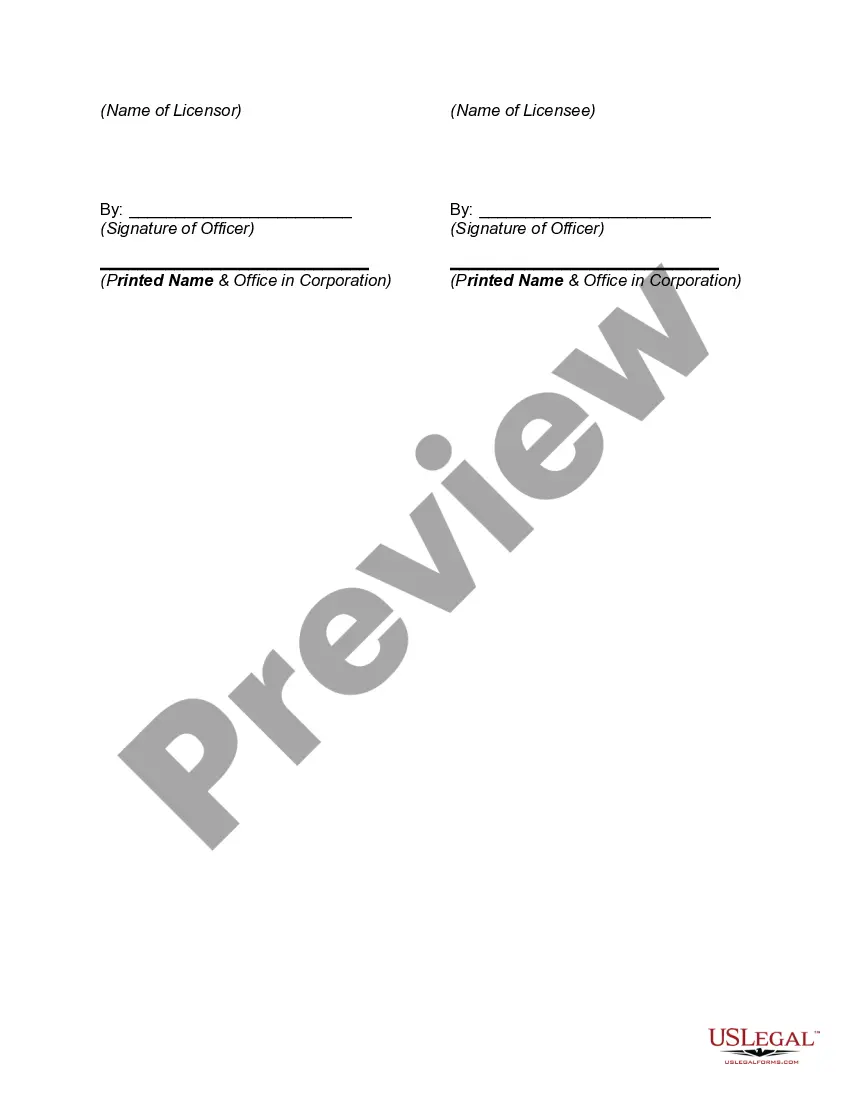
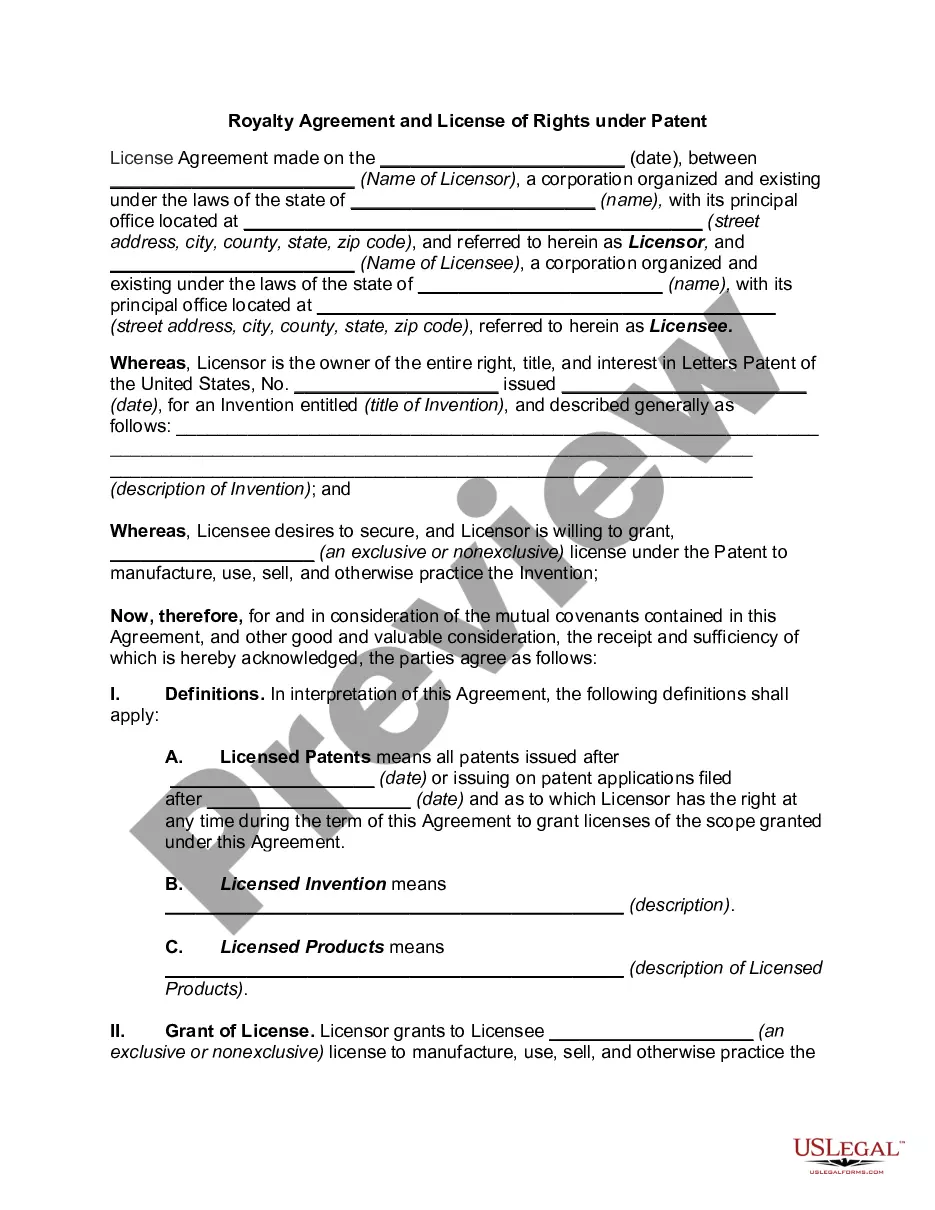
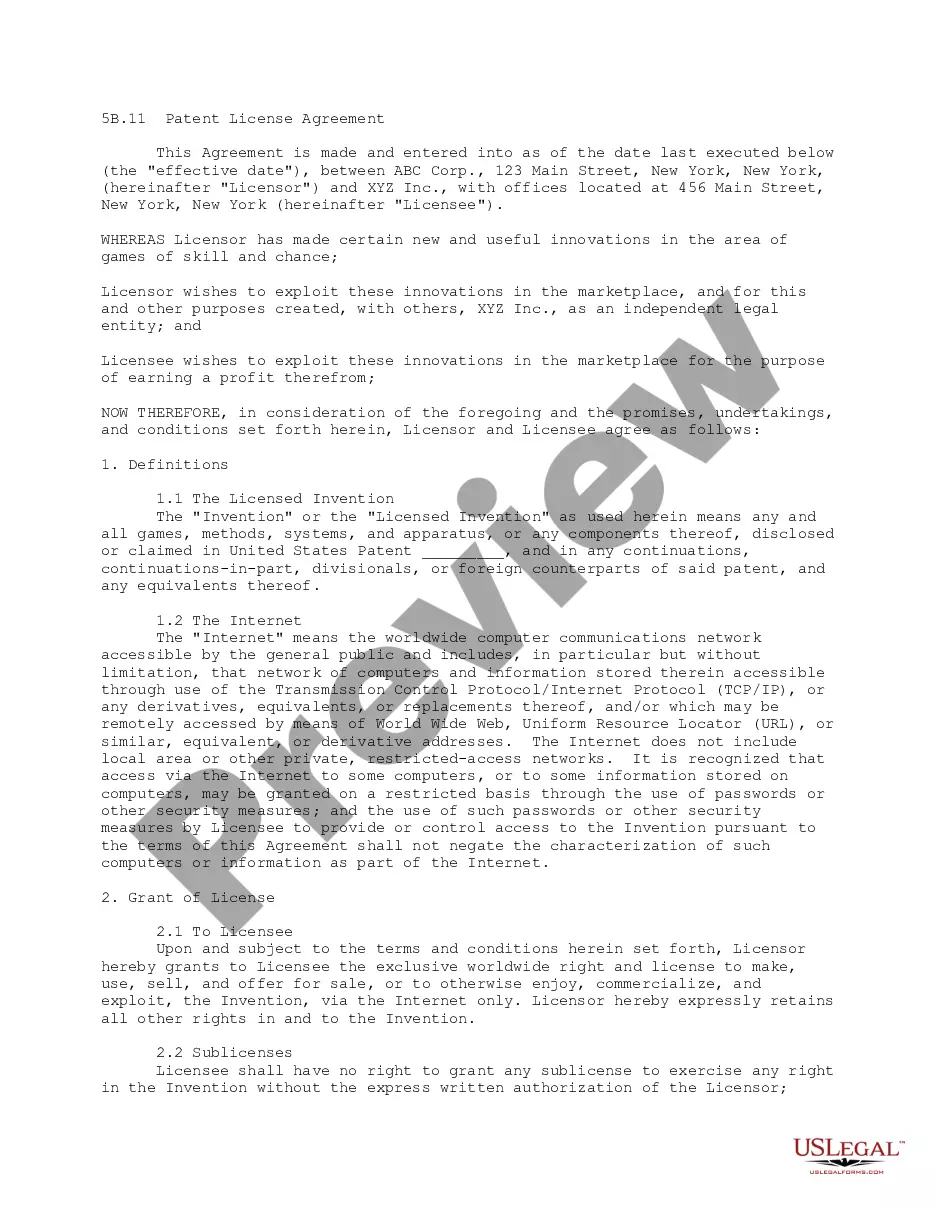
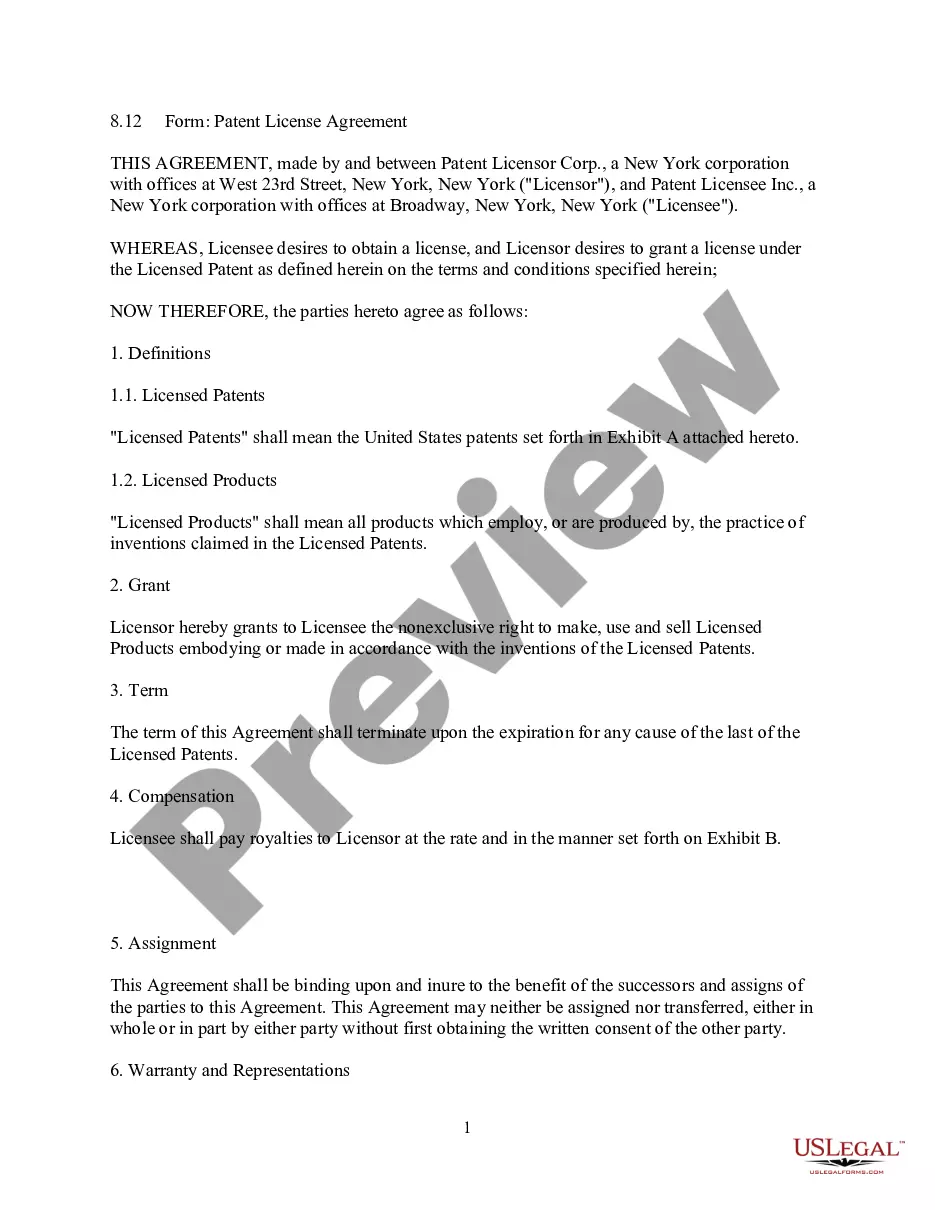
Get your form ready online
Our built-in tools help you complete, sign, share, and store your documents in one place.
Make edits, fill in missing information, and update formatting in US Legal Forms—just like you would in MS Word.
Download a copy, print it, send it by email, or mail it via USPS—whatever works best for your next step.
Sign and collect signatures with our SignNow integration. Send to multiple recipients, set reminders, and more. Go Premium to unlock E-Sign.
If this form requires notarization, complete it online through a secure video call—no need to meet a notary in person or wait for an appointment.
We protect your documents and personal data by following strict security and privacy standards.

Make edits, fill in missing information, and update formatting in US Legal Forms—just like you would in MS Word.

Download a copy, print it, send it by email, or mail it via USPS—whatever works best for your next step.

Sign and collect signatures with our SignNow integration. Send to multiple recipients, set reminders, and more. Go Premium to unlock E-Sign.

If this form requires notarization, complete it online through a secure video call—no need to meet a notary in person or wait for an appointment.

We protect your documents and personal data by following strict security and privacy standards.
Looking for another form?




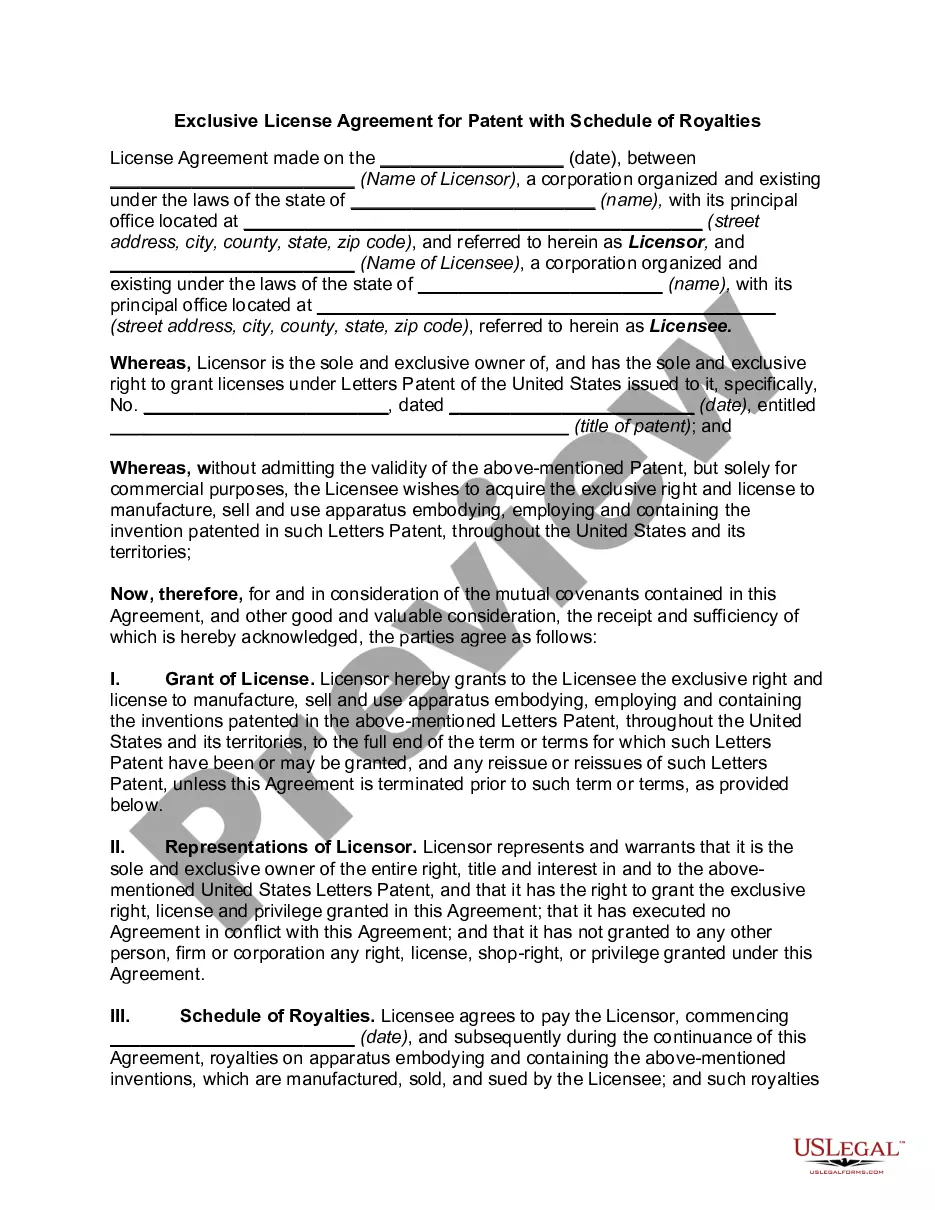
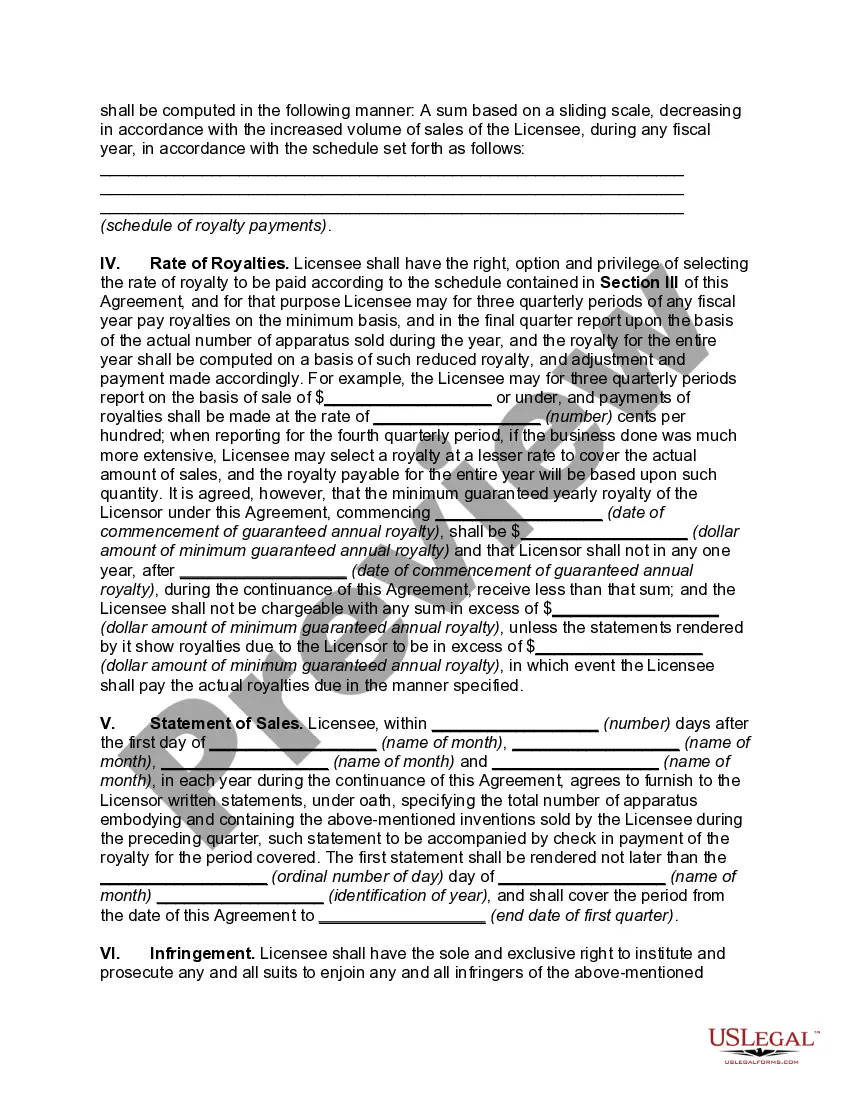
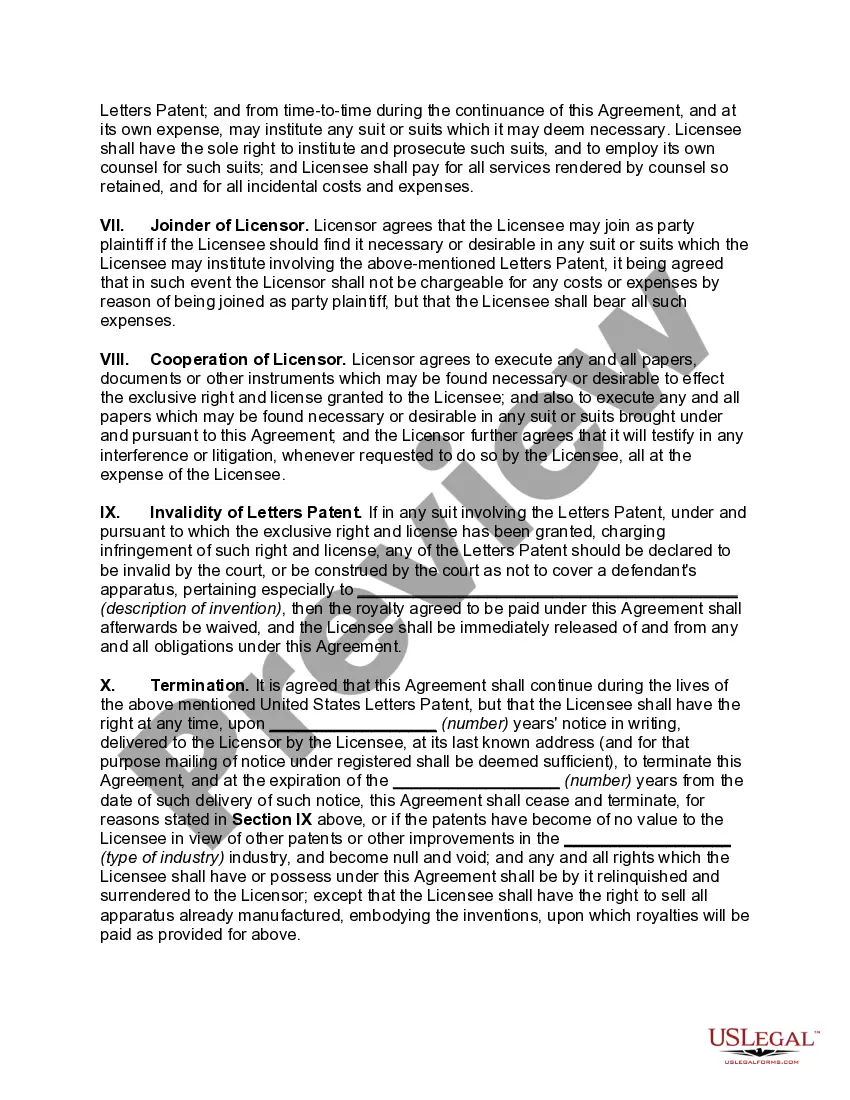
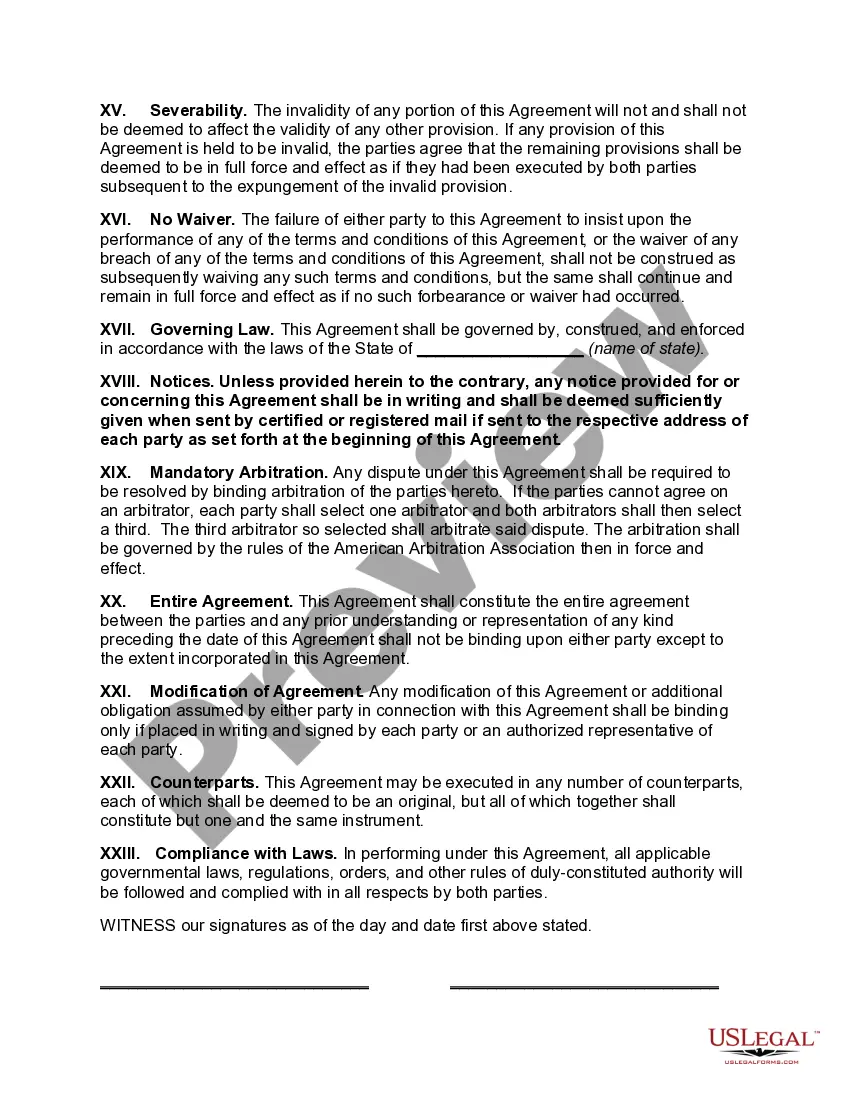
How to fill out Exclusive License Agreement For Patent With Schedule Of Royalties?
- Log into your US Legal Forms account if you are a returning user. Ensure your subscription is active, or renew it as necessary.
- Review the available forms in the Preview mode, ensuring you select one that meets your specific requirements and complies with local regulations.
- If you do not find the appropriate form, utilize the Search tab to locate the correct document. Once confirmed, proceed to the next step.
- Purchase the selected document by clicking the Buy Now button and choosing a subscription plan that suits your needs. Remember, you'll need to create an account for full access.
- Complete the payment process by entering your credit card information or logging into your PayPal account.
- Download your chosen document and save it onto your device. You can also revisit it anytime from the My Forms menu in your profile.
By following these steps, you'll be well on your way to successfully obtaining a licensed patent through US Legal Forms. Their extensive online library ensures you have access to more than 85,000 legal forms, and premium experts are available to assist you with any queries.
Start your journey to securing a licensed patent today with US Legal Forms!
Form popularity
FAQ
Certainly, you can file for a patent yourself, but doing so effectively demands careful preparation and knowledge of specific legal terms. Many inventors encounter challenges when navigating the application process, which is why seeking help from a licensed patent attorney can be advantageous. Our platform, USLegalForms, offers resources that can help you understand the requirements and steps involved in obtaining your licensed patent. This support makes it easier to protect your invention.
Yes, you can file a patent yourself, but it requires a keen understanding of patent laws and procedures. The process can be complex and time-consuming, making it beneficial to consider using a licensed patent professional. A licensed patent expert can guide you through each step, ensuring that your application meets all legal requirements. Using our platform at USLegalForms can simplify this process, providing you with the tools needed to file efficiently.
Obtaining a patent license involves negotiating terms with the patent holder and drafting a licensing agreement. Start by evaluating the specific rights you want to secure and the compensation you believe is fair. You can use the services available on platforms like USLegalForms to facilitate the drafting of contracts that protect both parties involved. A well-structured agreement is vital for a successful licensing arrangement, ensuring clarity and legal compliance.
Choosing between licensing or selling a patent depends on long-term goals. Licensing allows you to retain ownership while generating ongoing revenue, which may lead to higher overall returns. On the other hand, selling a patent provides immediate financial gain but relinquishes future rights. It's essential to evaluate your financial needs and strategic goals.
A patent provides the holder exclusive rights over an invention, preventing others from making, using, or selling it without permission. In contrast, a patent license permits another party to use the patented invention as per the agreed conditions. Thus, while a patent conveys ownership, a patent license facilitates its use by others.
Patent licensing is the process whereby a patent holder allows others to use their patented invention under agreed terms. This can include financial compensation, such as royalties, or other forms of consideration. Patent licensing can maximize the value of a licensed patent while fostering collaboration and innovation in various industries.
When a patent is licensed, the owner authorizes a third party to utilize the patent in specified ways, such as manufacturing or selling products based on it. Licensing creates a legal framework that protects both the patent holder's rights and the licensee's investment in the product or technology. This arrangement can lead to fruitful partnerships and commercial opportunities.
A licensed patent refers to a patent that the patent owner has granted permission to another party to use, produce, or sell. This agreement allows the licensee to leverage the patented invention without infringing on the owner's rights. Essentially, the licensed patent enables innovation while protecting the interests of the original creator.
A common example of a patent license involves a pharmaceutical company that allows another company to produce a generic version of a drug under a licensed patent agreement. This arrangement benefits both parties, as the original patent holder receives royalties, while the licensee gains access to a proven product to sell. Licensing can also extend to technology companies, where major tech firms grant access to their patents for specific uses, thus spurring further development and innovation. Using licensed patents can create a win-win situation for all stakeholders involved.
Licensed patents can take various forms, often reflecting the products or technologies being shared. For instance, a software company may grant a license to another firm to use their patented code in a new application. Similarly, manufacturers can license patents for machinery or methods to enhance their production processes. Licensed patents enable innovation and collaboration across industries, making them a crucial part of technological advancement.