Typical Royalty Rates For Patents
Description
Get your form ready online
Our built-in tools help you complete, sign, share, and store your documents in one place.
Make edits, fill in missing information, and update formatting in US Legal Forms—just like you would in MS Word.
Download a copy, print it, send it by email, or mail it via USPS—whatever works best for your next step.
Sign and collect signatures with our SignNow integration. Send to multiple recipients, set reminders, and more. Go Premium to unlock E-Sign.
If this form requires notarization, complete it online through a secure video call—no need to meet a notary in person or wait for an appointment.
We protect your documents and personal data by following strict security and privacy standards.

Make edits, fill in missing information, and update formatting in US Legal Forms—just like you would in MS Word.

Download a copy, print it, send it by email, or mail it via USPS—whatever works best for your next step.

Sign and collect signatures with our SignNow integration. Send to multiple recipients, set reminders, and more. Go Premium to unlock E-Sign.

If this form requires notarization, complete it online through a secure video call—no need to meet a notary in person or wait for an appointment.

We protect your documents and personal data by following strict security and privacy standards.
Looking for another form?







How to fill out Royalty Agreement And License Of Rights Under Patent?
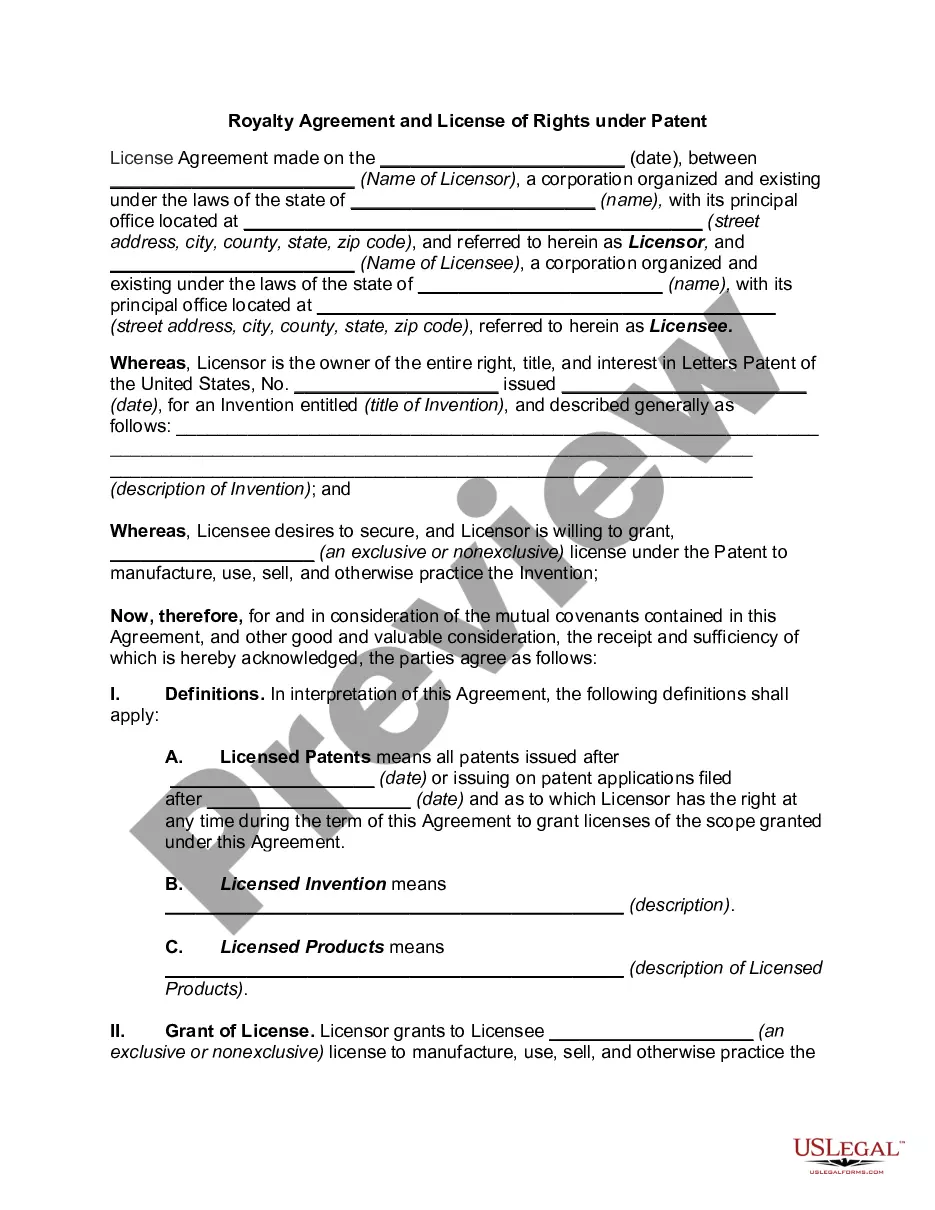
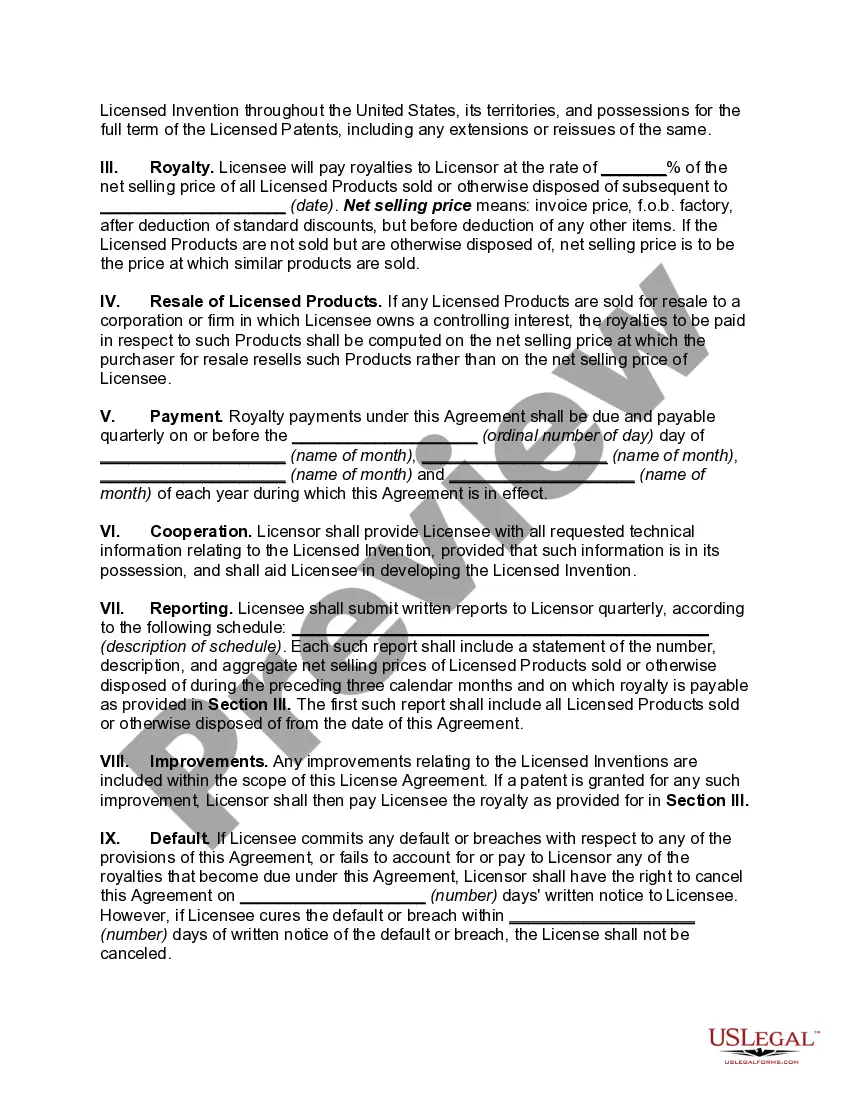
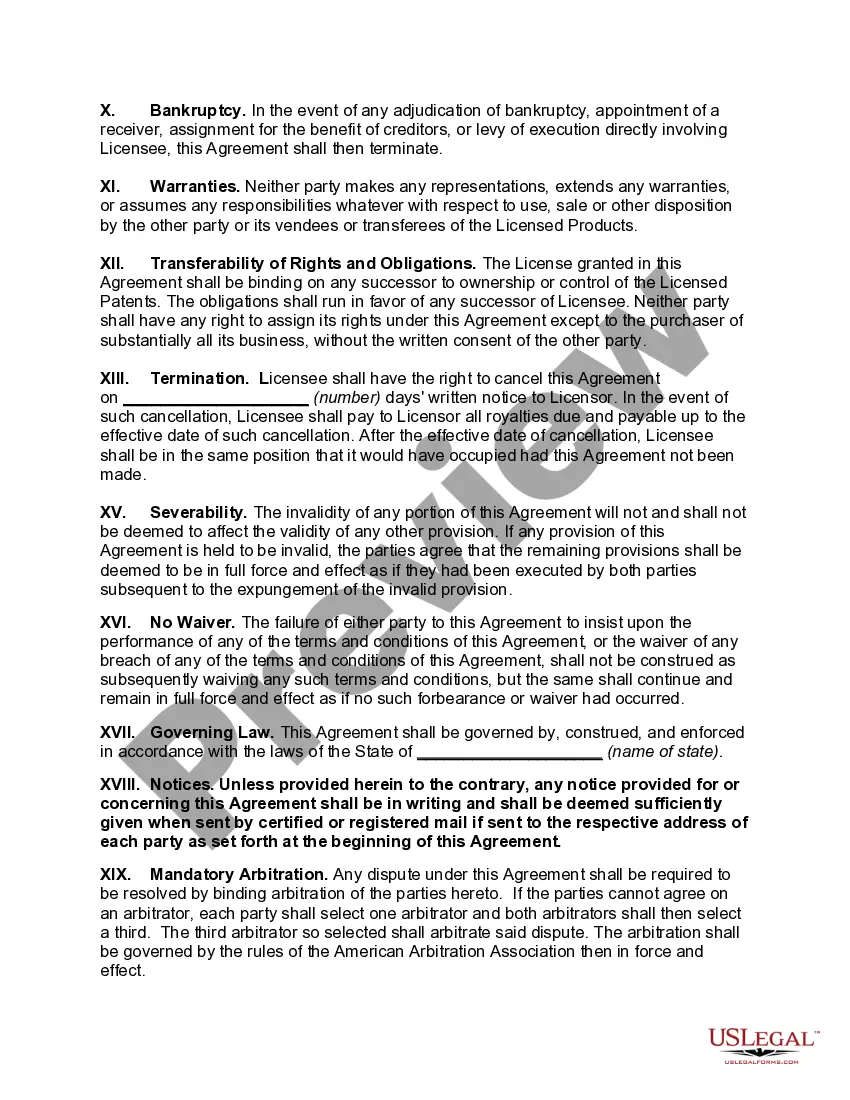
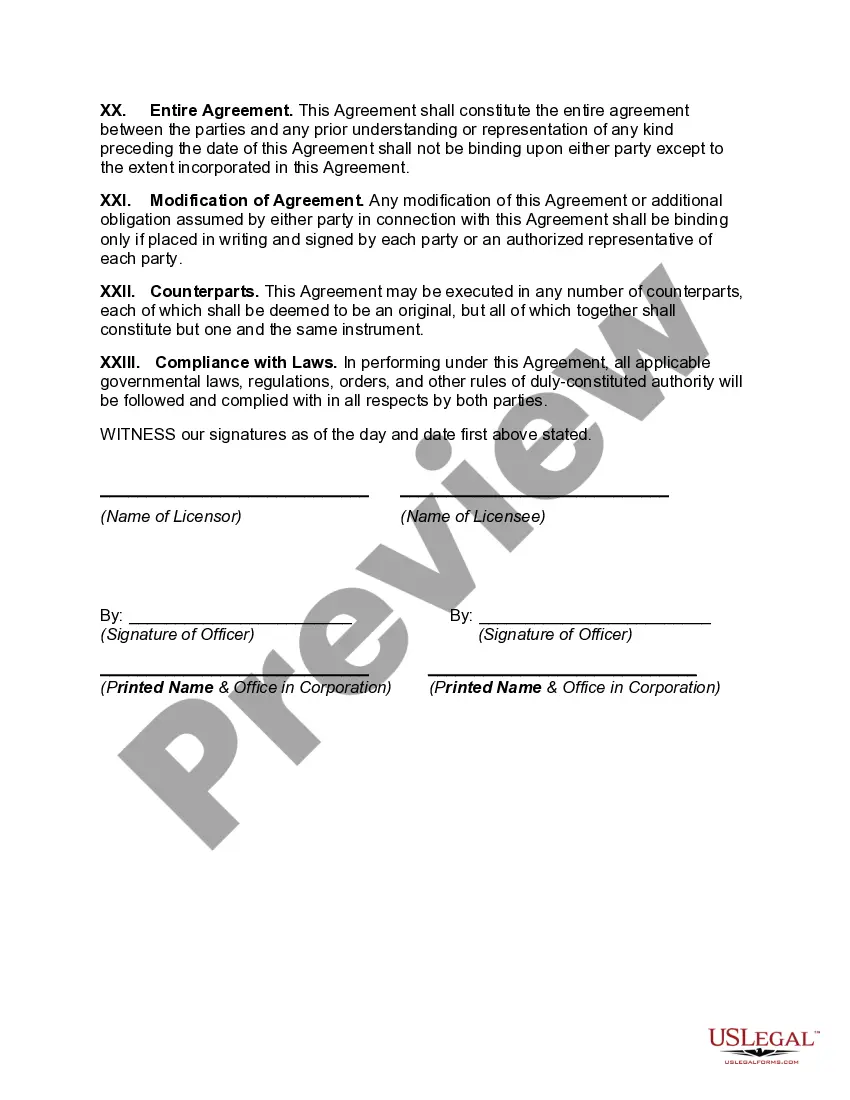
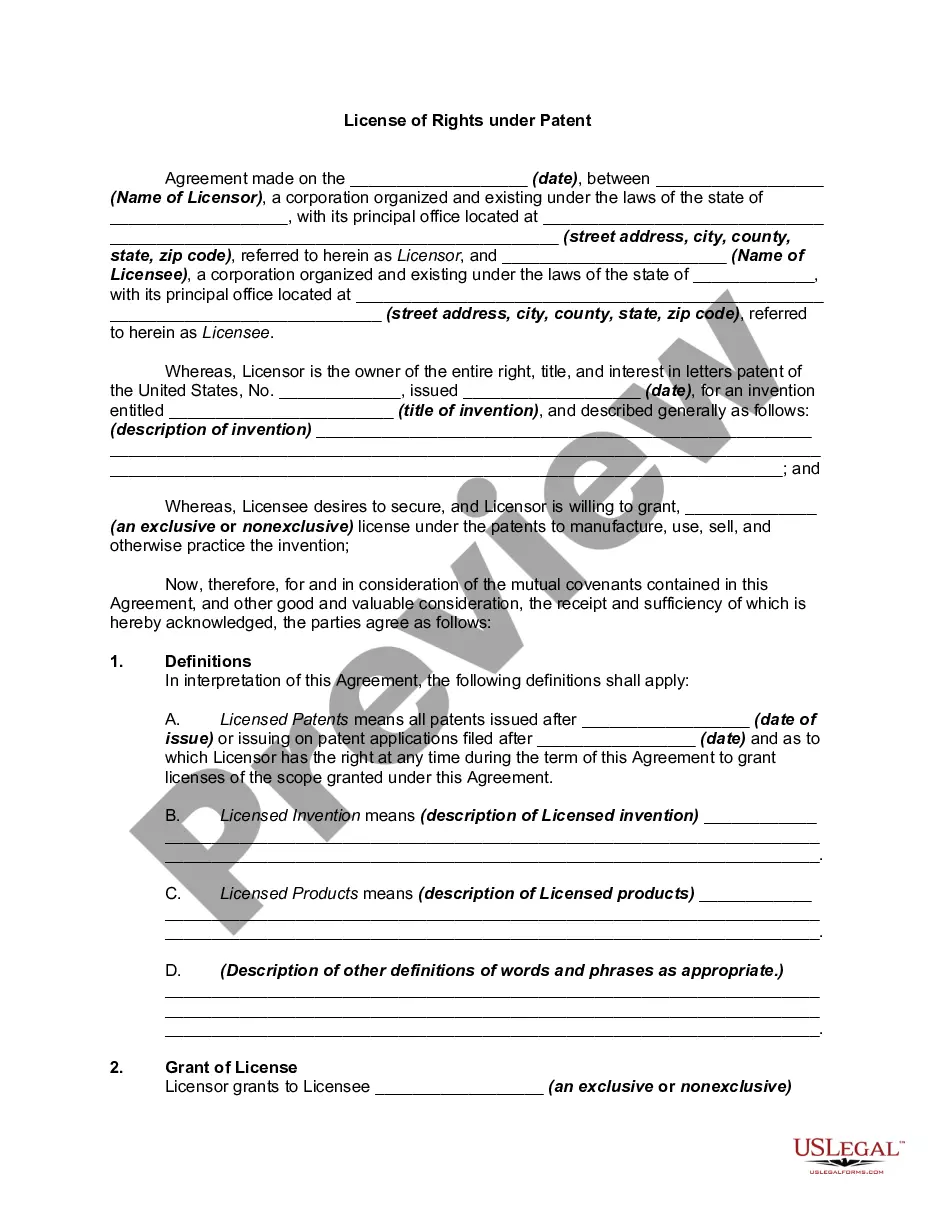
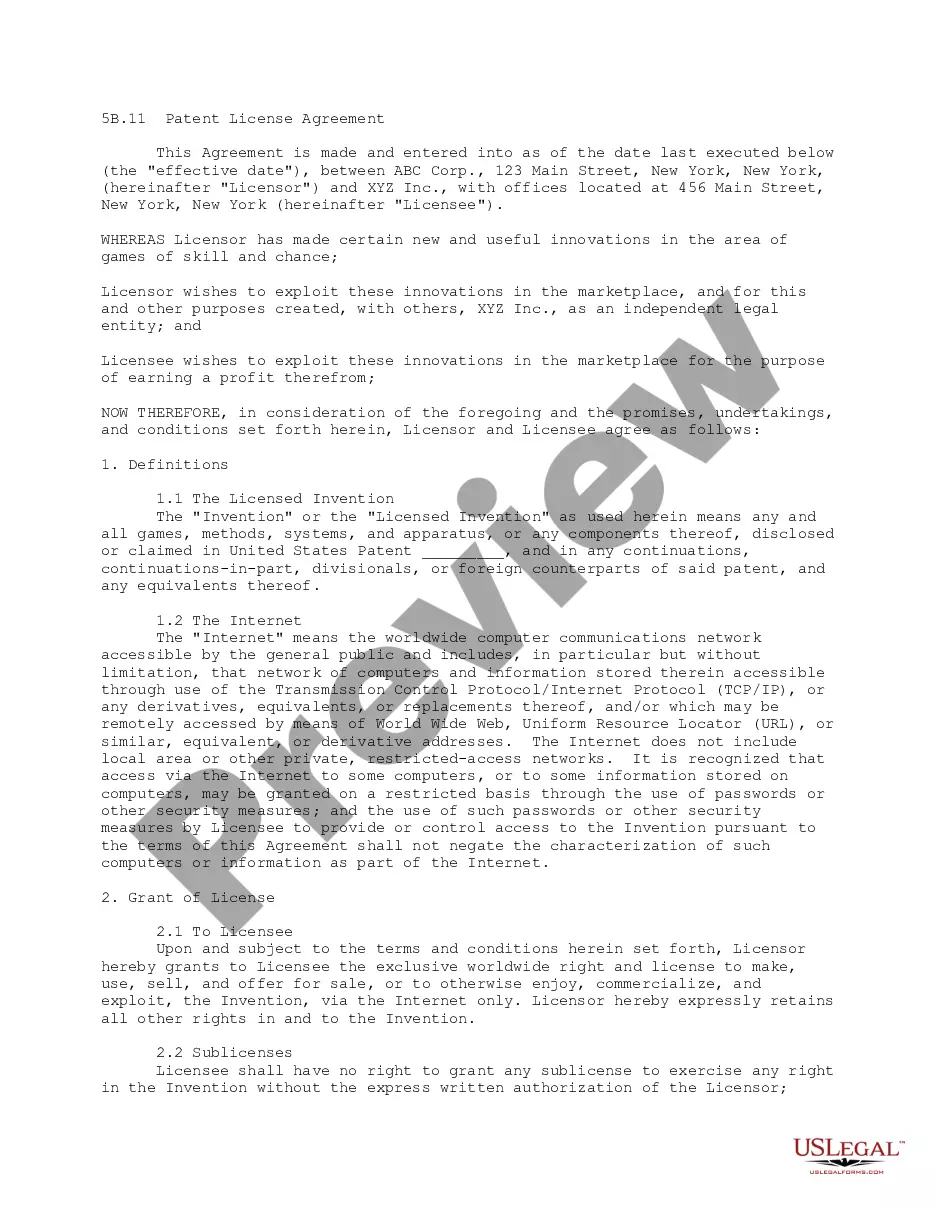
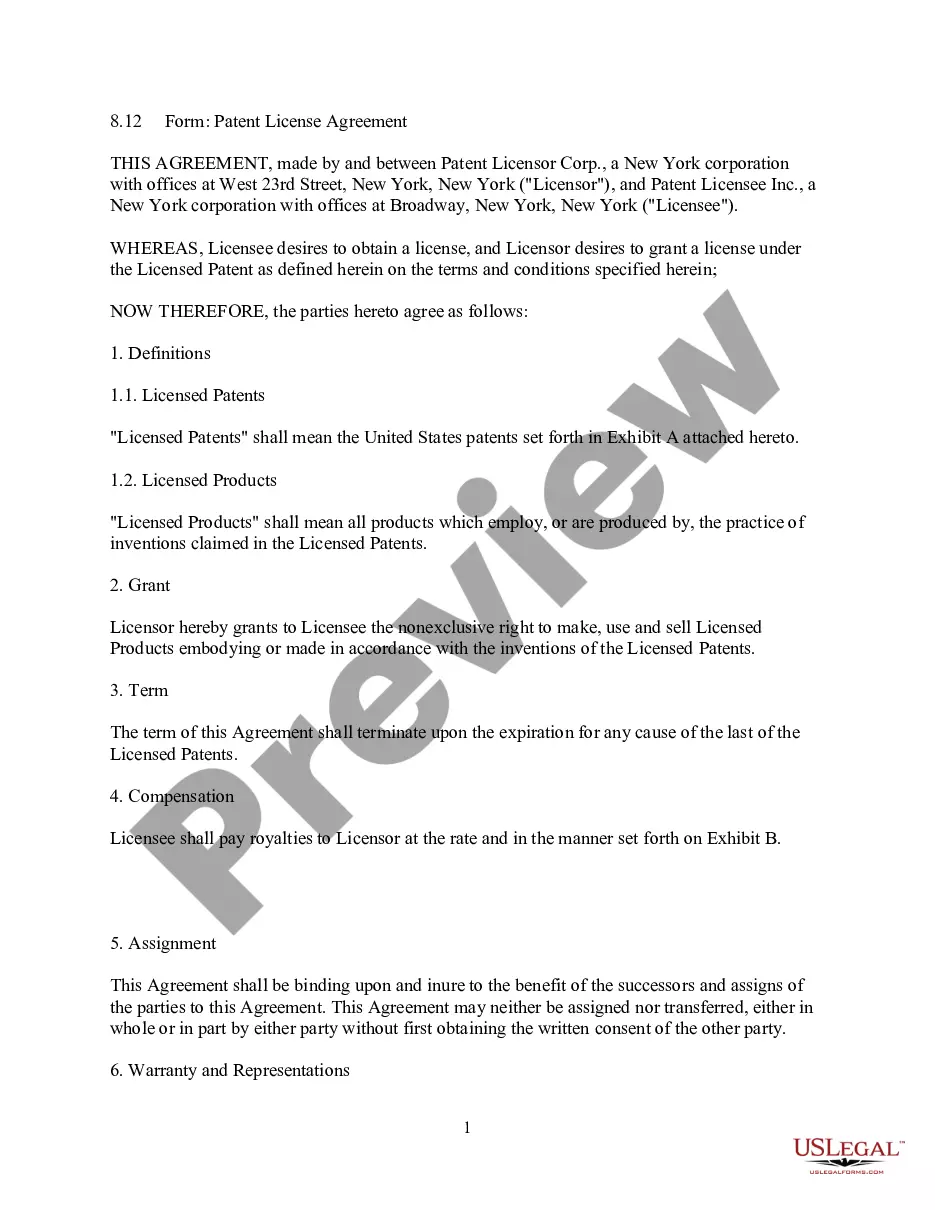
The Standard Royalty Fees For Patents displayed on this page is a versatile legal template crafted by experienced attorneys in compliance with federal and local laws.
For over 25 years, US Legal Forms has delivered individuals, businesses, and legal practitioners with more than 85,000 validated, state-specific documents for any commercial and personal situation. It’s the quickest, simplest, and most dependable method to procure the forms you require, as the service ensures bank-level data protection and anti-malware safeguards.
Select the format you desire for your Standard Royalty Fees For Patents (PDF, DOCX, RTF) and download the document onto your device.
- Look for the document you require and review it.
- Browse the sample you found and view it or read the form details to confirm it meets your requirements. If it doesn't, use the search feature to locate the right one. Click Buy Now once you find the template you want.
- Register and Log In.
- Choose the payment plan that works for you and set up an account. Use PayPal or a credit card for swift payment. If you already have an account, Log In and verify your subscription to continue.
- Obtain the editable template.
Form popularity
FAQ
A 7.5% royalty rate means that the licensee pays 7.5% of their revenue generated from products or services incorporating the patented technology to the patent holder. This percentage reflects the agreement between the parties and is part of the overall compensation for using the patented invention. Understanding typical royalty rates for patents can help you gauge whether this rate is reasonable within your industry. To ensure clarity in your agreements, consider utilizing resources from US Legal Forms for drafting and managing patent licenses.
To determine typical royalty rates for patents, begin by assessing the value of the patented technology and its market potential. Consider factors such as industry standards, comparable licensing agreements, and the competitive landscape. You can also evaluate the costs associated with the patent, including research and development expenses. For a streamlined approach, platforms like US Legal Forms offer resources to help you navigate the complexities of patent licensing.
A typical patent royalty is the payment made to a patent holder for the use of their invention, often expressed as a percentage of sales. This rate can fluctuate based on the industry, the strength of the patent, and the competitive environment. Understanding what constitutes a typical royalty can help you make informed decisions when licensing your patent.
The average royalty rate for patents varies widely by industry, but it typically ranges between 3% and 10% of sales. Factors such as the uniqueness of the invention and market conditions can influence these averages. By researching typical royalty rates for patents in your sector, you can better position yourself in negotiations.
The 25% rule for royalty rates is a principle that indicates a reasonable starting point for negotiations. It states that the patent owner should receive 25% of the profits generated from products that incorporate their patented invention. This rule can help you establish a baseline when discussing typical royalty rates for patents with potential licensees.
The 25% rule for royalties suggests that a patent holder should receive 25% of the profits from the product that uses their patented technology. This rule serves as a guideline for negotiating royalty rates and can vary based on the specifics of each deal. Understanding this rule can help you navigate typical royalty rates for patents more effectively.
To record royalty fees, start by maintaining detailed records of all transactions involving royalties. This includes invoices, payment receipts, and any agreements that outline the payment terms. Using a platform like US Legal Forms can help you create the necessary documentation, ensuring that your records comply with financial regulations and reflect typical royalty rates for patents.
A 20% royalty rate is considered favorable in many industries, especially for patents. However, what is deemed 'good' can depend on various factors, including the nature of the invention, market demand, and the competitive landscape. It’s essential to compare this rate against typical royalty rates for patents in your specific field to ensure you are getting a fair deal.
To determine the royalty rate, you should consider several factors, including the nature of the patent, the industry, and the market demand. Typically, royalty rates for patents can vary widely, often ranging from 1% to 10% of sales. Researching comparable licenses and industry standards can provide valuable insights. Platforms like US Legal Forms can help you navigate the complexities of patent licensing and offer resources to assist in calculating an appropriate royalty rate.