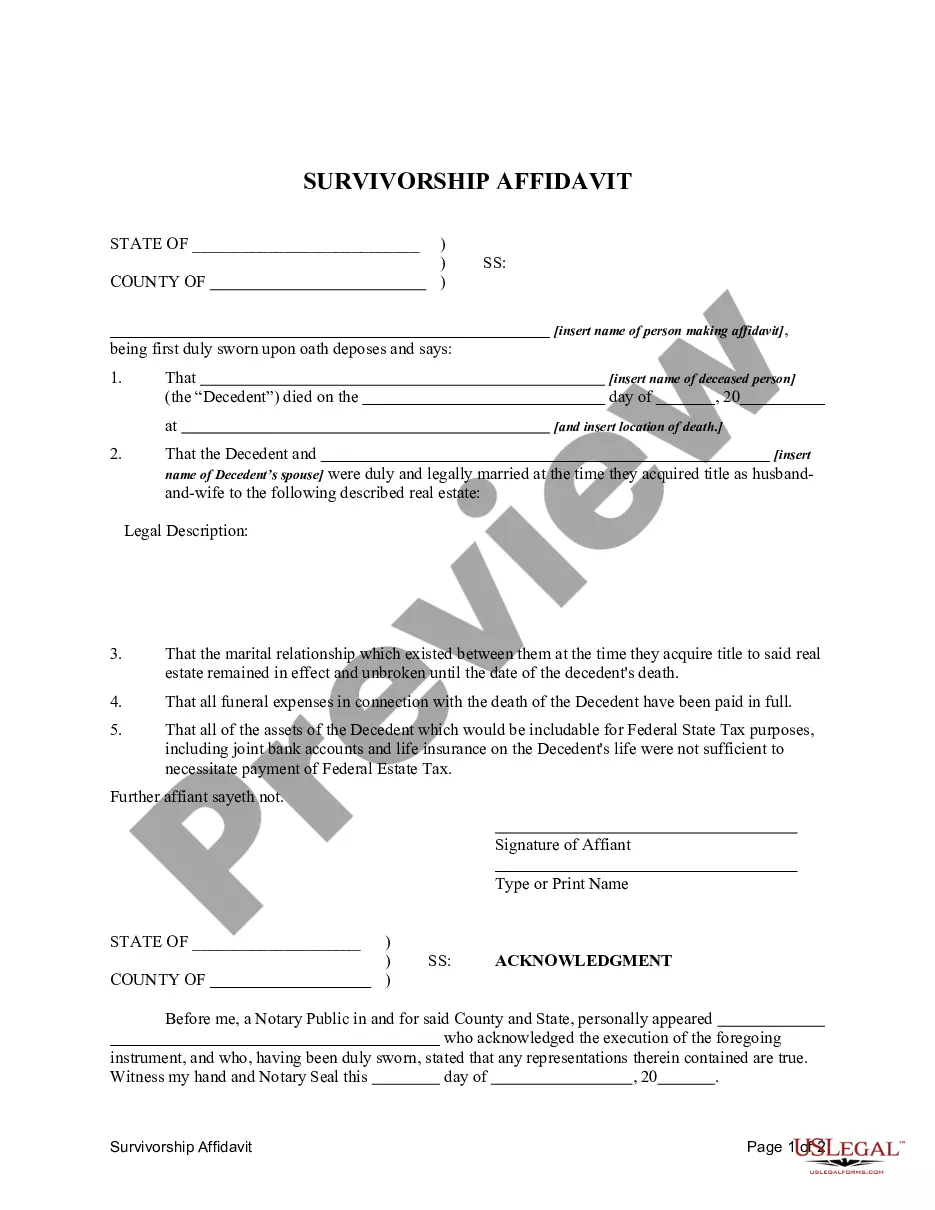
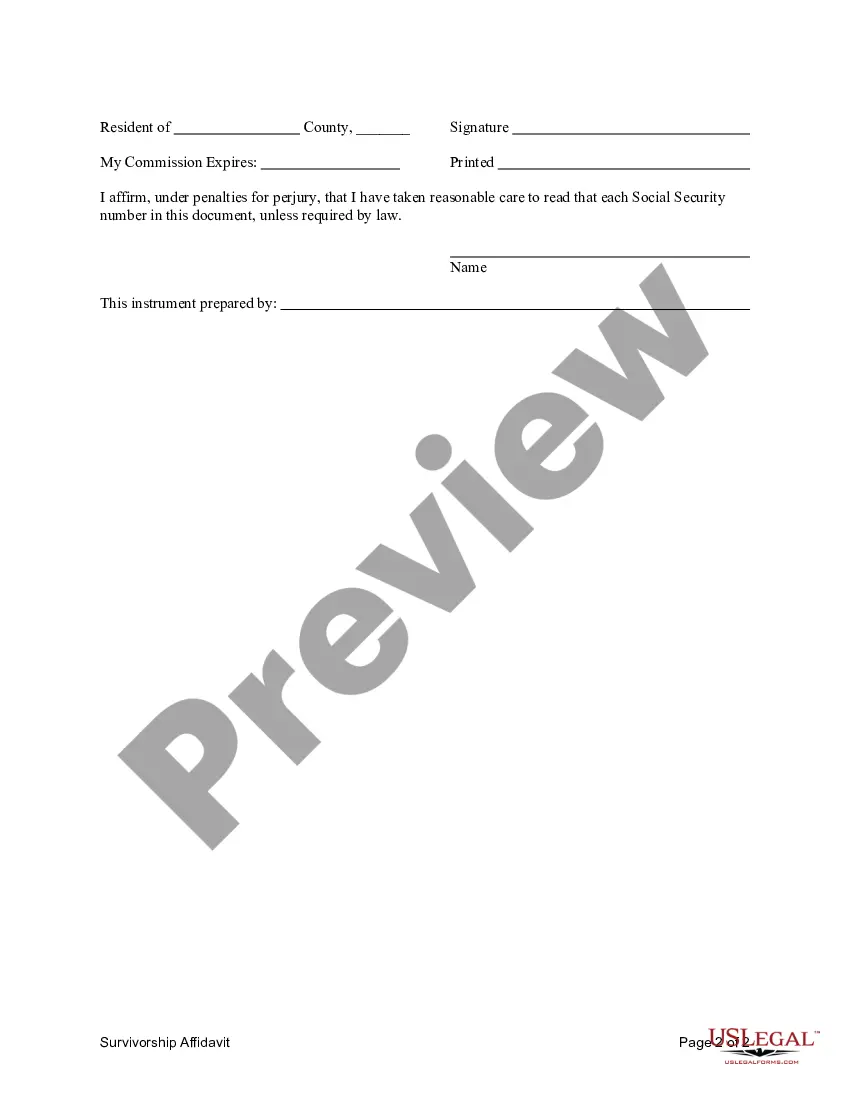
Survivorship Form Application With Mortgage
Description

Get your form ready online
Our built-in tools help you complete, sign, share, and store your documents in one place.
Make edits, fill in missing information, and update formatting in US Legal Forms—just like you would in MS Word.
Download a copy, print it, send it by email, or mail it via USPS—whatever works best for your next step.
Sign and collect signatures with our SignNow integration. Send to multiple recipients, set reminders, and more. Go Premium to unlock E-Sign.
If this form requires notarization, complete it online through a secure video call—no need to meet a notary in person or wait for an appointment.
We protect your documents and personal data by following strict security and privacy standards.

Make edits, fill in missing information, and update formatting in US Legal Forms—just like you would in MS Word.

Download a copy, print it, send it by email, or mail it via USPS—whatever works best for your next step.

Sign and collect signatures with our SignNow integration. Send to multiple recipients, set reminders, and more. Go Premium to unlock E-Sign.

If this form requires notarization, complete it online through a secure video call—no need to meet a notary in person or wait for an appointment.

We protect your documents and personal data by following strict security and privacy standards.
Looking for another form?

How to fill out Survivorship Affidavit?
The Survivorship Form Application With Mortgage displayed on this page is a reusable formal template created by expert attorneys in accordance with federal and state regulations.
For over 25 years, US Legal Forms has supplied individuals, organizations, and legal practitioners with more than 85,000 validated, state-specific forms for any business and personal occasion. It’s the quickest, easiest, and most dependable method to acquire the documents you require, as the service guarantees the utmost level of data protection and anti-malware safeguards.
Select the format you wish for your Survivorship Form Application With Mortgage (PDF, DOCX, RTF) and store the sample on your device.
- Look for the document you require and examine it.
- Browse through the sample you looked for and preview it or review the form description to confirm it meets your requirements. If it doesn’t, use the search bar to locate the correct one. Click Buy Now once you have found the template you require.
- Choose and Log In.
- Select the pricing plan that works for you and create an account. Use PayPal or a credit card for a swift transaction. If you already possess an account, Log In and verify your subscription to continue.
- Obtain the editable template.
Form popularity
FAQ
Property owned jointly with rights of survivorship is treated very much like property owned with multiple beneficiaries. The difference is often in the distribution to remaining owners if one has died. Unless percentage ownership of specific shares is spelled out, only the surviving owners will inherit the property.
For example, if two people, Mark and Amanda, own a property together and Mark dies, then Amanda will become to sole owner of the property even if this is not detailed in the will because the two of them purchased the property together.
Key Takeaways. Some of the main benefits of joint tenancy include avoiding probate courts, sharing responsibility, and maintaining continuity. The primary pitfalls are the need for agreement, the potential for assets to be frozen, and loss of control over the distribution of assets after death.
Disadvantages of joint tenants with right of survivorship JTWROS accounts involving real estate may require all owners to consent to selling the property. Frozen bank accounts. In some cases, the probate court can freeze bank accounts until the estate is settled.
The right of survivorship means that if two parties jointly own a property that has a right of survivorship, when one of them dies, their share of the property goes directly to the other owner ? no matter what the deceased party might have included in their will.