Drug Testing In Workplace
Description
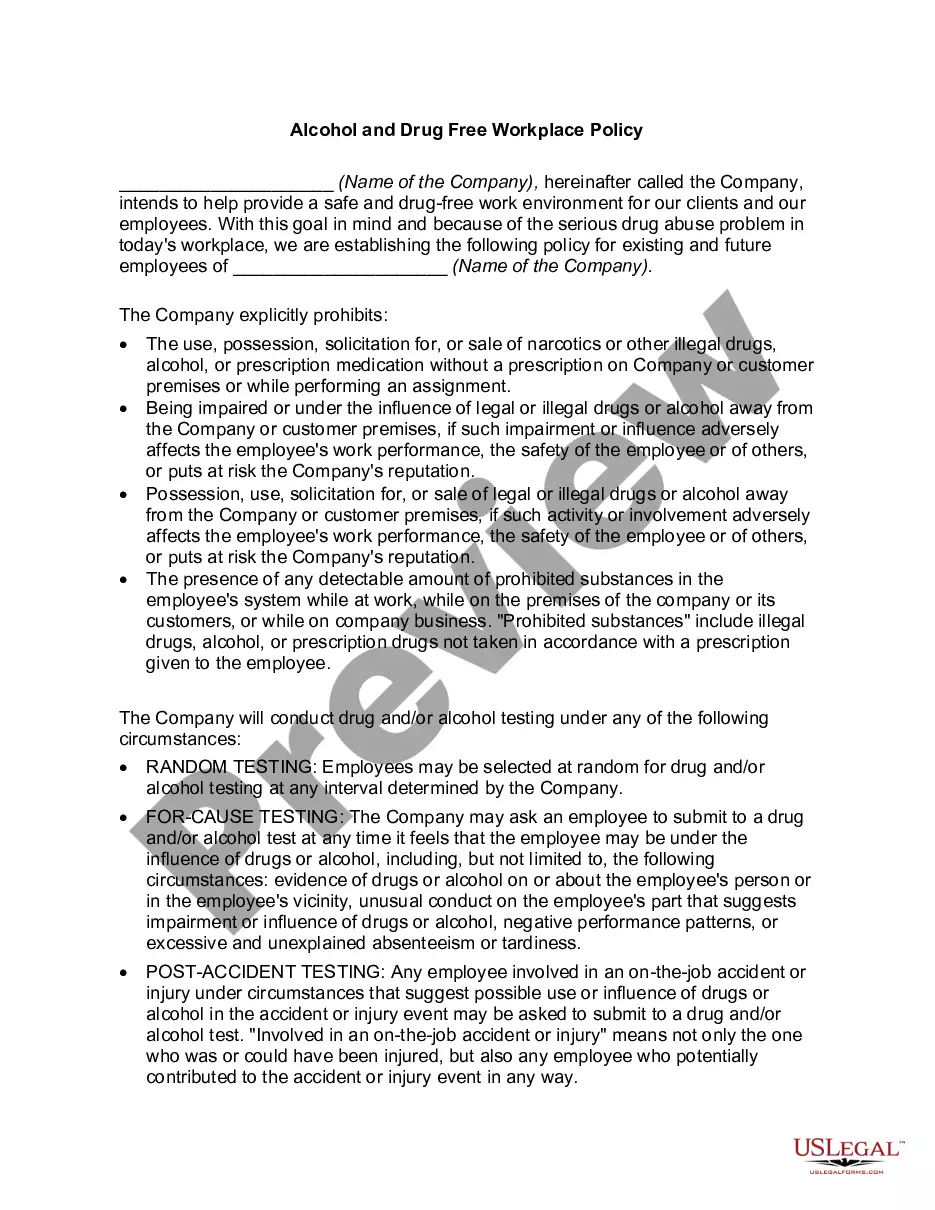
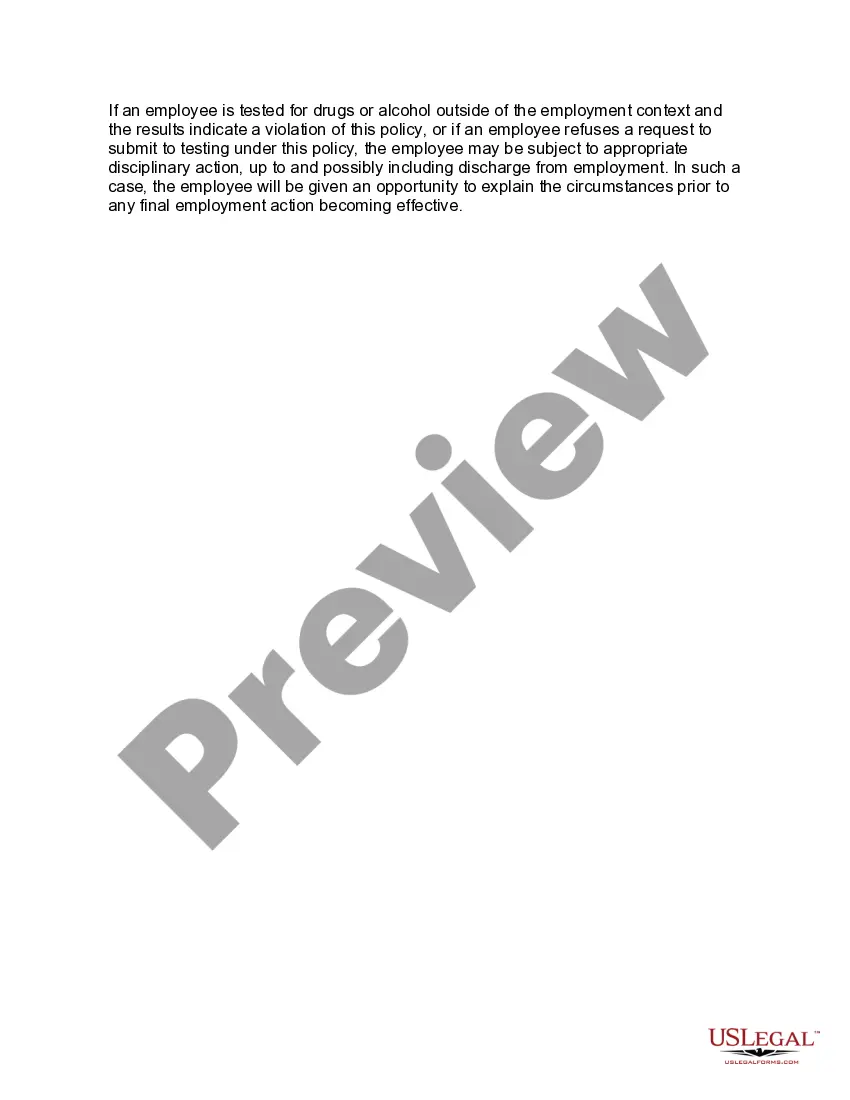
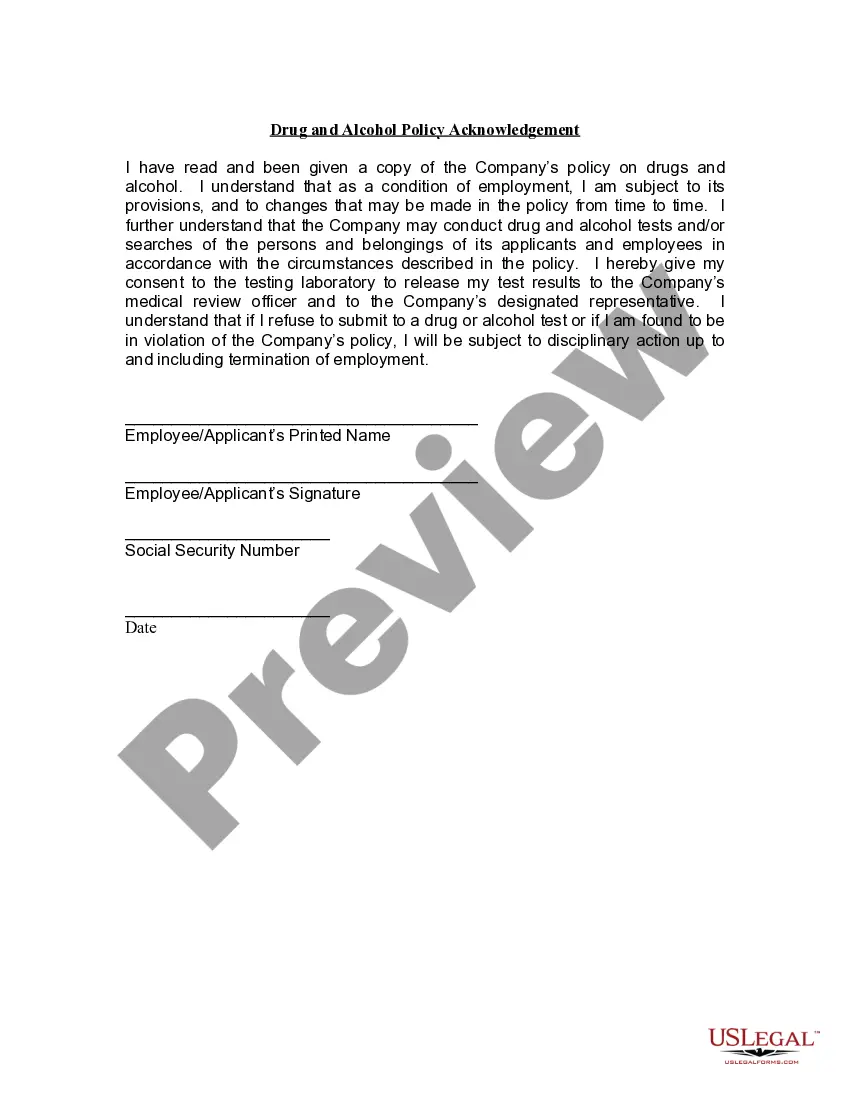
Get your form ready online
Our built-in tools help you complete, sign, share, and store your documents in one place.
Make edits, fill in missing information, and update formatting in US Legal Forms—just like you would in MS Word.
Download a copy, print it, send it by email, or mail it via USPS—whatever works best for your next step.
Sign and collect signatures with our SignNow integration. Send to multiple recipients, set reminders, and more. Go Premium to unlock E-Sign.
If this form requires notarization, complete it online through a secure video call—no need to meet a notary in person or wait for an appointment.
We protect your documents and personal data by following strict security and privacy standards.

Make edits, fill in missing information, and update formatting in US Legal Forms—just like you would in MS Word.

Download a copy, print it, send it by email, or mail it via USPS—whatever works best for your next step.

Sign and collect signatures with our SignNow integration. Send to multiple recipients, set reminders, and more. Go Premium to unlock E-Sign.

If this form requires notarization, complete it online through a secure video call—no need to meet a notary in person or wait for an appointment.

We protect your documents and personal data by following strict security and privacy standards.
Looking for another form?





How to fill out Alcohol And Drug Free Workplace Policy?
Creating legal documents from the ground up can occasionally be overwhelming.
Some situations may require extensive research and substantial financial investment.
If you're searching for a simpler and more cost-effective method to produce Drug Testing In Workplace or any other documentation without unnecessary complications, US Legal Forms is always ready to assist.
Our online repository of over 85,000 current legal documents encompasses nearly every element of your financial, legal, and personal affairs.
Examine the document preview and descriptions to ensure that you have located the document you need. Confirm that the form you choose meets your state and county's requirements. Select the most appropriate subscription option for purchasing the Drug Testing In Workplace. Download the file, then fill it out, sign it, and print it. US Legal Forms enjoys an impeccable reputation and over 25 years of expertise. Join us now and make form completion a streamlined and effortless process!
- With just a few clicks, you can swiftly obtain state- and county-specific templates carefully prepared for you by our legal experts.
- Utilize our platform whenever you seek dependable and trustworthy services to conveniently find and download the Drug Testing In Workplace.
- If you've previously registered with us, simply Log In to your account, find the form, and download it immediately or re-download it later from the My documents section.
- No account? No problem. It only takes a few minutes to set it up and explore the library.
- However, before diving directly into downloading Drug Testing In Workplace, adhere to these recommendations.
Form popularity
FAQ
To set up an employee drug test, begin by developing a clear policy that includes testing procedures and guidelines. Select a reputable testing provider and communicate expectations to employees effectively. Ensuring everyone understands the process is essential to successful drug testing in the workplace and contributes to a fair work environment.
Yes, employers can ask employees to take a drug test under certain circumstances. Policies should be clear, outlining when and why testing may occur. Providing transparency creates a trustworthy environment while reinforcing the importance of drug testing in the workplace to maintain safety and productivity.
Most companies use a 5-panel or 10-panel drug test, depending on their specific needs. The 5-panel test checks for the most commonly abused substances, while the 10-panel expands the list to include additional drugs. These panels help employers maintain a safe and productive work environment through effective drug testing in the workplace.
Workforce typically uses urine-based drug tests for their comprehensive screening processes. This method ensures a broad range of substances can be detected effectively. Employers focus on accuracy and reliability when implementing drug testing in the workplace, and urine tests fit this need well.
A 10-panel test can detect drug use over a specific period. Generally, it can trace substances in urine for up to 7 days after use. The exact timeframe depends on the type of drug and individual metabolism. Thus, when considering drug testing in the workplace, it's crucial to recognize that past use may still impact current results.
Failing a drug test in the workplace can significantly impact hiring decisions. While some employers might have a strict no-tolerance policy, others may offer a second chance, depending on their specific guidelines and the circumstances involved. It's essential to review the company's drug testing policy to understand how they handle such situations and potentially negotiate your employment status.
Employers typically use urine tests for drug testing in workplace settings; however, they may also opt for saliva, hair, or blood tests depending on their specific requirements. Each method has its advantages and can detect different substances for varying time frames. Ensuring a consistent and fair approach based on company policy contributes to effective workplace management.
Jobs utilize drug testing in the workplace primarily to ensure a safe and productive environment. Employers seek to identify any impairments that may affect job performance or workplace safety. Additionally, a clean drug test can reflect positively on an employee’s reliability and professionalism, reinforcing the employer's trust.
The procedures for drug testing in workplace settings generally involve pre-test briefing, sample collection, and laboratory analysis. Employees must be informed about the testing policy and the type of substances involved. Post-test results should be given in a timely manner, allowing employees to discuss any potential discrepancies as part of the follow-up process.
Employer drug tests typically screen for a range of substances, including illegal drugs like cocaine and marijuana, as well as prescription medications that may impair job performance. The specific substances tested often depend on the company's policies and the local laws regarding drug testing in workplace situations. Regular communication with employees about these substances is essential for clarity.