Alcohol Workplace Policy Withdrawal

Description
Get your form ready online
Our built-in tools help you complete, sign, share, and store your documents in one place.
Make edits, fill in missing information, and update formatting in US Legal Forms—just like you would in MS Word.
Download a copy, print it, send it by email, or mail it via USPS—whatever works best for your next step.
Sign and collect signatures with our SignNow integration. Send to multiple recipients, set reminders, and more. Go Premium to unlock E-Sign.
If this form requires notarization, complete it online through a secure video call—no need to meet a notary in person or wait for an appointment.
We protect your documents and personal data by following strict security and privacy standards.

Make edits, fill in missing information, and update formatting in US Legal Forms—just like you would in MS Word.

Download a copy, print it, send it by email, or mail it via USPS—whatever works best for your next step.

Sign and collect signatures with our SignNow integration. Send to multiple recipients, set reminders, and more. Go Premium to unlock E-Sign.

If this form requires notarization, complete it online through a secure video call—no need to meet a notary in person or wait for an appointment.

We protect your documents and personal data by following strict security and privacy standards.
Looking for another form?

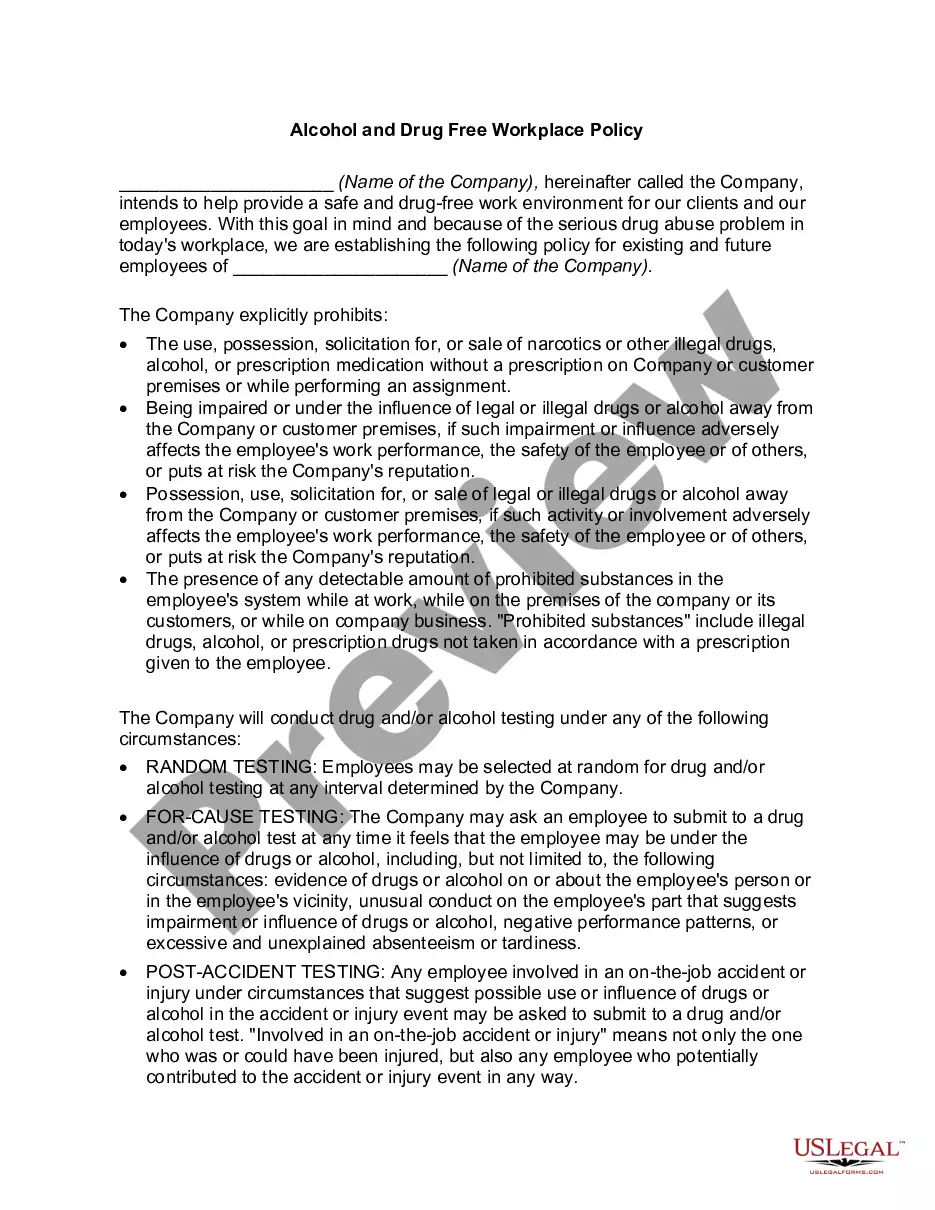
How to fill out Alcohol And Drug Free Workplace Policy?
It’s clear that you cannot transform into a legal expert instantaneously, nor can you acquire the ability to swiftly construct an Alcohol Workplace Policy Withdrawal without possessing a specific set of competencies.
Drafting legal documents is a lengthy endeavor that necessitates specialized training and expertise.
So why not entrust the formulation of the Alcohol Workplace Policy Withdrawal to qualified professionals.
You can revisit your documents from the My documents section whenever needed. If you’re a returning customer, you can simply Log In and find and download the template from the same section.
Regardless of the purpose of your documents—be it financial and legal, or personal—our site has everything you need. Explore US Legal Forms today!
- Locate the form you require by utilizing the search feature at the top of the site.
- Examine it (if this feature is available) and read the accompanying description to confirm whether the Alcohol Workplace Policy Withdrawal is what you need.
- Commence your search anew if you require another form.
- Create a complimentary account and select a subscription plan to purchase the template.
- Click Buy now. Once the payment is completed, you can download the Alcohol Workplace Policy Withdrawal, fill it out, print it, and send or mail it to the appropriate individuals or organizations.
Form popularity
FAQ
The 1/2/3 rule is a guideline advising individuals on responsible drinking. It suggests that for each alcoholic drink consumed, you should wait at least one hour before having another, drink water in between, and limit daily intake to three drinks. Understanding such guidelines supports the development of an alcohol workplace policy withdrawal, encouraging employees to make responsible choices while fostering a healthier workplace culture.
The alcohol policy in the workplace specifies the rules regarding the use and consumption of alcohol at work. It commonly includes guidance on when, where, and how alcohol use is prohibited, as well as procedures for handling violations. Implementing a clear alcohol workplace policy withdrawal helps to foster a professional environment and ensures employees understand the importance of maintaining safety and performance.
An effective alcohol management policy typically outlines prohibited behaviors, reporting protocols, and consequences for violations. For instance, a standard policy may state that employees must abstain from alcohol during work hours and that breaches will lead to a review under the alcohol workplace policy withdrawal. This helps maintain a safe and productive workplace while clearly outlining expectations and responsibilities.
Firing for alcohol-related issues may impact your eligibility for unemployment benefits, depending on state laws and the circumstances. If your employer documented a serious violation of the alcohol workplace policy withdrawal, it can serve as a basis for denial of benefits. However, if you can demonstrate that your dismissal was unjust, you might still be eligible for support. Seeking legal advice can help clarify your specific situation.
The Occupational Safety and Health Administration (OSHA) has regulations concerning alcohol use in the workplace, particularly in safety-sensitive roles. Employers must ensure a safe work environment, which includes policies to manage alcohol use. To comply, many companies draft an alcohol workplace policy withdrawal that outlines the consequences for violating these rules, thus promoting employee safety and accountability.
Yes, smelling like alcohol at work can lead to disciplinary action, depending on your employer's policies. If your company has an alcohol workplace policy withdrawal, it likely includes specific guidelines regarding alcohol use and its impact on performance. Employers are obligated to maintain a safe workplace, and the odor of alcohol may raise concerns about your ability to fulfill job responsibilities. It's crucial to be aware of your workplace policies and their implications.
If you notice that an employee smells like alcohol, it is essential to approach the situation thoughtfully. It is advisable to speak with the employee privately and express your concerns without jumping to conclusions. Depending on your company's alcohol workplace policy withdrawal, consider referring the employee to an employee assistance program for support. Addressing this issue promptly can prevent potential workplace safety risks and promote a healthier work environment.
Employees have a legal responsibility to ensure responsible alcohol service. This includes adhering to company policies that promote a safe workplace while following federal and state regulations. In the context of alcohol workplace policy withdrawal, employees should avoid serving alcohol to visibly intoxicated individuals and should refuse service to underage customers. Maintaining a strong alcohol workplace policy helps protect both employees and the business, establishing a culture of responsibility.
Yes, alcoholism can be considered a disability under the Americans with Disabilities Act (ADA). This means that employees who are struggling with alcohol use may be protected from discrimination when seeking treatment. However, an employer can implement an alcohol workplace policy withdrawal if an employee's behavior affects their job performance or workplace safety. Employers must balance support for the employee with maintaining a safe working environment.
Companies can terminate employees for alcoholism under specific circumstances, especially if the behavior interferes with job performance. However, terminating an employee requires careful consideration of workplace policies and ADA regulations. If your company has implemented an alcohol workplace policy withdrawal that includes accommodations and support, you might find alternatives to termination. It’s essential to understand your rights and options before facing such a significant decision.