No Representation Without
Description
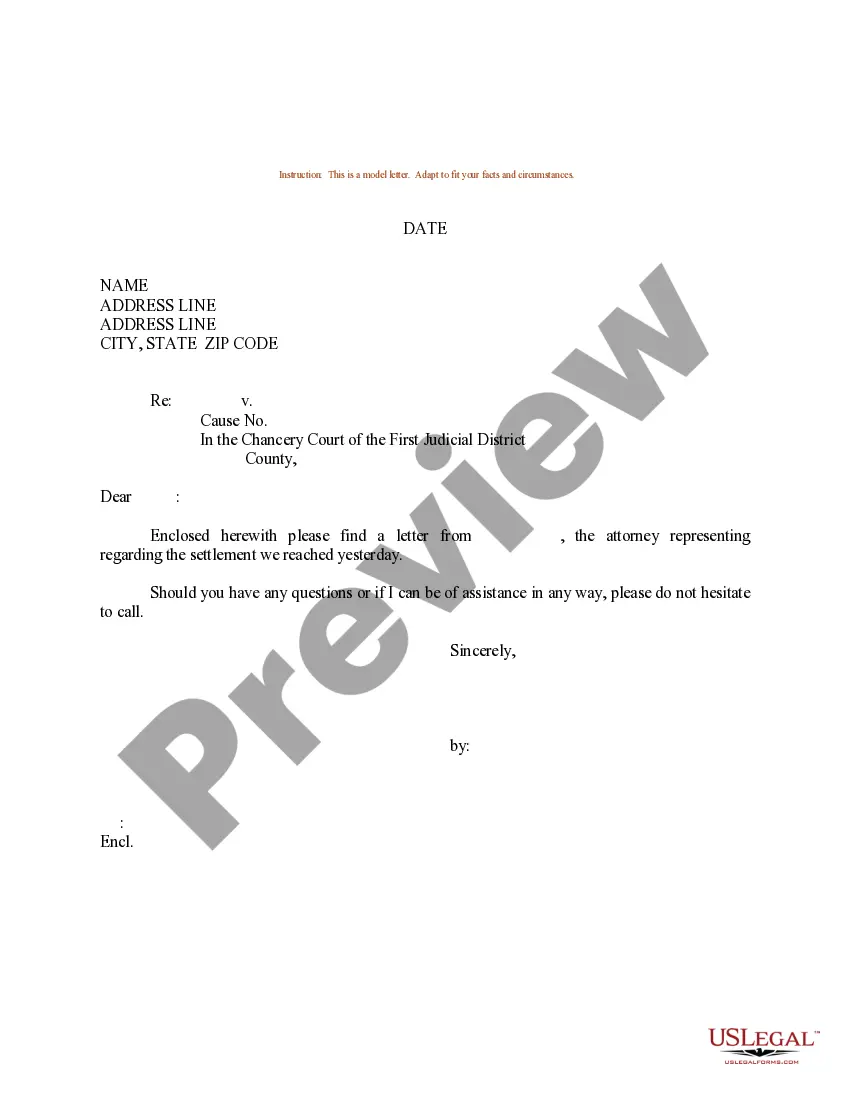

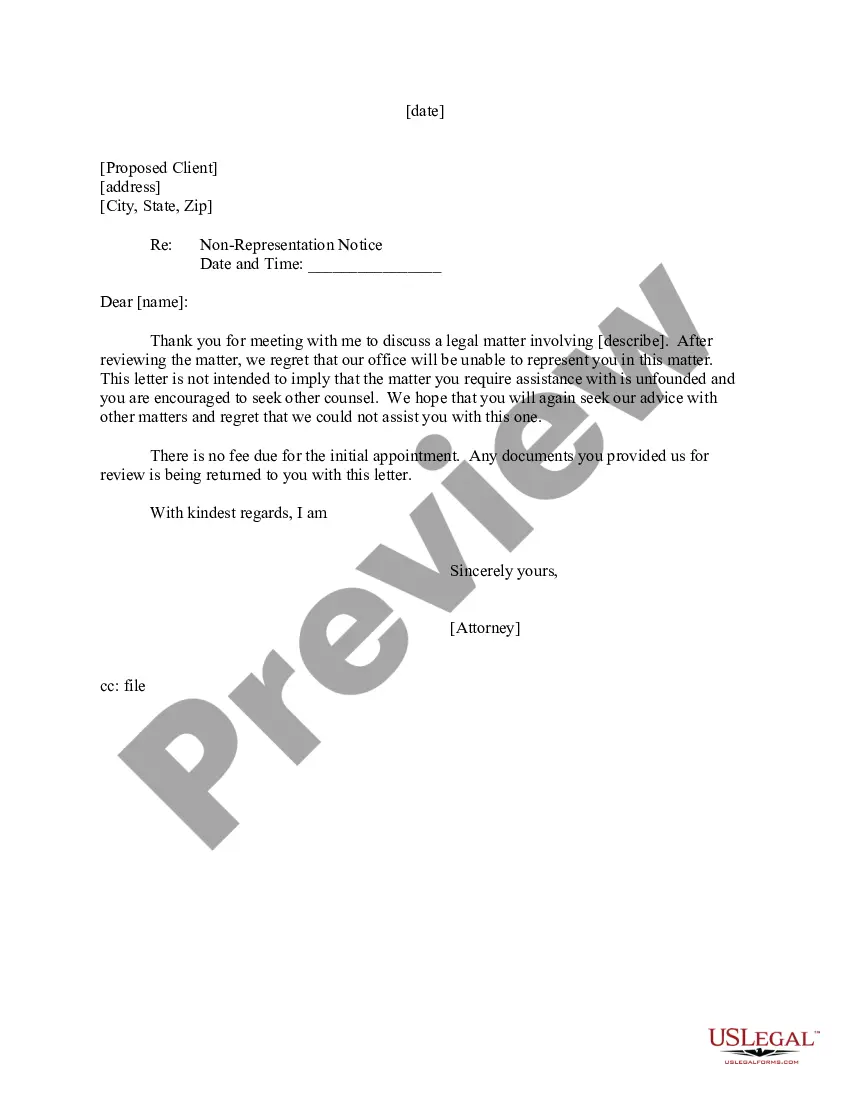

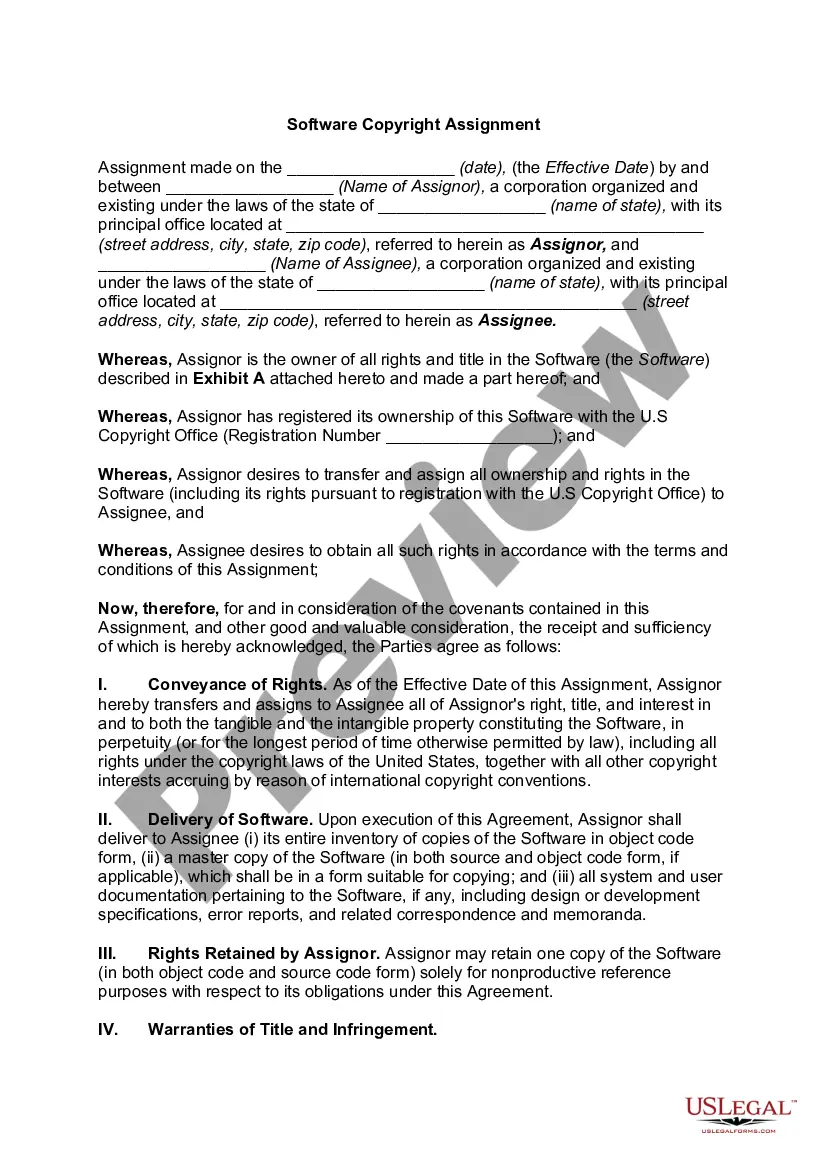

How to fill out Sample Letter To Proposed Client - Non-Representation Sample Letter?
Whether for commercial reasons or for personal issues, everyone must confront legal challenges at some point in their lives.
Filling out legal paperwork requires meticulous focus, starting with selecting the appropriate form template.
With a comprehensive US Legal Forms catalog available, you don’t have to waste time searching for the correct template across the web. Utilize the library’s intuitive navigation to find the suitable template for any situation.
- Locate the template you require by using the search bar or catalog browsing.
- Review the form’s details to confirm it aligns with your situation, state, and area.
- Click on the form’s preview to view it.
- If it is the wrong document, return to the search tool to find the No Representation Without sample you need.
- Download the file when it meets your specifications.
- If you already possess a US Legal Forms account, click Log in to retrieve previously saved documents in My documents.
- If you do not have an account yet, you can acquire the form by clicking Buy now.
- Select the suitable pricing option.
- Fill out the account registration form.
- Choose your payment method: you can use a credit card or PayPal account.
- Select the document format you prefer and download the No Representation Without.
- Once it is downloaded, you can complete the form using editing software or print it and finish it manually.
Form popularity
FAQ
Colonists shouted the phrase 'no taxation without representation' in response to unfair tax laws implemented by the British government. This protest gained momentum around the mid-18th century, particularly during events like the Stamp Act Congress in 1765. They sought to express their frustration over being taxed without having any representatives in Parliament. This phrase became a rallying cry that ultimately contributed to the American Revolution.
In short, many colonists believed that as they were not represented in the distant British parliament, any taxes it imposed on the colonists (such as the Stamp Act and the Townshend Acts) were unconstitutional and were a denial of the colonists' rights as Englishmen.
In short, many colonists believed that as they were not represented in the distant British parliament, any taxes it imposed on the colonists (such as the Stamp Act and the Townshend Acts) were unconstitutional and were a denial of the colonists' rights as Englishmen.
Perhaps no phrase is used more to describe the grievances of the colonists in the lead up to the American Revolution than ?No taxation without representation!? While the exact phrase did not appear until 1768, the principle of having consent from the people on issues of taxation can be traced all the way back to the ...
The Stamp Act Congress met on this day in New York in 1765, a meeting that led nine Colonies to declare the English Crown had no right to tax Americans who lacked representation in British Parliament.
Colonial assemblies denounced the law, claiming the tax was illegal on the grounds that they had no representation in Parliament. Colonists were likewise furious at being denied the right to a trial by jury.