Sample Letter Subpoena Withdrawing
Description
Get your form ready online
Our built-in tools help you complete, sign, share, and store your documents in one place.
Make edits, fill in missing information, and update formatting in US Legal Forms—just like you would in MS Word.
Download a copy, print it, send it by email, or mail it via USPS—whatever works best for your next step.
Sign and collect signatures with our SignNow integration. Send to multiple recipients, set reminders, and more. Go Premium to unlock E-Sign.
If this form requires notarization, complete it online through a secure video call—no need to meet a notary in person or wait for an appointment.
We protect your documents and personal data by following strict security and privacy standards.

Make edits, fill in missing information, and update formatting in US Legal Forms—just like you would in MS Word.

Download a copy, print it, send it by email, or mail it via USPS—whatever works best for your next step.

Sign and collect signatures with our SignNow integration. Send to multiple recipients, set reminders, and more. Go Premium to unlock E-Sign.

If this form requires notarization, complete it online through a secure video call—no need to meet a notary in person or wait for an appointment.

We protect your documents and personal data by following strict security and privacy standards.
Looking for another form?
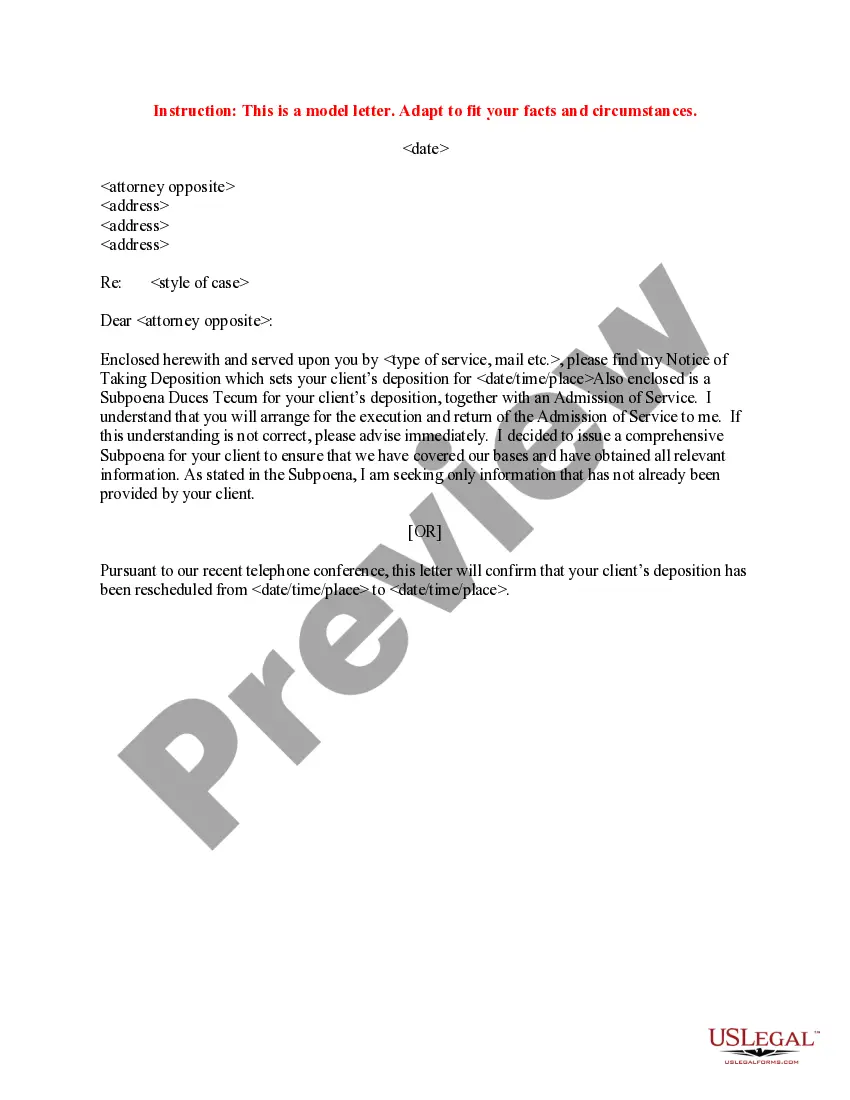
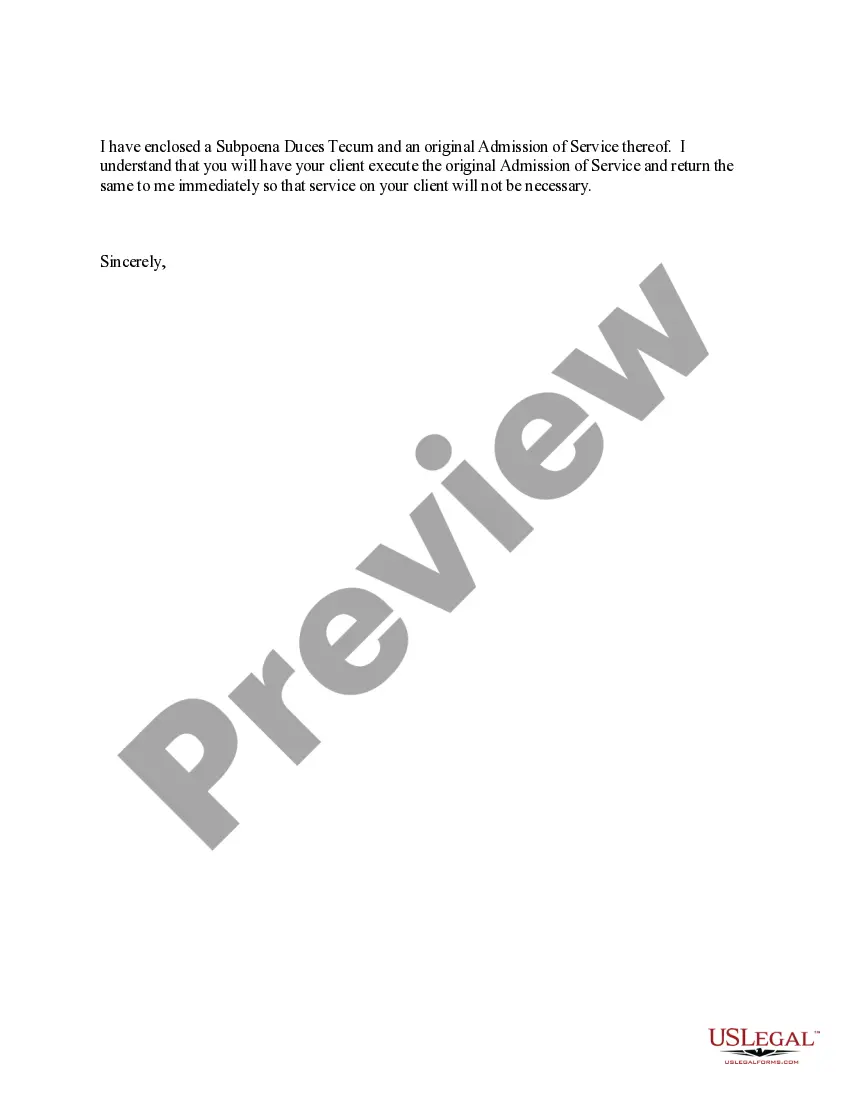
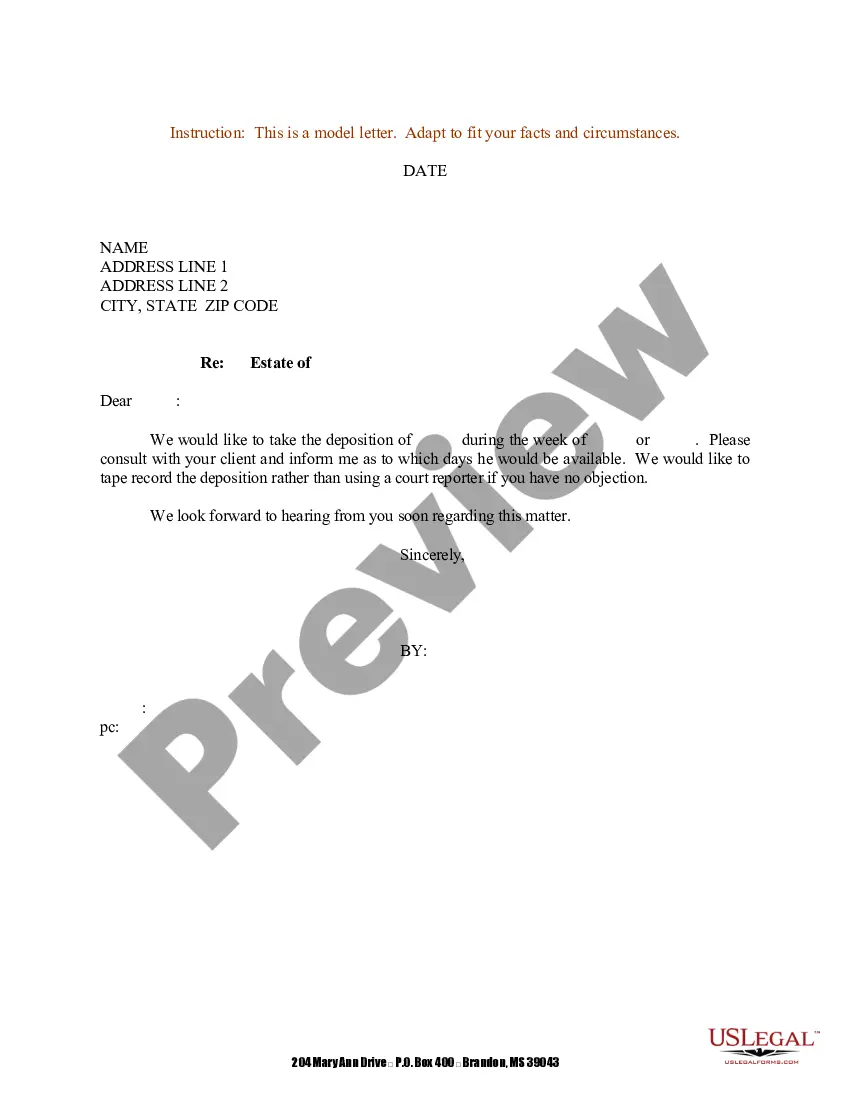
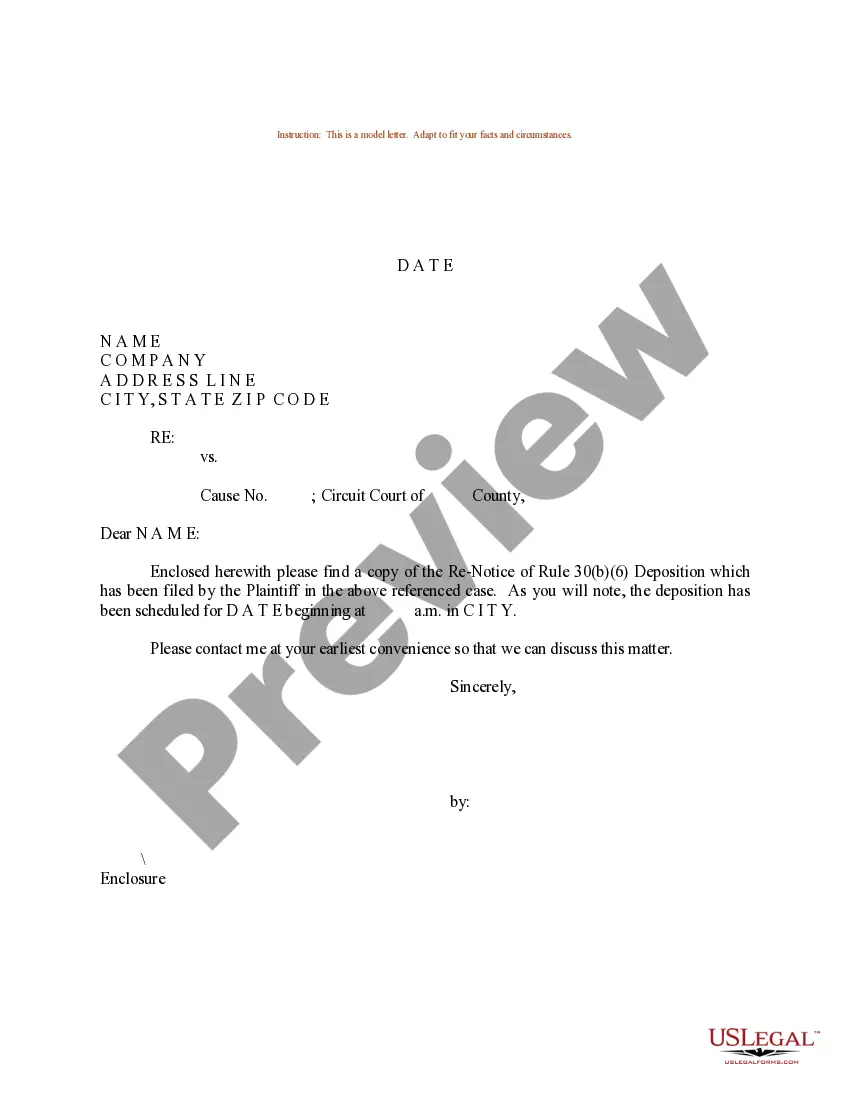
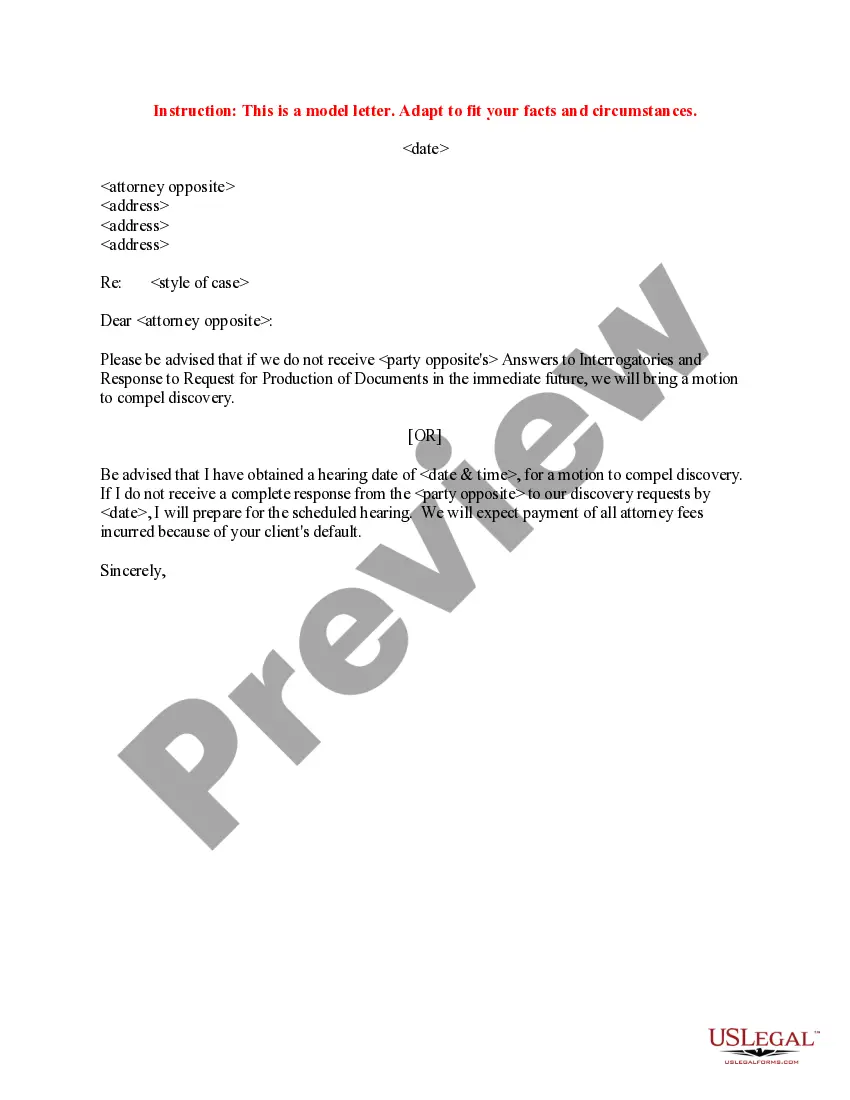
How to fill out Discovery - Sample Letter To Opposing Counsel Regarding Deposition And Subpoena Duces Tecum?
It’s widely acknowledged that you cannot instantly become a legal authority, nor can you learn to swiftly create a Sample Letter Subpoena Withdrawing without possessing a unique skill set.
Drafting legal documents is a labor-intensive process that demands specific training and expertise. So why not entrust the crafting of the Sample Letter Subpoena Withdrawing to the professionals.
With US Legal Forms, one of the most extensive repositories of legal templates, you can find everything from court documents to samples for internal corporate communication. We recognize how vital compliance with federal and state regulations is. That’s why, on our platform, all documents are tailored to specific locations and are current.
- Get started with our platform and obtain the form you require in just a few minutes.
- Locate the document you seek by utilizing the search bar at the top of the webpage.
- Preview it (if this option is available) and review the accompanying description to determine if the Sample Letter Subpoena Withdrawing fits your needs.
- If you require a different template, begin your search again.
- Sign up for a free account and select a subscription plan to purchase the template.
Form popularity
FAQ
The grounds for quashing a subpoena include lack of relevance, overbreadth, burden on the recipient, or violation of privacy rights. Additionally, a subpoena may be deemed unreasonable if it requires sensitive information without sufficient justification. Understanding these grounds can be crucial, and a sample letter subpoena withdrawing can aid in drafting a strong motion.
Filling out a subpoena for records involves providing specific details such as the names of the parties involved, the documents requested, and the relevant case information. Always ensure you include clear instructions on how the recipient should respond. If you need help, consider using a sample letter subpoena withdrawing to provide structure to your document.
When you receive a subpoena but have no records to produce, it is essential to respond formally. You can send a letter stating the absence of records, while also mentioning your compliance with the subpoena. Including a sample letter subpoena withdrawing can help you clearly communicate your position to the requesting party.
To get a subpoena squashed, you typically need to file a motion with the court. This motion should detail your reasons for wanting to quash the subpoena, focusing on aspects like relevance, scope, or the burden it imposes. If you are unsure how to proceed, a sample letter subpoena withdrawing can provide a template to guide your written request effectively.
People file a motion to quash a subpoena for various reasons. It might be that the subpoena is overly broad, seeks irrelevant information, or is burdensome in nature. By filing a motion, you can challenge the legality or reasonableness of the request. For those needing assistance, using a sample letter subpoena withdrawing can streamline the process.
Getting around a subpoena requires a thoughtful approach. You might explore options such as negotiating with the party who issued the subpoena or seeking a protective order from the court. If you face challenges, drafting a sample letter subpoena withdrawing can help articulate your concerns. It is vital to understand your legal rights and consider consulting with an attorney to find the best course of action.
To withdraw a subpoena, you typically file a motion with the court and submit a supporting document, such as a sample letter subpoena withdrawing. This letter should outline your reasons for withdrawal, along with any supporting evidence. After filing, ensure you follow up to confirm the court's acknowledgment of the withdrawal. Seeking assistance from legal experts can streamline this process and enhance your chances of success.
Valid reasons include lack of relevance, undue burden, or a violation of legal privileges. When you consider these factors, a sample letter subpoena withdrawing can serve as a helpful tool to explain your position to the court. It is crucial to back your claims with substantial evidence or legal arguments for a successful withdrawal. Remember, each case is unique, so professional guidance is often beneficial.
There are ways to challenge a subpoena, but it often requires valid legal grounds. You might argue that the subpoena is overly broad or burdensome, or that it infringes on privileged information. Additionally, using a sample letter subpoena withdrawing can clearly articulate your objections to the court. However, consulting a legal expert can provide the best strategies to address your situation effectively.
Yes, a subpoena can be withdrawn. The process generally involves filing a motion with the court that issued the subpoena. Furthermore, a sample letter subpoena withdrawing can simplify the task by providing a formal document that states the reason for withdrawal. It is essential to follow the specific procedures of the court to ensure the subpoena is effectively nullified.