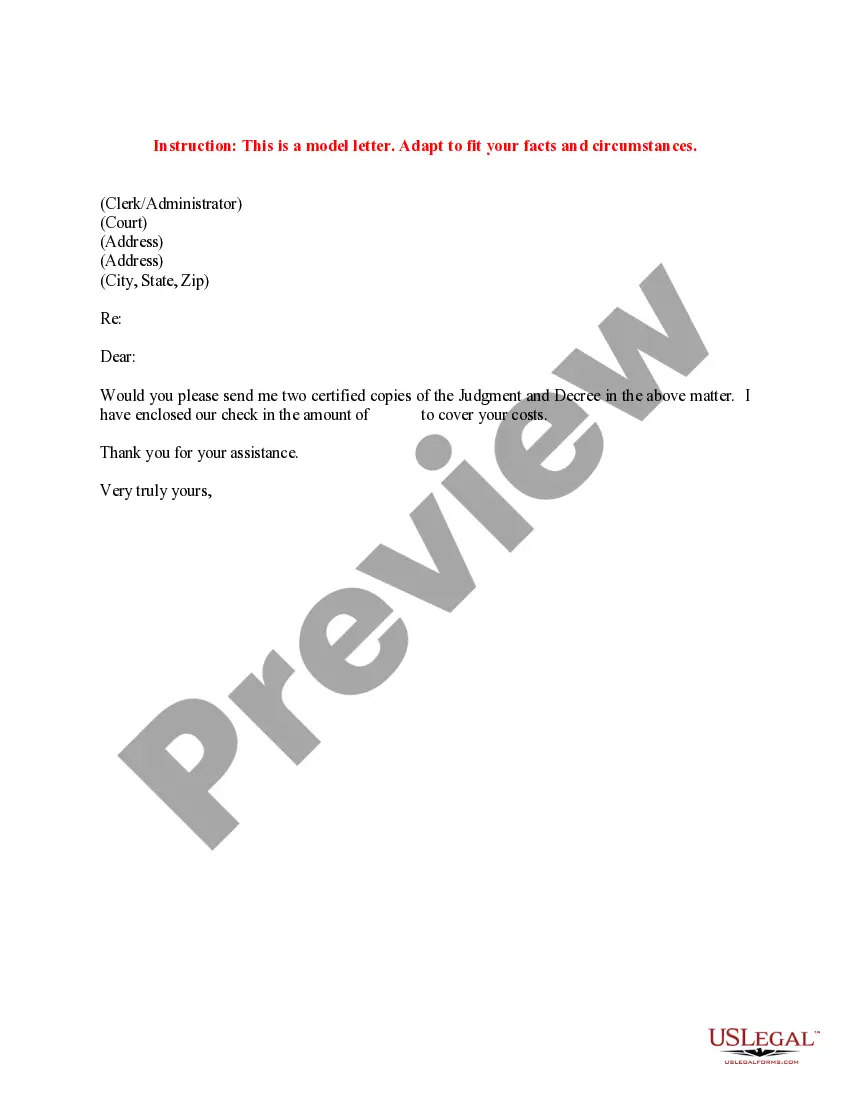
Certified Letter For Bank
Description


Get your form ready online
Our built-in tools help you complete, sign, share, and store your documents in one place.
Make edits, fill in missing information, and update formatting in US Legal Forms—just like you would in MS Word.
Download a copy, print it, send it by email, or mail it via USPS—whatever works best for your next step.
Sign and collect signatures with our SignNow integration. Send to multiple recipients, set reminders, and more. Go Premium to unlock E-Sign.
If this form requires notarization, complete it online through a secure video call—no need to meet a notary in person or wait for an appointment.
We protect your documents and personal data by following strict security and privacy standards.

Make edits, fill in missing information, and update formatting in US Legal Forms—just like you would in MS Word.

Download a copy, print it, send it by email, or mail it via USPS—whatever works best for your next step.

Sign and collect signatures with our SignNow integration. Send to multiple recipients, set reminders, and more. Go Premium to unlock E-Sign.

If this form requires notarization, complete it online through a secure video call—no need to meet a notary in person or wait for an appointment.

We protect your documents and personal data by following strict security and privacy standards.
Looking for another form?








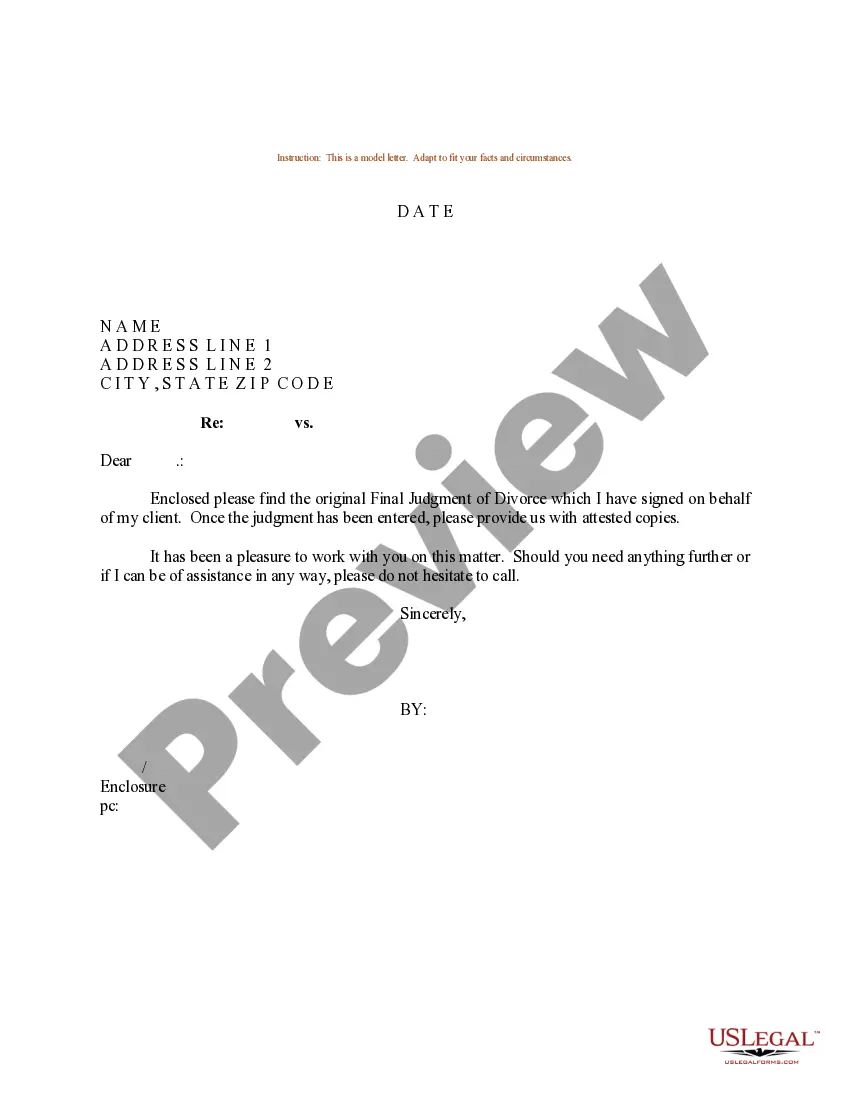
How to fill out Sample Letter Requesting Certified Copies Of Judgment And Decree?
Whether for business purposes or for individual affairs, everyone has to deal with legal situations sooner or later in their life. Filling out legal paperwork requires careful attention, starting with picking the right form template. For example, if you select a wrong edition of the Certified Letter For Bank, it will be rejected when you submit it. It is therefore crucial to get a dependable source of legal papers like US Legal Forms.
If you need to get a Certified Letter For Bank template, follow these simple steps:
- Get the sample you need by using the search field or catalog navigation.
- Examine the form’s description to make sure it fits your case, state, and county.
- Click on the form’s preview to view it.
- If it is the wrong form, go back to the search function to locate the Certified Letter For Bank sample you need.
- Get the template when it matches your needs.
- If you have a US Legal Forms account, just click Log in to gain access to previously saved documents in My Forms.
- In the event you don’t have an account yet, you can obtain the form by clicking Buy now.
- Pick the proper pricing option.
- Finish the account registration form.
- Select your transaction method: you can use a bank card or PayPal account.
- Pick the file format you want and download the Certified Letter For Bank.
- When it is saved, you are able to fill out the form by using editing applications or print it and complete it manually.
With a large US Legal Forms catalog at hand, you never need to spend time looking for the right sample across the internet. Take advantage of the library’s straightforward navigation to get the correct form for any situation.
Form popularity
FAQ
Fill in the Certified Mail® Receipt (Form PS 3800) and attach it to the front of your envelope. Then pay for the postage and Certified Mail fees at the counter. The clerk will stamp the PS 3800 form and give a portion back to you as Proof of Acceptance.
Financial institutions also commonly use Certified Mail for important communication with their customers. It could be a bank notifying you about changes in your account terms. It could also be a mortgage lender providing updates on your loan application.
How To Send Certified Mail - YouTube YouTube Start of suggested clip End of suggested clip Make sure to leave a three and a half inch space of a top right corner for postage to be placed.MoreMake sure to leave a three and a half inch space of a top right corner for postage to be placed. Fill out the certified mail form with a delivery address.
Get your letter ready, printed and in an envelope. A certified letter should be formal and professional, and it should clearly state the purpose of the letter and the action that you expect the recipient to take. Invoices, demand letters, and other form type letters work very well for certified mail.
Hear this out loud PauseYour name, address, and contact information. The recipient's name, address, and contact information. The date. A subject line that clearly states the purpose of the letter.