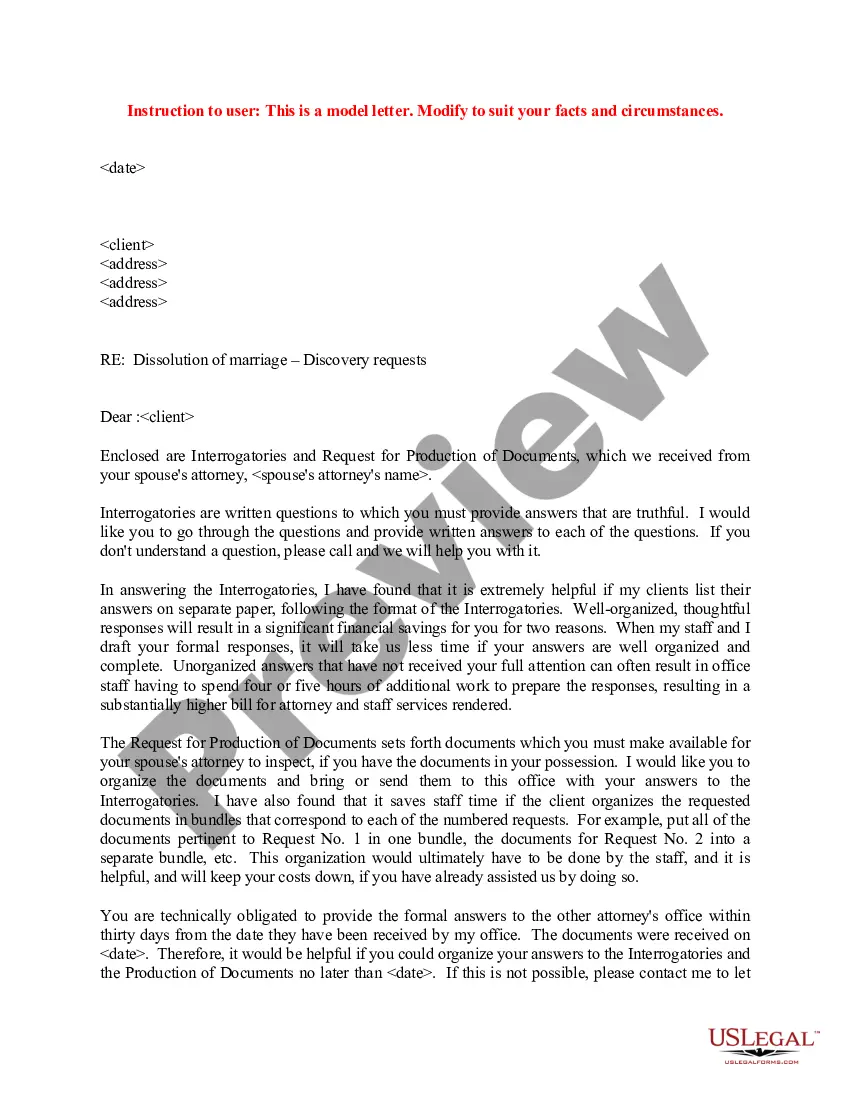
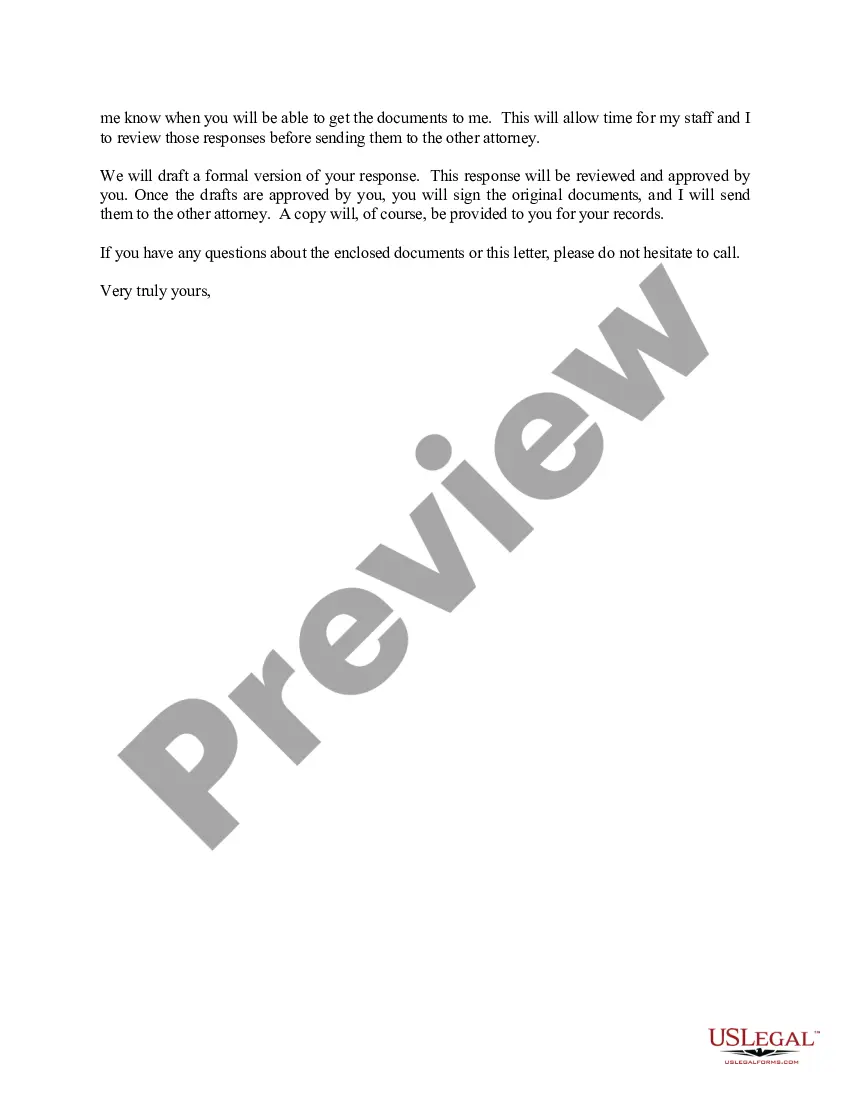
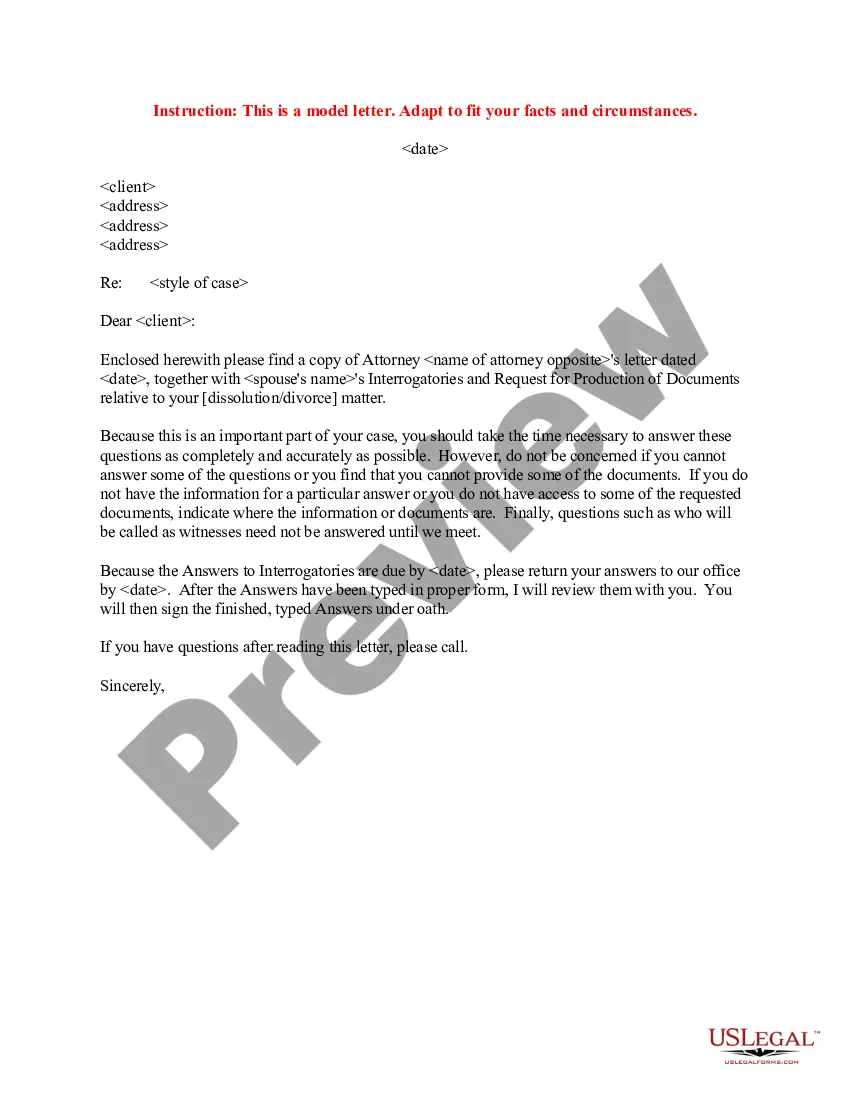
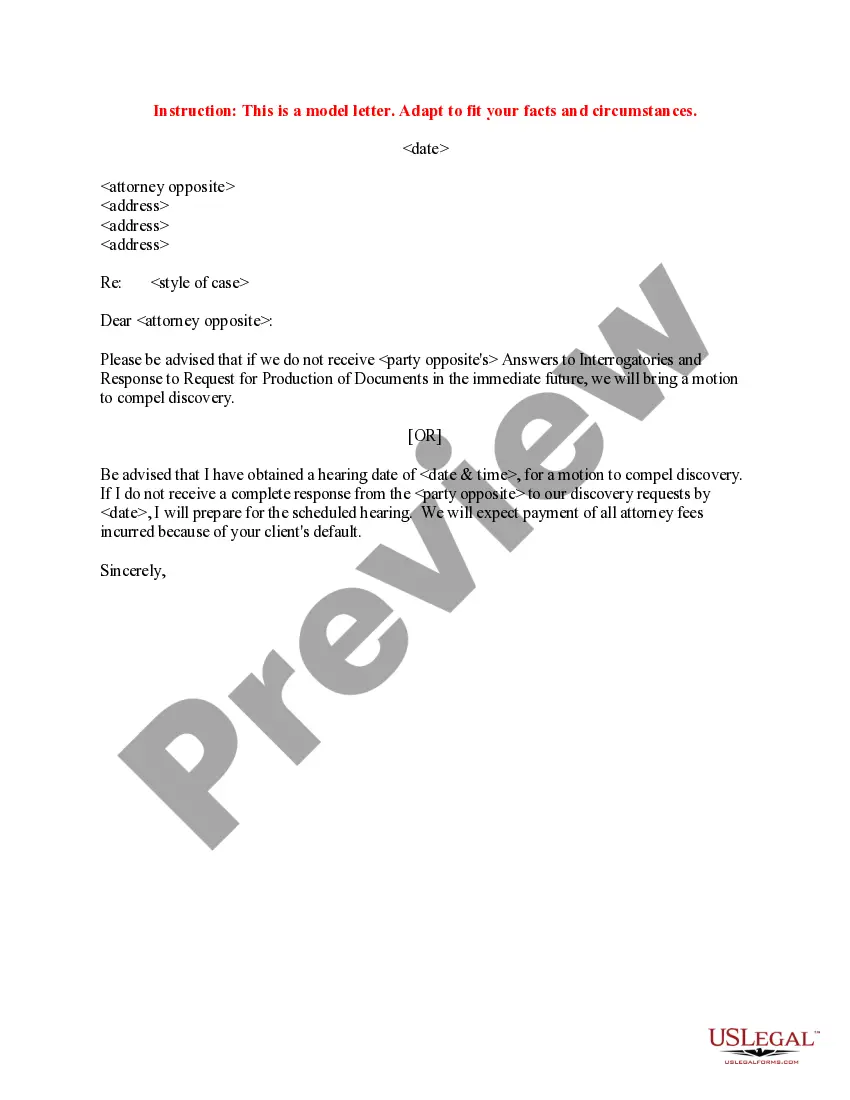
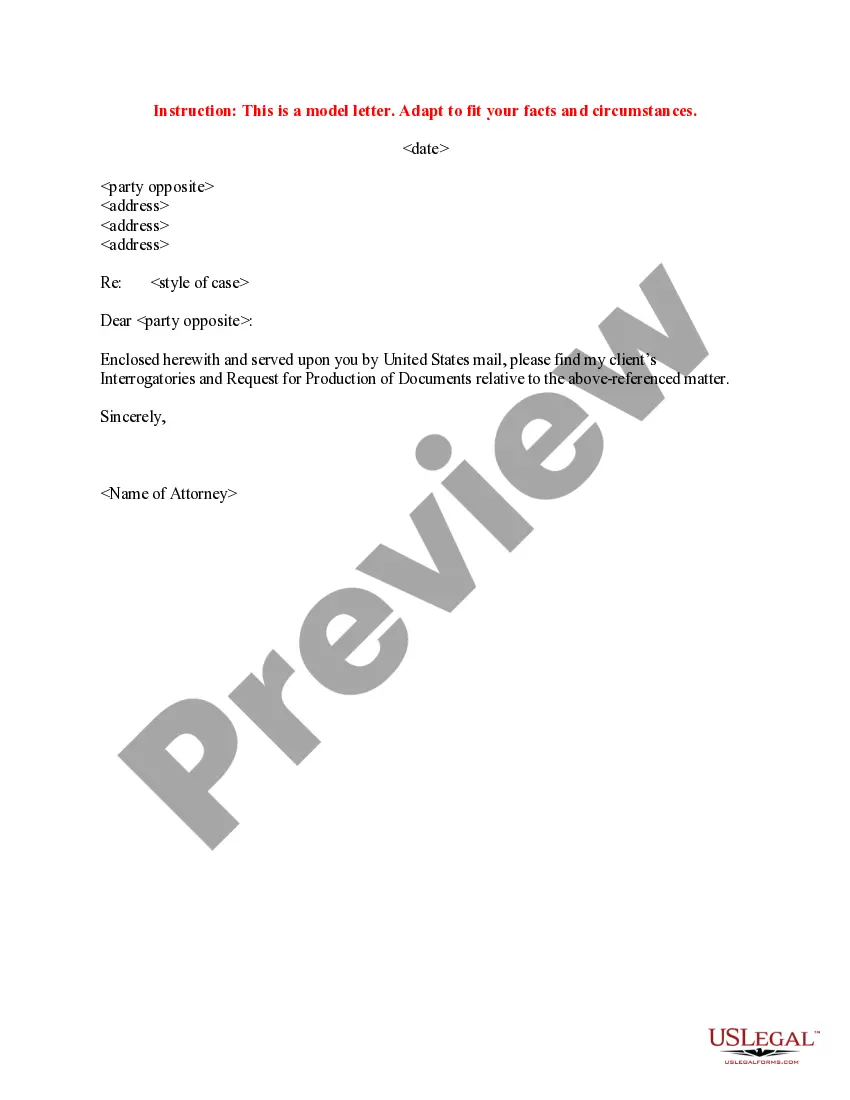
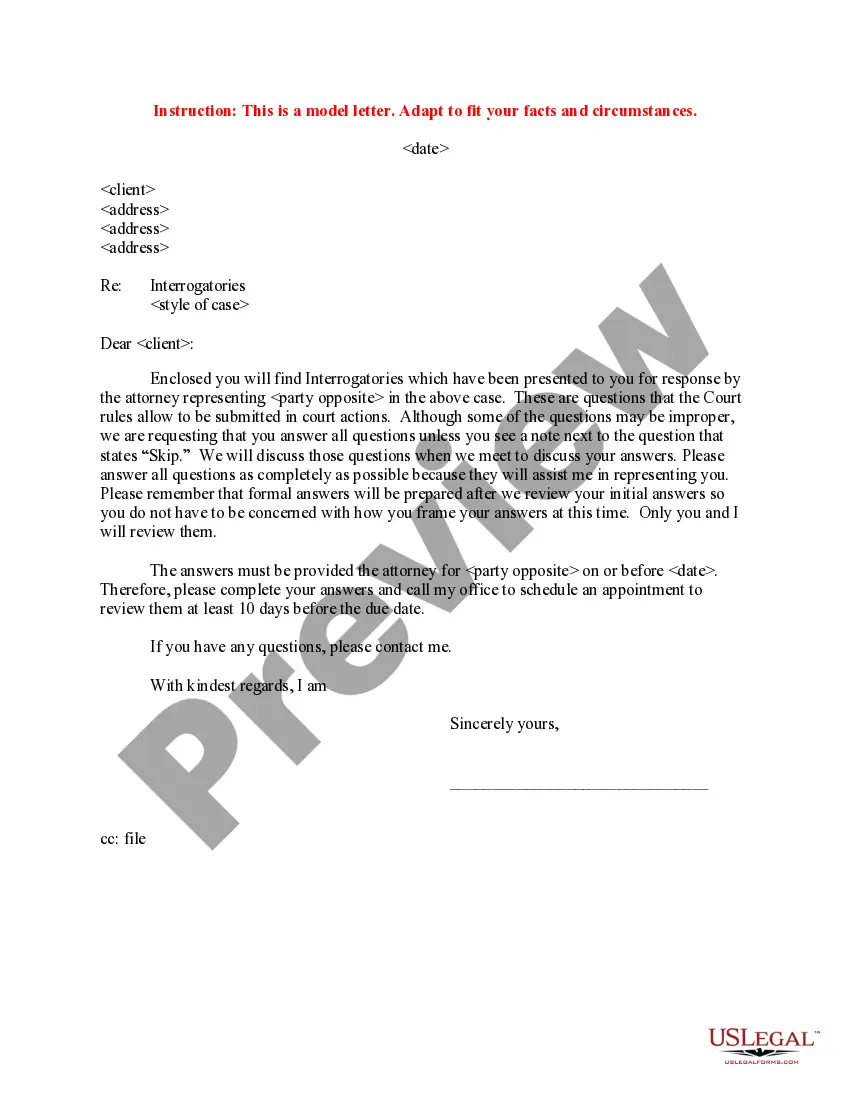
Discovery Request Sample With No Response
Description

Get your form ready online
Our built-in tools help you complete, sign, share, and store your documents in one place.
Make edits, fill in missing information, and update formatting in US Legal Forms—just like you would in MS Word.
Download a copy, print it, send it by email, or mail it via USPS—whatever works best for your next step.
Sign and collect signatures with our SignNow integration. Send to multiple recipients, set reminders, and more. Go Premium to unlock E-Sign.
If this form requires notarization, complete it online through a secure video call—no need to meet a notary in person or wait for an appointment.
We protect your documents and personal data by following strict security and privacy standards.

Make edits, fill in missing information, and update formatting in US Legal Forms—just like you would in MS Word.

Download a copy, print it, send it by email, or mail it via USPS—whatever works best for your next step.

Sign and collect signatures with our SignNow integration. Send to multiple recipients, set reminders, and more. Go Premium to unlock E-Sign.

If this form requires notarization, complete it online through a secure video call—no need to meet a notary in person or wait for an appointment.

We protect your documents and personal data by following strict security and privacy standards.
Looking for another form?



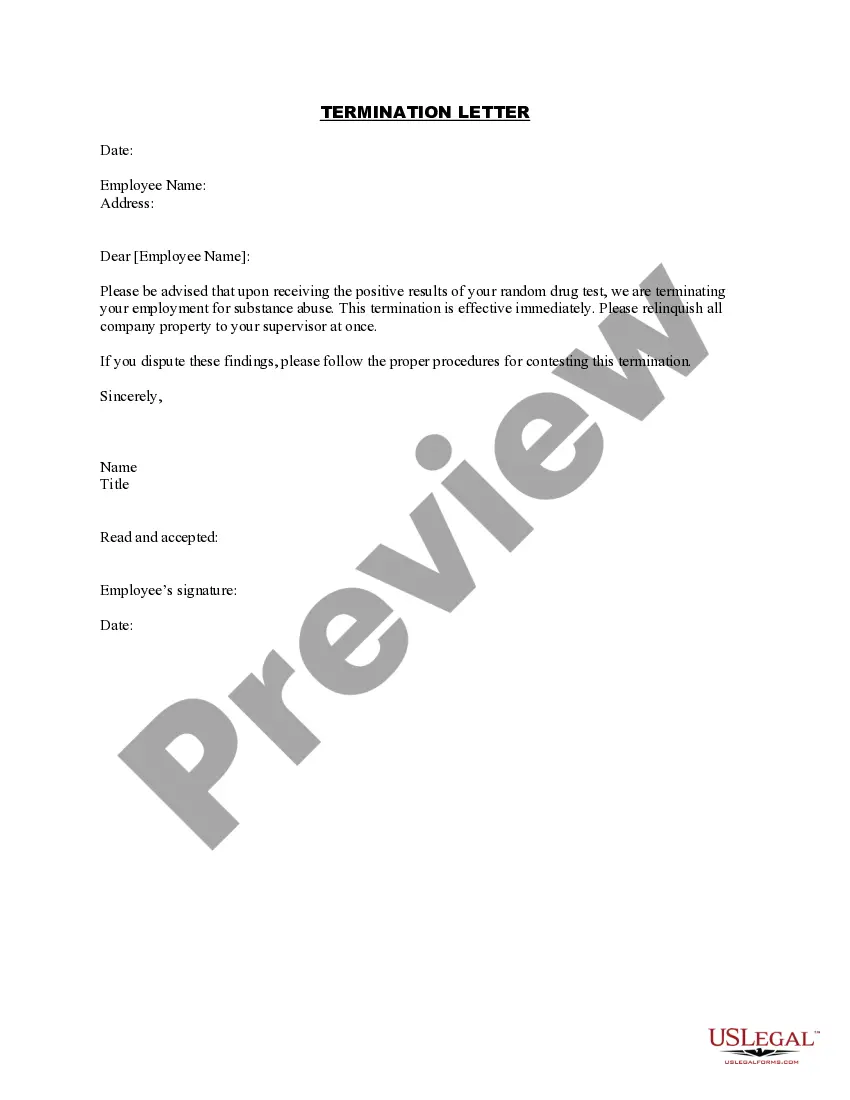



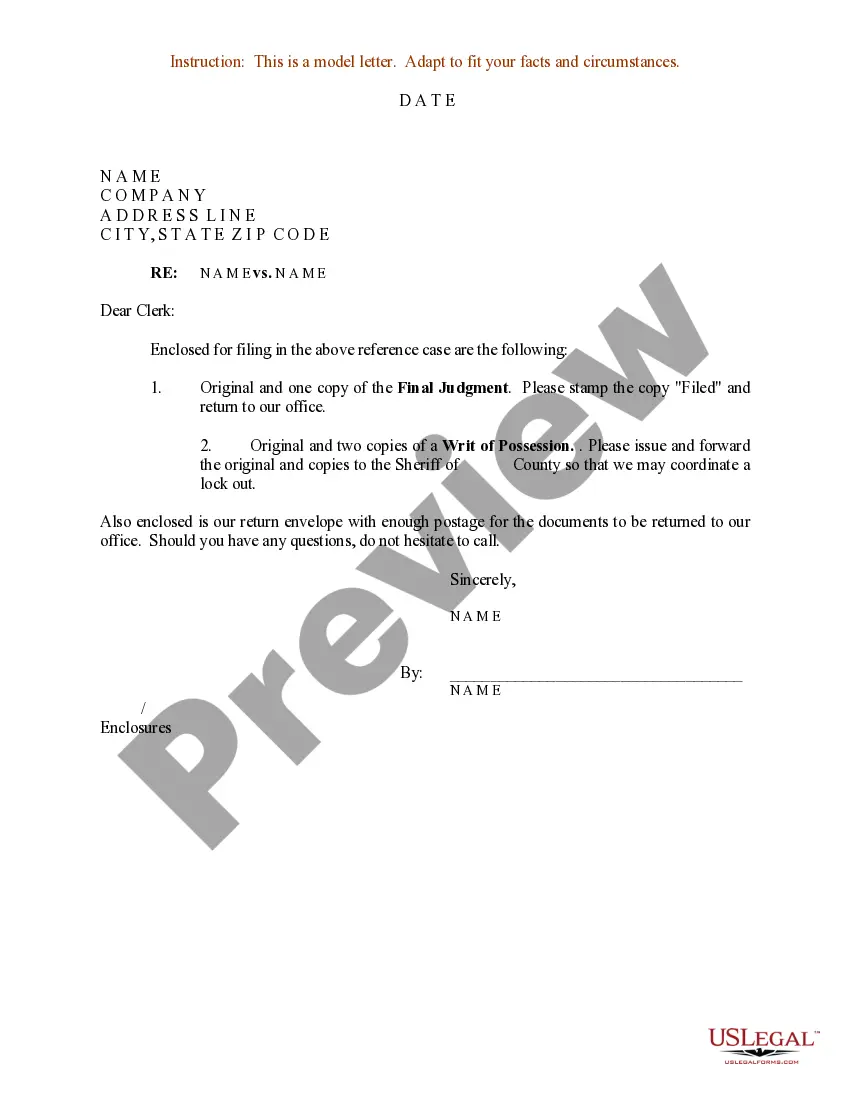

How to fill out Sample Letter To Client Instructing On Answering Discovery?
It’s clear that you cannot become a legal expert instantly, nor can you determine how to swiftly prepare a Discovery Request Sample With No Response without possessing a specialized background.
Crafting legal documents is a lengthy process that necessitates specific training and expertise.
So why not entrust the development of the Discovery Request Sample With No Response to the experts.
Preview it (if this option is available) and review the accompanying description to ascertain if the Discovery Request Sample With No Response is what you are seeking.
If you need a different template, restart your search. Set up a free account and choose a subscription plan to purchase the template. Select Buy now. Once the payment is finalized, you can access the Discovery Request Sample With No Response, complete it, print it, and send or mail it to the relevant individuals or organizations.
- With US Legal Forms, one of the largest legal document repositories, you can find everything from court papers to templates for internal business communication.
- We recognize how critical compliance and adherence to federal and local regulations are.
- That’s why, on our site, all forms are region-specific and current.
- Here’s how you can begin with our website and obtain the document you need in just minutes.
- Discover the form you require using the search bar at the top of the page.
Form popularity
FAQ
Many types of discovery exist, including: Interrogatories. Requests for Admission. Production of Documents. Property Inspection. Physical and Mental Exams. Depositions.
Steps Of The Discovery Process. There are four key actions in the discovery process which include interrogatories, request for documents, request for admissions, and depositions.
If you ignore the discovery requests, the party who served the request can file a motion to compel the court. The motion will ask the court to order you to comply with the discovery requests.
Discovery is the formal process by which the parties to a case in court exchange information about the case. This includes information about the witnesses and evidence to be presented at trial. Its purpose is to make the parties aware of the evidence which may be presented at trial.
Follow these steps to begin discovery in justice court: Step 1: Prepare and exchange your initial disclosures. Within thirty days after the defendant files his answer, the plaintiff and defendant must exchange: ... Step 2: File the early case conference report. ... Step 3: Ask the court to allow more discovery if you want it.