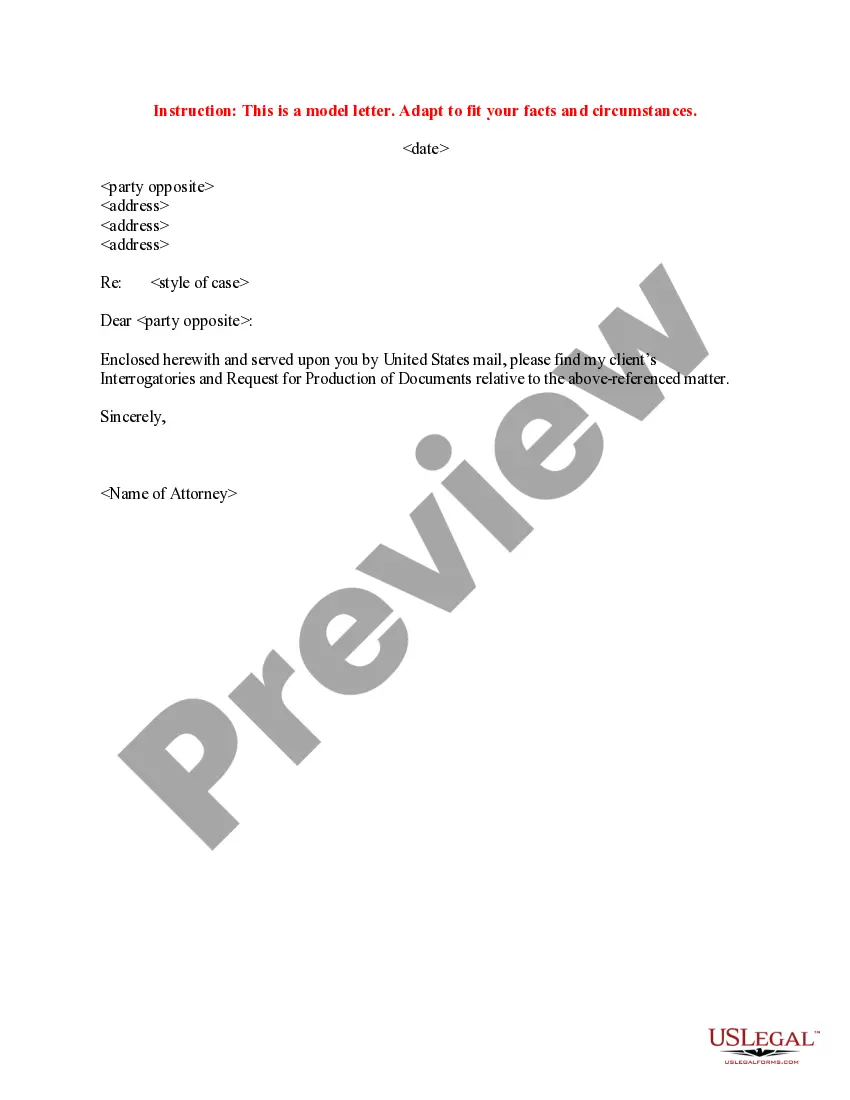
Discovery Letter Sample With Notice Period
Description

Get your form ready online
Our built-in tools help you complete, sign, share, and store your documents in one place.
Make edits, fill in missing information, and update formatting in US Legal Forms—just like you would in MS Word.
Download a copy, print it, send it by email, or mail it via USPS—whatever works best for your next step.
Sign and collect signatures with our SignNow integration. Send to multiple recipients, set reminders, and more. Go Premium to unlock E-Sign.
If this form requires notarization, complete it online through a secure video call—no need to meet a notary in person or wait for an appointment.
We protect your documents and personal data by following strict security and privacy standards.

Make edits, fill in missing information, and update formatting in US Legal Forms—just like you would in MS Word.

Download a copy, print it, send it by email, or mail it via USPS—whatever works best for your next step.

Sign and collect signatures with our SignNow integration. Send to multiple recipients, set reminders, and more. Go Premium to unlock E-Sign.

If this form requires notarization, complete it online through a secure video call—no need to meet a notary in person or wait for an appointment.

We protect your documents and personal data by following strict security and privacy standards.
Looking for another form?


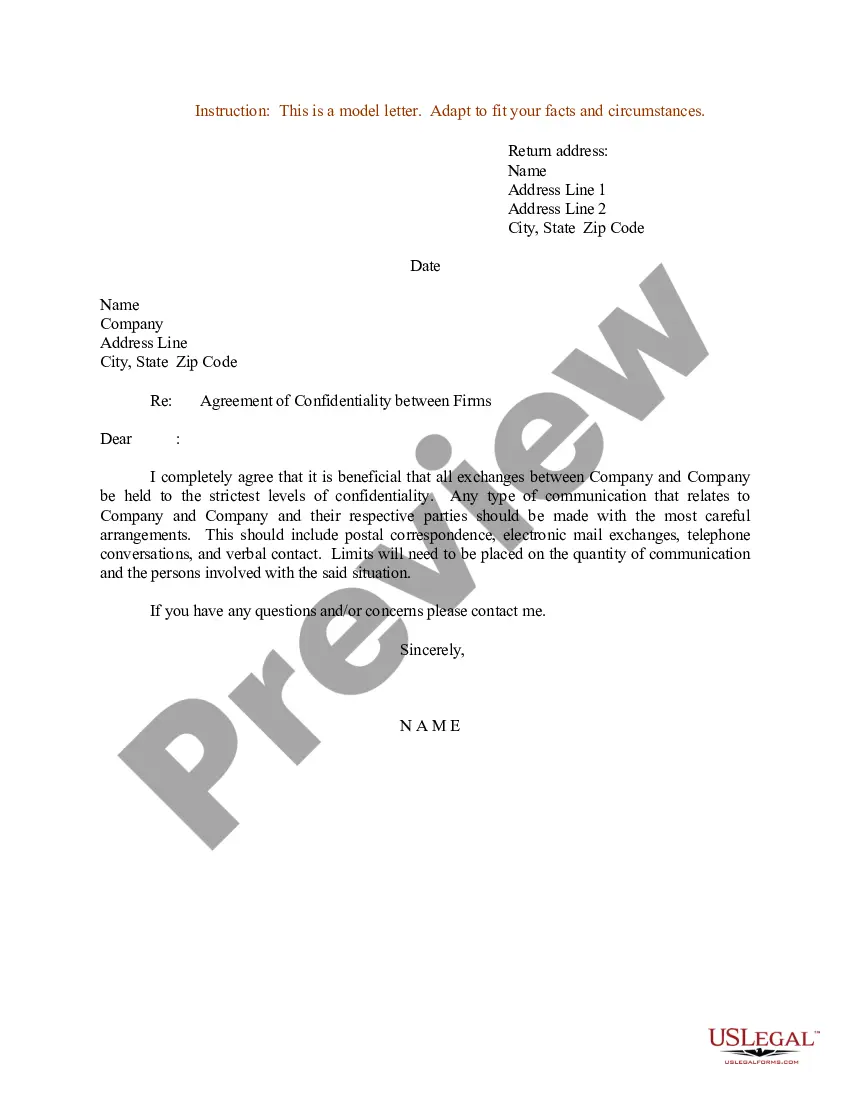





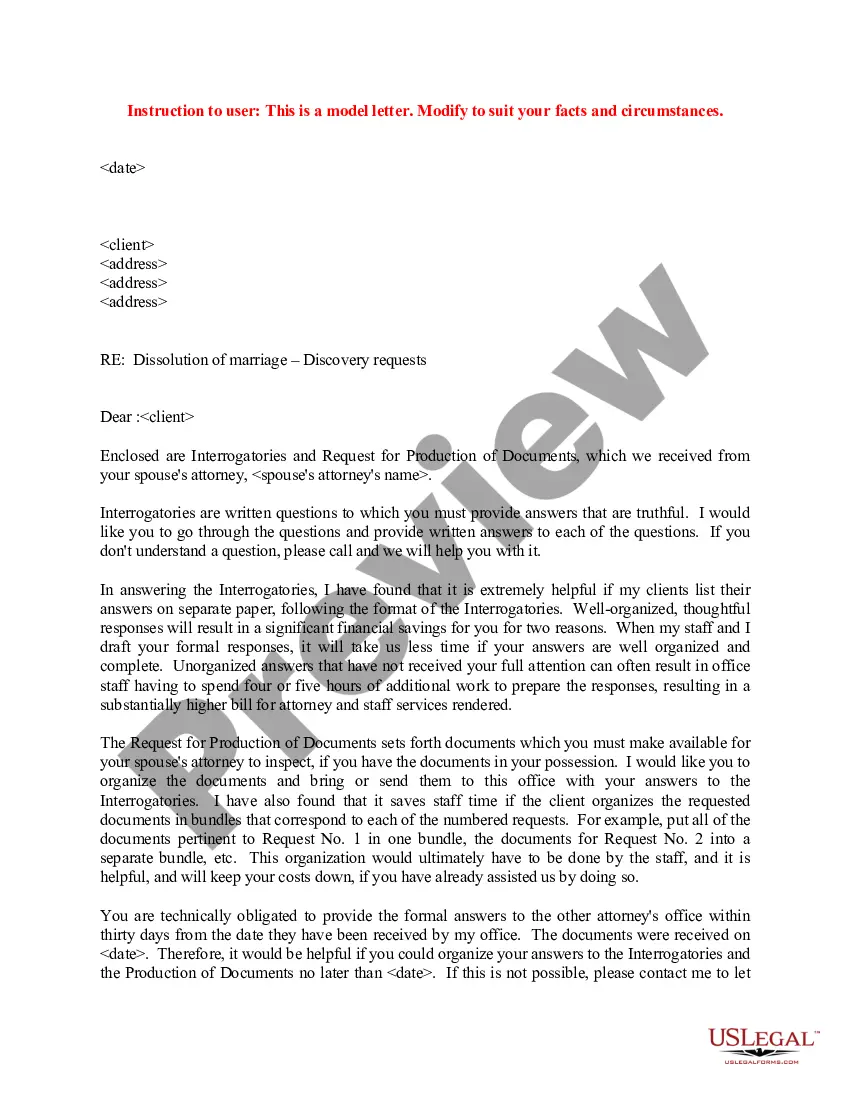
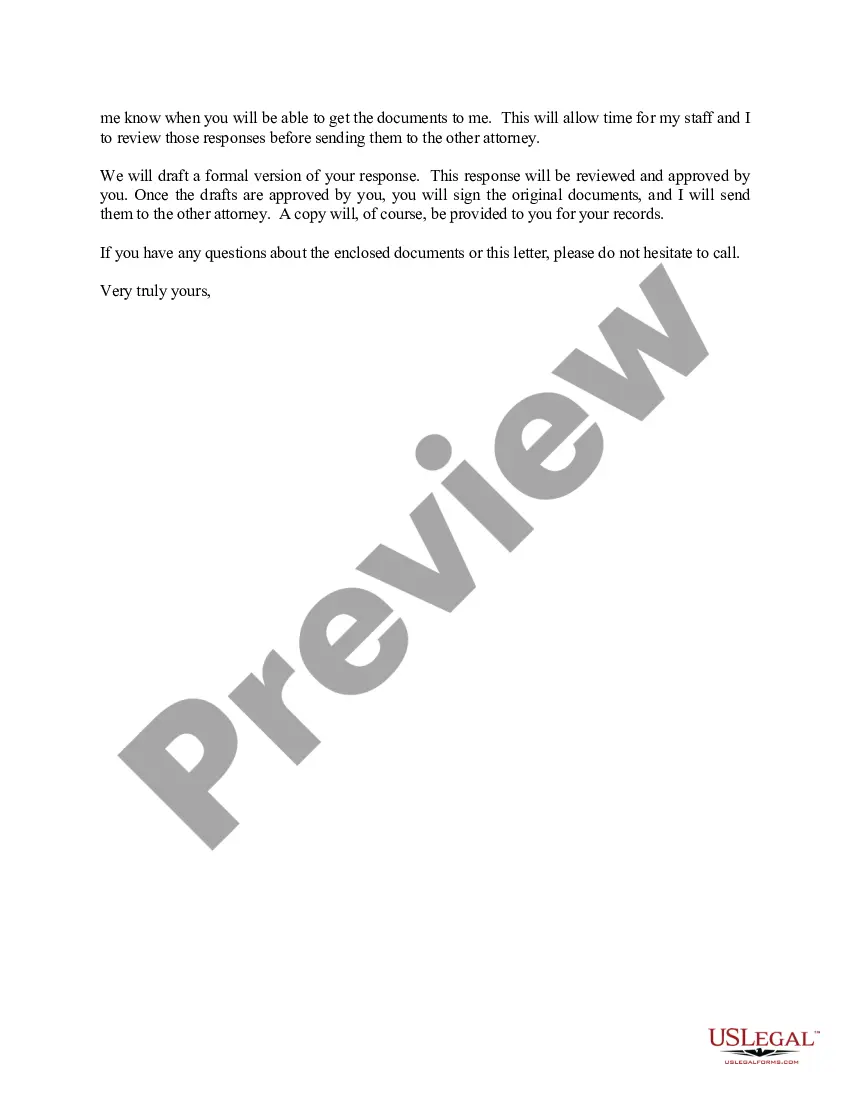
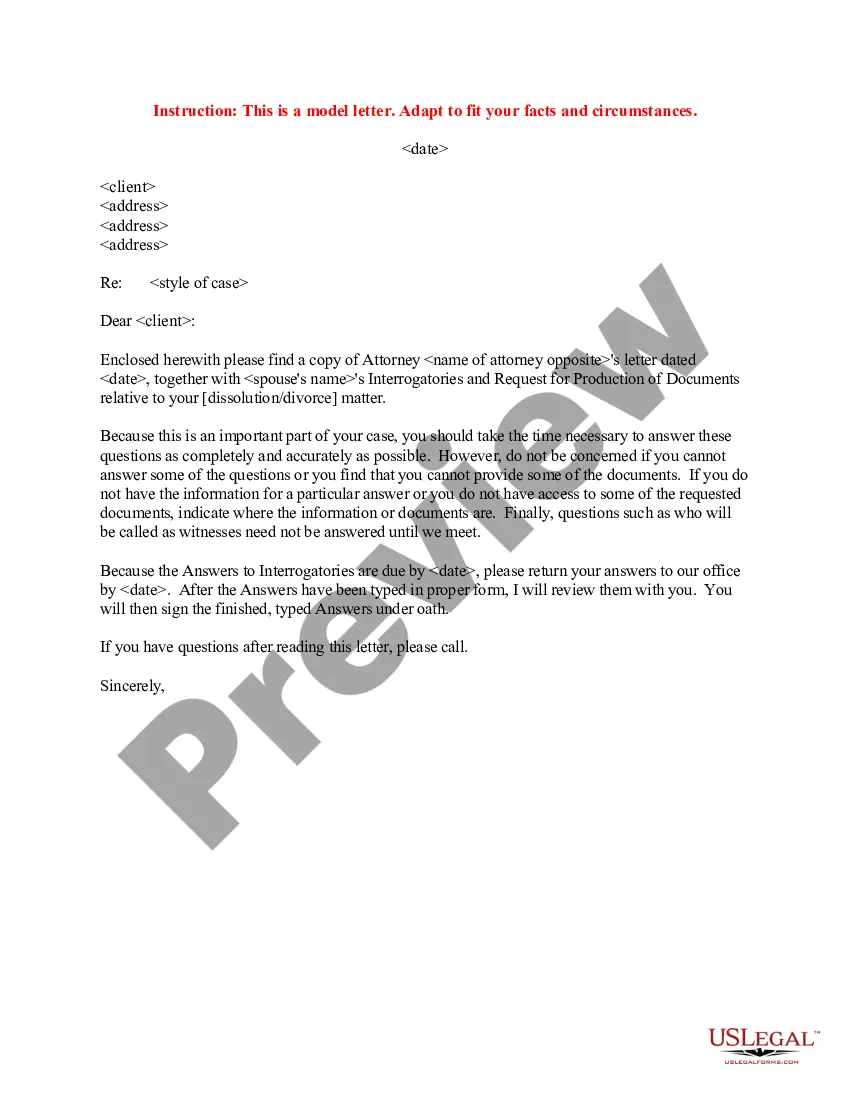
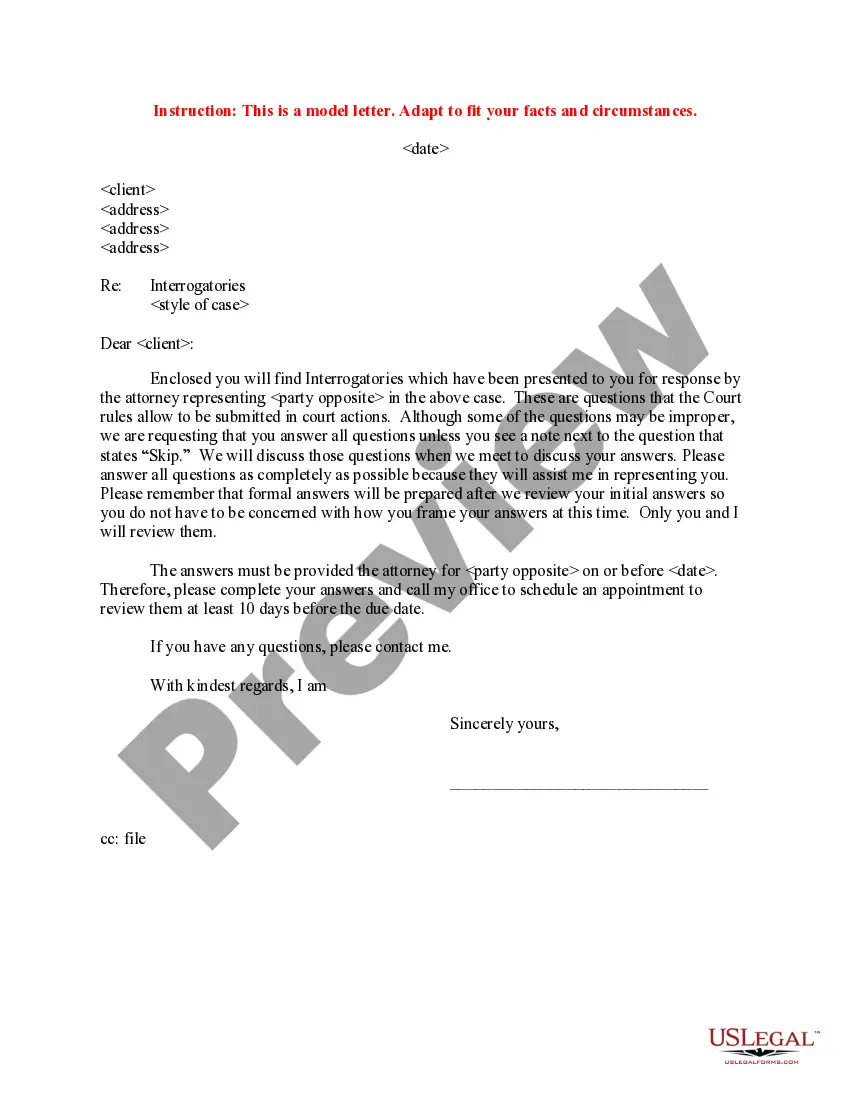
How to fill out Sample Letter To Client Instructing On Answering Discovery?
Locating a reliable venue to acquire the most current and suitable legal templates is part of the challenge of navigating bureaucracy.
Acquiring the correct legal documents requires accuracy and careful consideration, which highlights why it is crucial to source Discovery Letter Sample With Notice Period exclusively from trustworthy providers, such as US Legal Forms.
Once you have the form on your device, you can modify it using the editor or print it to fill it out by hand. Alleviate the burden associated with your legal paperwork. Explore the comprehensive collection of US Legal Forms to find legal templates, verify their suitability for your circumstances, and download them instantly.
- Utilize the catalog navigation or search bar to locate your template.
- Examine the form’s description to determine if it meets the criteria for your state and locality.
- Preview the form, if accessible, to confirm that the template is indeed the one you seek.
- Return to the search and find the appropriate document if the Discovery Letter Sample With Notice Period does not suit your requirements.
- If you are confident about the form’s applicability, proceed to download it.
- If you are an authorized user, click Log in to verify your identity and access your selected templates in My documents.
- If you do not yet possess an account, click Buy now to purchase the form.
- Select the pricing plan that aligns with your preferences.
- Continue with the registration to complete your transaction.
- Finish your purchase by choosing a payment method (credit card or PayPal).
- Choose the document format for downloading Discovery Letter Sample With Notice Period.
Form popularity
FAQ
A discovery response refers to the written reply provided by one party during the discovery phase of a legal proceeding. It includes answers to questions, documents requested, and any objections to the requests made by the opposing party. Using a discovery letter sample with notice period makes it easier to draft this response professionally, ensuring you cover all necessary points and comply with legal requirements. This clarity can significantly impact the case's outcome by fostering transparent communication.
Read and answer the questions Read the question very carefully. Answer only the question that is asked, and avoid the temptation to over-explain your answer. If the question contains several parts, you may break your answer into parts as well. It is also possible that you might object to the question.
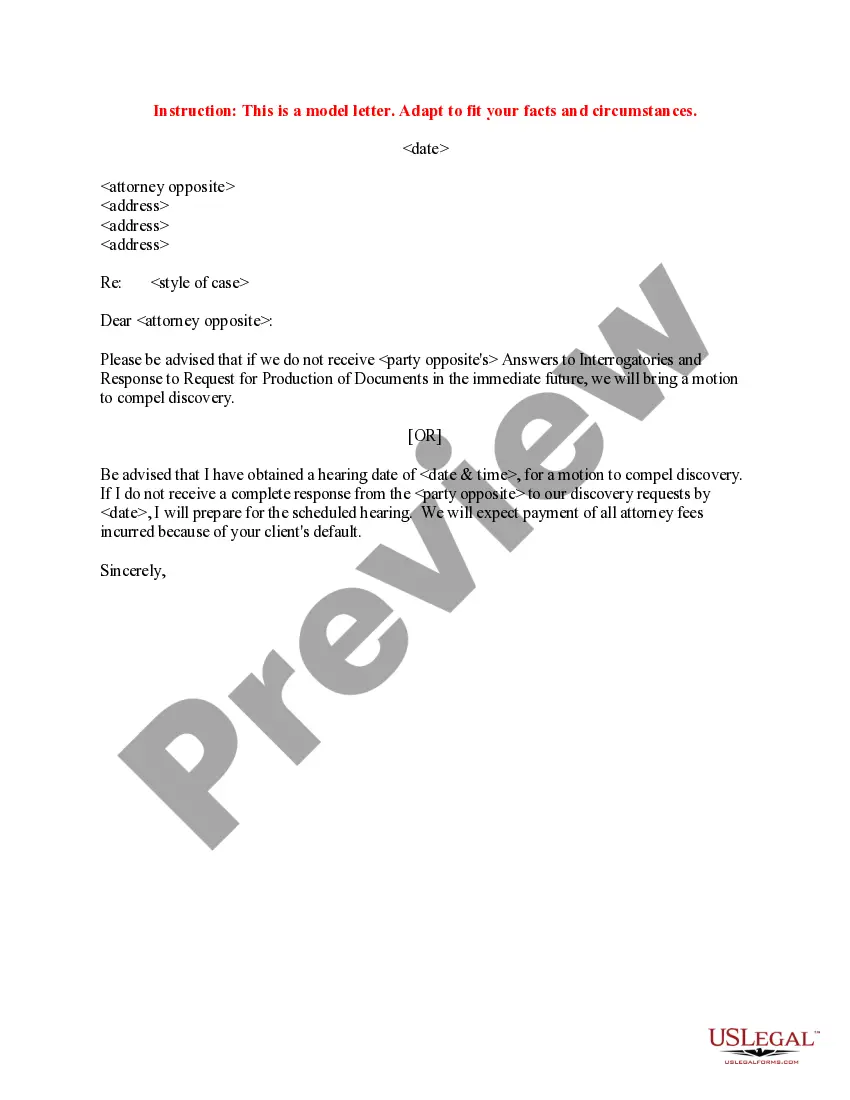
This letter is often called a good faith letter. And it is needed under many courts' rules before you can file a motion to compel discovery if the other party ignores your requests or provides evasive responses or move for sanctions if your opponent refuses to comply with the court's discovery order.
Rule 37? Failure to Make Disclosure or Cooperate in Discovery: Sanctions. (a) Motion for Order Compelling Disclosure or Discovery. A party, upon reasonable notice to other parties and all persons affected thereby, may apply for an order compelling disclosure or discovery as follows: (1) Appropriate Court.
Failure of United States to Participate in Good Faith in Discovery. Rule 37 authorizes the court to direct that parties or attorneys who fail to participate in good faith in the discovery process pay the expenses, including attorney's fees, incurred by other parties as a result of that failure.
Write out each fact you wish the other party to admit is true. When writing these facts, be as clear and concise as possible. Each request must be for a single fact; do not include multiple facts, compound questions, or subparts.