Residuary Estate Example
Description

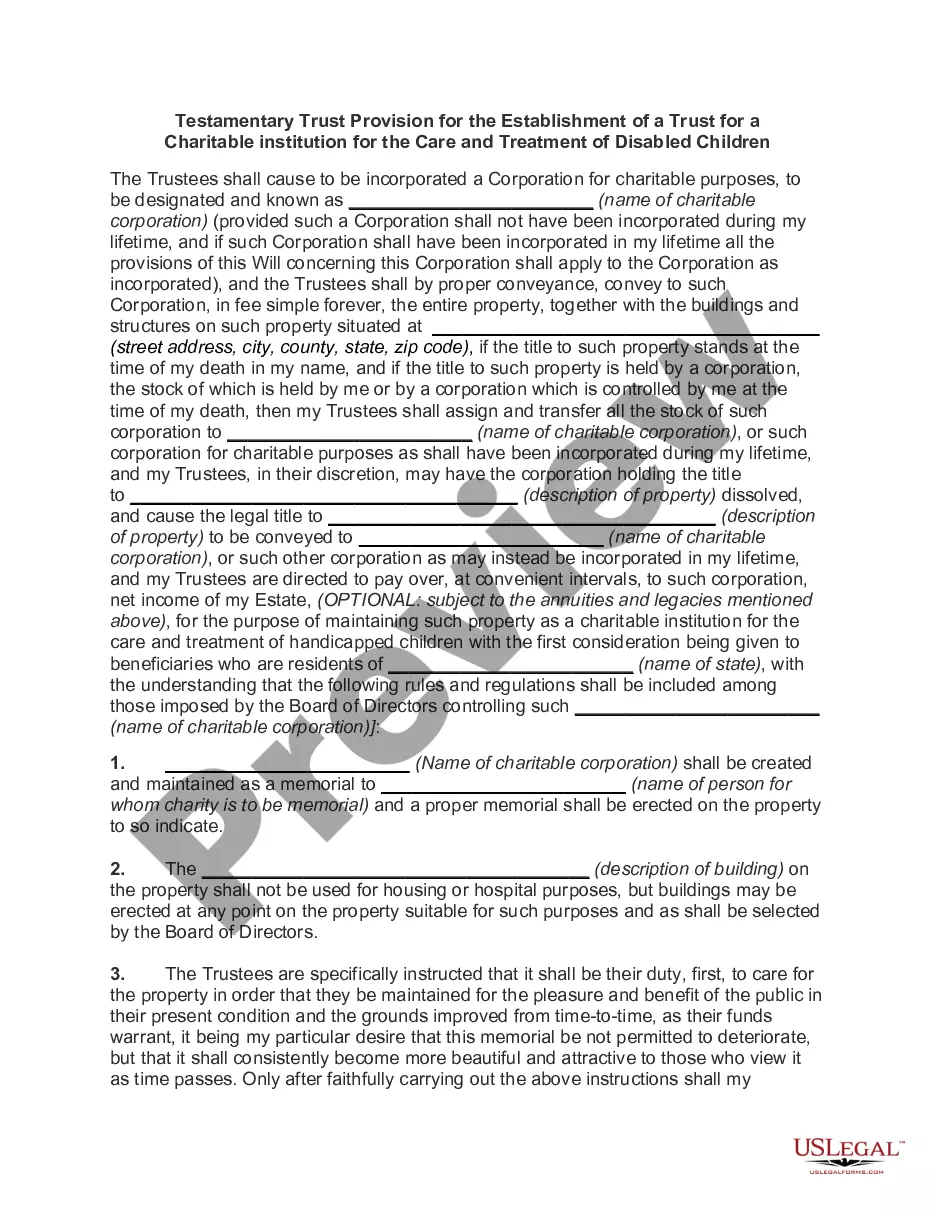
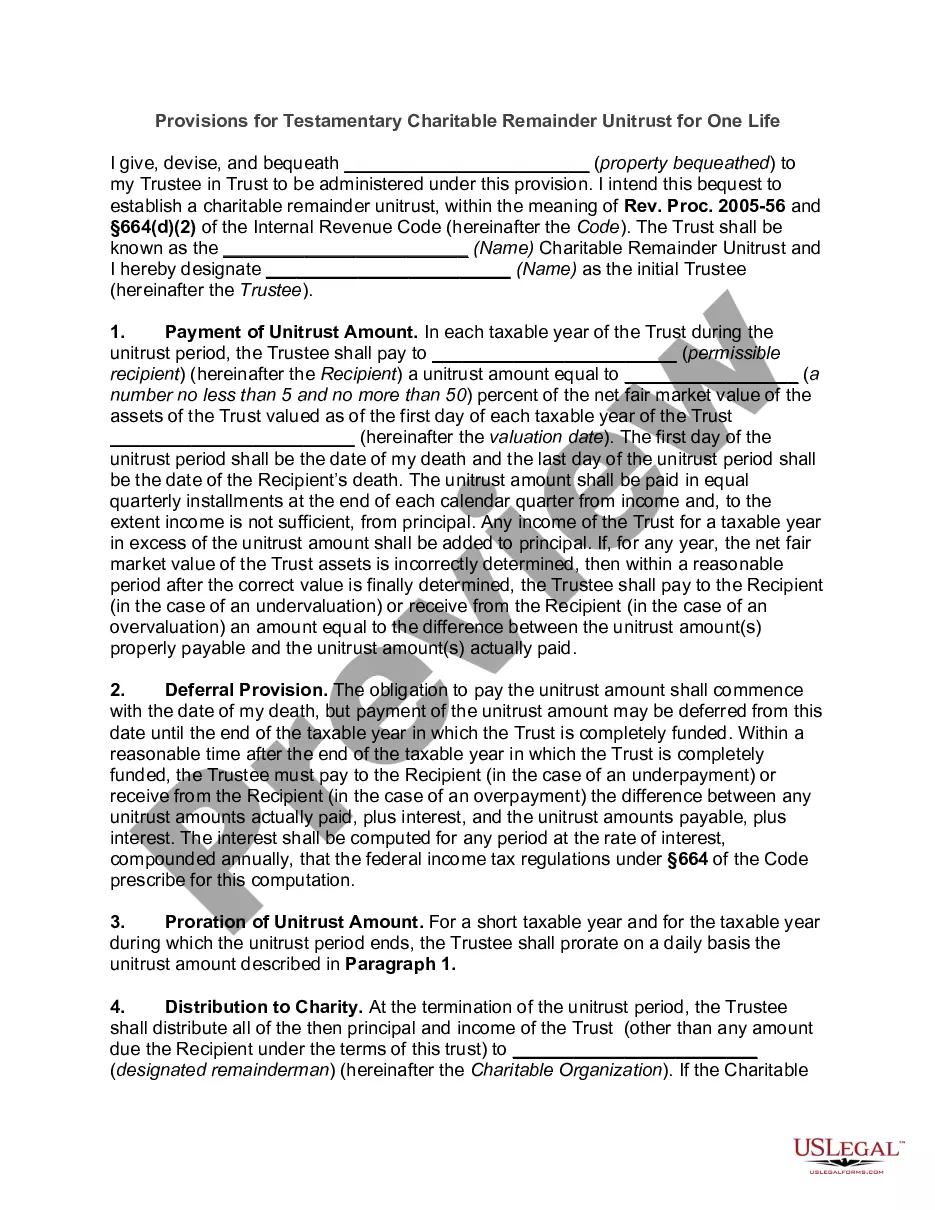
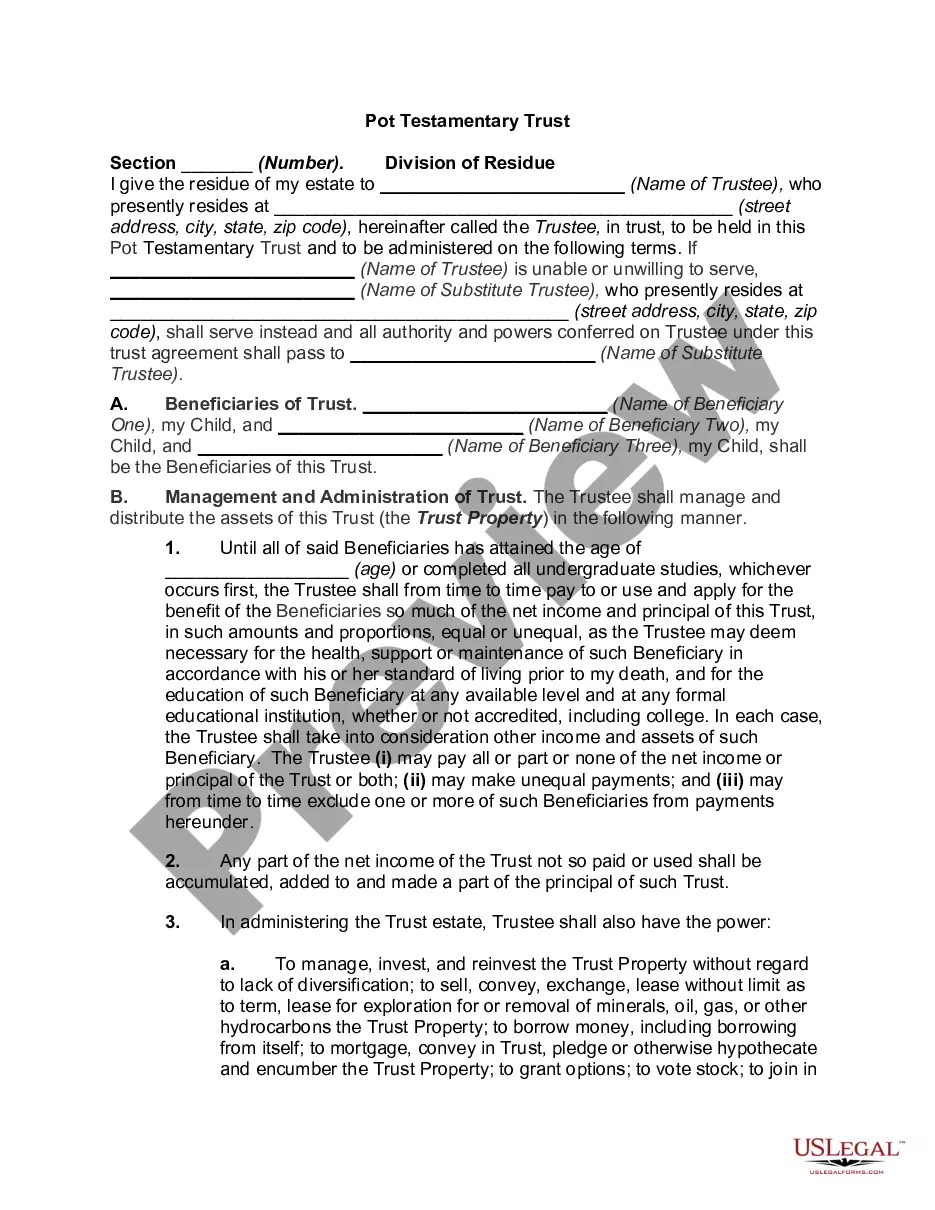
Get your form ready online
Our built-in tools help you complete, sign, share, and store your documents in one place.
Make edits, fill in missing information, and update formatting in US Legal Forms—just like you would in MS Word.
Download a copy, print it, send it by email, or mail it via USPS—whatever works best for your next step.
Sign and collect signatures with our SignNow integration. Send to multiple recipients, set reminders, and more. Go Premium to unlock E-Sign.
If this form requires notarization, complete it online through a secure video call—no need to meet a notary in person or wait for an appointment.
We protect your documents and personal data by following strict security and privacy standards.

Make edits, fill in missing information, and update formatting in US Legal Forms—just like you would in MS Word.

Download a copy, print it, send it by email, or mail it via USPS—whatever works best for your next step.

Sign and collect signatures with our SignNow integration. Send to multiple recipients, set reminders, and more. Go Premium to unlock E-Sign.

If this form requires notarization, complete it online through a secure video call—no need to meet a notary in person or wait for an appointment.

We protect your documents and personal data by following strict security and privacy standards.
Looking for another form?

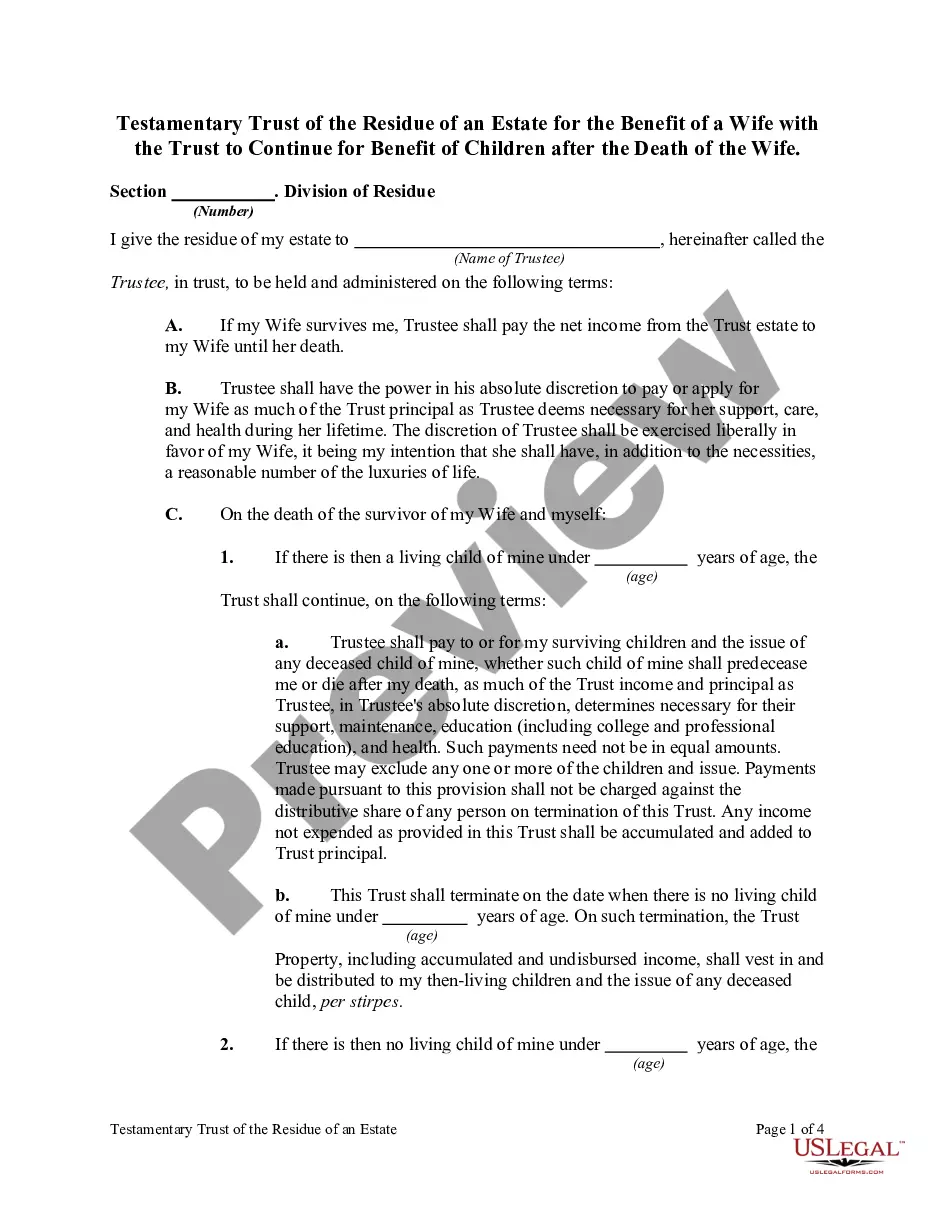
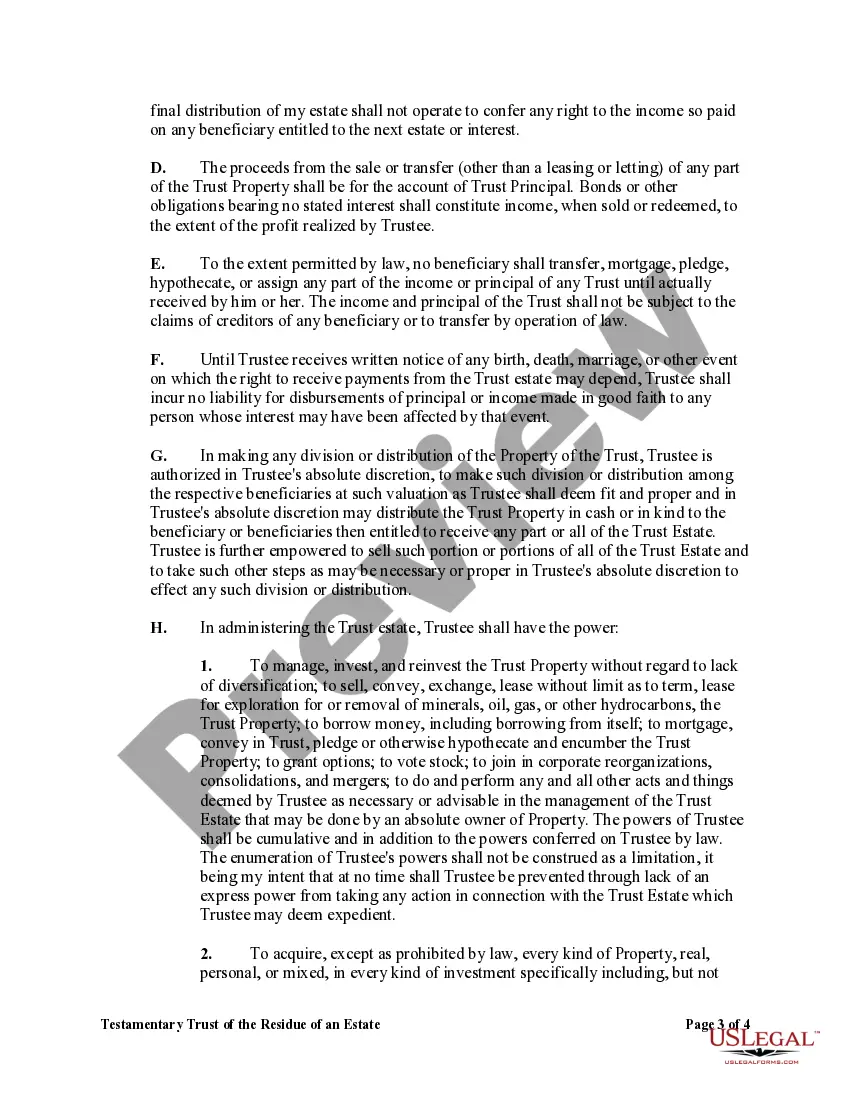
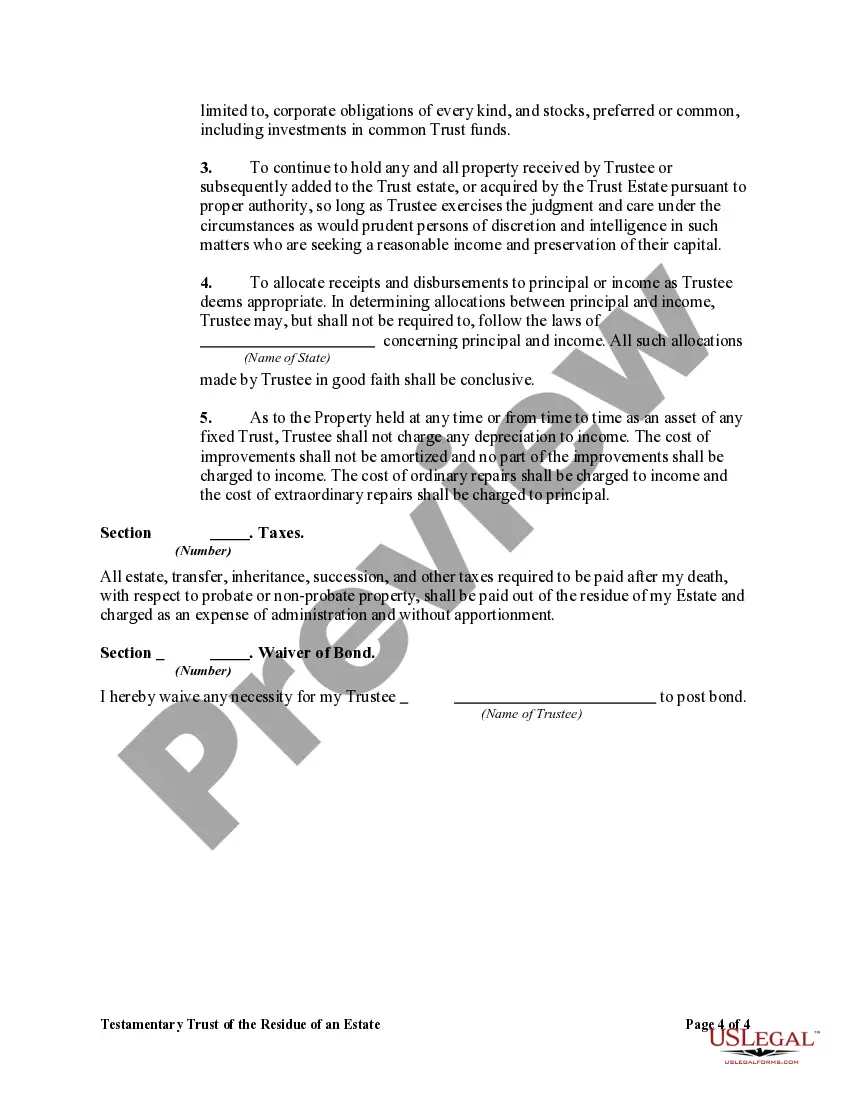
How to fill out Testamentary Trust Of The Residue Of An Estate For The Benefit Of A Wife With The Trust To Continue For Benefit Of Children After The Death Of The Wife?
Legal documents administration can be perplexing, even for experienced professionals.
When you are seeking a Residuary Estate Example and lack the time to invest in finding the accurate and current version, the process can be stressful.
US Legal Forms accommodates all requests you may have, from personal to corporate documentation, all in one location.
Utilize sophisticated tools to complete and manage your Residuary Estate Example.
Here are the steps to follow after locating the form you need: Confirm it is the correct document by previewing it and reviewing its description. Ensure the sample is validated in your state or county. Select Buy Now when you are ready. Choose a monthly subscription plan. Select the file format you need, then Download, fill out, sign, print, and send your documents. Take advantage of the US Legal Forms online library, backed by 25 years of experience and dependability. Transform your daily document management into a straightforward and user-friendly process today.
- Access a valuable repository of articles, tutorials, handbooks, and materials related to your situation and needs.
- Save time and effort searching for the documents you require, and use US Legal Forms’ advanced search and Preview tool to locate and download your Residuary Estate Example.
- If you have a membership, Log In to your US Legal Forms account, search for the form, and download it.
- Check the My documents tab to view the documents you’ve previously saved and manage your folders as needed.
- If it’s your first experience with US Legal Forms, establish a free account and gain unlimited access to all the platform's benefits.
- A strong online form library can be a transformative solution for anyone looking to navigate these situations efficiently.
- US Legal Forms is a leader in the online legal forms sector, offering over 85,000 state-specific legal forms accessible at any moment.
- With US Legal Forms, you can access state- or county-specific legal and business documents.
Form popularity
FAQ
Yes, bank accounts can be part of a residuary estate. If the account holder does not specify in their will who should receive the funds, the remaining balance in the bank account will be included in the residuary estate. This means that after settling debts and specific gifts, the funds will be distributed according to the instructions in the will. Utilizing platforms like USLegalForms can help you draft a clear will that addresses these details effectively.
The executor of the estate is responsible for paying debts from the residuary estate. This individual uses the assets remaining after specific bequests to settle any outstanding obligations. Understanding this process is vital, as it ensures all debts are accounted for before distributing the remaining assets to beneficiaries, providing a clear framework for managing the estate.
Yes, bank accounts can be part of a residuary estate example if they are not specifically designated to someone else in the will. When an individual passes away, any bank accounts not addressed in the will will fall into the residuary estate. It's crucial to clearly outline your wishes in your estate plan to avoid confusion and ensure your loved ones receive what you intended.
Primary tabs A residuary beneficiary is a person who receives any property from a will or trust that is not specifically left to another designated beneficiary.
EXAMPLE: In her will, Sara, a widow, leaves many different items to many different beneficiaries: books to her daughter, jewelry to a friend, a car to her nephew and so on. She doesn't name alternate beneficiaries for these specific bequests, but she names her daughter as residuary beneficiary.
There are two main ways to distribute the rest of the residue: Dividing up the residue by percentage or fractional share: If the residue is to go to more than one person or entity, the will may provide that it be divided by percentage or fractional share of the total assets. Each will have the same effect.
The rest of a deceased person's estate which is left after the payment of specific gifts, debts, funeral expenses and inheritance tax.
A residuary estate is the portion of a person's assets that are left over after paying off their estate's debts, taxes and expenses and after distributing any specific gifts of property or money.