Trustor Beneficiary Trustee For Corporation
Description


Get your form ready online
Our built-in tools help you complete, sign, share, and store your documents in one place.
Make edits, fill in missing information, and update formatting in US Legal Forms—just like you would in MS Word.
Download a copy, print it, send it by email, or mail it via USPS—whatever works best for your next step.
Sign and collect signatures with our SignNow integration. Send to multiple recipients, set reminders, and more. Go Premium to unlock E-Sign.
If this form requires notarization, complete it online through a secure video call—no need to meet a notary in person or wait for an appointment.
We protect your documents and personal data by following strict security and privacy standards.

Make edits, fill in missing information, and update formatting in US Legal Forms—just like you would in MS Word.

Download a copy, print it, send it by email, or mail it via USPS—whatever works best for your next step.

Sign and collect signatures with our SignNow integration. Send to multiple recipients, set reminders, and more. Go Premium to unlock E-Sign.

If this form requires notarization, complete it online through a secure video call—no need to meet a notary in person or wait for an appointment.

We protect your documents and personal data by following strict security and privacy standards.
Looking for another form?







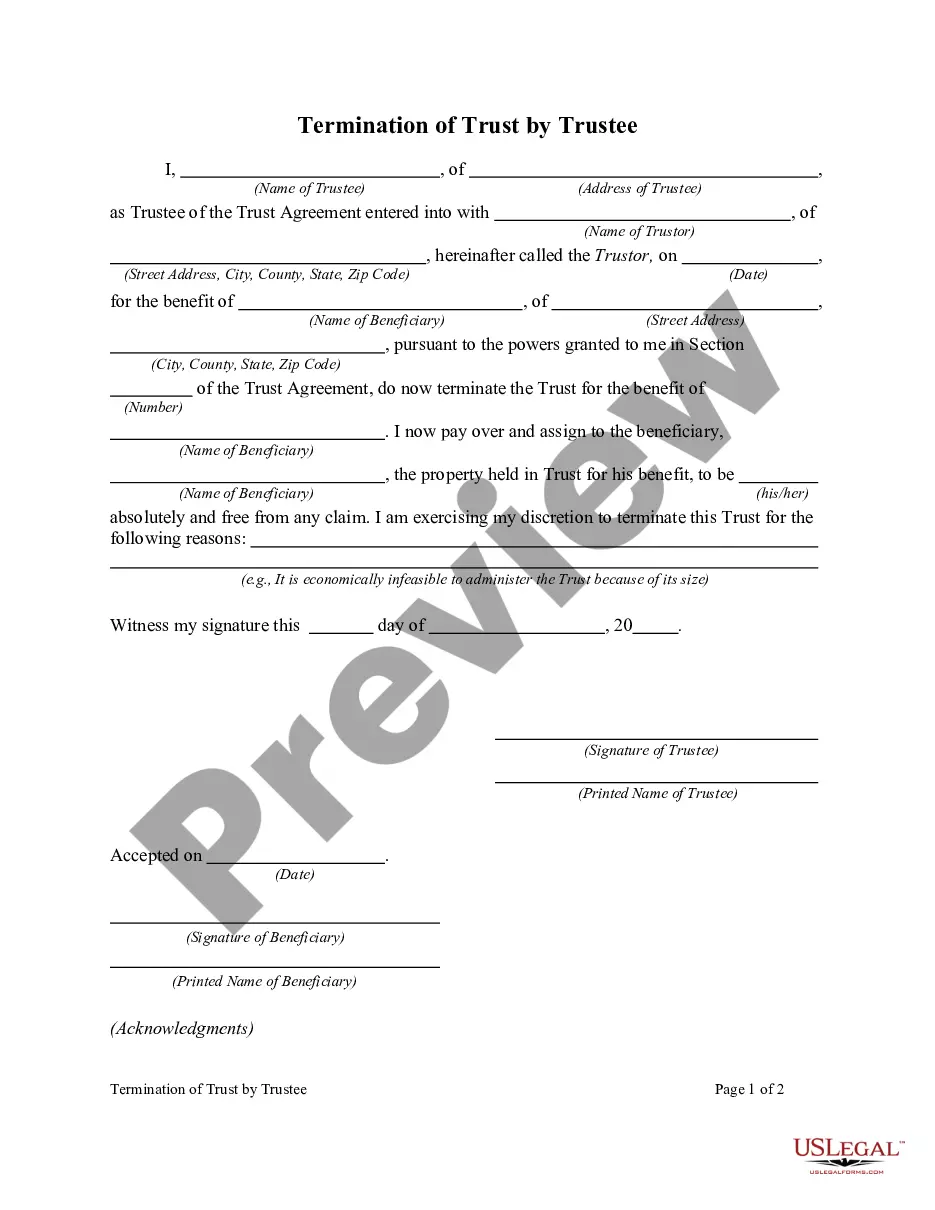
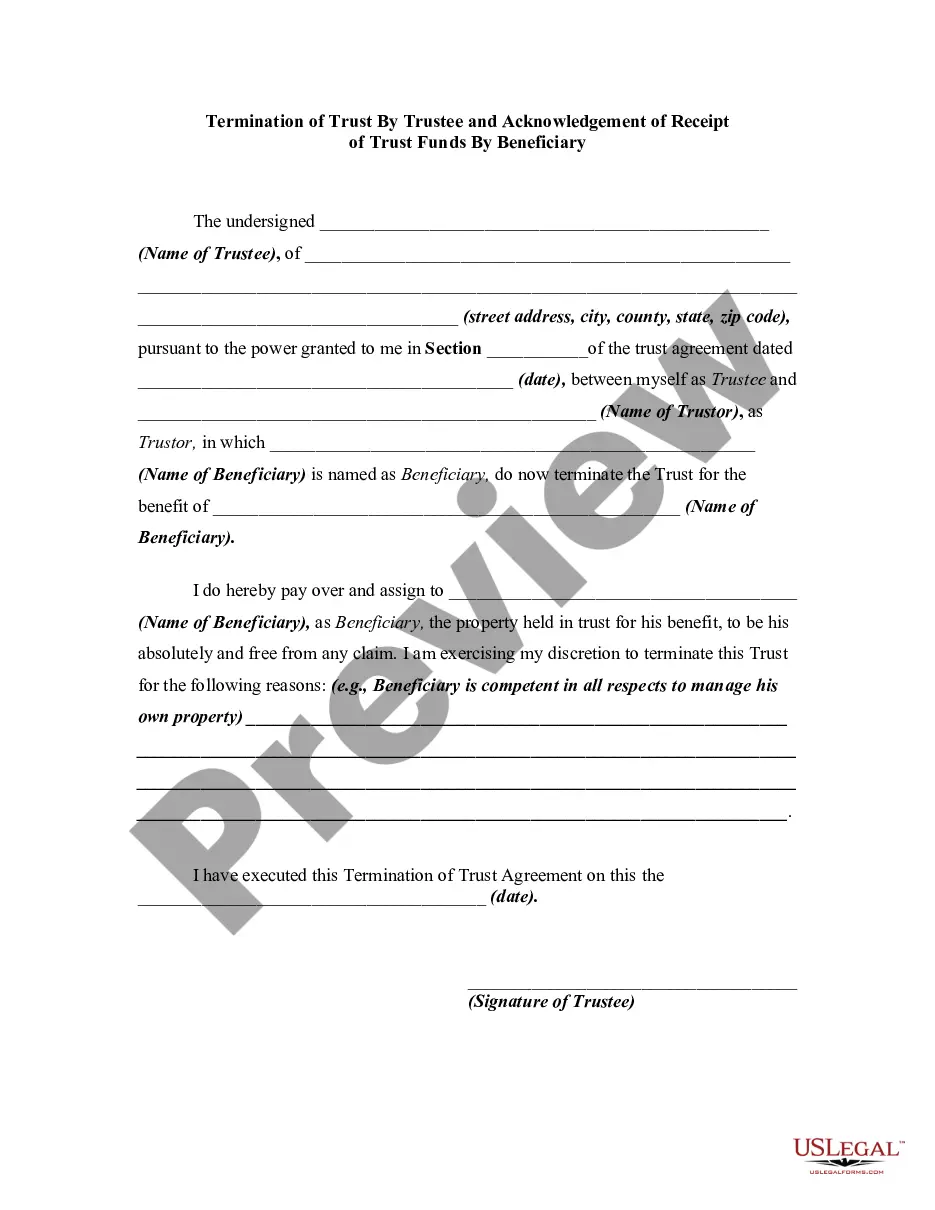
How to fill out Termination Of Trust By Trustee?
- Log in to your US Legal Forms account. If you're an existing user, ensure your subscription is active; if not, renew it according to your plan.
- Preview the available forms and read the descriptions to confirm you have the appropriate document that suits your specific requirements.
- If adjustments are needed, use the search function to find the correct template that meets your local jurisdiction's criteria.
- Select the template and proceed to purchase it by clicking the Buy Now button. Make sure to select a subscription plan that suits your needs.
- Complete your payment securely using either your credit card or PayPal account.
- Once your transaction is successful, download the form and save it on your device. You can access it anytime in the My Forms section of your profile.
By following these steps, you'll have access to an extensive library of over 85,000 fillable legal forms, ensuring that your documents remain precise and compliant. US Legal Forms stands out with its vast selection at an affordable price, complemented by support from premium legal experts.
Start your legal journey today and simplify your trust needs with US Legal Forms. Empower yourself with the right tools and documents to succeed!
Form popularity
FAQ
When selecting a corporate trustee, consider factors such as reputation, experience, and services offered. Look for a trustor beneficiary trustee for corporation that aligns with your specific needs and understands your goals. You can use platforms like uslegalforms to evaluate potential candidates and streamline the selection process.
Engaging a corporate trustee can be a smart choice, particularly for those seeking professional management of their trust assets. As a trustor beneficiary trustee for corporation, a corporate trustee often possesses specialized knowledge in investment, legal compliance, and trust administration. This expertise can help minimize risks and enhance the overall performance of the trust.
Yes, having a corporate trustee is permissible and often beneficial, especially for larger trusts or estates. This arrangement serves as a trustor beneficiary trustee for corporation, ensuring that a professional entity oversees the assets effectively. It can help streamline processes and serve the trust's needs with experienced oversight.
Typically, the trustor, who establishes the trust, appoints the corporate trustee. This decision can be part of the initial trust agreement, allowing the trustor beneficiary trustee for corporation to select a partner that aligns with their goals. The appointed corporate trustee then steps in to ensure the trust is managed according to specified terms.
A corporate trustee is a corporation that administers trusts, managing assets and ensuring compliance with trust agreements. As a trustor beneficiary trustee for corporation, this entity takes on fiduciary responsibilities to protect the interests of all parties involved. This approach often brings a level of expertise that individual trustees may lack, helping to create a more efficient management process.
To report trustee income, you typically need to include the income on the trust's tax return, and beneficiaries must also report income they receive. Accurate documentation of all transactions is essential for compliance. Using resources from USLegalForms can help streamline the reporting process for Trustor beneficiary trustee for corporation, ensuring you meet all requirements efficiently.
Entities that engage in significant business activities, including trusts that own interests in corporations, need to file a BOI report. This includes trusts operating under responsibilities as a Trustor beneficiary trustee for corporation. It's crucial for individuals managing such trusts to stay informed about their filing obligations.
No, trusts are generally not exempt from the Corporate Transparency Act. If a trust operates in contexts that align with corporate activities, it must comply with the reporting requirements. Knowing the nuances of Trustor beneficiary trustee for corporation can aid in navigating these regulations effectively.
A trust may be required to file a BOI report if it meets certain criteria outlined by regulatory bodies. When a trust holds assets or is involved in a corporation, it typically falls under the obligation to report its beneficial owners. Understanding these regulations helps trustees fulfill their responsibilities regarding Trustor beneficiary trustee for corporation.
Yes, trusts often need to file the beneficial ownership information (BOI) depending on their structure and operations. Generally, if the trust holds an interest in a corporation, it will qualify under the regulations. It's essential to assess your specific situation to determine filing requirements and ensure compliance with laws regarding Trustor beneficiary trustee for corporation.