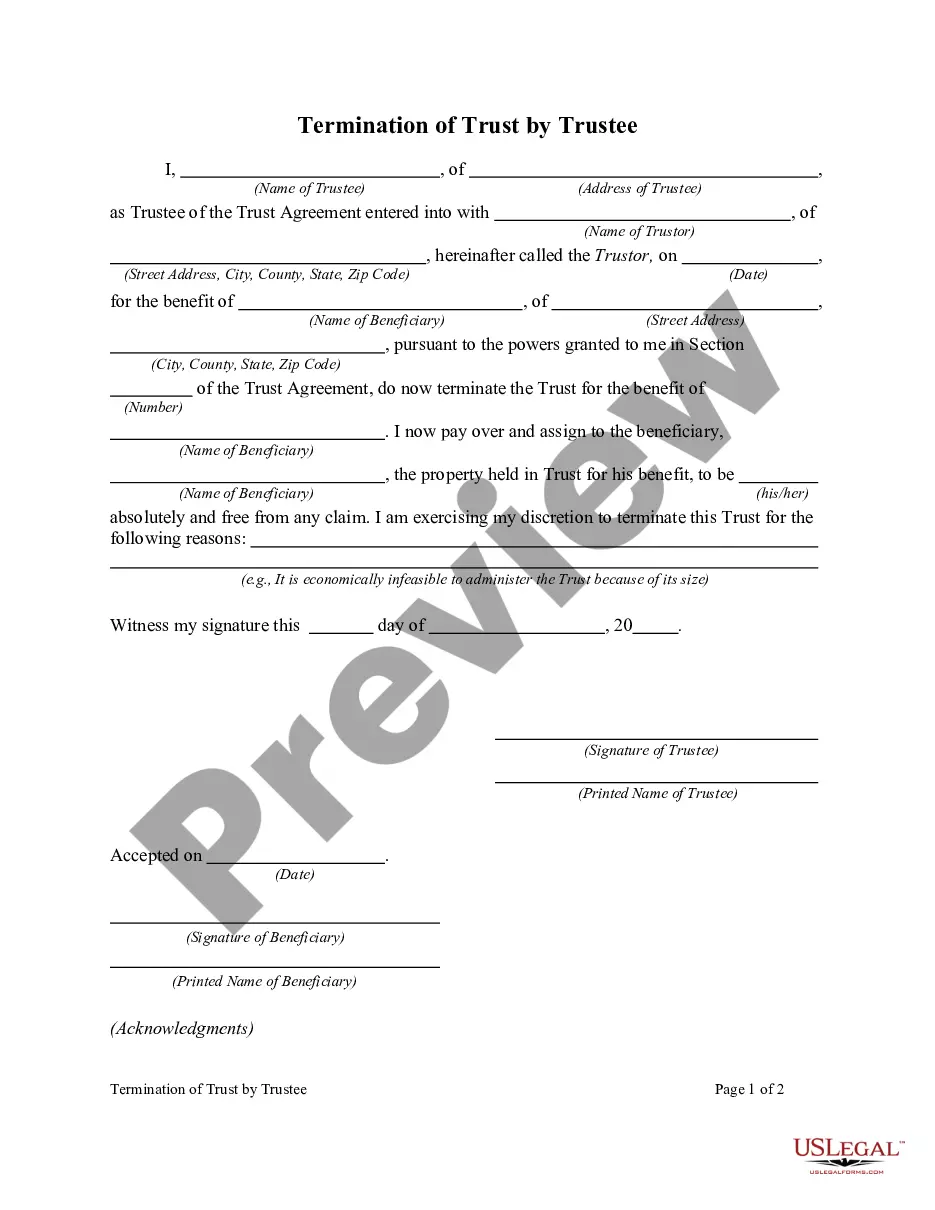
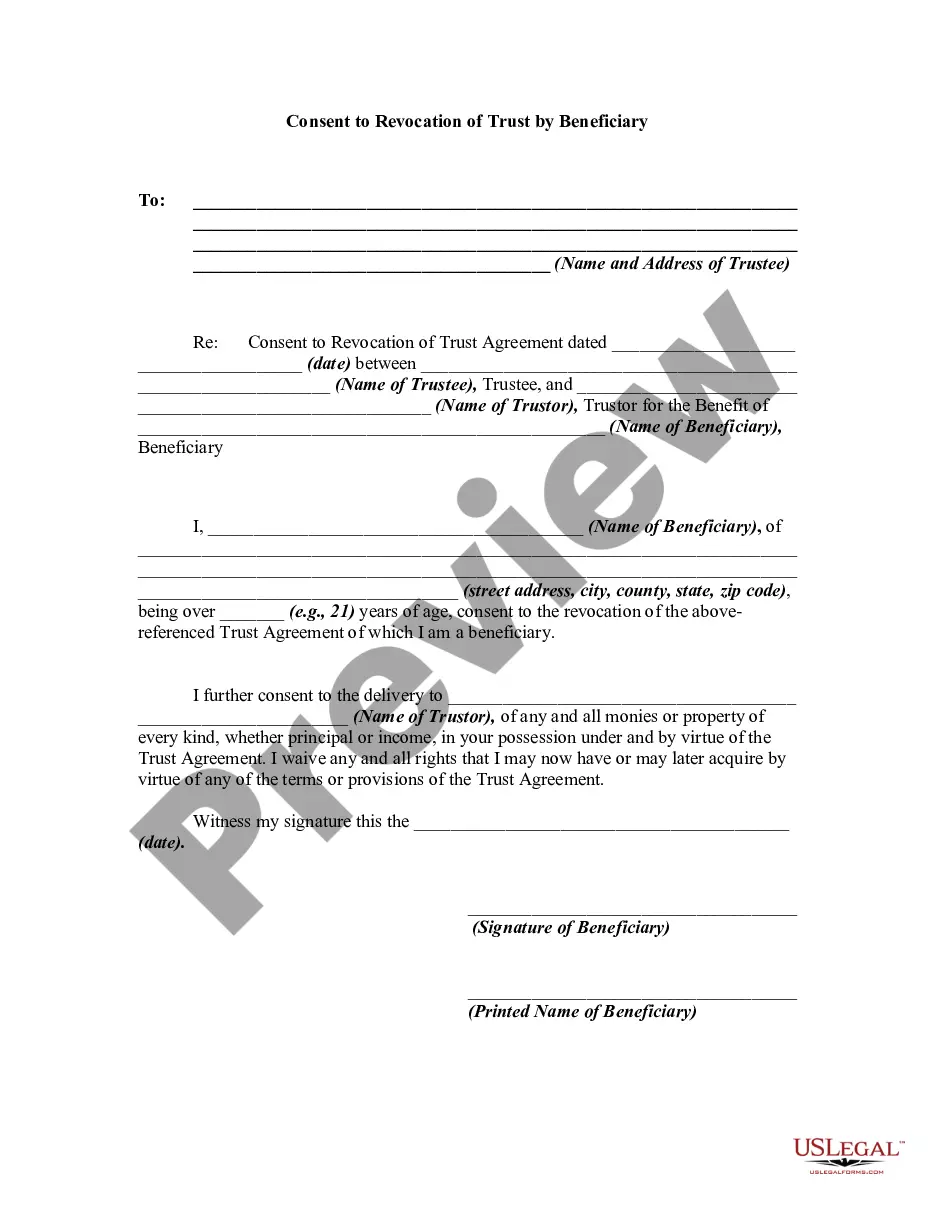
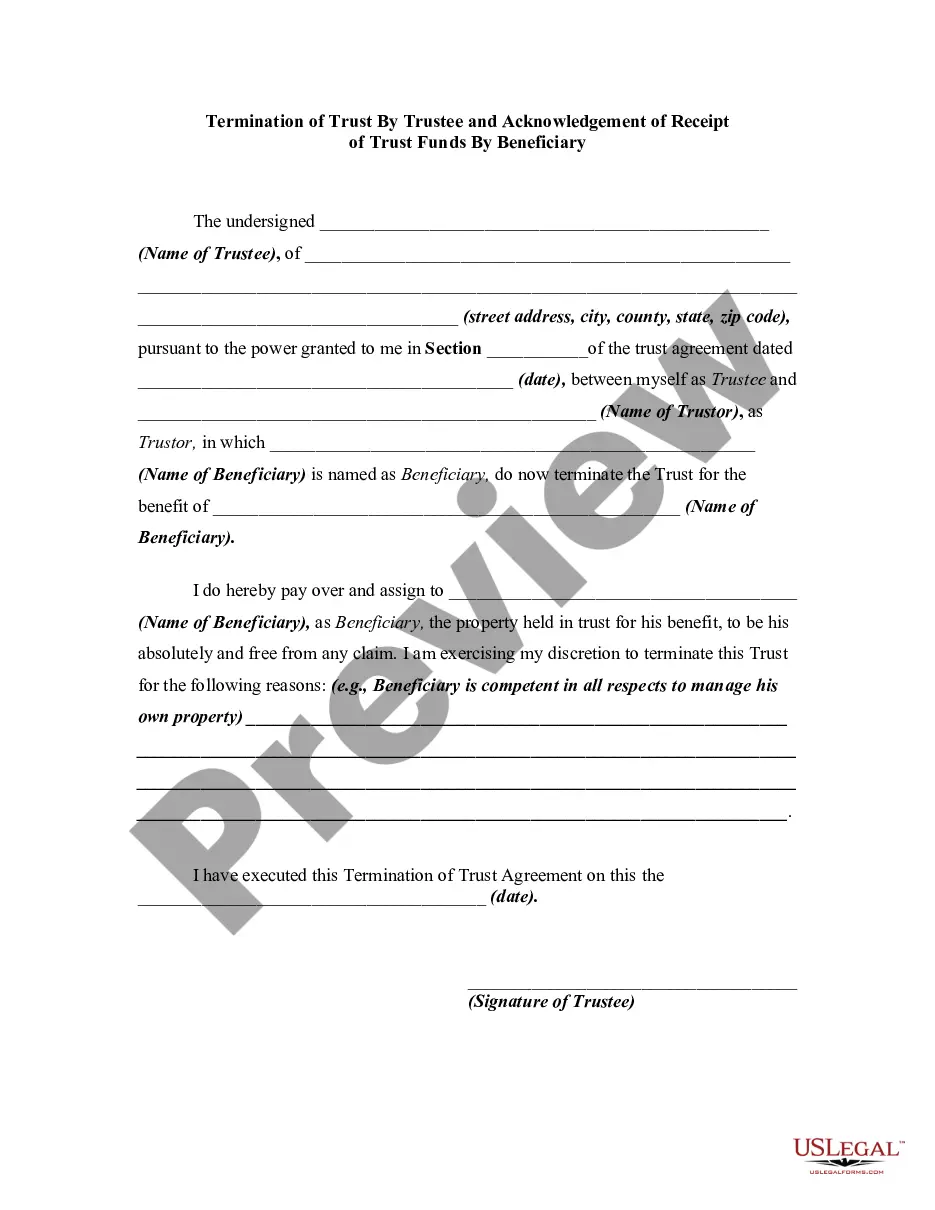
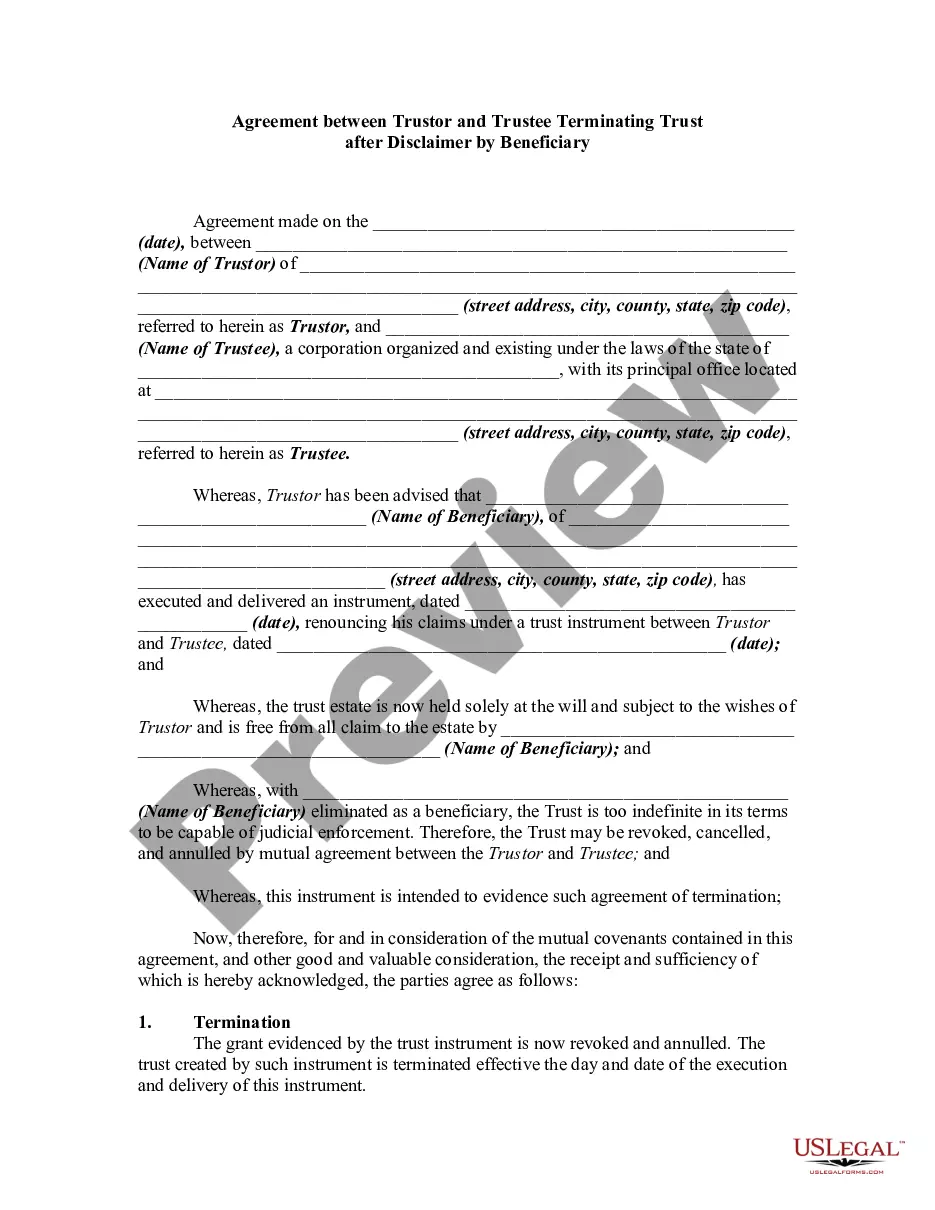
Termination Trust Trustee For Unit
Description


Get your form ready online
Our built-in tools help you complete, sign, share, and store your documents in one place.
Make edits, fill in missing information, and update formatting in US Legal Forms—just like you would in MS Word.
Download a copy, print it, send it by email, or mail it via USPS—whatever works best for your next step.
Sign and collect signatures with our SignNow integration. Send to multiple recipients, set reminders, and more. Go Premium to unlock E-Sign.
If this form requires notarization, complete it online through a secure video call—no need to meet a notary in person or wait for an appointment.
We protect your documents and personal data by following strict security and privacy standards.

Make edits, fill in missing information, and update formatting in US Legal Forms—just like you would in MS Word.

Download a copy, print it, send it by email, or mail it via USPS—whatever works best for your next step.

Sign and collect signatures with our SignNow integration. Send to multiple recipients, set reminders, and more. Go Premium to unlock E-Sign.

If this form requires notarization, complete it online through a secure video call—no need to meet a notary in person or wait for an appointment.

We protect your documents and personal data by following strict security and privacy standards.
Looking for another form?



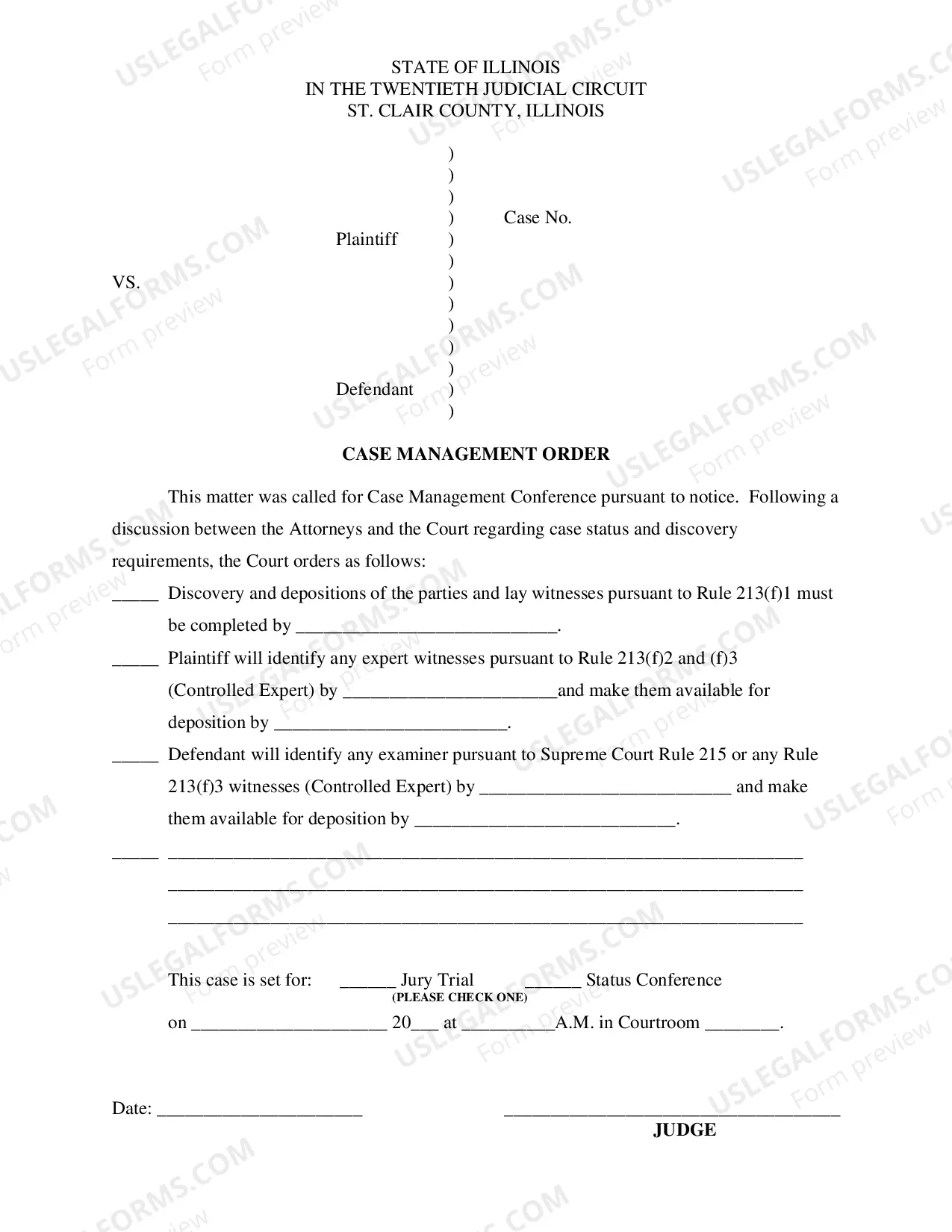
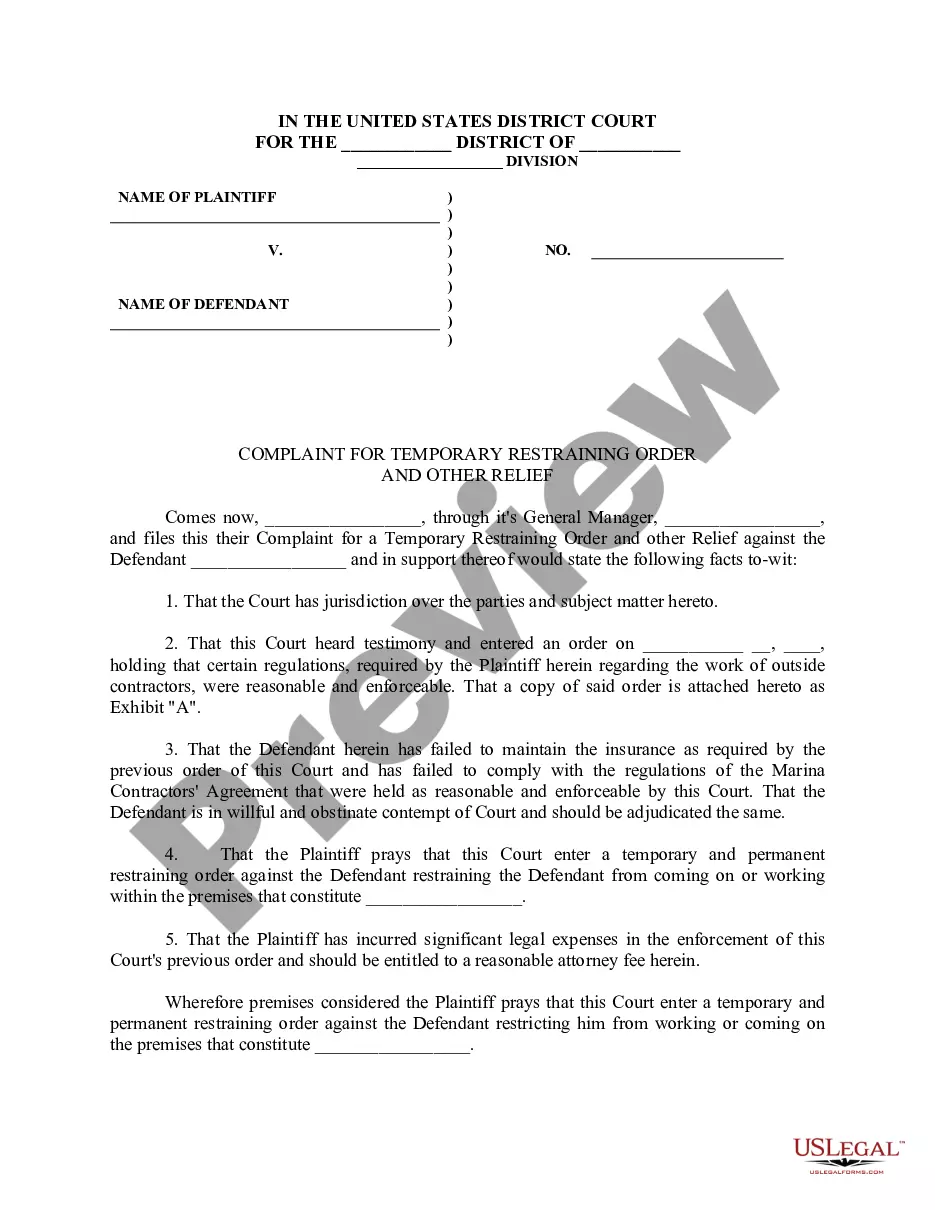
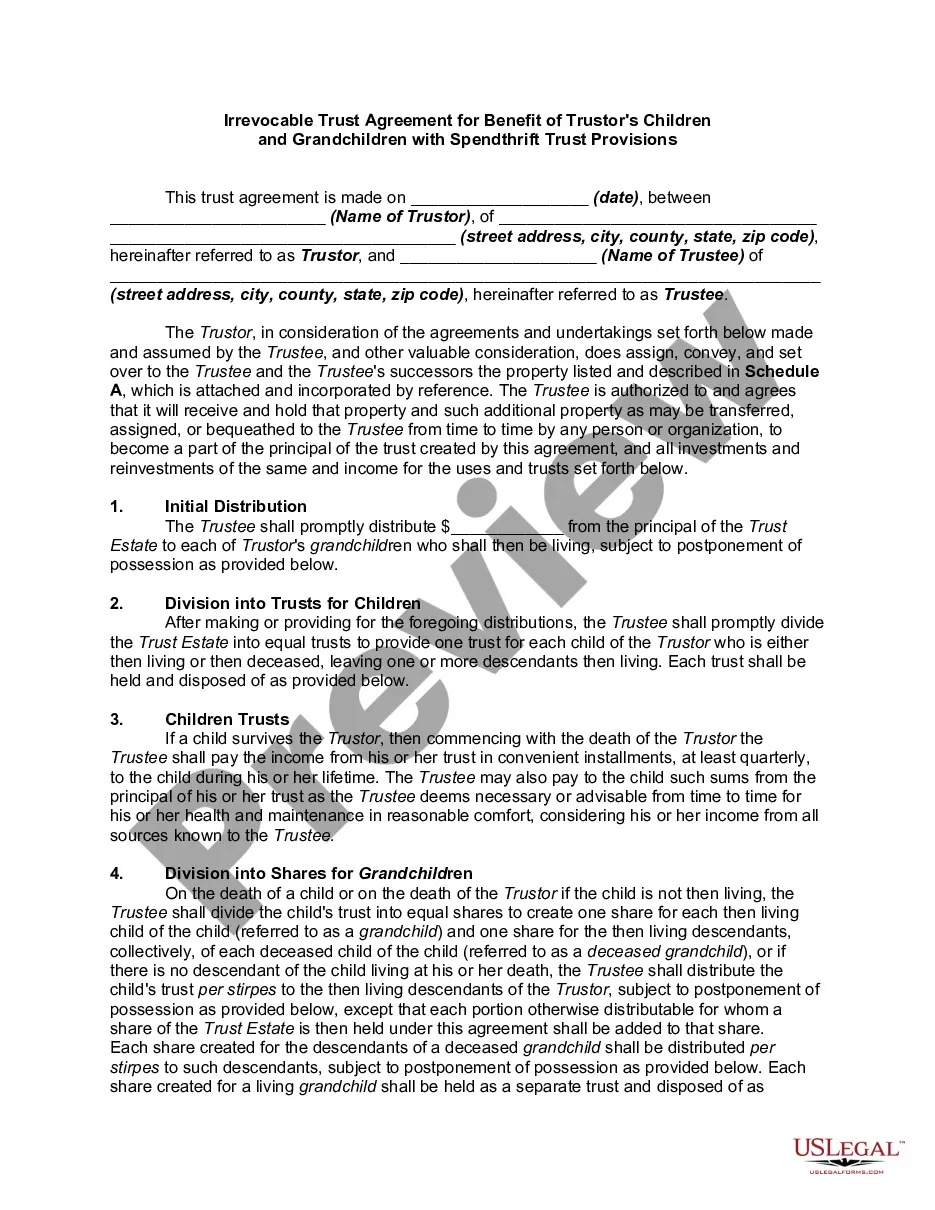
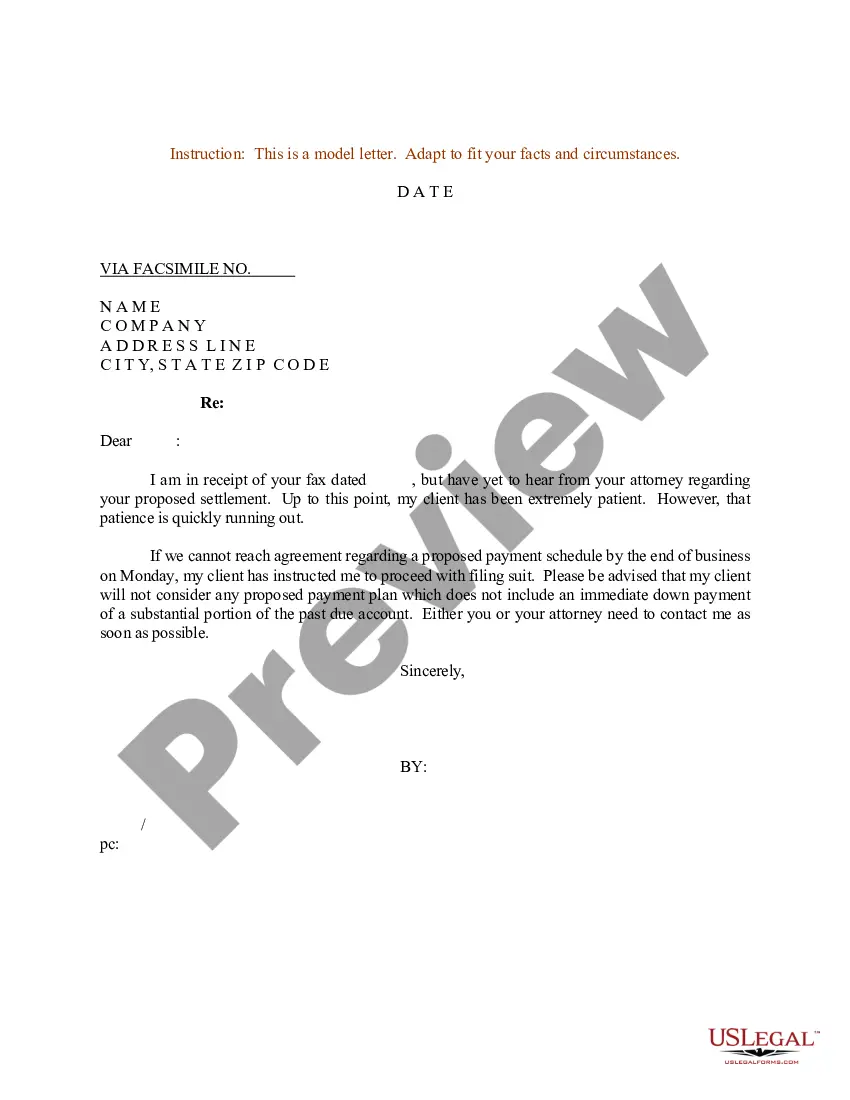

How to fill out Termination Of Trust By Trustee?
The Termination Trust Trustee For Unit displayed on this page is a versatile legal template crafted by experienced attorneys in compliance with federal and state laws and guidelines.
For over 25 years, US Legal Forms has offered individuals, companies, and lawyers more than 85,000 authenticated, state-specific documents for any business and personal circumstance. It’s the fastest, simplest, and most dependable method to acquire the paperwork you require, as the service assures the utmost level of data security and anti-malware safeguarding.
Select the format you desire for your Termination Trust Trustee For Unit (PDF, DOCX, RTF) and store the document on your device.
- Look for the document you require and verify it.
- Browse the example you searched for and preview it or review the form description to ensure it meets your requirements. If it doesn’t, use the search bar to find the appropriate one. Click Buy Now once you have found the template you need.
- Subscribe and Log In.
- Choose the pricing plan that fits you and create an account. Use PayPal or a credit card to make a swift payment. If you already possess an account, Log In and check your subscription to proceed.
- Acquire the fillable template.
Form popularity
FAQ
Yes, a trustee can be removed from a trust under specific circumstances. Common reasons include failure to perform their duties or acting against the trust's interests. The removal process may require a court petition, depending on your situation. For assistance with this process, US Legal can provide resources and forms to help you navigate the removal of a termination trust trustee for unit.
A trustee can terminate a trust by following the guidelines set forth in the trust document. This often includes notifying beneficiaries and distributing the remaining assets according to the trust's terms. In some cases, a court may need to approve the termination. US Legal can offer the necessary documentation and guidance to ensure a smooth termination process.
To get rid of a trustee, you must first check the trust document for removal procedures. If grounds for removal exist, you may need to seek court intervention or follow the outlined steps in the trust agreement. It is crucial to act within legal boundaries and document all actions. US Legal provides forms and legal advice to facilitate this process effectively.
Terminating a unit trust involves following specific legal procedures outlined in the trust deed. Typically, you will need to notify all beneficiaries and possibly the trustee. You may also need to file formal paperwork with relevant authorities. Utilizing US Legal’s resources can help streamline this process and ensure you comply with all legal requirements.
There are several valid grounds for the removal of a trustee, including mismanagement of trust assets, failure to follow the terms of the trust, or conflicts of interest. If a trustee is not acting in the best interest of the beneficiaries, they can be removed. It's essential to document any misconduct to support your case. US Legal can assist you in understanding these grounds and the steps for termination trust trustee for unit.
Firing a trustee is not as complicated as it may seem. Generally, it involves reviewing the trust document to check for specific procedures related to removal. You may need to provide valid reasons for termination, such as misconduct or failure to fulfill duties. Using the US Legal platform can simplify the process by providing necessary forms and guidance.
The CLAT is its own taxpayer but can claim a charitable deduction each year for payments made to the Lead Beneficiary that year. As long as the CLAT income in a given year does not exceed the payments made to Lead Beneficiary in that year, the CLAT will not owe income taxes.
What do I need to do to terminate the Unit Trust? The capital of the trust must be distributed in ance with the Unit Trust deed. The Trustee must satisfy any existing liabilities of the Unit trust. ... The Trustee must pass a resolution determining that the trust is to be vested (terminated).
If a trustee does not uphold these responsibilities and breaches their duty, the beneficiaries can take legal action. They may petition the court to terminate the trust and distribute its assets. The court then decides whether the trustee has indeed acted improperly and if so, may order the dissolution of the trust.
You need to file a Federal Form 5227, and if it's a non-grantor trust, a Form 1041. You also need to provide information to the grantor, if it's a grantor trust, and for all trusts, they often need to be registered with the state body that administers charitable bequests and charitable organizations.