Beneficiary Trustee Trust For Historic Preservation
Description

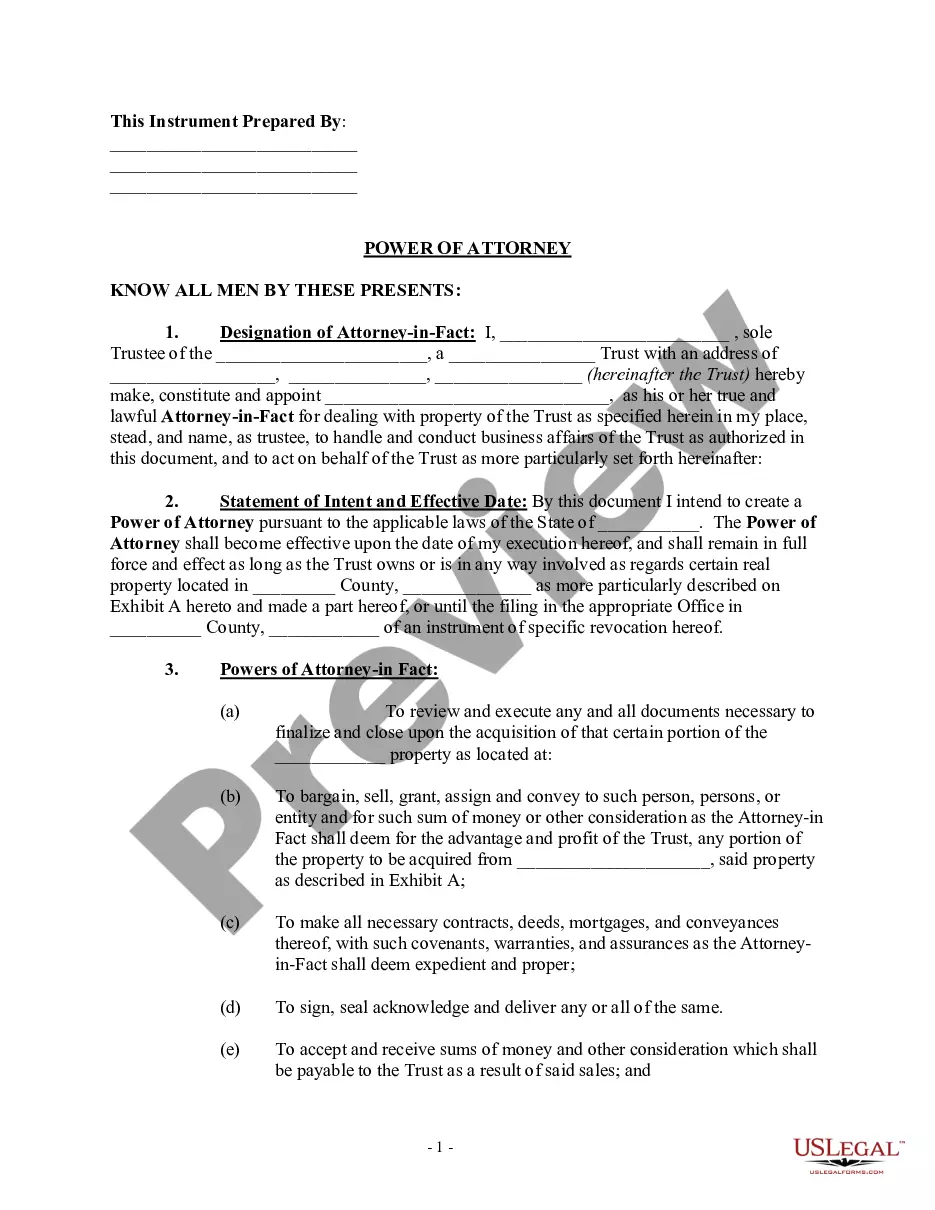
Get your form ready online
Our built-in tools help you complete, sign, share, and store your documents in one place.
Make edits, fill in missing information, and update formatting in US Legal Forms—just like you would in MS Word.
Download a copy, print it, send it by email, or mail it via USPS—whatever works best for your next step.
Sign and collect signatures with our SignNow integration. Send to multiple recipients, set reminders, and more. Go Premium to unlock E-Sign.
If this form requires notarization, complete it online through a secure video call—no need to meet a notary in person or wait for an appointment.
We protect your documents and personal data by following strict security and privacy standards.

Make edits, fill in missing information, and update formatting in US Legal Forms—just like you would in MS Word.

Download a copy, print it, send it by email, or mail it via USPS—whatever works best for your next step.

Sign and collect signatures with our SignNow integration. Send to multiple recipients, set reminders, and more. Go Premium to unlock E-Sign.

If this form requires notarization, complete it online through a secure video call—no need to meet a notary in person or wait for an appointment.

We protect your documents and personal data by following strict security and privacy standards.
Looking for another form?


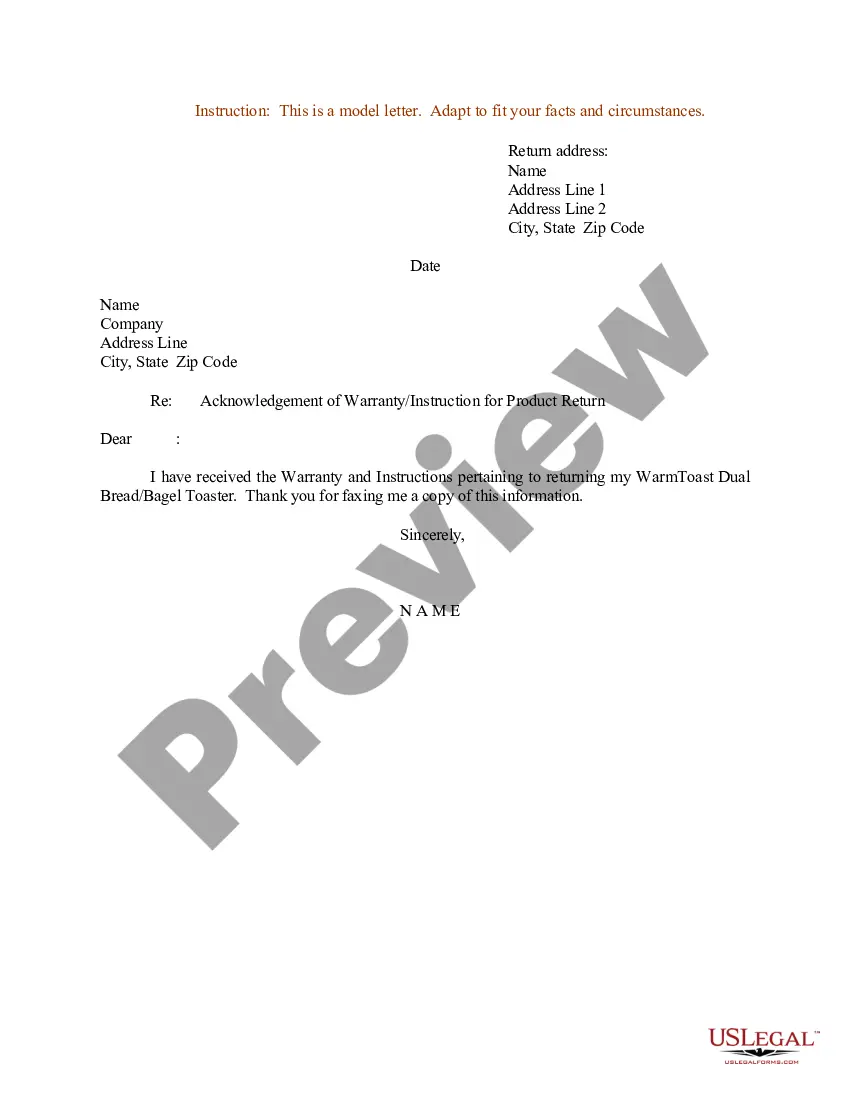




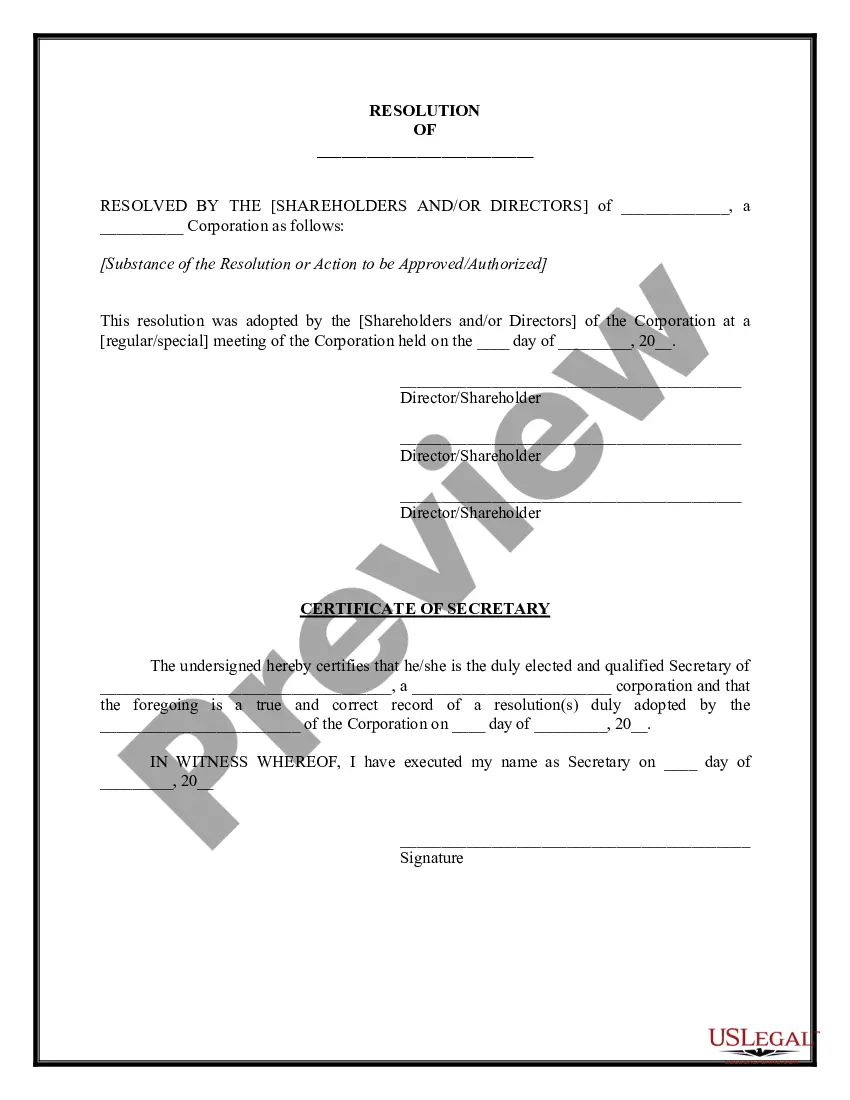


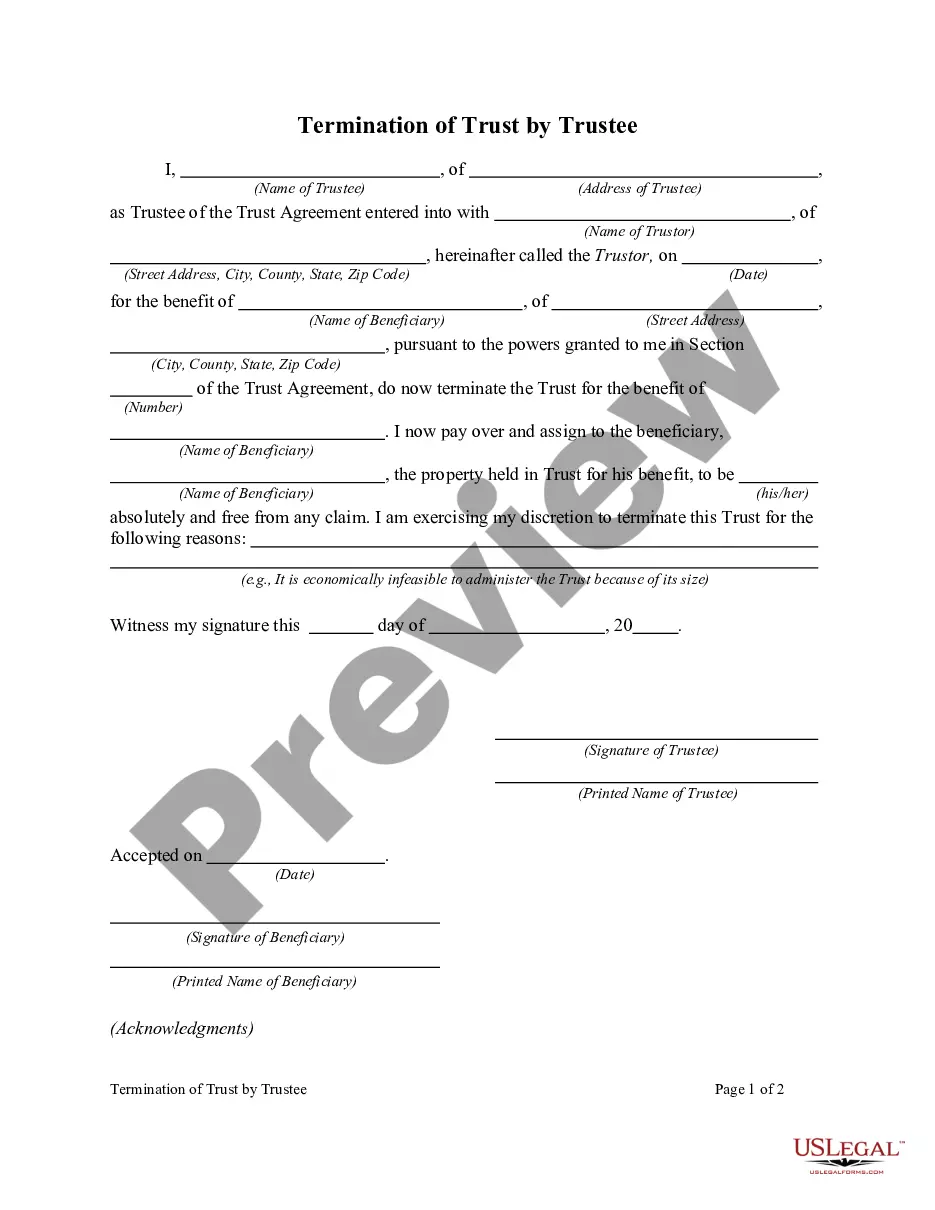
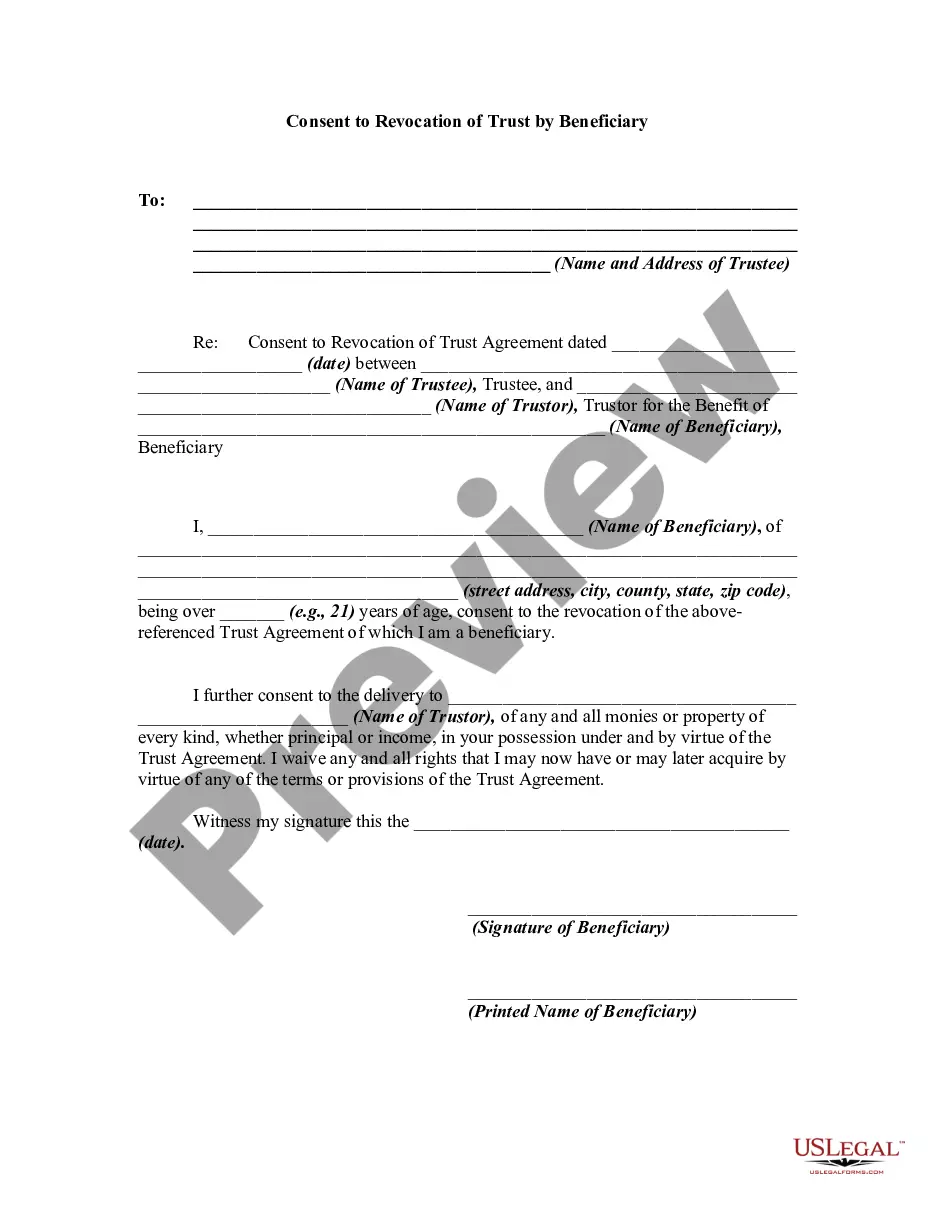
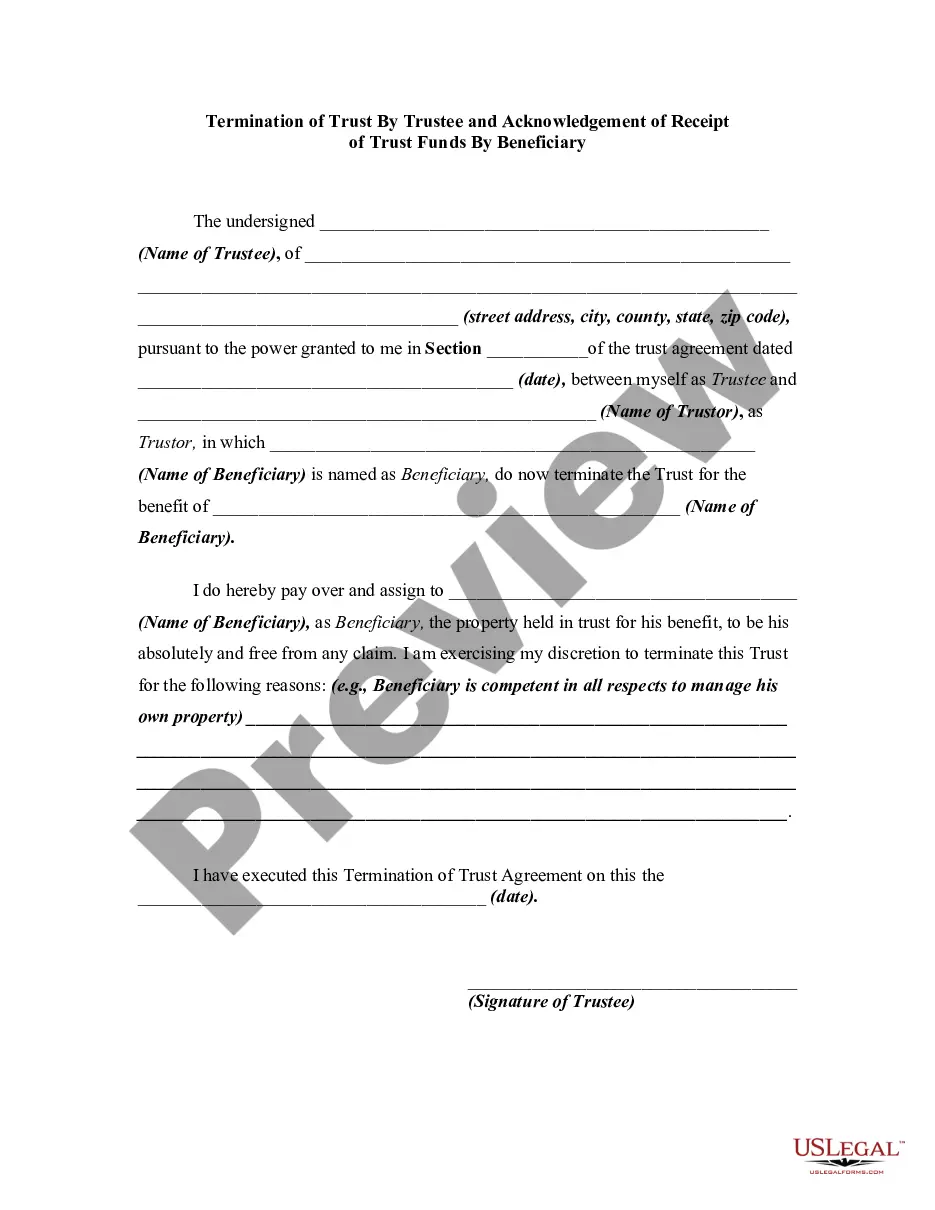
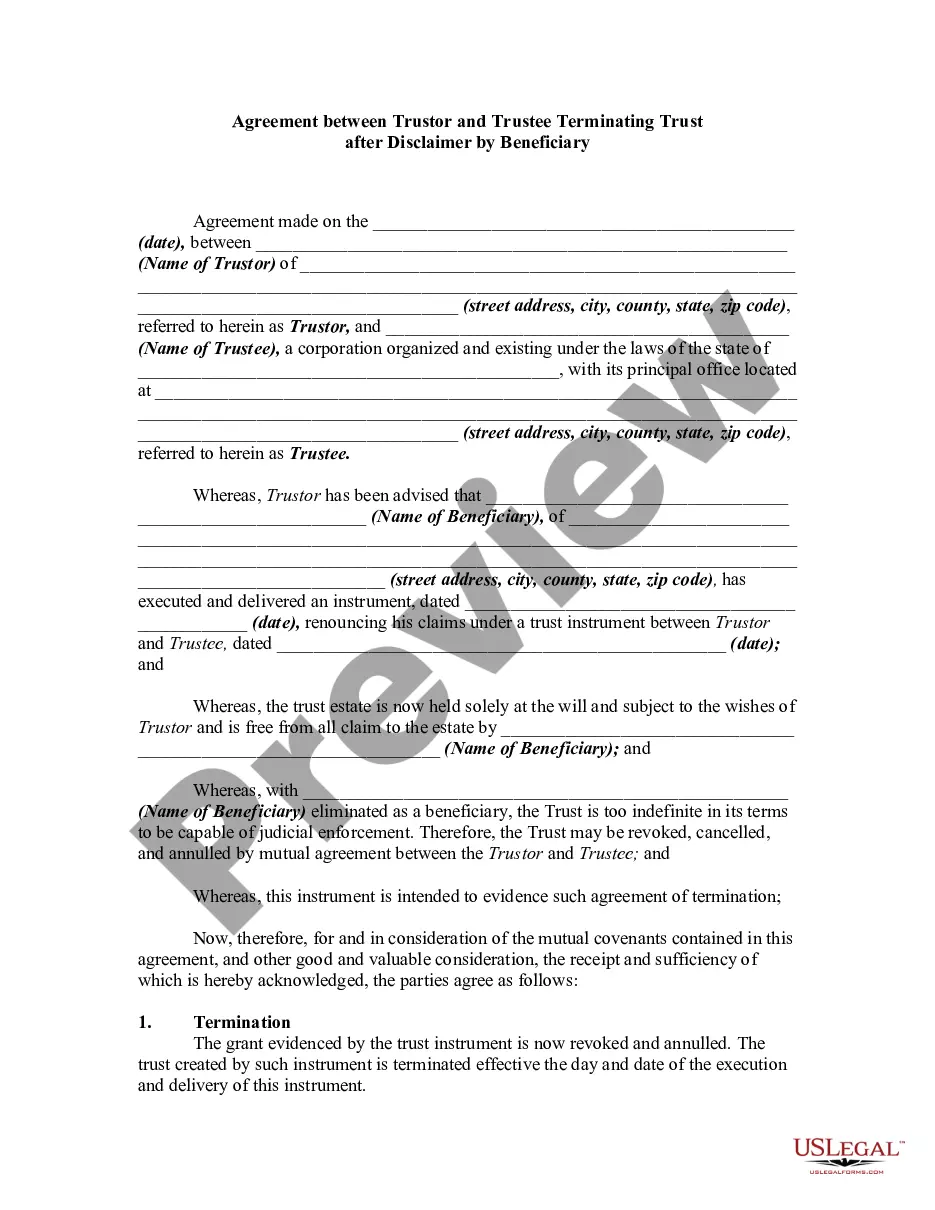
How to fill out Termination Of Trust By Trustee?
- If you're a returning user, log in to your account and select the form you need. Ensure your subscription is active; if it's not, renew it as per your payment plan.
- For new users, explore the Preview mode and description of the desired form to confirm its relevance to your needs and compliance with local requirements.
- If the form doesn't meet your needs, utilize the Search function to locate a suitable template.
- Once you've found the right document, click the Buy Now button and select your preferred subscription plan. Create an account to access the library.
- Complete your purchase using your credit card or PayPal for secure payment.
- Download the form and save it on your device for easy access. You can find it again later in the My Forms section of your profile.
By leveraging US Legal Forms, you can easily obtain and manage the necessary legal documents for your beneficiary trustee trust focused on historic preservation.
Start your journey today with US Legal Forms and ensure your documents are in place for your preservation goals!
Form popularity
FAQ
Funding for the National Trust comes from individual members, philanthropic organizations, and various grants. Their commitment to preserving historical integrity relies on this continuous support. By creating a beneficiary trustee trust for historic preservation, you can contribute to such vital organizations and ensure the maintenance of our national heritage for generations to come.
While putting land in a trust can offer benefits, there are disadvantages to consider. Land placed in a trust may face complexities related to taxes or management duties required by the trustee. It’s crucial to weigh these factors when setting up your beneficiary trustee trust for historic preservation, particularly to maintain the land's intended use and value.
The National Trust for Historic Preservation was founded in 1949 by a diverse group of individuals dedicated to protecting America's irreplaceable historic places. This collective effort aimed to create a robust organization focused on conservation. Establishing your own beneficiary trustee trust for historic preservation can amplify the good work started by those passionate founders and leave a lasting impact.
The National Trust for Historic Preservation receives funding from various sources, including individual donations, grants, and corporate sponsorships. This organization champions the preservation of historic sites across the United States, making their work pivotal for cultural heritage. Supporting a beneficiary trustee trust for historic preservation allows you to align your personal values with funding worthy causes like the National Trust.
The Johanna Favrot Fund for Historic Preservation offers financial support for projects aimed at preserving historic sites and landscapes. This fund typically assists in initiatives that safeguard America’s architectural heritage. By integrating the principles of a beneficiary trustee trust for historic preservation, individuals can contribute to such funds while ensuring their own historic legacies endure.
One significant mistake parents often make when setting up a trust fund is failing to clearly define the terms and beneficiaries. Lack of clarity can lead to disputes among heirs and ineffective asset management. When establishing a beneficiary trustee trust for historic preservation, ensure you communicate your intentions and structure the trust according to your wishes.
The 5 year rule for trusts refers to a requirement related to the distribution of trust assets. This rule states that if assets from a trust are not distributed within five years, they may face penalties or complications during estate settlement. When considering a beneficiary trustee trust for historic preservation, it is essential to keep this rule in mind to ensure compliance and avoid future issues.
Generally, assets that you wish to retain control over, such as personal property or accounts requiring access, should not be placed in an irrevocable trust. Additionally, keeping certain assets outside of a beneficiary trustee trust for historic preservation can allow greater flexibility in managing your estate. It is advisable to consult with a legal expert to tailor the trust structure that aligns with your financial goals.
Placing your bank accounts in a trust can be a wise decision for estate planning and asset protection. By incorporating them into a beneficiary trustee trust for historic preservation, you ensure that the funds are managed according to your wishes and can be allocated for specific purposes. Additionally, this can simplify the transfer of assets to your beneficiaries upon your passing, avoiding potential probate issues.
Filling out a trust fund typically involves providing essential information about the trust's purpose, naming trustees, and outlining beneficiaries. You will also include details about the assets being transferred, along with any specific instructions for managing those assets. A beneficiary trustee trust for historic preservation will often specify how funds are to be allocated for the upkeep of historic sites or structures.