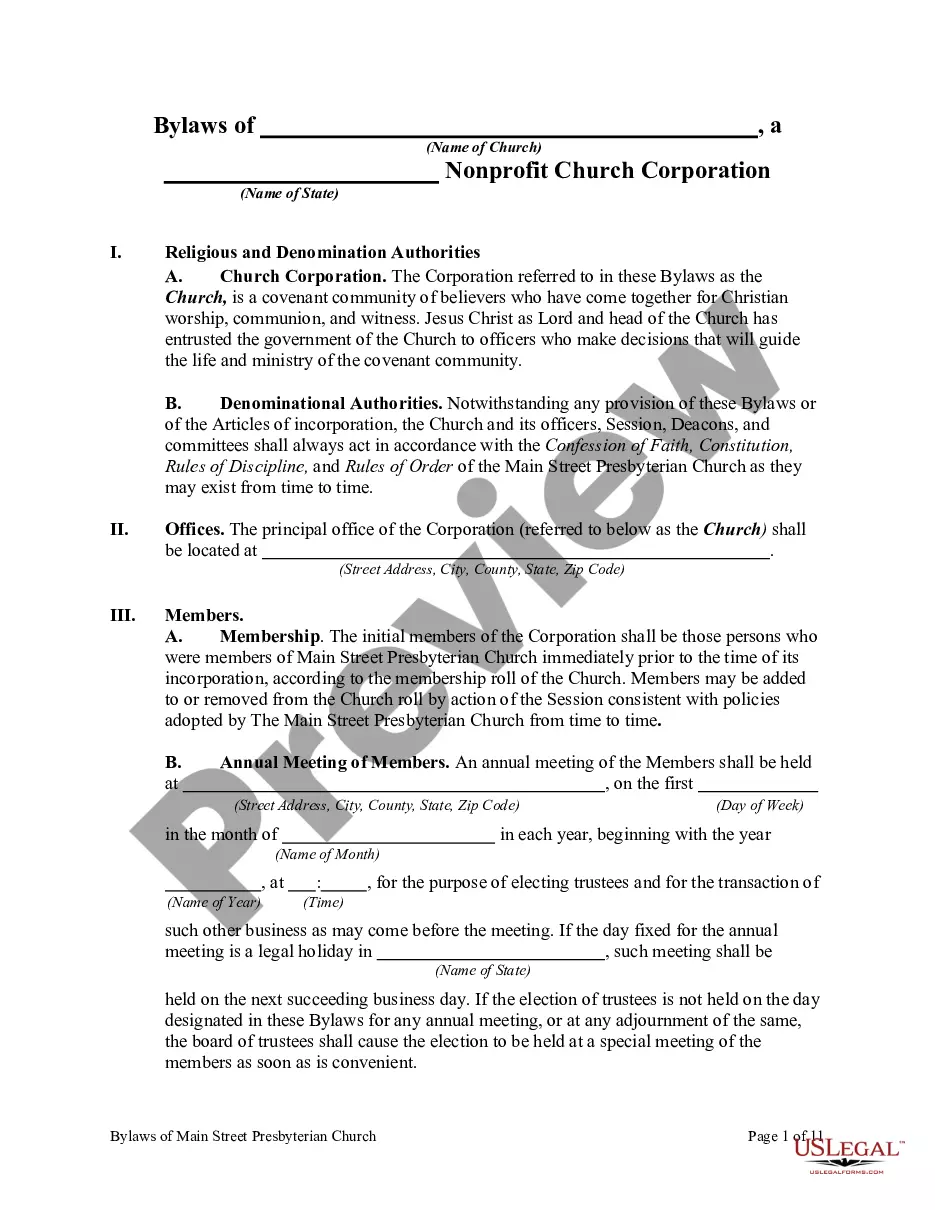
Sample Baptist Church Constitution And Bylaws
Description
Get your form ready online
Our built-in tools help you complete, sign, share, and store your documents in one place.
Make edits, fill in missing information, and update formatting in US Legal Forms—just like you would in MS Word.
Download a copy, print it, send it by email, or mail it via USPS—whatever works best for your next step.
Sign and collect signatures with our SignNow integration. Send to multiple recipients, set reminders, and more. Go Premium to unlock E-Sign.
If this form requires notarization, complete it online through a secure video call—no need to meet a notary in person or wait for an appointment.
We protect your documents and personal data by following strict security and privacy standards.

Make edits, fill in missing information, and update formatting in US Legal Forms—just like you would in MS Word.

Download a copy, print it, send it by email, or mail it via USPS—whatever works best for your next step.

Sign and collect signatures with our SignNow integration. Send to multiple recipients, set reminders, and more. Go Premium to unlock E-Sign.

If this form requires notarization, complete it online through a secure video call—no need to meet a notary in person or wait for an appointment.

We protect your documents and personal data by following strict security and privacy standards.
Looking for another form?







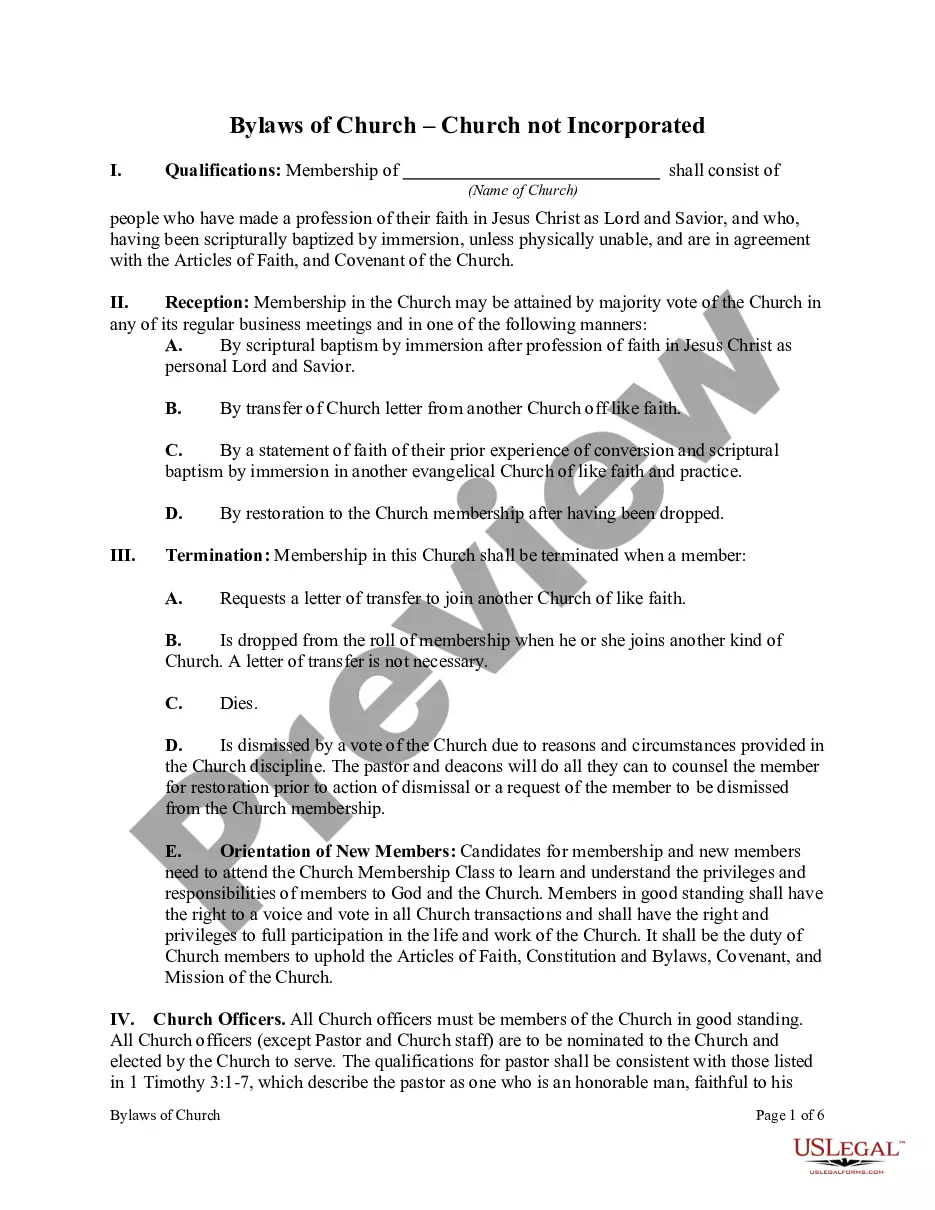
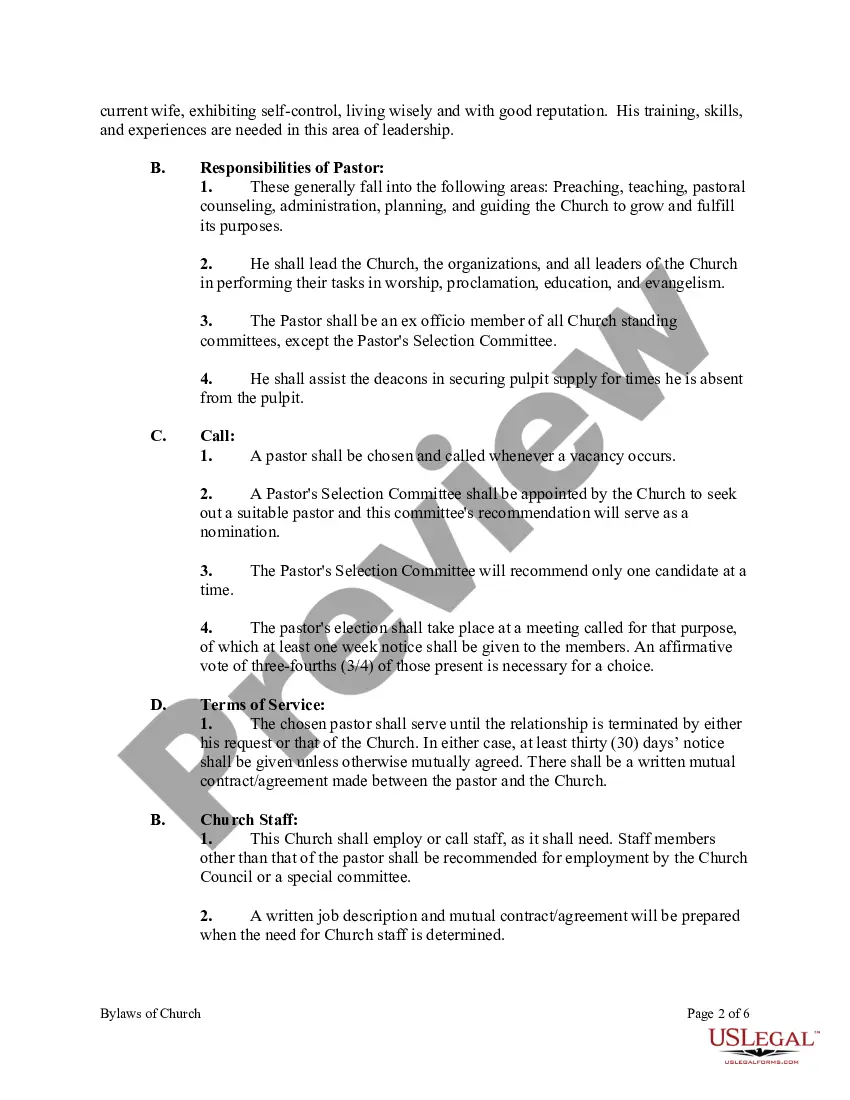
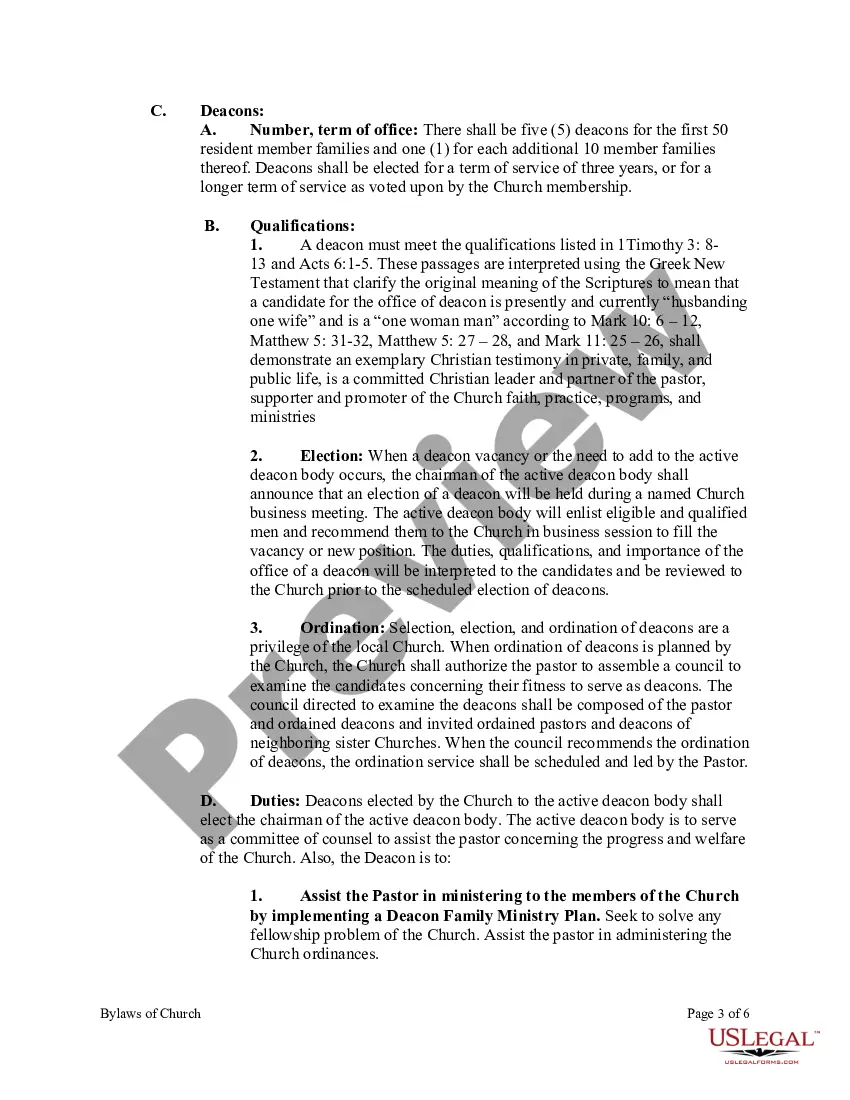
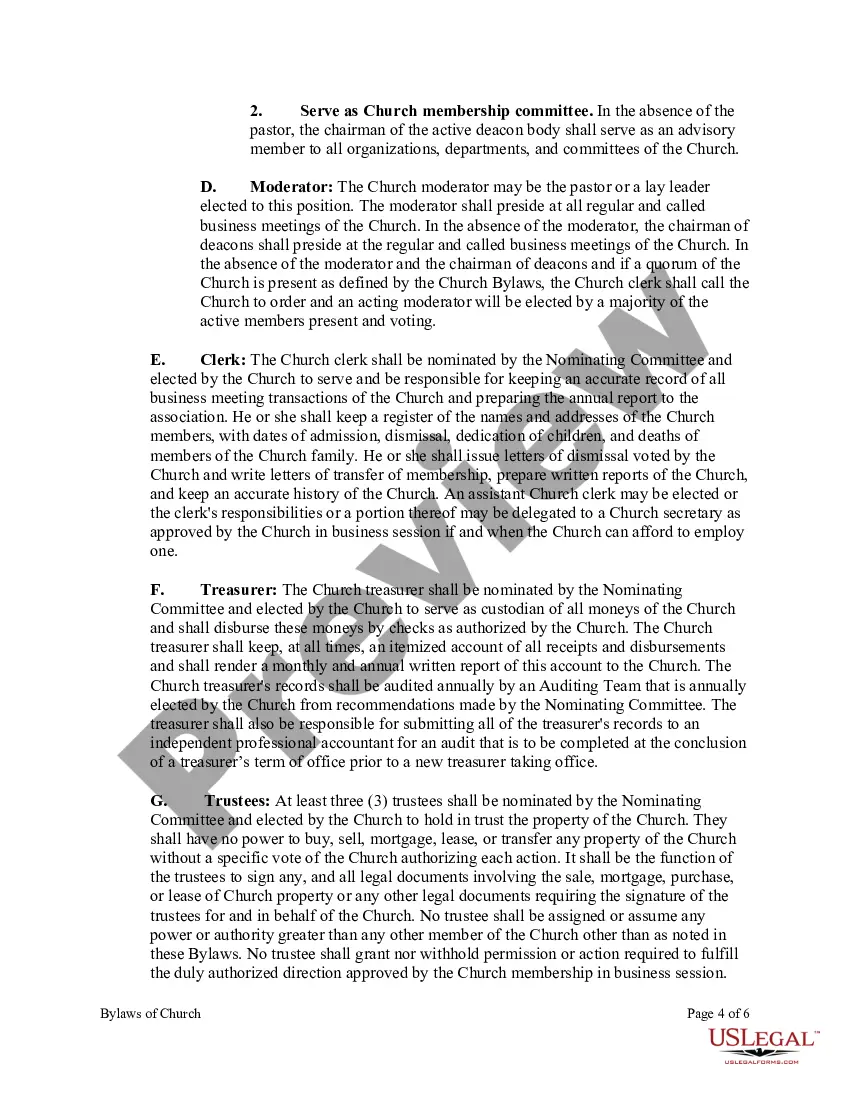
How to fill out Bylaws Of Church - Church Not Incorporated?
Managing legal documentation and processes can be a labor-intensive addition to your daily routine.
Examples like the Baptist Church Constitution and Bylaws and similar forms usually require you to locate them and grasp how to fill them out correctly.
Therefore, whether you are dealing with financial, legal, or personal issues, having a comprehensive and accessible online repository of forms at your disposal will be tremendously helpful.
US Legal Forms is the leading online resource for legal templates, offering over 85,000 state-specific documents and an array of tools to help you complete your paperwork with ease.
Is this your first experience with US Legal Forms? Sign up and create an account in a matter of minutes, granting you access to the form library and the Baptist Church Constitution and Bylaws. Next, follow these steps to fill out your form.
- Browse the library of pertinent documents available to you with just one click.
- US Legal Forms provides state- and county-specific documents that can be downloaded at any time.
- Safeguard your document management processes with top-tier support that enables you to assemble any form in minutes without additional or concealed fees.
- Simply Log In to your account, search for the Baptist Church Constitution and Bylaws, and download it directly from the My documents section.
- You may also retrieve previously saved documents.
Form popularity
FAQ
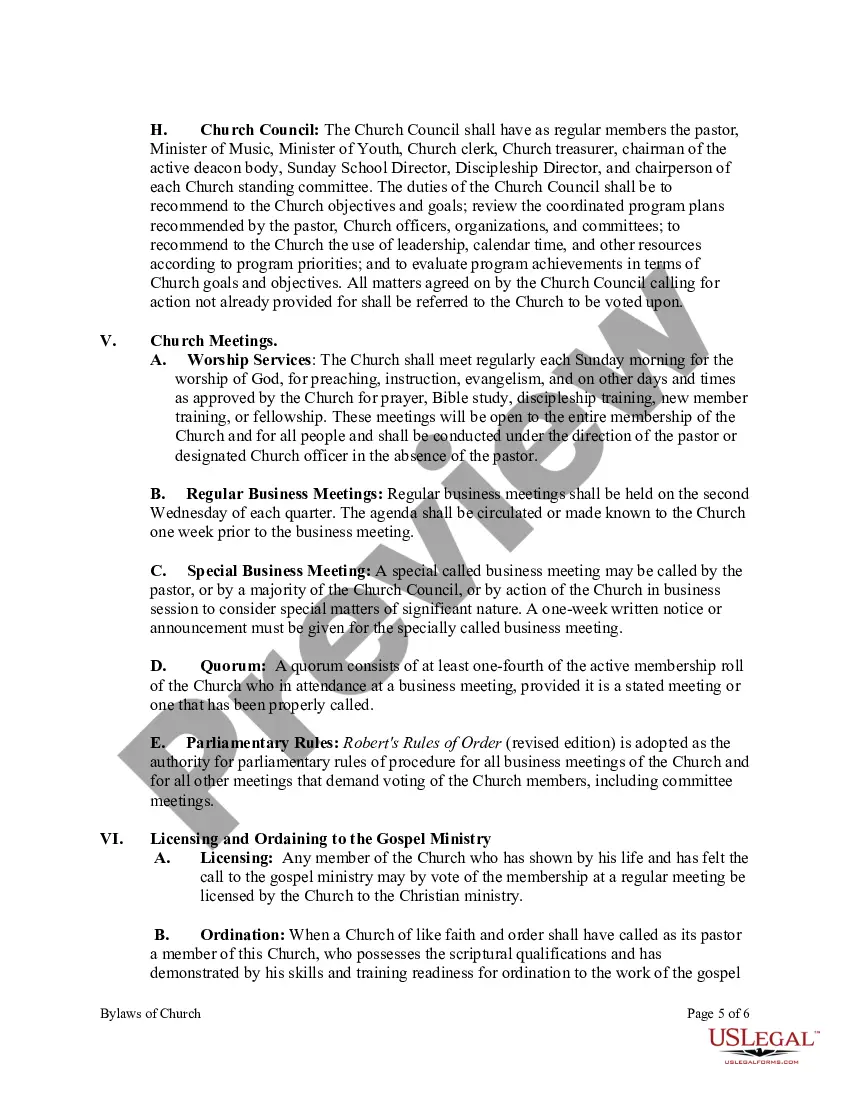
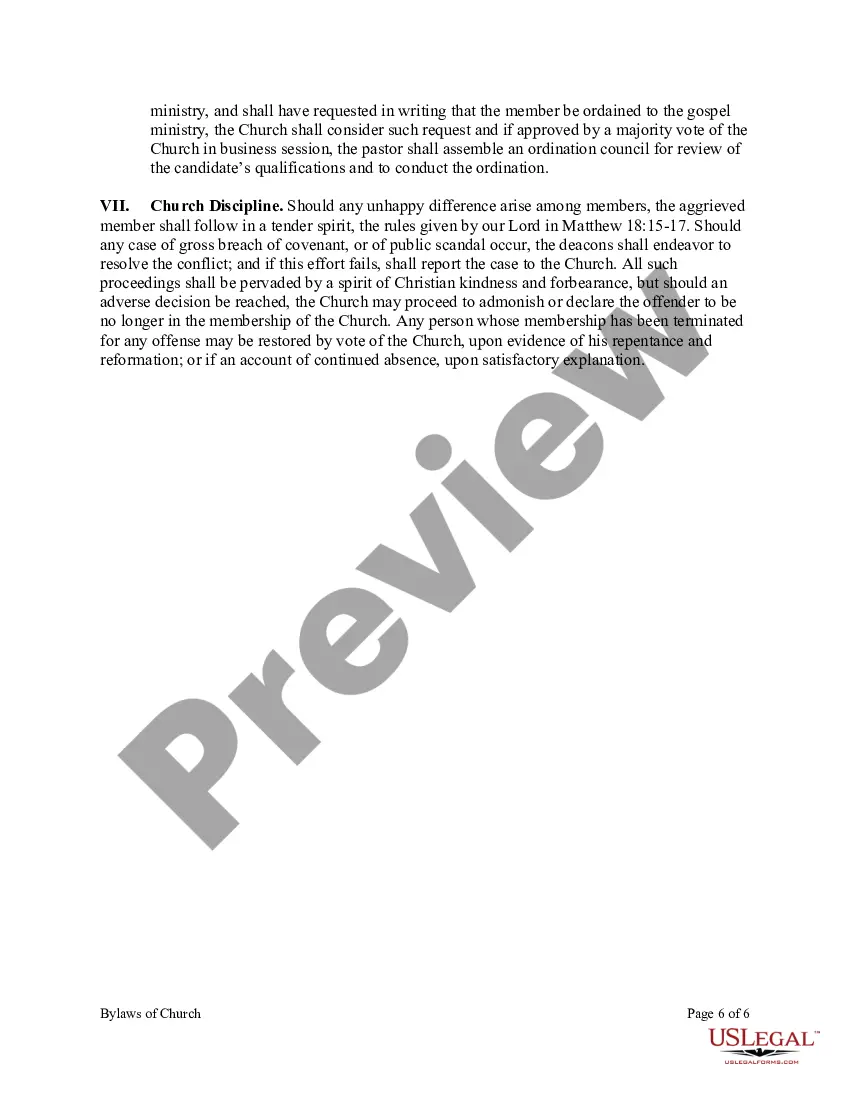
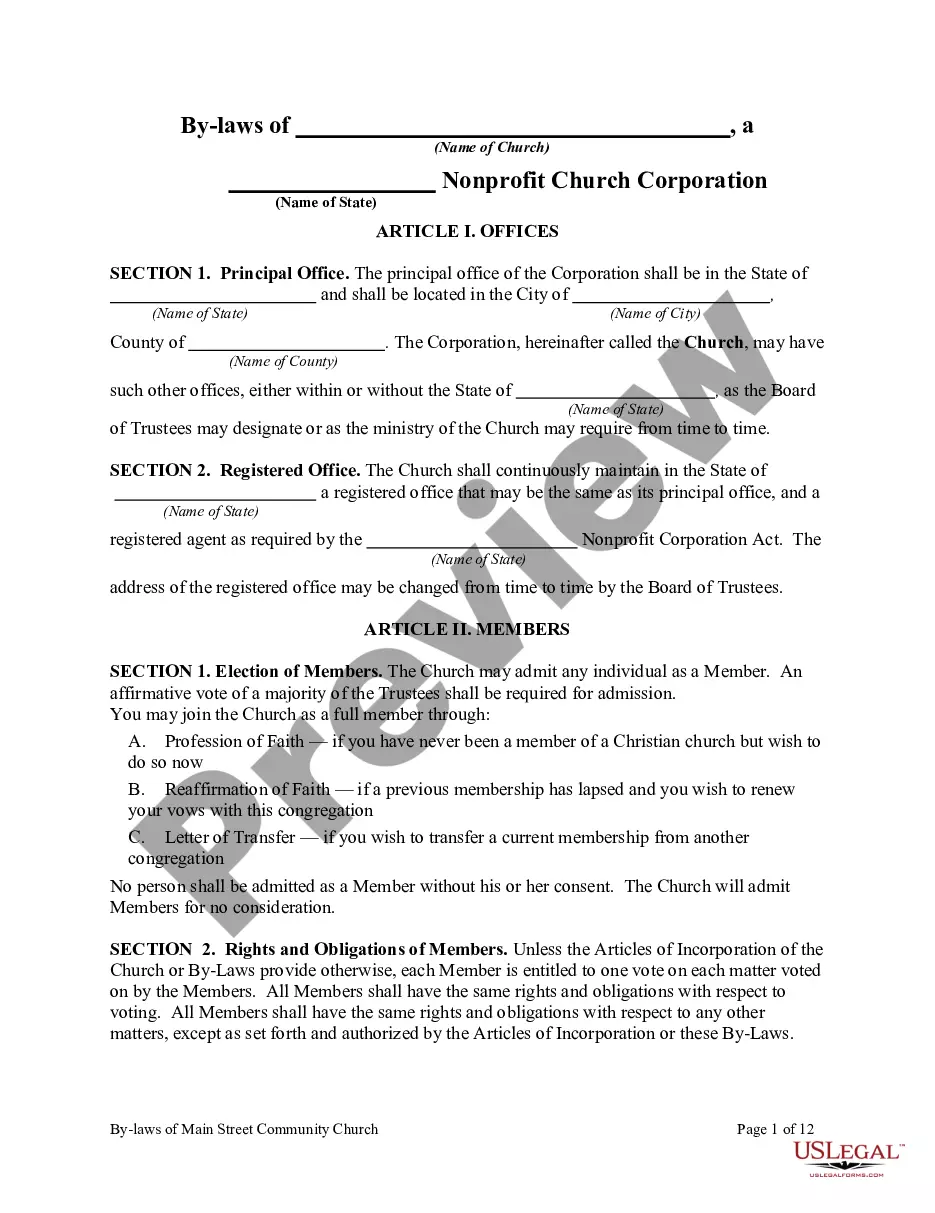
Normally the constitution is the broader body of mutually agreed upon principles and purposeful structure that govern the affairs and action of the church. The bylaws are the subordinate rules adopted by the church to augment the constitution. Sometimes there is no constitution, so bylaws serve the purpose.
Baptist churches have a fairly simple model of church leadership. At the top is the pastor, who has ultimate authority and makes final decisions on all matters. Deacons are appointed by the congregation to provide spiritual guidance and to serve in an advisory capacity.
The Baptist Church is a decentralized faith community, with each church being self-governing and autonomous. Each church is led by a pastor, who is responsible for preaching and teaching the Bible, and a group of deacons, who assist with the administration of the church.
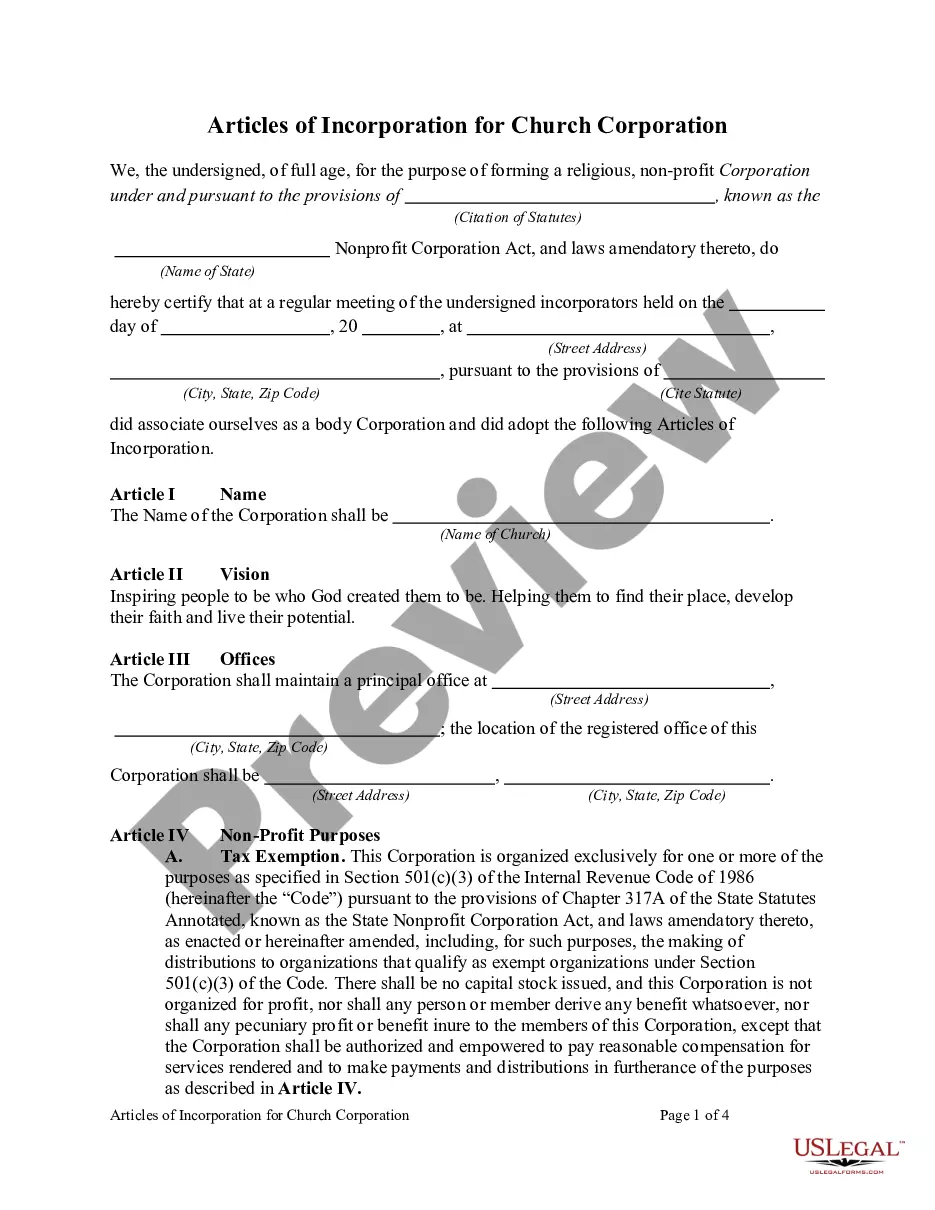
The constitution is required to describe the structure and order of the church so as to describe how the church will set out to remain "pure". Thus, the constitution often incorporates those other items you have listed or at least makes reference to them specifically by name to accomplish that.
Church bylaws also form an agreement among church members, acting as guardrails necessary for healthy church governance and action. For example, your bylaws should provide the qualifications for and manner of appointment/election of all church directors and officers.