Church Bylaws Examples For Non Profit Organizations
Description
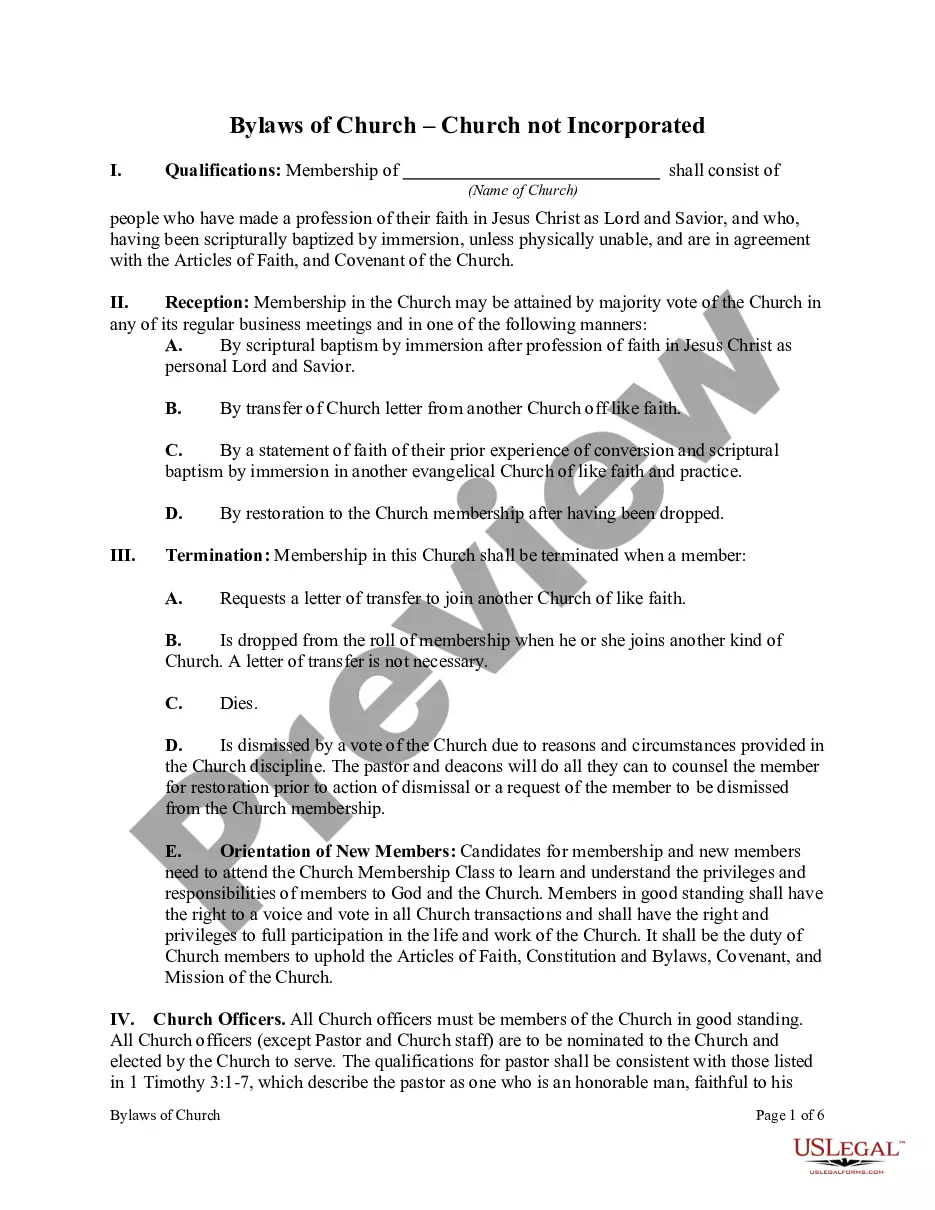
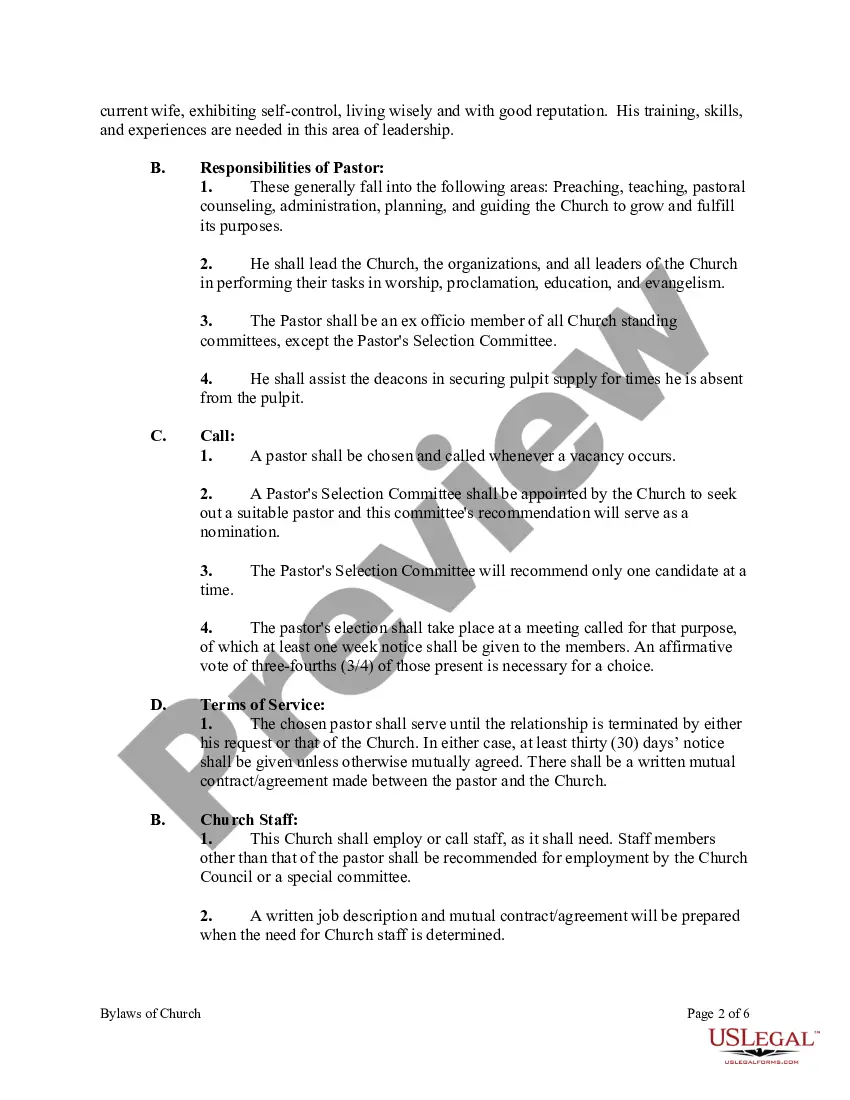
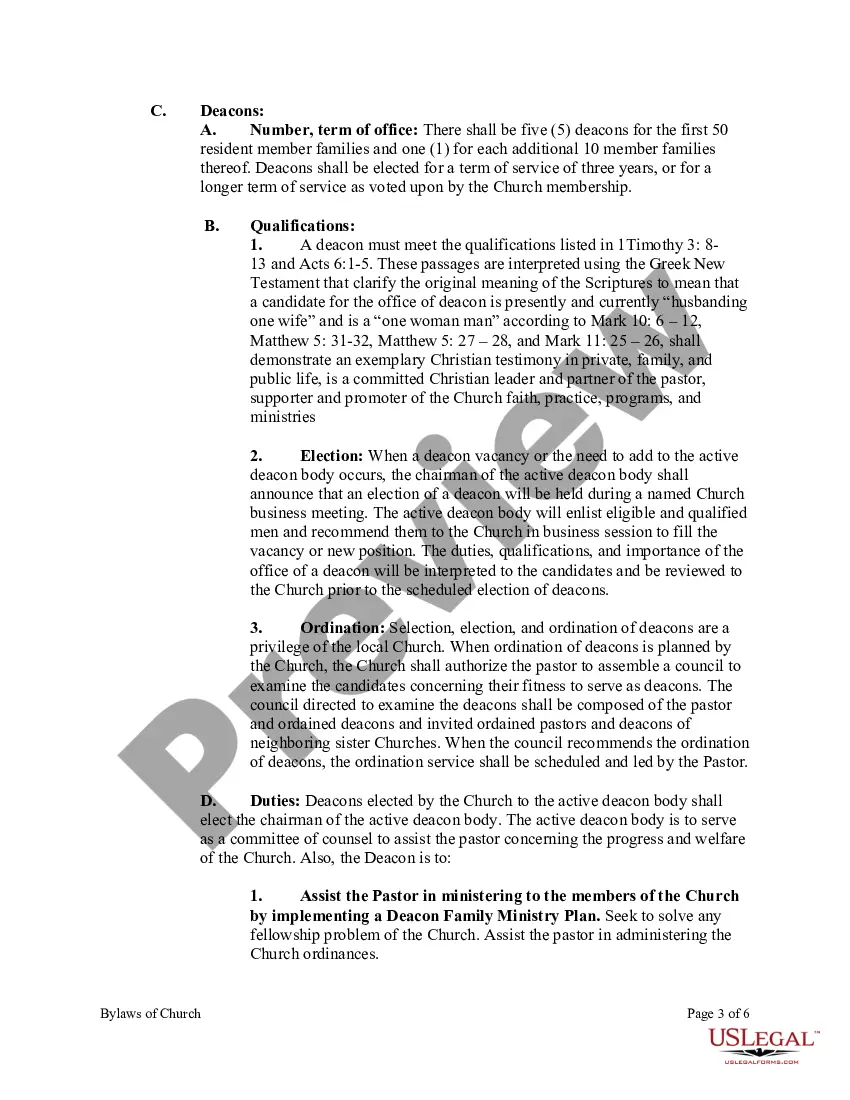
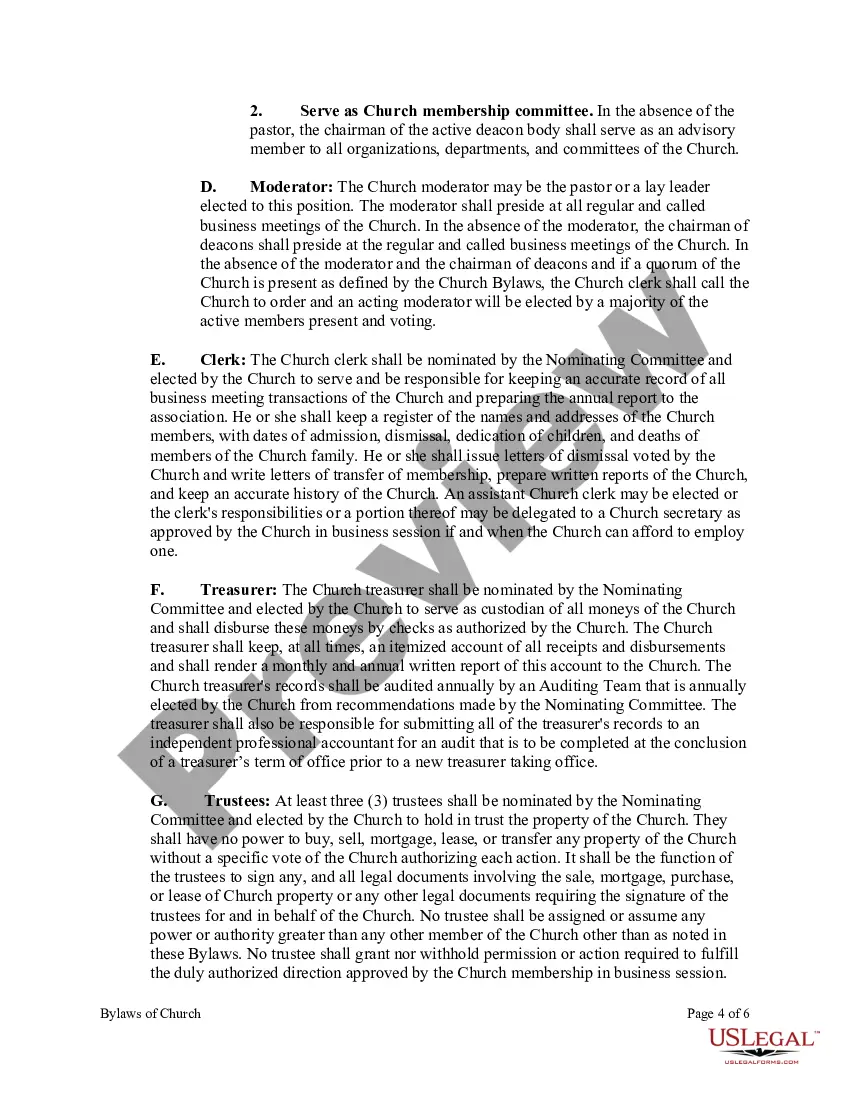
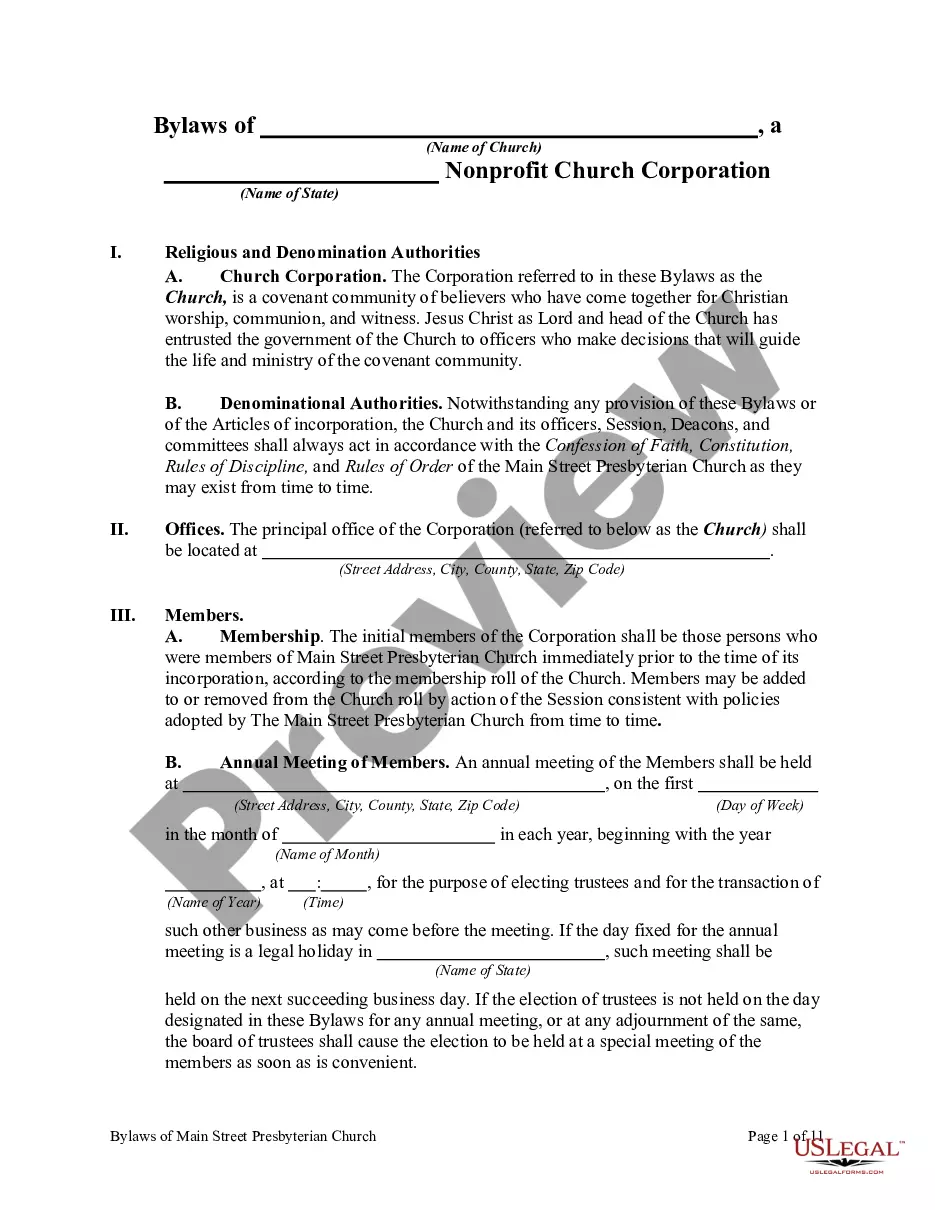
Get your form ready online
Our built-in tools help you complete, sign, share, and store your documents in one place.
Make edits, fill in missing information, and update formatting in US Legal Forms—just like you would in MS Word.
Download a copy, print it, send it by email, or mail it via USPS—whatever works best for your next step.
Sign and collect signatures with our SignNow integration. Send to multiple recipients, set reminders, and more. Go Premium to unlock E-Sign.
If this form requires notarization, complete it online through a secure video call—no need to meet a notary in person or wait for an appointment.
We protect your documents and personal data by following strict security and privacy standards.

Make edits, fill in missing information, and update formatting in US Legal Forms—just like you would in MS Word.

Download a copy, print it, send it by email, or mail it via USPS—whatever works best for your next step.

Sign and collect signatures with our SignNow integration. Send to multiple recipients, set reminders, and more. Go Premium to unlock E-Sign.

If this form requires notarization, complete it online through a secure video call—no need to meet a notary in person or wait for an appointment.

We protect your documents and personal data by following strict security and privacy standards.
Looking for another form?




How to fill out Bylaws Of Church - Church Not Incorporated?
Regardless of whether for commercial reasons or personal issues, everyone must confront legal matters at some point in their life.
Filling out legal documents requires meticulous care, starting from selecting the appropriate form template.
With an extensive US Legal Forms catalog available, you do not have to waste time searching for the suitable template online. Utilize the library’s user-friendly navigation to find the right template for any situation.
- For instance, if you choose an incorrect version of the Church Bylaws Examples For Non Profit Organizations, it will be denied upon submission.
- Thus, it is crucial to have a reliable source of legal documents such as US Legal Forms.
- To obtain a Church Bylaws Examples For Non Profit Organizations template, follow these simple steps.
- Search for the template you need by using the search bar or browsing the catalog.
- Review the form’s description to confirm it aligns with your situation, state, and county.
- Click on the form’s preview to inspect it.
- If it is the wrong document, return to the search function to locate the Church Bylaws Examples For Non Profit Organizations template you need.
- Acquire the file when it suits your requirements.
- If you already possess a US Legal Forms account, simply click Log in to access previously saved documents in My documents.
- If you do not yet have an account, you can secure the form by clicking Buy now.
- Select the correct pricing option.
- Complete the account registration form.
- Choose your payment method: utilize a credit card or PayPal account.
- Select the file format you prefer and download the Church Bylaws Examples For Non Profit Organizations.
- Once saved, you can fill out the form using editing software or print it and complete it by hand.
Form popularity
FAQ
Yes, a nonprofit organization is required to have bylaws, and they should be made available to the public if requested. Bylaws serve as the foundational document that outlines how the organization is structured and operates, including church bylaws examples for non profit organizations. Providing these documents promotes transparency and accountability, which are essential for building trust with the community and stakeholders. If you need help drafting bylaws, consider using resources such as US Legal Forms for guidance.
Yes, nonprofit bylaws are typically considered public records. This means that anyone can request to view them, which allows for transparency in how the organization operates. Church bylaws examples for non profit organizations fall under this category, as they outline the rules and procedures that govern the organization. Always verify with local regulations to understand the specific accessibility requirements.
To find bylaws for a nonprofit organization, including church bylaws examples for non profit organizations, you can start by visiting the organization's website. Many nonprofits post their bylaws in the 'About Us' or 'Governance' sections. Additionally, you can check with your state’s Secretary of State office, as many states maintain public records of nonprofit filings. If you need further assistance, platforms like US Legal Forms can provide templates and examples to help you navigate this process.
Bylaws for nonprofit organizations, including church bylaws examples for non profit organizations, are generally accessible to the public. This means anyone can view the bylaws to understand the internal governance of the organization. However, the specific availability can depend on state laws and the organization's policies. It is a good practice to check your state's requirements or directly contact the nonprofit for access.
Writing bylaws for non-profits requires careful consideration of your organization's mission and structure. Start by researching Church bylaws examples for non profit organizations to understand standard practices. Clearly define roles, responsibilities, and decision-making processes. Additionally, using a reliable platform like uslegalforms can help you access templates and guidance to create comprehensive and compliant bylaws.
Many organizations overlook the importance of clarity in their Church bylaws examples for non profit organizations. Common mistakes include vague language, failing to outline the roles of officers, and neglecting to address conflict resolution procedures. These oversights can lead to confusion and disputes within the organization. To avoid these pitfalls, ensure your bylaws are detailed, well-structured, and regularly reviewed.
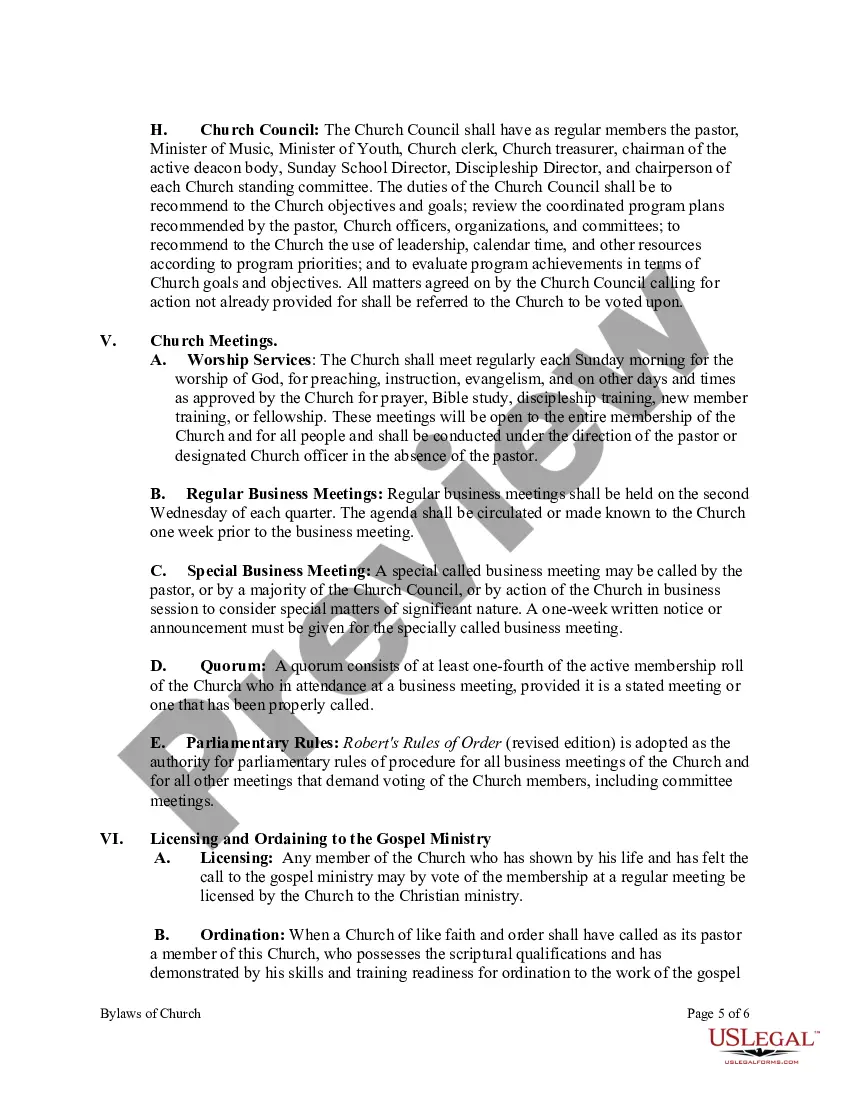
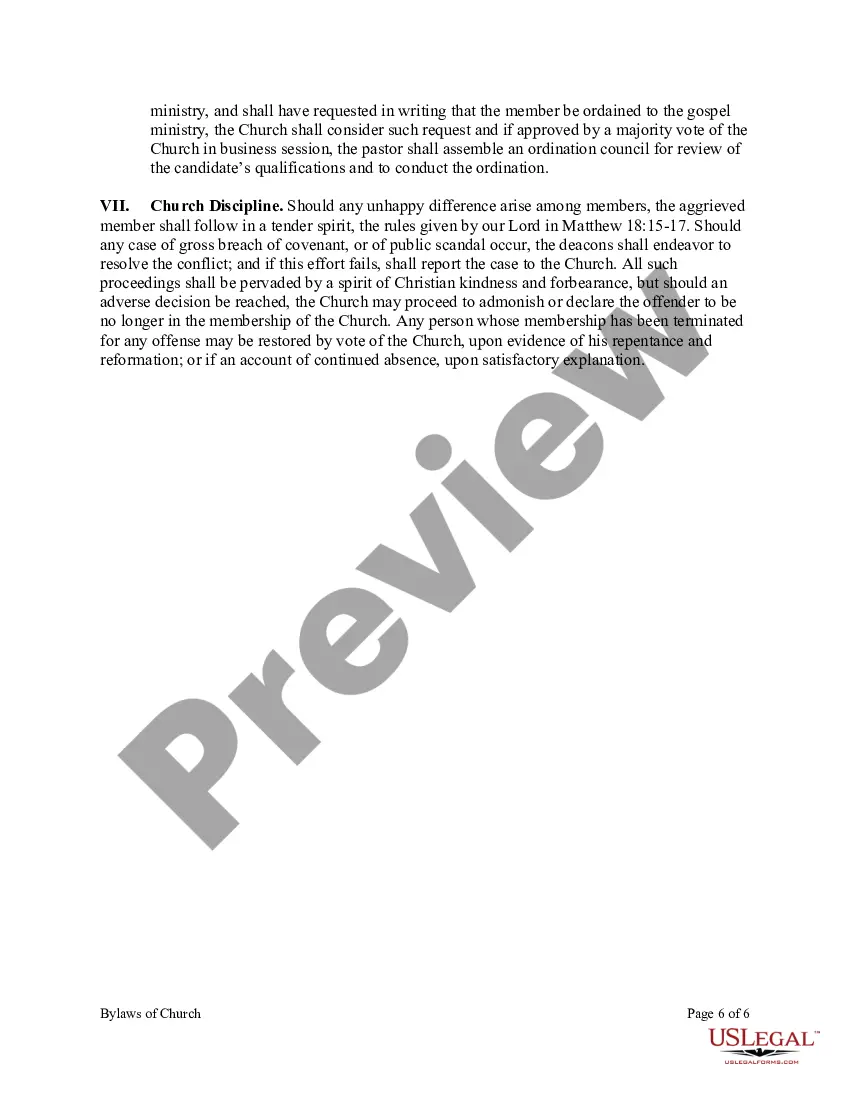
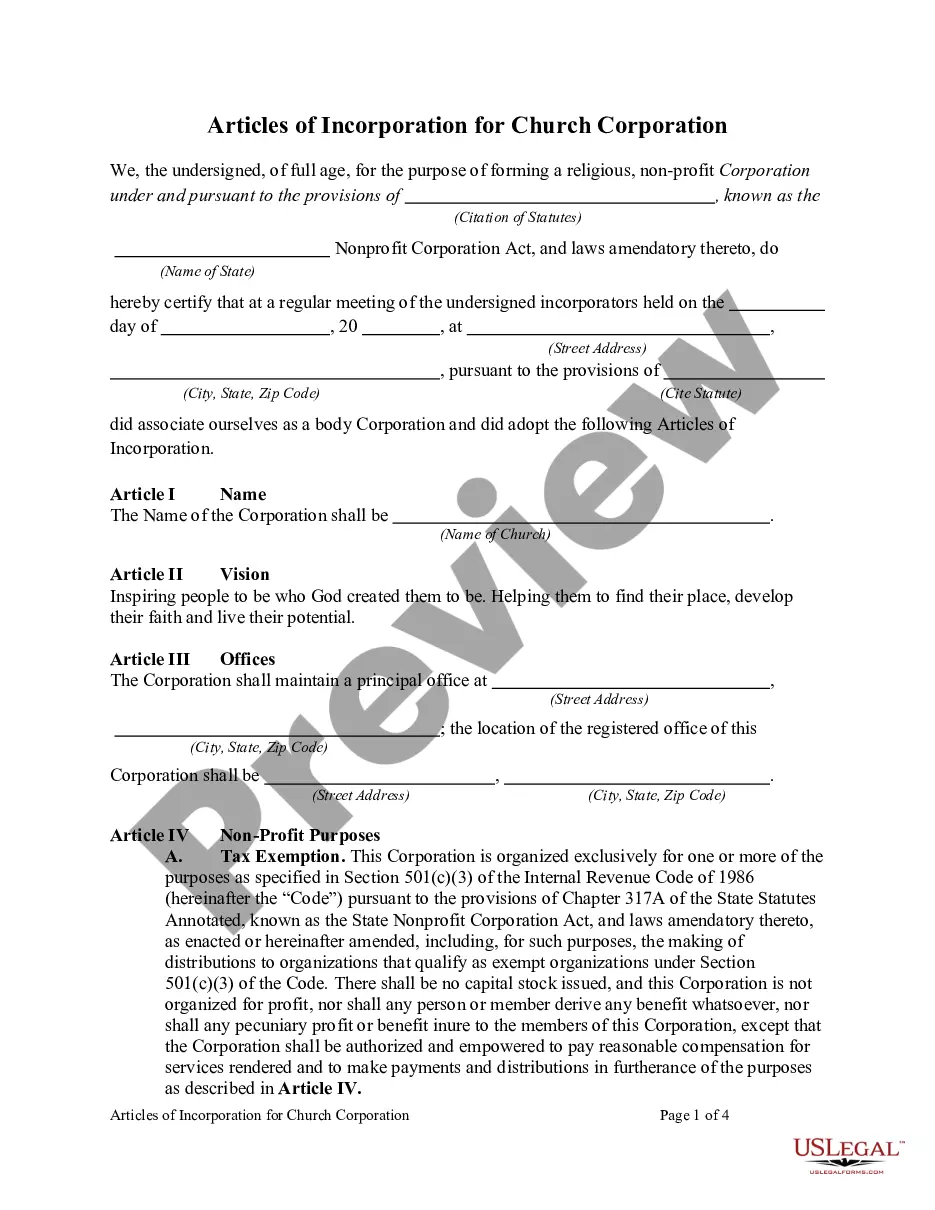
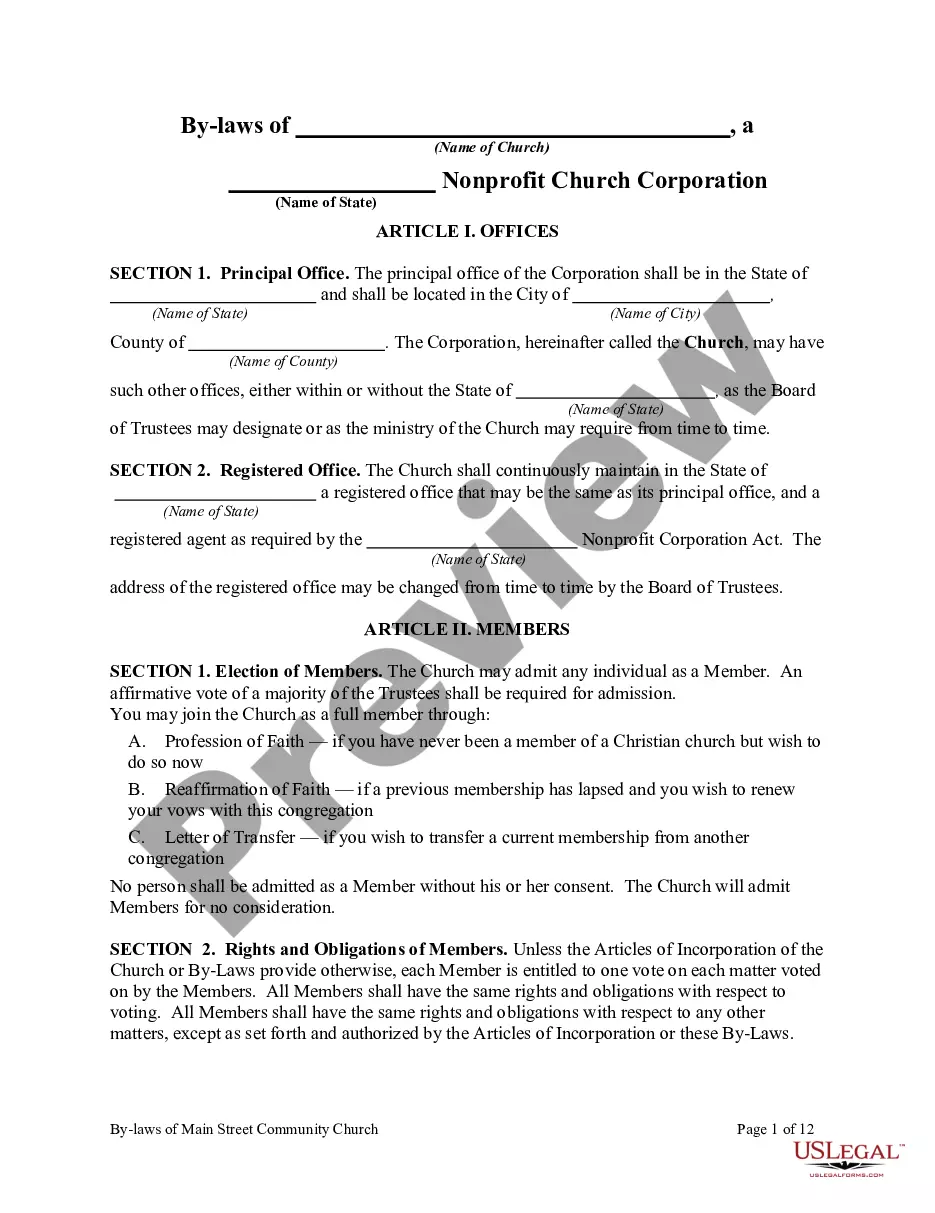
Bylaws of a nonprofit organization serve as the internal rules governing its operations and management. They typically outline the organization's purpose, structure, and procedures for conducting meetings and making decisions. To create effective church bylaws examples for nonprofit organizations, it is beneficial to refer to established templates and resources, such as those provided by US Legal Forms.
The 33% rule for nonprofits indicates that no more than one-third of the board members should be related to each other to maintain independence and avoid conflicts of interest. This promotes a diverse board that can bring various perspectives to decision-making. Incorporating this guideline into church bylaws examples for nonprofit organizations supports ethical governance and transparency.
Nonprofit bylaws should clearly outline the organization’s governance structure, including the roles and responsibilities of board members and officers. They must also specify voting procedures, meeting frequency, and how amendments can be made. Well-structured church bylaws examples for nonprofit organizations often include these elements, ensuring smooth operations and compliance with regulations.
The 80% rule for churches refers to the guideline that at least 80% of the church's income should be used for its core mission and purposes. This ensures that most resources are allocated to fulfilling the church's objectives rather than administrative costs. Understanding this principle can help organizations create effective church bylaws examples for nonprofit organizations that prioritize their mission.