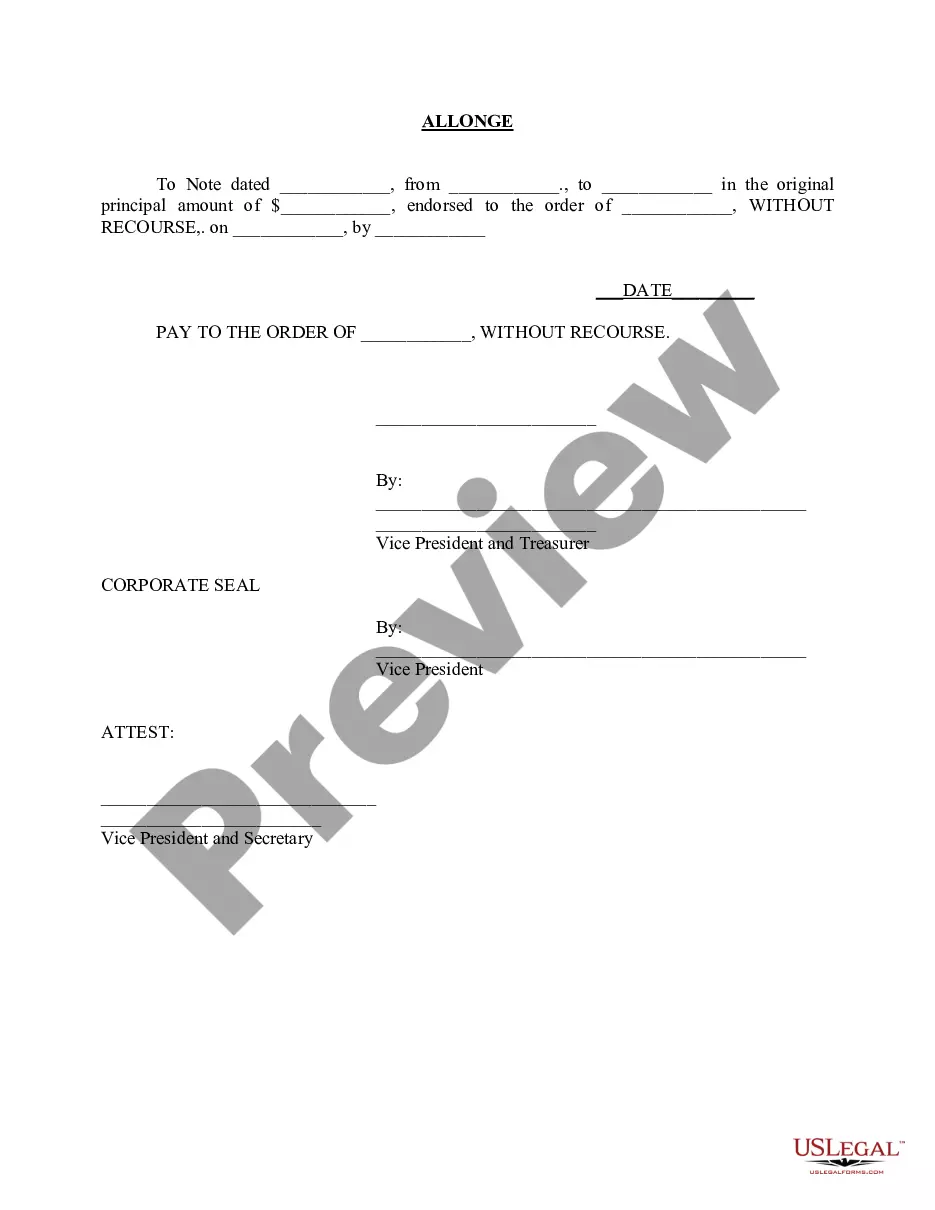
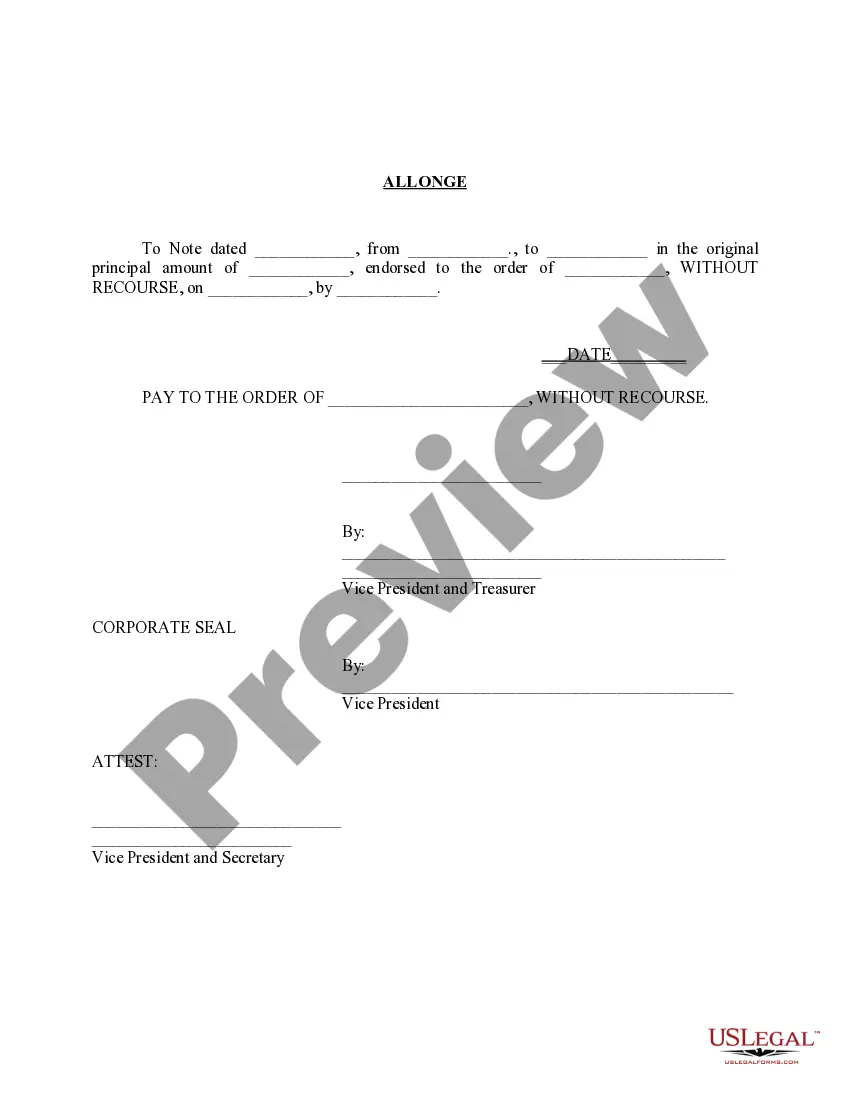
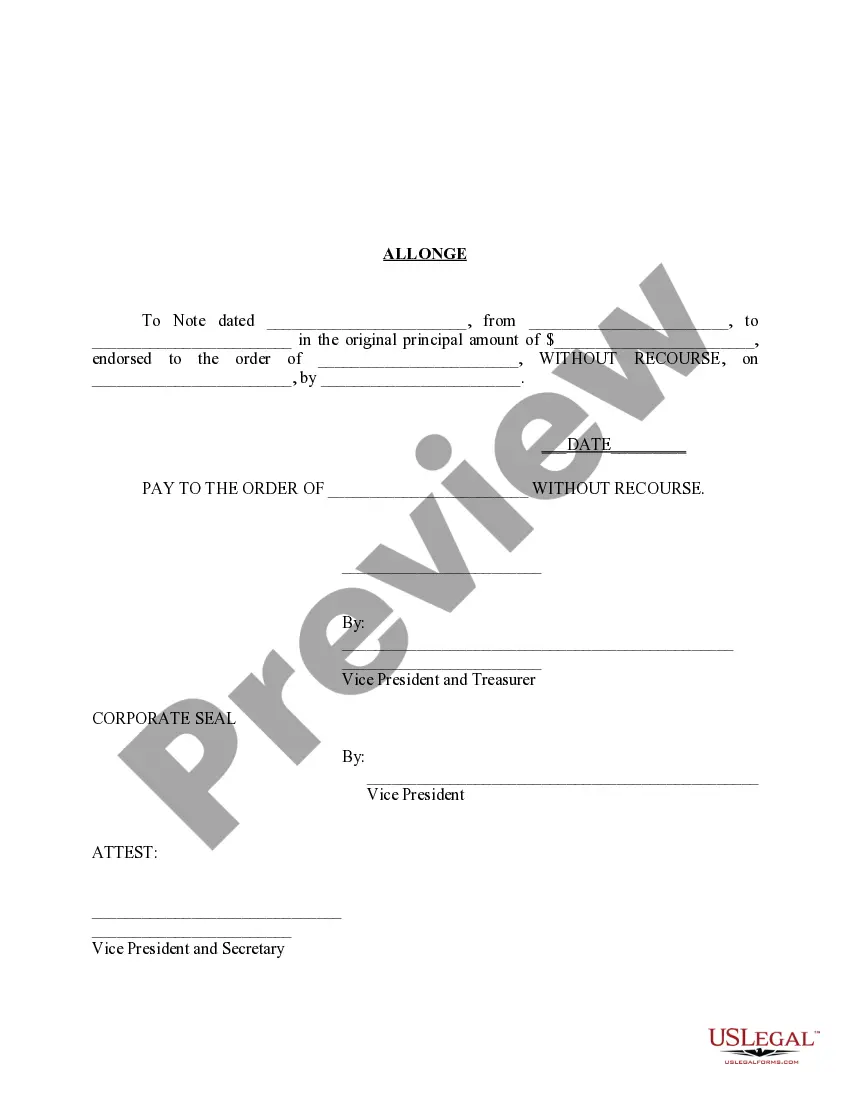
Allonge Format
Description
Get your form ready online
Our built-in tools help you complete, sign, share, and store your documents in one place.
Make edits, fill in missing information, and update formatting in US Legal Forms—just like you would in MS Word.
Download a copy, print it, send it by email, or mail it via USPS—whatever works best for your next step.
Sign and collect signatures with our SignNow integration. Send to multiple recipients, set reminders, and more. Go Premium to unlock E-Sign.
If this form requires notarization, complete it online through a secure video call—no need to meet a notary in person or wait for an appointment.
We protect your documents and personal data by following strict security and privacy standards.

Make edits, fill in missing information, and update formatting in US Legal Forms—just like you would in MS Word.

Download a copy, print it, send it by email, or mail it via USPS—whatever works best for your next step.

Sign and collect signatures with our SignNow integration. Send to multiple recipients, set reminders, and more. Go Premium to unlock E-Sign.

If this form requires notarization, complete it online through a secure video call—no need to meet a notary in person or wait for an appointment.

We protect your documents and personal data by following strict security and privacy standards.
Looking for another form?





How to fill out Allonge?
Dealing with legal paperwork and processes may become a lengthy addition to your overall schedule.
Allonge Format and similar documents usually necessitate you to locate them and comprehend how to fill them out correctly.
Thus, whether you are managing financial, legal, or personal issues, utilizing a comprehensive and accessible online collection of forms at your disposal will greatly assist.
US Legal Forms is the premier online resource for legal templates, featuring over 85,000 state-specific forms and a variety of tools to help you complete your paperwork with ease.
Is this your first experience with US Legal Forms? Register and create a free account in just a few minutes, granting you access to the form collection and Allonge Format. Next, follow these steps to complete your form: Ensure you have the correct document by utilizing the Review option and examining the form details. Click Buy Now when ready, and select the subscription plan that fits you. Click Download, then fill out, eSign, and print the document. US Legal Forms has 25 years of experience assisting users in managing their legal paperwork. Find the form you require today and streamline any process with ease.
- Explore the collection of relevant documents available at your fingertips with a single click.
- US Legal Forms provides state- and county-specific forms available for download anytime.
- Protect your document handling processes using a premium service that allows you to create any form in minutes without extra or hidden fees.
- Simply Log In to your account, locate Allonge Format, and retrieve it instantly from the My documents section.
- You can also access previously saved forms.
Form popularity
FAQ
To complete an allonge format, first ensure you have the original document in hand. Next, clearly indicate on the allonge what additional information or signatures are needed. Finally, have all parties sign the allonge to validate it, ensuring that it is attached to the original document securely. US Legal Forms provides user-friendly templates to guide you through this process.
The term allonge refers to an extension or addition to a legal document, providing space for further signatures or endorsements. This format is crucial in financial transactions where changes or updates need formal acknowledgment. By utilizing the allonge format, you ensure that all alterations are documented properly and legally recognized.
While both an allonge format and an assignment involve the transfer of rights, they serve different functions. An assignment typically involves transferring ownership of a contract or another legal right, while an allonge serves as a space for additional signatures or notes attached to the original document. Understanding these distinctions is key when preparing your legal documents.
The purpose of an allonge format is to allow for the transfer of rights or obligations in financial documents without needing to rewrite or replace the original document. It acts as an extension that accommodates additional signatures or endorsements. This is especially useful in transactions where multiple parties may need to endorse a document, ensuring that all necessary approvals are captured efficiently.
An allonge format is a document that acts as an attachment to another legal document, typically a promissory note or contract. It provides additional space for signatures, endorsements, or other important information. You can create an effective allonge using platforms like US Legal Forms, which offers customizable templates tailored to your needs.
Typically, the party transferring their interest in the note signs the allonge. This includes the original lender or any subsequent parties who hold the note. Signing the allonge format indicates acknowledgment of the transfer and the intention to enforce the terms of the original note. Ensuring clear signatures can help prevent disputes and support the overall validity of the transfer.
Whether a note requires notarization can depend on various factors, including state laws and the specific requirements of the transaction. Generally, notarization adds a layer of authenticity to the note, but it is not always mandatory. Using the allonge format to supplement a note can also clarify intentions without necessitating notarization. You may consider consulting legal resources or services like US Legal Forms for guidance.
In most cases, an allonge does not need to be notarized. The primary function of an allonge is to provide additional space for endorsements or signatures when the original document lacks sufficient space. However, for certain legal contexts, notarization might strengthen the allonge format. It is always wise to check specific legal requirements in your jurisdiction.
The purpose of the allonge is to supplement or clarify details of an existing note without needing to rewrite the original document. This allows for amendments, additional endorsements, or clarifications to be formally recognized. In the allonge format, it serves as a practical tool for maintaining accurate and comprehensive records.
The allonge to a note is typically filled out by the party making an endorsement or change to the original note. It can be the original lender or a subsequent endorser. They should provide all necessary details clearly, ensuring the document accurately reflects any changes for legal purposes.