Sample Deposition Form Document With Answers
Description
Get your form ready online
Our built-in tools help you complete, sign, share, and store your documents in one place.
Make edits, fill in missing information, and update formatting in US Legal Forms—just like you would in MS Word.
Download a copy, print it, send it by email, or mail it via USPS—whatever works best for your next step.
Sign and collect signatures with our SignNow integration. Send to multiple recipients, set reminders, and more. Go Premium to unlock E-Sign.
If this form requires notarization, complete it online through a secure video call—no need to meet a notary in person or wait for an appointment.
We protect your documents and personal data by following strict security and privacy standards.

Make edits, fill in missing information, and update formatting in US Legal Forms—just like you would in MS Word.

Download a copy, print it, send it by email, or mail it via USPS—whatever works best for your next step.

Sign and collect signatures with our SignNow integration. Send to multiple recipients, set reminders, and more. Go Premium to unlock E-Sign.

If this form requires notarization, complete it online through a secure video call—no need to meet a notary in person or wait for an appointment.

We protect your documents and personal data by following strict security and privacy standards.
Looking for another form?
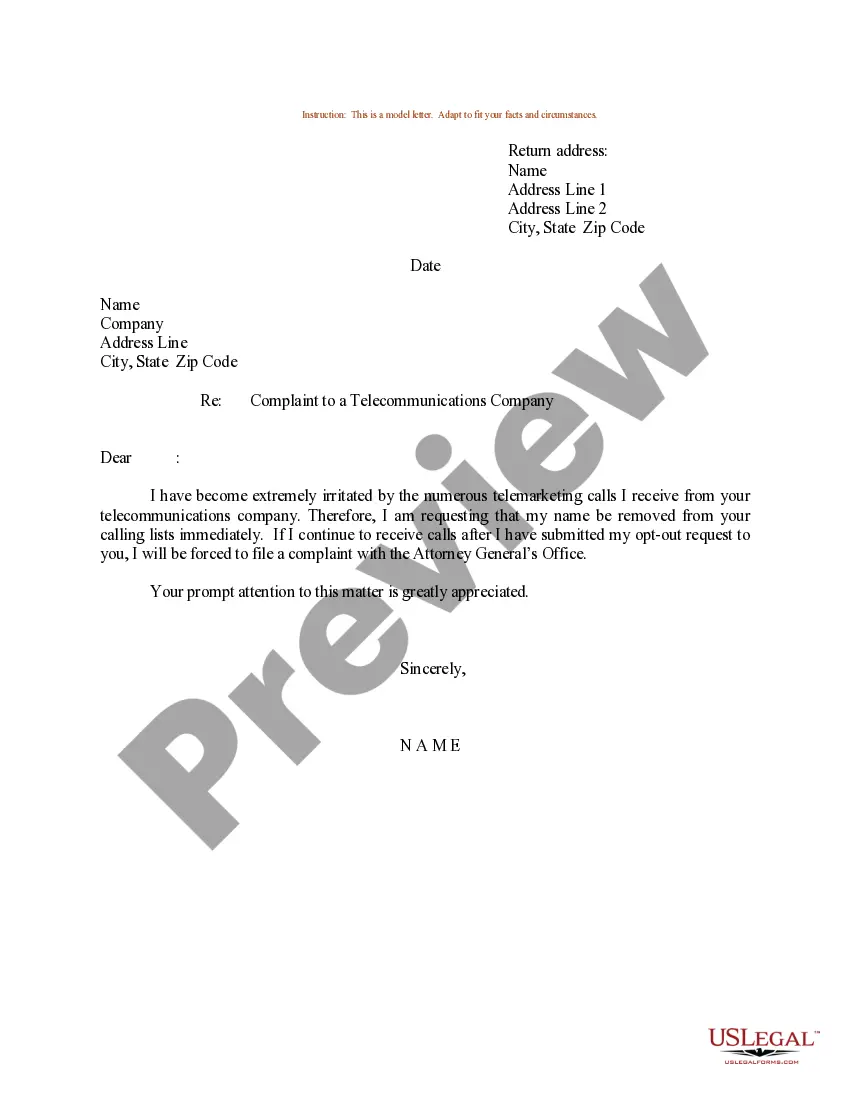
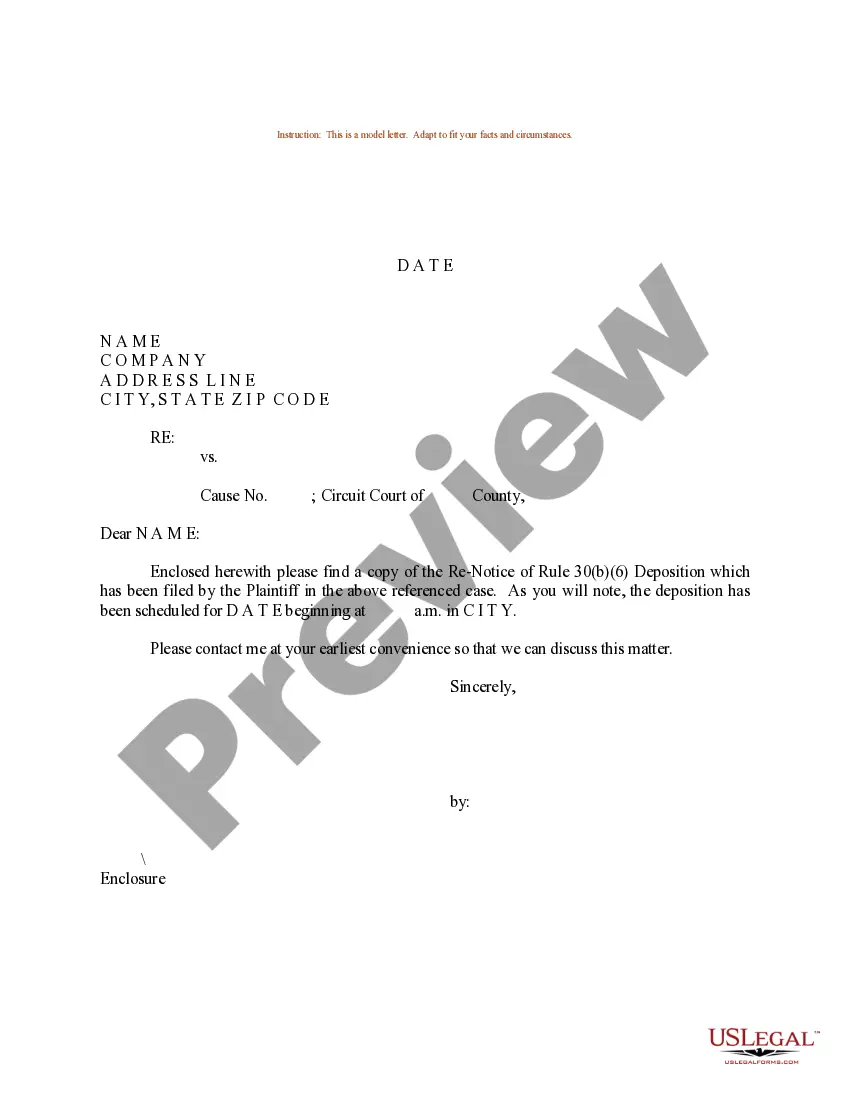
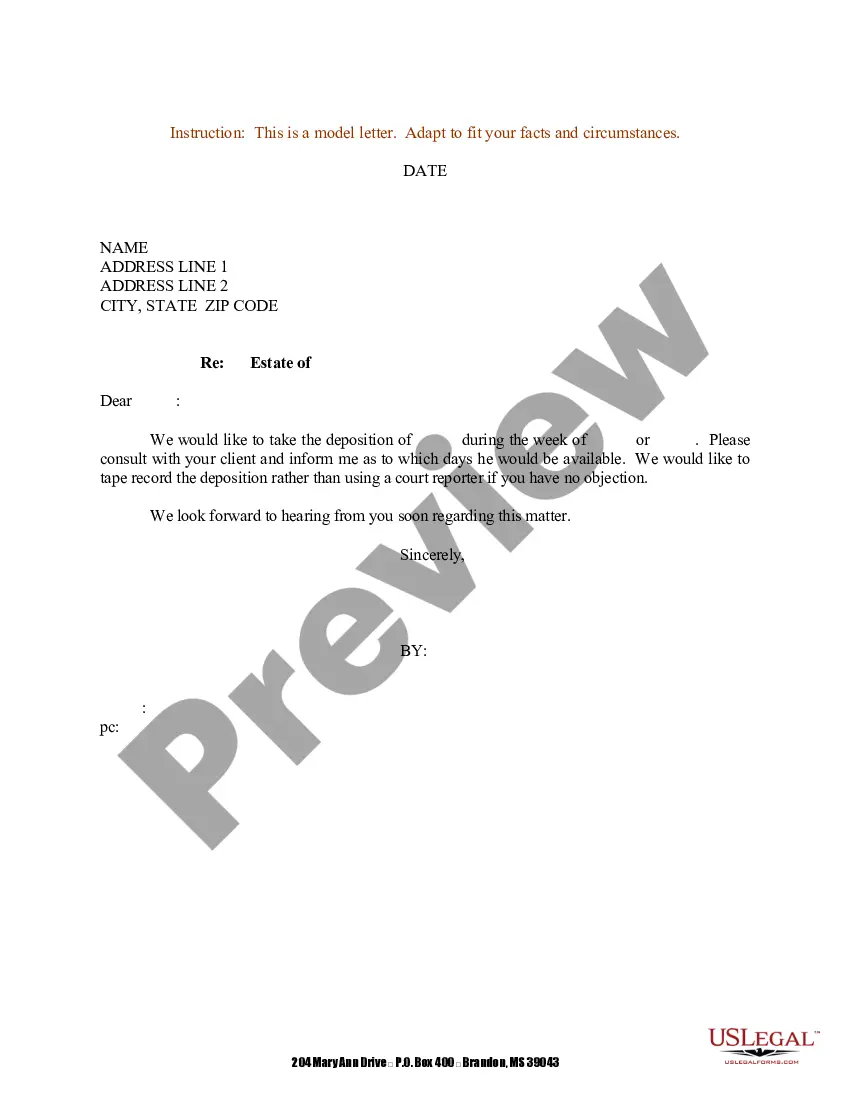
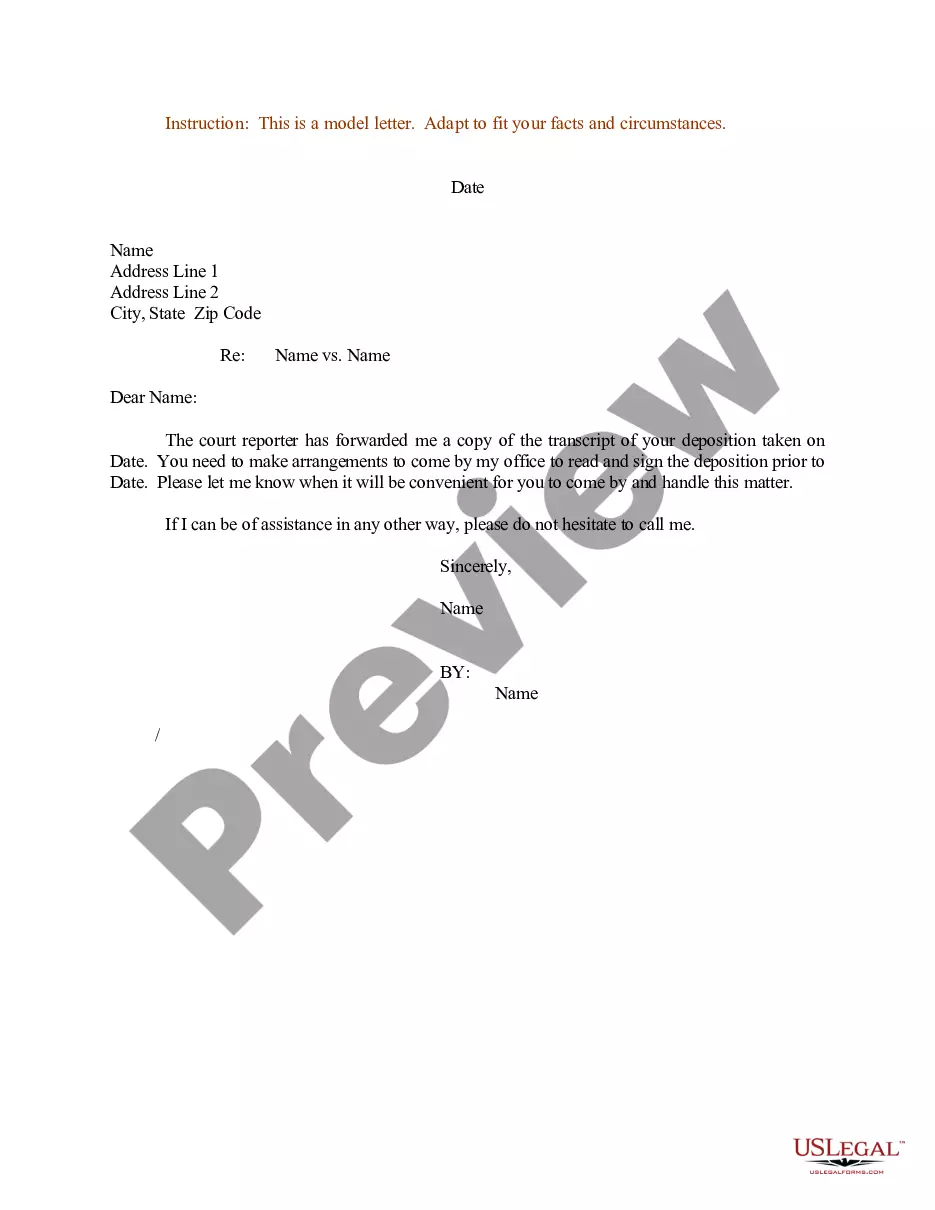
How to fill out Sample Letter Regarding Notice Of Deposition - Discovery?
The Sample Deposition Form Document With Answers displayed on this page is a versatile legal blueprint crafted by experienced attorneys in accordance with federal and local laws.
For over 25 years, US Legal Forms has delivered individuals, corporations, and lawyers with over 85,000 authenticated, state-specific documents for various business and personal needs.
Sign up for US Legal Forms to gain access to verified legal templates for all of life's situations.
- Search for the document you require and examine it.
- Browse through the file you sought and preview it or read the form description to verify it meets your requirements. If it doesn’t, use the search feature to locate the suitable one.
- Click Buy Now when you have found the template you need.
- Select a pricing plan that fits your needs and setup an account. Make a swift payment using PayPal or a credit card. If you already possess an account, Log In and check your subscription to proceed.
- Choose the format you prefer for your Sample Deposition Form Document With Answers (PDF, DOCX, RTF) and download the sample to your device.
Form popularity
FAQ
Yes, you can say 'I don't remember' during a deposition; however, it's essential to use this phrase judiciously. Frequent claims of memory loss can raise questions about your credibility. A sample deposition form document with answers can help you understand the implications of your responses. This tool assists you in maintaining consistency and clarity in your communication.
To obtain a copy of a deposition, you typically need to request it from the court reporter who recorded the session. You may also ask your attorney to facilitate this request for you. Having access to a sample deposition form document with answers can prepare you for what to expect in the process. It includes guidance on how to formally request your deposition records.
During a deposition, certain questions cannot be asked, particularly those that are irrelevant or that invade personal matters without connection to the case. Questions that elicit privileged information, such as attorney-client communications, are also off-limits. Understanding these restrictions can be aided by referring to a sample deposition form document with answers. This resource provides insights into allowable inquiries.
Beating a deposition begins with preparation. Review your case thoroughly and practice with a legal professional. When you understand the questions expected in a deposition, utilizing a sample deposition form document with answers can guide you. This form serves as a vital tool, helping you anticipate challenges and respond effectively.
'I don't remember' can be an appropriate response in a deposition, especially if you genuinely do not recall the information. However, it's important to answer as fully and honestly as you can. If you do not have a clear memory of a specific detail, it is more beneficial to communicate that than to provide incorrect information. A sample deposition form document with answers can help you understand the context in which this response may be suitable.
The best answers in a deposition are those that are clear, concise, and truthful. It's important to stick to the facts and avoid speculation or unnecessary detail. Practicing with a sample deposition form document with answers will help you familiarize yourself with the types of responses that convey confidence and accuracy.
Winning at a deposition involves thorough preparation and understanding of your case. Practice common questions and ensure you maintain your composure under pressure. Having a clear strategy and knowing how to respond can significantly impact the outcome. Referencing a sample deposition form document with answers can provide insights into effective response techniques.
To write a deposition report, summarize the key points discussed during the deposition. Include the questions asked and the witness's responses verbatim whenever possible. Organize the report logically for easy reference. Utilizing a sample deposition form document with answers can serve as a useful guide for formatting your report correctly.
A deposition typically follows a question-and-answer format. It begins with an introduction, followed by the witness providing their name and background. The attorney then conducts the questioning, while a court reporter records everything. Referring to a sample deposition form document with answers will clarify how you can structure your own deposition effectively.
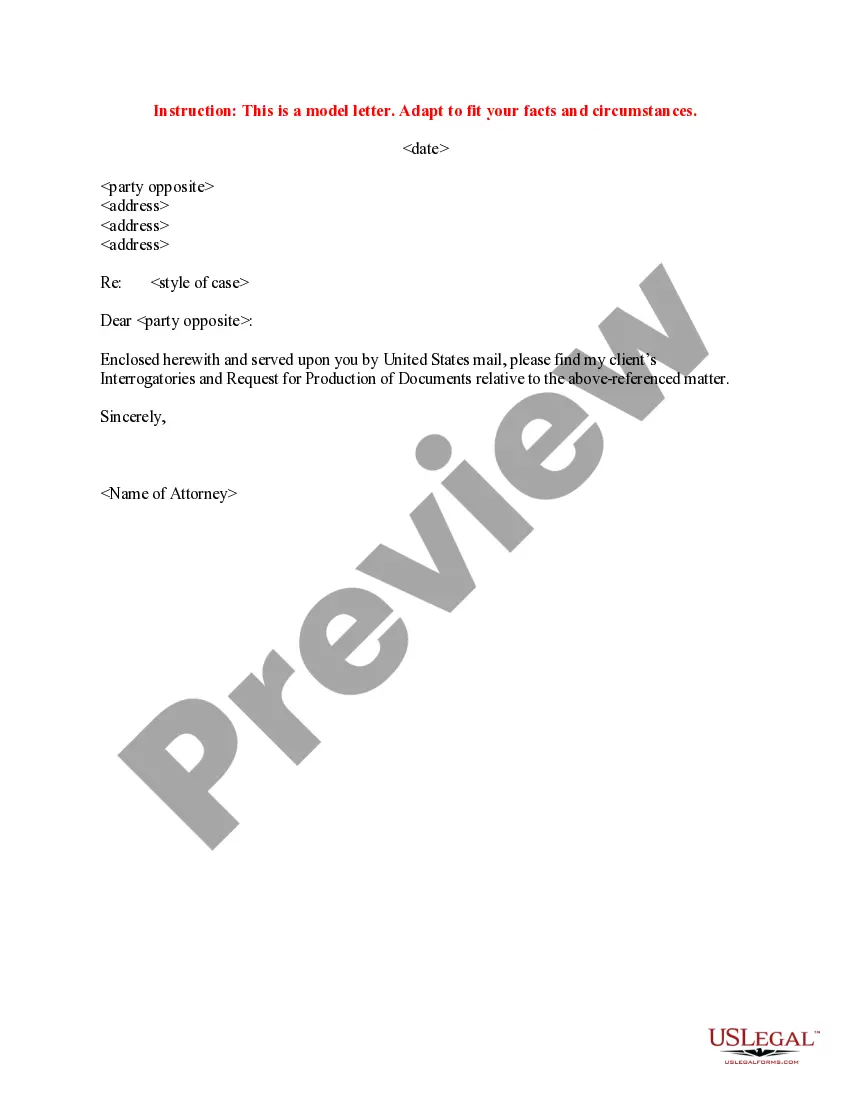
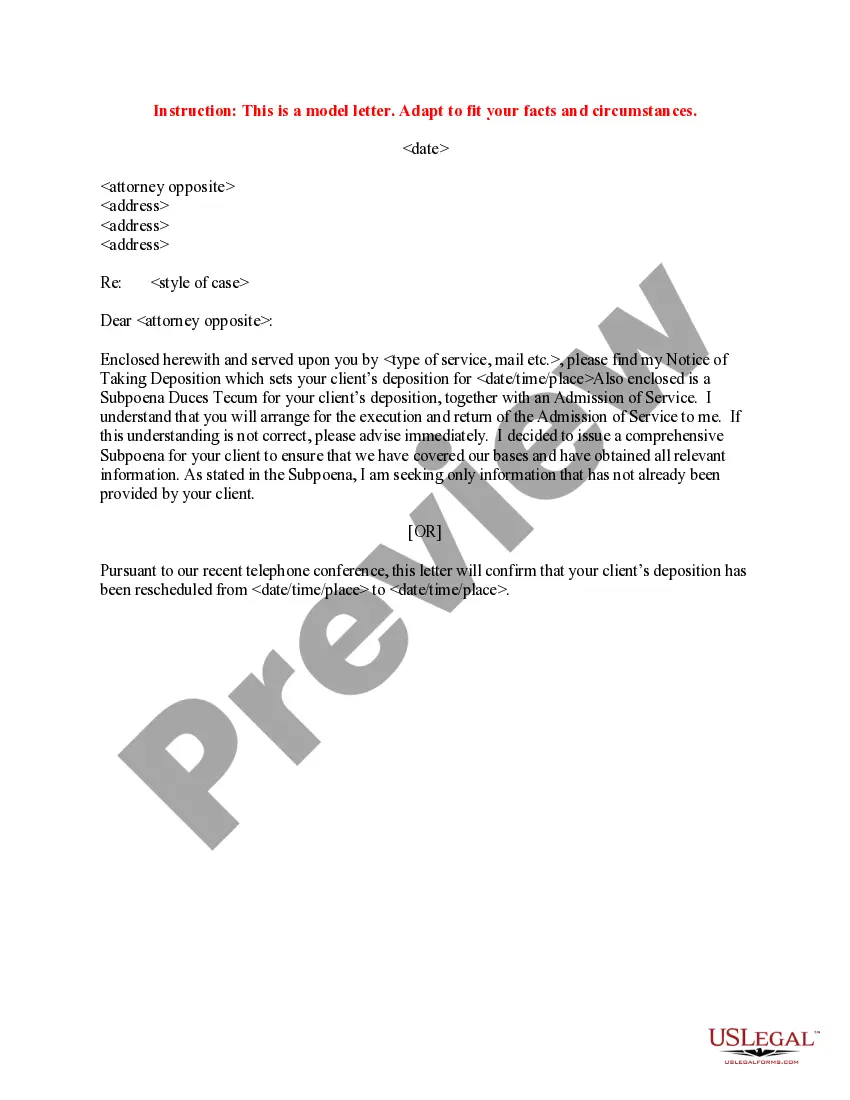
To file a notice of deposition, begin by preparing the notice that includes the time, place, and name of the person being deposed. After drafting the document, file it with the court and serve copies to all parties involved. Using a sample deposition form document with answers may streamline this process and ensure you include all necessary details.