Motion Of Relief From Stay Chapter 13
Description
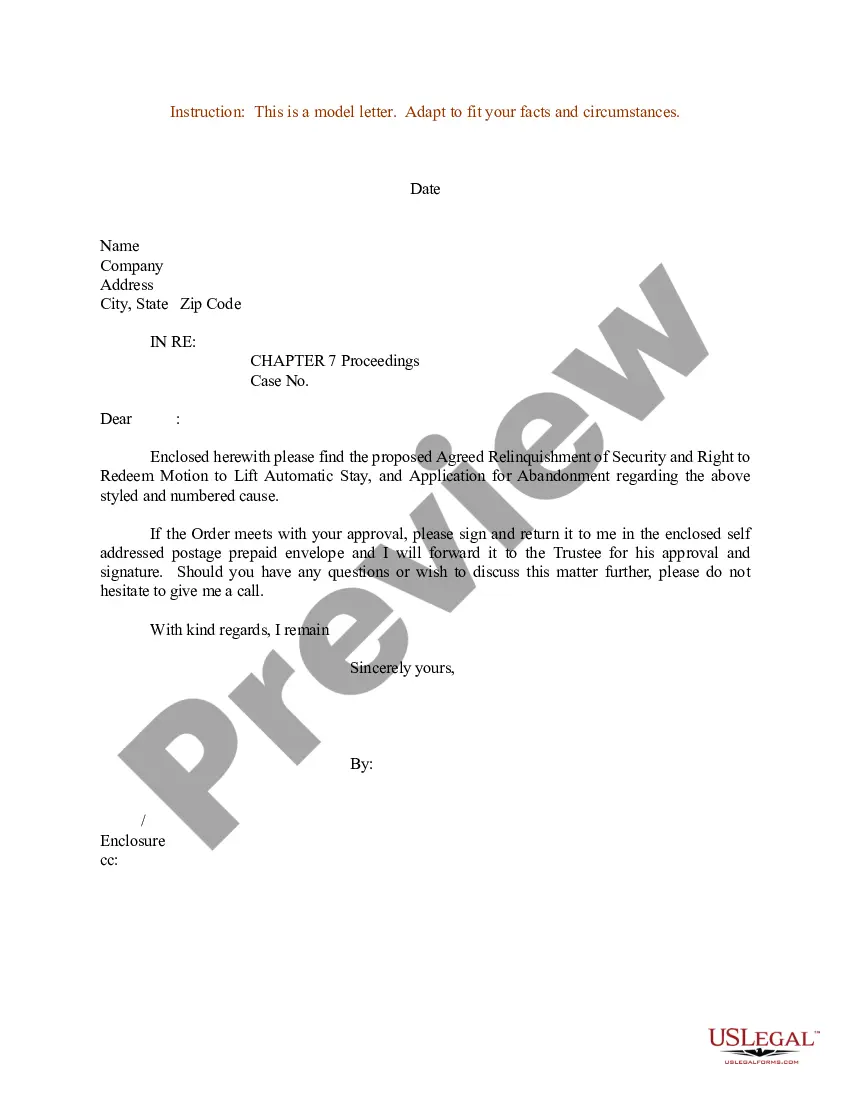
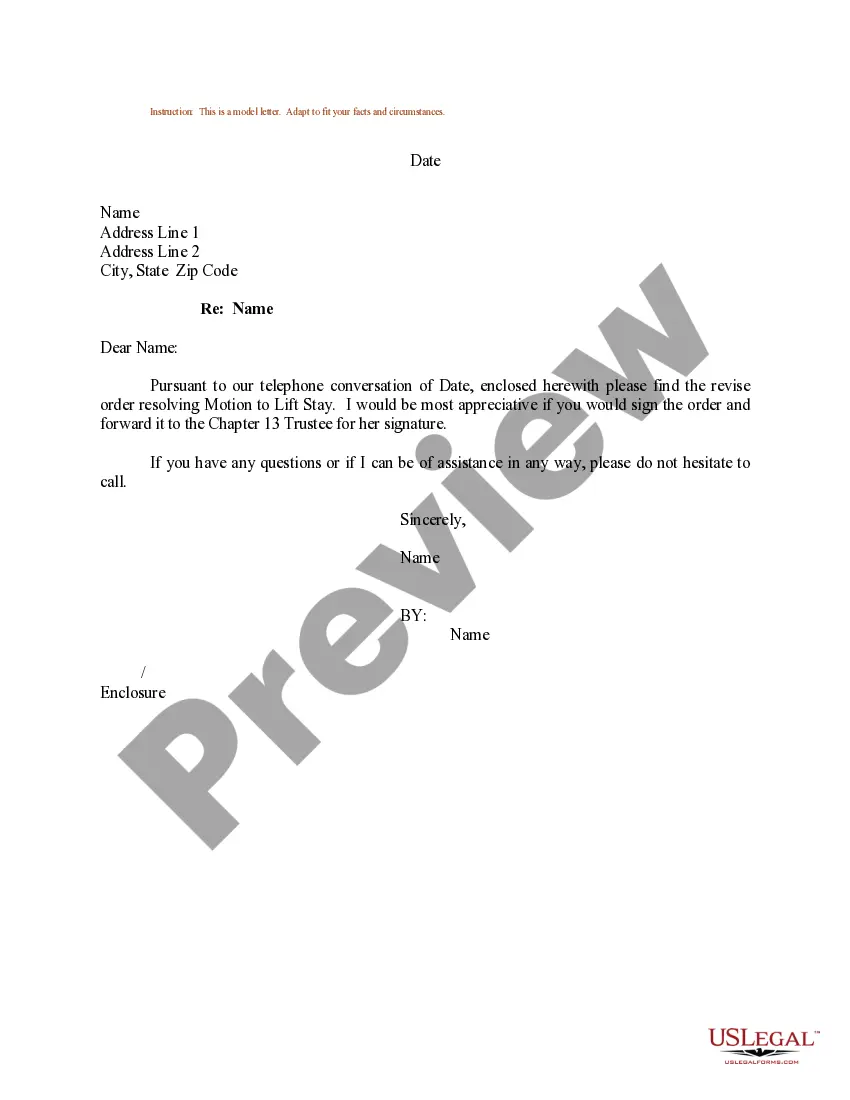
Get your form ready online
Our built-in tools help you complete, sign, share, and store your documents in one place.
Make edits, fill in missing information, and update formatting in US Legal Forms—just like you would in MS Word.
Download a copy, print it, send it by email, or mail it via USPS—whatever works best for your next step.
Sign and collect signatures with our SignNow integration. Send to multiple recipients, set reminders, and more. Go Premium to unlock E-Sign.
If this form requires notarization, complete it online through a secure video call—no need to meet a notary in person or wait for an appointment.
We protect your documents and personal data by following strict security and privacy standards.

Make edits, fill in missing information, and update formatting in US Legal Forms—just like you would in MS Word.

Download a copy, print it, send it by email, or mail it via USPS—whatever works best for your next step.

Sign and collect signatures with our SignNow integration. Send to multiple recipients, set reminders, and more. Go Premium to unlock E-Sign.

If this form requires notarization, complete it online through a secure video call—no need to meet a notary in person or wait for an appointment.

We protect your documents and personal data by following strict security and privacy standards.
Looking for another form?
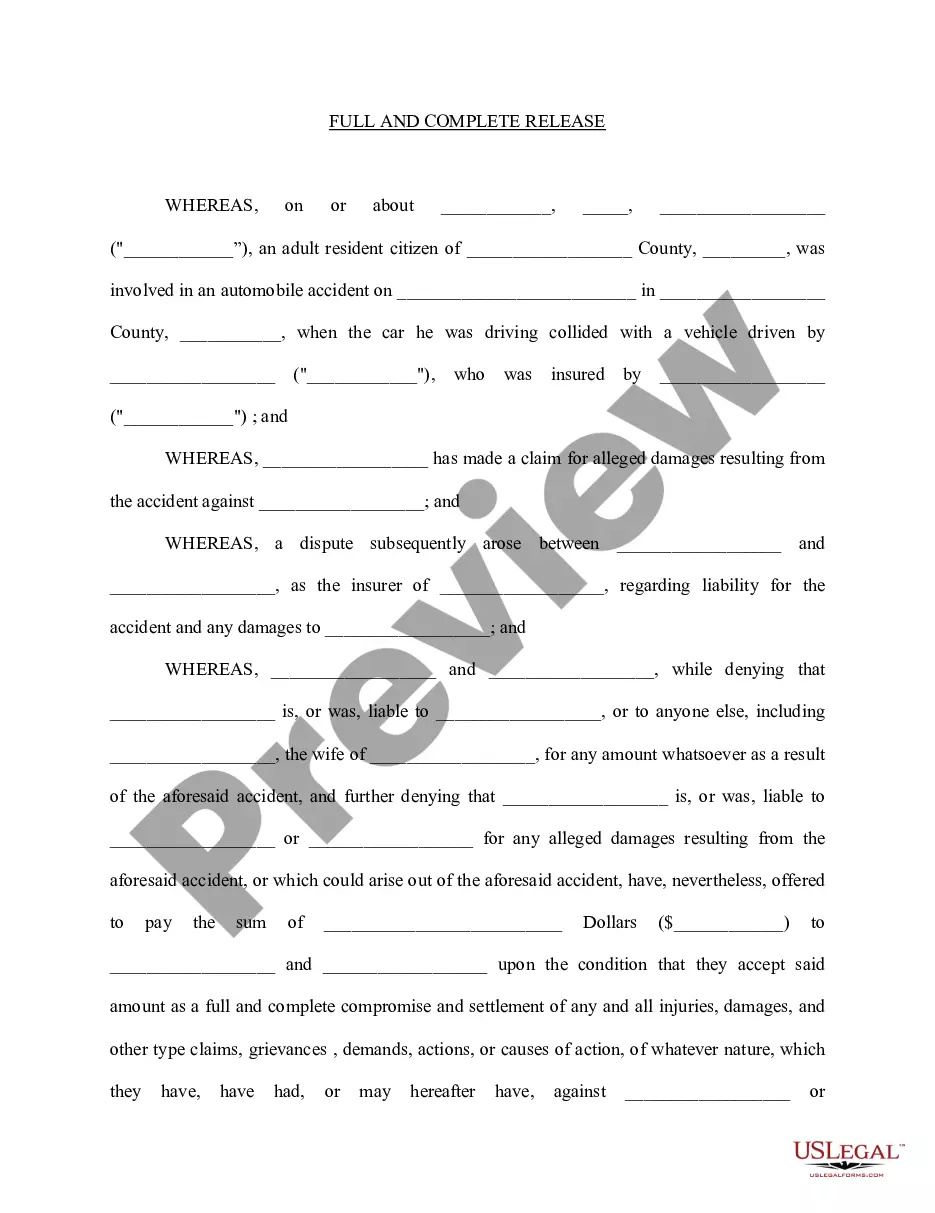
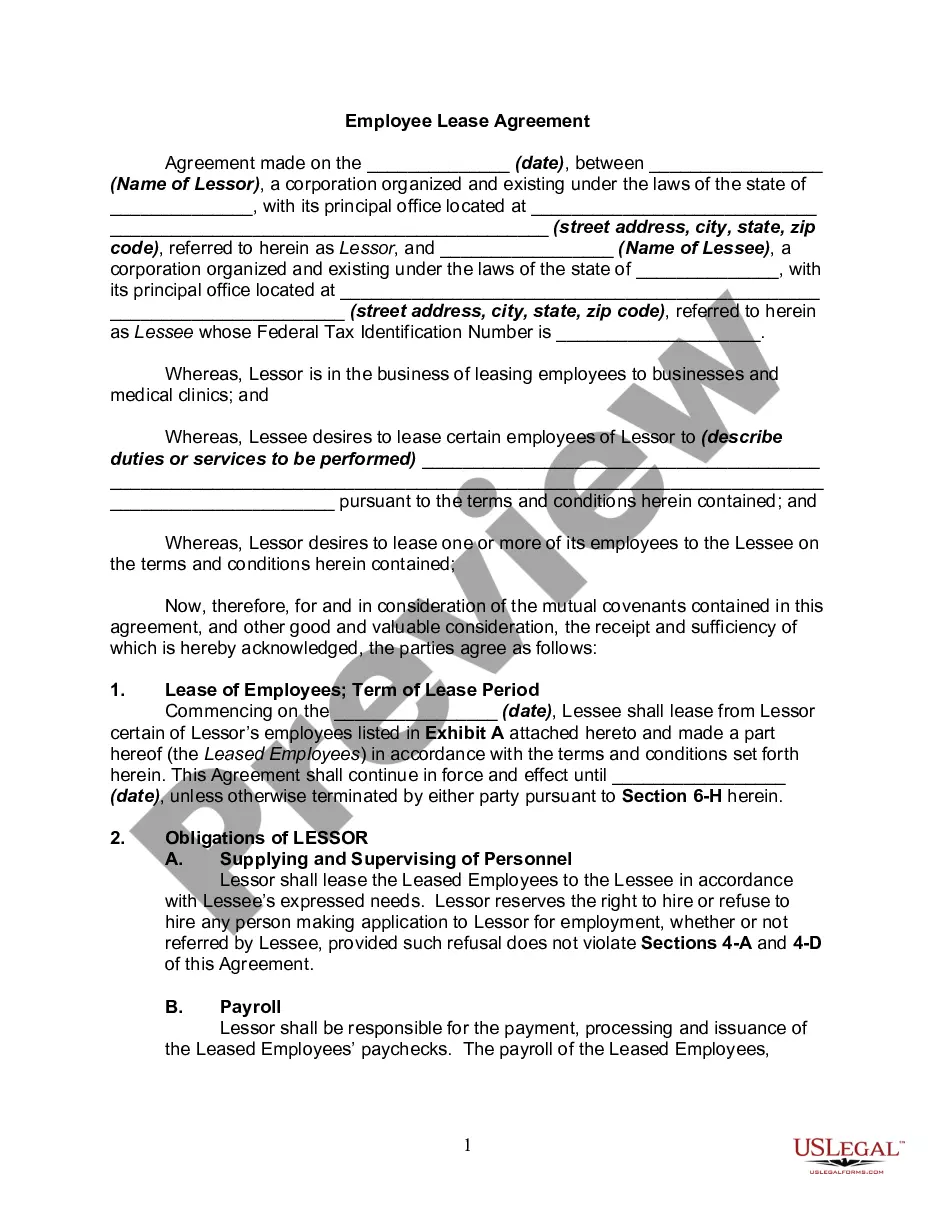
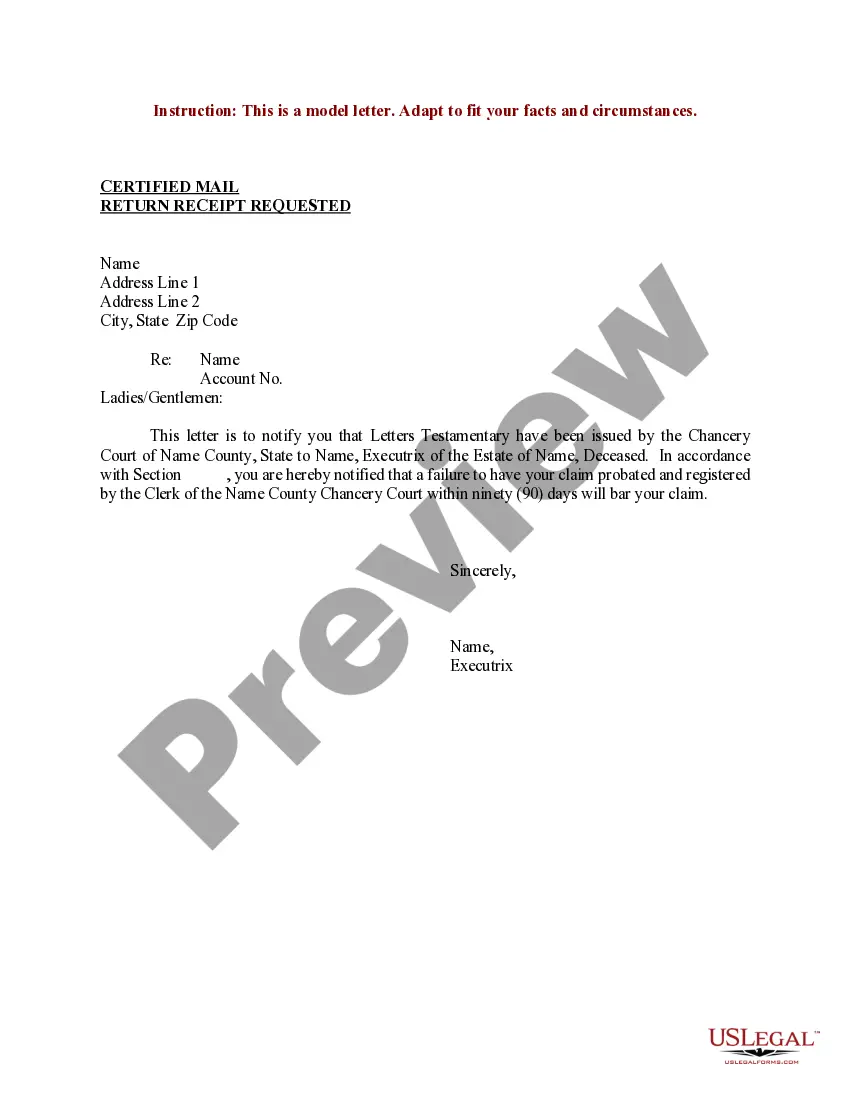
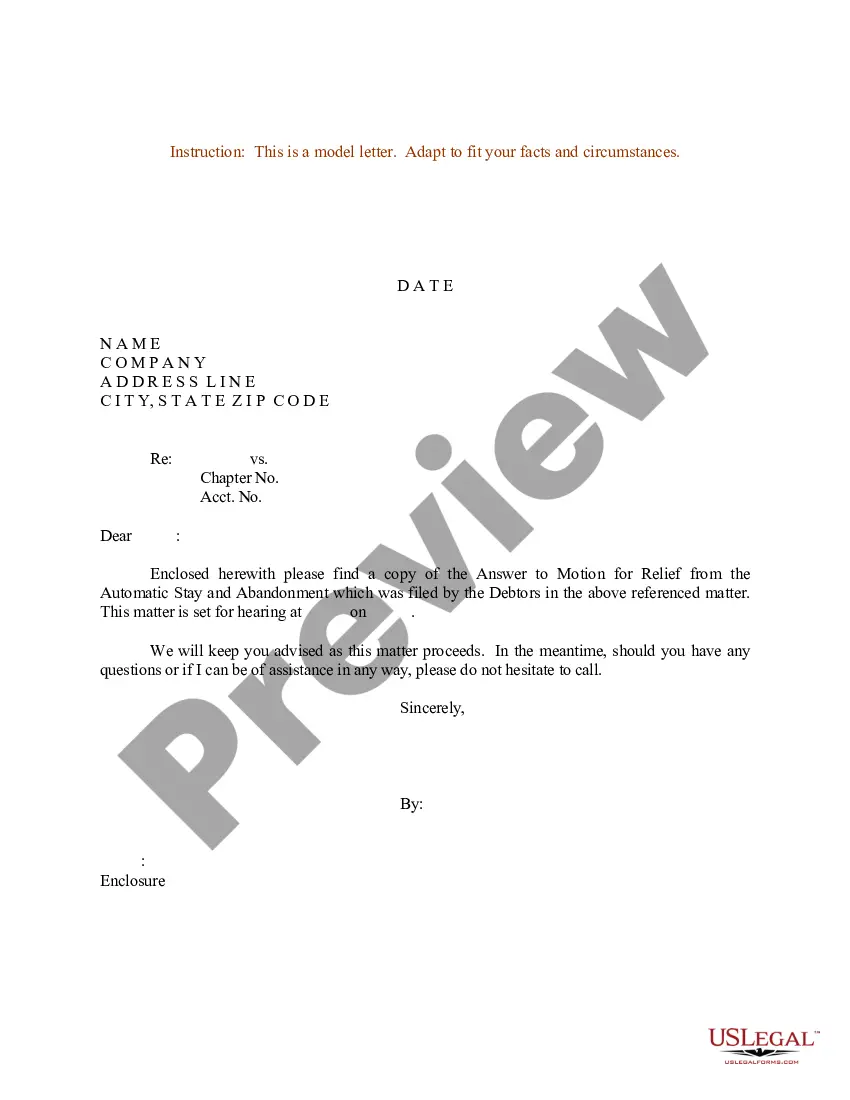
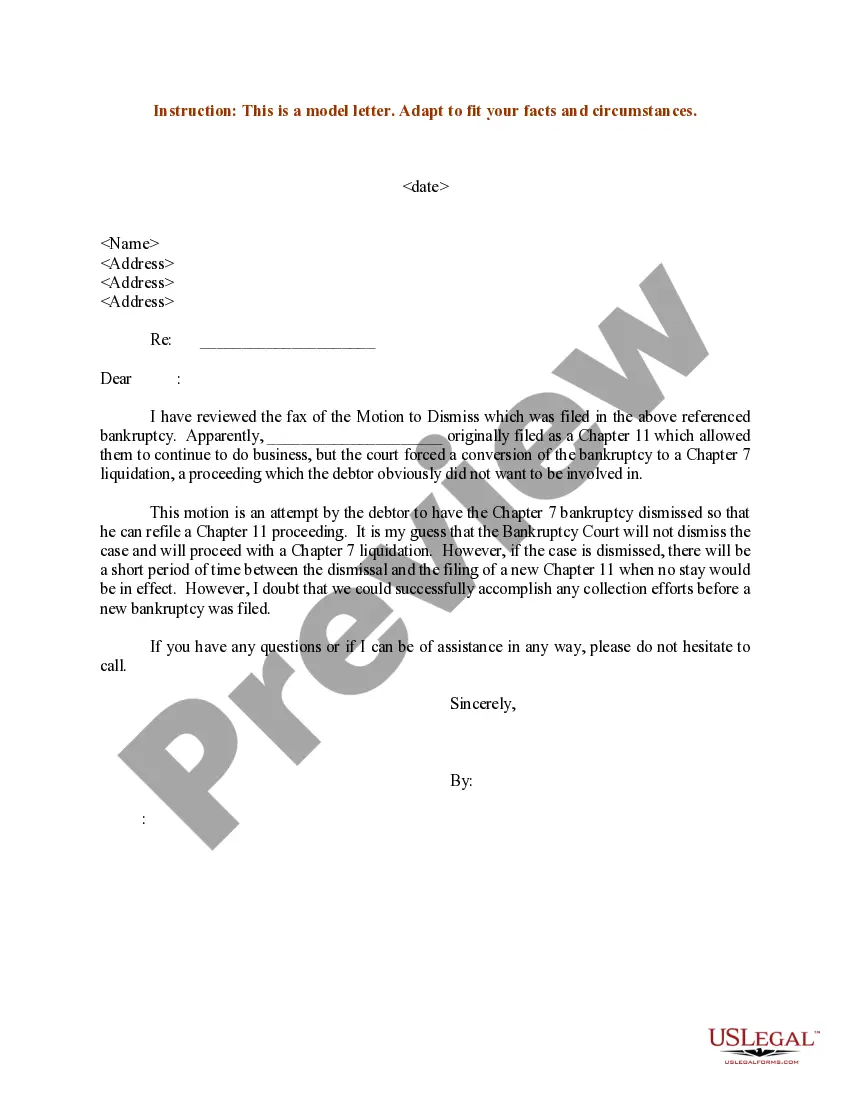
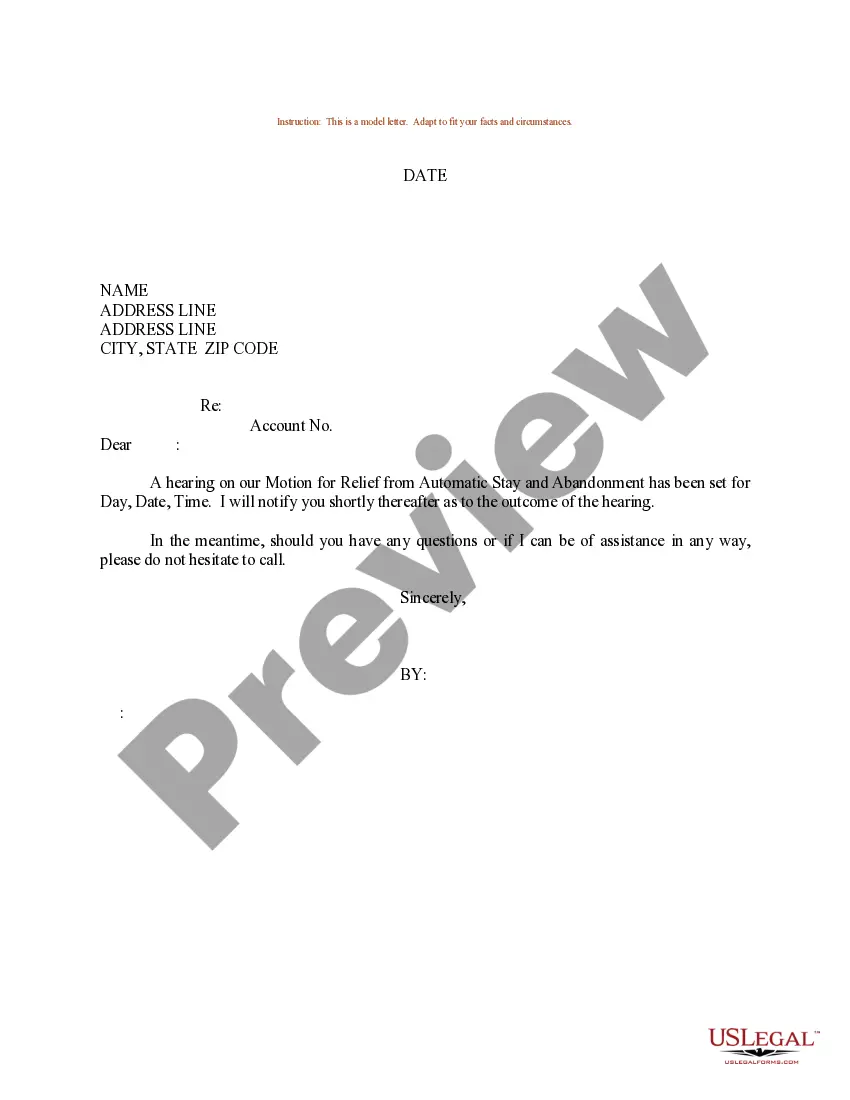
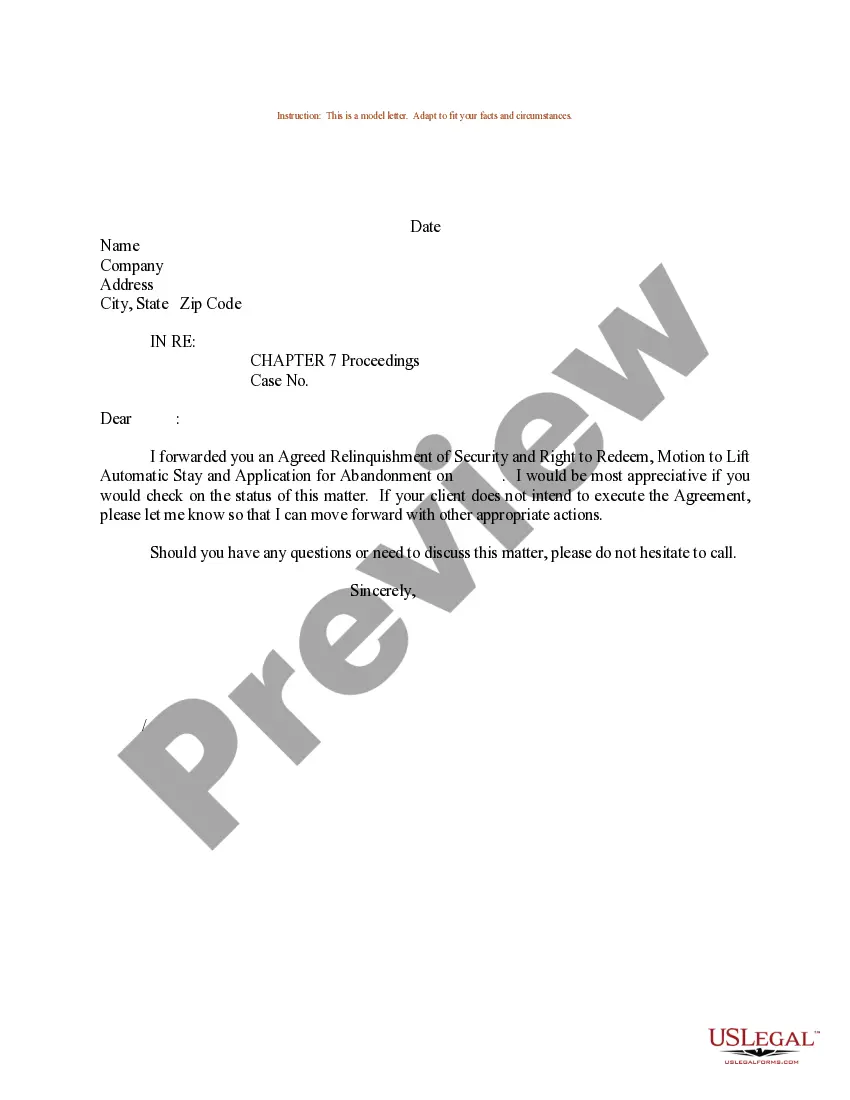
How to fill out Sample Letter Regarding Answer To Motion For Relief From The Automatic Stay And Abandonment?
It’s well-known that you cannot transform into a legal expert instantly, nor can you learn how to swiftly prepare Motion Of Relief From Stay Chapter 13 without possessing a specialized skill set.
Drafting legal documents is a lengthy process that demands specific training and expertise. So why not entrust the preparation of the Motion Of Relief From Stay Chapter 13 to the experts.
With US Legal Forms, one of the most extensive legal document repositories, you can access everything from court papers to templates for internal communication.
You can regain access to your forms from the My documents tab anytime. If you’re an existing client, you can simply Log In, and find and download the template from the same tab.
Regardless of the intention of your documents—whether financial and legal, or personal—our website has everything you need. Experience US Legal Forms today!
- Locate the document you need by utilizing the search bar at the top of the webpage.
- Preview it (if this option is available) and review the accompanying description to see if Motion Of Relief From Stay Chapter 13 meets your requirements.
- Restart your search if you need a different template.
- Create a free account and select a subscription plan to acquire the template.
- Click Buy now. Once the transaction is completed, you can download the Motion Of Relief From Stay Chapter 13, fill it out, print it, and send or mail it to the appropriate individuals or organizations.
Form popularity
FAQ
A motion for relief from stay Chapter 13 is a legal request made to the court to lift the automatic stay that prevents creditors from pursuing collection actions against a debtor. This motion typically arises when a debtor fails to comply with the terms of their Chapter 13 repayment plan or when a creditor seeks to reclaim collateral. Filing this motion allows creditors to resume actions like foreclosure or repossession, which can be critical for them. If you're facing this situation, US Legal Forms offers resources to help you navigate the process efficiently.
Relief granted in bankruptcies means that the court has approved a motion for relief from the automatic stay, allowing creditors to take further action to collect debts. This can lead to foreclosure, repossession, or other collection efforts against the debtor. Understanding the consequences of relief granted is essential for anyone involved in a Motion of relief from stay chapter 13, as it can significantly affect your financial situation.
Responding to a motion for relief from automatic stay involves filing a written objection with the court, outlining your reasons for opposing the motion. You should clearly present your case, detailing how the stay protects your interests. If you find this process overwhelming, platforms like uslegalforms can provide resources and templates to help you prepare an effective response.
A motion to be relieved refers to a request to be excused from certain obligations or restrictions, often in a legal context. In bankruptcy, this may involve asking the court to lift protections that prevent creditors from collecting debts. It is vital to understand the implications of such a motion, especially when navigating a Motion of relief from stay chapter 13.
A debt relief order (DRO) provides a way to manage debts without the need for bankruptcy. When you have a DRO, your creditors cannot take further action to collect debts while you comply with the order's terms. However, if a creditor seeks a motion for relief from stay during this period, it can complicate matters, making it crucial to stay informed about your rights.
A motion for relief is a formal request made to the court to lift certain restrictions imposed by bankruptcy laws, such as the automatic stay. This motion allows creditors to take legal actions they would otherwise be prohibited from pursuing. Understanding the implications of a motion for relief is essential for anyone dealing with bankruptcy, especially in Chapter 13 cases.
In Chapter 13, a motion for relief from stay means that a creditor is seeking permission from the court to bypass the automatic stay and collect debts. This typically occurs when a debtor defaults on payments or when the creditor believes they have a valid reason to act. Being aware of this motion can help you prepare for potential challenges during your bankruptcy process.
A motion for relief from stay in Chapter 13 is a request made by a creditor to allow them to continue or initiate collection actions despite the bankruptcy case. This motion can be filed when a debtor fails to make necessary payments or if the creditor believes their interests are not adequately protected. It's important to handle these motions carefully, as they can significantly impact your bankruptcy case and financial future.
An order on motion for relief from stay refers to a court's decision regarding a debtor's request to lift the automatic stay imposed during bankruptcy proceedings. This stay typically protects the debtor from creditor actions. When a motion for relief from stay is granted, creditors may proceed with collection efforts. Understanding this process is crucial for those navigating a Motion of relief from stay chapter 13.