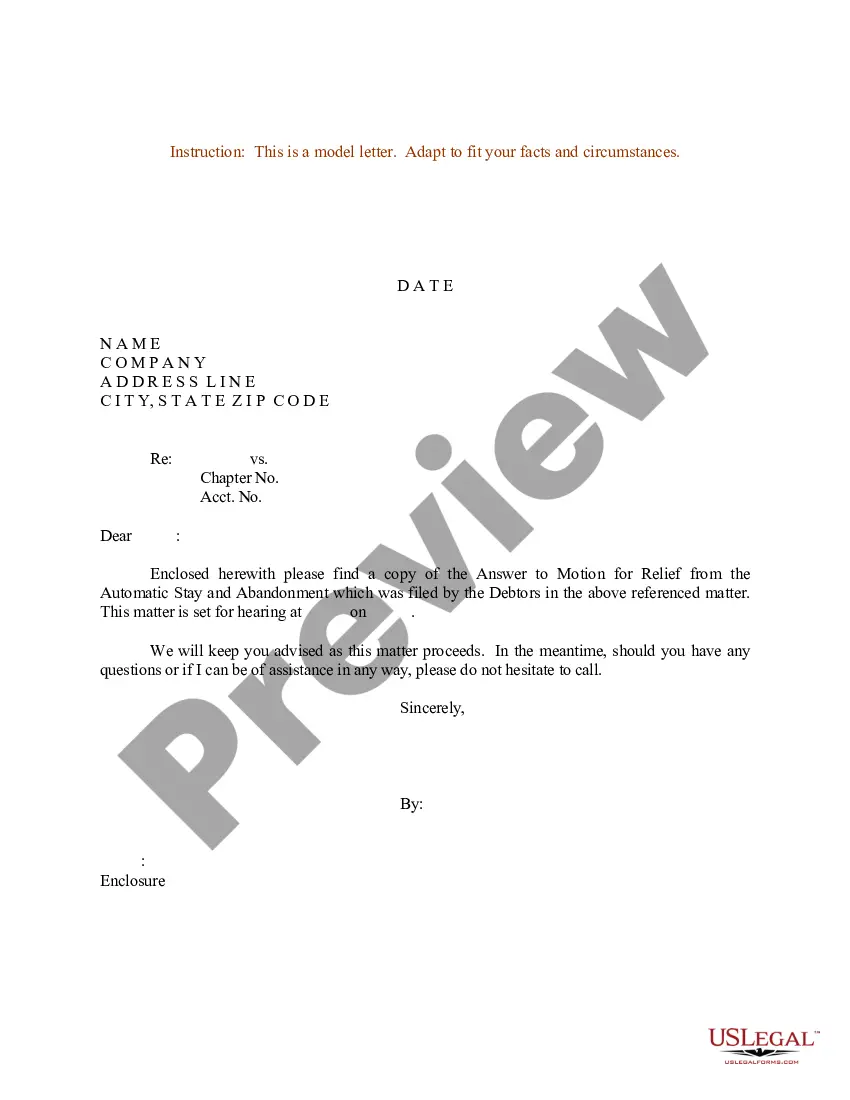
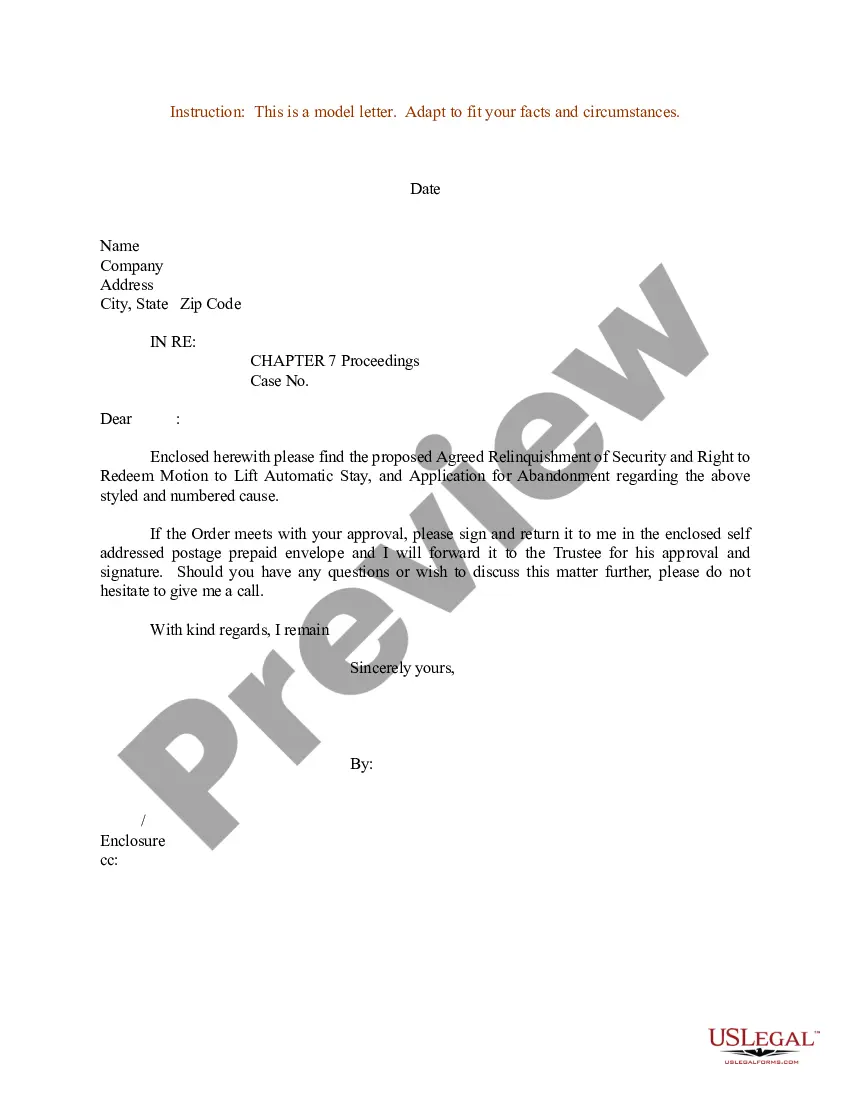
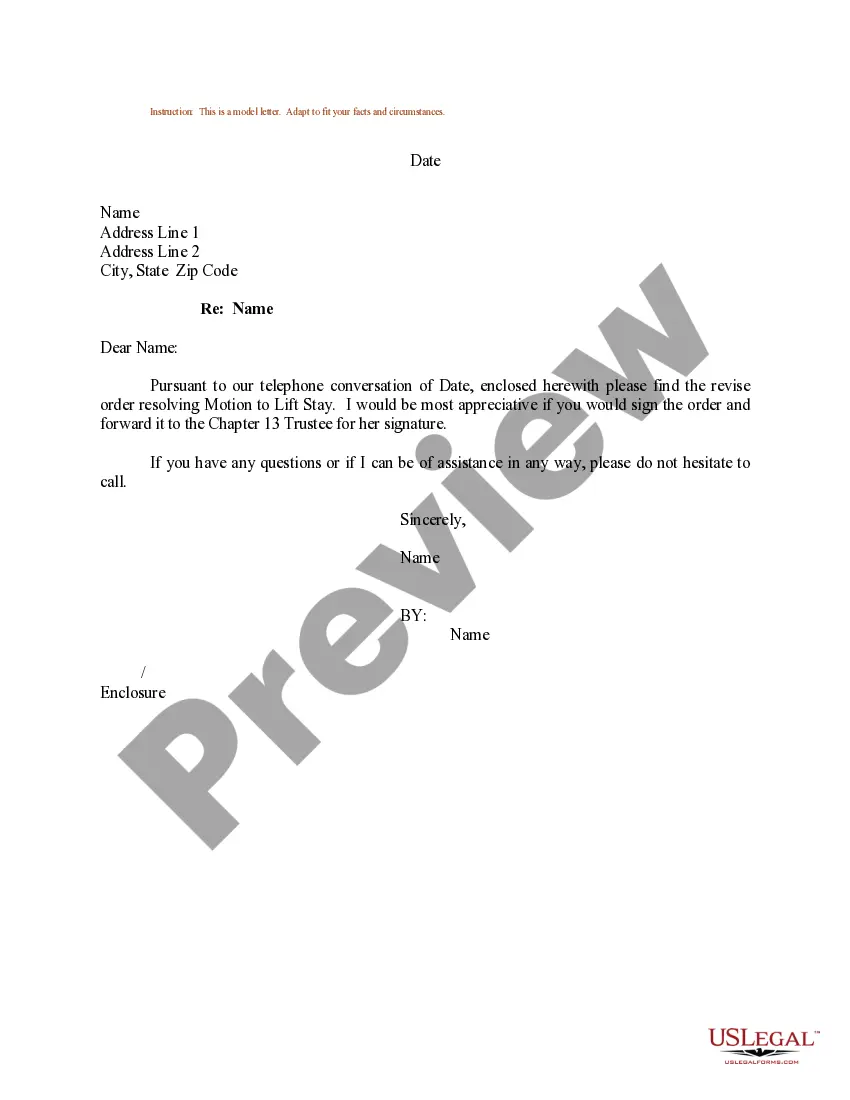
Motion For Relief From Stay Chapter 7
Description
Get your form ready online
Our built-in tools help you complete, sign, share, and store your documents in one place.
Make edits, fill in missing information, and update formatting in US Legal Forms—just like you would in MS Word.
Download a copy, print it, send it by email, or mail it via USPS—whatever works best for your next step.
Sign and collect signatures with our SignNow integration. Send to multiple recipients, set reminders, and more. Go Premium to unlock E-Sign.
If this form requires notarization, complete it online through a secure video call—no need to meet a notary in person or wait for an appointment.
We protect your documents and personal data by following strict security and privacy standards.

Make edits, fill in missing information, and update formatting in US Legal Forms—just like you would in MS Word.

Download a copy, print it, send it by email, or mail it via USPS—whatever works best for your next step.

Sign and collect signatures with our SignNow integration. Send to multiple recipients, set reminders, and more. Go Premium to unlock E-Sign.

If this form requires notarization, complete it online through a secure video call—no need to meet a notary in person or wait for an appointment.

We protect your documents and personal data by following strict security and privacy standards.
Looking for another form?
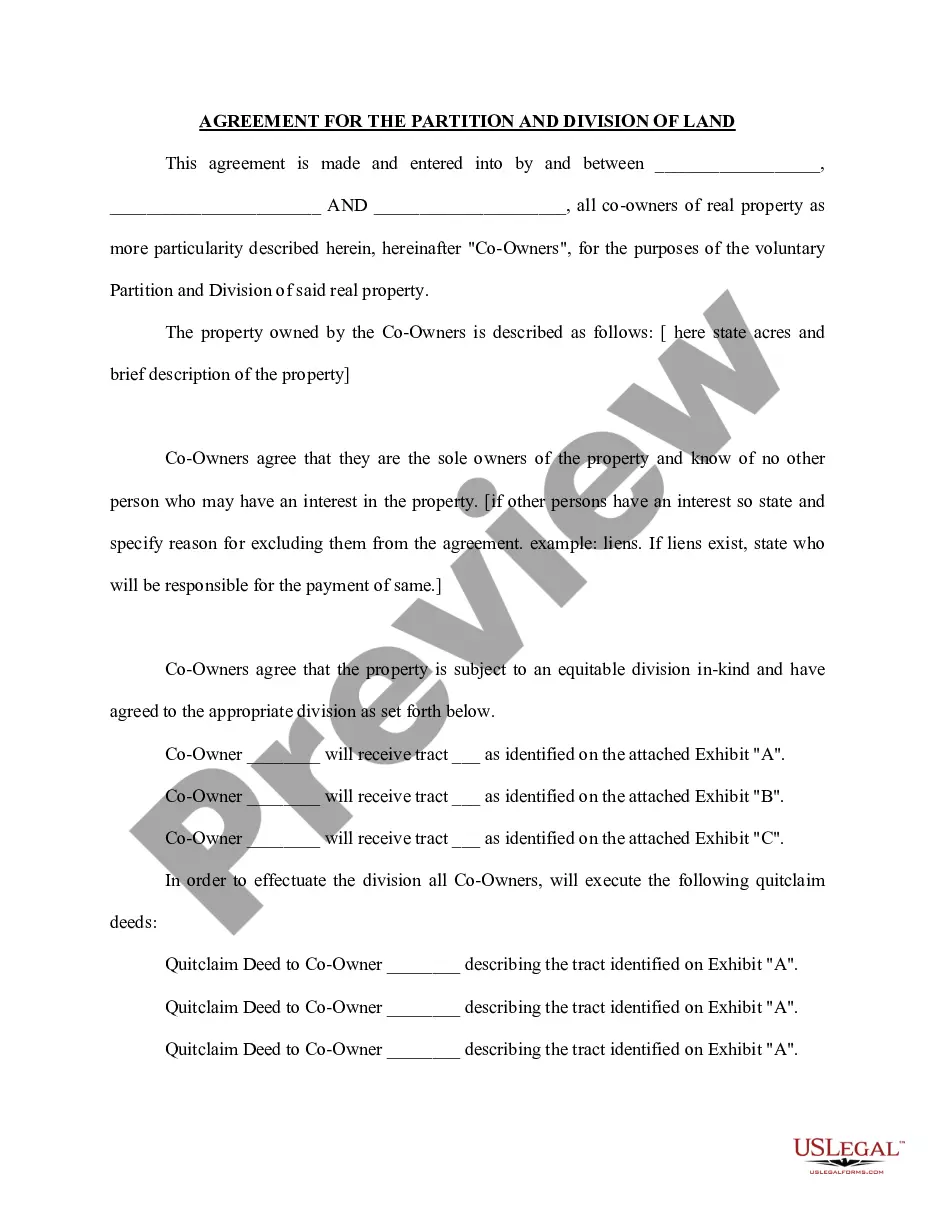
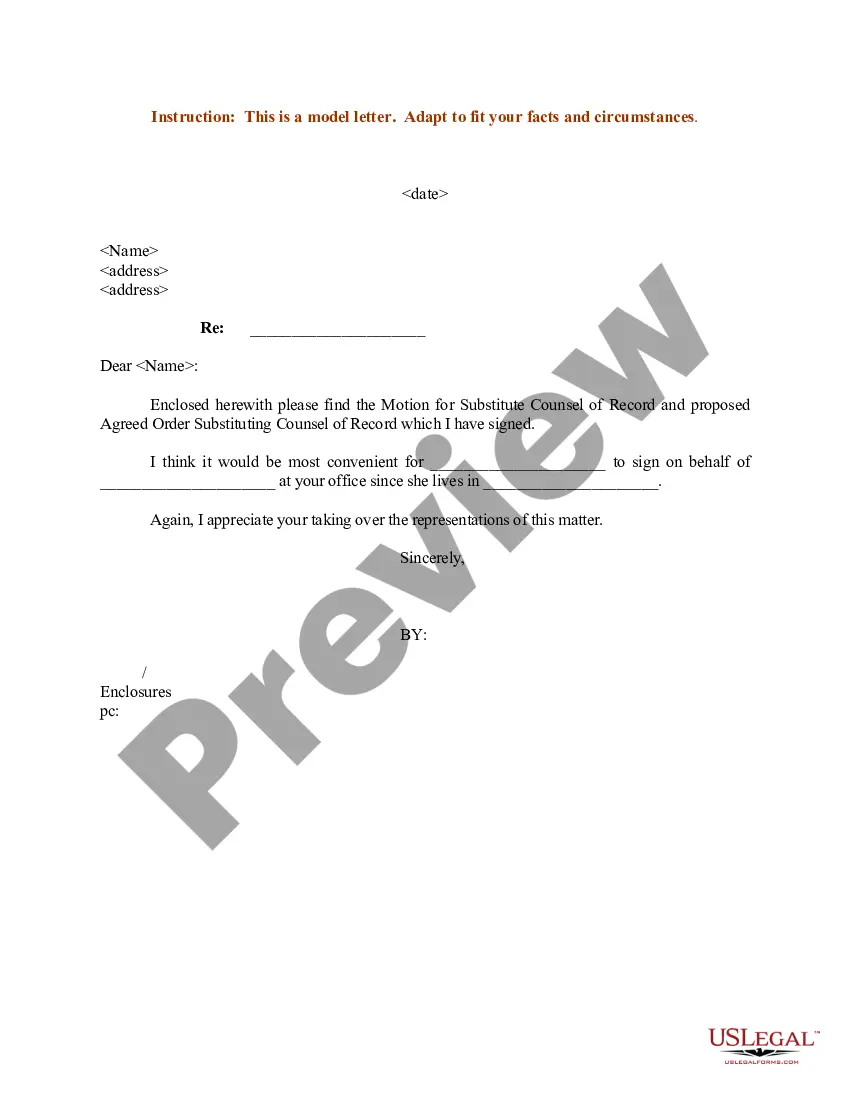
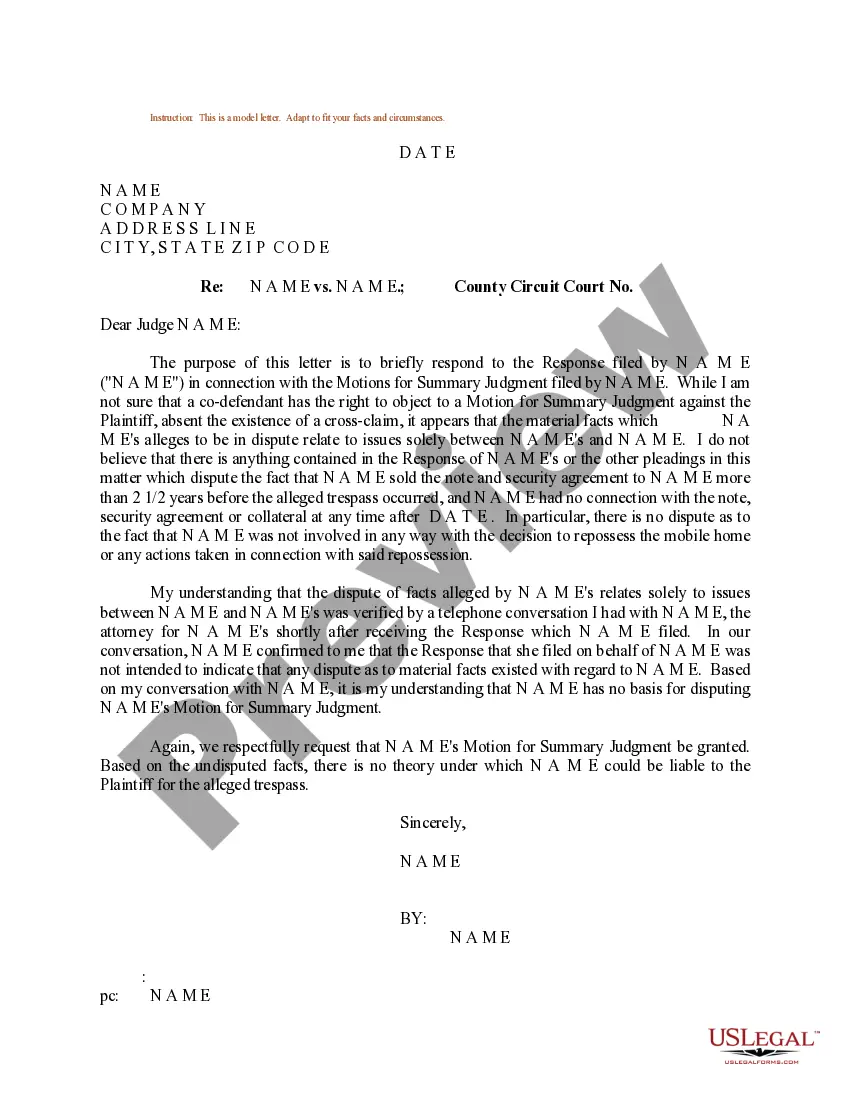
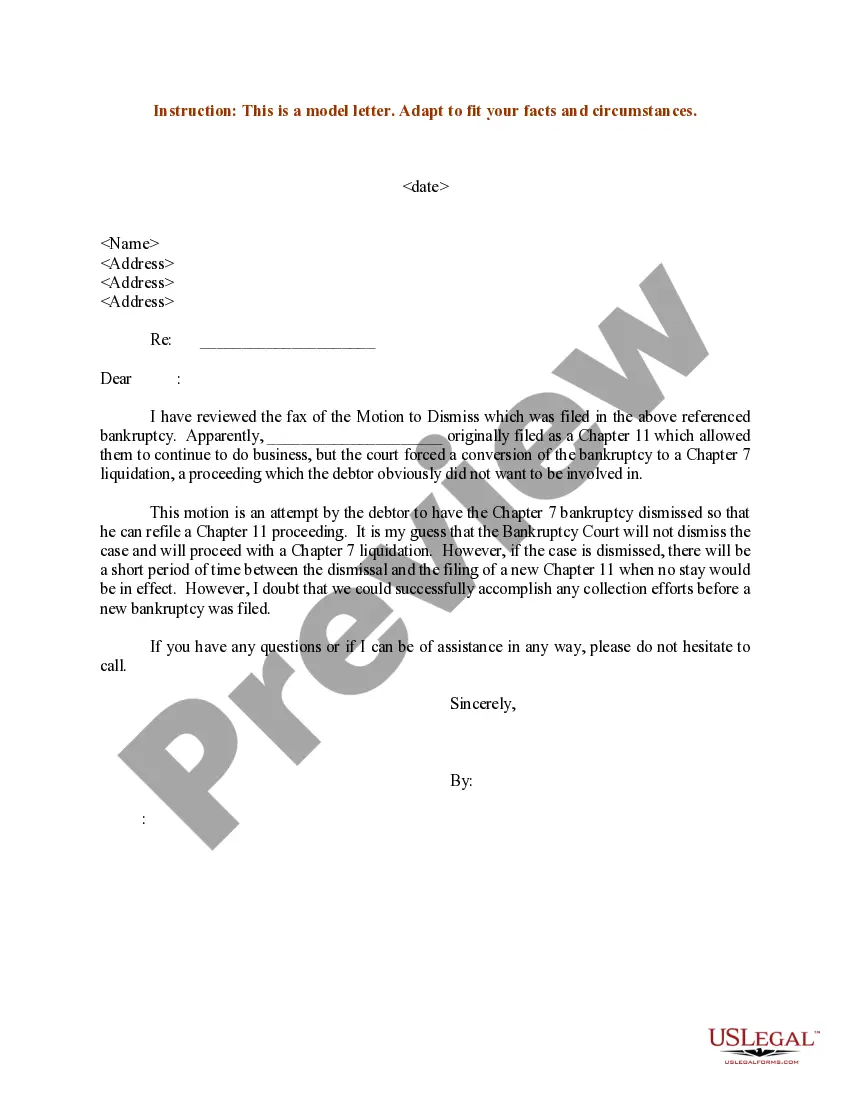
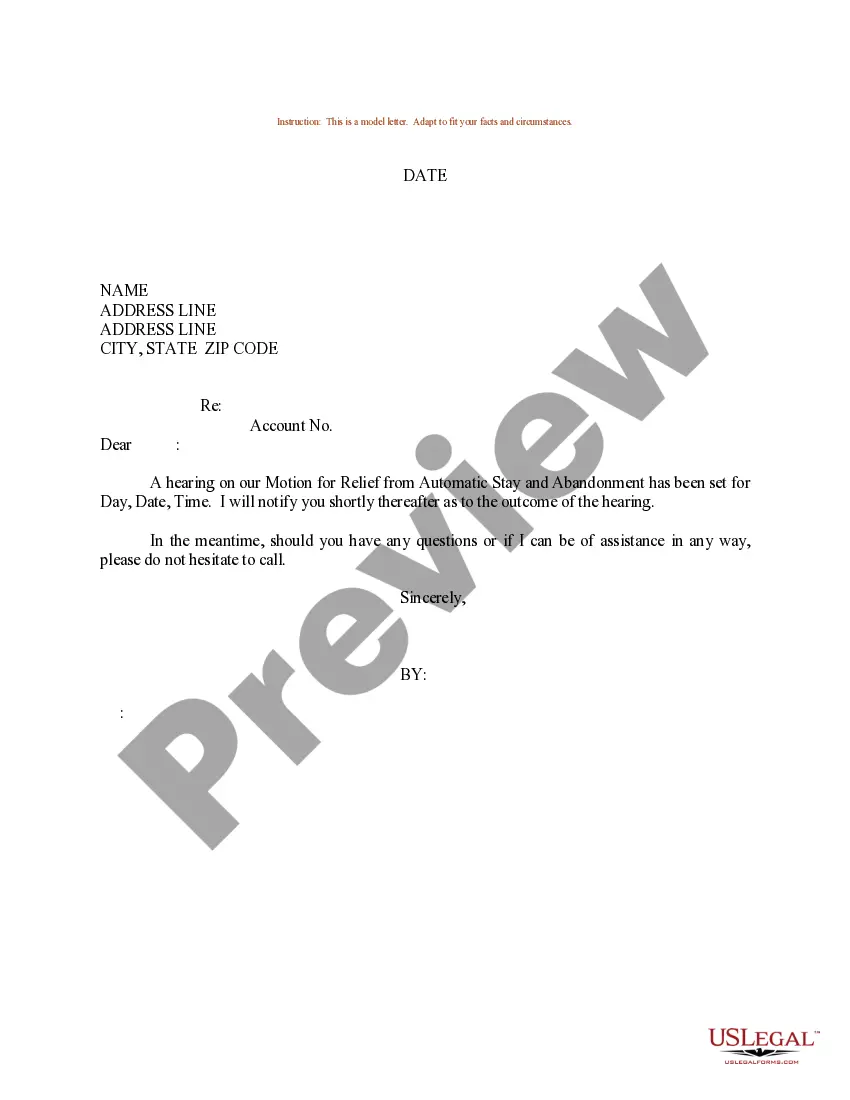
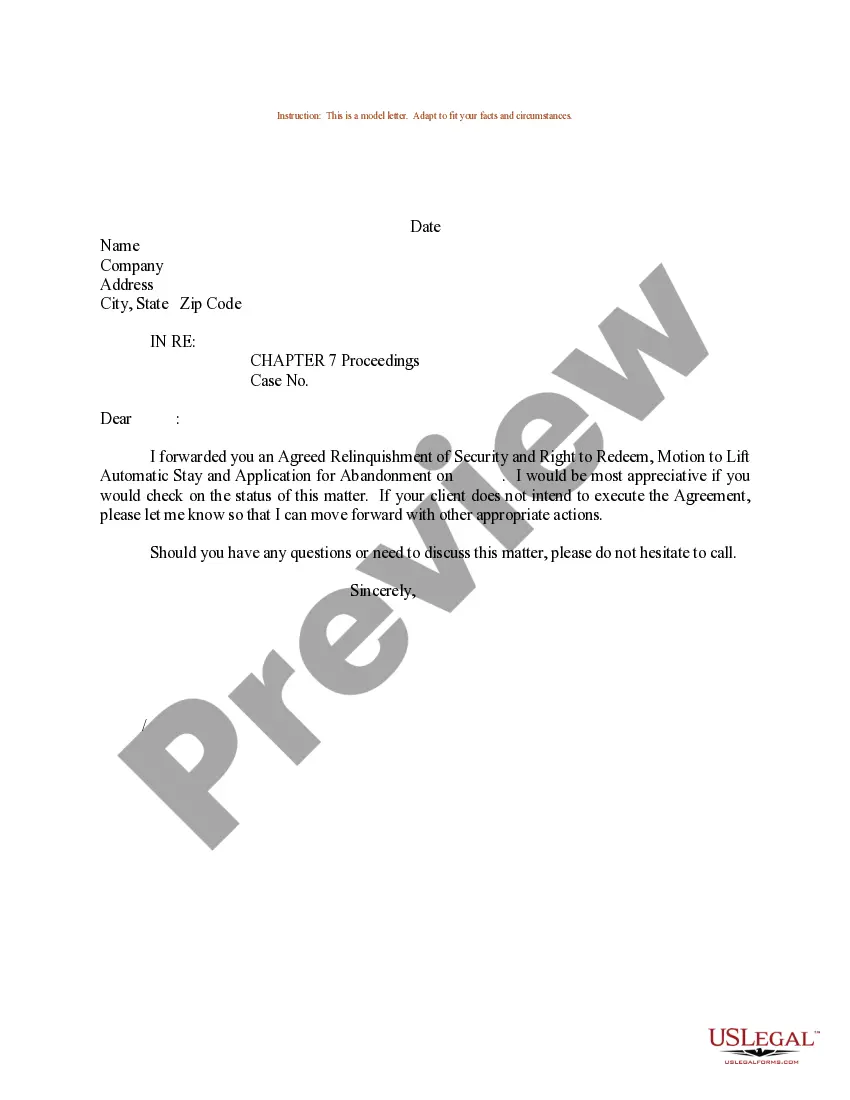
How to fill out Sample Letter Regarding Answer To Motion For Relief From The Automatic Stay And Abandonment?
Creating legal documents from the ground up can occasionally be daunting.
Certain situations may require extensive research and considerable financial investment.
If you’re looking for a simpler and more budget-friendly method to generate Motion For Relief From Stay Chapter 7 or any other documents without unnecessary complications, US Legal Forms is readily available.
Our digital repository of over 85,000 current legal documents covers nearly every facet of your financial, legal, and personal affairs.
Check the form preview and details to ensure you’ve located the correct document. Confirm that the template you select meets your state and county requirements. Choose the appropriate subscription option to acquire the Motion For Relief From Stay Chapter 7. Download the file, then complete, sign, and print it out. US Legal Forms boasts an impeccable reputation and over 25 years of expertise. Join us today and simplify your document execution!
- With just a few clicks, you can swiftly access state- and county-specific forms meticulously crafted for you by our legal experts.
- Utilize our site whenever you require dependable services to efficiently find and acquire the Motion For Relief From Stay Chapter 7.
- If you’re familiar with our website and have previously registered, simply Log In to your account, select the template, and download it promptly, or retrieve it later from the My documents section.
- Not signed up yet? No problem. It takes minimal time to create an account and explore the library.
- But before you dive right into downloading Motion For Relief From Stay Chapter 7, heed these suggestions.
Form popularity
FAQ
Responding to a motion for relief from automatic stay requires you to file a written response with the court before the designated deadline. It's crucial to outline your objections, if any, and present any supporting evidence that demonstrates why the stay should remain in effect. You might consider utilizing resources available on platforms like USLegalForms to ensure your response is thorough and effective.
In most cases, the automatic stay remains in force and effect during the entire bankruptcy case. The stay goes into effect the moment your bankruptcy petition is filed and remains in effect until the court issues an order closing case.
The automatic stay only applies to prepetition events and does not bar suit against the debtor based on a cause of action arising postpetition. The automatic stay has a broad scope, applying to all creditors, whether secured or unsecured, and to all of the debtor's property, wherever located.
Automatic Stay -- Immediately after a bankruptcy case is filed, an injunction (called the "Automatic Stay") is generally imposed against certain creditors who want to start or continue taking action against a debtor or the debtor's property.
If your total monthly income over the course of the next 60 months is less than $7,475 then you pass the means test and you may file a Chapter 7 bankruptcy. If it is over $12,475 then you fail the means test and don't have the option of filing Chapter 7.
What is the Difference Between Chapter 11 & Chapter 13 Bankruptcies? The main difference between Chapter 11 and Chapter 13 is that a Chapter 13 bankruptcy requires that the debtor pay his or her debts within five years. On the other hand, Chapter 11 allows the filer to extend the five-year period unlike Chapter 13.
Filing a petition under chapter 7 "automatically stays" (stops) most collection actions against the debtor or the debtor's property. 11 U.S.C. § 362. But filing the petition does not stay certain types of actions listed under 11 U.S.C. § 362(b), and the stay may be effective only for a short time in some situations.
Filing a petition under chapter 7 "automatically stays" (stops) most collection actions against the debtor or the debtor's property. 11 U.S.C. § 362. But filing the petition does not stay certain types of actions listed under 11 U.S.C. § 362(b), and the stay may be effective only for a short time in some situations.
Filing Fees1 - Effective 12/01/20 New PetitionsChapter 7 Case ($245 filing fee, $78 administrative fee, $15 trustee surcharge)$338.00Chapter 13 Case ($235 filing fee, $78 administrative fee)$313.00Chapter 11 ($1167 filing fee, $571 administrative fee)$1738.00Chapter 12 ($200 filing fee, $78 administrative fee)$278.0063 more rows