Contract Checklist For Risk Management
Description
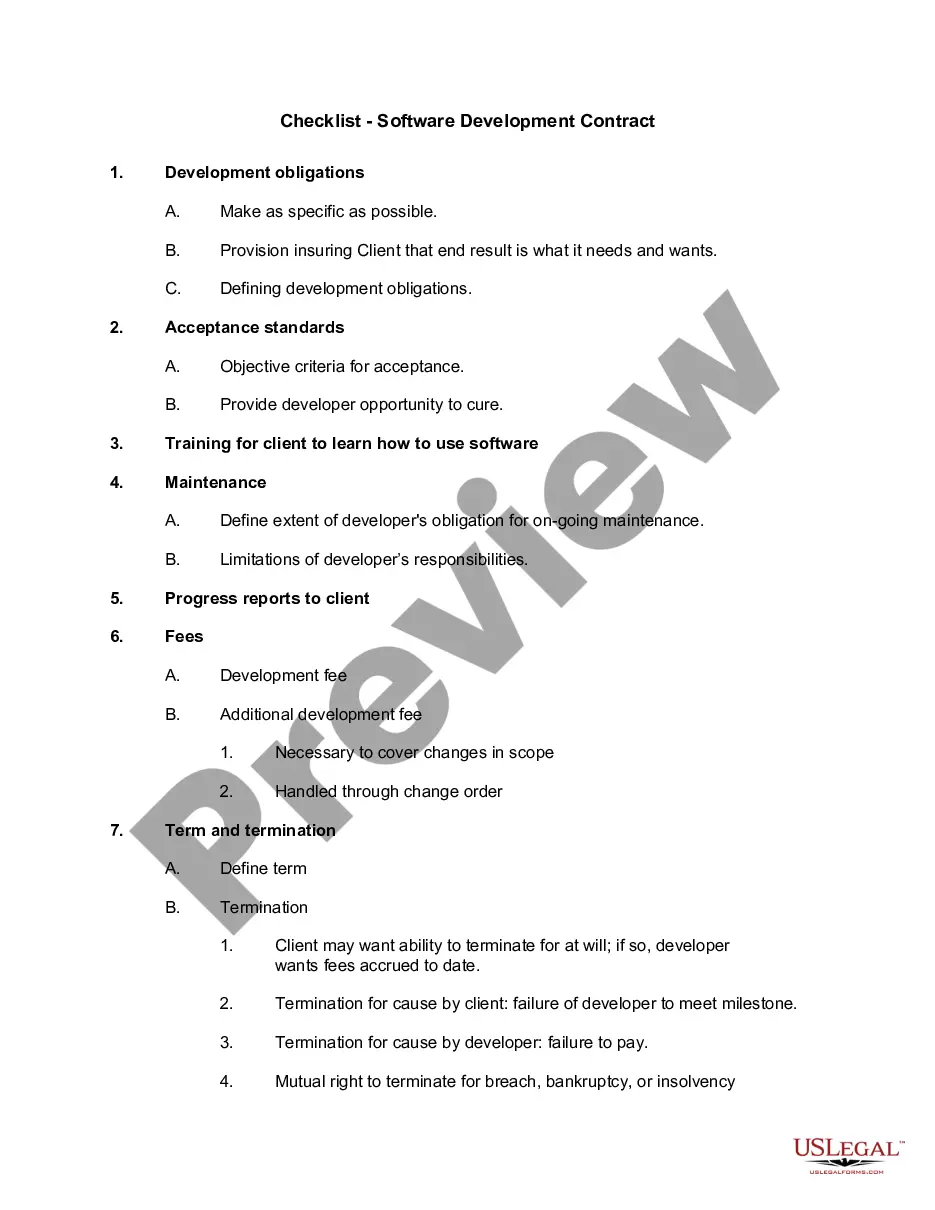
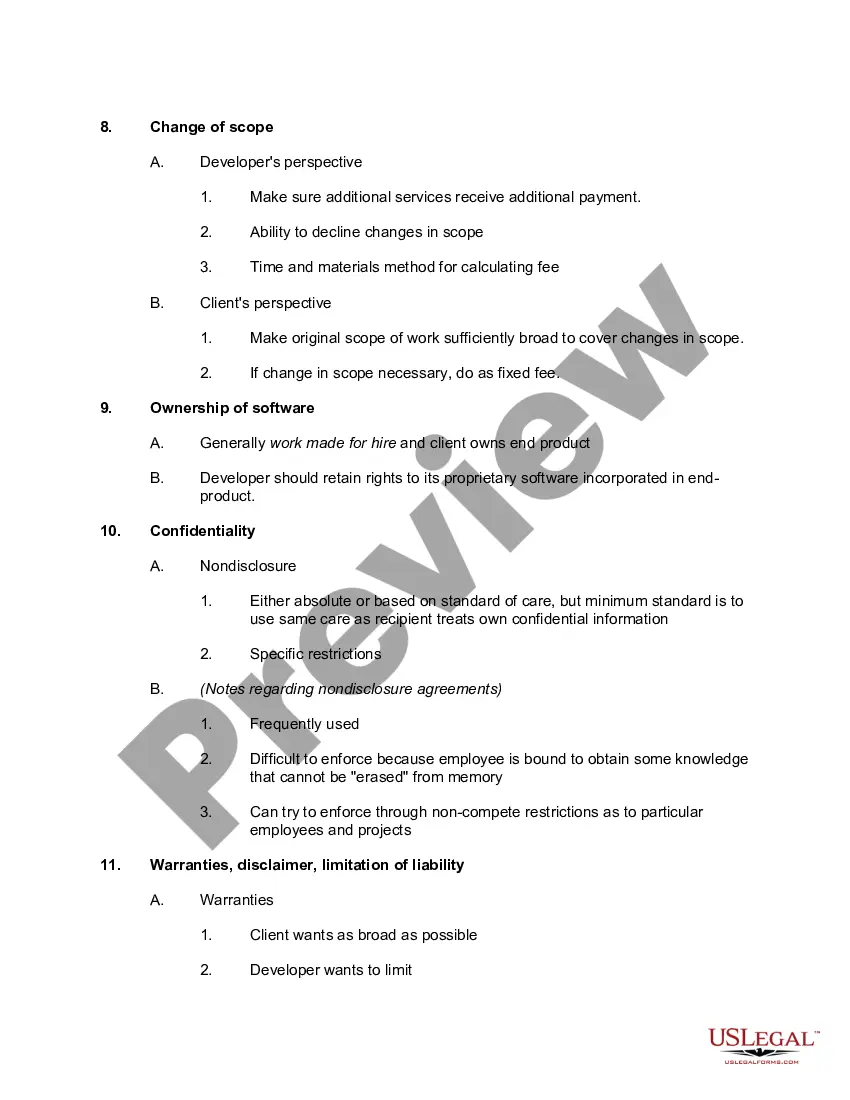
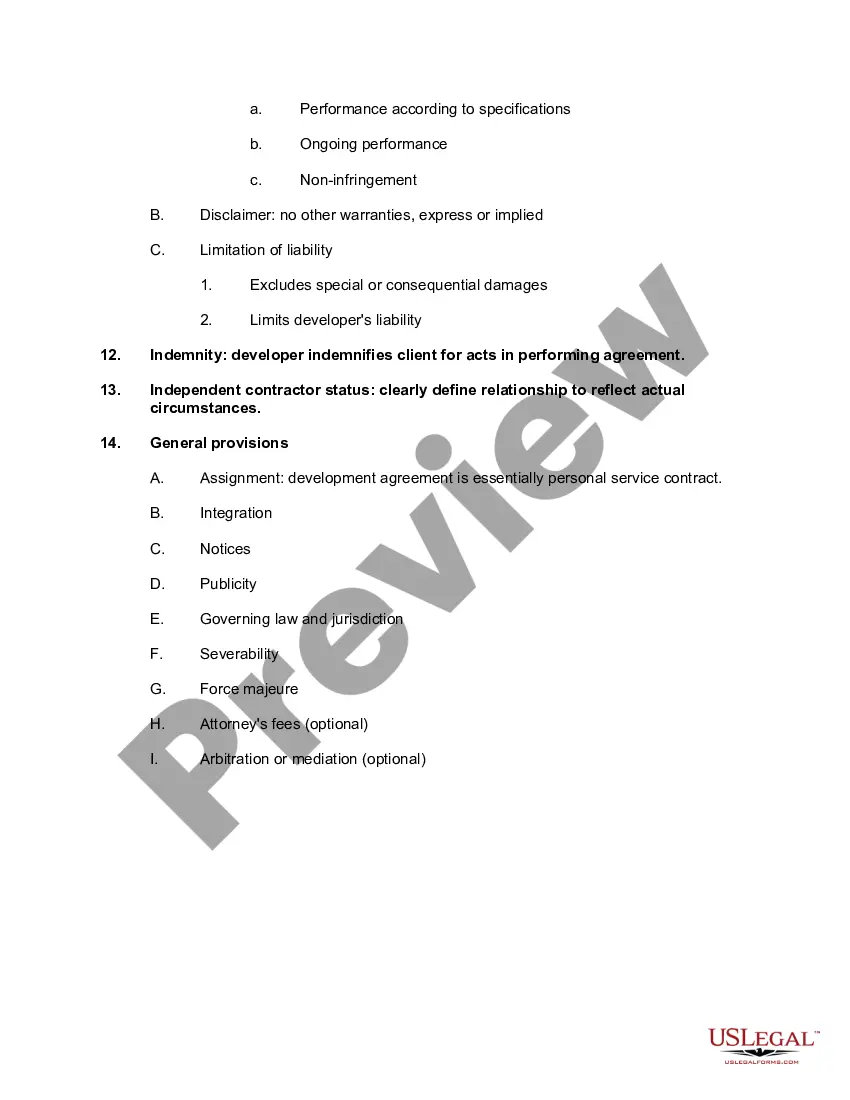
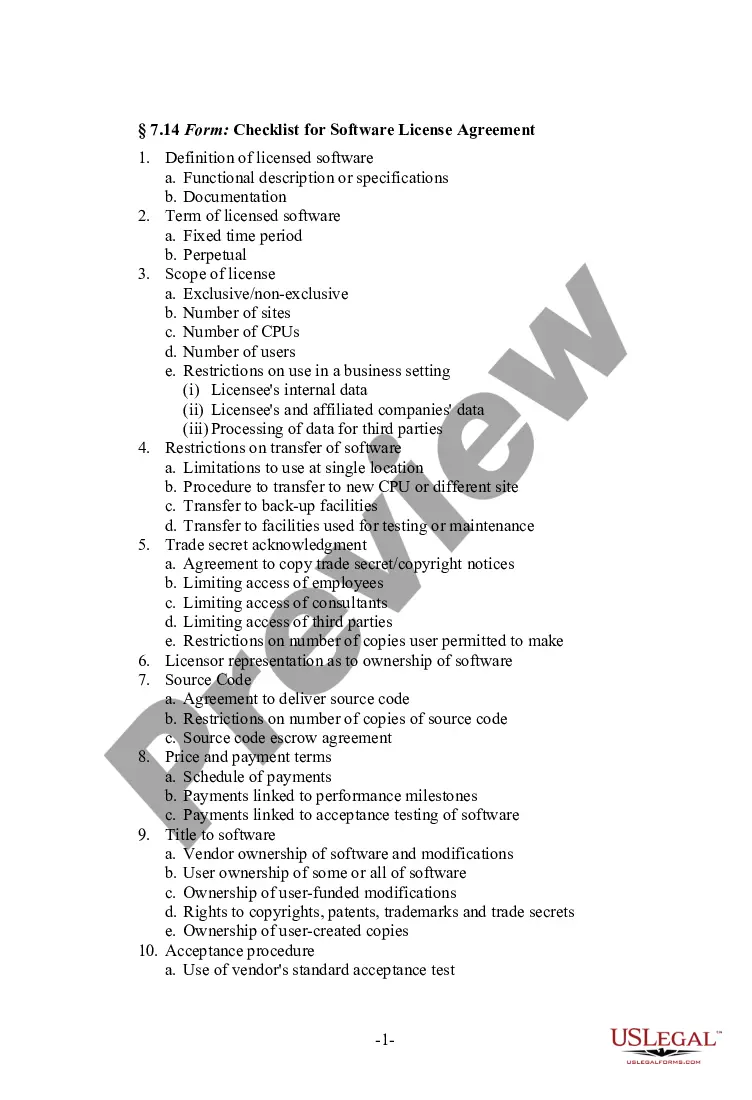
Get your form ready online
Our built-in tools help you complete, sign, share, and store your documents in one place.
Make edits, fill in missing information, and update formatting in US Legal Forms—just like you would in MS Word.
Download a copy, print it, send it by email, or mail it via USPS—whatever works best for your next step.
Sign and collect signatures with our SignNow integration. Send to multiple recipients, set reminders, and more. Go Premium to unlock E-Sign.
If this form requires notarization, complete it online through a secure video call—no need to meet a notary in person or wait for an appointment.
We protect your documents and personal data by following strict security and privacy standards.

Make edits, fill in missing information, and update formatting in US Legal Forms—just like you would in MS Word.

Download a copy, print it, send it by email, or mail it via USPS—whatever works best for your next step.

Sign and collect signatures with our SignNow integration. Send to multiple recipients, set reminders, and more. Go Premium to unlock E-Sign.

If this form requires notarization, complete it online through a secure video call—no need to meet a notary in person or wait for an appointment.

We protect your documents and personal data by following strict security and privacy standards.
Looking for another form?






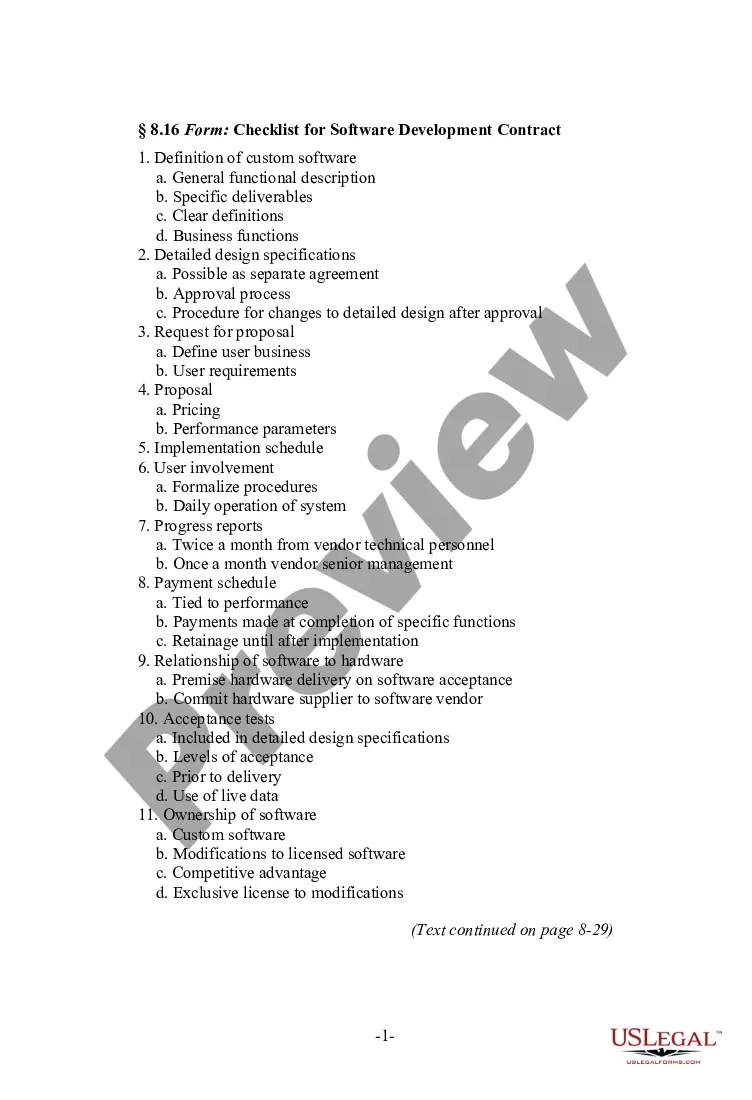
How to fill out Checklist - Software Development Contract?
Whether for commercial objectives or personal matters, everyone must handle legal issues sooner or later in their life.
Completing legal documents requires meticulous attention, starting with choosing the suitable form template. For example, if you select an incorrect version of the Contract Checklist For Risk Management, it will be rejected once you submit it. Thus, it is crucial to find a trustworthy source of legal documents like US Legal Forms.
With an extensive US Legal Forms catalog available, you do not need to waste time searching for the correct sample online. Use the library’s straightforward navigation to find the appropriate template for any situation.
- Obtain the sample you require by using the search bar or catalog browsing.
- Review the form’s details to confirm it aligns with your circumstances, state, and locality.
- Click on the form’s preview to examine it.
- If it is the wrong form, return to the search function to locate the Contract Checklist For Risk Management sample you need.
- Acquire the document once it meets your specifications.
- If you possess a US Legal Forms account, simply click Log in to access previously stored documents in My documents.
- If you do not have an account yet, you may purchase the form by clicking Buy now.
- Choose the appropriate payment option.
- Fill out the account registration form.
- Choose your payment method: you can use a credit card or PayPal account.
- Select the file format you desire and download the Contract Checklist For Risk Management.
- Once saved, you can fill out the form using editing software or print it and complete it by hand.
Form popularity
FAQ
Contract management can be risky business. That's because risk is inherent in any contract and in most cases, it can't be avoided, it must be managed and minimized. After all, nothing ventured, nothing gained. Completely avoiding all risk essentially means you are completely avoiding all opportunities.
Contract risk management is the process that allows businesses to realise the maximum value of their contracts while continuously identifying, tracking, and minimising risk throughout the contract lifecycle. Contract management is the process of managing contracts from start to finish.
The Health and Safety Executive's Five steps to risk assessment. Step 1: Identify the hazards. Step 2: Decide who might be harmed and how. Step 3: Evaluate the risks and decide on precautions. Step 4: Record your findings and implement them. Step 5: Review your risk assessment and update if. necessary.
The use of a risk checklist is the final step of risk identification to ensure that common project risks are not overlooked. What is it? Risk checklists are a historic list of risks identified or realized on past projects. Risk checklists are meant to be shared between Estimators and discipline groups on all projects.
Below, we'll explore some of the crucial things you must do to ensure you're on top of your contract risk management game. #1 Evaluate the scope of the contract. ... #2 Examine the delivery schedule. ... #3 Evaluate the terms. ... #4 Review risks associated with location-specific obligations. ... #5 Research your contract partner.