Fire Employee For Lying
Description
Get your form ready online
Our built-in tools help you complete, sign, share, and store your documents in one place.
Make edits, fill in missing information, and update formatting in US Legal Forms—just like you would in MS Word.
Download a copy, print it, send it by email, or mail it via USPS—whatever works best for your next step.
Sign and collect signatures with our SignNow integration. Send to multiple recipients, set reminders, and more. Go Premium to unlock E-Sign.
If this form requires notarization, complete it online through a secure video call—no need to meet a notary in person or wait for an appointment.
We protect your documents and personal data by following strict security and privacy standards.

Make edits, fill in missing information, and update formatting in US Legal Forms—just like you would in MS Word.

Download a copy, print it, send it by email, or mail it via USPS—whatever works best for your next step.

Sign and collect signatures with our SignNow integration. Send to multiple recipients, set reminders, and more. Go Premium to unlock E-Sign.

If this form requires notarization, complete it online through a secure video call—no need to meet a notary in person or wait for an appointment.

We protect your documents and personal data by following strict security and privacy standards.
Looking for another form?










Form popularity
FAQ
If someone lies about you to get you fired, first, collect any evidence that supports your version of events. Speak with your supervisor or HR department to address the situation. It is crucial to remain calm and present your case clearly. Additionally, using tools from platforms like US Legal Forms can provide valuable resources for documenting your complaint and understanding your rights.
If you suspect an employee is lying, it is important to gather all relevant information before taking action. Document any instances of dishonesty, and review company policies regarding integrity. You may need to consult with a legal professional to understand your options, especially if you decide to fire the employee for lying. Remember, acting swiftly and fairly can uphold your workplace standards.
To address an employee who lies, start by having a private conversation to discuss the behavior. Present the evidence of their dishonesty and allow them to explain their side. Ensure you communicate the consequences of lying, reinforcing that repeated dishonesty may lead to a decision to fire the employee for lying.
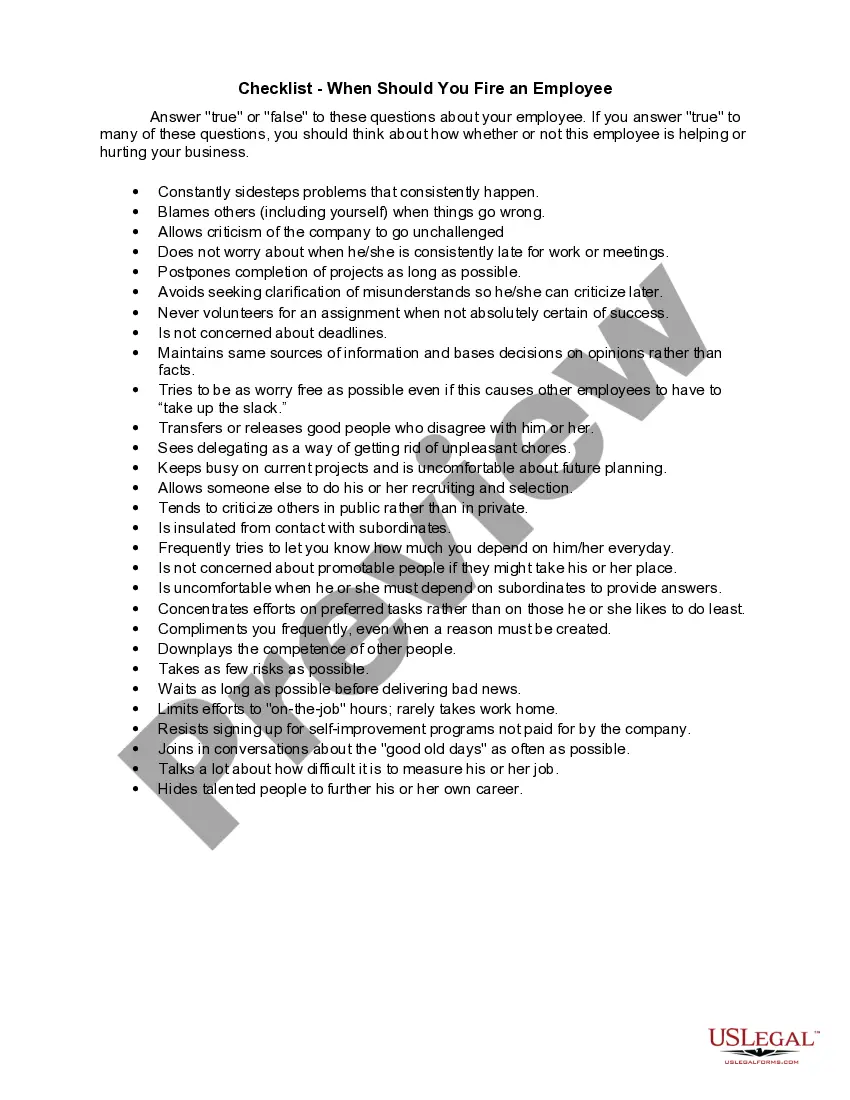
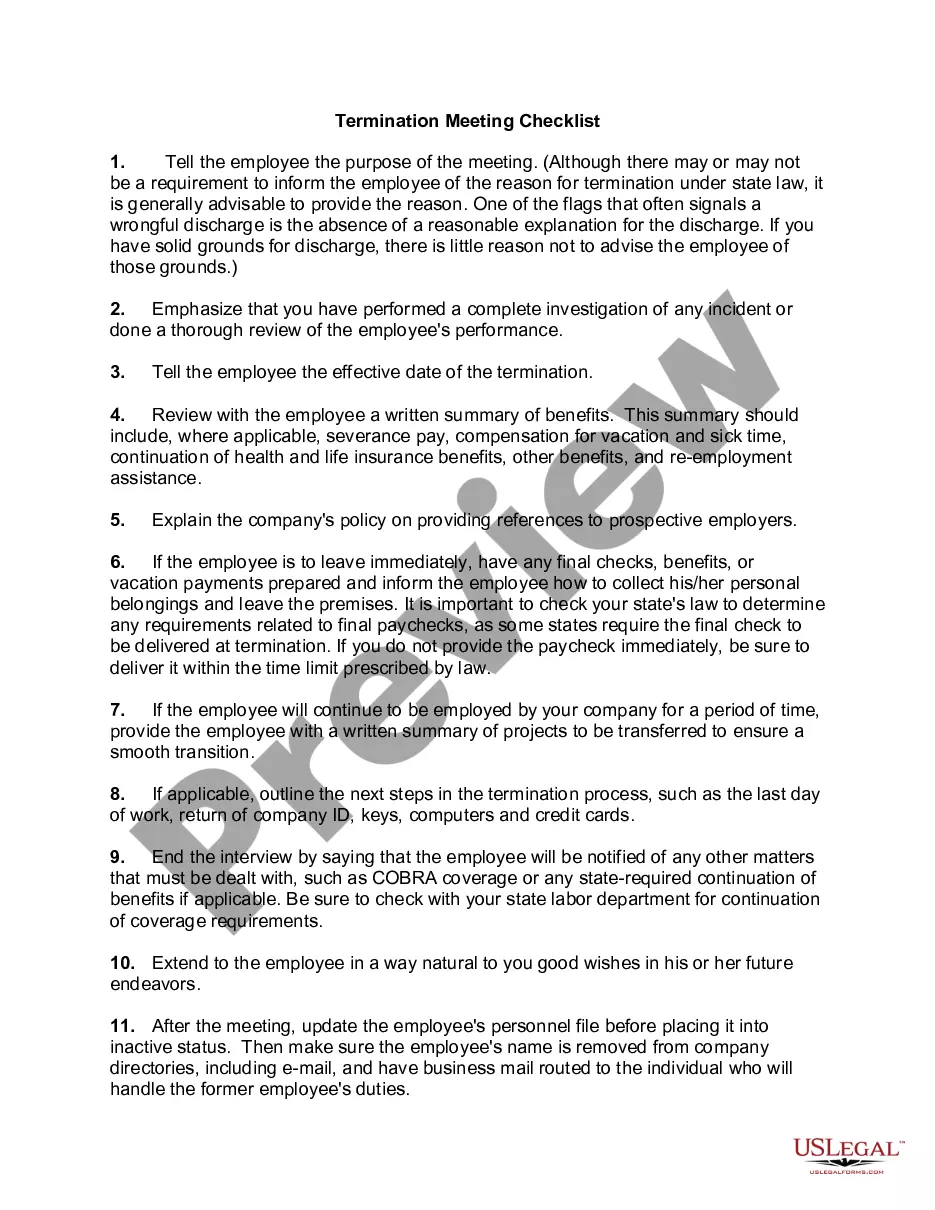
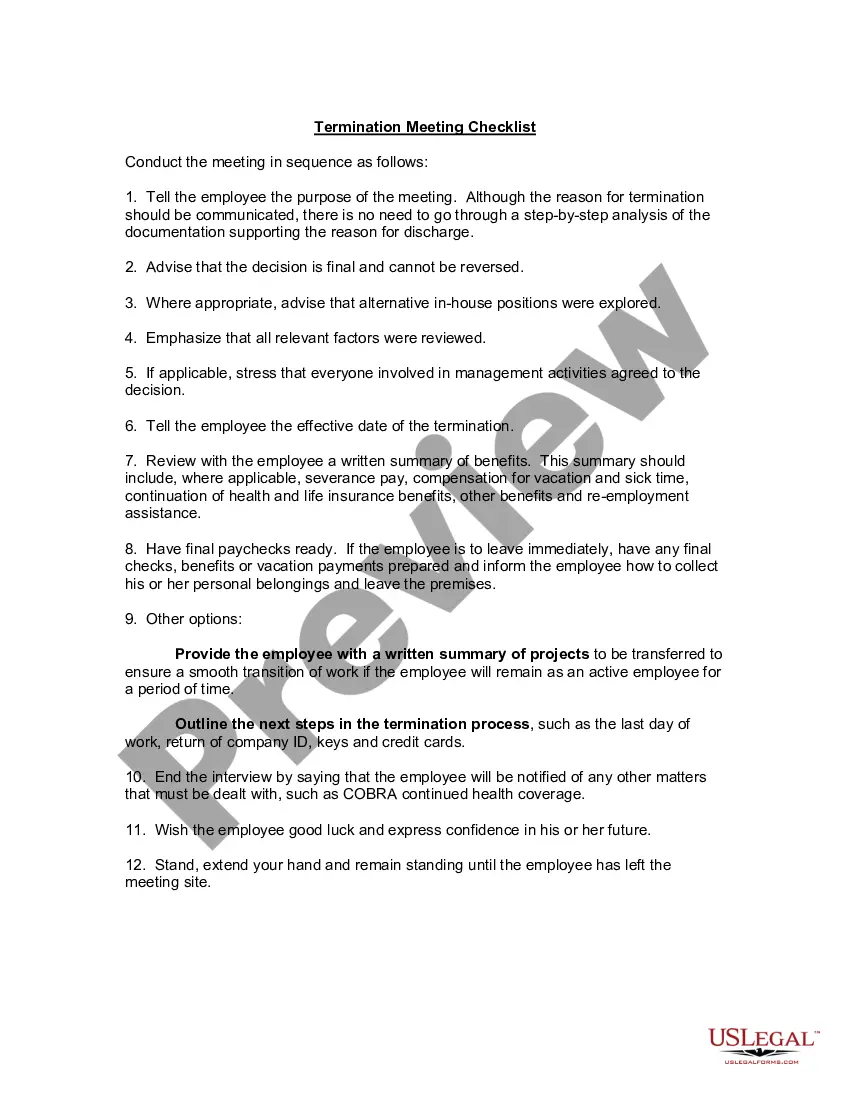
To fire a lying employee, first gather all relevant documentation regarding the instances of dishonesty. Next, prepare for the termination meeting by reviewing company policies and legal requirements. During the meeting, communicate your decision clearly and provide the reasons based on the evidence collected, ensuring a professional approach.
Yes, you can dismiss an employee for lying. When you fire an employee for lying, it's crucial to have proof of the dishonesty. Document the evidence carefully and follow your company's termination policy to ensure you comply with applicable laws.
Dealing with a dishonest employee requires a careful and structured approach. Start by documenting the dishonest behavior and gathering evidence to support your claims. Then, have a meeting to confront the employee about their actions, allowing them a chance to explain themselves. Depending on the severity, you may need to consider disciplinary measures, including the possibility to fire the employee for lying.
Yes, you can be fired for being dishonest, especially if your dishonesty disrupts operations or violates workplace policies. Companies often reserve the right to terminate employees who engage in dishonest behaviors. To avoid such situations, companies should have clear policies in place that outline the consequences of dishonesty.
Yes, you can terminate an employee for lying, especially if their actions harm the business or violate internal policies. It is vital to understand the reasons behind their dishonesty and to consider whether previous incidents had occurred. If you choose to move forward with termination, document everything to support your case legally.
Lying can serve as just cause for termination, particularly if it violates company policy or compromises trust. Evaluate the impact of the lie on your business and determine if it warrants termination. Always ensure that you have strong evidence and follow the proper protocols to avoid wrongful termination claims.
To terminate an employee for dishonesty, begin by collecting all relevant facts and documentation related to the incident. Conduct a thorough investigation, and if warranted, hold a meeting with the employee to discuss their actions. After due process, deliver the termination notice while clearly stating that the decision was due to their dishonesty.