Photography Without Permission
Description
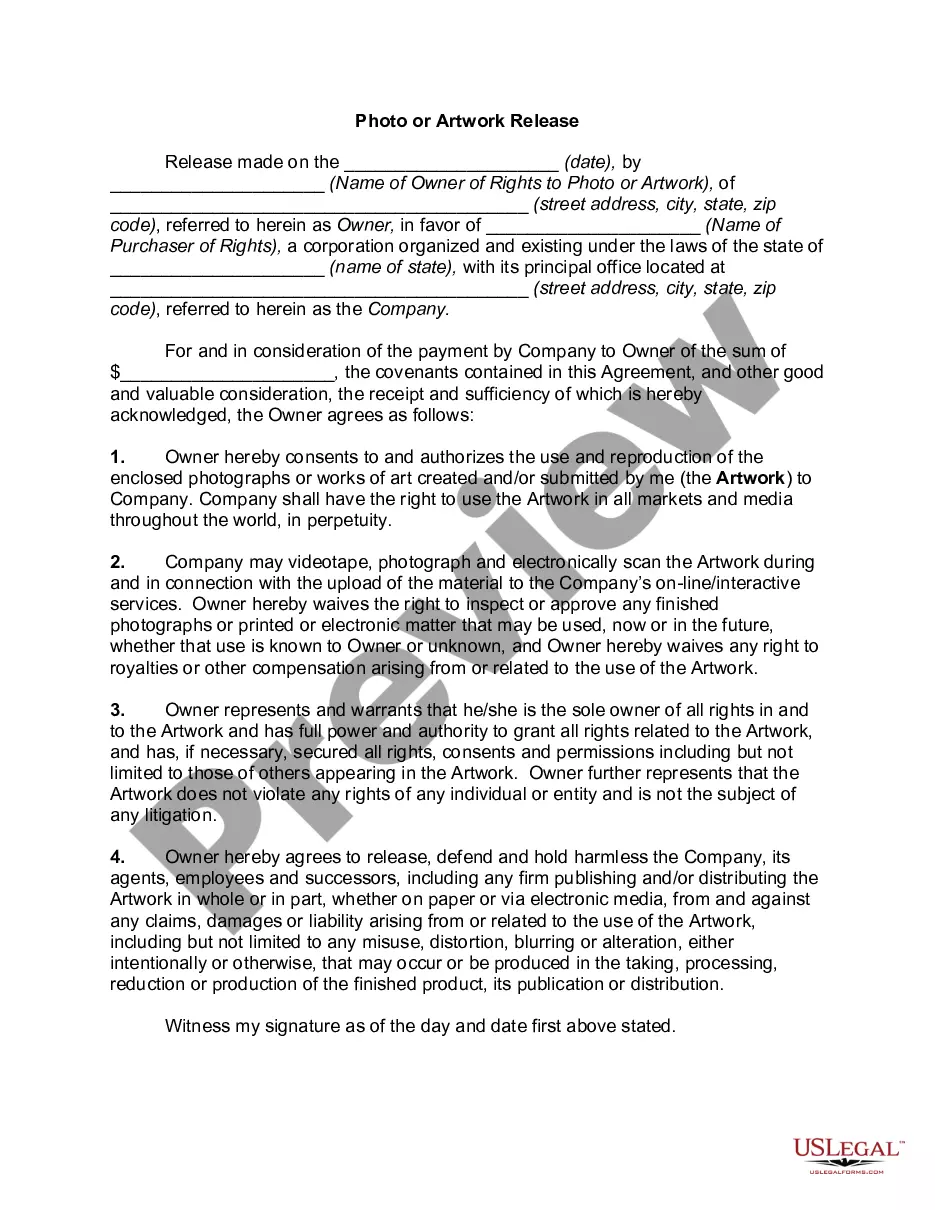
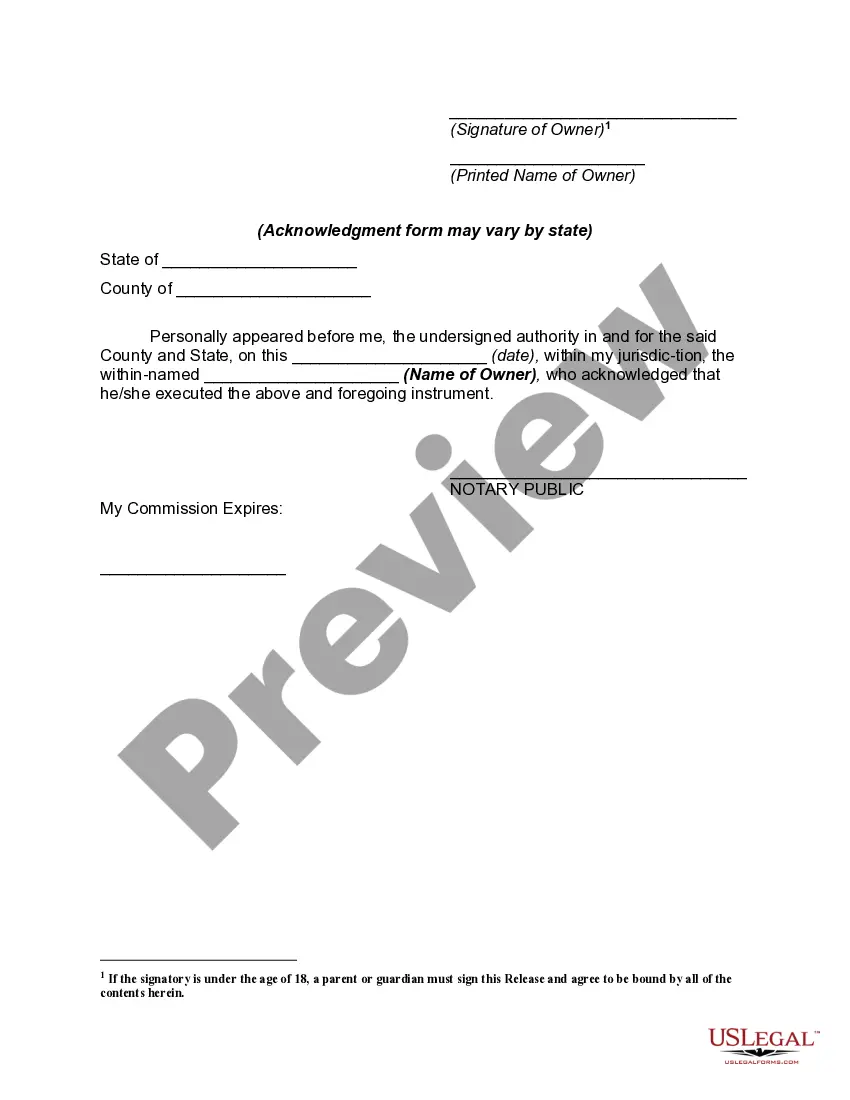
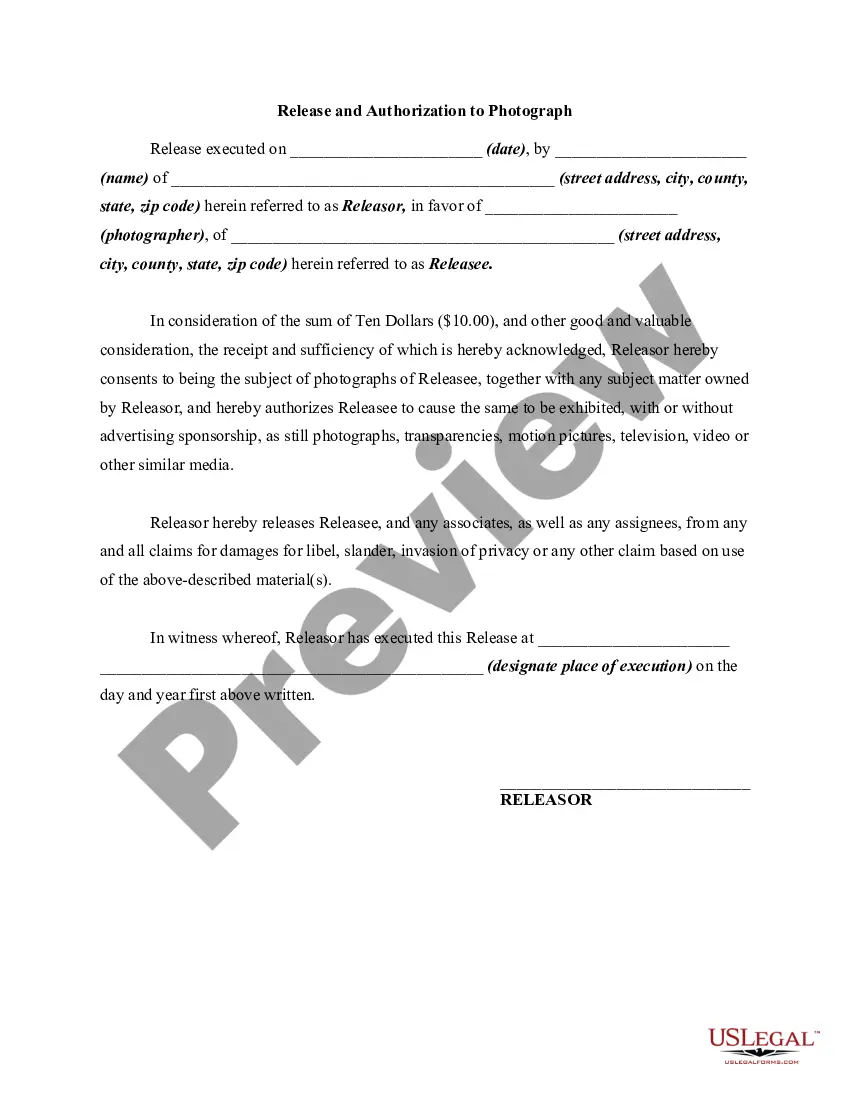
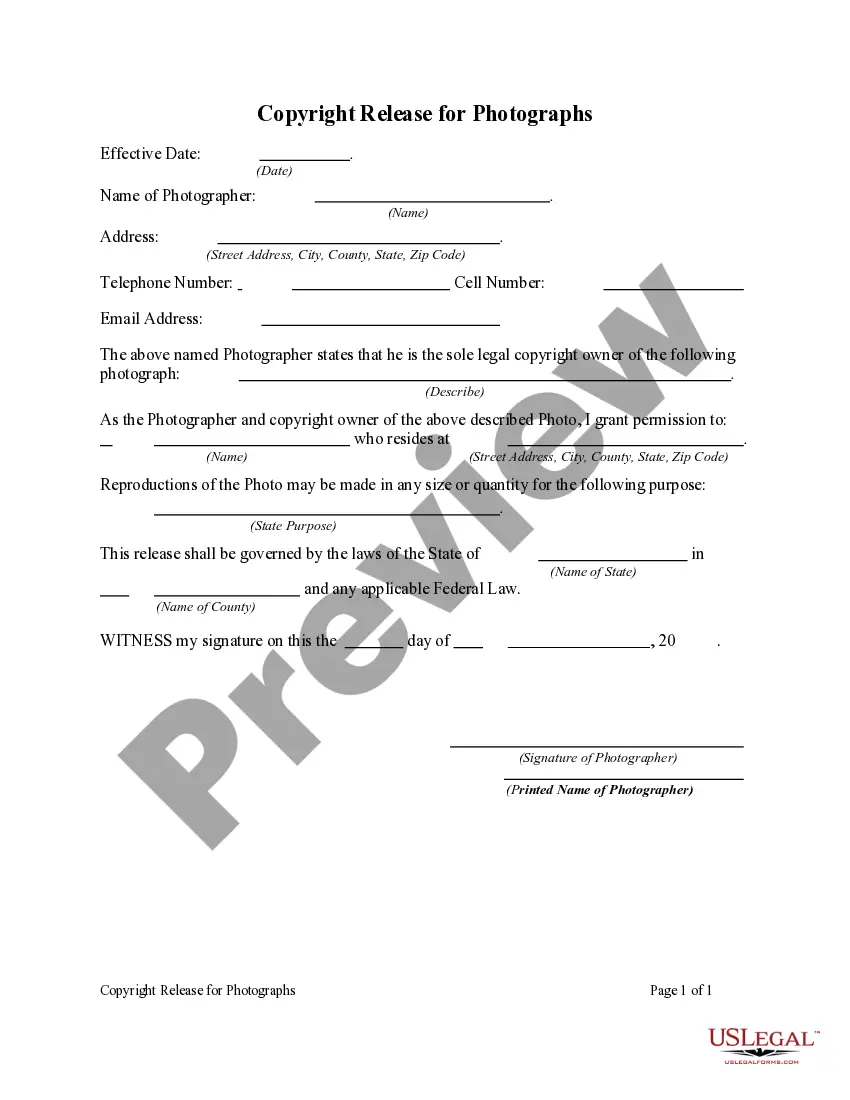


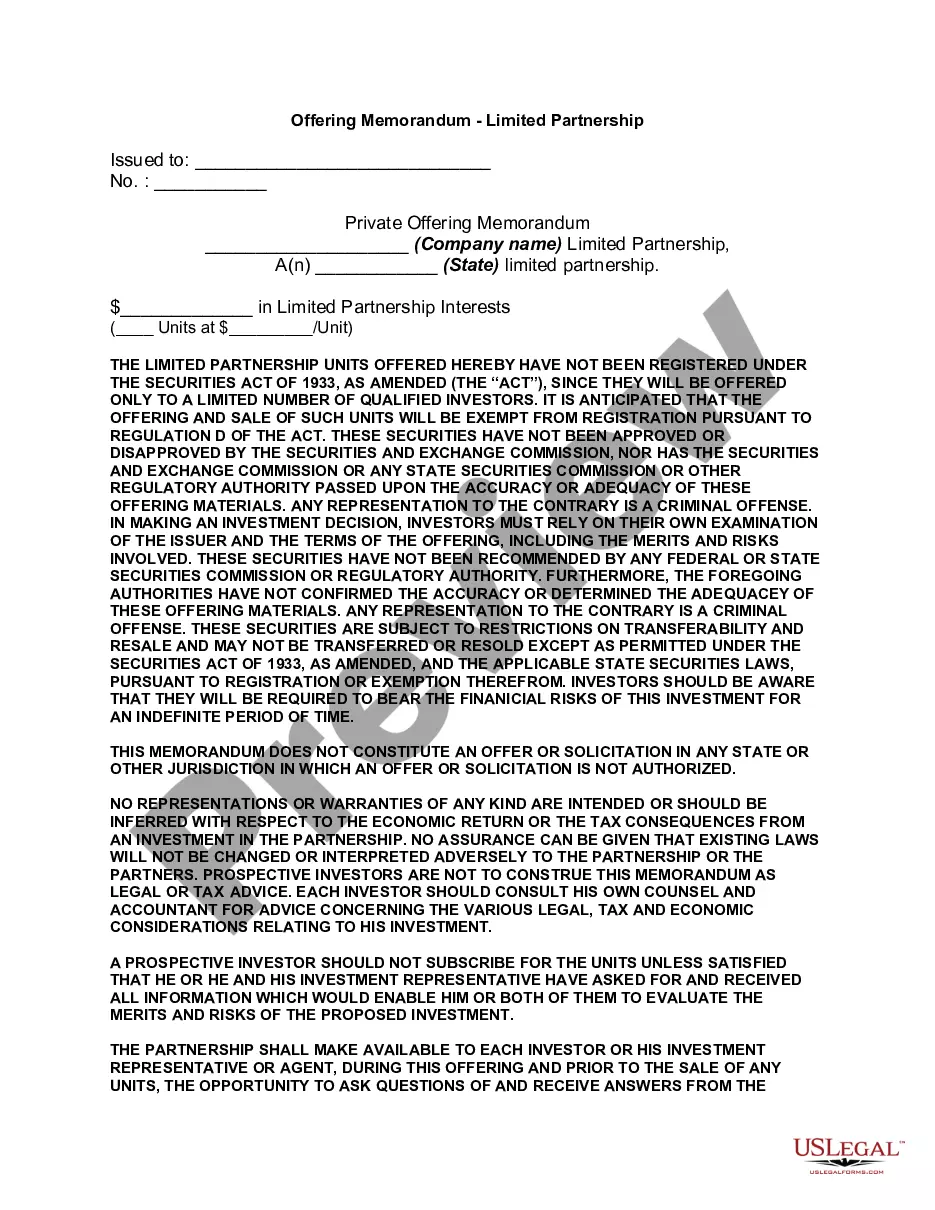
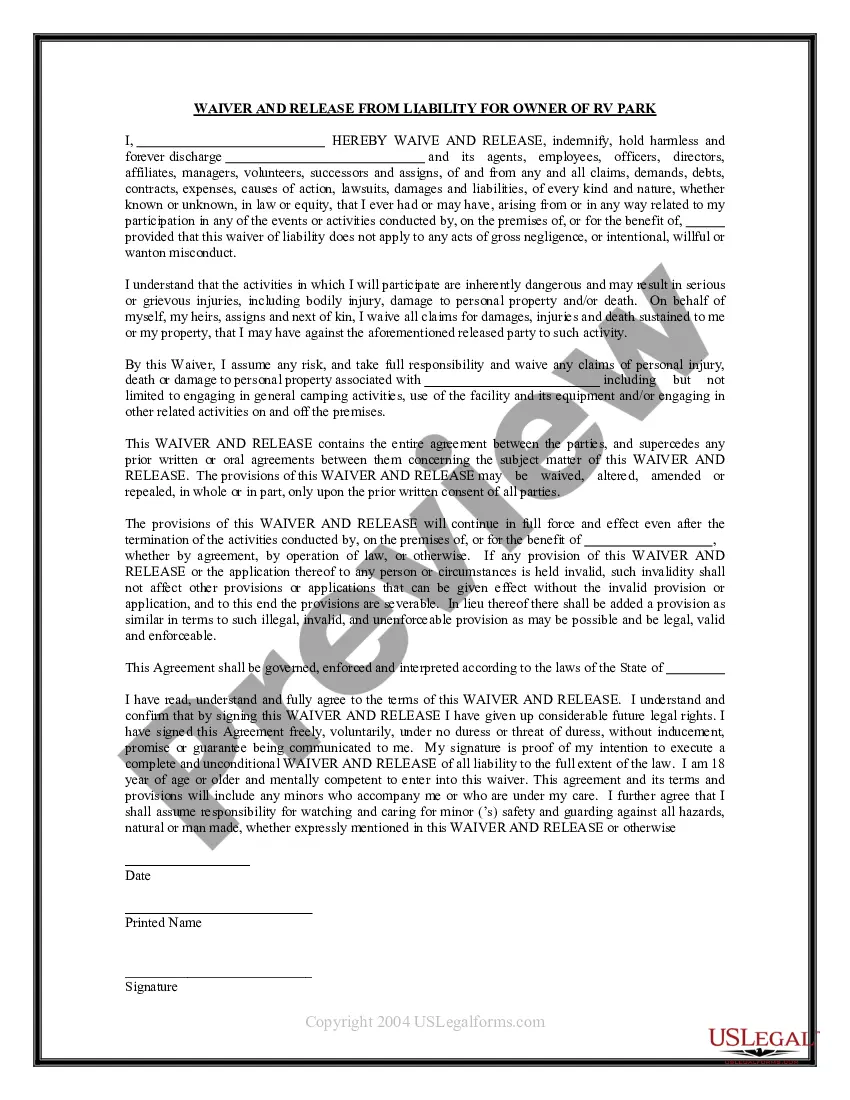
How to fill out Photo Or Artwork Release?
It’s no secret that you can’t become a legal expert immediately, nor can you learn how to quickly draft Photography Without Permission without having a specialized background. Creating legal documents is a time-consuming process requiring a certain training and skills. So why not leave the preparation of the Photography Without Permission to the specialists?
With US Legal Forms, one of the most extensive legal template libraries, you can access anything from court paperwork to templates for in-office communication. We know how crucial compliance and adherence to federal and state laws and regulations are. That’s why, on our website, all templates are location specific and up to date.
Here’s how you can get started with our platform and get the form you need in mere minutes:
- Find the form you need with the search bar at the top of the page.
- Preview it (if this option available) and check the supporting description to figure out whether Photography Without Permission is what you’re looking for.
- Begin your search over if you need any other template.
- Set up a free account and choose a subscription plan to buy the form.
- Choose Buy now. As soon as the payment is complete, you can get the Photography Without Permission, complete it, print it, and send or mail it to the necessary people or entities.
You can re-gain access to your documents from the My Forms tab at any time. If you’re an existing customer, you can simply log in, and locate and download the template from the same tab.
No matter the purpose of your documents-whether it’s financial and legal, or personal-our platform has you covered. Try US Legal Forms now!
Form popularity
FAQ
DO ask for permission if you're about to invade someone's privacy, intimate moment. DON'T need to ask for permission if you're taking photographs in a public place. DO carry your professional business cards, it's the easiest way to ask for permission.
Whoever, intentionally or knowingly captures, publishes or transmits the image of a private area of any person without his or her consent, under circumstances violating the privacy of that person, shall be punished with imprisonment which may extend to three years or with fine not exceeding two lakh rupees, or with ...
Unless the content is in the public domain, someone who posts it without permission and/or attribution may be liable for copyright infringement. People also get in trouble for posting illegal ography, including revenge .
There are only four simple components you need to include: The copyright symbol © or the word ?copyright? The name of the copyright owner or author of the work. The year the content was published, which can be different from the year of creation. Your statement of the rights you're reserving over the materials.
Although the photographer does own the copyright for the photographs, they cannot use the photographs publicly without your permission if the photographs have been commissioned for private or domestic purposes (such as a family photo shoot or a wedding.)