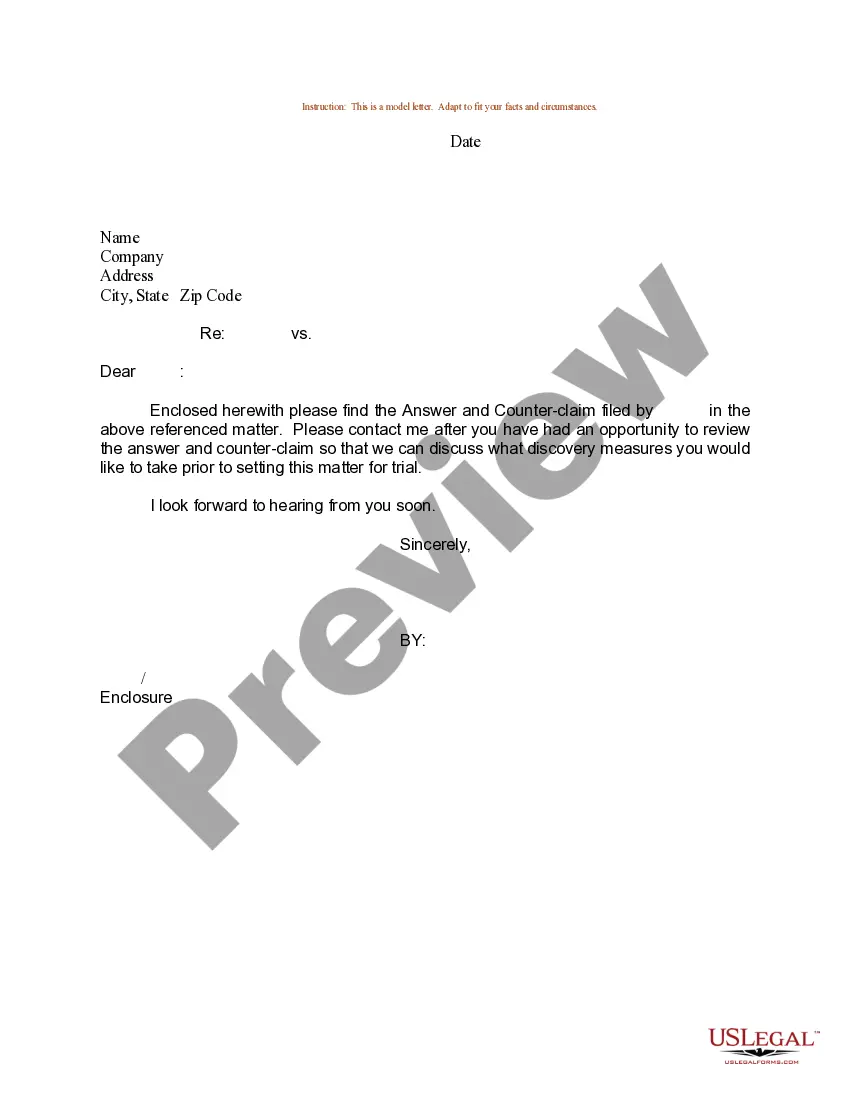
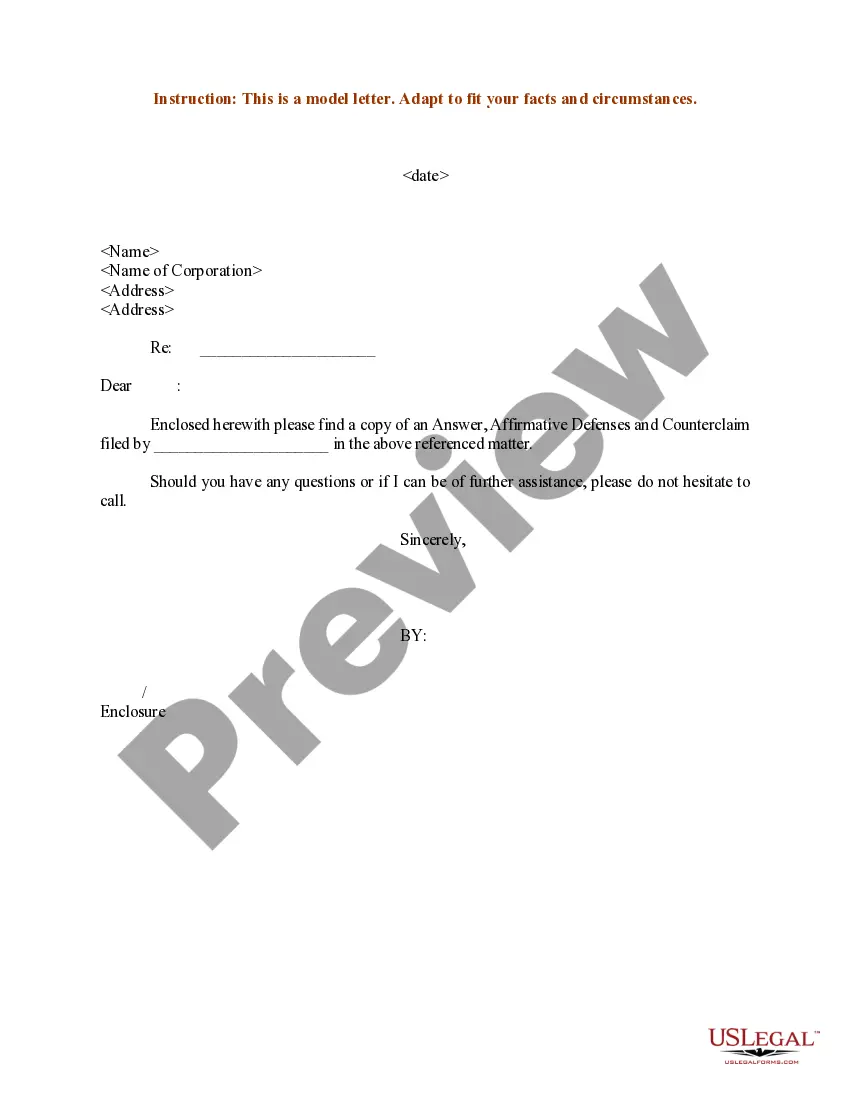
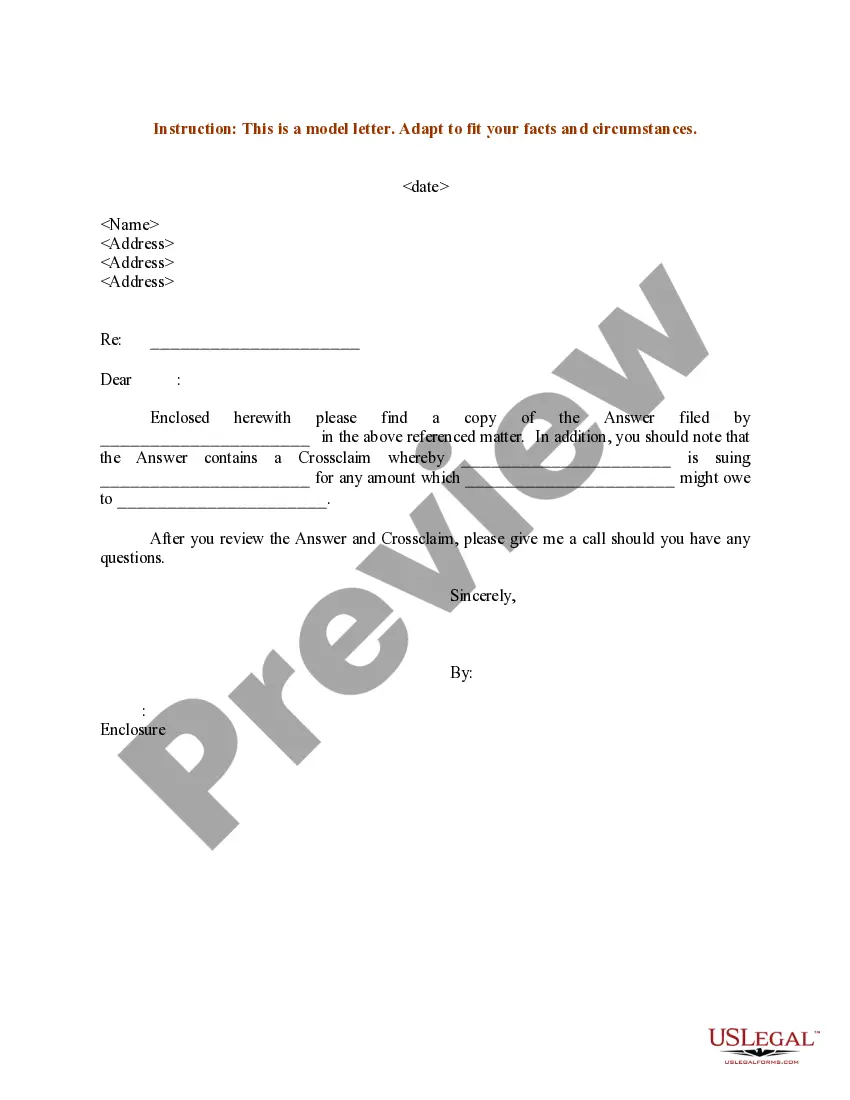
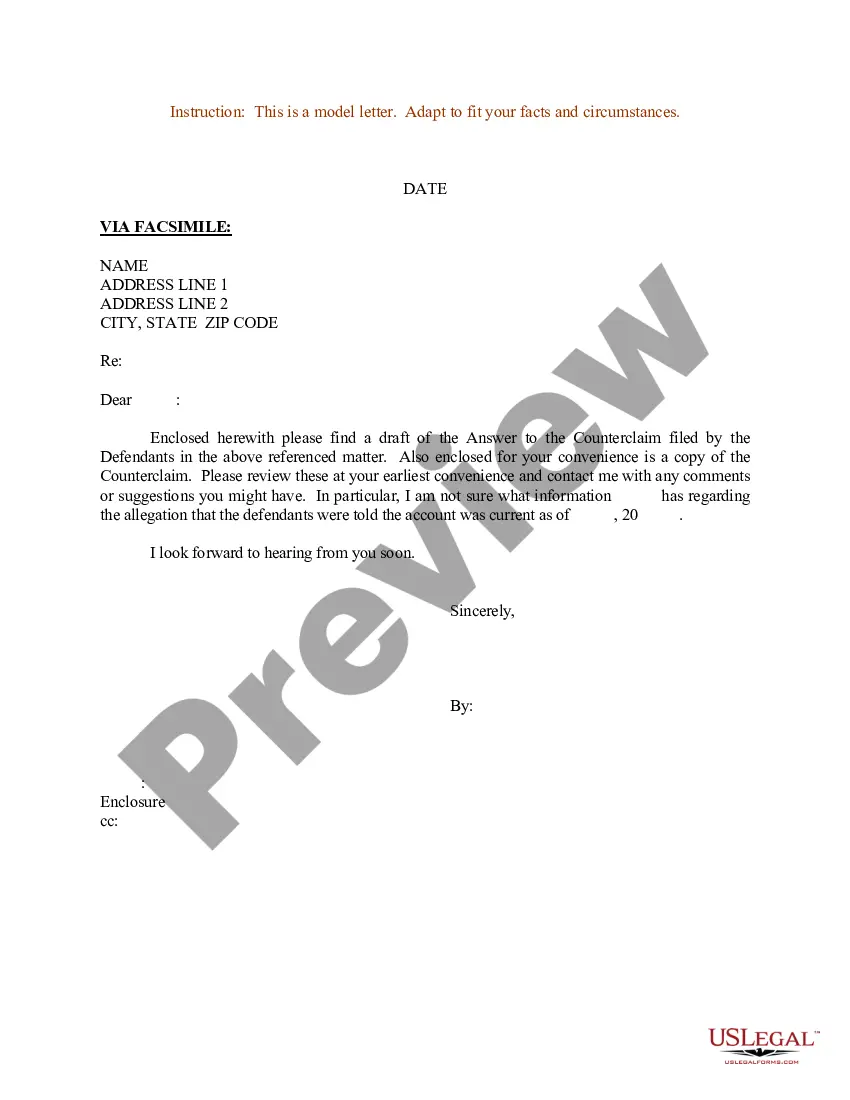
Answer Counter Claim With Federal Court
Description
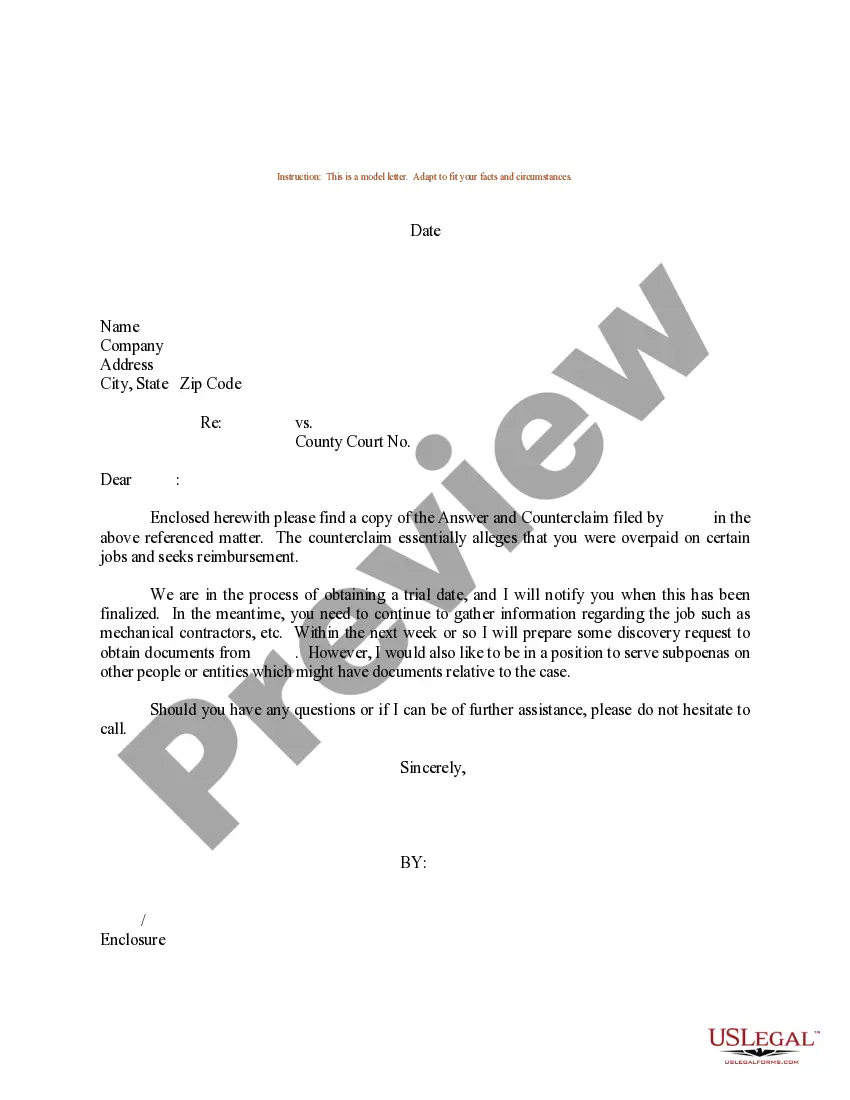
Get your form ready online
Our built-in tools help you complete, sign, share, and store your documents in one place.
Make edits, fill in missing information, and update formatting in US Legal Forms—just like you would in MS Word.
Download a copy, print it, send it by email, or mail it via USPS—whatever works best for your next step.
Sign and collect signatures with our SignNow integration. Send to multiple recipients, set reminders, and more. Go Premium to unlock E-Sign.
If this form requires notarization, complete it online through a secure video call—no need to meet a notary in person or wait for an appointment.
We protect your documents and personal data by following strict security and privacy standards.

Make edits, fill in missing information, and update formatting in US Legal Forms—just like you would in MS Word.

Download a copy, print it, send it by email, or mail it via USPS—whatever works best for your next step.

Sign and collect signatures with our SignNow integration. Send to multiple recipients, set reminders, and more. Go Premium to unlock E-Sign.

If this form requires notarization, complete it online through a secure video call—no need to meet a notary in person or wait for an appointment.

We protect your documents and personal data by following strict security and privacy standards.
Looking for another form?
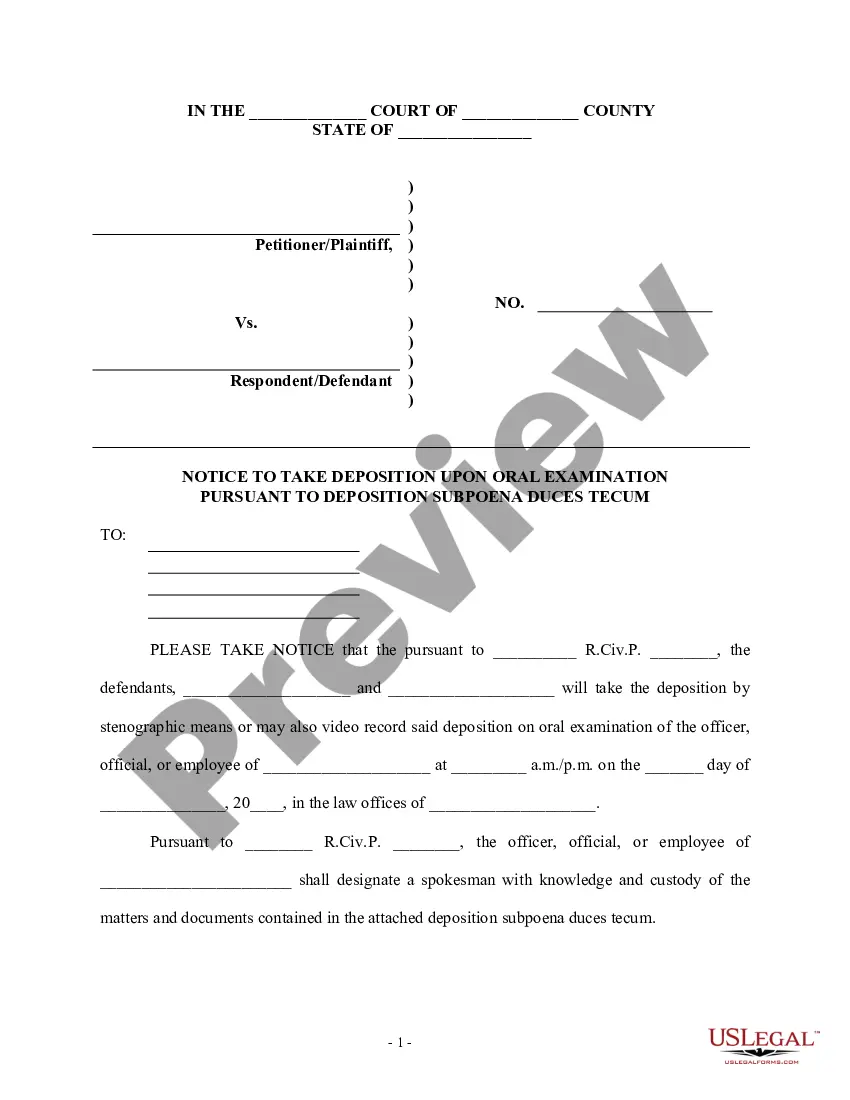
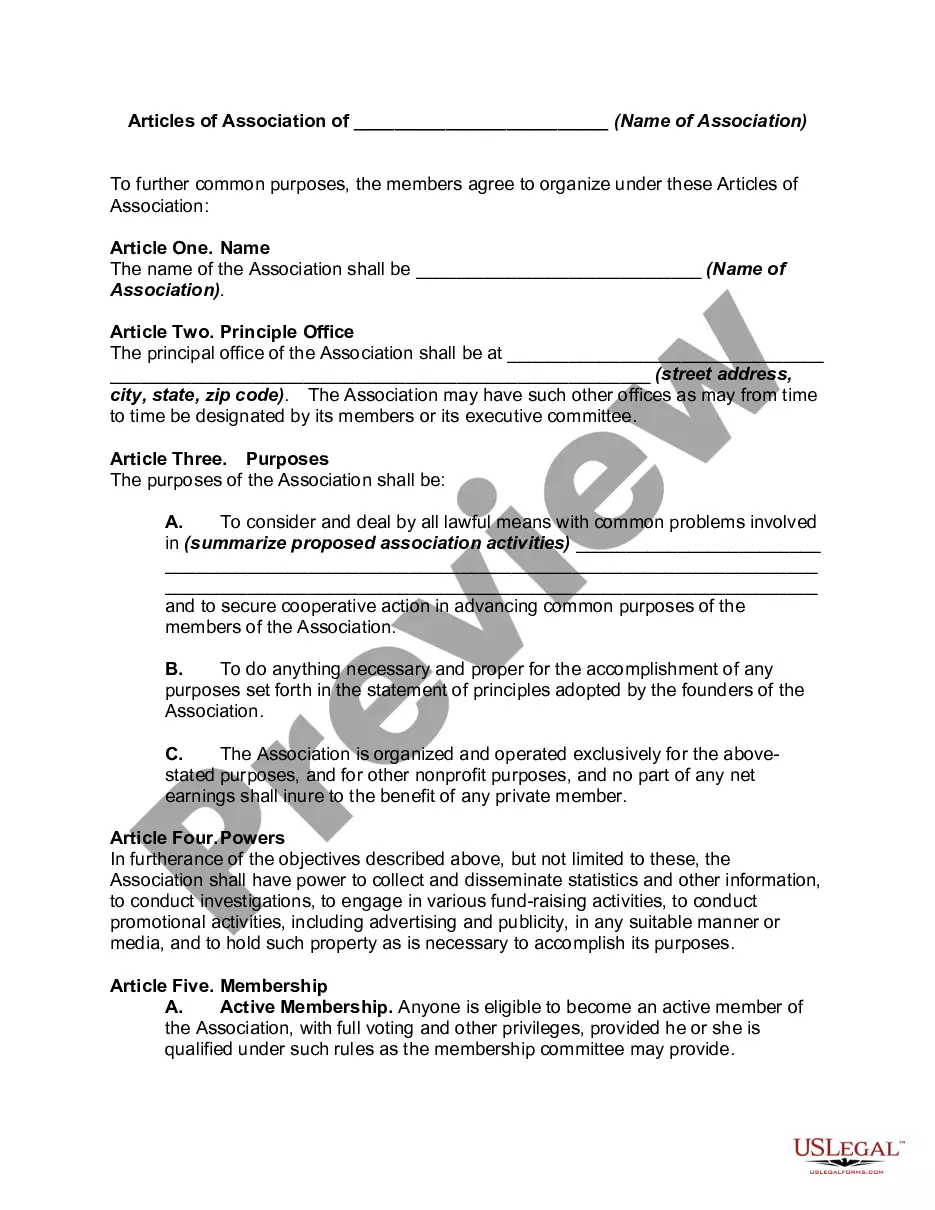

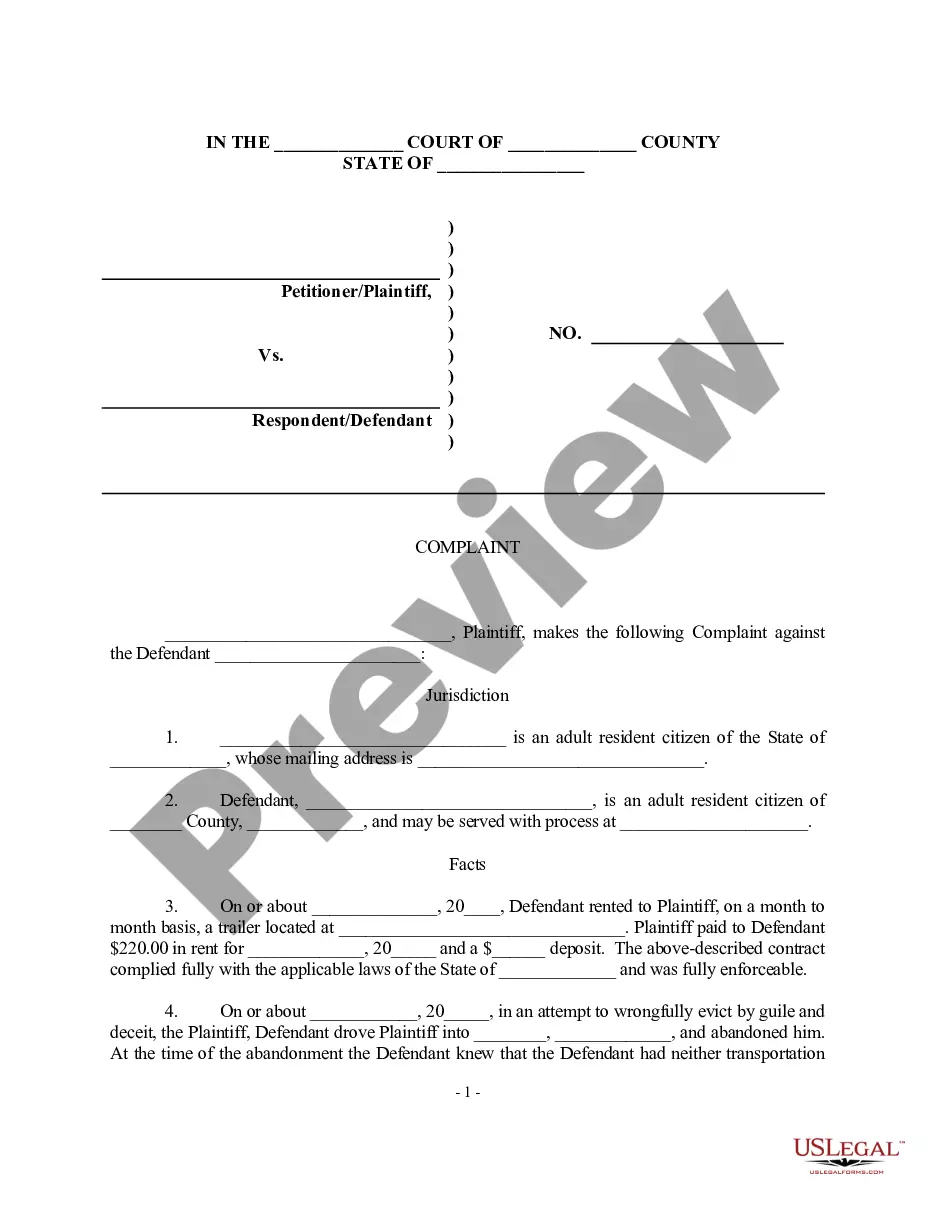
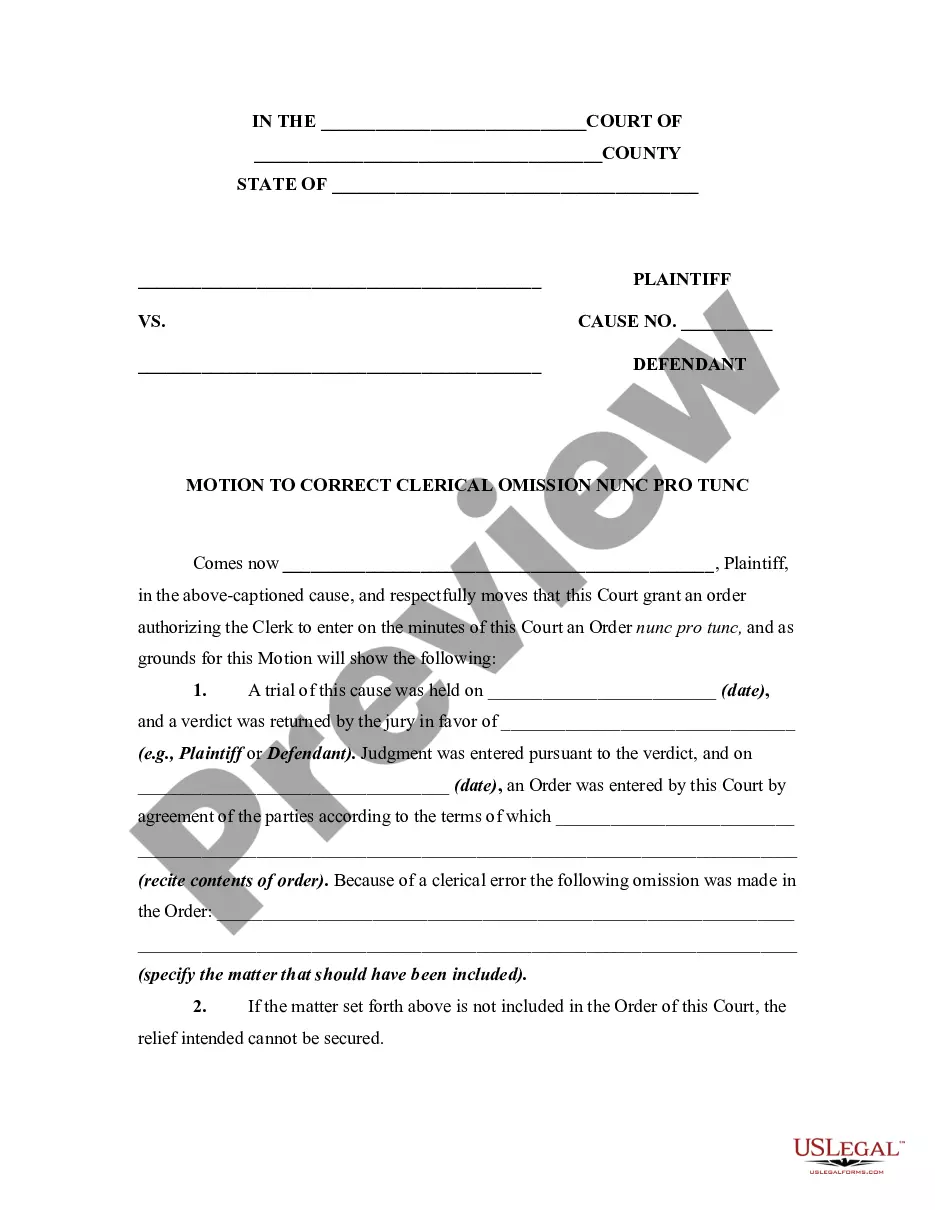
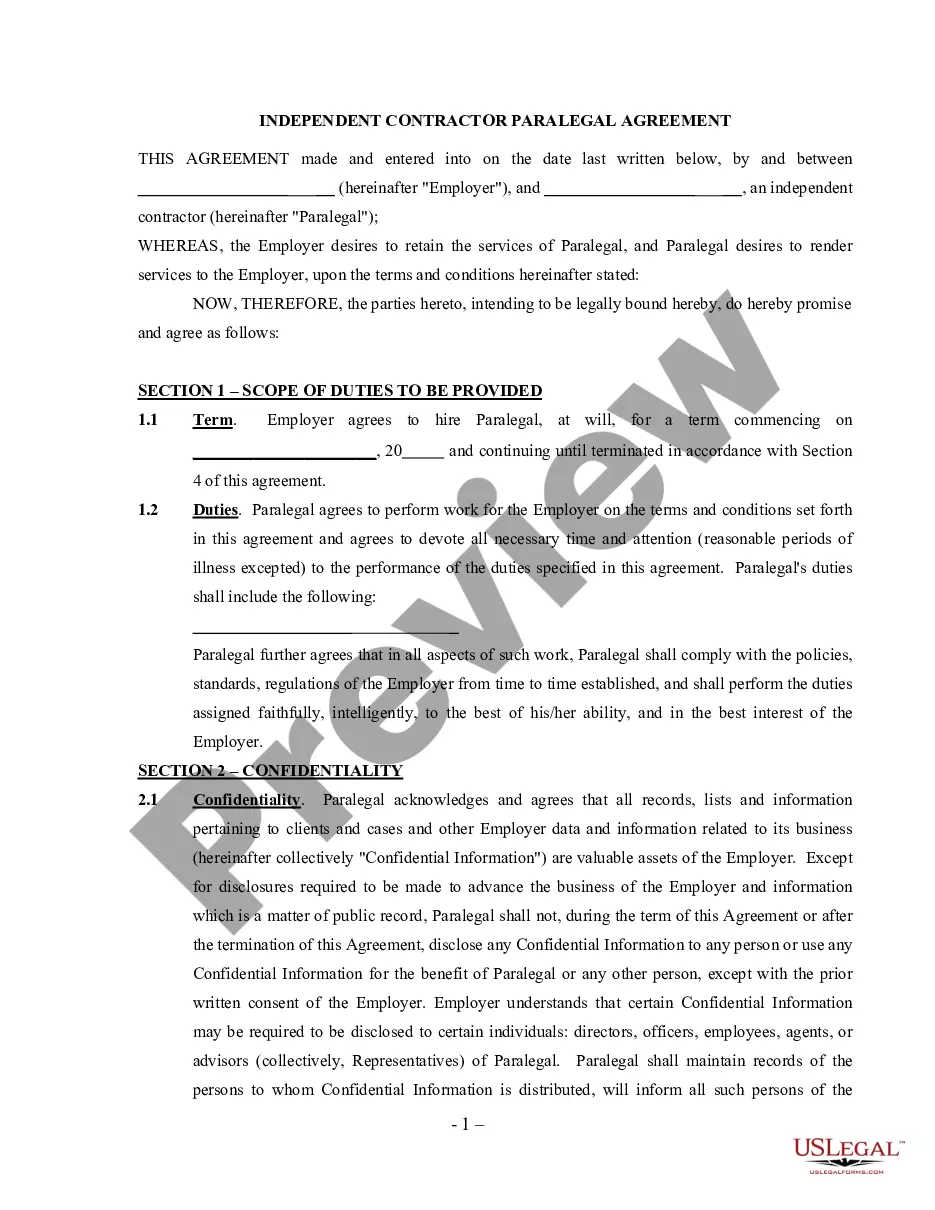
How to fill out Sample Letter For Answer And Counterclaim?
Whether for commercial intentions or personal matters, everyone must handle legal issues at some stage in their lifetime.
Filling out legal documents necessitates careful consideration, starting from selecting the appropriate form template.
After it is saved, you can complete the form using editing software or print it and fill it out manually. With a large collection available at US Legal Forms, there is no need to waste time searching for the correct template online. Make use of the library's easy navigation to discover the relevant template for any scenario.
- For instance, if you choose an incorrect version of the Answer Counter Claim With Federal Court, it will be rejected once submitted.
- It is thus crucial to find a reliable source of legal documents such as US Legal Forms.
- To procure an Answer Counter Claim With Federal Court template, follow these simple steps.
- Utilize the search bar or catalog navigation to find the template you require.
- Review the form's details to ensure it fits your case, jurisdiction, and county.
- Click on the form's preview to examine it.
- If it is the wrong document, return to the search tool to locate the Answer Counter Claim With Federal Court sample you need.
- Download the file once it meets your specifications.
- If you possess a US Legal Forms account, click Log in to access previously saved templates in My documents.
- If you are not yet registered, you can acquire the form by clicking Buy now.
- Select the appropriate payment option.
- Fill out the account registration form.
- Choose your payment method: you can utilize a credit card or PayPal account.
- Select the desired document format and download the Answer Counter Claim With Federal Court.
Form popularity
FAQ
A best example of a counterclaim involves a car accident case. If Person A sues Person B for damages after a collision, Person B might counterclaim that Person A was driving recklessly, leading to the accident. This example not only illustrates the concept but also shows how counterclaims can be used defensively. When you need to answer a counter claim with federal court, detailed examples can enhance your argument.
A claim is an assertion made by a plaintiff seeking relief from a defendant, while a counterclaim is a response made by the defendant asserting their own claims against the plaintiff. Understanding this distinction helps in navigating legal processes. When you need to respond effectively, you may find guidance on how to answer counter claim with federal court invaluable.
Drafting an effective answer requires an individual to carefully review the factual allegations and legal claims in a complaint, and to carefully consider the responses to those allegations, including any affirmative defenses, counterclaims, cross-claims, and third-party claims that may be asserted.
(B) A party must serve an answer to a counterclaim or crossclaim within 21 days after being served with the pleading that states the counterclaim or crossclaim. (C) A party must serve a reply to an answer within 21 days after being served with an order to reply, unless the order specifies a different time.
Under the Federal Rules of Procedure, an answer to a counterclaim or cross-claim is due twenty-one (21) days after service of the pleading that asserts the counterclaim or cross-claim.
Respond to each paragraph in the Complaint. Read each sentence of the Complaint. Each paragraph should be numbered. If everything in the paragraph is false, do not write that paragraph number anywhere. D and explain which specific parts of the paragraph are true.
An answer to a counterclaim is a written response by a Plaintiff to a Defendant's counterclaim. The answer to counterclaim must also state defenses to each of the Defendant's counterclaims in short, plain statements.