Executor Of Estate Responsible For Debts
Description
Get your form ready online
Our built-in tools help you complete, sign, share, and store your documents in one place.
Make edits, fill in missing information, and update formatting in US Legal Forms—just like you would in MS Word.
Download a copy, print it, send it by email, or mail it via USPS—whatever works best for your next step.
Sign and collect signatures with our SignNow integration. Send to multiple recipients, set reminders, and more. Go Premium to unlock E-Sign.
If this form requires notarization, complete it online through a secure video call—no need to meet a notary in person or wait for an appointment.
We protect your documents and personal data by following strict security and privacy standards.

Make edits, fill in missing information, and update formatting in US Legal Forms—just like you would in MS Word.

Download a copy, print it, send it by email, or mail it via USPS—whatever works best for your next step.

Sign and collect signatures with our SignNow integration. Send to multiple recipients, set reminders, and more. Go Premium to unlock E-Sign.

If this form requires notarization, complete it online through a secure video call—no need to meet a notary in person or wait for an appointment.

We protect your documents and personal data by following strict security and privacy standards.
Looking for another form?


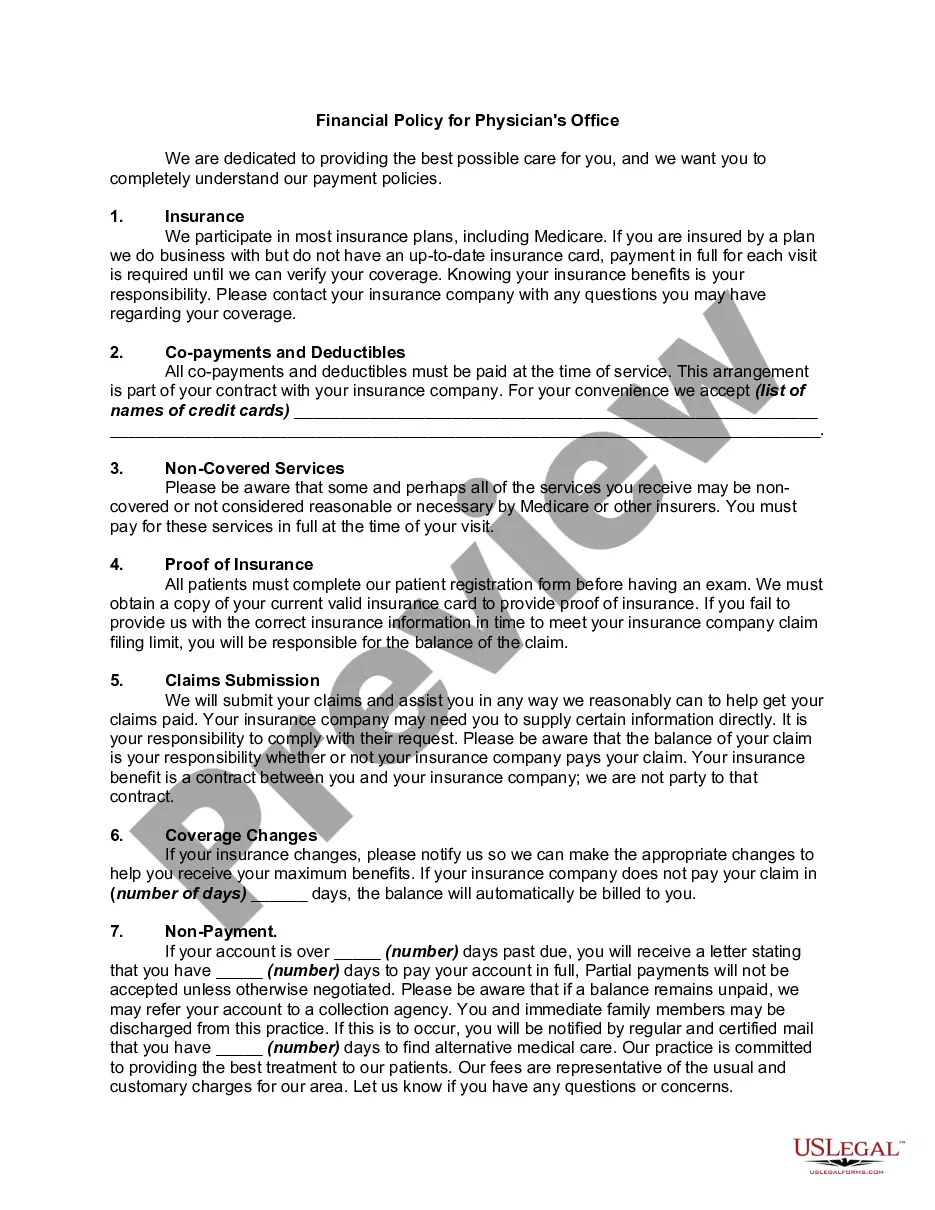




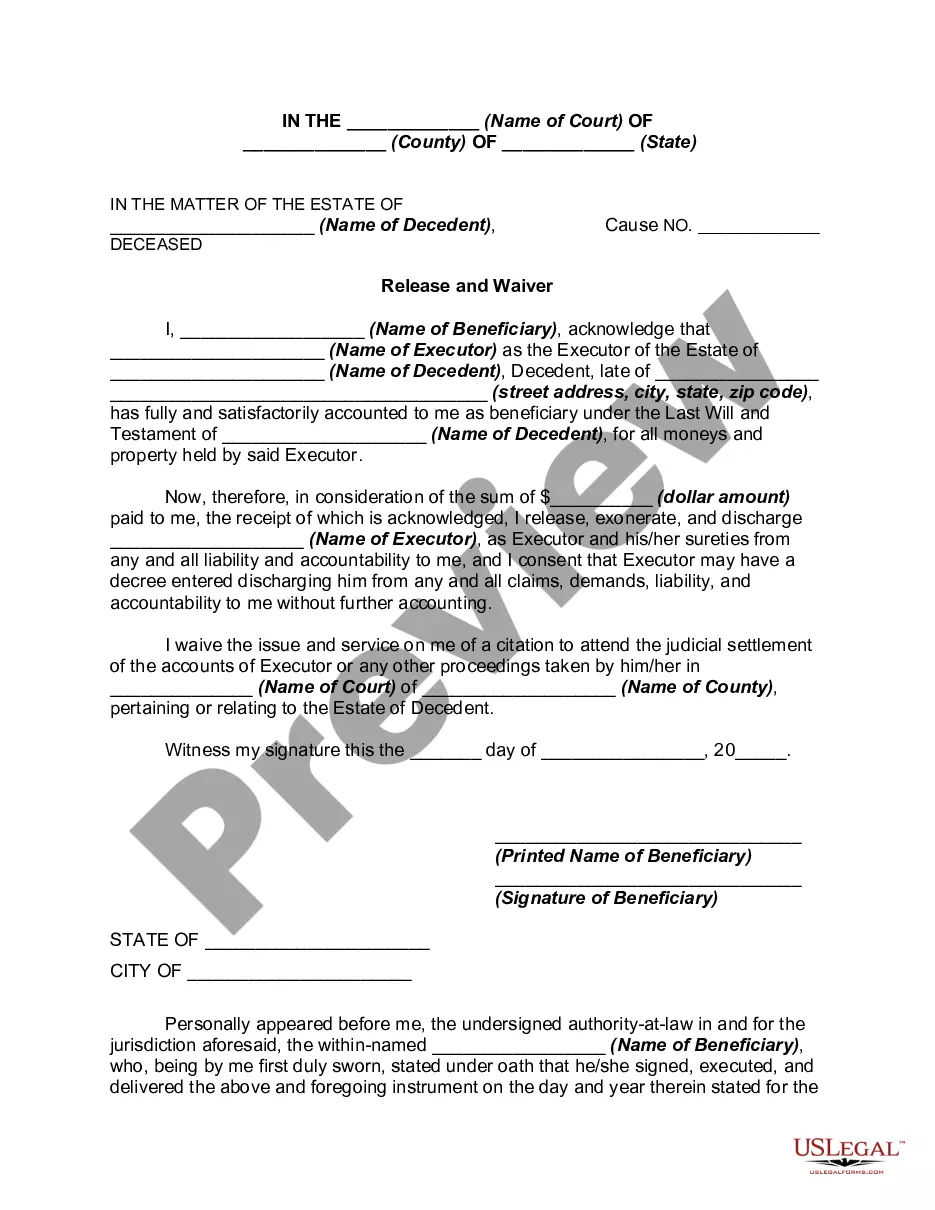
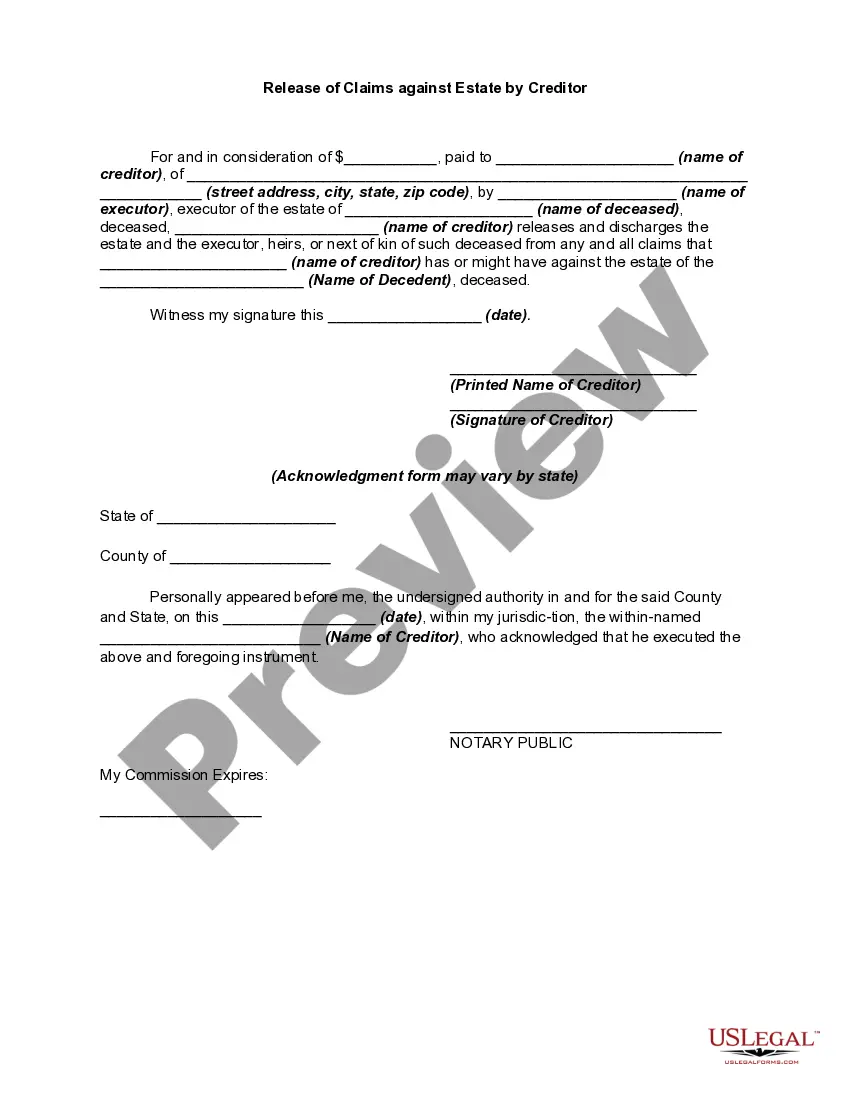
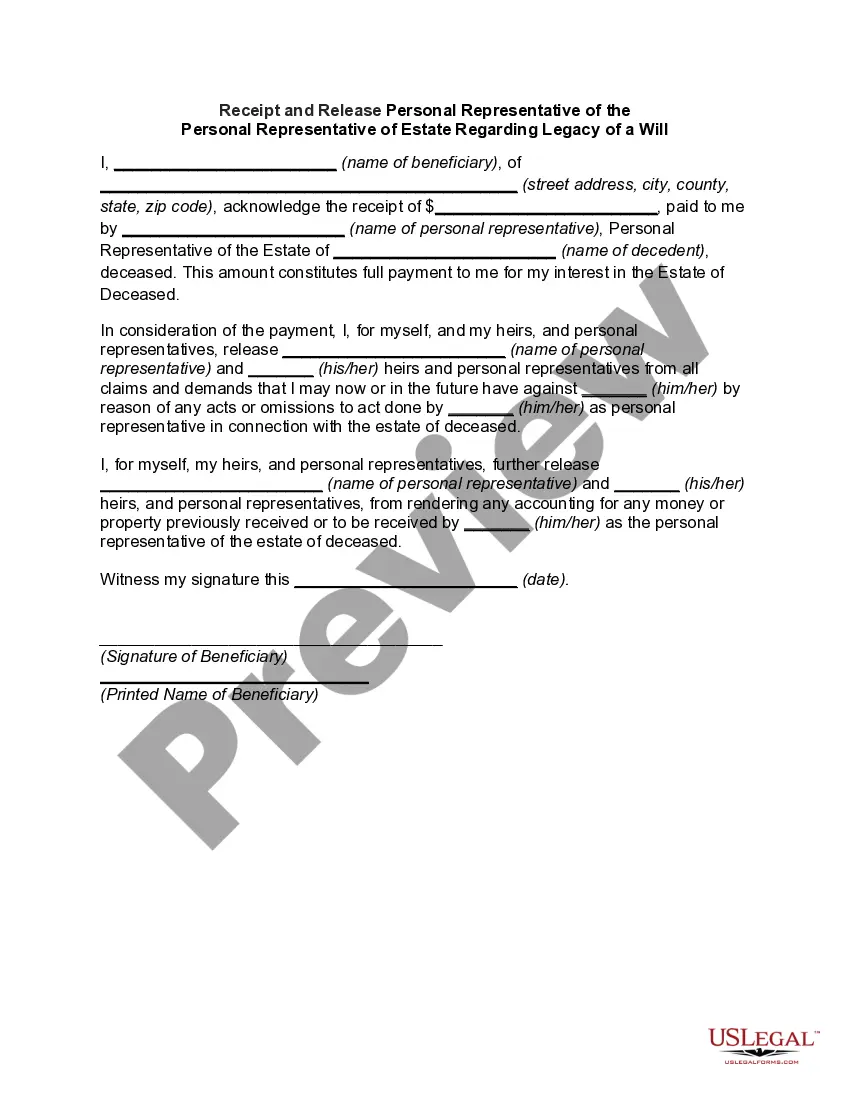
How to fill out Release And Exoneration Of Executor On Distribution To Beneficiary Of Will And Waiver Of Citation Of Final Settlement?
- Access your US Legal Forms account by logging in. Ensure that your subscription is currently active; if not, renew it to avoid any disruptions.
- Preview the desired form and read the description to confirm it meets both your requirements and local jurisdiction standards.
- If necessary, utilize the Search tab to find additional templates that align with your legal needs.
- Click the Buy Now button to select a subscription plan that suits you best and create an account for library access.
- Complete the purchase by entering your credit card details or using your PayPal account.
- Finally, download the form to your device and keep it accessible via the My Forms section in your profile.
In conclusion, using US Legal Forms empowers you as an executor to manage estate debts with confidence. With over 85,000 templates available, you can find precisely what you need and receive expert assistance if required.
Start simplifying your legal document processes today by exploring US Legal Forms!
Form popularity
FAQ
An executor is generally liable for debts of the estate until the estate is fully settled. This means completing the payment of all valid claims against the estate, typically within a year but sometimes longer, depending on the complexity of the estate. Understanding the timeframe is crucial for the executor of estate responsible for debts, as they must navigate duties effectively. To ensure compliance, utilizing a platform like USLegalForms can help clarify responsibilities and streamline the process.
An executor is accountable to the beneficiaries of the estate and the court overseeing the probate process. Beneficiaries can request a detailed accounting of the estate’s finances, ensuring transparency in the executor’s handling of assets and debts. If an executor fails to perform their duties properly, beneficiaries can petition the court for removal or seek legal action. This accountability reinforces that the executor of the estate is responsible for debts and manages the estate responsibly.
Yes, the executor of the estate is responsible for managing the debts of the deceased. This means they must identify and settle any outstanding obligations before distributing assets to beneficiaries. The executor has the duty to navigate claims from creditors, ensuring that the estate's financial responsibilities are met. Understanding that the executor of the estate is responsible for debts can help in preparing for the probate process.
Yes, creditors can pursue an executor if the estate fails to settle its debts appropriately. However, the executor's personal assets should not be at risk as long as they have acted within their authority and handled estate matters responsibly. It is essential for executors to manage debts diligently to mitigate potential claims against them.
An executor is accountable through various means, including probate court oversight and potential lawsuits from beneficiaries. They must provide detailed records of their actions and decisions related to the estate. Transparency is crucial, as it builds trust with beneficiaries and ensures that the executor fulfills their role as the executor of an estate responsible for debts.
The executor of an estate is granted significant authority to manage the deceased's affairs. This includes paying bills, distributing assets, and resolving any debts. However, the executor must act within the boundaries set by the will and state laws. Understanding these limits ensures the executor remains accountable and transparent to beneficiaries and creditors alike.
The powers held by a power of attorney and an executor are quite different. A power of attorney grants authority to manage affairs during a person's lifetime, which may include financial and health-related decisions. In contrast, the executor is responsible for handling the estate after death, including fulfilling obligations like paying debts. Therefore, while both roles hold significant responsibilities, the executor of the estate becomes the final authority once the individual has passed away.
An executor has significant authority concerning the estate, including settling debts and managing assets according to the will. This role requires you to act in the best interest of the estate and its beneficiaries. Importantly, the executor of the estate is responsible for debts, ensuring that all financial obligations are met before distributing assets. You have the crucial duty to uphold the wishes of the deceased while navigating through legal and financial requirements.