Executor Estate Under Without Will
Description
Get your form ready online
Our built-in tools help you complete, sign, share, and store your documents in one place.
Make edits, fill in missing information, and update formatting in US Legal Forms—just like you would in MS Word.
Download a copy, print it, send it by email, or mail it via USPS—whatever works best for your next step.
Sign and collect signatures with our SignNow integration. Send to multiple recipients, set reminders, and more. Go Premium to unlock E-Sign.
If this form requires notarization, complete it online through a secure video call—no need to meet a notary in person or wait for an appointment.
We protect your documents and personal data by following strict security and privacy standards.

Make edits, fill in missing information, and update formatting in US Legal Forms—just like you would in MS Word.

Download a copy, print it, send it by email, or mail it via USPS—whatever works best for your next step.

Sign and collect signatures with our SignNow integration. Send to multiple recipients, set reminders, and more. Go Premium to unlock E-Sign.

If this form requires notarization, complete it online through a secure video call—no need to meet a notary in person or wait for an appointment.

We protect your documents and personal data by following strict security and privacy standards.
Looking for another form?
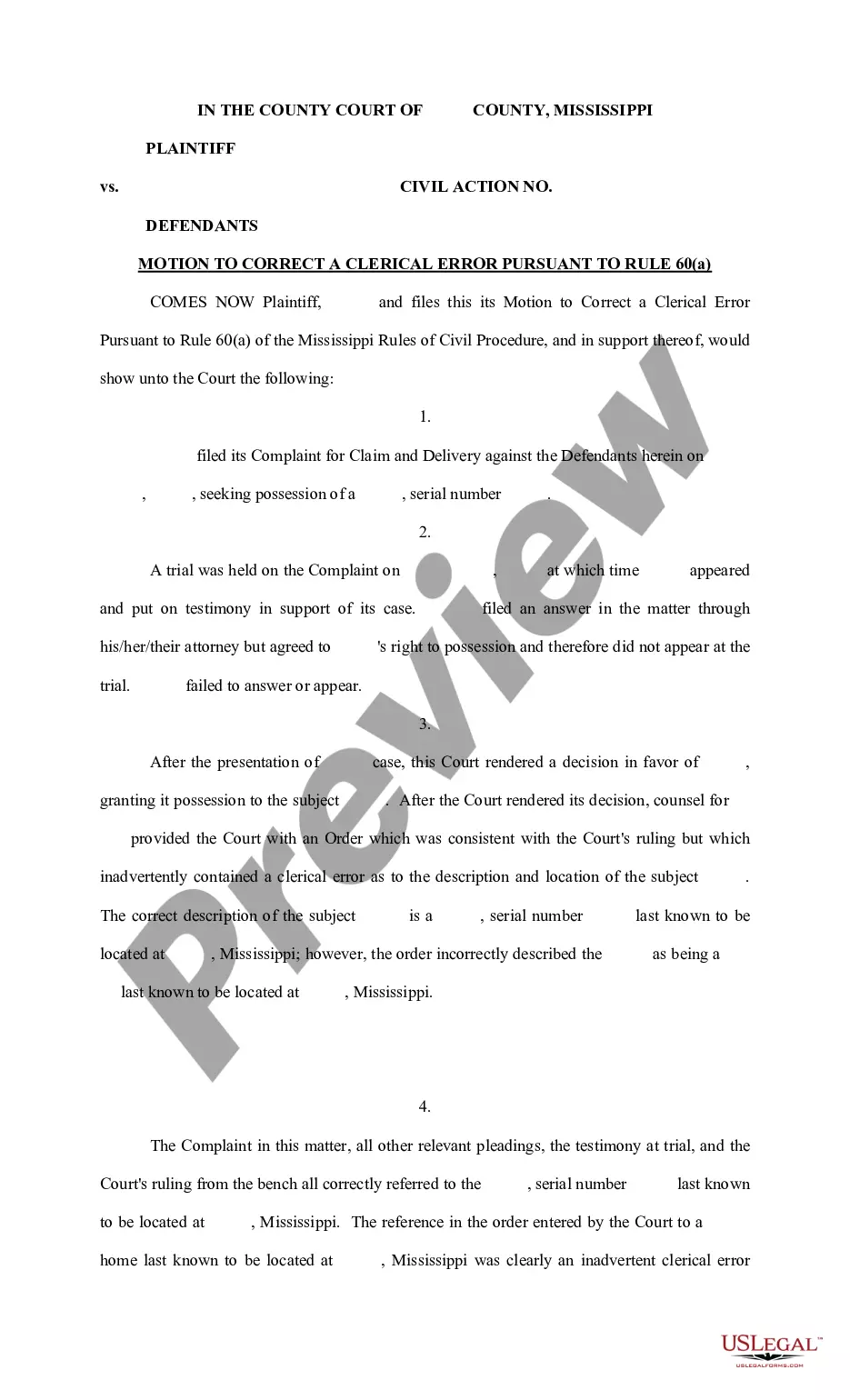




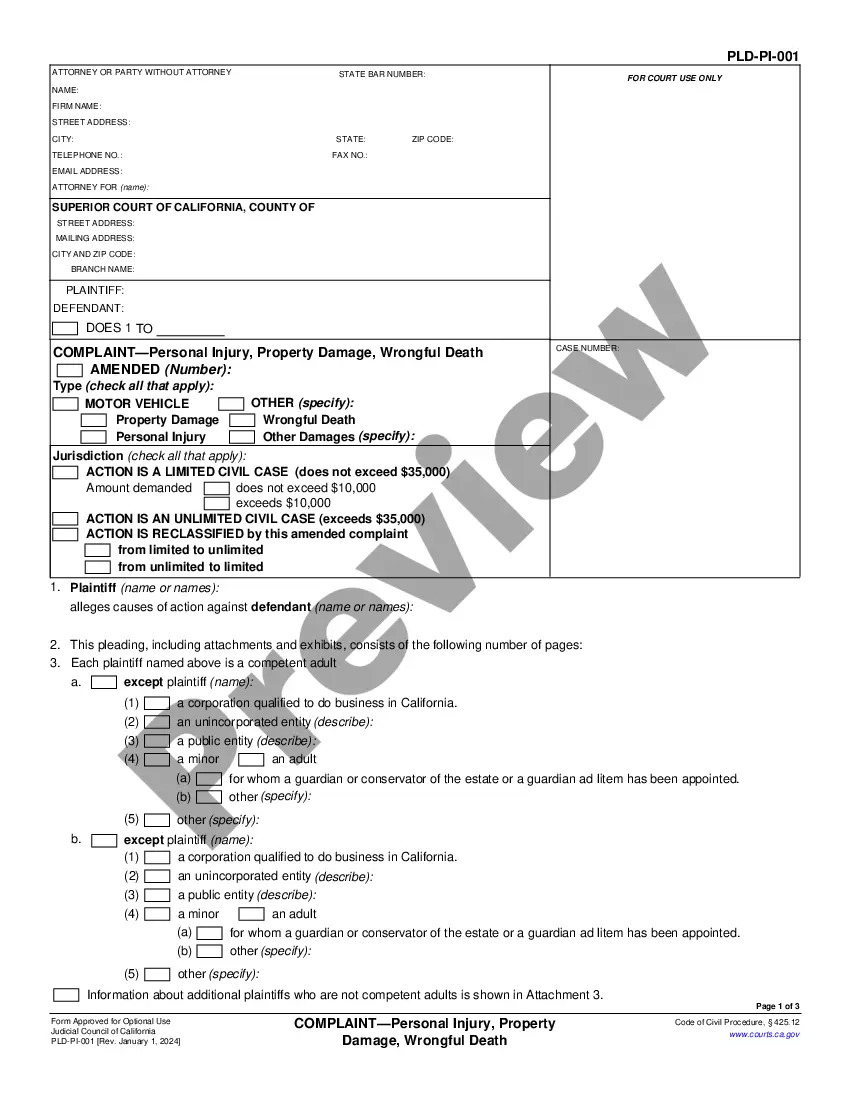

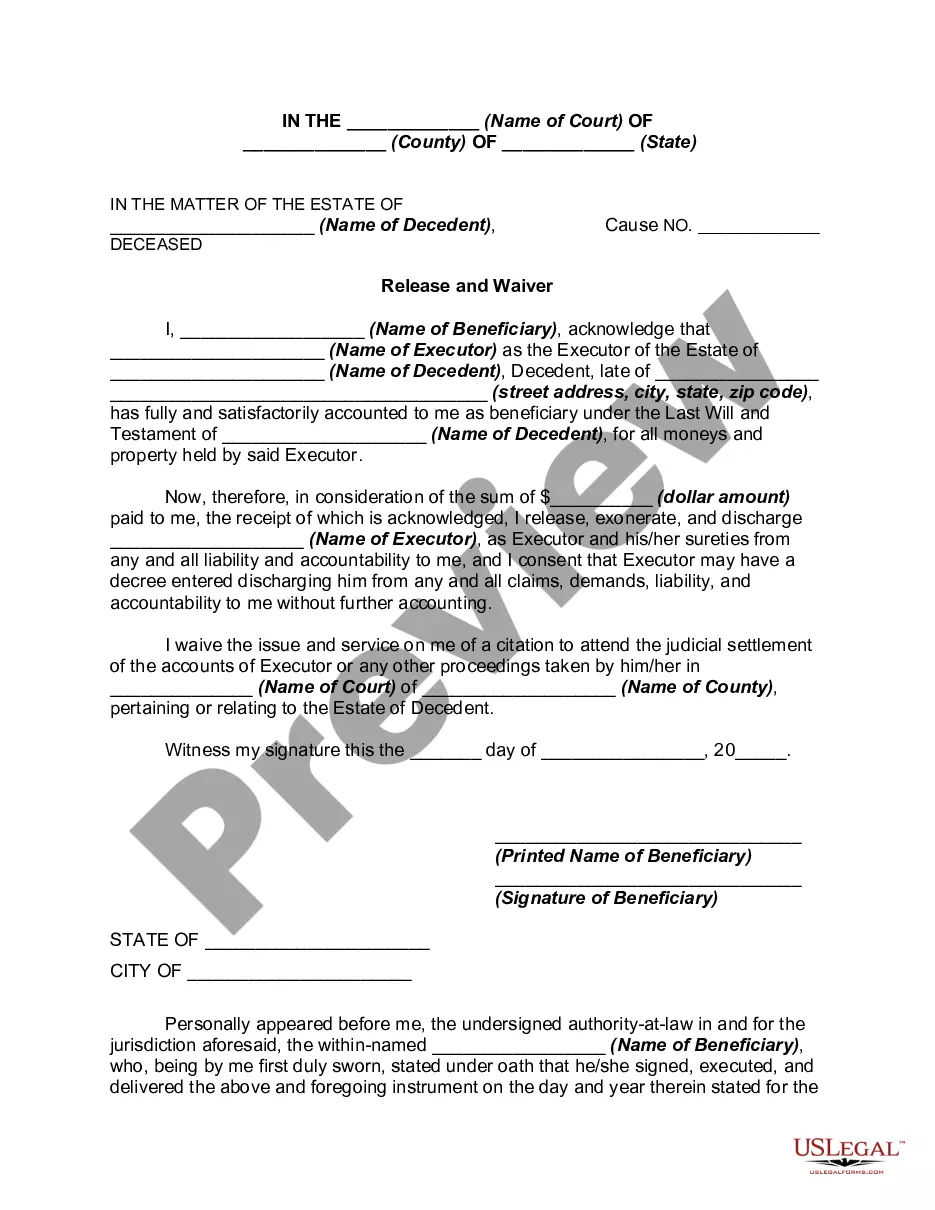
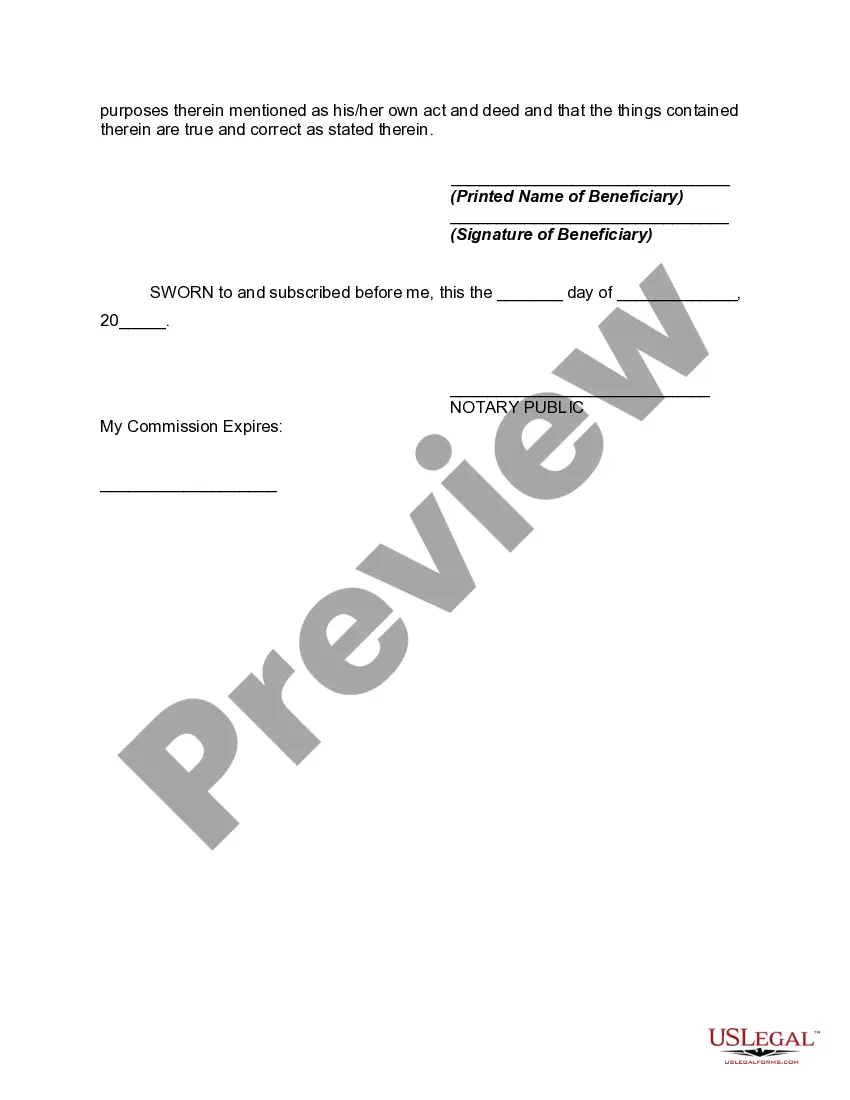
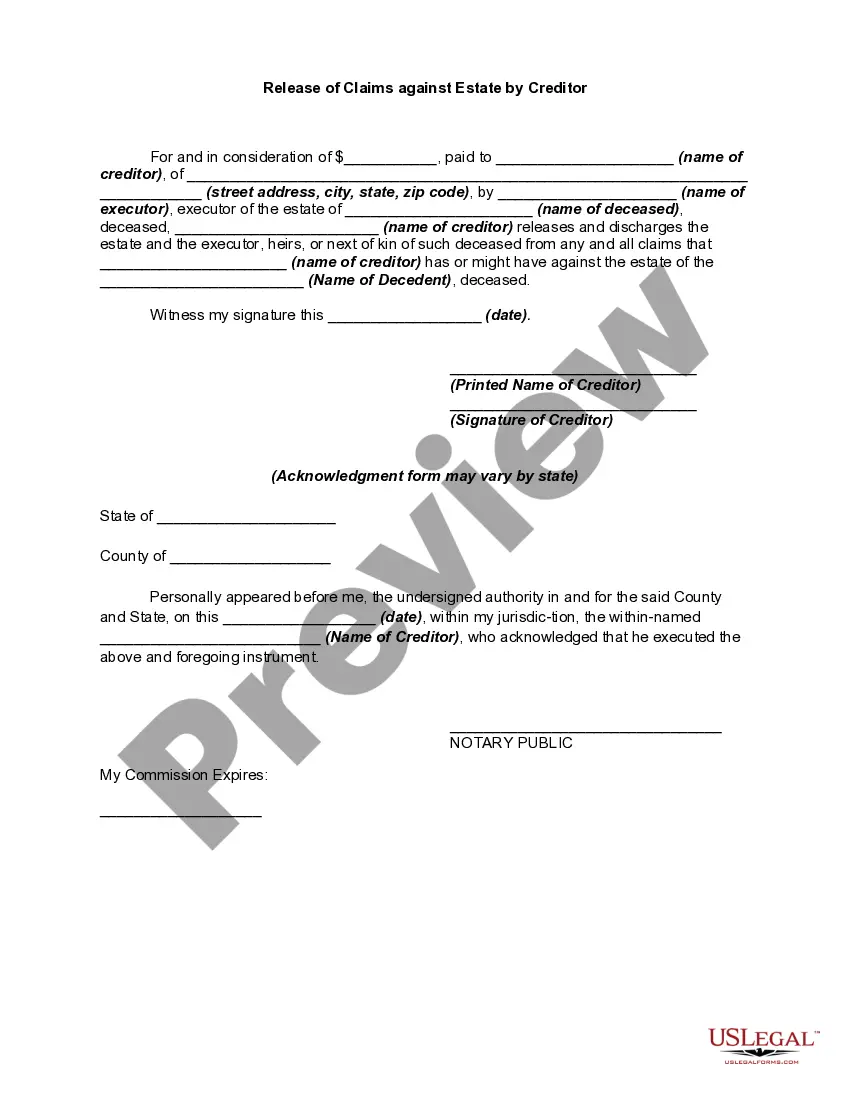
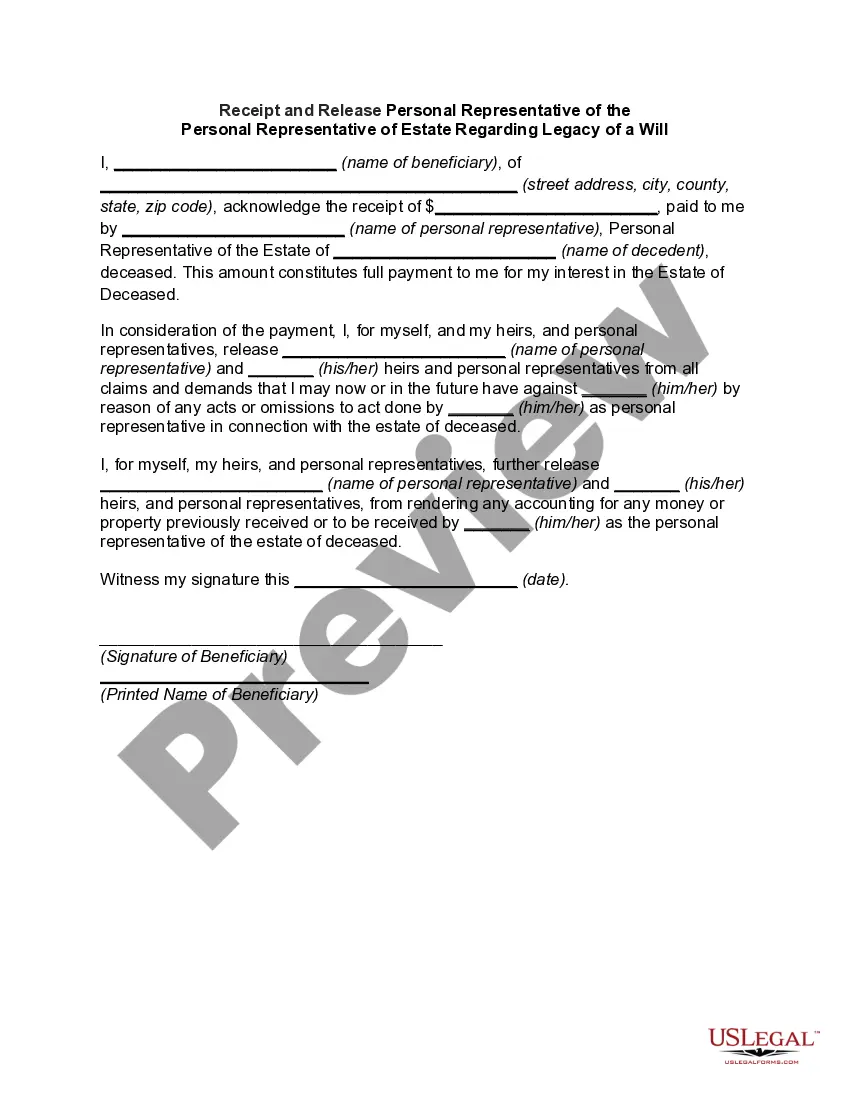
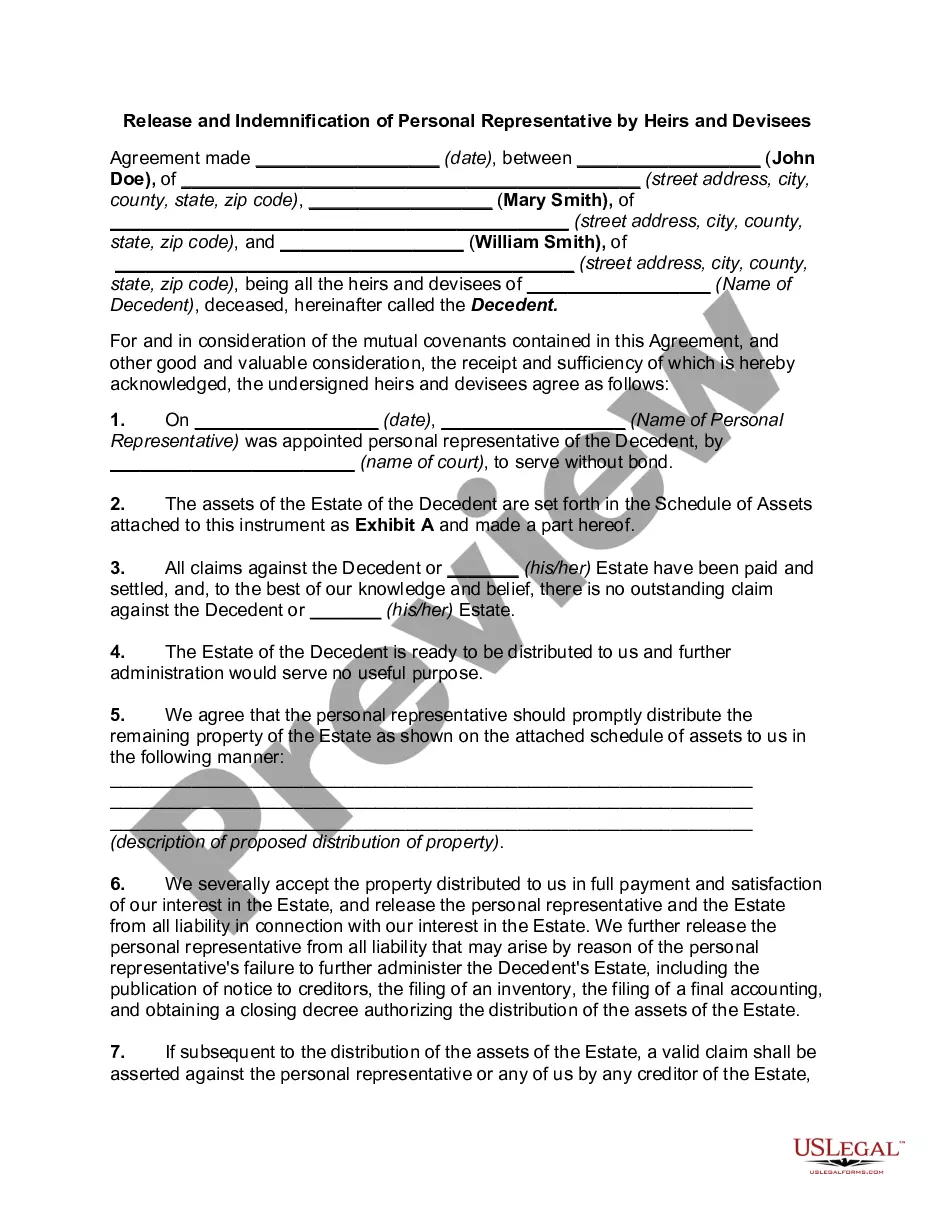
How to fill out Release And Exoneration Of Executor On Distribution To Beneficiary Of Will And Waiver Of Citation Of Final Settlement?
Handling legal documents can be daunting, even for the most seasoned professionals.
When you're in need of an Executor Estate Under Without Will and lack the opportunity to invest time in finding the correct and latest version, the processes can be taxing.
US Legal Forms addresses all your needs, from personal to business documentation, all in one place.
Utilize cutting-edge tools to complete and manage your Executor Estate Under Without Will.
Here are the steps to follow after acquiring the desired form: Verify it is the correct document by previewing and reviewing its description.
- Tap into a repository of articles, guides, and manuals that are pertinent to your situation and requirements.
- Save time and energy while searching for the necessary documents, and use US Legal Forms’ advanced search and Preview feature to find and obtain Executor Estate Under Without Will.
- If you hold a subscription, Log In to your US Legal Forms account, search for the form, and obtain it.
- Visit the My documents tab to see the documents you have previously saved and organize your folders as desired.
- If this is your first encounter with US Legal Forms, create a complimentary account and gain unlimited access to all the platform's benefits.
- Utilize a comprehensive online form directory to be a game-changer for anyone aiming to navigate these circumstances successfully.
- US Legal Forms stands as a premier provider in online legal forms, offering over 85,000 specific legal forms for each state accessible at any time.
- Gain access to documents specific to your state or county.
Form popularity
FAQ
The best person to appoint as executor of a will under without will is someone who is trustworthy, responsible, and organized. This person should also have a good understanding of financial matters, as they will oversee the estate's administration. Close family members or friends often make suitable executors, but consider discussing this role with them beforehand to ensure they are willing to take on the responsibilities.
To become an executor of an estate under without will, you must be at least 18 years old and legally competent. Additionally, you should be willing to assume the responsibilities that come with this role, which may include managing assets, paying debts, and distributing inheritance. It's helpful to have some knowledge of financial and legal matters to navigate this process smoothly.
To start as an executor of an estate under without will, you first need to file a petition with the probate court in your county. This petition will formally request to be appointed as the executor. Make sure to provide relevant information about the deceased and the estate. Once the court approves your petition, you can begin managing the estate.
An executor cannot simply take everything if there is no will; they must follow state laws governing intestate succession. These laws dictate how the estate's assets are distributed among heirs. The executor’s role is to manage the estate fairly and lawfully, ensuring beneficiaries receive their rightful portions. By leveraging resources like uslegalforms, executors can better understand their responsibilities and avoid potential disputes.
The time needed to be appointed executor estate under without will varies based on jurisdiction and case complexity. Generally, the process can take several weeks to a few months, as the court must evaluate the petition and any related documentation. Factors that can affect this timeline include the size of the estate and the clarity of the claims. To expedite the process, consult experienced legal resources or platforms like uslegalforms.
If the executor does nothing, the estate may face delays in settling debts and distributing assets. This can lead to complications for beneficiaries, who might not receive their inheritances on time. In such cases, interested parties can petition the court to appoint a new executor. Timely action is essential to protect the estate’s value and ensure compliance with legal obligations.
To prove your role as an executor estate under without will, you typically need to file a petition in probate court. This process may require providing documentation regarding the deceased's assets and potential heirs. It’s also vital to demonstrate your qualifications to serve as an executor, such as your relationship to the deceased. Consider using resources like uslegalforms to streamline the paperwork.
When managing an executor estate under without will, the executor holds the authority to oversee the distribution of assets in accordance with state laws. This includes settling debts, managing properties, and distributing remaining assets to heirs. They act on behalf of the deceased, ensuring that everything is handled properly. Overall, their role is crucial during this complex process.
If there is no will in New Jersey, the state's intestacy laws dictate who inherits your estate. Generally, the spouse and children are first in line, followed by parents and siblings. Understanding these laws can help the executor estate under without will manage the estate distribution efficiently and fairly to the designated heirs.
To become the executor of an estate in New Jersey, you need to file a petition in the local Surrogate's Court along with the deceased's death certificate. You may also need to provide a list of the beneficiaries and the estate's assets. Using platforms like US Legal Forms can simplify this process by providing necessary forms and guidance for your filings.