Executor Beneficiary Things Without Consent
Description

Get your form ready online
Our built-in tools help you complete, sign, share, and store your documents in one place.
Make edits, fill in missing information, and update formatting in US Legal Forms—just like you would in MS Word.
Download a copy, print it, send it by email, or mail it via USPS—whatever works best for your next step.
Sign and collect signatures with our SignNow integration. Send to multiple recipients, set reminders, and more. Go Premium to unlock E-Sign.
If this form requires notarization, complete it online through a secure video call—no need to meet a notary in person or wait for an appointment.
We protect your documents and personal data by following strict security and privacy standards.

Make edits, fill in missing information, and update formatting in US Legal Forms—just like you would in MS Word.

Download a copy, print it, send it by email, or mail it via USPS—whatever works best for your next step.

Sign and collect signatures with our SignNow integration. Send to multiple recipients, set reminders, and more. Go Premium to unlock E-Sign.

If this form requires notarization, complete it online through a secure video call—no need to meet a notary in person or wait for an appointment.

We protect your documents and personal data by following strict security and privacy standards.
Looking for another form?






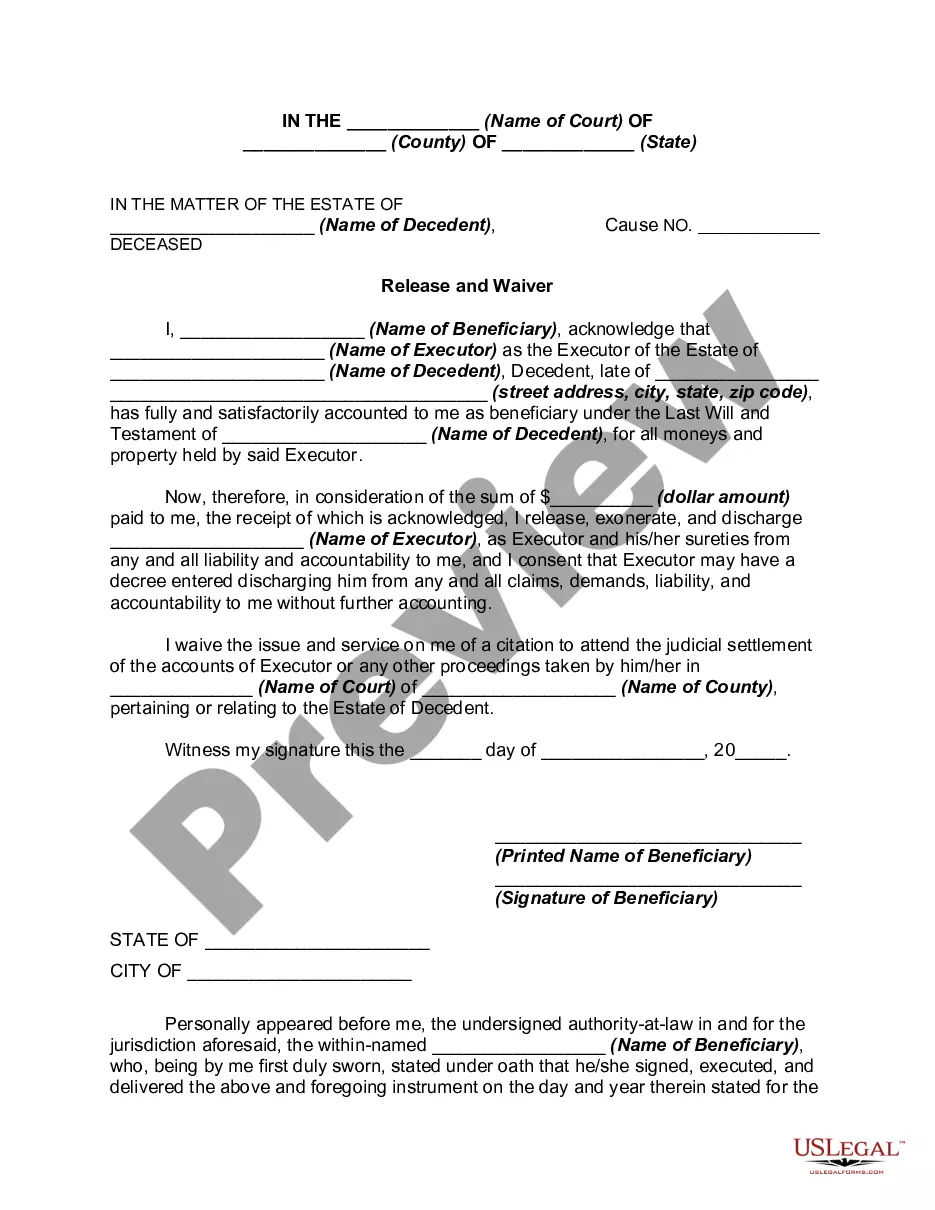
How to fill out Release And Exoneration Of Executor On Distribution To Beneficiary Of Will And Waiver Of Citation Of Final Settlement?
Securing a reliable source for obtaining the most up-to-date and pertinent legal templates is part of the challenge of navigating bureaucracy.
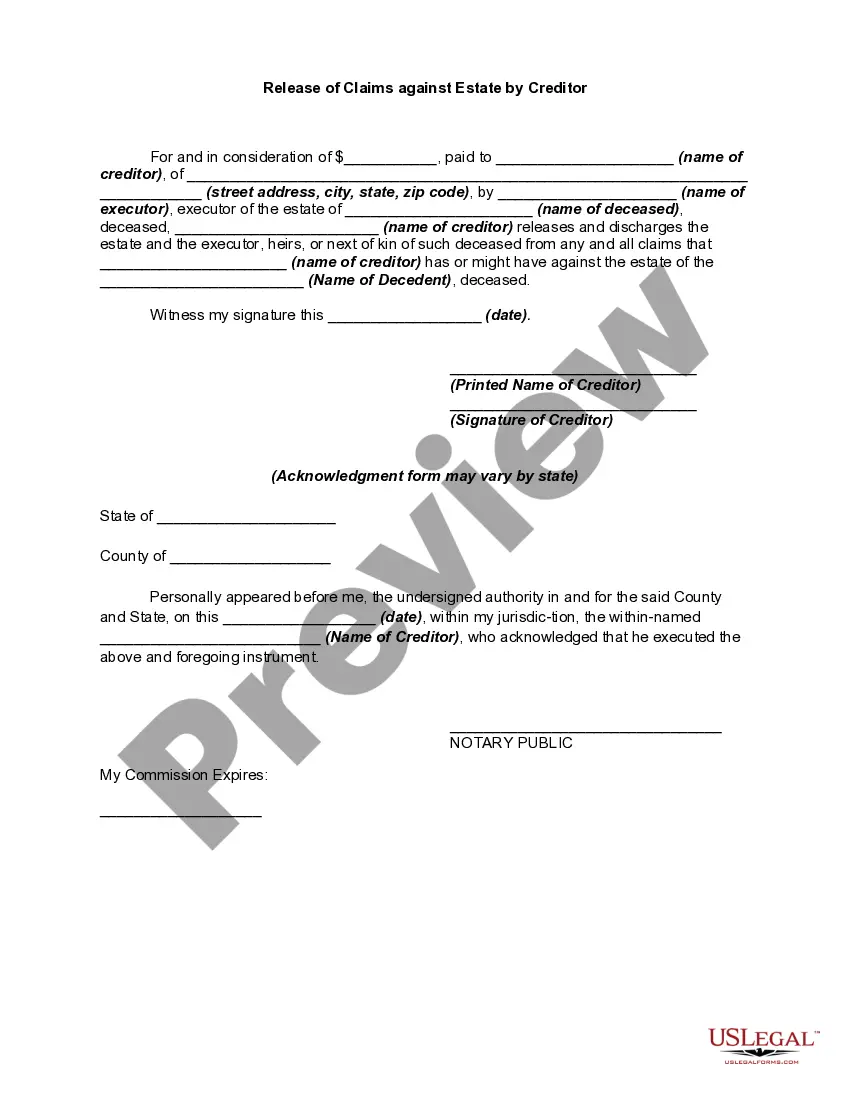
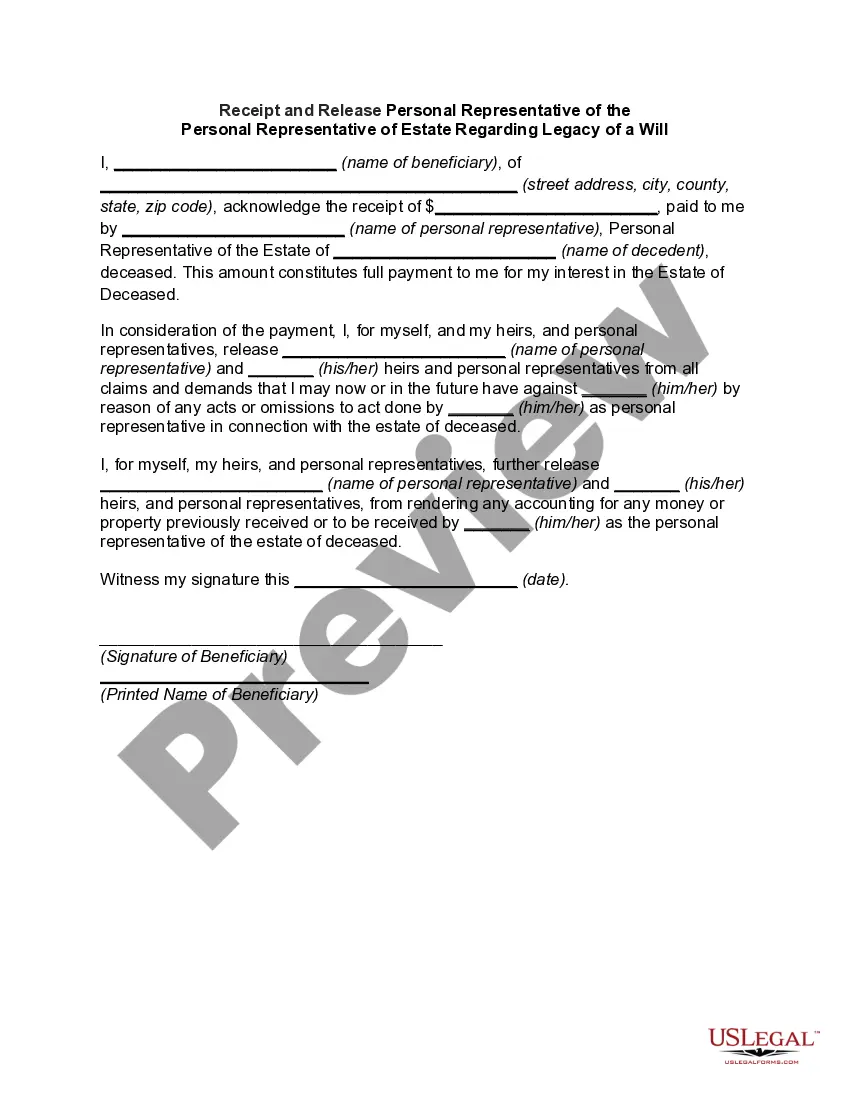
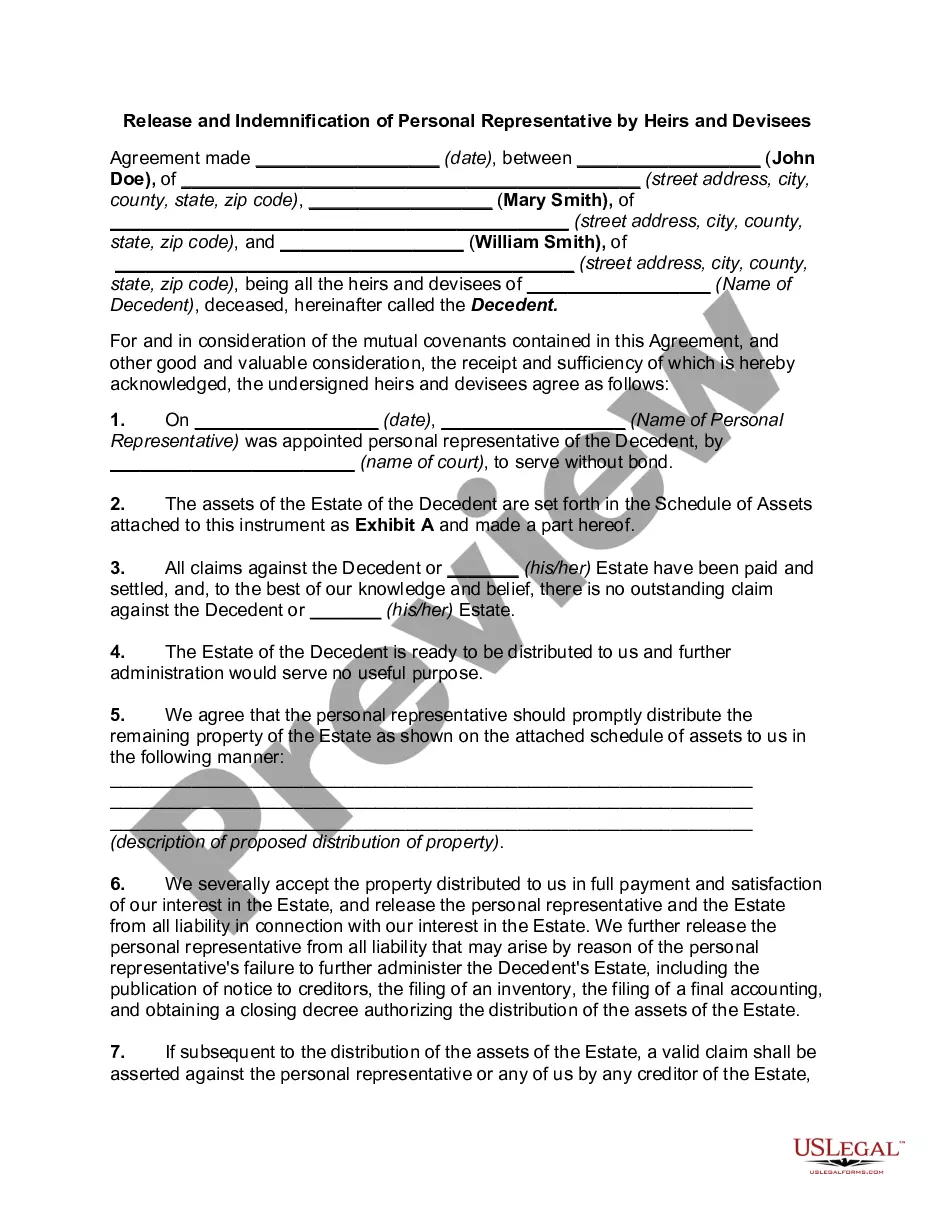
Identifying the appropriate legal documents requires precision and meticulousness, which is why it’s crucial to source Executor Beneficiary Documents Without Consent exclusively from trustworthy providers, such as US Legal Forms. An incorrect template can squander your time and delay your situation.
Once you have the form on your device, you can edit it with the editor or print it out and complete it by hand. Eliminate the stress associated with your legal documents. Explore the extensive US Legal Forms library to find legal samples, assess their applicability to your situation, and download them right away.
- Utilize the library navigation or search function to locate your template.
- Examine the form’s description to ensure it meets the standards of your state and county.
- Check the form preview, if available, to confirm the template is what you need.
- If the Executor Beneficiary Documents Without Consent does not meet your requirements, continue searching for the correct document.
- If you are confident about the form’s applicability, download it.
- As a registered user, click Log in to verify and access your chosen templates in My documents.
- If you haven’t created an account yet, click Buy now to acquire the template.
- Choose the pricing option that fits your requirements.
- Proceed with the registration to complete your purchase.
- Finalize your transaction by selecting a payment method (credit card or PayPal).
- Choose the document format for downloading Executor Beneficiary Documents Without Consent.
Form popularity
FAQ
If the executor hasn't notified you about the death or shown you the will within a reasonable amount of time ? or if they aren't keeping you in the loop about how probate is going, this may signal a lack of honesty on the executor's part.
When that happens it can raise the question: can a beneficiary designation be contested? The short answer is: yes. In Keul v Hodges Blvd Presbyterian Church, a Florida Court of Appeal allowed a pay-on-death designation in favor of the deceased's caretaker to be invalidated based on a claim of undue influence.
As mentioned earlier, there are certain asset types that are passed by beneficiary designation, overriding the Will. Therefore, an executor cannot override a beneficiary designation, unless specifically ordered to do so by the court. However, be careful not to confuse this with a beneficiary of a Will.
The Will will also name beneficiaries who are to receive assets. An executor can override the wishes of these beneficiaries due to their legal duty. However, the beneficiary of a Will is very different than an individual named in a beneficiary designation of an asset held by a financial company.
If a beneficiary requests access to financial institution statements and the executor refuses to provide them, the beneficiary can take legal action. They can follow the court for an order compelling the executor to reveal the requested information.