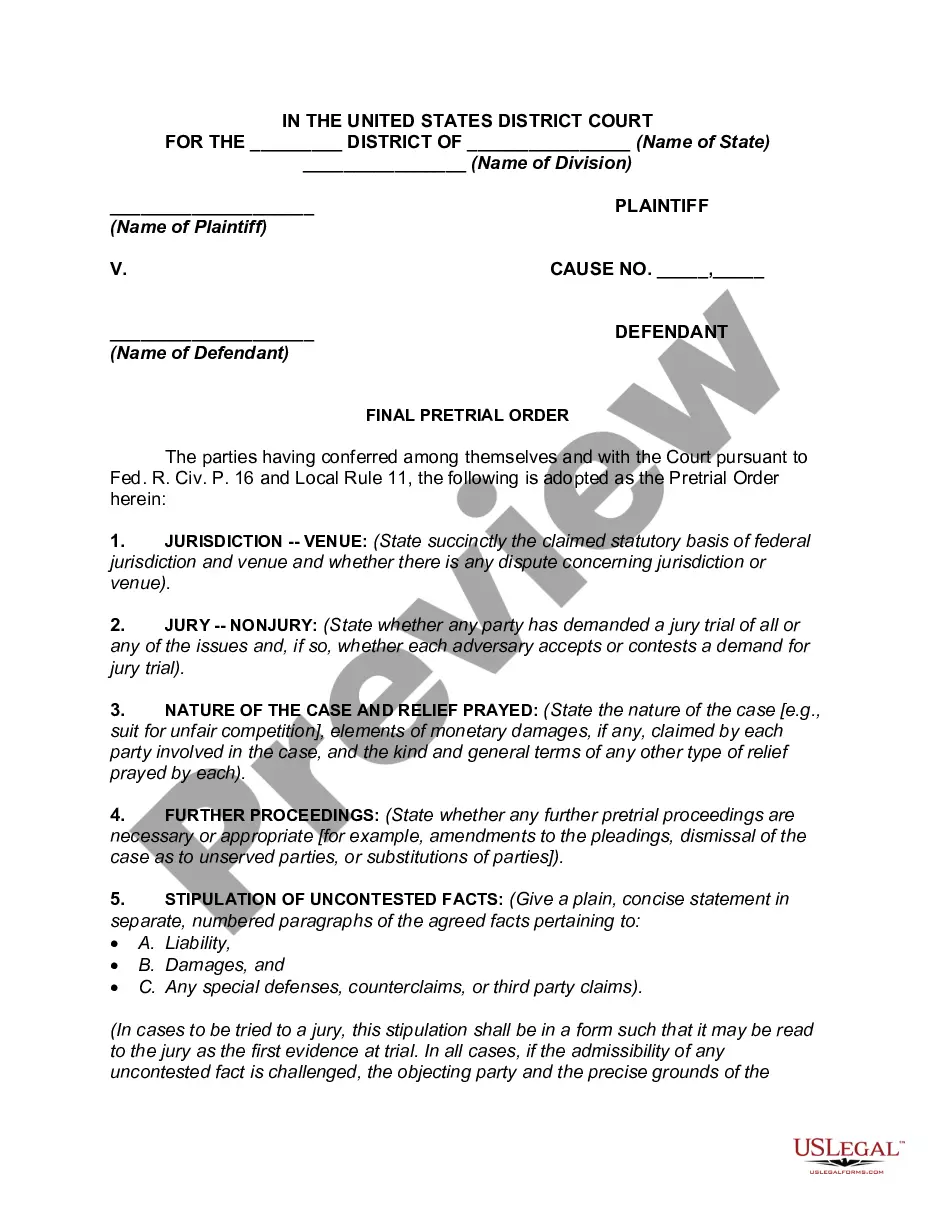
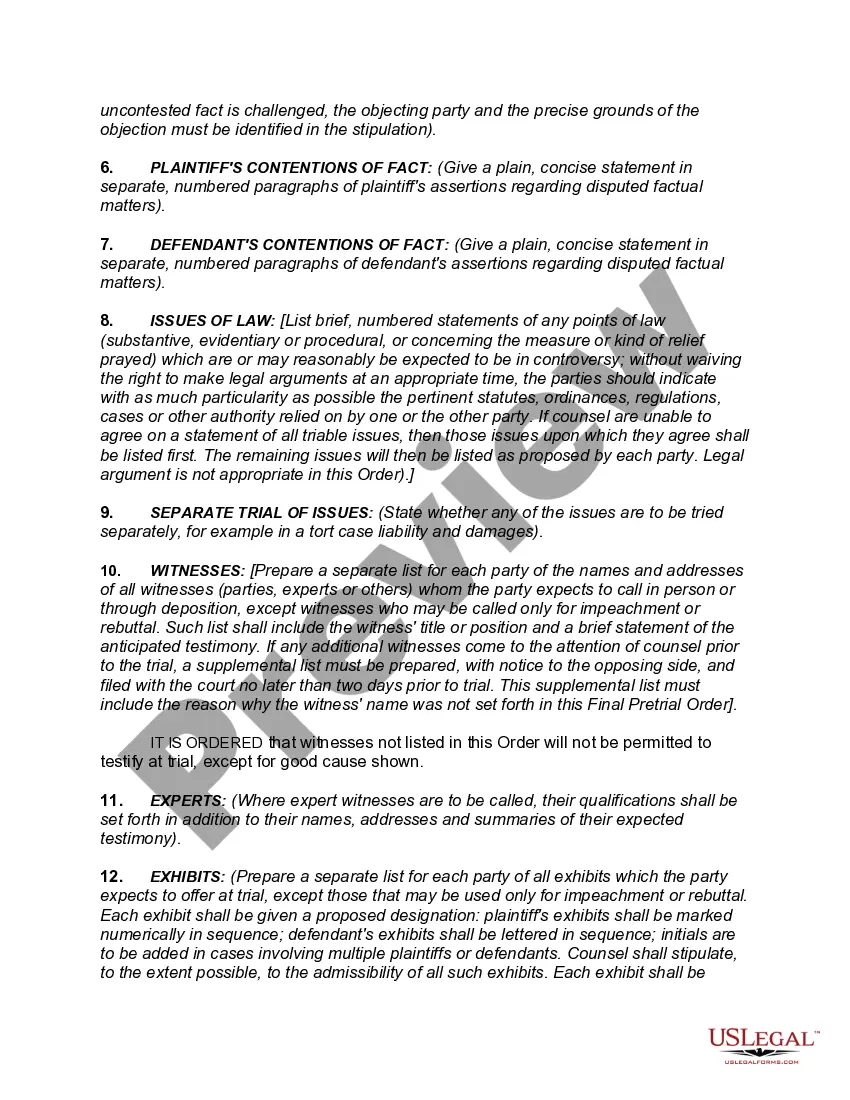
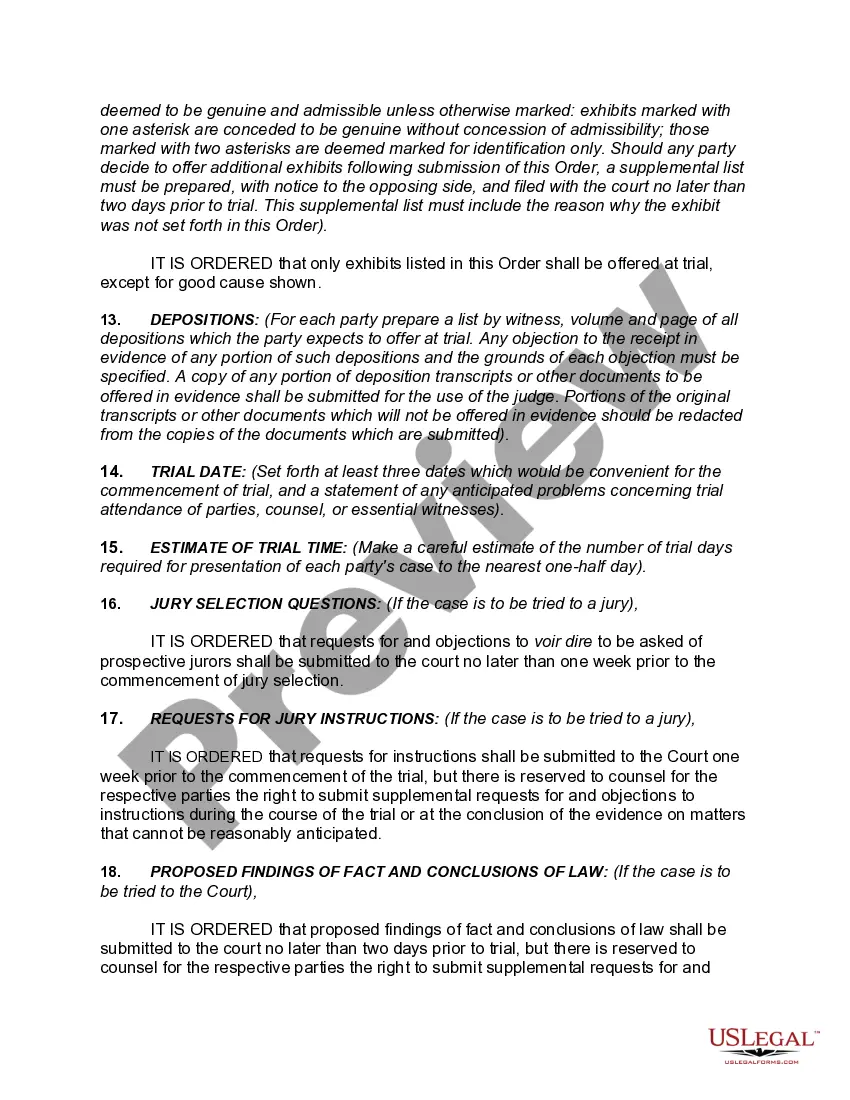
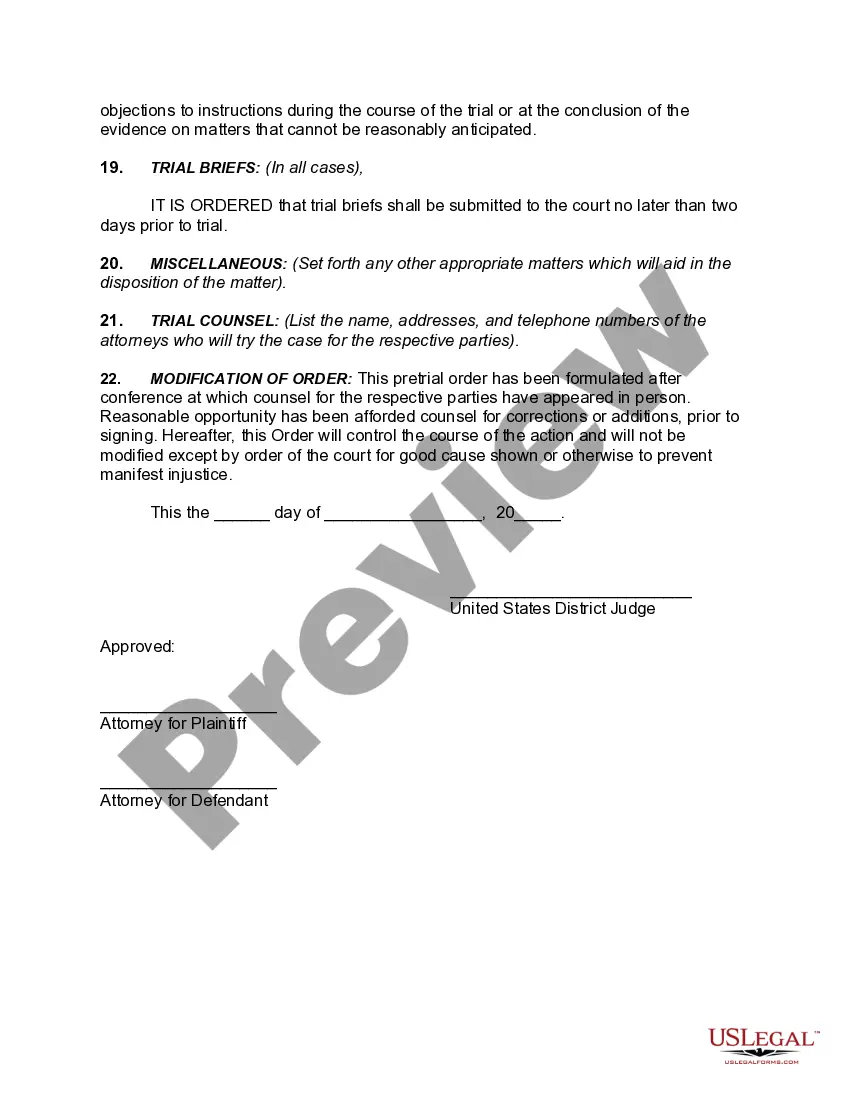
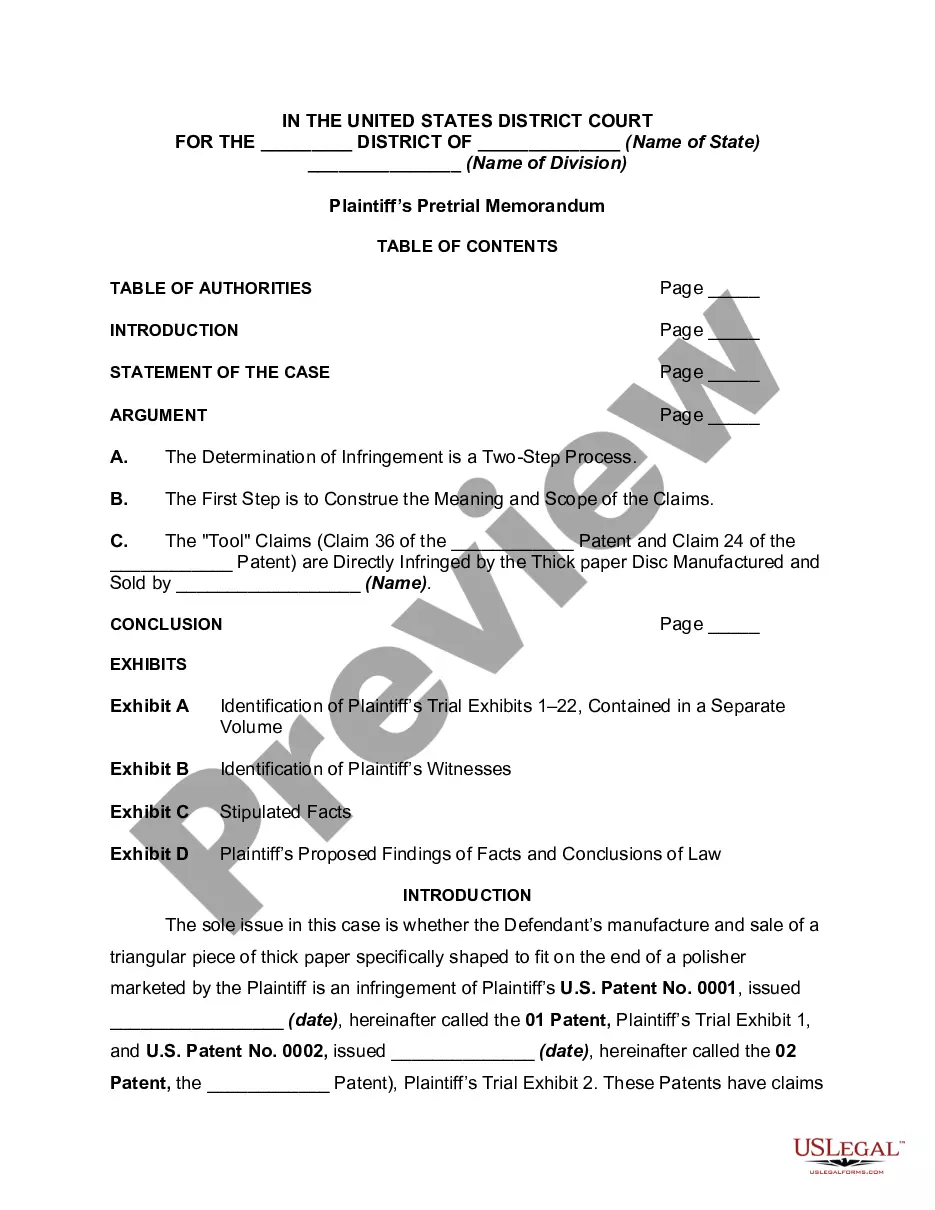
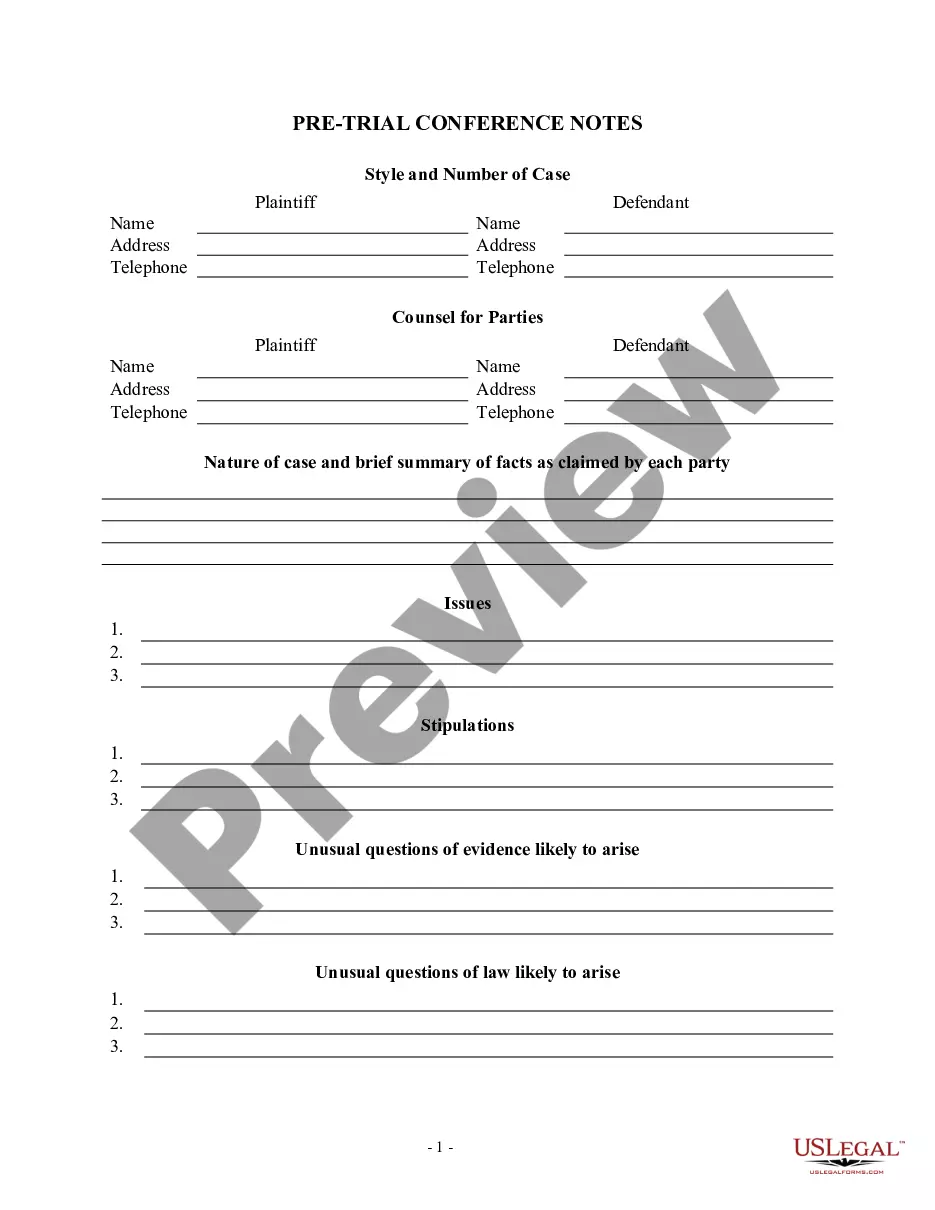
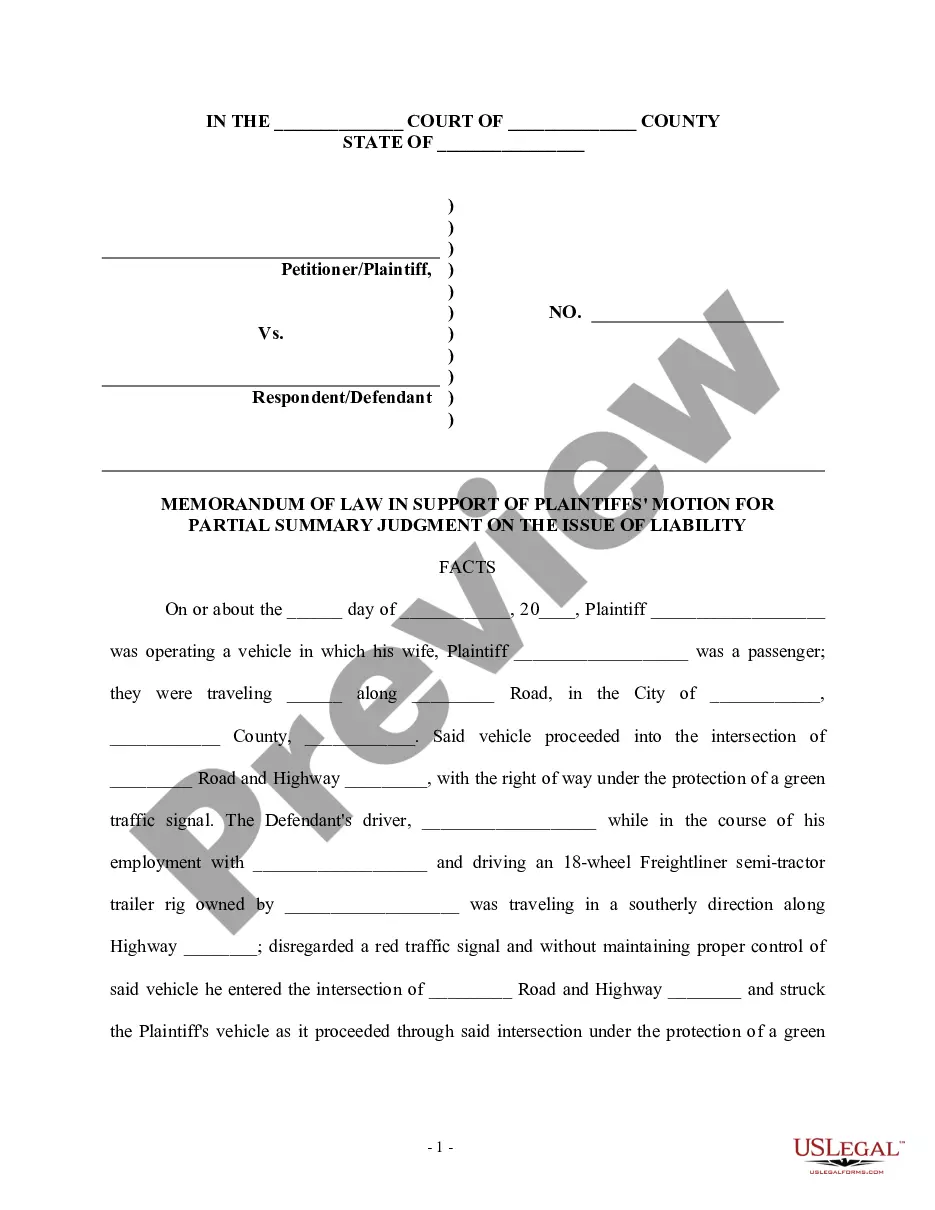
Pretrial Memorandum Example For Court
Description
Get your form ready online
Our built-in tools help you complete, sign, share, and store your documents in one place.
Make edits, fill in missing information, and update formatting in US Legal Forms—just like you would in MS Word.
Download a copy, print it, send it by email, or mail it via USPS—whatever works best for your next step.
Sign and collect signatures with our SignNow integration. Send to multiple recipients, set reminders, and more. Go Premium to unlock E-Sign.
If this form requires notarization, complete it online through a secure video call—no need to meet a notary in person or wait for an appointment.
We protect your documents and personal data by following strict security and privacy standards.

Make edits, fill in missing information, and update formatting in US Legal Forms—just like you would in MS Word.

Download a copy, print it, send it by email, or mail it via USPS—whatever works best for your next step.

Sign and collect signatures with our SignNow integration. Send to multiple recipients, set reminders, and more. Go Premium to unlock E-Sign.

If this form requires notarization, complete it online through a secure video call—no need to meet a notary in person or wait for an appointment.

We protect your documents and personal data by following strict security and privacy standards.
Looking for another form?
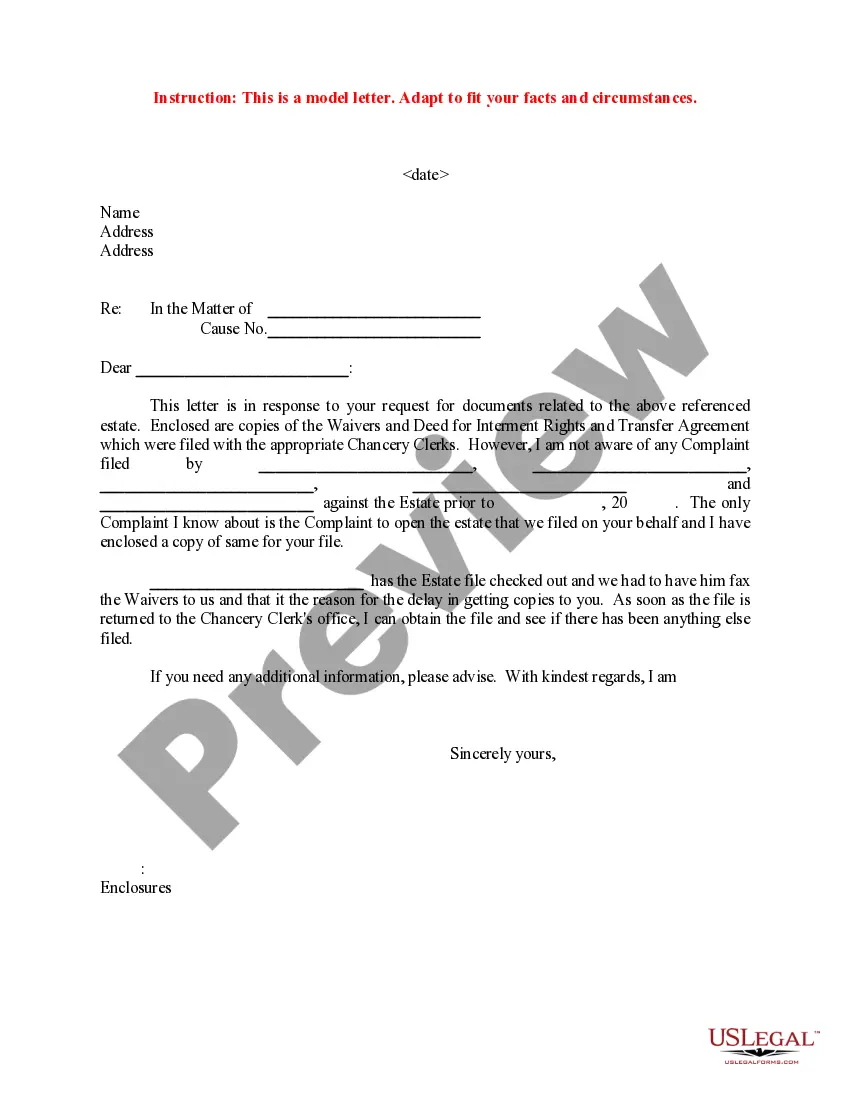
How to fill out Outline For Pretrial Memorandum?
Regardless of whether for professional engagements or personal matters, everyone must manage legal issues at some point in their lives.
Completing legal paperwork necessitates meticulous care, starting with selecting the right form template.
Once it is downloaded, you can complete the form using editing tools or print it and finalize it manually. With a vast US Legal Forms catalog available, you will never need to waste time searching for the correct sample online. Utilize the library’s straightforward navigation to find the right template for any circumstance.
- For instance, if you choose an incorrect version of a Pretrial Memorandum Example For Court, it will be declined upon submission.
- Thus, it is crucial to obtain a reliable source of legal documents like US Legal Forms.
- If you need to acquire a Pretrial Memorandum Example For Court template, adhere to these simple instructions.
- Obtain the sample required by using the search feature or browsing the catalog.
- Review the form’s details to ensure it corresponds with your case, jurisdiction, and area.
- Click on the preview of the form to view it.
- If it is the wrong document, return to the search function to find the Pretrial Memorandum Example For Court sample you need.
- Download the file if it satisfies your requirements.
- If you already possess a US Legal Forms account, simply click Log in to retrieve previously saved documents in My documents.
- If you do not have an account yet, you can acquire the form by clicking Buy now.
- Select the suitable pricing option.
- Fill out the account registration form.
- Choose your payment method: you can utilize a credit card or PayPal account.
- Select the document format you desire and download the Pretrial Memorandum Example For Court.
Form popularity
FAQ
A postnuptial agreement is a legal document that married couples create after they get married. It outlines how their assets, debts, and other important matters would be handled in the event of a divorce or separation.
A postnuptial agreement can protect each spouse's interests in the same way as a prenuptial agreement, since they can (and often do) opt-out of the same ?default? state marital laws and address the same topics.
A prenuptial agreement, or ?prenup,? is a written contract made between two people before they are married. By contrast, a postnuptial is an agreement that can be thought of as a prenup after marriage. Both agreements outline the prospective spouses' rights and obligations upon the end of their marriage.
A postnuptial agreement cannot provide enforceable terms for child support or custody. However, it can include provisions for alimony since that is considered separately from a spouse's duties as a parent. (We have seen agreements that have a provision for child support, but it is not enforceable.
A postnuptial agreement must include the following elements: It must be voluntarily agreed to by both parties. It must be in writing. It requires full disclosure of assets and debts. It must not be one-sided in nature. It must be signed by both parties.
A prenuptial agreement is a contract written prior to a marriage that defines terms of divorce to foresee a positive outcome for both spouses in the event of a dissolution. A postnuptial agreement is a simple prenuptial but written after a marriage is performed.
The best way to protect assets is not a prenuptial agreement, but via an irrevocable trust. This helps to keep the assets outside your marital estate and is more difficult to contest in court.
Yes, absolutely. In determining the validity of a postnup, courts treat them with special caution. Even though the agreement may be exactly the same as a prenup, from a legal perspective, they are very different.